
How to Hook 2 Air Compressors Together: Practical Guide for 2026
Connecting pneumatic systems takes precision. Learn how to hook 2 air compressors together to double your delivered CFM safely in October 2026.
 By Tom Scalisi
Updated October 7, 2026
By Tom Scalisi
Updated October 7, 2026

Continuous pneumatic tools like dual-action sanders, abrasive blasters, and HVLP paint sprayers frequently exhaust the air supply of a single workshop compressor. When a small tank depletes and pump recovery lags behind active demand, line pressure plummets and pneumatic motors immediately bog down. Learning how to hook 2 air compressors together allows woodworkers, auto mechanics, and DIY fabricators to combine the cubic feet per minute (CFM) output of two separate units without investing in an expensive three-phase stationary system. Connecting two pumps into a unified air delivery network provides the sustained volume necessary for high-consumption air tools while expanding total tank storage.
Tying two pneumatic machines together requires strict attention to plumbing layout, one-way check valves, and electrical branch circuit loads. Simply connecting two air hoses with an open tee fitting can backfill unloader valves or trip residential breakers during simultaneous motor starts. Before modifying workshop lines, understanding delivered SCFM ratings helps determine whether your dual setup can actually sustain your target pneumatic equipment. For operators who need extra buffer capacity rather than continuous pump production, adding an auxiliary air storage tank can sometimes solve rapid pressure drops without running multiple electric motors.
| Award | Product | ACR Score About ACR ScoreThe ACR Score is our own rating from 0 to 10, based on performance, design and build, ease of use, and value. It reflects independent research and is never influenced by manufacturers, retailers, or affiliate commissions. Learn more › | |
|---|---|---|---|
| Best Overall |
ALL-TOP Dual Cylinder 12V Air Compressor
|
9.2/10 | Buy |
| Best Premium |
 Stealth SAQ-1234 2-Gallon Air Compressor
|
9.2/10 | Buy |
| Best Budget |
 WYNNsky 20-Piece 1/4-Inch Air Tool Kit
|
9.1/10 | Buy |
| Best Value |
 Master Airbrush Cool Runner II Airbrush Compressor
|
9.1/10 | Buy |
 FYPower 18-Piece Air Compressor Accessories Kit
|
8.6/10 | Buy | |
 ECOMAX Wall Mount 0.5-Gal Air Compressor
|
8.6/10 | Buy | |
 MADONGLI 100 PSI Air Bag Compressor Kit
|
8.6/10 | Buy | |
 VIAIR 88P 12V Portable Air Compressor
|
8.4/10 | Buy | |
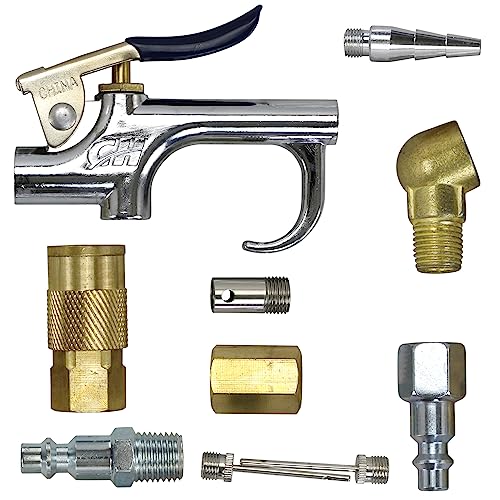 Harrier Hardware 11-Piece Air Compressor Starter
|
8.3/10 | Buy | |
 Air Lift 25980EZ WirelessONE Air Compressor
|
8.1/10 | Buy |
ALL-TOP Dual Cylinder 12V Air Compressor
Built for rapid tire inflation on large trucks and off-road rigs, this dual-cylinder pump pushes an impressive 12.35 CFM flow rate up to 150 PSI. The rugged metal frame, integrated thermal safeguards, and extended 26-foot hose provide reliable utility for heavy-duty vehicle recovery.
Pros
- High 12.35 CFM output swiftly inflates large tires
- Dual aluminum cylinder construction helps dissipate heat
- Generous 26-foot hose reaches all corners of large vehicles
- Equipped with automatic thermal and over-current safety switches
Cons
- Heftier 24-pound build demands extra carrying effort
- Third-party gauges require built-in over-pressure protection
Stealth SAQ-1234 2-Gallon Air Compressor
Operating at under 60 decibels, this compact unit provides exceptionally quiet performance for garage DIY tasks, brad nailing, and tire inflation. Its oil-free motor reaches up to 125 PSI while keeping routine maintenance to a minimum.
Pros
- Quiet operation suitable for indoor workspaces
- Maintenance-free oil-free pump design
- Durable steel tank with rubber vibration dampening
- Reliable pressure recovery for intermittent nailing
Cons
- Relatively heavy to carry at nearly 42 pounds
- Small two-gallon tank limits continuous tool use
- Modest 1.8 CFM flow rate at 90 PSI
WYNNsky 20-Piece 1/4-Inch Air Tool Kit
This starter package bundles a 15-foot recoil hose, blow gun, and essential fittings into a compact carrying case. It provides the core accessories needed for basic tire inflation, surface dusting, and standard pneumatic tool hookups.
Pros
- Broad 20-piece assortment of standard pneumatic fittings
- Blow gun includes five swappable nozzle attachments
- Self-coiling hose design stores away neatly
- Dedicated case keeps all small adapters organized
Cons
- 120 PSI working limit excludes high-pressure pneumatic tools
- 15-foot hose length limits overall work radius
Master Airbrush Cool Runner II Airbrush Compressor
The Master Airbrush Cool Runner II system centers on a 1/5 HP single-piston compressor featuring dual cooling fans designed for extended painting sessions without overheating. Bundled with three specialized airbrushes and acrylic paints, this 11.75-pound kit offers an accessible, all-in-one setup for hobbyists, scale modelers, and studio craft painters.
Pros
- Dual integrated cooling fans help manage operating temperatures during prolonged spraying sessions
- All-in-one system includes three distinct airbrushes, primary acrylic paints, reducer, cleaner, and maintenance brushes
- Supports varied spray techniques ranging from precision 0.3mm fine lines to broader 0.8mm spray patterns
- Built-in twin airbrush dock keeps loaded tools elevated and prevents messy desktop spills
Cons
- Dedicated 1/5 HP airbrush pump is strictly designed for hobby spraying and cannot power pneumatic shop tools or nail guns
- Compact single-piston setup lacks a large storage air tank, requiring the pump to cycle during active airbrushing
- Larger nozzle sizes such as the 0.8mm tip may require proper paint reduction to ensure smooth, unhindered atomization
FYPower 18-Piece Air Compressor Accessories Kit
The FYPower 18-Piece Air Compressor Accessories Kit combines a 25-foot recoil poly hose rated at 120 PSI with standard Industrial Type M brass and steel fittings, a 100 PSI tire gauge, and multi-tip blow gun attachments. It serves as an accessible starter set for garage DIYers and homeowners handling benchtop cleanups and routine tire maintenance.
Pros
- Comprehensive all-in-one starter bundle covers inflation, dusting, and standard airline connections
- Self-coiling 25-foot polyurethane recoil design retracts automatically to prevent shop floor clutter
- Standard 1/4-inch Industrial Type M couplers and plugs match standard American garage air setups
- Supplied with solid brass fittings and thread sealing tape to help prevent immediate airline leaks
Cons
- The 120 PSI maximum working pressure rating is unsuitable for high-pressure systems operating above standard home compressor thresholds
- The 1/4-inch inner diameter recoil hose introduces airflow restriction that may starve continuous high-CFM air tools like impact wrenches or grinders
- Recoil polyurethane hoses pull back with spring tension during extended reaching across large work areas
ECOMAX Wall Mount 0.5-Gal Air Compressor
Built for garage workshops, this space-saving wall-mounted unit integrates a 30-foot retractable hose reel and a low-maintenance oil-free motor. The 0.5-gallon tank and 125 PSI output make it ideal for tire inflation and light pneumatic fastening without cluttering floor space.
Pros
- Convenient built-in retractable 30-foot hose reel
- Low-maintenance oil-free motor design
- Wall-mount form factor frees up workshop floor space
- Solid 125 PSI maximum working pressure
Cons
- Small 0.5-gallon tank limits continuous high-demand airflow
- Does not include starter air tool accessories
- Relatively heavy at nearly 21 pounds to mount
MADONGLI 100 PSI Air Bag Compressor Kit
Built for truck and van owners hauling heavy loads, this on-board kit delivers in-cab suspension adjustments up to 100 psi. Its steel-housed compressor and pure copper coil offer dependable chassis leveling for work vehicles.
Pros
- Convenient in-cab control panel for quick leveling adjustments
- Durable pure copper motor and steel compressor housing
- Shock-absorbing gaskets effectively reduce operational vibration
- Complete package includes all necessary installation hardware
Cons
- Recommended regular operating range tops out at 70 psi
- Air lines require manual sleeving to prevent abrasive wear
VIAIR 88P 12V Portable Air Compressor
Designed for passenger cars and light trucks with tires up to 33 inches, the VIAIR 88P delivers dependable 120 PSI output directly from a vehicle battery. Its generous 26-foot total reach, built-in gauge, and integrated work light make it a practical emergency companion for road trips and camping.
Pros
- Solid 1.47 CFM flow rate provides brisk inflation
- Generous 26-foot reach easily accesses all four tires
- Built-in LED work light aids dark roadside repairs
- Compact body weighs under five pounds for convenient storage
Cons
- Requires direct battery connection instead of standard 12V outlet
- Limited to a 25-minute duty cycle before cooling
- Not designed for tires larger than 33 inches
Harrier Hardware 11-Piece Air Compressor Starter
The Harrier Hardware 11-piece air compressor accessory kit provides essential pneumatic connections including a blow gun, tire chuck, and standard 1/4-inch NPT fittings. It is a practical starter set for garage DIYers and homeowners looking to handle basic inflation and shop cleanup tasks.
Pros
- Comprehensive 11-piece starter bundle covers basic inflation and workbench cleanup needs.
- Standard 1/4-inch NPT fitting compatibility connects easily with common workshop air hoses.
- Dedicated plastic storage container prevents losing small needles, inflator tips, and fittings.
- Cost-effective entry option for homeowners setting up a newly purchased air compressor.
Cons
- Supplies only one coupler and plug set, requiring extra fittings for multi-tool setups.
- Thread sealant or PTFE tape is not pre-applied and must be added to ensure leak-free connections.
- Designed for light DIY and garage duties rather than high-demand industrial production.
Air Lift 25980EZ WirelessONE Air Compressor
Designed for effortless vehicle leveling, the Air Lift 25980EZ combines a pre-assembled 12V compressor with wireless app and remote control. It is an ideal on-board inflation solution for drivers regularly towing or hauling heavy payloads.
Pros
- Pre-assembled bracket noticeably cuts down installation time
- Dual control options via wireless remote or mobile app
- Capable 120 PSI output handles demanding towing needs
- Three custom presets enable quick pressure adjustments
- Backed by a two-year manufacturer warranty
Cons
- Single-path system cannot level side-to-side loads independently
- Maximum pressure output capped at 120 PSI
- Requires adequate vehicle underbody mounting clearance
Dual Air Compressor Synchronization and Plumbing Architecture
Hooking two air compressors together creates a parallel pneumatic network that combines their individual air delivery volumes into a single discharge header. This configuration allows two moderate portable pumps to supply continuous commercial air tools that normally demand an industrial stationary compressor. While the concept sounds straightforward, combining pneumatic machines requires balanced pressure regulation, backflow prevention, and dedicated electrical feeds. Successful implementation depends on setting up proper mechanical isolation so neither machine overpowers or damages the other during heavy cycling.
Understanding Air Delivery Physics: Adding CFM Without Increasing PSI
Hooking two compressors in parallel increases available air volume measured in cubic feet per minute, but it does not increase operating pressure measured in pounds per square inch. If you connect two compressors rated at 125 PSI that each produce 4 CFM at 90 PSI, the combined manifold delivers 8 CFM at 90 PSI while maximum line pressure remains capped at 125 PSI. Operating pressure is always governed by the lower cut-out setting of the two units, meaning two 150 PSI pumps will still only provide 150 PSI maximum storage. Understanding this principle prevents dangerous assumptions about doubling pressure reserves.
Series connections, where the discharge of one compressor feeds into the air intake of another, must never be attempted on standard consumer equipment. Standard single-stage and two-stage workshop compressors rely on atmospheric intake air to maintain safe internal compression ratios and cylinder temperatures. Feeding pre-compressed air into an atmospheric pump intake causes severe cylinder head overheating, excessive motor load, and catastrophic valve failure. Parallel plumbing, where both compressors discharge into a shared air manifold, remains the only safe and mechanically sound configuration.
Total air storage buffer also doubles when two receiver tanks are joined together through a shared distribution network. A two-gallon portable tank paired with a six-gallon pancake unit creates eight gallons of shared receiver volume, which cushions initial tool activation and slows line pressure drop. This expanded buffer gives both pumps a larger thermal and pneumatic cushion before triggering another recovery cycle. When assessing overall demand, reviewing our guide on sizing an air compressor setup clarifies whether your combined volume meets the continuous air consumption of high-draw pneumatic equipment.
Electrical Demands and Preventing Breaker Trips
Electric air compressor motors draw massive current spikes during the initial rotor startup phase before settling into their continuous running amperage. An electric motor rated for 12 running amps can easily pull 30 to 45 amps of inrush startup current while overcoming cylinder head compression. Plugging two compressors into the same 120-volt 15-amp or 20-amp residential branch circuit will inevitably trip the circuit breaker as soon as both motors attempt to spin simultaneously. Dedicated, separate electrical circuits are mandatory to run a dual compressor arrangement safely.
Compressor A should always plug directly into an outlet on one dedicated branch circuit, while Compressor B connects to an outlet fed by an entirely separate circuit breaker. Avoid running either machine through light-duty consumer extension cords, which induce voltage drop and starve induction motors of required operating voltage. Starving an electric motor of voltage increases running amperage, triggers thermal overload switches, and can burn out motor start capacitors prematurely. If physical distance requires line extension, plumb longer pneumatic air hoses rather than stringing electrical extension cords across the garage floor.
Staggering the electrical startup cycles further minimizes the risk of overloading home electrical panels or portable generator supplies. When both compressors rest in an unpressurized state, turning on the primary lead compressor first allows its motor to clear initial inrush current and build basic tank pressure. Once the first unit stabilizes or reaches its normal cut-out threshold, powering on the second compressor prevents dual inrush spikes from occurring at the identical second. This sequential startup routine protects shop wiring, magnetic contactors, and internal pressure switch contacts.
Essential Hardware: Check Valves, Manifolds, and Fittings
The single most critical plumbing component in a dual compressor setup is the one-way in-line brass check valve. Each compressor must have an independent check valve installed on its discharge line before the air enters the common tee fitting or distribution manifold. These check valves allow pressurized air to flow outward toward the tool line while mechanically blocking air from backfilling into the opposite compressor tank. Without dedicated check valves, pressurized air from the stronger unit will push backward into the weaker unit, escaping through its unloader valve or over-pressurizing its manifold.
Brass tee fittings or multi-port aluminum distribution manifolds serve as the central junction point where both compressor discharge lines unite. Ensure that all threaded connections use quality NPT fittings sealed with PTFE thread sealant tape or anaerobic pipe sealant paste to eliminate micro-leaks. Inexpensive accessory sets, such as basic brass couplers and plugs, can help assemble custom whip lines between each compressor and the junction block. High-flow quick-connect fittings are strongly recommended over restrictive standard automotive couplers to minimize dynamic pressure drops across the combined system.
Air hose internal diameter plays an enormous role in preserving the added volume created by hooking two compressors together. Standard 1/4-inch inside diameter hoses introduce significant flow friction, creating a severe bottleneck that chokes airflow when multiple tools draw from the common manifold. Upgrading discharge lines to 3/8-inch or 1/2-inch inside diameter hybrid polymer hoses ensures that the higher combined CFM flows freely without unnecessary friction loss. Larger hose diameters maintain stable tool operating pressure at the end of long workshop runs.
Pressure Switch Calibration and Lead-Lag Staggering
Pressure switches feature internal springs that dictate the cut-in pressure where the motor starts and the cut-out pressure where the motor shuts down. When two compressors operate on the exact same pressure switch settings, minor mechanical manufacturing tolerances cause them to compete erratically. One compressor invariably cuts in slightly ahead of the other, frequently causing rapid cycling, uneven pump wear, or uncoordinated motor starts. Establishing an intentional lead-lag pressure differential creates an orderly and predictable operating hierarchy.
In a lead-lag configuration, designated Compressor A acts as the primary lead unit by having its cut-in pressure calibrated slightly higher than Compressor B. For example, setting the lead unit to cut in at 100 PSI and cut out at 130 PSI handles all light-duty tasks, tire inflation, and intermittent finish nailers by itself. The secondary lag unit is adjusted to cut in at 85 PSI and cut out at 120 PSI, remaining dormant during minor shop tasks to save electricity and reduce noise. When high-consumption tools like sanders drop line pressure past 85 PSI, the lag compressor immediately activates to double total air production.
Pressure switches with fixed, non-adjustable differential spans require careful manual monitoring to establish this staged balance. If your portable compressors feature non-adjustable factory switches, you can achieve a similar staging effect by using the onboard regulators on each tank. Setting the discharge regulator on Compressor A higher than the regulator on Compressor B ensures that air is drawn primarily from the lead tank until high flow forces both tanks to contribute equally. This regulatory technique prevents unneeded double cycling during small shop projects.
Step-by-Step Installation and System Assembly
Begin installation by completely disconnecting both air compressors from electrical power and opening their drain valves to vent all internal air pressure. Verify that the pressure gauges on both tanks read exactly zero PSI before loosening any factory fittings or installing manifold plumbing. Manually pull the ring on the ASME safety relief valve on each tank to confirm the valve moves freely and releases internal air passages. Working on pressurized pneumatic systems poses severe injury risks from flying fittings or unexpected air bursts.
Thread a brass one-way check valve into the discharge port of Compressor A, ensuring the directional flow arrow points away from the tank and toward the outlet line. Repeat this exact process on Compressor B, applying multiple wraps of PTFE thread sealing tape to all male NPT threads before tightening with wrenches. Connect flexible 3/8-inch whip hoses to each check valve outlet and route both lines into a central brass tee fitting or distribution block. Firmly anchor the central manifold to a workshop wall or rigid mounting board to prevent vibrating hoses from fatiguing threaded joints.
Install a heavy-duty master pressure regulator and inline moisture filter downstream of the central tee junction where both air supplies combine. Placing the master regulator after the junction point ensures that downstream air tools receive a stable, unified operating pressure regardless of which individual compressor is cycling. Attach a standard quick-connect coupler to the regulator outlet for your primary air delivery hose. Double-check that all hose clamps, threaded unions, and quick couplers are tightened securely before introducing line pressure.
Conduct a pressurized leak test before connecting air tools or starting heavy workshop operations. Close all tank drain valves, start Compressor A on its dedicated electrical circuit, and allow it to build pressure while leaving Compressor B powered off. Spray soapy water over every fitting, check valve body, and threaded connection on the manifold to inspect for bubbling air leaks. Observe the unloader valve on the powered-off compressor to confirm that backflowing air is not leaking past its check valve, then reverse the test for Compressor B.
Pairing Dissimilar Compressors: Oil-Free vs. Oil-Lubricated Units
Workshop owners frequently hook together two compressors with completely different mechanical architectures, such as pairing a quiet oil-free unit with an oil-lubricated cast-iron pump. When comparing oil-free and oil-lubricated compressors, each design presents unique operational characteristics regarding duty cycles, maintenance requirements, and discharge air purity. Oil-lubricated pumps tolerate higher continuous run cycles, whereas compact oil-free units offer low-maintenance convenience and rapid transport. Combining these two pump types works effectively provided proper filtration safeguards are positioned along the manifold.
Oil-lubricated compressors naturally release microscopic oil aerosols and vapor past their piston rings during normal reciprocating compression cycles. If downstream applications include automotive spray painting, fine furniture finishing, or clean plasma cutting, oil aerosols from a lubricated pump can ruin workpiece finishes. Install a dedicated coalescing oil filter and desiccant dryer immediately downstream of the lubricated compressor before its air enters the shared manifold. This filtration layout protects the clean air delivery stream while letting the oil-lubricated unit provide heavy CFM assistance.
Dissimilar tank volumes and recovery speeds also require realistic operational management. Pairing a small two-gallon trim compressor with a thirty-gallon garage compressor means the small pump will fill its portion of the receiver network much faster than the large pump. However, the smaller pump may also generate more heat if forced into continuous high-duty cycles alongside the larger unit. Monitor pump head temperatures during extended jobs, giving smaller oil-free motors adequate rest periods so thermal overload switches do not trip.
Troubleshooting Dual Compressor Mechanical Problems
Air hissing continuously from the unloader valve of an idle compressor is the most frequent symptom of a failing or missing check valve. When the idle unit shuts down, trapped air from the active compressor pushes backward through the shared line, forcing open the idle unloader valve. Replacing the faulty check valve with a spring-loaded brass directional valve immediately stops this backflow leak and restores proper system pressure. Never attempt to solve this issue by plugging or bypassing an unloader port, as unloader valves are vital for motor restart.
Stalling motors and humming sounds during restart indicate that a compressor is attempting to spin against trapped cylinder head pressure. If the unloader line is blocked or backpressure leaks past an internal valve, the electric motor cannot overcome the resistance of compressed air sitting directly atop the piston. Shut off power immediately to avoid burning out the motor windings, bleed line pressure manually, and verify that the unloader mechanism releases head pressure after shutdown. Ensuring each compressor exhausts its head pressure completely guarantees smooth subsequent startup cycles.
Unbalanced recovery times, where one compressor runs continuously while the second compressor rarely turns on, usually point to incorrect regulator adjustments or mismatched cut-in thresholds. If the lead compressor is set with too broad of a pressure differential, line pressure may hover just above the lag unit’s activation threshold without triggering extra support. Adjust the pressure switch cut-in points closer together or fine-tune line regulators until the secondary compressor engages reliably under heavy tool consumption. Regular calibration keeps both machines sharing the workload evenly.
Condensation Management, Maintenance, and Safe Operation
Operating two air compressors together doubles the rate of moisture condensation generated within your pneumatic network. Compressing atmospheric air generates intense heat, and as that air cools inside two separate steel receiver tanks, suspended water vapor rapidly condenses into liquid water. Both receiver tanks must be drained completely at the conclusion of every workday using their underside drain valves. Upgrading stiff needle petcocks to accessible quarter-turn brass ball valves encourages daily draining, preventing internal tank corrosion and protecting pneumatic air tools from moisture contamination.
Routine safety inspections are essential for maintaining a multi-tank pneumatic delivery system over years of workshop use. Test the pop-off rings on both ASME safety relief valves monthly to verify that internal springs move freely and vent overpressure smoothly. Inspect rubber whip hoses and high-flow quick couplers regularly for signs of dry rot, cracking, or thread deformation caused by motor vibration. Maintaining clean air intake filters on both compressor heads prevents airborne workshop dust from scoring cylinder walls and reducing CFM efficiency.
Hooking two air compressors together provides a practical, cost-effective method to achieve high-volume airflow without rewiring your shop for heavy industrial machinery. By implementing dedicated electrical circuits, installing reliable brass check valves, and setting up staggered pressure switch thresholds, you create a robust pneumatic power system capable of handling continuous air tools. Proper plumbing execution and diligent moisture maintenance ensure reliable operation, long equipment life, and consistent air pressure across all your workshop projects.
About the author
Tom Scalisi brings more than two decades of experience in construction, building maintenance, contracting, and hands-on tool use. His practical understanding of power tools, automotive work, repairs, and jobsite equipment helps readers evaluate compressors based on real workloads rather than specifications alone.