
Two Stage vs One Stage Air Compressor of 2026 Top Workshop Picks
Prevent air tool starvation with steady CFM. Compare two stage vs one stage air compressor models in November 2026 for high pressure pneumatic demands.
 By Tony Carrick
Updated October 8, 2026


Air tool starvation disrupts heavy shop grinding and continuous paint spraying right in the middle of a pass. When line pressure drops below working thresholds, impact wrenches lose torque and pneumatic sanders bog down into sluggish vibrations. Resolving this performance issue requires understanding the key differences in a two stage vs one stage air compressor setup before investing in stationary workshop equipment. Single-stage pumps compress ambient air directly into the storage receiver in one piston stroke, making them economical for intermittent nailer use and light automotive repair. Matching your required CFM at 90 PSI against continuous duty demands prevents pump overheating and keeps tools running efficiently.
In contrast, busy fabrication shops often choose durable piston air compressors for sale equipped with dual-stage pumps that compress air twice to achieve 175 max PSI. These systems use an intercooler tube between cylinders to cool air, which reduces internal tank condensation and wear. If you are comparing an oilless air compressor vs oil air compressor, cast-iron oil-lubricated pumps provide significantly longer service life under heavy workloads. Checking electrical breaker requirements and receiver capacity ensures steady workshop airflow without frequent motor stalls.
| Award | Product | ACR Score About ACR ScoreThe ACR Score is our own rating from 0 to 10, based on performance, design and build, ease of use, and value. It reflects independent research and is never influenced by manufacturers, retailers, or affiliate commissions. Learn more › | |
|---|---|---|---|
| Best Overall |
DEWALT 60-Gallon Stationary Air Compressor
|
9.2/10 | Buy |
| Best Budget |
 Campbell Hausfeld 60-Gallon Air Compressor |
8.9/10 | Buy |
| Best Value |
 Campbell Hausfeld 80-Gallon Stationary Air |
8.8/10 | Buy |
 NorthStar 2-Stage 24.4 CFM Compressor Pump |
8.6/10 | Buy | |
 Klutch 20-Gallon Portable Air Compressor |
8.4/10 | Buy | |
 DeWalt DXCM271.COM 27-Gallon Air Compressor |
8.4/10 | Buy | |
| Best Premium |
 Ingersoll Rand 2340N5-V 5 HP Air Compressor |
8.4/10 | Buy |
 Ingersoll Rand 2340L5-V 5 HP Air Compressor |
8.3/10 | Buy | |
 Ingersoll Rand 2475N7.5 7.5 HP 80-Gallon Two-Stage |
8.1/10 | Buy | |
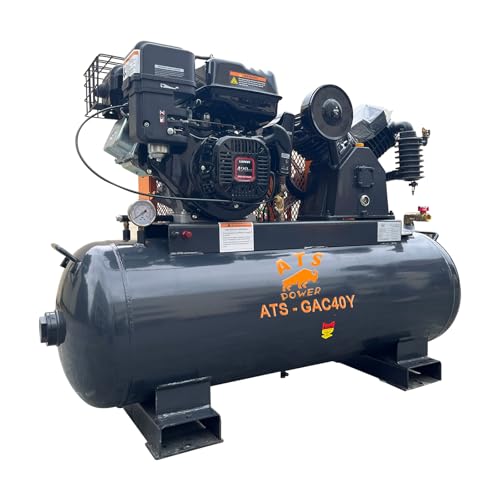 Generic 40-Gallon 15HP Gas Air Compressor |
8.0/10 | Buy |
DEWALT 60-Gallon Stationary Air Compressor
The DEWALT DXCM602.COM is a heavy-duty 60-gallon vertical stationary air compressor engineered for dedicated workshops, featuring an oil-lubricated pump and a 3.7 HP motor delivering 11.5 CFM at 90 PSI up to 175 max PSI. Powered by 208V or 230V electrical service, it is an ideal stationary air source for mechanics, fabricators, and woodworkers running demanding pneumatic tools.
Pros
- High rated air output of 11.5 CFM at 90 PSI easily handles air-hungry continuous tools
- Durable oil-lubricated pump engineered for cooler operation and extended service life
- ASME-certified 60-gallon vertical steel pressure vessel ensures verified safety and high capacity
- Dual-voltage spread-volt motor simplifies integration into 208V or 230V electrical systems
Cons
- Stationary 200-pound footprint requires permanent shop placement and lacks mobility wheels
- Requires a dedicated 208V or 230V high-voltage circuit and cannot run on standard 120V household outlets
- Requires routine maintenance including oil level inspections and periodic pump oil changes
Campbell Hausfeld 60-Gallon Air Compressor
Built for demanding garage and workshop tasks, this stationary compressor combines a 3.7 HP motor with a two-stage cast-iron pump reaching 175 PSI. It provides steady airflow to support high-demand air tools like sprayers, grinders, and sanders.
Pros
- High 175 PSI maximum output pressure
- Durable cast-iron pump rated for longevity
- Large 60-gallon capacity supports sustained pneumatic tool use
- Vertical tank design saves workshop floor space
Cons
- Requires a dedicated 230V to 240V electrical connection
- Heavy 255-pound stationary build is difficult to move
Campbell Hausfeld 80-Gallon Stationary Air
Engineered for automotive repair shops and serious home garages, this stationary Campbell Hausfeld unit combines an 80-gallon ASME tank with a 5 HP motor delivering 16.0 CFM at 90 PSI. Its oil-lubricated cast-iron pump runs at a low 950 RPM, making it a dependable choice for continuous paint spraying, sanding, and air tool operation.
Pros
- Substantial 16.0 CFM delivery at 90 PSI easily powers continuous pneumatic tools like sanders and paint sprayers
- Heavy-duty cast-iron two-cylinder pump runs at a low 950 RPM for smoother operation and reduced thermal stress
- ASME-certified 80-gallon vertical tank maximizes air storage while minimizing workshop floor footprint
- Single-phase 208-230V motor includes overload protection and eliminates the need for an external magnetic starter
Cons
- Stationary footprint and substantial 460-pound weight require permanent shop placement and mechanical assistance during unloading
- Requires dedicated 208-230V single-phase electrical wiring and cannot run on standard 120V household outlets
- Maximum operating pressure caps at 140 PSI, which is lower than some two-stage compressors that reach 175 PSI
NorthStar 2-Stage 24.4 CFM Compressor Pump
Built with full cast iron construction and Swedish steel valves, this NorthStar two-stage pump delivers 24.4 CFM at 90 PSI for demanding pneumatic setups. Its low-RPM operation and V-style cylinder layout prioritize cooling and mechanical durability during heavy use.
Pros
- High airflow rating of 24.4 CFM at 90 PSI
- Heavy-duty FC35 cast iron construction
- Durable Swedish steel floating valve design
- V-style cylinders promote effective heat dissipation
- Low-RPM operation minimizes wear and running temperatures
Cons
- Heavy 135-pound weight complicates mounting and handling
- Substantial 21-inch cubic dimensions require ample space
Klutch 20-Gallon Portable Air Compressor
Featuring a 2.0 HP 120V motor and a 20-gallon tank, the Klutch portable air compressor delivers a rated 4.2 SCFM at 90 PSI for versatile workshop air. Its oil-free pump and wheeled design make it a dependable choice for garage mechanics, woodworkers, and serious DIYers needing steady air storage.
Pros
- Generous 20-gallon air storage capacity provides a substantial buffer for intermittent shop tools
- Delivers a listed 4.2 SCFM at 90 PSI, outperforming smaller pancake compressors for workshop chores
- Oil-free pump design eliminates messy oil changes and allows clean, upright transport
- Rugged rubber wheels and built-in ergonomic handle make moving the 90-pound frame manageable
- Integrated thermal overload protection helps prevent motor burnout during demanding cycles
Cons
- Substantial 90-pound weight makes lifting into truck beds or carrying up stairs difficult without assistance
- Oil-free motor configurations generally produce noticeable operating noise compared to low-RPM lubricated units
- At 4.2 SCFM at 90 PSI, high-draw continuous air tools like sanders or grinders will require recovery pauses
DeWalt DXCM271.COM 27-Gallon Air Compressor
Built for home workshops and garage tasks, this vertical compressor delivers 5.1 SCFM at 90 PSI with a low-maintenance oil-free pump. Its space-saving upright tank fits tight corners, though the 136-pound heft demands effort to transport.
Pros
- Maintenance-free oil-free pump design
- Solid airflow output of 5.1 SCFM at 90 PSI
- Space-saving vertical orientation for garages
- Reliable low-voltage start on standard 110V circuits
Cons
- Heavy 136-pound build limits quick portability
- At 78 dBA, operation remains noticeable indoors
- Tall vertical frame requires ample overhead clearance
Ingersoll Rand 2340N5-V 5 HP Air Compressor
Built for demanding shop environments, this stationary compressor pairs an 80-gallon tank with a 100% continuous duty rating for uninterrupted airflow. Its durable cast iron pump delivers 14.3 CFM at 90 PSI to power heavy-duty pneumatic machinery.
Pros
- Continuous duty cycle supports non-stop commercial workloads
- Rugged cast iron pump engineered for long operational life
- Generous 80-gallon tank maintains ample air reserves
- Strong 14.3 CFM output at 90 PSI
Cons
- Extremely heavy at 435 pounds, making installation difficult
- Requires dedicated 230-volt single-phase electrical wiring
- Tall 68.5-inch height requires ample vertical workshop clearance
Ingersoll Rand 2340L5-V 5 HP Air Compressor
Built for demanding workshop environments, this two-stage compressor provides continuous duty operation through an all-cast-iron design. Its 60-gallon vertical configuration helps conserve valuable floor space while reliably sustaining high-pressure air applications.
Pros
- Durable all-cast-iron construction
- Rated for 100% continuous duty
- Vertical tank configuration saves floor space
- Individually cast cylinders ease maintenance
Cons
- Extremely heavy at 430 pounds
- Requires dedicated 230-volt single-phase power
- Tall 69-inch profile requires significant overhead clearance
Ingersoll Rand 2475N7.5 7.5 HP 80-Gallon Two-Stage
The Ingersoll Rand 2475N7.5 is an industrial-grade 7.5 HP two-stage stationary air compressor pairing an 80-gallon ASME receiver tank with a rugged cast-iron pump rated for 100% continuous duty at up to 175 psig. It provides dependable, high-capacity air storage for professional auto mechanics, commercial garages, and demanding fabrication shops.
Pros
- Durable solid cast-iron two-stage pump engineered for over 15,000 hours of heavy-duty shop service
- True 100% continuous duty rating supports non-stop production in multi-bay automotive and fabrication environments
- Spacious 80-gallon ASME-certified vertical receiver tank stores ample air volume at up to 175 psig
- Extended 2,000-hour oil service intervals when utilizing All Season Select synthetic lubricant
- Individual cylinder casting and one-piece connecting rod simplify preventative maintenance and component access
Cons
- Substantial 611-pound dry weight requires dedicated floor anchoring, mechanical lifting gear for positioning, and a permanent shop footprint
- Demands high-power dedicated electrical service and professional stationary hardwiring rather than standard outlet convenience
- Extended two-year pump warranty coverage requires the separate purchase of the official lubricant start-up kit
Generic 40-Gallon 15HP Gas Air Compressor
Built for demanding pneumatic tools like sandblasters and impact wrenches, this two-stage compressor pairs a 420cc RATO gas engine with a 40-gallon ASME tank. It delivers 24 CFM at up to 175 psi, providing reliable air delivery for off-grid job sites and busy workshops.
Pros
- High 24 CFM output powers demanding pneumatic tools
- Electric and recoil start provide flexible operation
- Durable ASME-certified steel pressure tank
- Oil-free pump minimizes routine maintenance tasks
- Integrated low-oil shutdown protects the engine
Cons
- Very heavy unit at 360 pounds
- Gas engine requires outdoor or well-ventilated placement
- Large footprint demands significant floor space
Frequently Asked Questions
What is the primary mechanical difference between a single-stage and a two-stage air compressor?
The main mechanical difference is the number of compression cycles the intake air undergoes before entering the receiver tank. Single-stage pumps compress atmospheric air directly to final working pressure in one stroke, typically topping out around 135 to 150 PSI. Two-stage compressors route partially pressurized air through an intercooler into a smaller secondary cylinder, reaching up to 175 PSI with greater volumetric efficiency.
Does a two-stage air compressor deliver higher CFM than a single-stage unit?
Yes, two-stage compressors generally deliver higher CFM at elevated working pressures like 90 to 175 PSI. While single-stage units provide adequate volume at lower pressures, their output drops as tank pressure increases. Two-stage pumps maintain steady airflow because cooler operating temperatures preserve air density, making them dependable for high-demand tools like grinders and sanders.
Can a single-stage compressor handle automotive paint spraying?
No, most single-stage compressors struggle with automotive painting because HVLP spray guns demand continuous high-volume airflow. Paint guns frequently consume 10 to 15 CFM, which quickly drains smaller single-stage tanks and leads to pressure drops. When evaluating a two stage vs one stage air compressor for finishing work, two-stage models supply the sustained CFM and tank storage needed for uniform spray patterns.
What electrical circuit requirements do these shop compressors require?
Single-stage portable compressors generally operate on standard 120V household outlets, while stationary two-stage machines require dedicated 230V circuits. Researching which motor is used in air compressor installations prevents unexpected circuit breaker trips during cold starts. High-output 5 HP motors draw significant initial amperage, making proper wiring and breaker sizing essential in 2026.
Is a two-stage compressor worth the higher price for a home garage?
A two-stage compressor is worth the investment if you operate continuous-demand tools like sandblasters or rotary sanders. For basic tasks like tire inflation, brad nailing, and occasional impact wrench use, a single-stage unit offers ample power at a much lower cost. Assessing your specific pneumatic tool CFM requirements ensures you do not overspend on unneeded capacity.
About the author
Tony Carrick is an experienced product researcher and writer specializing in tools, home improvement, automotive maintenance, and consumer equipment. With extensive experience reviewing tools and tackling hands-on renovation projects, he brings a buyer-focused perspective to compressor performance, usability, and overall value.