
Can an Air Compressor Lay on Its Side: Practical Guide for 2026
Learn whether can an air compressor lay on its side for transport or storage in this October 2026 guide covering oil-lubricated and oil-free pump safety.
 By Bob Beacham
Updated October 7, 2026
By Bob Beacham
Updated October 7, 2026

Transporting garage equipment in a truck bed or fitting a bulky pneumatic setup into a crowded trunk often forces DIYers and tradespeople to wonder whether can an air compressor lay on its side without causing mechanical failure. The answer largely depends on whether the pump utilizes an oil-free mechanism or a traditional splash-lubricated crankcase. While compact jobsite units without oil reservoirs handle horizontal transport with relative ease, tipping an oil-lubricated model creates substantial risks of fluid migration and internal fouling. Understanding your specific pump architecture prevents costly motor damage and ruined air lines before you load up for a job.
Beyond the pump internals, positioning any pressurized vessel horizontally introduces mechanical challenges regarding condensation drainage, manifold safety, and vibration dampening. Anyone considering laying down a stand-up air compressor must also account for vulnerable components like copper transfer tubes, delicate pressure switches, and exposed regulator assemblies. Laying a tank flat while under pressure or with trapped tank water can contaminate downstream pneumatic tools with rusty sludge. Taking a few proactive steps before tilting your machine protects critical fittings, ensures clean regulated airflow, and keeps your workshop equipment operating dependably.
| Award | Product | ACR Score About ACR ScoreThe ACR Score is our own rating from 0 to 10, based on performance, design and build, ease of use, and value. It reflects independent research and is never influenced by manufacturers, retailers, or affiliate commissions. Learn more › | |
|---|---|---|---|
| Best Overall |
AstroAI MC3 160 PSI Tire Inflator
|
9.1/10 | Buy |
| Best Budget |
 Lhfacc 150 PSI In-Cab Air Compressor System
|
9.1/10 | Buy |
| Best Premium |
 Craftsman CMXECXM331 33-Gallon Air Compressor
|
8.9/10 | Buy |
 ECOMAX 6-Gallon 150 PSI Portable Pancake Air
|
8.8/10 | Buy | |
 Ironton 3-Gallon Oil-Free Pancake Air Compressor
|
8.6/10 | Buy | |
| Best Value |
 Metabo HPT 6-Gallon Pancake Air Compressor Review
|
8.6/10 | Buy |
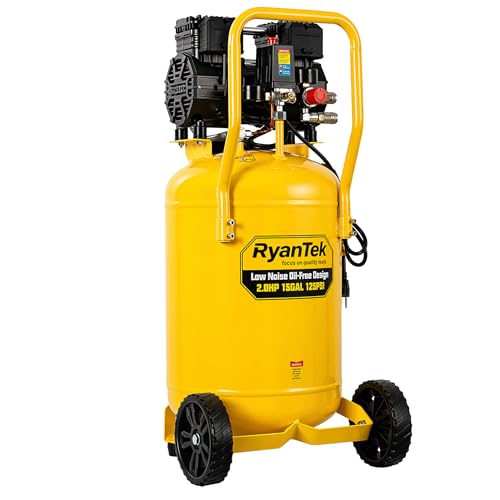 RyanTek 15-Gallon 2HP Air Compressor
|
8.6/10 | Buy | |
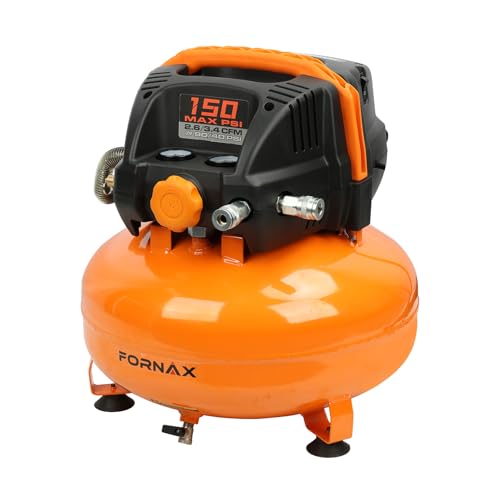 FORNAX 6-Gallon Pancake Air Compressor
|
8.4/10 | Buy | |
 Metabo HPT EC914S 6-Gallon 200 PSI Pancake Air
|
8.3/10 | Buy | |
 Limodot 5-Gallon Quiet Portable Air Compressor
|
8.0/10 | Buy |
AstroAI MC3 160 PSI Tire Inflator
Powered by a versatile three-way system supporting battery, AC, and DC inputs, this dual-motor inflator handles high-pressure car tires and high-volume inflatables with ease. It is an ideal roadside and garage tool for owners of passenger cars, mid-sized SUVs, and outdoor recreational gear.
Pros
- Versatile AC, DC, and cordless battery power options
- Dual modes handle both tires and camping mattresses
- Automatic shut-off prevents over-inflation
- Convenient built-in storage for hoses and accessories
Cons
- Not compatible with heavy-duty truck tires
- Relatively bulky footprint compared to pocket inflators
Lhfacc 150 PSI In-Cab Air Compressor System
Designed for trucks and vans, this tankless system allows drivers to monitor and adjust suspension air springs directly from the cab. Its 150 PSI compressor and electric paddle valve setup deliver fast leveling support without taking up excessive chassis space.
Pros
- Compact tankless layout saves valuable vehicle space
- Generates up to 150 PSI for quick leveling
- Real-time digital readout directly inside the cab
- Complete installation kit with relay and air lines
Cons
- Lacks a reserve tank for pre-pressurized air storage
- Requires routing airlines and electrical wiring into the cabin
Craftsman CMXECXM331 33-Gallon Air Compressor
Built for dedicated workshop tasks and dual-tool operation, this unit delivers up to 175 PSI and 5.1 CFM at 90 PSI. Its upright build conserves floor space while an oil-free motor eliminates routine fluid maintenance.
Pros
- High 175 max PSI output
- Dual quick couplers allow two operators
- Maintenance-free oil-free pump design
- Space-saving vertical tank layout
- Strong 5.1 CFM delivery at 90 PSI
Cons
- Heavy 154-pound total unit weight
- Tall profile demands vertical storage clearance
ECOMAX 6-Gallon 150 PSI Portable Pancake Air
The ECOMAX 6-Gallon 150 PSI Pancake Air Compressor delivers portable, low-maintenance pneumatic power with its 1.5 HP oil-free pump, dual quick-connect couplers, and bundled 10-piece accessory kit. Featuring cold-weather starting support and a flip-up handle, it is an accessible choice for DIYers, trim carpenters, and garage tire maintenance.
Pros
- Comes with a 10-piece accessory kit including an air hose, tire chuck, and blow gun ready out of the box
- Dual quick-connect couplers enable two operators to run pneumatic lines simultaneously
- Oil-free pump design requires zero motor oil maintenance and prevents oil discharge into air lines
- Low-voltage and cold-weather startup capability helps ensure reliable motor turnover in chilly garages
- Flip-up carrying handle and built-in cord bracket simplify transport and tidy storage
Cons
- PVC air hose included in the kit can become stiff and difficult to manage in freezing temperatures
- Not intended for continuous high-demand air tools such as rotary sanders or automotive paint sprayers
- Standard universal motor noise level makes hearing protection advisable during indoor use
Ironton 3-Gallon Oil-Free Pancake Air Compressor
The Ironton 3-Gallon Oil-Free Pancake Air Compressor combines a 0.3 HP motor and 110 PSI max pressure with an ultra-portable 20.6-pound frame and fold-down handle. It is a practical, low-maintenance option for DIY homeowners and hobbyists handling light brad nailing, stapling, and tire inflation.
Pros
- Lightweight 20.6-pound build with a fold-down carry handle makes one-handed portability nearly effortless
- Wide pancake base delivers outstanding stability with a low center of gravity to prevent tipping
- Zero-maintenance oil-free pump means clean discharge air and no messy oil changes
- Protective shroud includes convenient molded wraps for both the power cord and air hose
- Large regulator knob and quick-connect coupler allow fast, intuitive line adjustments
Cons
- Modest 0.3 HP motor and 110 PSI ceiling cannot support continuous high-CFM air tools like sanders or sprayers
- 3-gallon capacity requires occasional recovery pauses during rapid fastener firing
- Bare-tool setup does not include an air hose, tire chuck, or pneumatic nailer out of the box
Metabo HPT 6-Gallon Pancake Air Compressor Review
The Metabo HPT EC711S is a portable 6-gallon pancake air compressor delivering 2.8 CFM at 90 PSI with a 165 PSI tank ceiling and an operating sound level of 73 dB. With its quick 46-second recovery cycle and dual quick couplers, it is an excellent choice for finish carpenters, punch-list contractors, and DIYers running pneumatic nailers.
Pros
- 73 dB operational sound rating is substantially quieter than standard job-site pancake units
- 165 PSI maximum pressure provides ample air storage with a swift 46-second recovery cycle
- Two 1/4-inch universal quick couplers support multi-tool setups right out of the box
- Sturdy steel roll cage protects gauges and the manifold assembly against knocks and drops
- Oil-free 1.0 HP motor ensures low maintenance and reliable cold-weather motor startup
Cons
- At 38.5 lbs, it is slightly heavier than ultra-compact 1-to-3-gallon trim compressors
- Airflow of 2.8 CFM at 90 PSI is designed for intermittent fastening, not continuous rotary tools or paint sprayers
- Bare-tool configuration means air hoses and pneumatic fastening tools must be purchased separately
RyanTek 15-Gallon 2HP Air Compressor
Built for garage workshops and indoor tasks, this vertical compressor combines a quiet 66 dBA dual-cylinder motor with a spacious 15-gallon tank. It supplies a dependable 4.5 CFM at 90 PSI for continuous nailing, spraying, and inflation while conserving floor space.
Pros
- Quiet 66 dBA operation suitable for indoor spaces
- Generous 4.5 CFM output at 90 PSI
- Compact vertical tank saves workshop floor space
- Maintenance-free oil-free pump design
- Integrated wheels make rolling transport straightforward
Cons
- Heavy at 68.3 pounds to lift manually
- Maximum pressure caps at 125 PSI
FORNAX 6-Gallon Pancake Air Compressor
The FORNAX 6-Gallon Pancake Air Compressor delivers 2.6 CFM at 90 PSI and up to 150 PSI of maximum pressure, featuring dual couplers and a lightweight 28.8-pound portable footprint. It is a practical pneumatic power source for DIY homeowners, finish carpenters, and garage hobbyists driving nailers or managing tire inflation.
Pros
- Dual quick-connect couplers allow two nailers to operate simultaneously without adding an external splitter manifold
- Generous 6-gallon air tank capacity with a 150 PSI maximum pressure ceiling provides a dependable air reserve
- Lightweight 28.8-pound profile simplifies one-handed carrying up stairs and transport into work vans
- Maintenance-free oil-free pump eliminates oil checks, oil changes, and mess around finished work surfaces
Cons
- Operating sound output rated at 95 dBA is loud and makes hearing protection necessary, especially in closed rooms
- Airflow output of 2.6 CFM at 90 PSI cannot support continuous-demand tools like sanders, grinders, or paint sprayers
- Supplied as a bare-tool compressor without an included air hose, tire inflator chuck, or pneumatic nailers
Metabo HPT EC914S 6-Gallon 200 PSI Pancake Air
The Metabo HPT EC914S delivers an impressive 200 PSI maximum pressure and 4 CFM at 90 PSI from a 6-gallon tank, giving trim carpenters and remodelers the air volume needed to drive multiple nailers simultaneously. At roughly 41 pounds, it successfully combines high-pressure air storage with practical job-site portability.
Pros
- High 200 PSI tank ceiling stores substantially more usable air than conventional 150 PSI pancake models
- Generous 4 CFM at 90 PSI airflow rating supports multi-tool operation and reduces nailer drive hesitation
- Manageable 41-pound carry weight offers better portability than heavier twin-stack compressor configurations
- Engineered by Metabo HPT to support both lightweight trim nailers and larger framing or roofing guns
Cons
- At 41 pounds, it is noticeably heavier to carry than minimalist 1-to-3 gallon trim-only compressors
- Tank volume and CFM output remain inadequate for continuous high-demand air tools like HVLP sprayers or sanders
- Ships as a bare-tool compressor without included air hoses, pneumatic fittings, or nail guns
Limodot 5-Gallon Quiet Portable Air Compressor
The Limodot 5-Gallon Quiet Air Compressor delivers 2.8 CFM at 90 PSI with an operating noise level of just 68 dB, making it a great match for indoor trim work, tire maintenance, and home workshops. With an 80-second full tank fill time, an oil-free pump, and an included 13-piece accessory kit, this wheeled unit offers solid utility for DIYers seeking quiet performance without routine oil changes.
Pros
- Quiet 68 dB operational sound level suitable for indoor spaces and attached garages
- Strong airflow rating of 2.8 CFM at 90 PSI with rapid 25-second recovery duration
- Maintenance-free oil-free pump ensures hassle-free operation and easy vehicle transport
- Integrated wheel assembly improves mobility around the shop, garage, and jobsite
- Bundled package includes a 25-foot air hose and a 13-piece starter accessory collection
Cons
- Continuous air-hungry tools like rotary sanders or spray equipment will quickly exceed the 2.8 CFM output
- Included PVC air hose can be stiff and prone to kinking in cold garage environments compared to hybrid polymer hoses
- At 5 gallons with a wheeled frame, it has a larger storage footprint than compact pancake or twin-stack trim compressors
Operating, Transporting, and Storing an Air Compressor on Its Side
Determining whether an air compressor can rest on its side requires separating three distinct situations: active operation, temporary vehicle transit, and long-term storage. Under no circumstances should any reciprocating air compressor run while tipped horizontally, because doing so compromises balance, vibration dampening, and mechanical lubrication. For transport and storage, however, the answer depends on pump lubrication, full pressure relief, and moisture drainage. Oil-free units tolerate horizontal transit relatively well when empty, whereas oil-lubricated models demand strict handling to prevent crankcase fluid from entering the cylinder head.
Oil-Lubricated Versus Oil-Free Pump Architectures
The fundamental dividing line between compressors that can lay flat and those that cannot is the pump lubrication mechanism. Splash-lubricated pumps feature an open crankcase holding liquid oil, relying on a mechanical dipper attached to the connecting rod to splash oil across cylinder walls and bearings. If you lay an oil-lubricated compressor on its side, that oil shifts away from the sump and seeps through internal vents. Oil-free pumps instead utilize sealed ball bearings and self-lubricating piston rings made from fluoropolymers such as polytetrafluoroethylene.
Because an oil-free pump contains no pool of liquid inside its crankcase, it eliminates the primary risk associated with tipping or flat transport. Portable models like Metabo HPT pancake compressors or vertical CRAFTSMAN units rely on these dry compression designs specifically to accommodate frequent jobsite movement. Even when turned sideways, an oil-free pump has no oil reservoir capable of fouling the valve plate or intake filter. This design makes oil-free units the preferred choice for mobile contractors hauling tools in car trunks.
Despite their resilience against oil leakage, oil-free compressors still feature internal assemblies that require physical protection during horizontal storage. The motor shaft, eccentric bearing, and piston connecting rod inside an oil-free pump are balanced to operate in a specific orientation relative to gravity. Placing heavy cargo on top of a tipped oil-free compressor shroud can bend the cooling fan cover or distort the housing. While the absence of liquid lubricant removes fluid migration hazards, physical impacts during transit remain a serious risk.
The Mechanics of Oil Migration in Tilted Compressors
When a splash-lubricated compressor rests on its side, liquid in the oil sump flows toward the crankcase breather vent and the cylinder bore. Reciprocating pumps feature an unpressurized breather designed to vent thermal expansion gases while keeping dust out. Tipping the machine causes oil to leak out through this breather port, creating a mess across your vehicle cargo bed or workbench. More dangerously, the fluid can seep past the piston rings and pool directly inside the cylinder head chamber.
If compressor oil enters the valve chamber, it fouls the thin metal reed valves that regulate air intake and exhaust cycles. Coated reed valves become sluggish, fail to seal against the valve plate, and cause severe pressure drops or slow recovery times. In severe instances, an oil-filled cylinder chamber creates hydrostatic lock when the electric motor attempts to cycle. Because liquids do not compress like air, the rising piston strikes the trapped oil, potentially shattering valve plates or stalling the motor.
Reviewing specific compressor pump oil requirements highlights why maintaining correct fluid levels matters after any unexpected tipping event. Standard non-detergent ISO 68 or ISO 100 compressor oils possess high viscosity designed to cling to metal surfaces under heat. Once this thick lubricant enters the copper discharge tube or tank check valve, cleaning it requires substantial mechanical disassembly. Whenever an oil-lubricated machine tips over, you must verify the oil level through the sight glass before attempting to power the unit.
Why Operating an Air Compressor on Its Side Causes Immediate Failure
Running any reciprocating air compressor while it rests on its side almost always leads to catastrophic mechanical breakdown within minutes. In splash-lubricated models, the rotating crankshaft dipper depends on gravity to keep the oil pool centered directly beneath its swing arc. When tilted ninety degrees, the oil pools against the side wall of the crankcase, completely out of reach of the dipper paddle. Without constant lubrication splashing onto the cylinder walls and wrist pin, metal friction creates extreme heat, quickly scoring the cylinder.
Even with oil-free compressors, active operation on their side presents severe functional problems. Manufacturers design vibration dampening rubber isolators specifically to absorb vertical downward shock waves generated by high-speed piston strokes. Operating a unit on its side directs these reciprocating forces horizontally, causing the machine to walk erratically across the floor. This aggressive motion can bend copper unloader tubes, crack soldered fittings, or pull electrical cords out of their strain relief grommets.
Cooling airflow presents another critical reason why compressors must remain upright during continuous operation. Electric induction motors and universal motors incorporate axial cooling fans that draw ambient air through side louvers and expel heat over the aluminum cylinder head. Resting the compressor shroud directly against a shop floor blocks these intake vents, cutting off convective cooling. Without proper ventilation, the thermal overload protection switch will trip quickly, or the motor windings may overheat and suffer permanent insulation damage.
Internal Tank Condensation and Moisture Drain Risks
Compressing ambient atmospheric air generates heat and forces airborne moisture vapor to condense into liquid water inside the steel reservoir. Under normal upright conditions, this acidic water collects at the lowest gravity point of the tank, directly adjacent to the drain valve. Tipping the tank onto its side redistributes that corrosive liquid pool across the side walls and longitudinal welded seams. Left unaddressed, this pooled water strips internal coatings and accelerates structural rust in areas never designed for standing moisture.
Understanding the mechanics behind moisture buildup in air tanks explains why complete water drainage is mandatory before transporting any machine horizontally. When a tank containing sitting condensate is laid flat, the water can slosh upward through the tank bung into the check valve or safety relief port. This moisture carries microscopic rust flakes that can foul delicate check valve seals and contaminate your pressure switch diaphragm. Once you reconnect pneumatic tools, that trapped sludge blows straight into your nailers or spray guns.
The simplest way to eliminate moisture hazards before laying a compressor down is performing a thorough purge while the vessel remains upright. Open the bottom drain valve completely and allow stored tank pressure to blow every droplet of condensation into a rag or catch basin. Once the air pressure drops to zero, leave the valve open for several minutes to vent residual dampness. Performing this quick drainage routine keeps the tank interior dry and prevents rusty water from leaking across your vehicle during transit.
Safe Transport Protocols for Vehicle Trunks and Truck Beds
Transporting a portable compressor safely requires a clear pre-trip protocol to safeguard both the machine and your vehicle interior. First, disconnect the compressor from its power source and depressurize the tank completely by pulling the ring on the ASME safety relief valve or opening the drain cock. Never travel with a pressurized air vessel in a passenger vehicle or trunk, as sudden temperature spikes or road collisions create dangerous pressure hazards. Depressurizing the tank also relieves mechanical tension on check valves and manifold seals.
If you must lay an oil-free pancake or hot dog unit flat, position the machine so its manifold assembly faces upward away from the cargo floor. The pressure switch, air regulator knob, and quick-connect couplers are precision components that break easily under shifting cargo weight. Place the compressor on a thick moving blanket or rubber utility mat to absorb road vibration and prevent metal sliding. Use ratcheting tie-down straps secured through the tubular roll cage or steel carry handle rather than looping straps over plastic shrouds.
For larger oil-lubricated vertical compressors, laying the machine down should always remain a last resort. If vertical transport in a truck bed is impossible due to height restrictions, you must drain the crankcase oil completely into an approved container before tilting the unit. Label the power switch with high-visibility tape reminding yourself that the pump has no oil before you load it horizontally. Once you arrive at your destination, refill the sump with fresh non-detergent compressor oil to the proper mark before attempting startup.
Pre-Startup Verification After Horizontal Transit
Reactivating an air compressor after it has traveled on its side demands careful verification rather than immediate full-load operation. If the unit uses an oil-lubricated pump and was transported horizontally without draining the sump, place it upright on a level surface and let it rest for at least twelve to twenty-four hours. This extended settling period allows any oil that entered the cylinder head or crankcase vent to drain back down into the reservoir. Rushing this step increases the likelihood of hydraulic lock or damaged valve reeds.
Inspect the oil sight glass or dipstick to confirm the crankcase holds the exact manufacturer-recommended volume before plugging the unit into a circuit. If the oil level dropped significantly during transport, locate the leak to ensure oil did not saturate the air intake filter element. A paper or foam air filter soaked in oil restricts intake airflow, causing the pump to pull a vacuum and overheat during compression cycles. Replace any contaminated filter elements immediately to maintain rated CFM delivery and avoid motor strain.
Perform a manual rotation check if your compressor pump features an exposed flywheel or accessible motor cooling fan. Rotate the pump by hand for two full revolutions to verify the piston moves smoothly through its stroke without binding against trapped fluid. Once smooth movement is confirmed, close the tank drain valve and connect the machine to a dedicated 15-amp or 20-amp branch circuit. Allow the pump to build pressure to cut-out threshold while listening for abnormal knocks, hissing leaks, or excessive motor vibration.
Tank Geometry and Structural Stability in Shop Environments
Compressor tank configurations are engineered with deliberate geometric proportions to balance air reserve capacity against physical footprint stability. Pancake tanks, such as those found on Metabo HPT, ECOMAX, and Ironton models, feature low-profile spherical bases with exceptionally wide foot stances. This low center of gravity prevents the compressor from tipping over on uneven framing subfloors or gravel driveways. Storing these pancake models upright preserves their natural stability and protects underside quarter-turn brass drain valves from physical damage.
Vertical stationary and semi-portable compressors, like large 15-gallon or 33-gallon shop units, are built tall to minimize square footage requirements in crowded garages. These vertical vessels rely on heavy steel legs and rubber vibration pads to keep motor weight centered directly above the tank welds. Tipping a tall vertical compressor against a wall or shelf creates an unbalanced resting point that risks crushing external air manifolds or snapping rigid copper transfer lines. If shop floor space is limited, installing a wall-mounted hose reel is far safer than storing a vertical tank horizontally.
Custom onboard pneumatic setups present an exception where horizontal orientation is often engineered directly into the system architecture. Vehicle air systems like the Lhfacc onboard kit utilize compact, sealed 12-volt compressor pumps specifically rated for multi-angle chassis mounting. Because these dedicated automotive compressors lack liquid oil reservoirs and large free-standing air tanks, they operate reliably whether mounted upright or horizontally along frame rails. However, standard workshop and jobsite compressors lack this omnidirectional design and must be operated in their intended upright posture.
Practical Decision Flow for Handling Compressors Horizontally
Before deciding to tilt or lay down any pneumatic equipment, following a quick operational checklist prevents unexpected garage accidents. First, verify whether the pump uses oil-free PTFE technology or splash-lubricated crankcase oil. If the unit contains liquid lubricant, keep it vertical whenever possible, or prepare to drain the sump and let the machine settle before reuse. Second, confirm that the air tank is completely depressurized and purged of condensation through the bottom drain port to prevent internal corrosion and fluid backflow.
Finally, inspect the physical orientation of the tipped machine to ensure delicate components remain elevated above potential impact points. Keep regulator knobs, pressure switches, dual quick-connect couplers, and copper discharge lines facing upward to avoid direct contact with cargo floors. Secure the chassis with quality ratchet straps around reinforced roll-cage tubing or main carry handles rather than plastic motor cowlings. Following these simple precautions ensures your air compressor arrives ready to power your pneumatic tools without unexpected downtime or costly mechanical repairs.
About the author
Bob Beacham is an experienced tools and workshop writer with deep knowledge of power equipment, mechanical systems, and practical DIY applications. His coverage of air compressors, welding equipment, saws, and workshop tools helps translate technical specifications into useful guidance for homeowners and serious DIYers.