
Can You Lay Down a Stand up Air Compressor? Safe Transport and Storage Guide for 2026
Find out if can you lay down a stand up air compressor for transport or storage in October 2026, covering oil drainage, component safety, and upright operation.
 By Clint DeBoer
Updated October 7, 2026
By Clint DeBoer
Updated October 7, 2026

Transporting a tall vertical air compressor in the back of an SUV or pickup truck bed often presents an immediate logistical headache due to limited overhead clearance. Many workshop owners and contractors facing tight vehicle cargo spaces wonder: can you lay down a stand up air compressor without destroying internal pump components or cracking fragile manifold fittings? While the physical impulse is to simply tip the machine onto its side, your compressor pump mechanism, crankcase lubrication system, and pressure vessel design dictate whether horizontal positioning is safe or potentially catastrophic. Before moving or repositioning any upright unit, understanding air compressor oil types and requirements is vital because unmanaged fluid migration creates severe mechanical failure risks.
Operating a standard stand-up compressor while resting horizontally is strictly prohibited because gravity-dependent systems will fail immediately under load. For transport and temporary storage, however, laying the unit down is often feasible if you take precise precautions tailored to whether your pump is oil-lubricated or oil-free. Laying an unserviced compressor on its side can cause crankcase lubricant to flood the cylinder head, foul the intake filter, or dislodge corrosive tank moisture into delicate check valves. Following proven air compressor moisture and safety precautions ensures your pressure vessel stays sound and rust-free throughout transit. Taking the time to evaluate pump design, depressurize the tank, and protect top-heavy controls will keep your pneumatic investment completely safe.
| Award | Product | ACR Score About ACR ScoreThe ACR Score is our own rating from 0 to 10, based on performance, design and build, ease of use, and value. It reflects independent research and is never influenced by manufacturers, retailers, or affiliate commissions. Learn more › | |
|---|---|---|---|
| Best Overall |
BairDplusL 8 Gallon Ultra Quiet Air Compressor
|
9.2/10 | Buy |
| Best Value |
 ALL-TOP Dual Cylinder 12V Air Compressor
|
9.2/10 | Buy |
 BOSTITCH BTFP02012 6-Gallon Pancake Air Compressor
|
9.2/10 | Buy | |
 ECOMAX 6-Gallon 150 PSI Portable Pancake Air
|
8.8/10 | Buy | |
| Best Budget |
 Baococo 8 Gallon Portable Air Compressor
|
8.6/10 | Buy |
 Metabo HPT 6-Gallon Pancake Air Compressor Review
|
8.6/10 | Buy | |
| Best Premium |
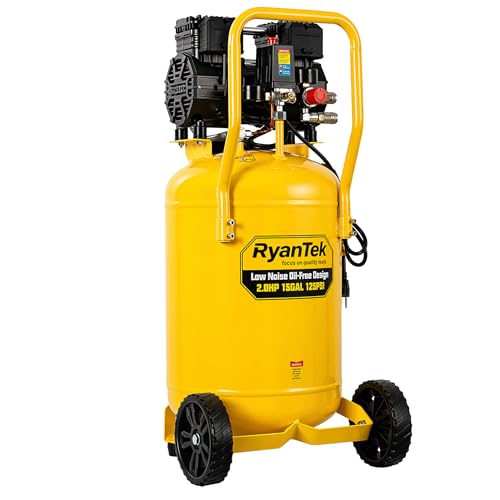 RyanTek 15-Gallon 2HP Air Compressor
|
8.6/10 | Buy |
 VIAIR 88P 12V Portable Air Compressor
|
8.4/10 | Buy | |
 DEWALT DWFP55130 2.5-Gallon 200 PSI Quiet Trim Air
|
8.4/10 | Buy | |
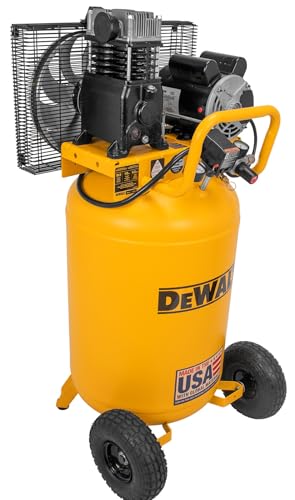 DEWALT 30-Gallon Vertical Portable Electric Air
|
8.3/10 | Buy |
BairDplusL 8 Gallon Ultra Quiet Air Compressor
The BairDplusL 8-Gallon Ultra Quiet Air Compressor features a 1.5 HP oil-free motor and dual silencers to deliver a listed 8.75 CFM at 115 PSI while keeping operational noise at a modest 70 dB. It offers quick 45-65 second recovery times, making it a reliable option for DIYers and woodworkers running nailers, screwdrivers, and light spray equipment.
Pros
- Noticeably quiet 70 dB operation helps reduce auditory fatigue in enclosed garage or basement workspaces
- Quick 45 to 65 second tank recovery minimizes waiting during cyclic pneumatic tool operations
- Oil-free 1.5 HP pump design eliminates routine oil changes and avoids lubricant mist in downstream air lines
- Compact 35-pound weight and 10 x 22 x 22 inch footprint make it easy to transport and store
Cons
- Maximum operating pressure tops out at 115 PSI, which may fall short for tools requiring 125 to 150 PSI
- The product description lists both 8-gallon and 9-gallon tank capacities, creating slight sizing ambiguity
- Coupler style, regulator port sizes, and discharge fitting standards are not specified in the manufacturer documentation
ALL-TOP Dual Cylinder 12V Air Compressor
Built for rapid tire inflation on large trucks and off-road rigs, this dual-cylinder pump pushes an impressive 12.35 CFM flow rate up to 150 PSI. The rugged metal frame, integrated thermal safeguards, and extended 26-foot hose provide reliable utility for heavy-duty vehicle recovery.
Pros
- High 12.35 CFM output swiftly inflates large tires
- Dual aluminum cylinder construction helps dissipate heat
- Generous 26-foot hose reaches all corners of large vehicles
- Equipped with automatic thermal and over-current safety switches
Cons
- Heftier 24-pound build demands extra carrying effort
- Third-party gauges require built-in over-pressure protection
BOSTITCH BTFP02012 6-Gallon Pancake Air Compressor
Delivering 2.6 SCFM at 90 PSI from a 6-gallon 150 max PSI tank, the Bostitch BTFP02012 provides reliable pneumatic output in a 29-pound portable design. It is an ideal match for DIY homeowners, finish carpenters, and punch-list contractors needing low-maintenance air power for trim nailers and inflation tasks.
Pros
- Delivers a steady 2.6 SCFM at 90 PSI with a 150 max PSI ceiling for sequential finish fastening
- Portable 29-pound build and balanced center handle simplify jobsite mobility and vehicle loading
- Dual universal couplers allow two users to run separate nailers without aftermarket splitters
- High-efficiency motor starts smoothly in cold conditions and on properly rated extension cords
Cons
- Airflow output of 2.6 SCFM is not suited for continuous high-demand tools like sanders or spray guns
- Operational sound level of 78.5 dBA is louder than ultra-quiet low-RPM dual-piston models
- Ships as a bare tool without an air hose, blow gun, or pneumatic finish nailers included
ECOMAX 6-Gallon 150 PSI Portable Pancake Air
The ECOMAX 6-Gallon 150 PSI Pancake Air Compressor delivers portable, low-maintenance pneumatic power with its 1.5 HP oil-free pump, dual quick-connect couplers, and bundled 10-piece accessory kit. Featuring cold-weather starting support and a flip-up handle, it is an accessible choice for DIYers, trim carpenters, and garage tire maintenance.
Pros
- Comes with a 10-piece accessory kit including an air hose, tire chuck, and blow gun ready out of the box
- Dual quick-connect couplers enable two operators to run pneumatic lines simultaneously
- Oil-free pump design requires zero motor oil maintenance and prevents oil discharge into air lines
- Low-voltage and cold-weather startup capability helps ensure reliable motor turnover in chilly garages
- Flip-up carrying handle and built-in cord bracket simplify transport and tidy storage
Cons
- PVC air hose included in the kit can become stiff and difficult to manage in freezing temperatures
- Not intended for continuous high-demand air tools such as rotary sanders or automotive paint sprayers
- Standard universal motor noise level makes hearing protection advisable during indoor use
Baococo 8 Gallon Portable Air Compressor
The Baococo 8-gallon portable air compressor pairs a 2HP electric motor with a 150 PSI receiver tank, delivering 2.8 SCFM at 90 PSI. It provides a solid, accessible air source for garage DIYers tackling tire inflation, car detailing, and pneumatic finish nailing.
Pros
- Useful 8-gallon tank capacity cushions air demand better than smaller pancake style compressors
- 150 PSI peak tank pressure accommodates common automotive tire inflators and pneumatic nailers
- Standard 120V 60Hz power compatibility allows easy plug-and-play use in residential garages
- Sufficient airflow rating of 2.8 SCFM at 90 PSI for light woodworking, trim carpentry, and cleaning tasks
Cons
- Continuous high-CFM pneumatic tools like rotary sanders and heavy-duty 1/2-inch impact wrenches will quickly deplete tank reserves
- Contradictory product listing notes an oil-free tank in the title while mentioning regular oil checks in the description, requiring users to inspect pump details before first start
- Does not include an air hose, quick-connect fittings, or downstream regulator accessories in the box
Metabo HPT 6-Gallon Pancake Air Compressor Review
The Metabo HPT EC711S is a portable 6-gallon pancake air compressor delivering 2.8 CFM at 90 PSI with a 165 PSI tank ceiling and an operating sound level of 73 dB. With its quick 46-second recovery cycle and dual quick couplers, it is an excellent choice for finish carpenters, punch-list contractors, and DIYers running pneumatic nailers.
Pros
- 73 dB operational sound rating is substantially quieter than standard job-site pancake units
- 165 PSI maximum pressure provides ample air storage with a swift 46-second recovery cycle
- Two 1/4-inch universal quick couplers support multi-tool setups right out of the box
- Sturdy steel roll cage protects gauges and the manifold assembly against knocks and drops
- Oil-free 1.0 HP motor ensures low maintenance and reliable cold-weather motor startup
Cons
- At 38.5 lbs, it is slightly heavier than ultra-compact 1-to-3-gallon trim compressors
- Airflow of 2.8 CFM at 90 PSI is designed for intermittent fastening, not continuous rotary tools or paint sprayers
- Bare-tool configuration means air hoses and pneumatic fastening tools must be purchased separately
RyanTek 15-Gallon 2HP Air Compressor
Built for garage workshops and indoor tasks, this vertical compressor combines a quiet 66 dBA dual-cylinder motor with a spacious 15-gallon tank. It supplies a dependable 4.5 CFM at 90 PSI for continuous nailing, spraying, and inflation while conserving floor space.
Pros
- Quiet 66 dBA operation suitable for indoor spaces
- Generous 4.5 CFM output at 90 PSI
- Compact vertical tank saves workshop floor space
- Maintenance-free oil-free pump design
- Integrated wheels make rolling transport straightforward
Cons
- Heavy at 68.3 pounds to lift manually
- Maximum pressure caps at 125 PSI
VIAIR 88P 12V Portable Air Compressor
Designed for passenger cars and light trucks with tires up to 33 inches, the VIAIR 88P delivers dependable 120 PSI output directly from a vehicle battery. Its generous 26-foot total reach, built-in gauge, and integrated work light make it a practical emergency companion for road trips and camping.
Pros
- Solid 1.47 CFM flow rate provides brisk inflation
- Generous 26-foot reach easily accesses all four tires
- Built-in LED work light aids dark roadside repairs
- Compact body weighs under five pounds for convenient storage
Cons
- Requires direct battery connection instead of standard 12V outlet
- Limited to a 25-minute duty cycle before cooling
- Not designed for tires larger than 33 inches
DEWALT DWFP55130 2.5-Gallon 200 PSI Quiet Trim Air
The DEWALT DWFP55130 delivers a capable 3.0 SCFM at 90 PSI with a 200 max PSI 2.5-gallon tank, running at a quiet 71.5 dBA on an efficient 12-amp motor. It is an ideal pneumatic power source for trim carpenters, punch-list contractors, and DIYers working on residential circuits.
Pros
- Delivers 3.0 SCFM at 90 PSI with a high 200 max PSI ceiling for rapid pressure recovery during sequential fastening
- Quiet 71.5 dBA sound output makes indoor trim carpentry and remodeling far less disruptive to homeowners
- Low 12-amp draw reduces breaker trips when running on shared 15-amp household circuits
- Integrated roll cage and console protect critical components while supporting horizontal or vertical operation
- Dual quick couplers allow two trim carpenters to connect and work off a single compressor
Cons
- Bare-tool configuration means you must supply your own air hoses, couplers, and pneumatic nail guns
- At 36 pounds, it is heavier to haul up flights of stairs than ultra-compact 1-gallon finish compressors
- Air output of 3.0 SCFM is built for intermittent finish fastening and will not support continuous tools like rotary sanders or sprayers
DEWALT 30-Gallon Vertical Portable Electric Air
Delivering 6.2 SCFM at 90 PSI with a high-capacity 175 PSI max pressure rating, the DEWALT DXCM303 30-Gallon Electric Air Compressor offers substantial air reserves for demanding workshop tools. Featuring rugged pneumatic wheels and a factory high-flow regulator, it is an outstanding mobile solution for garage mechanics and serious DIY woodworkers.
Pros
- Substantial 175 PSI maximum pressure provides longer run time between motor recovery cycles
- Solid airflow output of 6.2 SCFM at 90 PSI supports a wide variety of pneumatic garage tools
- High-flow regulator supplies up to 65% more usable operating pressure to connected hoses
- Heavy-duty pneumatic wheels make rolling this 196-pound upright compressor around the garage practical
Cons
- Substantial 196-pound total weight makes vehicle loading and transport between jobsites difficult without ramps or assistance
- Large vertical shop profile is designed for roll-around floor use rather than hand-carry punch-list applications
Understanding Vertical Compressor Orientation, Transport, and Storage
Addressing whether can you lay down a stand up air compressor requires separating everyday tool operation from temporary vehicle transport or shop storage. You must never run a traditional upright compressor while it rests on its side, as the internal components depend entirely on vertical alignment to function properly. Transporting or storing an upright machine horizontally is possible under specific conditions, but success depends on your pump lubrication system and component protection. Failing to prepare the machine beforehand can lead to severe mechanical damage, oil leaks, or broken brass fittings.
Operating Orientation: Why Running a Vertical Compressor Flat Causes Immediate Damage
Vertical air compressors are engineered strictly to run in an upright position. The internal reciprocating pump, motor mounts, rubber isolation feet, and tank condensation drain all rely on gravity to work as intended. Placing an upright machine horizontally while powering the motor subjects the mechanical assembly to severe abnormal stresses. The cooling airflow generated by the motor shroud and flywheel fan is severely restricted when the chassis rests on the floor.
Vibration dampening is another major factor during active operation. Vertical compressors use balanced rubber feet or pneumatic wheels positioned at the base of the tank to absorb reciprocating harmonic vibrations. When the steel tank barrel is laid directly against a hard workshop floor or vehicle deck, excessive vibration will walk the machine across the surface. This uncontrolled movement can loosen copper discharge tubing, crack tank weldments, and stress the pressure switch manifold.
The Mechanics of Oil-Lubricated Pumps and Fluid Migration
Oil-lubricated reciprocating air compressors rely on a splash-lubrication design inside a dedicated cast-iron crankcase sump. As the crankshaft turns, precision dippers attached to the bottom of the connecting rods dip into the oil reservoir and fling a fine mist across the cylinder walls, wrist pins, and bearings. This entire process relies on the oil remaining pooled level at the bottom of the crankcase. When a splash-lubricated pump is tipped horizontally, the oil pool shifts completely away from the crankshaft dippers.
Laying an oil-filled compressor on its side allows liquid lubricant to flow directly through the internal crankcase breather passages. The oil quickly fills the underside of the piston, migrates past the piston rings, and floods the valve plate inside the cylinder head. In severe cases, the fluid pours into the air intake housing, soaking the paper or foam air filter element. Attempting to start a compressor in this condition causes hydraulic lock, where the non-compressible oil bends the connecting rod or shatters delicate reed valves.
Liquid oil can also seep backward through the unloader valve tube and into the pressure switch enclosure. Oil contamination degrades the rubber diaphragms inside factory pressure switches and compromises electrical contact points. Furthermore, once oil enters the air delivery passages of the tank, it contaminates downstream pneumatic lines and ruins paint spraying equipment. For these reasons, you must never transport or store an oil-lubricated vertical compressor horizontally without draining the crankcase first.
Oil-Free Pumps: Can You Transport Upright Tanks Horizontally?
Oil-free compressors use self-lubricating piston rings manufactured from precision Teflon or PTFE compounds sliding inside friction-resistant cylinder sleeves. Units like the RyanTek 15-gallon or BairDplusL 8-gallon models do not have an open liquid oil reservoir inside their crankcase. Because there is no liquid lubricant to spill, the risk of crankcase fluid migration is completely eliminated when tilting the unit. This mechanical design makes oil-free vertical compressors significantly easier to transport inside passenger vehicles and compact truck beds.
Despite the lack of oil hazards, laying an oil-free upright compressor on its side exposes delicate exterior components to mechanical damage. The top of a vertical air compressor houses the motor, cooling fan, shroud, pressure regulator, and dual quick-connect couplers. These components are positioned high on the frame for convenient access when standing, which makes them vulnerable to impact when the machine is laid flat. The heavy cylindrical steel tank can easily roll, crushing plastic motor covers or shearing brass fittings against the transport floor.
To safely haul an oil-free unit on its side, you must place high-density foam or heavy moving blankets beneath the motor assembly. Supporting the weight of the air tank on wooden blocks prevents the rounded vessel from rotating during transit. Never allow the full dry weight of the steel tank to rest directly on the air manifold, regulator knobs, or factory pressure relief valve. Securing the compressor with ratchet straps over the tank body keeps the machine stable without putting stress on delicate pneumatic controls.
Internal Tank Moisture and Condensation Hazards During Incline
Every reciprocating air compressor generates moisture as a natural consequence of compressing ambient atmospheric air. Atmospheric water vapor condenses into liquid inside the receiver vessel as warm discharge air cools against the steel tank walls. In vertical tanks, this condensation gathers at the lowest point of the bottom convex dome, directly above the drain valve. Gaining a solid grasp of how an air compressor operates internally highlights why moisture collection is unavoidable during regular operation.
When an upright compressor is laid flat on its side, dirty condensation accumulated at the base of the tank shifts toward the top ports. This acidic mixture of water and dislodged rust scale can flow into the internal one-way check valve and discharge ports. When rust particles settle into the rubber seal of the check valve, the valve fails to seal properly, resulting in continuous tank air hissing out through the unloader port. Purging all moisture through the bottom drain valve before laying the compressor down prevents internal contamination.
Multi-Position Exceptions in Portable Compressor Engineering
While standard vertical workshop units cannot be run horizontally, certain specialized portable models are intentionally designed for dual orientation. The DEWALT DWFP55130 trim compressor is an engineered example that is explicitly rated for operation and storage in both vertical and horizontal positions. These multi-position machines incorporate enclosed roll-cage frames, recessed control consoles, and balanced oil-free pump mechanisms. The protective roll cage bears the weight of the tool, preventing ground contact with vital valves and regulators.
In contrast, large stationary or semi-portable vertical compressors like the DEWALT DXCM303 30-gallon unit are designed strictly for upright positioning. Their heavy cast-iron pumps, large flywheels, and tall center of gravity cannot safely support horizontal placement. You should never assume an upright compressor supports horizontal operation unless the manufacturer explicitly specifies dual-position capability on the product data plate. Treating standard upright units as single-orientation machines prevents costly repairs and premature motor wear.
Preparation Sequence: How to Safely Lay Down an Upright Unit for Transport
If you must transport an upright compressor on its side due to vehicle height limitations, you should follow a strict mechanical preparation sequence. First, disconnect the electrical power cord from the outlet and shut off the main pressure switch. Pull the ring on the ASME safety relief valve to confirm the vessel is depressurized, then open the tank drain valve at the bottom. Allow all stored air pressure and accumulated moisture to escape completely until the tank pressure gauge reads exactly zero.
If the compressor features an oil-lubricated pump, the second mandatory step is completely draining the crankcase oil. Remove the oil drain plug located at the base of the pump casting and catch the fluid in a clean drain pan. Thread the drain plug back into place once the crankcase is fully empty, and seal the oil fill breather cap tightly. Transporting a dry pump eliminates the hazard of motor flooding and keeps your vehicle interior clean from oily spills.
Third, assess the drive assembly and motor mounting brackets to protect delicate moving parts. Reviewing different air compressor motor configurations helps clarify how motor mounts, capacitor housings, and belt guards interact under side loading. When placing the compressor down, rest it on the side that keeps the delicate manifold, regulator, and switch assembly pointed upward toward the sky. Use dense foam blocks or rolled moving blankets to elevate the pump head and keep hard surfaces away from copper discharge tubes.
Finally, secure the compressor inside your vehicle using heavy-duty ratchet straps anchored to solid vehicle tie-down rings. Wrap the straps firmly across the steel tank body rather than wrapping them around the handle, motor brackets, or unloader lines. Chock both sides of the rounded pressure vessel with wooden wedges or sandbags to prevent rolling during sudden vehicle stops. Verifying that the machine cannot shift or bounce protects both your vehicle and the compressor chassis from severe transit shocks.
Recommissioning and Safe Startup After Horizontal Transport
Once you reach your destination, unload the compressor and immediately return it to its vertical position on a level surface. Do not attempt to plug the machine into an electrical circuit right away. If the machine is oil-lubricated and was transported without draining the oil, you must allow it to stand upright for at least several hours. This extended settling period gives any fluid that seeped into the upper crankcase galleries time to drain back down into the sump.
If you drained the crankcase prior to travel, refill the pump with fresh non-detergent air compressor oil before plugging in the power cord. Check the oil sight glass or dipstick to confirm the lubricant sits precisely at the center red indicator dot. Avoid overfilling the crankcase, as excess oil causes foaming and excessive oil carryover into your air delivery lines. Inspect the air intake filter housing to verify that no residual fluid has saturated the internal filter material.
Perform an unloaded break-in test before closing the drain valve and building tank pressure. Leave the bottom tank drain valve completely open, plug the power cord into a dedicated electrical circuit, and turn the switch on. Allow the compressor motor to spin freely without head pressure for approximately five to ten minutes. This unloaded run circulates the fresh oil throughout the bearings and purges any tiny pockets of trapped air before full compression load begins.
Critical Mistakes to Avoid When Moving Heavy Workshop Compressors
A frequent mistake when transporting an air compressor on its side is leaving stored air pressure inside the tank. Pressurized vessels represent a severe safety hazard during transit because vehicle collisions or shifting cargo can rupture exterior fittings. A sheared brass drain cock or snapped gauge stem under pressure can turn small fittings into high-velocity projectiles. Always vent the receiver tank down to zero PSI before loading equipment into any vehicle.
Another dangerous practice is using the factory regulator assembly or copper discharge tube as a lifting handle. These brass and copper components are designed strictly for pneumatic flow and cannot support the heavy steel weight of the tank. Pulling or lifting by the manifold bends the copper lines, causes immediate air leaks at compression fittings, and can fracture the cast aluminum regulator housing. Always lift vertical tanks by their dedicated steel transport handles, tank legs, or main vessel shell.
Never leave an upright compressor unsecured inside an open pickup truck bed while resting horizontally. The curved cylindrical profile of an air tank turns the machine into a heavy rolling cylinder when taking sharp corners. If the unit rolls onto its manifold or plastic motor shroud, the resulting impact can bend the motor shaft or break the cast-iron pump cylinder. Taking two minutes to chock the tank with wooden wedges prevents catastrophic equipment loss on the road.
Long-Term Storage and Workshop Placement Principles
While horizontal positioning is an acceptable short-term compromise for transport, long-term storage should always remain vertical. Upright stationary storage keeps the footprint minimal, saving valuable floor space in small garages and busy workshops. It also keeps the internal pressure vessel positioned properly over the bottom condensation drain port. Storing an air compressor flat for months invites moisture to pool against the sidewalls of the tank, accelerating localized internal corrosion along the shell.
In summary, answering whether can you lay down a stand up air compressor comes down to pump design and operational state. Running an upright compressor horizontally is never recommended unless you own an engineered multi-position trim model. Laying a machine flat for transport is entirely safe for oil-free units when fittings are cushioned, and safe for oil-lubricated units provided you drain the crankcase completely beforehand. Taking these sensible precautions ensures your air compressor arrives intact, stays free from oil fouling, and delivers dependable pneumatic power for years to come.
About the author
Clint DeBoer is an experienced tool-industry specialist with decades of involvement in technical media, hands-on product evaluation, and testing methodology. His focus on performance, practical usability, and data-driven comparisons makes his expertise highly relevant to professional air compressors, pneumatic tools, and workshop equipment.