
Is a 150 Psi Air Compressor Good? Practical Guide for 2026
Learn whether Is A 150 Psi Air Compressor Good for home workshops, tire inflation, and pneumatic nailers in this October 2026 technical breakdown.
 By Bob Beacham
Updated October 8, 2026
By Bob Beacham
Updated October 8, 2026

Operating pneumatic nailers, inflation chucks, and impact wrenches requires stable air pressure, but air tank pressure ratings often create confusion among buyers. Many workshops feature machines rated at 150 pounds per square inch, prompting shoppers to question whether Is A 150 Psi Air Compressor Good for their daily workshop requirements. Maximum tank pressure dictates how much compressed air is packed into the reservoir, while delivered volume controls whether your tools operate smoothly. Reviewing our garage air compressor sizing guide demonstrates that pressure storage is only half of the operating equation. A pressure threshold of 150 PSI provides a solid buffer, allowing standard pneumatic tools operating between 70 and 90 PSI to cycle cleanly before the motor restarts.
The true utility of a compressor depends heavily on continuous air volume output rather than peak tank pressure alone. A compact unit capable of reaching 150 PSI easily handles intermittent fasteners, vehicle tire maintenance, and dust blowers. High-demand continuous tools like random orbital sanders or rotary grinders quickly drain small storage tanks, demanding steady volume measured in cubic feet per minute. Understanding our advice on matching air compressors to air tools helps prevent equipment stalls and pump overheating. Balancing maximum tank pressure against delivered airflow ensures your garage or jobsite pneumatic setup remains efficient without tripping household electrical breakers.
| Award | Product | ACR Score About ACR ScoreThe ACR Score is our own rating from 0 to 10, based on performance, design and build, ease of use, and value. It reflects independent research and is never influenced by manufacturers, retailers, or affiliate commissions. Learn more › | |
|---|---|---|---|
| Best Overall |
Goodyear 6 Gallon 150 PSI Oil Free Electric
|
9.2/10 | Buy |
| Best Budget |
 ECOMAX Pancake Air Compressor MAX 150 PSI
|
8.8/10 | Buy |
| Best Premium |
 ECOMAX Air Compressor 6 Gallon 150 PSI Pancake
|
8.8/10 | Buy |
| Best Value |
 8 Gallon Portable Air compressor
|
8.6/10 | Buy |
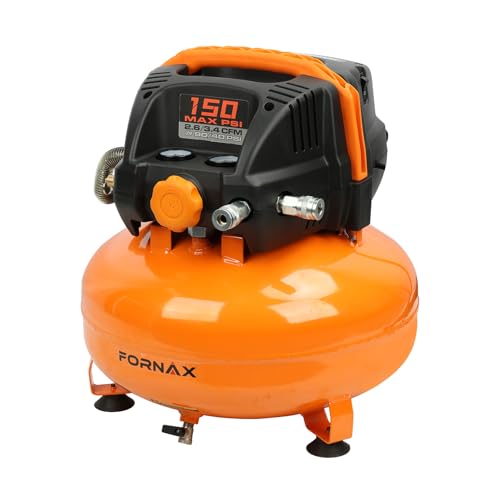 FORNAX Pancake Air Compressor with two couplers
|
8.4/10 | Buy | |
 Klutch 20-Gallon Air Compressor, 2 HP, 120V
|
8.4/10 | Buy | |
 Metabo HPT Portable Pancake Air Compressor
|
8.3/10 | Buy | |
 Goodyear 10 Gallon 150 PSI Oil Free
|
8.3/10 | Buy | |
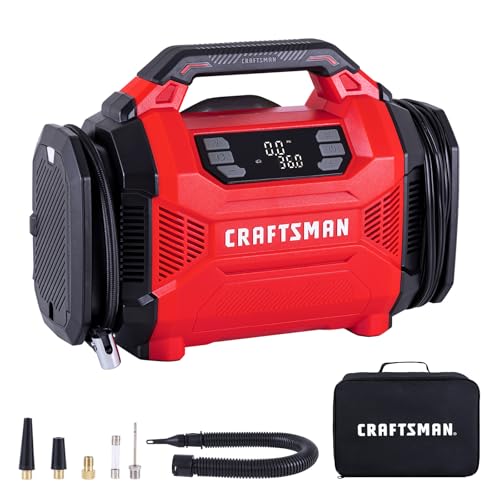 CRAFTSMAN Dual Power Tire Inflator with
|
8.1/10 | Buy | |
 CRAFTSMAN 6 Gallon 150 PSI Oil-Free Pancake Air
|
8.1/10 | Buy |
Evaluating 150 PSI Air Compressors for Workshop and Jobsite Tasks
A maximum pressure rating of 150 PSI provides adequate power for almost every standard workshop maintenance task, DIY carpentry project, and automotive tire service. Pneumatic equipment relies on regulated line pressure rather than raw tank pressure, meaning a 150 PSI reservoir stores ample compressed air to operate tools rated at 90 PSI. The real question is not whether 150 PSI is sufficient, but whether the air compressor delivers the continuous volume your specific tools require. Understanding how operating pressure, tank volume, and air delivery interact ensures you choose equipment capable of sustaining your daily workload without stalling.
The Core Mechanics of 150 PSI Maximum Operating Pressure
Pneumatic air compressors store energy by packing ambient atmospheric air into a sealed metal pressure vessel until reaching a predetermined shut-off threshold. In a 150 PSI rated compressor, the internal pressure switch automatically cuts power to the motor once internal tank pressure reaches 150 pounds per square inch. This stored air sits at a much higher pressure than the standard 70 to 90 PSI required by typical pneumatic tools. An onboard regulator reduces this high internal pressure down to a usable working level before sending air through the discharge hose.
The operating range between motor cut-out and motor cut-in plays a fundamental role in tool stability. Most 150 PSI compressors feature a differential pressure switch that restarts the electric motor when tank pressure drops to around 110 or 120 PSI. This wide 30 to 40 PSI buffer allows you to perform work while the regulator maintains a constant 90 PSI at the tool inlet. Lower-pressure compressors rated at 100 or 125 PSI offer a much narrower buffer, which causes the motor to cycle more frequently. Storing air at 150 PSI essentially maximizes the amount of air held inside a compact tank without requiring a physically larger footprint.
Pressure switch mechanics govern the automated cycling of the electric motor throughout your work session. When tank pressure climbs to 150 PSI, an internal diaphragm trips the mechanical switch, cutting electricity to the motor. Simultaneously, a mechanical unloader valve vents trapped head pressure from the pump cylinder with a brief hiss. This head depressurization allows the electric motor to restart smoothly without fighting against trapped compressed air when tank pressure eventually drops.
Maximum Pressure vs Airflow Delivery: Why CFM Governs Real Performance
New buyers frequently mistake maximum tank pressure for an indicator of total pneumatic power and tool capability. While 150 PSI measures the static force of stored air, cubic feet per minute (CFM) measures the actual volume of air the pump delivers over time. A small inflator can generate 150 PSI to seat a bicycle bead, but its tiny pump cannot move enough air volume to turn a pneumatic ratchet. Mastering the method of calculating air compressor CFM delivery reveals why volume output matters far more than pressure limits for heavy-duty pneumatic tools.
Pneumatic tools consume air volume at specific operating pressures, with standard industry ratings measured at 90 PSI. Many portable 150 PSI pancake compressors deliver between 2.6 and 3.0 SCFM at 90 PSI, powered by 1.0 to 1.5 horsepower electric motors. This air delivery rate easily keeps up with intermittent tools that fire and pause, such as finish nailers and staplers. Continuous air tools like random orbital sanders or die grinders demand 6 to 12 SCFM at 90 PSI, which quickly drains any compact compressor regardless of its 150 PSI storage limit. Matching your tool volume requirements to the pump output prevents line pressure drops that cause pneumatic tools to stall mid-stroke.
Pneumatic Tool Compatibility: What a 150 PSI Compressor Can and Cannot Run
Evaluating tool compatibility requires separating intermittent pneumatic tools from continuous air-consumption equipment. Fastening tools like 18-gauge brad nailers, 16-gauge finish nailers, and framing nailers require only brief pulses of air to drive a piston. A 150 PSI compressor with a 6-gallon tank easily supports framing and trim carpentry, allowing operators to sink nails flush into dimensional lumber without delay. Tire inflation chucks and standard blow guns also operate exceptionally well on 150 PSI systems, providing more than enough pressure to seat beads on passenger vehicles and light trucks.
Significant limitations arise when attempting to operate continuous rotary air tools on compact 150 PSI compressors. Dual-action orbital sanders, cutoff wheels, pneumatic grinders, and HVLP paint spray guns consume vast amounts of uninterrupted airflow. When connected to a 150 PSI pancake unit delivering under 3.0 SCFM, these continuous tools will deplete the stored tank air within fifteen to thirty seconds. Once the tank drops below 90 PSI, the tool loses torque and stalls while the motor runs continuously trying to recover pressure. Automotive mechanics needing continuous air for restoration work require large shop compressors with high CFM delivery rather than portable 150 PSI units.
Automotive impact wrenches occupy a middle ground between intermittent fasteners and continuous rotary tools. A half-inch pneumatic impact wrench uses short bursts of air to break stubborn lug nuts loose, which a 150 PSI compressor can handle for individual wheels. Attempting to rotate tires on multiple vehicles in rapid succession will quickly outrun the air recovery speed of a small portable tank. For quick garage repairs and intermittent DIY mechanical work, a 150 PSI setup provides practical capability as long as you pause between heavy fastener removals.
Tank Capacity Dynamics Across Portable and Workshop Form Factors
Tank size determines how long you can operate pneumatic equipment before the electric pump engages to replenish stored air. Portable pancake models featuring 6-gallon tanks remain the most common consumer style for 150 PSI units, weighing between 27 and 34 pounds for easy transport. These compact tanks provide an ideal balance of portability and air reserve for interior trim carpentry, garage inflation tasks, and furniture assembly. Their wide round base keeps the unit stable on uneven subflooring, while integrated top handles make carrying them up staircases straightforward.
Stepping up to an 8-gallon or 10-gallon portable tank extends operating runtimes without requiring a permanent workshop installation. A 10-gallon vertical compressor equipped with transport wheels offers increased air reserves while occupying minimal floor space in crowded garages. Larger air reserves provide extra cushion during small spray painting jobs or when running multiple brad nailers simultaneously on a project. The pump cycles less frequently during moderate work, which helps reduce thermal buildup in the cylinder head and extends component life.
Stationary and large wheeled shop compressors often incorporate 20-gallon tanks paired with 2.0 horsepower motors delivering over 4.0 SCFM at 90 PSI. A 20-gallon 150 PSI machine bridges the gap between lightweight jobsite units and commercial two-stage cast-iron installations. This expanded tank volume allows automotive hobbyists to operate air ratchets, small spray guns, and intermittent impact tools with minimal cycle interruption. While sacrificing the one-handed portability of a pancake model, a larger tank maximizes the practical utility of 150 PSI storage for dedicated workshop spaces.
Pump Architecture: Oil-Free Convenience vs Heavy-Duty Lubricated Systems
Most consumer and prosumer 150 PSI compressors utilize oil-free pump mechanisms built with durable Teflon-coated piston rings and aluminum cylinders. Oil-free pumps eliminate the need for regular crankcase oil checks, fluid top-offs, and routine oil changes. They can be transported lying flat in a car trunk or truck bed without the risk of oil leaking across upholstery or tools. Oil-free pumps also discharge clean air free of oil mist, making them well suited for painting tasks and delicate woodwork.
Operating duty cycle represents the primary tradeoff associated with compact oil-free pump designs. Many oil-free consumer compressors are engineered around a 50 percent duty cycle, meaning the pump should rest as long as it runs to dissipate heat. Running an oil-free motor continuously under heavy tool demand can overheat the compression chamber and degrade the Teflon seals prematurely. Traditional splash-lubricated cast-iron pumps handle continuous operation better, but they add substantial weight and require regular fluid maintenance. For DIY garage hobbyists and residential contractors, the zero-maintenance convenience of an oil-free 150 PSI pump usually outweighs the higher duty cycle of oil-lubricated units.
Cylinder construction and cooling airflow play critical roles in the service life of oil-free pumps. Aluminum pump heads with cast cooling fins help dissipate the intense heat generated during single-stage compression cycles. Built-in electric cooling fans direct ambient air over the cylinder shrouds to lower operating temperatures during extended runs. Keeping the air intake filter clean prevents abrasive particulate matter from entering the compression chamber and scoring the precision cylinder walls.
Electrical Circuit Demand and Cold-Weather Starting Reliability
Electric air compressors place considerable strain on residential electrical branch circuits during initial motor startup. A 1.0 to 1.5 horsepower induction motor requires an inrush of starting amperage that can momentarily surge past normal operating levels. Operating a 150 PSI compressor on a standard 120-volt 15-amp household circuit that already powers overhead lights or bench tools can easily trip the circuit breaker. Connecting the compressor to a dedicated 20-amp garage receptacle prevents unexpected interruptions and protects the electric motor from low-voltage strain.
Cold ambient temperatures present another operational challenge for electric air compressor motors. When temperatures drop below freezing, cold air increases mechanical resistance inside the pump while unloader valves may stiffen. Many modern 150 PSI portable compressors feature low-voltage and cold-weather starting systems designed to bleed trapped head pressure and enable smooth motor spin-up. If extra reach is required on a cold jobsite, operators should always extend their reach using longer 50-foot air hoses rather than long, light-gauge electrical extension cords. Undersized extension cords cause severe voltage drop, causing the motor to hum, overheat, and trip thermal protection switches.
Moisture Management, Condensation Purging, and Tank Longevity
Compressing atmospheric air naturally generates substantial thermal energy, which cools and produces liquid condensation inside the metal storage vessel. Moisture collects at the bottom of the tank during every compression cycle, creating an environment ripe for internal corrosion if left unmanaged. Water accumulated inside the tank also robs valuable storage volume, effectively shrinking your usable air buffer over time. Furthermore, standing water can travel through discharge hoses into pneumatic nailers and spray guns, causing internal tool corrosion or ruining delicate paint finishes.
Purging moisture daily through the bottom drain valve is critical for maintaining tank structural integrity and operational safety. Standard needle-style petcock valves can be difficult to turn and often clog with rust debris over months of use. Many workshop owners upgrade their routine by installing an automatic drain valve or retrofitting an accessible quarter-turn brass ball valve to make draining effortless. Depressurizing the tank completely and opening the drain valve after every work session ensures that water and scale escape before corrosion weakens the steel walls.
Air Hose Diameter and Pressure Drop Considerations
The internal diameter of your air hose significantly impacts the actual pressure delivered to pneumatic tools. Standard quarter-inch air hoses introduce friction and restriction, causing noticeable dynamic pressure drops over lengths of fifty feet or more. Upgrading to a three-eighths-inch inner diameter hose reduces line friction and preserves steady pressure at the tool coupler. Quick-connect brass fittings and restrictive couplers can also choke air delivery even when the tank gauge reads a solid 150 PSI. Ensuring unrestricted airflow through quality hoses allows your pneumatic tools to receive the full benefit of your compressor output.
Coupler choice and hose material also influence daily workflow on the jobsite or in the garage. Lightweight polyurethane hoses resist kinking and remain flexible in sub-freezing temperatures, making them preferable to stiff rubber lines. Standard industrial style quick-connect plugs should be inspected periodically for damaged rubber O-rings that bleed stored tank pressure. Installing high-flow fittings can improve airflow volume to thirsty tools without requiring a higher tank pressure setting. Taking care of your downstream air distribution setup ensures that air pressure generated by the pump reaches your pneumatic equipment efficiently.
Noise Levels, Manifold Features, and Workshop Ergonomics
Operational noise is a major consideration for anyone working in residential garages, basements, or enclosed interior rooms. Traditional open-frame 150 PSI pancake compressors powered by high-RPM universal motors can generate sound levels reaching 90 to 95 decibels. This intense noise level can quickly cause hearing fatigue and disrupt household members during indoor trim work. Ultra-quiet dual-piston compressors running at lower motor RPMs maintain sound levels around 65 to 70 decibels, allowing normal conversation while the pump recharges. Checking decibel ratings before buying helps ensure your compressor fits your specific acoustic environment.
Manifold design and gauge clarity directly affect daily user experience on the jobsite. Quality 150 PSI compressors feature dual pressure gauges that clearly display both internal tank pressure and regulated tool output simultaneously. Integrated dual quick-connect couplers allow two operators to run separate finish nailers or staplers without swapping hoses back and forth. Sturdy protective consoles, rubber vibration-dampening feet, and cord-wrap brackets keep the unit organized and prevent damage when loading gear into work vehicles.
Summary: When a 150 PSI Air Compressor Is the Right Choice
A 150 PSI air compressor represents an excellent investment for homeowners, woodworkers, and general contractors who need reliable pressure for nailing, stapling, blowing, and tire maintenance. The 150 PSI storage ceiling provides a generous pressure cushion that keeps intermittent pneumatic tools operating consistently at peak force. As long as you do not expect a compact 2.6 to 4.0 CFM pump to power continuous air sanders or commercial spray equipment, a 150 PSI machine delivers outstanding versatility. Inspecting delivered CFM at 90 PSI, selecting an appropriate tank capacity, and performing regular condensation maintenance ensures your compressor delivers dependable service for years to come.
Evaluating your daily workspace and power availability will confirm whether this compressor category matches your pneumatic ambitions. Pairing a 150 PSI pump with dedicated twenty-amp electrical circuits eliminates breaker trips during cold morning starts. Maintaining a daily tank draining routine preserves the steel pressure vessel and protects pneumatic tools from internal moisture damage. When selected with realistic airflow expectations, a 150 PSI compressor remains one of the most practical and reliable power tools in any workshop.
About the author
Bob Beacham is an experienced tools and workshop writer with deep knowledge of power equipment, mechanical systems, and practical DIY applications. His coverage of air compressors, welding equipment, saws, and workshop tools helps translate technical specifications into useful guidance for homeowners and serious DIYers.