
How to Drain a Air Compressor: Practical Workshop Guide for 2026
Master how to drain a air compressor safely to eliminate internal tank rust and protect pneumatic tools with this complete October 2026 workshop guide.
 By Glenda Taylor
Updated October 8, 2026
By Glenda Taylor
Updated October 8, 2026

Moisture accumulation inside a steel air receiver tank is an unavoidable physical consequence of pneumatic compression. Every time an electric motor or gas engine draws ambient atmosphere into the pump cylinder, airborne humidity condenses as the heated compressed air cools against the metal tank walls. If left unchecked, this standing pool of acidic water corrodes the internal receiver tank, contaminates downstream air lines, and ruins delicate pneumatic tools. Understanding how to drain a air compressor protects your mechanical equipment from premature failure and keeps moisture from ruining fine spray finishes or gumming up nailer pistons.
Regular tank maintenance is just as essential as tracking pump lubrication or choosing an air compressor with the right tank capacity for your workshop. While many factory setups rely on stubborn needle petcocks, modern workshops frequently upgrade to quarter-turn ball valves or electronic timed drain valves to streamline daily purging. Pairing consistent moisture removal with proper compressor pump oil maintenance ensures your pneumatic system delivers dependable pressure for years to come.
| Award | Product | ACR Score About ACR ScoreThe ACR Score is our own rating from 0 to 10, based on performance, design and build, ease of use, and value. It reflects independent research and is never influenced by manufacturers, retailers, or affiliate commissions. Learn more › | |
|---|---|---|---|
| Best Overall |
HK 10-Inch Air Compressor Drain Kit
|
9.2/10 | Buy |
| Best Premium |
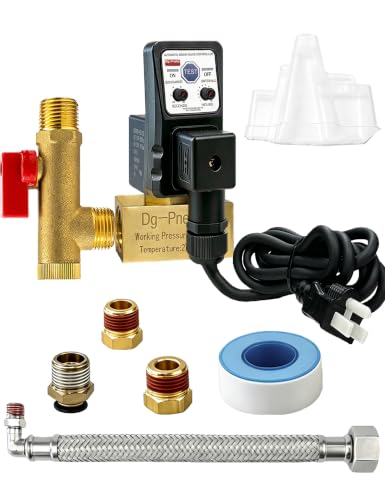 Dg-Pnetic Electronic Auto Drain Timer Valve Kit
|
9.2/10 | Buy |
| Best Budget |
 SUNROAD 1/4-Inch NPT Male Brass Mini Ball Valve
|
9.1/10 | Buy |
| Best Value |
 Hromee 10-Inch Extended Tank Drain Valve Kit
|
8.9/10 | Buy |
 Reluen 1/4-Inch Male NPT Brass Air Compressor
|
8.6/10 | Buy | |
 Ingersoll Rand EDV200 1/4-Inch NPT Electronic
|
8.4/10 | Buy | |
 SUNROAD 10-Inch Compressor Tank Drain Kit
|
8.3/10 | Buy | |
 QWORK Automatic Timed Condensate Drain Valve
|
8.3/10 | Buy | |
 SUNROAD Automatic Electronic Air Compressor Tank
|
8.3/10 | Buy | |
 LEONTOOL 1/4-Inch Compressor Drain Valve 2-Pack
|
7.8/10 | Buy |
HK 10-Inch Air Compressor Drain Kit
This assembly kit relocates hard-to-reach compressor drain valves using a flexible 10-inch braided stainless steel line for easier moisture draining. Pre-coated sealant and an included brass adapter help secure airtight connections up to 175 PSI.
Pros
- Durable stainless steel braided hose construction
- Pre-coated thread sealant minimizes air leaks
- Includes adapter for 3/8-inch and 1/4-inch fittings
- Shut-off valve allows connecting additional extensions
Cons
- Working pressure capped at 175 PSI
- 10-inch length may be short for taller tanks
- Maximum temperature limit of 200 degrees Fahrenheit
Dg-Pnetic Electronic Auto Drain Timer Valve Kit
The Dg-Pnetic electronic auto drain timer valve automates tank moisture purging on a 1-to-12 hour cycle to prevent internal tank rust and downstream tool damage. Equipped with 1/4-inch, 3/8-inch, and 1/2-inch NPT adapter bushings and a 120V solenoid, it is an essential hands-free upgrade for garage and workshop compressor tanks.
Pros
- Eliminates the tedious chore of crawling under compressor tanks to manually operate stiff thumb petcocks
- Supplied with 1/4-inch, 3/8-inch, and 1/2-inch NPT bushings for immediate fitment on most residential and commercial tanks
- Programmable 1 to 12 hour cycle timer prevents excessive air depletion while maintaining dry tank conditions
- Built-in LED diagnostic light verifies cycle activity at a glance
Cons
- Requires an accessible 120V electrical outlet near the compressor tank drain location
- Requires periodic manual cleaning of the internal filter screen to prevent mineral scale clogs
- High-pressure purge burst can splatter moisture if not fitted with a discharge tube or aimed into a catch basin
SUNROAD 1/4-Inch NPT Male Brass Mini Ball Valve
The SUNROAD 1/4-inch MNPT brass mini ball valve replaces sticky factory drain petcocks with a quick quarter-turn lever rated for up to 150 PSI. It offers garage DIYers and shop owners a durable, corrosion-resistant solution for blowing out moisture and sediment from air receiver tanks.
Pros
- Quick 90-degree quarter-turn lever eliminates hand fatigue caused by stubborn thumb-twist petcocks
- Solid brass construction resists rust and corrosion caused by standing tank condensation
- Supports up to 150 PSI working pressure across extreme temperature ranges from -65°F to 250°F
- Design without internal O-rings removes a common point of rubber seal deterioration
Cons
- Unthreaded discharge outlet prevents threading a drain line or elbow directly onto the valve exit
- 150 PSI working pressure limit is unsuitable for high-pressure two-stage air compressors running up to 175 PSI
- Requires applying your own PTFE tape or anaerobic thread sealant on the male NPT threads before installation
Hromee 10-Inch Extended Tank Drain Valve Kit
Draining air compressor moisture is significantly easier with this extended kit, which relocates awkward underside petcocks to an accessible position. Built with a flexible braided steel line and a chrome-plated brass shutoff valve, it suits workshop owners seeking hassle-free daily maintenance.
Pros
- Braided steel hose resists kinking and physical wear
- Chrome-plated brass valve resists moisture corrosion
- Rubber-wrapped lever handle provides comfortable grip
- Includes adapters and thread tape for easy setup
Cons
- 10-inch reach may be short for large upright tanks
- 175 PSI hose limit restricts higher-pressure compressors
Reluen 1/4-Inch Male NPT Brass Air Compressor
The Reluen 1/4-inch male NPT hand-turn petcock is a solid brass drain valve rated up to 150 PSI, built for manual moisture drainage on compressed air tanks. It provides garage DIYers and mechanics with a reliable, corrosion-resistant replacement for stuck or leaking factory drain plugs.
Pros
- Solid brass body resists rust and corrosion caused by internal tank water buildup
- Standard 1/4-inch male NPT threading fits common compressor female drain bungs
- Rated up to 150 PSI to match common homeowner and garage compressor tanks
- Winged petcock head enables manual draining without searching for hand tools
- Compact overall footprint fits low ground-clearance compressor configurations
Cons
- Manual hand-turn operation requires reaching under the tank compared to extended ball-valve kits
- Over-torquing the winged petcock handle with pliers can bend or damage the shutoff wings
- Requires proper application of thread sealant tape during install to avoid slow seeps
Ingersoll Rand EDV200 1/4-Inch NPT Electronic
The Ingersoll Rand EDV200 is an automated 110/120V electronic drain valve featuring an adjustable timer and 1/4-inch NPT connection to purge tank moisture automatically. It is a dependable maintenance upgrade for shop owners and home garage woodworkers seeking to protect air tanks from internal rust without manual petcock draining.
Pros
- Takes the guesswork out of moisture maintenance with fully automated, interval-based tank purging
- Adjustable dials let you adapt drain cycles to high-humidity summer seasons or low-demand winter months
- Standard 1/4-inch NPT threading fits a broad variety of compressor tanks, drop legs, and air dryers
- Solid 2.3-pound build quality engineered by Ingersoll Rand for demanding shop environments
Cons
- Requires a nearby standard 110/120V electrical outlet to power the valve timer mechanism
- Audible discharge blasts during automatic purges can startle occupants in small attached garages
- Does not include an upstream strainer, meaning heavy scale from neglected tanks could foul the valve seat
SUNROAD 10-Inch Compressor Tank Drain Kit
Draining moisture prevents compressor tank rust, and this SUNROAD kit simplifies routine maintenance with a flexible braided steel line and an accessible quarter-turn shutoff. It provides a practical upgrade for standard 1/4-inch and 3/8-inch drain ports operating under 175 PSI.
Pros
- Durable braided steel hose prevents kinks
- Corrosion-resistant chrome-plated brass valve
- Complete installation kit with clamps and tape
- Rubber-coated handle allows easy quarter-turn operation
Cons
- 10-inch hose may be short for large tanks
- Working pressure is limited to 175 PSI
- Requires manual operation after every compressor use
QWORK Automatic Timed Condensate Drain Valve
The QWORK Automatic Timed Condensate Drain Valve is an electric programmable purge valve engineered to automate moisture drainage on air compressor tanks, inline dryers, and filter drops. With adjustable open durations from 0.5 to 10 seconds and intervals from 0.5 to 45 minutes, it is ideal for busy workshop owners, mechanics, and woodworkers looking to prevent internal tank rust without manual petcock hassles.
Pros
- Programmable open and interval knobs provide flexible drainage schedules tailored to workshop humidity levels
- Built-in manual review button allows fast diagnostic cycling and confirms leak-free connections
- Comes packaged with connecting elbow, exhaust hose, and thread tape for simplified plumbing
- Standard 1/2-inch NPT inlet matches typical industrial air receiver tank drain ports
Cons
- Requires access to an electrical power source near the compressor base to operate the solenoid timer
- Discharges on a fixed timer rather than sensing actual water accumulation levels, resulting in minor air loss during dry runs
- Can experience valve seat sticking if heavy rust flakes or scale from older tanks enter without an upstream screen
SUNROAD Automatic Electronic Air Compressor Tank
The SUNROAD Automatic Electronic Tank Drain Kit automates compressor moisture maintenance by purging water and oily sludge on an adjustable 0.5-50 minute cycle. Powered by standard 110V-120V current and equipped with an inline isolation ball valve and strainer, it is an essential upgrade for garage mechanics and woodworkers seeking to protect their pressure vessels from internal rust.
Pros
- Automates daily tank draining with easily adjustable cycle interval and purge duration dials
- Built-in ball valve and strainer allow quick isolation and screen cleanout without emptying the air system
- Supplied with a flexible braided stainless steel discharge tube and multiple brass plumbing adapters
- Plugs into standard 110V-120V household wall outlets with an IP65 rated timer enclosure
Cons
- Requires an accessible 110V-120V electrical outlet positioned near the bottom of the compressor tank
- Sudden discharge bursts create a sharp air hiss that can be startling in quiet, enclosed home garages
- Minimum operating ambient temperature of 32°F means condensation can freeze in unheated winter shops
LEONTOOL 1/4-Inch Compressor Drain Valve 2-Pack
Built from galvanized brass, this two-pack of drain valves provides quick-turn moisture and oil release for compatible compressor tanks. The winged handles allow fast manual operation, though the reverse left-hand threading requires specific matching ports.
Pros
- Durable rust-proof galvanized brass construction
- Convenient wing handle enables easy manual drainage
- Includes sealing tape to prevent leaks
- Versatile for air, gas, liquid, and steam applications
Cons
- Reverse left-hand threading restricts universal fit
- Incompatible with standard right-hand threaded ports
Complete Guide to Draining Moisture and Protecting Compressed Air Systems
Purging liquid condensate from an air receiver tank is the single most vital maintenance procedure for any compressed air installation. Water naturally separates from compressed air during normal cycling, collecting at the lowest gravity point of the steel vessel. Without an established drain routine, accumulated moisture rots the tank from the inside out, decreases usable storage volume, and carries abrasive rust scale into your pneumatic tools. Taking the time to empty the reservoir after every work session safeguards your equipment and maintains consistent air delivery.
The Thermodynamics of Tank Condensation
Atmospheric air always contains water vapor, and compressing that air intensifies the moisture density. When a compressor pump draws in ambient air at atmospheric pressure and squeezes it into a compact tank volume, the air heats up dramatically. As this heated air enters the steel receiver tank, the metal walls act as a heat exchanger, cooling the compressed air down toward ambient room temperature.
Cool air cannot hold as much moisture vapor as hot air, which forces water to condense out of suspension into liquid droplets. These droplets trickle down the tank walls and form a standing puddle at the base of the tank. In humid environments, a typical compressor running through several duty cycles can generate a surprising volume of water in a single afternoon.
Leaving water inside the tank causes severe chemical oxidation because compressed air is rich in oxygen. The standing condensate reacts with the bare internal steel, creating iron oxide sludge that flakes off into the drain port. Over time, internal rust thins the vessel walls, compromising structural integrity and creating a severe tank rupture hazard.
Critical Safety Preparations Before Opening the Drain Port
Discharging moisture from a pressurized vessel requires basic safety precautions to prevent personal injury and workshop mess. Compressed air can eject standing dirty water, rust scale, and oil droplets at high velocity when a drain port cracks open. Always wear impact-rated safety glasses to protect your eyes from high-speed debris and chemical mist.
Hearing protection is equally essential when draining a receiver tank that holds high pressure. The sudden release of air rushing through a small drain orifice produces sound levels that can easily exceed ninety decibels in an enclosed garage or shop. Using earplugs or earmuffs prevents auditory fatigue and long-term hearing damage during discharge cycles.
Managing tank pressure before opening the valve makes the draining process far cleaner and safer. You should avoid opening a drain valve when the receiver tank is fully pressurized to one hundred and fifty or two hundred pounds per square inch. Bleeding the tank pressure down to approximately ten to twenty pounds per square inch provides enough force to expel heavy water and sludge without blasting dirty condensate across your workshop floor.
Step-by-Step Procedure for Manual Tank Draining
The standard manual draining process begins by shutting down the compressor and disconnecting it from its power source. Turn the pressure switch to the off position, then unplug the electrical cord or disconnect the branch circuit switch. This step ensures that the motor cannot suddenly kick on while your hands are working near the tank base or drain fittings.
Locate the drain port, which sits at the lowest point on the bottom of the receiver tank. Place a shallow catch pan, shop towel, or bucket directly beneath the drain valve to collect the expelled liquid. If your compressor is a portable pancake or hot dog model, position the unit on a flat surface where the drain port sits directly over the container.
Slowly turn the drain valve counterclockwise to crack the seal and allow trapped air pressure to push the water outward. Keep your face away from the discharge stream as dark, rust-tinted water flows into your collection pan. Allow the port to stay open until the hissing air turns completely dry and no liquid droplets emerge.
Tilt portable compressors slightly toward the drain opening during the final stage of discharge. Horizontal and pancake tanks often feature curved bottoms where pools of water can linger away from the central port threads. A gentle tilt ensures complete evacuation of moisture before you turn the valve clockwise to seal the tank closed.
Comparing Drain Valve Types: Factory Petcocks vs. Ball Valves
Most entry-level air compressors ship from the factory with inexpensive brass thumb petcocks or knurled screw valves, such as compact hand-turn models. These valves feature compact wing handles that tuck close to the tank bottom, making them suitable for low-clearance applications. However, their small internal needle passages easily clog with rust scale, and their stiff wings can cause severe hand strain over time.
Replacing a finicky thumb petcock with a quarter-turn brass mini ball valve transforms daily maintenance. Ball valves utilize a polished brass or chrome-plated sphere with a central bore that opens fully with a simple ninety-degree handle rotation. This direct pathway provides an unobstructed flow that sweeps rust scale and thick sludge out of the tank without catching debris in narrow needle threads.
Ball valves also offer clear visual confirmation of their open or closed status based on handle orientation. When the rubber-coated lever runs parallel to the valve body, the port is open; when perpendicular, the port is completely closed. This simple visual cue prevents accidental pressure leaks before you power up your unit for a new work session.
Extended Drain Hose Assemblies for Difficult Tank Orientations
Large upright compressors and heavy horizontal shop tanks often have drain ports located directly beneath the tank shell, mere inches above the floor. Kneeling on concrete to reach an inaccessible drain petcock under a heavy tank discourages regular draining. When maintenance is physically frustrating, moisture accumulates neglected inside the tank for months.
Installing an extended tank drain kit moves the drain valve out to an easily accessible location. These kits feature a ten-inch flexible stainless steel braided hose rated for high working pressures up to one hundred and seventy-five pounds per square inch. An elbow fitting threads directly into the bottom port, routing the hose outward toward the compressor leg or outer frame.
Mounting the brass shut-off valve on the compressor exterior allows you to purge the receiver with a quick flick of a lever. Most extension kits supply hex bushing adapters, such as three-eighths-inch male to one-quarter-inch female fittings, accommodating standard tank port sizes. Securing the hose with routing clamps keeps the assembly rigid against machine vibration during motor operation.
Automating Moisture Purging with Electronic Timer Valves
Commercial workshops and busy home garages benefit greatly from automatic electronic drain assemblies that eliminate manual labor entirely. Automatic timer valves utilize an electric solenoid valve governed by an internal dual-dial timer. The valve opens on a set schedule, purging collected condensate automatically throughout the workday without manual intervention.
Electronic drain valves feature adjustable cycle controls that allow you to customize both discharge duration and discharge intervals. You can configure the discharge time to open from half a second up to ten seconds, while setting the pause interval anywhere from thirty seconds up to forty-five or fifty minutes. In humid environments, setting frequent short purges prevents liquid water from ever reaching the main air distribution manifold.
Premium automatic setups incorporate integrated ball valves and mesh strainers before the solenoid inlet. Trapping rust flakes and scale before they enter the solenoid mechanism prevents valve seats from jamming open and leaking air. Testing buttons and LED indicators allow you to verify proper electrical cycling and clear trapped sludge on demand.
Establishing an Effective Drain Frequency Schedule
Determining how often you should purge your air receiver tank depends on your workspace humidity levels and daily compressor usage. For casual DIY homeowners inflating tires or running occasional brad nailers, draining the tank at the end of every operating session is ideal. Never allow an air compressor to sit pressurized in an unheated garage or basement between infrequent projects.
Production workshops and auto restoration facilities running continuous air tools demand daily or multi-shift draining. High air consumption means the pump continuously cycles fresh ambient moisture into the receiver tank, creating rapid water buildup. Pairing continuous operations with our guide to understanding compressor CFM output highlights how higher air volume directly correlates with accelerated moisture generation.
Climate conditions also dictate seasonal adjustments to your maintenance routine. Summer months with elevated relative humidity produce substantially more condensation than dry winter conditions. If you plan to store your compressor unused for several months, fully depressurize the vessel and leave the manual drain valve cracked open to let residual humidity evaporate freely.
Diagnosing and Fixing Clogged, Leaking, or Stuck Drain Valves
When you open a drain valve and nothing comes out despite a pressurized tank, rust sediment has likely plugged the port orifice. Never attempt to poke sharp metal objects into an open drain port while the vessel holds high pressure. Completely depressurize the tank through an air chuck or tool coupler, unthread the drain valve assembly, and clear the hardened scale with a flexible wire probe.
If a drain valve continues to hiss air after you attempt to close it, debris has likely lodged inside the valve seat or the internal seals have degraded. Wrapping the male threads with fresh PTFE thread seal tape and cleaning the brass seating surface often resolves minor leaks. However, if the brass petcock needle is scored or the internal ball seal is worn, replacing the valve with a durable brass replacement is the best remedy.
Proper fitting alignment and thread sealing are essential when installing new drain components. Most small to mid-sized receiver tanks use standard one-quarter-inch national pipe taper threads, though some heavy commercial tanks require three-eighths-inch or half-inch bushings. Always apply three to four wraps of high-density thread sealant tape clockwise around the male threads, tightening the fitting securely with a wrench without overtightening delicate brass components.
Protecting Downstream Pneumatic Tools and Air Quality
Draining the receiver tank is the foundation of air system maintenance, but it is only the first line of defense against moisture. Vaporized water still travels past the tank outlet into the delivery hose unless you install dedicated moisture filtration. Water traveling through air lines washes away internal lubricating oils in air ratchets and impact wrenches, leading to premature motor wear and corrosion.
For sensitive tasks like automotive spray painting or precision plasma cutting, liquid droplets ruin surface finishes and cause pinhole defects. Installing in-line water separators, particulate filters, and coalescing dryers downstream from the tank captures residual moisture and aerosolized oil before it reaches your tools. Large stationary workshops with dedicated workshop electrical power configurations routinely combine automatic tank drains with multi-stage wall-mounted filtration loops for optimal tool longevity.
Combining disciplined receiver draining with downstream air treatment guarantees dry, reliable air delivery for every project. A clean, moisture-free air supply protects your capital investment in pneumatic equipment, prevents costly rework on fine finishes, and extends the working life of your compressor tank. Adopting a reliable manual or automatic draining routine ensures that your workshop compressed air system operates safely and efficiently for decades.
About the author
Glenda Taylor has extensive experience in residential construction, remodeling, home improvement, and tool use. Her practical approach to equipment evaluation focuses on usability, performance, safety, and value—helping DIYers and workshop users make better-informed decisions about compressors and related tools.