
What Size Generator for Air Compressor: Sizing Guide for 2026
Calculate what size generator for air compressor setups by evaluating motor starting wattage, running amperage, and pressure demands for October 2026.
 By Tony Carrick
Updated October 8, 2026
By Tony Carrick
Updated October 8, 2026

Starting an electric air compressor on portable generator power often causes unexpected engine bogging or instant breaker trips. Induction motors demand substantial inrush current during the initial rotation phase, typically requiring three times their standard running power just to overcome trapped cylinder head pressure. Understanding what size generator for air compressor setups demand ensures your portable power plant can supply this heavy surge without stalling. When evaluating equipment, calculating air compressor wattage requirements serves as the essential baseline before attempting off-grid framing or emergency shop work.
Small portable pancake or twin-stack compressors present very different electrical profiles compared to large shop units with high-output motors. Checking rated running amperage and motor horsepower helps identify realistic surge parameters, while reviewing small air compressor power consumption prevents pairing delicate equipment with an undersized power inverter. Matching your generator’s continuous and peak surge wattages accurately protects both the internal motor windings and delicate generator voltage regulators. This guide explores the formulas, motor types, and practical electrical factors necessary to run your pneumatic equipment reliably anywhere.
| Award | Product | ACR Score About ACR ScoreThe ACR Score is our own rating from 0 to 10, based on performance, design and build, ease of use, and value. It reflects independent research and is never influenced by manufacturers, retailers, or affiliate commissions. Learn more › | |
|---|---|---|---|
| Best Overall |
ALL-TOP Dual Cylinder 12V Air Compressor
|
9.2/10 | Buy |
| Best Budget |
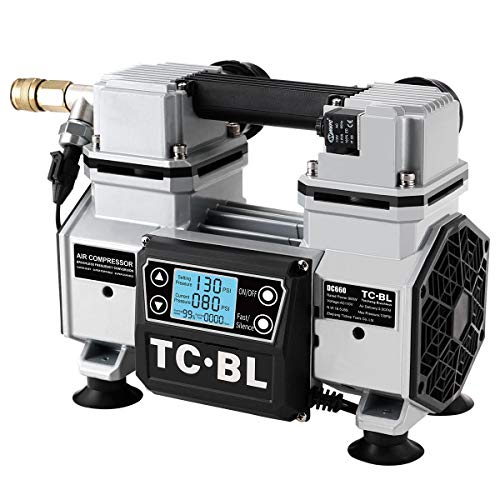 TC·BL 110V Portable Air Compressor
|
9.2/10 | Buy |
 Metabo HPT EC28M Quiet Air Compressor
|
9.1/10 | Buy | |
| Best Premium |
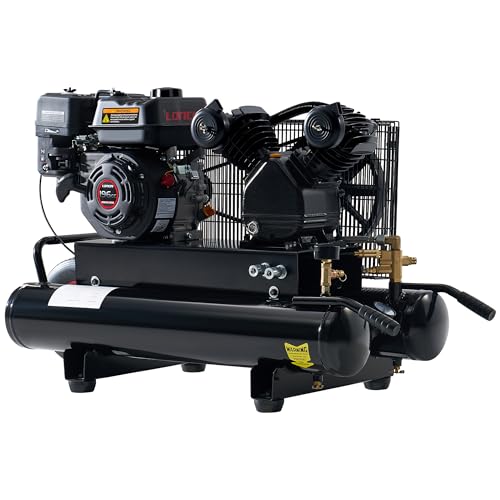 Albott 6.5HP 8-Gallon Gas Air Compressor
|
9.1/10 | Buy |
 Klutch 29-Gallon Portable Air Compressor - 2.5 HP
|
8.9/10 | Buy | |
 Metabo HPT 6-Gallon Pancake Air Compressor Review
|
8.6/10 | Buy | |
| Best Value |
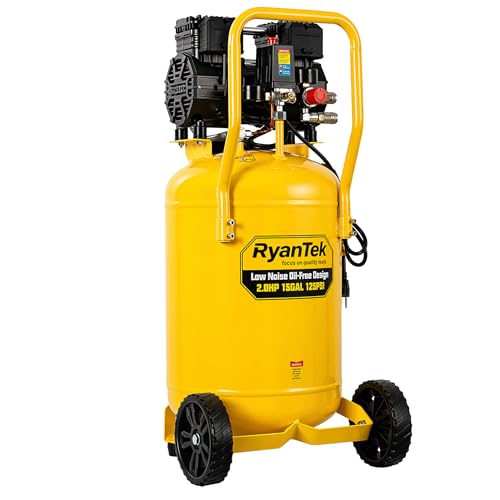 RyanTek 15-Gallon 2HP Air Compressor
|
8.6/10 | Buy |
 VEVOR 2HP Oil-Free Air Compressor Motor
|
8.4/10 | Buy | |
 DEWALT DWFP55130 2.5-Gallon 200 PSI Quiet Trim Air
|
8.4/10 | Buy | |
 Klutch 20-Gallon Portable Air Compressor
|
8.4/10 | Buy |
ALL-TOP Dual Cylinder 12V Air Compressor
Built for rapid tire inflation on large trucks and off-road rigs, this dual-cylinder pump pushes an impressive 12.35 CFM flow rate up to 150 PSI. The rugged metal frame, integrated thermal safeguards, and extended 26-foot hose provide reliable utility for heavy-duty vehicle recovery.
Pros
- High 12.35 CFM output swiftly inflates large tires
- Dual aluminum cylinder construction helps dissipate heat
- Generous 26-foot hose reaches all corners of large vehicles
- Equipped with automatic thermal and over-current safety switches
Cons
- Heftier 24-pound build demands extra carrying effort
- Third-party gauges require built-in over-pressure protection
TC·BL 110V Portable Air Compressor
Weighing roughly 16 pounds, this compact 110V unit delivers adjustable pressure up to 130 PSI via a digital LCD controller. Running at 68 dB with an oil-free motor, it provides a low-maintenance solution for indoor trim work, tire inflation, and light pneumatic tasks.
Pros
- Digital LCD screen allows exact pressure adjustments
- Operates quietly at 68 dB
- Lightweight 16-pound build enhances jobsite portability
- Maintenance-free oil-free permanent magnet motor
- Automatic overvoltage and overcurrent shutoff protection
Cons
- Requires a tethered 110V power source to operate
- Maximum working pressure tops out at 130 PSI
Metabo HPT EC28M Quiet Air Compressor
Operating at an ultra-quiet 59 dB, the Metabo HPT EC28M 1-gallon oil-free air compressor provides low-noise pneumatic air power in a compact 25.2-pound roll-cage frame. It is an ideal portable match for trim carpenters, punch-list contractors, and residential DIYers needing peaceful indoor fastening.
Pros
- Remarkably quiet 59 dB operation makes it well-suited for occupied residential job sites
- Lightweight 25.2-pound weight and ergonomic rubber grip make carrying up stairs straightforward
- Sturdy steel roll cage provides reliable physical protection around gauges and controls
- Oil-free pump mechanism eliminates pump lubrication maintenance and avoids messy oil leaks
- Universal quick-connect coupler simplifies tool connections across standard pneumatic lines
Cons
- Compact 1-gallon tank capacity is intended for intermittent fastening rather than continuous air tools
- Small air storage volume causes frequent motor cycling during rapid nailing sequences
- Bare-tool configuration does not include an air hose or pneumatic finish nailers
Albott 6.5HP 8-Gallon Gas Air Compressor
Built for off-grid job sites, this gas-powered unit delivers reliable pneumatic power with a 6.5 HP engine and a two-cylinder cast iron pump. Dual air outlets let two operators run tools simultaneously without depending on electrical hookups.
Pros
- Rugged cast iron pump and frame construction
- Dual air outlets support two simultaneous tools
- Gas-powered design eliminates need for electrical outlets
- Automatic safety valve ensures steady pressure management
Cons
- Very heavy at 166 pounds
- Modest 115 PSI maximum working pressure
- Substantial footprint requires ample vehicle cargo space
Klutch 29-Gallon Portable Air Compressor - 2.5 HP
The Klutch 29-Gallon Air Compressor pairs a 2.5 HP 120V motor with a 175 PSI maximum tank pressure and 5.1 CFM at 90 PSI, providing reliable air reserve for garage mechanics and serious DIY woodworkers. Its oil-free pump eliminates messy maintenance while large flat-free tires provide dependable mobility across busy workshop floors.
Pros
- Generous 29-gallon tank reserve coupled with high 175 PSI maximum storage pressure
- Solid airflow output delivering 5.1 CFM at 90 PSI on standard 120V power
- Maintenance-free oil-free pump design removes the hassle of oil checks and messy spills
- Durable flat-free wheels make maneuvering the 127-pound upright unit around the garage manageable
- Factory-installed brass quick-connect fitting allows easy one-handed hose connections
Cons
- Substantial 127-pound weight makes lifting the unit into a truck bed or up stairs a two-person job
- Oil-free direct pumps typically generate higher operational sound levels than slow-turning belt-drive compressors
- Continuous air-hungry tools like dual-action rotary sanders will outpace the 5.1 CFM pump delivery during extended sessions
Metabo HPT 6-Gallon Pancake Air Compressor Review
The Metabo HPT EC711S is a portable 6-gallon pancake air compressor delivering 2.8 CFM at 90 PSI with a 165 PSI tank ceiling and an operating sound level of 73 dB. With its quick 46-second recovery cycle and dual quick couplers, it is an excellent choice for finish carpenters, punch-list contractors, and DIYers running pneumatic nailers.
Pros
- 73 dB operational sound rating is substantially quieter than standard job-site pancake units
- 165 PSI maximum pressure provides ample air storage with a swift 46-second recovery cycle
- Two 1/4-inch universal quick couplers support multi-tool setups right out of the box
- Sturdy steel roll cage protects gauges and the manifold assembly against knocks and drops
- Oil-free 1.0 HP motor ensures low maintenance and reliable cold-weather motor startup
Cons
- At 38.5 lbs, it is slightly heavier than ultra-compact 1-to-3-gallon trim compressors
- Airflow of 2.8 CFM at 90 PSI is designed for intermittent fastening, not continuous rotary tools or paint sprayers
- Bare-tool configuration means air hoses and pneumatic fastening tools must be purchased separately
RyanTek 15-Gallon 2HP Air Compressor
Built for garage workshops and indoor tasks, this vertical compressor combines a quiet 66 dBA dual-cylinder motor with a spacious 15-gallon tank. It supplies a dependable 4.5 CFM at 90 PSI for continuous nailing, spraying, and inflation while conserving floor space.
Pros
- Quiet 66 dBA operation suitable for indoor spaces
- Generous 4.5 CFM output at 90 PSI
- Compact vertical tank saves workshop floor space
- Maintenance-free oil-free pump design
- Integrated wheels make rolling transport straightforward
Cons
- Heavy at 68.3 pounds to lift manually
- Maximum pressure caps at 125 PSI
VEVOR 2HP Oil-Free Air Compressor Motor
Delivering 5.2 CFM at 90 PSI with a 1680 RPM motor, this oil-free VEVOR pump head provides clean, low-maintenance air output for garage shops and pneumatic tools. Its cold-rolled steel build and dedicated cooling fans make it a dependable drop-in motor for woodworking, spray painting, and automotive repairs.
Pros
- Low-maintenance oil-free operation
- Generates 5.2 CFM at 90 PSI
- Sturdy steel and aluminum construction
- Effective cooling via built-in fans and heat sinks
Cons
- Heavier unit at over 36 pounds to install
- Single-stage design limits peak pressure to 145 PSI
- At 78 dB, operating volume is still noticeable indoors
DEWALT DWFP55130 2.5-Gallon 200 PSI Quiet Trim Air
The DEWALT DWFP55130 delivers a capable 3.0 SCFM at 90 PSI with a 200 max PSI 2.5-gallon tank, running at a quiet 71.5 dBA on an efficient 12-amp motor. It is an ideal pneumatic power source for trim carpenters, punch-list contractors, and DIYers working on residential circuits.
Pros
- Delivers 3.0 SCFM at 90 PSI with a high 200 max PSI ceiling for rapid pressure recovery during sequential fastening
- Quiet 71.5 dBA sound output makes indoor trim carpentry and remodeling far less disruptive to homeowners
- Low 12-amp draw reduces breaker trips when running on shared 15-amp household circuits
- Integrated roll cage and console protect critical components while supporting horizontal or vertical operation
- Dual quick couplers allow two trim carpenters to connect and work off a single compressor
Cons
- Bare-tool configuration means you must supply your own air hoses, couplers, and pneumatic nail guns
- At 36 pounds, it is heavier to haul up flights of stairs than ultra-compact 1-gallon finish compressors
- Air output of 3.0 SCFM is built for intermittent finish fastening and will not support continuous tools like rotary sanders or sprayers
Klutch 20-Gallon Portable Air Compressor
Featuring a 2.0 HP 120V motor and a 20-gallon tank, the Klutch portable air compressor delivers a rated 4.2 SCFM at 90 PSI for versatile workshop air. Its oil-free pump and wheeled design make it a dependable choice for garage mechanics, woodworkers, and serious DIYers needing steady air storage.
Pros
- Generous 20-gallon air storage capacity provides a substantial buffer for intermittent shop tools
- Delivers a listed 4.2 SCFM at 90 PSI, outperforming smaller pancake compressors for workshop chores
- Oil-free pump design eliminates messy oil changes and allows clean, upright transport
- Rugged rubber wheels and built-in ergonomic handle make moving the 90-pound frame manageable
- Integrated thermal overload protection helps prevent motor burnout during demanding cycles
Cons
- Substantial 90-pound weight makes lifting into truck beds or carrying up stairs difficult without assistance
- Oil-free motor configurations generally produce noticeable operating noise compared to low-RPM lubricated units
- At 4.2 SCFM at 90 PSI, high-draw continuous air tools like sanders or grinders will require recovery pauses
Matching Portable Generator Capacity to Air Compressor Electrical Demands
Selecting the proper generator size for an air compressor requires looking past simple running wattage numbers. Air compressors rely on heavy electric induction motors that encounter immediate mechanical resistance from pressurized pump cylinders. When an undersized generator attempts to power this sudden load, voltage collapses and circuit breakers trip instantly. Matching these two power systems requires understanding how electrical surge demands interact with pneumatic storage reserves.
A generator rated only for running watts cannot handle the intense momentary spike required to turn an unmoving pump. A portable compressor pulling standard household current often demands several thousand surge watts for a fraction of a second. Failing to account for this initial current rush risks damaging both the generator alternator and the compressor motor. Calculating your exact generator requirements keeps pneumatic tools operating smoothly across remote jobsites and workshop projects.
Understanding Motor Inrush Current and the Starting Wattage Surge
Electric induction motors behave very differently from resistive loads like jobsite work lights or space heaters. Resistive heating elements draw a steady amperage from the moment current begins flowing through the circuit. Compressor motors require an immense magnetizing current to establish an internal magnetic field and spin a heavy crankshaft against atmospheric pressure. This initial surge is called locked rotor amperage, representing the maximum current drawn while stationary.
Locked rotor current can spike between three to five times higher than the continuous running current on the motor data plate. For a motor operating at twelve running amps, the instant the pressure switch engages can demand over thirty-five amps. A standard utility grid absorbs this momentary spike with only a minor flicker of nearby lighting circuits. A portable generator relies on engine inertia and automatic voltage regulation that can easily stall under that sudden demand.
Capacitor-start induction motors use a start capacitor and centrifugal switch to provide extra torque during initial acceleration. If the generator cannot supply sufficient surge wattage during those first few hundred milliseconds, the motor fails to reach operating speed. The start winding remains engaged too long, creating excess heat that triggers the thermal overload protector. Sizing a generator with generous starting watts prevents this stalled rotor state and protects internal motor components.
The Core Calculation Formula: From Amps and Volts to Surge Watts
Calculating necessary generator capacity begins with basic electrical formulas converted into real-world wattage figures. Continuous running wattage is calculated by multiplying operating voltage by the rated running amperage of the motor. A portable trim compressor pulling twelve amps on a standard 120-volt circuit requires 1,440 continuous running watts. This baseline represents the mechanical energy needed to sustain cylinder compression once the pump reaches full operating speed.
Determining starting wattage requires applying a realistic surge multiplier to that continuous running baseline. For single-stage oil-free and splash-lubricated compressors, multiplying running wattage by three provides a dependable safety margin for generator sizing. Applying that multiplier to a 1,440-watt baseline yields a starting requirement of approximately 4,320 surge watts. Balancing these power equations alongside verified air compressor CFM and PSI ratings guarantees that pneumatic delivery remains consistent without tripping generator breakers.
Modern compact units, such as the Metabo HPT Quiet Air Compressor with its one-gallon tank, operate with lower electrical footprints. Low-draw designs pulling under three running amps generate significantly smaller startup spikes, making them compatible with smaller portable generators. Conversely, units drawing fifteen amps demand starting surge capacities approaching five thousand watts from the generator. Always calculate wattage based on actual motor nameplate data rather than generalized consumer marketing estimates.
Generator Sizing Guidelines by Compressor Horsepower and Tank Class
Compressor capacity categories directly dictate the continuous and surge output necessary from your generator power plant. Compact finish compressors rated around one horsepower generally operate between eight and twelve running amps. These lightweight units require a generator providing at least three thousand surge watts and two thousand running watts to cycle reliably. The popular DEWALT Air Compressor for Trim uses a low twelve-amp motor designed specifically to reduce breaker tripping during jobsite startup cycles.
Mid-sized workshop and contractor compressors featuring two-horsepower motors increase electrical demand substantially. Models like the Klutch 20-Gallon Air Compressor or the RyanTek 15-Gallon Air Compressor draw substantial current when refilling their large receivers. A two-horsepower motor on 120 volts typically demands between fifteen and eighteen running amps, equating to roughly 2,160 running watts. Starting that mechanical assembly against tank pressure requires a generator capable of delivering between five thousand and six thousand peak surge watts.
Heavy-duty single-stage models equipped with 2.5-horsepower motors push standard 120-volt circuits to their functional boundaries. The Klutch 29-Gallon Air Compressor utilizes a 2.5-horsepower motor delivering robust airflow, yet starting that displacement demands serious generator reserves. Operating a unit in this class requires a generator rated for at least six thousand surge watts and 3,500 continuous running watts. When scaling up to industrial equipment, our practical guide on sizing generators for larger stationary compressors explains the dedicated 240-volt considerations needed for commercial machinery.
Horsepower ratings on consumer compressors can occasionally present deceptive marketing figures rather than true running output. Peak surge horsepower claims often describe momentary motor stall torque rather than continuous operational capacity. True running horsepower is directly reflected by steady amperage draw under full operating pressure near tank cut-off thresholds. Relying on nameplate running amps rather than prominent horsepower decals ensures you select an appropriately matched generator.
Mechanical Resistance Factors: Pressure Switches, Unloader Valves, and Head Pressure
The mechanical state of the compressor pump directly alters the surge wattage required from the generator during startup. When a compressor starts with completely empty air tanks, the pistons encounter minimal initial backpressure. The motor accelerates rapidly to operating speed, requiring a brief and manageable inrush current from the power supply. A generator handles empty-tank initial startups much more easily than re-pressurization cycles encountered mid-workday.
Mid-cycle restarts present the greatest challenge to generator stability and engine governor response. When tank pressure drops to the pressure switch cut-in threshold, the motor must restart while fighting residual air pressure. Mechanical unloader valves play a critical role here by venting trapped air off the piston heads through a small discharge tube. If the unloader valve malfunctions or fails to bleed head pressure, the pistons stall against high trapped resistance.
A motor attempting to turn against trapped head pressure draws full locked rotor amperage for several extended seconds. This prolonged current spike exceeds standard generator surge timing limits, instantly triggering overload protection switches. Maintaining clean unloader valve assemblies and ensuring proper check valve seating inside the tank bung prevents severe starting drag. Verifying that your compressor vents head pressure with a distinct hissing sound upon shutoff confirms it is ready for safe generator cycling.
Inverter Generators Versus Standard Open-Frame Generators on the Jobsite
Choosing between a portable inverter generator and an open-frame contractor generator influences operational reliability with pneumatic power equipment. Inverter generators produce clean electrical sine waves with total harmonic distortion levels consistently below three percent. Standard open-frame portable generators use conventional alternators that can produce distorted electrical waveforms and voltage fluctuations. While mechanical induction motors tolerate mild distortion, modern compressors with digital components require steady power.
Units featuring digital microprocessor controls, such as the TC·BL Portable Air Compressor with its digital LCD controller, are sensitive to electrical voltage irregularities. Excessive harmonic distortion or voltage drops from low-cost alternators can disrupt digital pressure sensors or trigger automatic shutdown safeguards. Inverter generators deliver the clean electrical baseline needed to safeguard sensitive monitoring electronics against erratic voltage spikes. The clean output ensures that electronic pressure switches accurately detect cut-in and cut-out thresholds.
Engine throttle behavior also creates distinct performance differences between inverter and conventional generator designs. Many inverter generators feature an efficiency switch or eco-mode that throttles the engine down when electrical demand drops. If an air compressor kicks on while the generator engine is idling low, the delayed throttle response creates an immediate stall. Disabling eco-mode and running the generator at fixed full speed ensures instantaneous surge power whenever the compressor cycles.
Preventing Critical Voltage Drops: Cord Gauges Versus Hose Length
Connecting an air compressor to a generator through an inappropriate electrical extension cord causes severe mechanical complications. Electrical resistance over long runs of small-gauge copper wire causes significant voltage drop between the generator receptacle and the motor. When line voltage drops below 110 volts under load, motor amperage automatically spikes to compensate for lost wattage. This compounding amp spike overheats internal motor windings and causes generator circuit breakers to trip repeatedly.
Lightweight sixteen-gauge or fourteen-gauge utility extension cords should never be placed between a generator and an air compressor. If electrical extension cannot be avoided, operators must use heavy-duty twelve-gauge or ten-gauge cords limited to short distances. Thick conductors preserve circuit voltage, allowing the compressor motor to develop full starting torque without drawing excessive amperage. Maintaining stable operating voltage at the motor terminals protects starting capacitors from premature failure during demanding workday cycles.
Pneumatic equipment specialists recommend placing the air compressor directly beside the generator and extending air lines rather than power cords. Compressed air hoses experience minimal pressure loss over long runs when sized with adequate internal diameters. Running one hundred feet of 3/8-inch rubber air hose eliminates electrical resistance entirely while keeping generator noise away from work areas. This setup maximizes generator electrical efficiency while delivering stable pneumatic pressure to your framing nailers or impact tools.
Cold Weather Operating Conditions and Pump Lubrication Drag
Freezing jobsite temperatures dramatically increase the mechanical effort required to rotate an air compressor pump assembly. In splash-lubricated cast-iron pumps, low ambient temperatures cause compressor oil to thicken into a dense fluid. Thickened oil creates severe hydrodynamic drag on the crankshaft, connecting rods, and piston assemblies during initial startup rotations. This mechanical resistance forces the electric motor to draw maximum inrush current for an extended duration before reaching operating speeds.
Oil-free compressors utilizing Teflon-coated piston sleeves experience less lubricant drag in sub-freezing conditions, but stiff internal rubber seals still elevate startup friction. The Metabo HPT Pancake Air Compressor incorporates an oil-free high-efficiency motor engineered to improve cold-weather startup reliability on unheated jobsites. However, even cold oil-free pumps require greater rotational torque when internal valve flappers and seals stiffen from freezing moisture. A generator that barely starts a compressor in warm weather will frequently stall during freezing morning operations.
Mitigating cold-weather starting strain involves warming the compressor pump in a vehicle cab before connecting it to generator power. In addition, opening the tank drain valve during initial startup allows the pump to cycle under zero backpressure until friction warms the components. Once the motor runs smoothly at full speed, closing the valve allows normal tank pressurization without shocking the generator alternator. Allowing extra generator capacity headroom accounts for these unavoidable seasonal temperature swings.
Electric Compressor Generator Setup Versus Dedicated Gas-Powered Units
Hauling both an electric air compressor and a portable generator to remote jobsites introduces logistical overhead and complex electrical coordination. Operating two separate small engines and dealing with electrical conversion losses prompts many contractors to evaluate dedicated gas-powered air compressors. Self-contained units combine an internal combustion engine directly with a cast-iron compressor pump on a single portable cart chassis. This direct mechanical coupling eliminates electrical conversion inefficiency, motor inrush concerns, and generator compatibility calculations entirely.
The Albott 6.5HP Gas Powered Air Compressor represents this integrated approach, utilizing an eight-gallon tank and a rugged cast-iron pump. Powered directly by a 6.5-horsepower gasoline engine, it delivers high air volumes for roofing crews, framing teams, and agricultural repairs without requiring electrical generators. For mobile service trucks and remote construction sites lacking utility lines, dedicated gas compressors provide immense continuous airflow without electrical bottlenecks. The direct mechanical drive operates reliably regardless of cord gauges, inverter tolerances, or circuit breaker ratings.
Despite the power of dedicated gas compressors, electric units paired with versatile generators remain preferable for multi-use trades. A high-output portable generator can run your electric air compressor during framing phases, then power saws, battery chargers, and lighting circuits throughout the day. Choosing a quality standalone electric pump, such as the VEVOR Air Compressor Motor setup, offers modular flexibility for custom shop or mobile installations. Evaluating whether you need dedicated pneumatic volume or flexible multi-tool electricity determines the best jobsite power configuration.
Matching your generator capacity to an air compressor requires respecting motor inrush current, verified nameplate running amperage, and mechanical startup conditions. Calculating continuous running watts and multiplying by three establishes the minimum peak surge rating your generator must supply for uninterrupted operation. Bypassing long electrical extension cords in favor of extended air hoses protects delicate motor windings and prevents frustrating generator circuit trips. Taking the time to calculate these electrical requirements ensures your pneumatic power equipment runs reliably wherever your work takes you.
About the author
Tony Carrick is an experienced product researcher and writer specializing in tools, home improvement, automotive maintenance, and consumer equipment. With extensive experience reviewing tools and tackling hands-on renovation projects, he brings a buyer-focused perspective to compressor performance, usability, and overall value.