
How Many Watts Does a Small Air Compressor Use: Practical Guide for 2026
Learn how many watts does a small air compressor use during startup and continuous operation in this October 2026 guide to circuit sizing and generator power.
 By Clint DeBoer
Updated October 8, 2026
By Clint DeBoer
Updated October 8, 2026

Tripping a garage circuit breaker or overloading a portable battery power station is an all-too-common frustration when firing up compact pneumatic tools. Understanding exactly how many watts does a small air compressor use requires looking beyond the basic label on the motor shroud, because running wattage and peak startup inrush tell two completely different stories. Compact inflators and trim compressors range anywhere from 120 watts for direct-current tire pumps to over 1,500 running watts for multi-gallon shop units. When preparing your electrical setup or sizing an air compressor for pneumatic tools, matching your power source to these electrical spikes prevents tripped breakers and stalled motors.
Electric motors encounter significant mechanical resistance the moment the pump piston attempts to compress air against tank pressure. This initial resistance produces a momentary surge known as starting wattage, which can easily double or triple the continuous power draw. Whether you are running a lightweight trim compressor from a jobsite inverter or plugging a pancake tank into a shared household outlet, calculating both running and surge requirements is essential. Factoring in motor efficiency, tank storage buffer, and circuit branch ratings ensures your equipment cycles smoothly without blowing fuses or damaging delicate electronics.
| Award | Product | ACR Score About ACR ScoreThe ACR Score is our own rating from 0 to 10, based on performance, design and build, ease of use, and value. It reflects independent research and is never influenced by manufacturers, retailers, or affiliate commissions. Learn more › | |
|---|---|---|---|
| Best Overall |
Baococo 4-Gallon 0.5 HP Air Compressor
|
9.2/10 | Buy |
| Best Value |
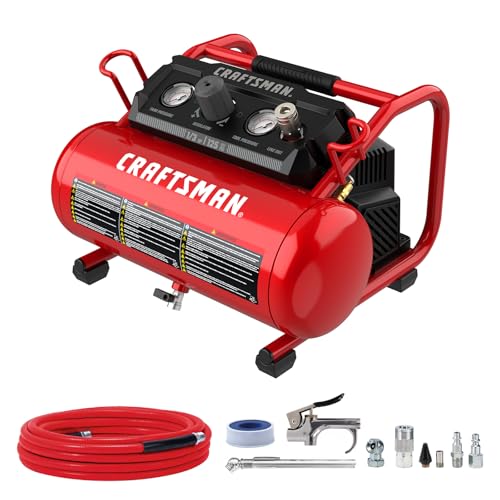 CRAFTSMAN 2-Gallon Portable Air Compressor
|
9.1/10 | Buy |
| Best Premium |
 Metabo HPT EC28M Quiet Air Compressor
|
9.1/10 | Buy |
| Best Budget |
 AstroAI Dual Power 110V/12V Tire Inflator
|
8.9/10 | Buy |
 Ironton 3-Gallon Oil-Free Pancake Air Compressor
|
8.6/10 | Buy | |
 Baococo 8 Gallon Portable Air Compressor
|
8.6/10 | Buy | |
 CARSUN Dual Power AC/DC Portable Tire Inflator
|
8.3/10 | Buy | |
 VELPAX 2.4-Gallon Quiet Air Compressor
|
8.1/10 | Buy | |
 CRAFTSMAN 6 Gallon 150 PSI Portable Oil-Free
|
8.1/10 | Buy | |
 FORNAX 3-Gallon Pancake Air Compressor
|
7.8/10 | Buy |
Baococo 4-Gallon 0.5 HP Air Compressor
Built for light household maintenance and quick inflation tasks, this compact 4-gallon unit pairs a quiet 0.5 HP motor with an automatic overpressure safety shut-off. Its modest air delivery handles small nailers and tire filling without creating excessive workshop noise.
Pros
- Quiet operation suitable for residential spaces
- Automatic overpressure shut-off enhances operational safety
- Compact footprint stores easily in tight spaces
- Stable base minimizes movement during use
Cons
- Low airflow output limits heavy pneumatic tool use
- Maximum pressure capped at 110 PSI
- Modest 0.5 HP motor lacks heavy-duty capability
CRAFTSMAN 2-Gallon Portable Air Compressor
This CRAFTSMAN 2-gallon portable compressor package pairs a max 125 PSI oil-free pump with a versatile 10-piece pneumatic accessory kit using standard 1/4-inch NPT fittings. It is a practical, lightweight solution for DIYers and homeowners tackling tire inflation, air dusting, and light fastening.
Pros
- Complete out-of-the-box pneumatic package with air hose, blow gun, tire chuck, and 1/4-inch NPT quick-connect hardware
- Lightweight 19-pound carry weight makes moving between the garage, driveway, and workbench effortless
- Oil-free pump eliminates crankcase oil checks and prevents oil aerosol contamination in downstream air lines
- Dual quick couplings allow quick hookups without needing additional brass splitters
Cons
- Small 2-gallon receiver tank and 1/3 HP motor are limited to light-duty pneumatic tasks rather than continuous air-hungry tools
- The included starter air hose and accessories are entry-level components that high-volume shops may eventually want to upgrade
- Fittings utilize standard 1/4-inch auto profile plugs which require matching couplers if your shop uses alternate pneumatic profiles
Metabo HPT EC28M Quiet Air Compressor
Operating at an ultra-quiet 59 dB, the Metabo HPT EC28M 1-gallon oil-free air compressor provides low-noise pneumatic air power in a compact 25.2-pound roll-cage frame. It is an ideal portable match for trim carpenters, punch-list contractors, and residential DIYers needing peaceful indoor fastening.
Pros
- Remarkably quiet 59 dB operation makes it well-suited for occupied residential job sites
- Lightweight 25.2-pound weight and ergonomic rubber grip make carrying up stairs straightforward
- Sturdy steel roll cage provides reliable physical protection around gauges and controls
- Oil-free pump mechanism eliminates pump lubrication maintenance and avoids messy oil leaks
- Universal quick-connect coupler simplifies tool connections across standard pneumatic lines
Cons
- Compact 1-gallon tank capacity is intended for intermittent fastening rather than continuous air tools
- Small air storage volume causes frequent motor cycling during rapid nailing sequences
- Bare-tool configuration does not include an air hose or pneumatic finish nailers
AstroAI Dual Power 110V/12V Tire Inflator
Versatile dual-power support lets this lightweight inflator run from either a garage wall outlet or a vehicle cigarette lighter. An automatic shutoff and onboard cord storage make routine tire top-offs straightforward for any driver.
Pros
- Flexible dual AC and DC power options
- Automatic shutoff prevents over-inflation
- Compact and lightweight at 2.2 pounds
- Integrated cord and nozzle storage
Cons
- Requires a 10-minute cooldown after 15 minutes of runtime
- Must be plugged into a power source to operate
Ironton 3-Gallon Oil-Free Pancake Air Compressor
The Ironton 3-Gallon Oil-Free Pancake Air Compressor combines a 0.3 HP motor and 110 PSI max pressure with an ultra-portable 20.6-pound frame and fold-down handle. It is a practical, low-maintenance option for DIY homeowners and hobbyists handling light brad nailing, stapling, and tire inflation.
Pros
- Lightweight 20.6-pound build with a fold-down carry handle makes one-handed portability nearly effortless
- Wide pancake base delivers outstanding stability with a low center of gravity to prevent tipping
- Zero-maintenance oil-free pump means clean discharge air and no messy oil changes
- Protective shroud includes convenient molded wraps for both the power cord and air hose
- Large regulator knob and quick-connect coupler allow fast, intuitive line adjustments
Cons
- Modest 0.3 HP motor and 110 PSI ceiling cannot support continuous high-CFM air tools like sanders or sprayers
- 3-gallon capacity requires occasional recovery pauses during rapid fastener firing
- Bare-tool setup does not include an air hose, tire chuck, or pneumatic nailer out of the box
Baococo 8 Gallon Portable Air Compressor
The Baococo 8-gallon portable air compressor pairs a 2HP electric motor with a 150 PSI receiver tank, delivering 2.8 SCFM at 90 PSI. It provides a solid, accessible air source for garage DIYers tackling tire inflation, car detailing, and pneumatic finish nailing.
Pros
- Useful 8-gallon tank capacity cushions air demand better than smaller pancake style compressors
- 150 PSI peak tank pressure accommodates common automotive tire inflators and pneumatic nailers
- Standard 120V 60Hz power compatibility allows easy plug-and-play use in residential garages
- Sufficient airflow rating of 2.8 SCFM at 90 PSI for light woodworking, trim carpentry, and cleaning tasks
Cons
- Continuous high-CFM pneumatic tools like rotary sanders and heavy-duty 1/2-inch impact wrenches will quickly deplete tank reserves
- Contradictory product listing notes an oil-free tank in the title while mentioning regular oil checks in the description, requiring users to inspect pump details before first start
- Does not include an air hose, quick-connect fittings, or downstream regulator accessories in the box
CARSUN Dual Power AC/DC Portable Tire Inflator
The CARSUN Dual Power Tire Inflator delivers up to 150 PSI of high-pressure air running from either a 110V household outlet or a 12V vehicle socket. With digital pressure presets, automatic shutoff, and a lightweight 2.1-pound frame, it is an ideal maintenance pump for passenger vehicles, bicycles, and household inflatables.
Pros
- Versatile dual-voltage operation works seamlessly in the home garage or on the road without requiring an external converter
- Accurate auto-shutoff mechanism protects tires from accidental over-pressurization during routine top-offs
- Compact 2.1-pound build packs away easily in car trunks, under vehicle seats, or on garage shelving
- Clear digital display allows fast switching across four standard pressure measurement units
Cons
- Requires a mandatory 10-minute cooldown period after every 15 minutes of continuous operation
- Manufacturer explicitly states it does not support heavy truck tires, tractor tires, or stand-up paddleboards (SUP)
- Tankless inflator design cannot run standard workshop pneumatic air tools like brad nailers or paint sprayers
VELPAX 2.4-Gallon Quiet Air Compressor
Operating at roughly 60 decibels, this portable compressor provides steady air pressure for garage tasks, tire inflation, and trim carpentry without excessive noise. Its oil-free 1.5 HP motor keeps routine upkeep minimal while the integrated handle makes transport between work areas easy.
Pros
- Very quiet operation at roughly 60 dB
- Maintenance-free oil-less pump design
- Compact build with convenient carry handle
- Integrated overload protection and safety release valve
Cons
- Small 2.4-gallon tank limits continuous high-demand tool use
- Modest 115 PSI ceiling restricts heavy industrial applications
CRAFTSMAN 6 Gallon 150 PSI Portable Oil-Free
The CRAFTSMAN 6-Gallon 150 PSI Oil-Free Pancake Air Compressor delivers 2.6 SCFM at 90 PSI via a 1.0 HP low-voltage start motor with factory dual quick couplers. Weighing 30.8 pounds, it provides dependable air delivery for finish carpenters, DIY remodelers, and garage maintenance tasks.
Pros
- Delivers 2.6 SCFM at 90 PSI with a 150 PSI maximum tank ceiling for dependable finish fastening.
- Dual quick couplers allow two pneumatic tools to remain connected at the same time without splitters.
- Oil-free pump design ensures clean air delivery and zero periodic pump oil maintenance.
- Low-voltage start 1.0 HP motor supports reliable startups on standard 120V household outlets.
- Manageable 30.8-pound weight and integrated carry handle provide practical one-person jobsite transport.
Cons
- Air delivery rate of 2.6 SCFM at 90 PSI is not designed for continuous high-demand tools like rotary sanders or paint sprayers.
- Standard oil-free electric motor design generates typical high-pitch operational sound during tank recharge cycles.
- Sold as a bare compressor unit without included air hoses, couplers, or pneumatic nailers.
FORNAX 3-Gallon Pancake Air Compressor
Built for quick household inflations and light pneumatic jobs, this compact unit features an oil-free pump that requires minimal upkeep. At under 20 pounds, it is exceptionally easy to carry, though its low air delivery restricts it to lighter-duty tasks.
Pros
- Low-maintenance oil-free pump mechanism
- Very lightweight and easy to transport
- Compact pancake footprint saves garage space
- Sufficient 110 PSI pressure for basic tasks
Cons
- High noise output rated at 89 dB(A)
- Limited air delivery of 0.8 CFM at 90 PSI
- Lower 110 PSI ceiling than typical workshop compressors
Electrical Wattage Dynamics of Small Air Compressors
A small air compressor typically consumes between 150 and 1,800 running watts during continuous operation, but temporary startup spikes can surge anywhere from 600 to well over 3,000 watts. The wide range stems from fundamental differences in motor displacement, pump mechanics, and intended pneumatic workloads. Compact 12-volt direct-current tire inflators operate on modest wattage levels, whereas one-horsepower pancake compressors and two-horsepower shop tanks draw substantial current from 120-volt alternating-current outlets. Accurately assessing energy draw requires evaluating how electric motors handle mechanical backpressure, circuit amperage thresholds, and power factor efficiency.
Running Watts Versus Starting Surge: The Physics of Inrush Current
Running wattage represents the continuous electrical power an air compressor motor consumes once it reaches its normal operating revolutions per minute. When the piston moves steadily and internal mechanical components are fully up to speed, the electrical current stabilizes at a predictable level. For example, a motor rated at one horsepower typically demands between 800 and 1,200 continuous watts while compressing air into the storage reservoir. This steady figure determines your overall electricity consumption and basic operational energy costs during standard workshop tasks.
Starting wattage, commonly referred to as inrush current or locked rotor amperage, is the momentary spike of electricity required to break the motor away from a dead standstill. Because an electric induction motor acts essentially as a short circuit for a fraction of a second until magnetic fields establish rotation, current draw spikes dramatically. This initial surge typically demands two to three times the continuous running wattage of the pump assembly. If an air compressor draws 1,000 running watts, it can easily demand an initial burst of 2,500 to 3,000 watts for a few hundred milliseconds when the motor switch closes.
The unloader valve plays a critical mechanical role in controlling how high this startup surge climbs during regular cycling. When the compressor shuts off at its cut-out pressure, the unloader valve vents trapped compressed air from the cylinder head and discharge tube. This brief hiss of exhausting air ensures that the pump does not attempt to restart against high head pressure inside the lines. If an unloader valve malfunctions or clogs, the motor must push directly against trapped tank pressure on restart, causing inrush current to skyrocket and often tripping circuit protection devices immediately.
Wattage Breakdown by Compressor Size and Motor Horsepower
Portable tire inflators and compact emergency pumps represent the lowest wattage category in pneumatic equipment. Units such as the AstroAI Tire Inflator Portable Air Compressor and CARSUN AC/DC Tire Inflator Portable Air run on dual-voltage systems that plug into 12-volt vehicle sockets or 110-volt household wall outlets. These mini diaphragm or piston pumps generally draw between 100 and 180 watts of continuous electrical power. Because their fractional-horsepower motors lack massive iron flywheels and operate without large storage vessels, startup surge remains minimal and rarely exceeds 200 to 250 watts.
Lightweight trim and finish nailer compressors occupy the next tier of power demand, typically utilizing motors between 0.3 and 0.5 horsepower. Models like the Ironton Oil-Free Pancake Air Compressor, the CRAFTSMAN Air Compressor two-gallon unit, and the Baococo 4 Gallon Portable Air compressor fall squarely into this classification. These compact machines generally consume between 300 and 600 running watts while sustaining working pressures between 110 and 125 PSI. Their starting surge normally peaks between 900 and 1,500 watts, making them exceptionally compatible with small mobile generators and entry-level portable power stations.
Mid-size jobsite compressors featuring 1.0-horsepower motors deliver greater airflow volume but demand substantially higher continuous electrical power. The CRAFTSMAN 6 Gallon 150 PSI Oil-Free Pancake Air compressor exemplifies this category, producing 2.6 SCFM at 90 PSI from a 120-volt motor. Compressors in this group typically consume 900 to 1,250 running watts while actively replenishing their air tanks. Startup inrush for a 1.0-horsepower universal or induction motor frequently reaches 2,200 to 2,800 watts, which requires a robust electrical circuit or a generator with ample surge capacity.
Prosumer quiet compressors and heavy-duty portable models push electrical requirements toward the standard limit of residential wall outlets. The VELPAX Ultra Quiet Air Compressor features a motor specifically rated at 1100 watts (1.5 HP), while the Baococo 8 Gallon Portable Air compressor incorporates a 2-horsepower motor delivering 2.8 SCFM at 90 PSI. These units pull approximately 1,100 to 1,800 running watts during continuous compression cycles. Starting surge for a 1.5 to 2.0-horsepower unit can reach 3,000 to 4,000 peak watts, which demands dedicated circuit branches to avoid tripping breakers.
Calculating Compressor Wattage from Volts and Amperage
Determining the real-world electrical consumption of an air compressor requires understanding the relationship between voltage, current, and true operational power. The fundamental formula for calculating basic electrical power is multiplying voltage by amperage (Watts = Volts x Amps). On a standard 120-volt alternating-current circuit, a small compressor nameplate that indicates a 7.5-amp running draw equates to 900 watts of apparent power. Always check the electrical data placard attached directly to the compressor motor housing rather than relying on promotional product packaging.
Electric motors introduce a variable known as power factor, which accounts for inductive reactance between voltage and alternating-current waveforms. Because an induction motor creates magnetic fields to turn the rotor, the true active power consumed is slightly lower than the simple product of volts and amps. A typical small compressor motor operates with a power factor between 0.75 and 0.88 under heavy compression loads. When sizing generators or battery inverters, however, you must plan for total volt-amperes to prevent the power source from overloading.
Matching electrical consumption to real tool capability is just as crucial as verifying motor wattage figures. While a 1,100-watt motor draws predictable power from your wall outlet, the pneumatic work it accomplishes depends heavily on pump design and valve efficiency. For a thorough breakdown of how volume output correlates to physical performance, review our guide on understanding compressor CFM ratings. Efficient pumps deliver more cubic feet of air per minute for every watt consumed, maximizing tool productivity without needlessly straining your electrical circuits.
Household Circuit Breakers and Preventing Breaker Trips
Standard residential workshops and garages typically feature 120-volt branch circuits protected by 15-amp or 20-amp circuit breakers. A standard 15-amp breaker can safely support up to 1,800 total watts, but the continuous load rule mandates keeping sustained draw below 80 percent, or 1,440 watts. A 1.0 to 1.5-horsepower air compressor drawing 1,200 running watts leaves very little electrical margin on a 15-amp circuit. If a refrigerator, fluorescent shop lighting, or a battery charger shares that same branch line, the compressor startup surge will trip the breaker almost every time.
Cold workshop environments compound electrical startup challenges by dramatically increasing initial mechanical resistance inside the pump cylinder. Oil-lubricated pumps suffer from thickened crankcase fluid in low temperatures, while oil-free Teflon sleeve rings become stiff and exert higher friction against cylinder walls. This mechanical drag forces the electric motor to remain in its high-amp inrush state for several seconds longer than usual. That extended startup duration often exceeds the thermal trip curve of standard household circuit breakers, resulting in frustrating nuisance shutoffs on chilly mornings.
Undersized extension cords represent another major cause of electrical issues and premature compressor motor failures. Running a small air compressor through a thin 16-gauge or 14-gauge extension cord creates significant electrical resistance, causing a steep voltage drop at the motor terminals. When voltage drops below 108 volts on a nominal 120-volt line, the electric motor draws additional amperage to compensate, generating extreme internal heat. To avoid tripping breakers and burning out motor windings, always plug the compressor directly into a wall receptacle or use a heavy 10-gauge cord under 25 feet in length.
Operating Small Compressors on Generators and Portable Power Stations
Running pneumatic equipment in remote locations or unpowered jobsites requires careful matching between compressor wattage and generator output. Many users make the mistake of selecting a generator based solely on the compressor running wattage rating, only to find the unit stalls during startup. A 2,000-watt generator might easily supply the 900 running watts needed by a 6-gallon pancake tank, but it will quickly choke on the 2,500-watt starting surge. To ensure seamless cycling, your generator should feature a surge rating that is at least two and a half times greater than the compressor running wattage.
Modern lithium battery power stations and solar generators impose even stricter surge limitations than conventional gasoline engines. While a gas generator can briefly bog down and recover under an inrush spike, digital inverters inside battery power stations trip into safety shutdown almost instantaneously when surge limits are exceeded. When running a compact compressor from a portable power station, select an oil-free dual-piston model or a quiet-series compressor known for soft-start capabilities. Models like the Metabo HPT Quiet Air Compressor incorporate overload protection circuits and low-draw induction motors that ease startup stress on sensitive electronic inverters.
Inverter generators offering pure sine wave output provide the cleanest and most stable electricity for modern compressor control assemblies. Units equipped with electronic pressure sensors, digital displays, and automatic shutoff circuits require clean harmonic waveforms to function reliably. Modified sine wave power sources can cause electric motors to run noticeably hotter, vibrate excessively, and pull higher running amperage under load. Investing in clean inverter power protects both the compressor motor windings and any onboard digital monitoring hardware.
Tank Capacity and Duty Cycle Impact on Energy Consumption
Air tank volume directly dictates how frequently a compressor motor must cycle on and off to maintain working line pressure. A smaller 1-gallon or 2-gallon reservoir fills rapidly, but it expends its stored air volume quickly when operating continuous pneumatic tools. To explore how storage volume influences performance across diverse applications, consult our detailed air compressor tank capacity guide. Matching tank volume to your typical air consumption pattern minimizes unnecessary motor starts and reduces the total cumulative surge cycles on your electrical system.
Duty cycle limits establish the percentage of time a compressor pump can safely run within a given operating window without overheating. Most small consumer air compressors feature a 50 percent duty cycle rating, meaning they should rest for at least as long as they run. When a high-demand pneumatic tool forces a small pump to run continuously, the electric motor generates severe thermal buildup. As motor windings heat up, electrical resistance increases, which in turn elevates the continuous running amperage and wattage draw of the unit.
Built-in thermal overload protectors serve as the primary safeguard against motor burnout during excessive duty cycle operation. When operating temperatures exceed safe design parameters, the thermal switch automatically cuts power to the motor assembly. Restarting the unit requires waiting for the internal components to cool down sufficiently before manually depressing the reset button. Understanding your compressor wattage and respecting rated duty cycles prevents these disruptive thermal shutdowns and extends the overall service life of the machine.
Practical Verification and Safety Protocols for Compressor Power
Verifying the electrical health of your air compressor setup begins with inspecting supply cords, wall receptacles, and circuit breakers. Always ensure that the power cord plug exhibits clean brass prongs free of oxidation, pitting, or heat discoloration. Plugs that feel warm to the touch after a standard compression cycle indicate poor electrical contact or excessive circuit resistance. If your compressor repeatedly trips a breaker upon startup, verify that the unloader valve discharges cleanly whenever the pressure switch cuts out.
Routine mechanical maintenance significantly reduces electrical strain and keeps operational wattage within factory specifications. Daily draining of accumulated tank condensation through the bottom drain valve prevents moisture from displacing valuable air volume. A tank filled with water forces the pump to cycle far more frequently, multiplying electrical startup surges and wasting power. Furthermore, cleaning or replacing clogged air intake filters ensures the pump breathes freely, preventing the motor from laboring against intake restrictions.
Balancing air demand with electrical supply ensures your pneumatic equipment operates efficiently without causing circuit interruptions. For light tire inflation and occasional brad nailing, compact inflators and small 0.3 to 0.5-horsepower units provide ample capability while drawing well under 600 running watts. For demanding workshop tasks requiring sustained airflow, allocating a dedicated 20-amp outlet guarantees that larger 1.0 to 1.5-horsepower compressors start reliably every time. Always depressurize your tank completely before performing electrical inspections, follow manufacturer safety guidelines, and wear appropriate eye protection during operation.
About the author
Clint DeBoer is an experienced tool-industry specialist with decades of involvement in technical media, hands-on product evaluation, and testing methodology. His focus on performance, practical usability, and data-driven comparisons makes his expertise highly relevant to professional air compressors, pneumatic tools, and workshop equipment.