
Single Stage vs 2 Stage Air Compressor of 2026: Workshop Comparison
Tackle air tool starvation with our 2026 guide to single stage vs 2 stage air compressor. Review CFM delivery, tank pressure, and pump builds for October 2026.
 By Clint DeBoer
Updated October 7, 2026
By Clint DeBoer
Updated October 7, 2026

Continuous sanding or grinding quickly reveals the frustration of pressure drops and tool starvation. Air tools freeze up when a small pump cannot keep up with high volume demand, leaving you waiting on a lagging recovery cycle. Evaluating a Single Stage Vs 2 Stage Air Compressor setup comes down to your actual CFM consumption at 90 PSI and how hard you run your shop equipment. Single-stage units compress ambient air directly into the receiver tank in one stroke, which works nicely for moderate intermittent chores like running impact wrenches or framing nailers. In contrast, dual-stage machines squeeze air across two separate cylinders to reach 175 PSI, giving high-demand equipment steady airflow without cooking the motor.
Matching pump engineering to your shop workflow prevents blown electrical circuits and premature wear. Before settling on hardware, learning how to choose air compressor size depends heavily on calculating duty cycles and understanding what SCFM means on an air compressor under real load. A single-stage compressor suits general garage tasks and basic pneumatic gear on standard 120V power. Meanwhile, heavy-duty two-stage powerplants handle extended sandblasting, paint spraying, or multi-bay auto service without overheating.
| Award | Product | ACR Score About ACR ScoreThe ACR Score is our own rating from 0 to 10, based on performance, design and build, ease of use, and value. It reflects independent research and is never influenced by manufacturers, retailers, or affiliate commissions. Learn more › | |
|---|---|---|---|
| Best Overall |
VEVOR 3HP 11 CFM Air Compressor Pump
|
9.2/10 | Buy |
| Best Value |
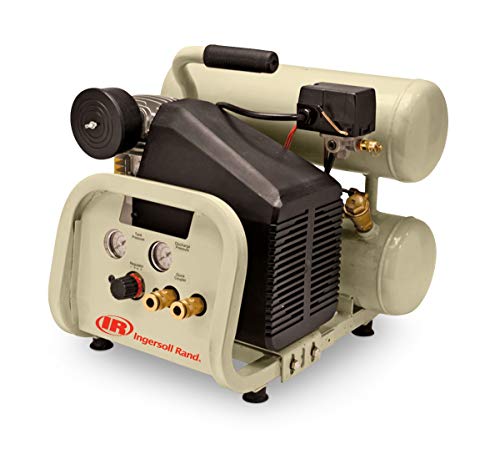 Ingersoll Rand 42672949 Twin-Stack Compressor
|
9.1/10 | Buy |
 NorthStar 1-Stage 13.7 CFM Compressor Pump
|
8.9/10 | Buy | |
| Best Premium |
 Campbell Hausfeld 60-Gallon Air Compressor
|
8.9/10 | Buy |
 NorthStar 2-Stage 24.4 CFM Compressor Pump
|
8.6/10 | Buy | |
| Best Budget |
 VEVOR 3HP Twin Cylinder Air Compressor Pump Head
|
8.4/10 | Buy |
 Klutch 20-Gallon Portable Air Compressor
|
8.4/10 | Buy | |
 DeWalt DXCM271.COM 27-Gallon Air Compressor
|
8.4/10 | Buy | |
 Ingersoll Rand 2475N7.5 7.5 HP 80-Gallon Two-Stage
|
8.1/10 | Buy | |
 2HP Cast Iron Air Compressor Pump Universal
|
8.0/10 | Buy |
VEVOR 3HP 11 CFM Air Compressor Pump
Built for industrial and workshop setups, this twin-cylinder replacement pump delivers up to 11 CFM using a reliable belt-driven mechanism. Its cast-iron crankcase paired with an aluminum head provides dependable durability and heat dissipation, though it tops out at 116 PSI.
Pros
- Strong 11 CFM output for heavy-duty pneumatic tools
- Cast iron crankcase resists wear and tear
- Aluminum components help dissipate operational heat quickly
- Smooth and reliable belt-driven piston operation
Cons
- Maximum pressure peaks at only 116 PSI
- Single-stage setup lacks high-pressure dual-stage capability
- Heavy bare pump assembly at over 30 pounds
Ingersoll Rand 42672949 Twin-Stack Compressor
Built for job sites and workshops needing reliable air delivery, this unit provides 3.2 CFM at 90 PSI with a 100 percent continuous duty rating. Dual quick disconnect couplers allow two operators to run tools simultaneously, though its 77 pound frame requires deliberate effort to transport.
Pros
- 100 percent continuous duty rating prevents downtime
- Dual couplers enable simultaneous two tool operation
- Long 2,000 hour oil change intervals
- User friendly front control panel design
Cons
- Heavy 77 pound weight limits easy mobility
- 79 dBA noise level remains loud indoors
- Extended warranty requires proprietary synthetic lubricant
NorthStar 1-Stage 13.7 CFM Compressor Pump
Engineered for thermal efficiency and long service life, this twin-cylinder cast iron replacement pump delivers 13.7 CFM at 90 PSI. Its slow-running design and Swedish steel valves make it well suited for demanding shop environments.
Pros
- Solid FC35 grade cast iron construction
- V-style design optimizes cylinder cooling
- Swedish steel valves enhance component longevity
- Low-RPM operation minimizes mechanical wear
Cons
- Heavy 53.2-pound weight makes installation demanding
- Single-stage design is unsuitable for high-pressure setups
- Bulky 16-inch cube profile requires substantial space
Campbell Hausfeld 60-Gallon Air Compressor
Built for demanding garage and workshop tasks, this stationary compressor combines a 3.7 HP motor with a two-stage cast-iron pump reaching 175 PSI. It provides steady airflow to support high-demand air tools like sprayers, grinders, and sanders.
Pros
- High 175 PSI maximum output pressure
- Durable cast-iron pump rated for longevity
- Large 60-gallon capacity supports sustained pneumatic tool use
- Vertical tank design saves workshop floor space
Cons
- Requires a dedicated 230V to 240V electrical connection
- Heavy 255-pound stationary build is difficult to move
NorthStar 2-Stage 24.4 CFM Compressor Pump
Built with full cast iron construction and Swedish steel valves, this NorthStar two-stage pump delivers 24.4 CFM at 90 PSI for demanding pneumatic setups. Its low-RPM operation and V-style cylinder layout prioritize cooling and mechanical durability during heavy use.
Pros
- High airflow rating of 24.4 CFM at 90 PSI
- Heavy-duty FC35 cast iron construction
- Durable Swedish steel floating valve design
- V-style cylinders promote effective heat dissipation
- Low-RPM operation minimizes wear and running temperatures
Cons
- Heavy 135-pound weight complicates mounting and handling
- Substantial 21-inch cubic dimensions require ample space
VEVOR 3HP Twin Cylinder Air Compressor Pump Head
The VEVOR 3HP Twin Cylinder Air Compressor Pump Head delivers a rated 5.8 CFM at 90 PSI with a 116 PSI maximum pressure, utilizing an oil-lubricated aluminum design with cooling fins and an integrated oil sight glass. It provides an economical replacement option for garage DIYers, woodworkers, and automotive hobbyists restoring an existing belt-driven air compressor system.
Pros
- Cost-effective solution for reviving a compressor setup with a damaged or seized pump
- Aluminum construction with pronounced cylinder head fins assists with thermal dissipation during operation
- Integrated oil sight glass simplifies routine fluid level inspections
- Supplied with an intake filter to shield internal valves and cylinders from airborne contaminants
Cons
- Requires a separate 3HP motor, drive belt, and mounting hardware as the motor is not included
- Maximum pressure is limited to 116 PSI, which is lower than standard two-stage 150 to 175 PSI industrial units
- Demands precise pulley and belt alignment during installation to prevent excessive vibration
Klutch 20-Gallon Portable Air Compressor
Featuring a 2.0 HP 120V motor and a 20-gallon tank, the Klutch portable air compressor delivers a rated 4.2 SCFM at 90 PSI for versatile workshop air. Its oil-free pump and wheeled design make it a dependable choice for garage mechanics, woodworkers, and serious DIYers needing steady air storage.
Pros
- Generous 20-gallon air storage capacity provides a substantial buffer for intermittent shop tools
- Delivers a listed 4.2 SCFM at 90 PSI, outperforming smaller pancake compressors for workshop chores
- Oil-free pump design eliminates messy oil changes and allows clean, upright transport
- Rugged rubber wheels and built-in ergonomic handle make moving the 90-pound frame manageable
- Integrated thermal overload protection helps prevent motor burnout during demanding cycles
Cons
- Substantial 90-pound weight makes lifting into truck beds or carrying up stairs difficult without assistance
- Oil-free motor configurations generally produce noticeable operating noise compared to low-RPM lubricated units
- At 4.2 SCFM at 90 PSI, high-draw continuous air tools like sanders or grinders will require recovery pauses
DeWalt DXCM271.COM 27-Gallon Air Compressor
Built for home workshops and garage tasks, this vertical compressor delivers 5.1 SCFM at 90 PSI with a low-maintenance oil-free pump. Its space-saving upright tank fits tight corners, though the 136-pound heft demands effort to transport.
Pros
- Maintenance-free oil-free pump design
- Solid airflow output of 5.1 SCFM at 90 PSI
- Space-saving vertical orientation for garages
- Reliable low-voltage start on standard 110V circuits
Cons
- Heavy 136-pound build limits quick portability
- At 78 dBA, operation remains noticeable indoors
- Tall vertical frame requires ample overhead clearance
Ingersoll Rand 2475N7.5 7.5 HP 80-Gallon Two-Stage
The Ingersoll Rand 2475N7.5 is an industrial-grade 7.5 HP two-stage stationary air compressor pairing an 80-gallon ASME receiver tank with a rugged cast-iron pump rated for 100% continuous duty at up to 175 psig. It provides dependable, high-capacity air storage for professional auto mechanics, commercial garages, and demanding fabrication shops.
Pros
- Durable solid cast-iron two-stage pump engineered for over 15,000 hours of heavy-duty shop service
- True 100% continuous duty rating supports non-stop production in multi-bay automotive and fabrication environments
- Spacious 80-gallon ASME-certified vertical receiver tank stores ample air volume at up to 175 psig
- Extended 2,000-hour oil service intervals when utilizing All Season Select synthetic lubricant
- Individual cylinder casting and one-piece connecting rod simplify preventative maintenance and component access
Cons
- Substantial 611-pound dry weight requires dedicated floor anchoring, mechanical lifting gear for positioning, and a permanent shop footprint
- Demands high-power dedicated electrical service and professional stationary hardwiring rather than standard outlet convenience
- Extended two-year pump warranty coverage requires the separate purchase of the official lubricant start-up kit
2HP Cast Iron Air Compressor Pump Universal
This 2-horsepower cast iron twin-cylinder replacement pump produces up to 5.5 SCFM at 90 PSI for receiver tanks up to 40 gallons. It offers a solid, direct-fit solution for workshop owners and garage DIYers looking to rebuild select Campbell Hausfeld, Husky, or Kobalt compressors.
Pros
- Durable cast iron cylinder block paired with an aluminum head for effective heat dissipation
- Pre-mounted 10-inch flywheel and included air filter reduce initial rebuild assembly time
- Built-in oil sight glass allows fast visual checks without pulling a dipstick
- Direct bolt pattern replacement for Campbell Hausfeld VT4823 and equivalent 2-horsepower units
Cons
- Mounting footprint, pulley alignment, and port threads must be measured and verified prior to purchase
- Single-stage 5.5 SCFM delivery at 90 PSI is best suited for light-to-moderate air demands rather than continuous industrial tools
- Does not include discharge copper tubing, crankcase oil, or motor-to-pump drive belts
Workshop Pressures: Single Stage Vs 2 Stage Air Compressor Breakdown
What is the primary pressure difference in a single stage vs 2 stage air compressor?
Single-stage compressors typically top out around 125 to 150 PSI, whereas two-stage models reach up to 175 PSI. The higher maximum tank pressure in a two-stage unit allows an 80-gallon receiver to store significantly more air volume. That extra stored energy provides a buffer for high-draw tools before the motor needs to cycle back on.
Can a single-stage air compressor run continuous air tools like sanders?
No, single-stage models usually struggle with sustained high-CFM tools like rotary sanders or sandblasters. These continuous tools bleed pressure faster than a single compression piston can replenish it, causing rapid pressure drops and pump overheating. Continuous-duty tasks perform much better with two-stage pumps engineered for 100 percent duty cycles.
Do two-stage compressors require special electrical wiring?
Yes, two-stage air compressors generally require a dedicated 230V or 240V single-phase electrical line. Their motors typically produce 3.7 to 7.5 running horsepower, which draws too much amperage for a standard 120V household wall receptacle. Single-stage units, however, often run on standard 15-amp or 20-amp 120V circuits.
How does heat dissipation differ between single-stage and two-stage pumps?
Two-stage pumps run noticeably cooler because they include an intercooler finned tube between the low-pressure and high-pressure cylinders. Cooling the air between compression strokes reduces thermal stress on internal valves and head gaskets. Single-stage units pack heat directly into the cylinder head, which increases moisture condensation and reduces valve longevity.
Which compressor configuration delivers longer pump lifespan?
Two-stage cast-iron compressors offer much longer operating lives, frequently rated for 10,000 to 15,000 hours of shop runtime. Comparing oil-free vs oil-lubricated air compressor configurations shows that splash-lubricated two-stage designs handle commercial wear better than compact single-stage setups.
Is a two-stage air compressor necessary for home DIY projects in 2026?
No, a two-stage machine is usually unnecessary for routine DIY maintenance, tire inflation, and trim carpentry. A reliable single-stage compressor delivering 4 to 6 CFM at 90 PSI provides more than enough air to operate brad nailers, impact wrenches, and ratchets without the expense of commercial 240V installation.
About the author
Clint DeBoer is an experienced tool-industry specialist with decades of involvement in technical media, hands-on product evaluation, and testing methodology. His focus on performance, practical usability, and data-driven comparisons makes his expertise highly relevant to professional air compressors, pneumatic tools, and workshop equipment.