
What Type of Oil Do Air Compressors Take: Practical Guide for 2026
Learn what type of oil do air compressors take for October 2026, covering non-detergent formulas, ISO viscosity grades, and pump maintenance needs.
 By Bob Beacham
Updated October 7, 2026
By Bob Beacham
Updated October 7, 2026

Piston pumps generate intense thermal friction and condensation inside the crankcase during every compression cycle. Pouring the wrong lubricant into a splash-lubricated cast-iron pump leads to sticky reed valves, heavy carbon buildup, and premature piston ring seizure. Equipment owners frequently ask what type of oil do air compressors take when setting up a new workshop machine or performing routine maintenance. Selecting a formula tailored to pneumatic equipment preserves internal seals and ensures reliable starts across varying ambient workshop temperatures.
Unlike automotive engines that rely on high-detergent fluids to scrub combustion byproducts, pneumatic pumps demand dedicated non-detergent formulations that allow moisture to separate cleanly. Buyers comparing oil-free versus oil-lubricated air compressors often discover that lubricated models offer extended mechanical lifespans when fed the correct fluid. Brands like DEWALT, Milton, and Ingersoll Rand engineer compressor-specific petroleum and synthetic lubricants to withstand extreme cylinder head pressures. Using proper viscosity ratings prevents pump cavitation, minimizes foaming, and protects critical bearings from severe metal contact.
| Award | Product | ACR Score About ACR ScoreThe ACR Score is our own rating from 0 to 10, based on performance, design and build, ease of use, and value. It reflects independent research and is never influenced by manufacturers, retailers, or affiliate commissions. Learn more › | |
|---|---|---|---|
| Best Overall |
Mag 1 1-Gallon Air Compressor Oil
|
9.2/10 | Buy |
| Best Budget |
 Triax Kompressor ISO 46 SAE 20 Full Synthetic Air
|
9.1/10 | Buy |
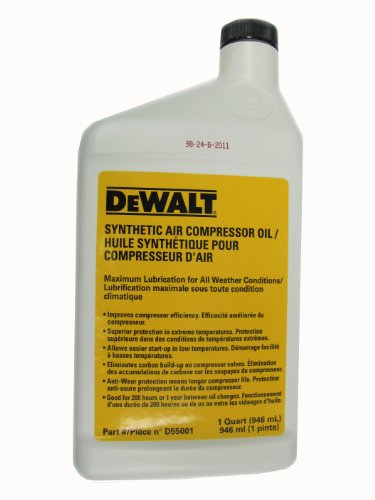 DeWalt D55001 1-Quart Compressor Oil
|
9.1/10 | Buy | |
| Best Premium |
 Triax Kompressor ISO 100 SAE 30 Oil (5 Gal)
|
9.1/10 | Buy |
 Milton 1002 SAE 30W Compressor Oil, 1 Gallon
|
8.8/10 | Buy | |
 TRIAX Kompressor ISO 46 SAE 20 Full Synthetic Air
|
8.8/10 | Buy | |
| Best Value |
 TRIAX Kompressor ISO 68 Full Synthetic Air
|
8.6/10 | Buy |
 Ingersoll Rand All Season Select Lubricant, 1L
|
8.6/10 | Buy | |
 Milton 1002-32 ISO-100 Compressor Oil, 32 oz
|
8.4/10 | Buy | |
 MAG 1 Air Compressor Oil 16 oz
|
7.8/10 | Buy |
Mag 1 1-Gallon Air Compressor Oil
Formulated for reliable workshop maintenance, Mag 1 Air Compressor Oil uses refined petroleum base stocks paired with anti-foam additives to maintain stable lubrication. The generous one-gallon volume makes it a practical choice for keeping reciprocating or stationary compressors running smoothly over time.
Pros
- Anti-foam additives maintain steady lubrication
- Refined petroleum stocks promote smooth operation
- Formula helps extend compressor service life
- Generous 1-gallon volume handles multiple refills
Cons
- Jug weighs 7.25 pounds and can be heavy to pour
- One-gallon size may exceed small top-off needs
Triax Kompressor ISO 46 SAE 20 Full Synthetic Air
Triax Kompressor ISO 46 SAE 20 is a commercial-grade, full synthetic non-detergent compressor oil engineered for oil-lubricated reciprocating, rotary screw, and vane pumps operating in temperatures from -49°F to over 140°F. It provides exceptional thermal protection and extended component life for garage mechanics and shop owners maintaining heavy-duty pneumatic systems.
Pros
- Extreme all-weather operating range from -49°F to 140°F+ prevents cold-start motor stalling and high-heat viscosity breakdown
- Non-detergent full synthetic formula protects internal bearings and provides up to 20,000 hours of service longevity
- Lowers operating pump temperatures by 30% and actively sheds condensation to prevent internal crankcase rust
- Compatible with oil-lubricated reciprocating, rotary screw, and rotary vane compressor pumps from major manufacturers
Cons
- Not suitable for oil-free or maintenance-free dual-piston compressor designs that do not use crankcase oil
- Explicitly prohibited for use in breathing air systems, oxygen compressors, or liquid natural gas (LNG) units
- Single-quart volume may require purchasing multiple bottles for larger stationary 60-gallon or 80-gallon shop pump crankcases
DeWalt D55001 1-Quart Compressor Oil
Formulated for regular air compressor maintenance, the DeWalt D55001 comes in a handy one-quart bottle to keep pump components operating smoothly. It is a solid choice for workshops and job sites running oil-lubricated compressors that require dedicated manufacturer-grade fluid.
Pros
- Convenient 1-quart size for routine maintenance
- OEM formulation from an established tool brand
- Compact bottle design stores easily
Cons
- Not applicable for oil-free compressor models
- May require multiple bottles for high-capacity industrial tanks
Triax Kompressor ISO 100 SAE 30 Oil (5 Gal)
Engineered for rotary, vane, screw, and reciprocating systems, this industrial-grade synthetic fluid provides up to 20,000 hours of continuous service across extreme temperatures. Its non-detergent formula lowers operating heat by 30 percent while guarding vital bearings against friction and moisture.
Pros
- Extended 20,000-hour life span minimizes maintenance cycles
- Reliable all-season operation across wide temperature swings
- Substantially reduces operating temperatures and oil burnoff
- Non-detergent blend prevents bearing wear and vibration
Cons
- Not compatible with oxygen air or LNG compressors
- Large 5-gallon volume exceeds small workshop requirements
Milton 1002 SAE 30W Compressor Oil, 1 Gallon
Milton 1002 is a non-detergent ISO-100 SAE 30W conventional lubricant engineered specifically for reciprocating air compressors. The one-gallon capacity makes it a sensible option for regular workshop equipment upkeep.
Pros
- Non-detergent formula tailored for reciprocating compressors
- Standard ISO-100 SAE 30W viscosity rating
- Generous one-gallon volume covers multiple refills
Cons
- Conventional mineral formula instead of synthetic blend
- Heavy container can be awkward to pour directly
TRIAX Kompressor ISO 46 SAE 20 Full Synthetic Air
TRIAX Kompressor ISO 46 SAE 20 is a commercial-grade, full-synthetic non-detergent lubricant engineered for oil-lubricated reciprocating, rotary screw, and vane air compressors. It provides reliable extreme-temperature wear protection and multi-viscosity all-season performance, making it an excellent maintenance choice for auto shops, contractors, and home garage workshops.
Pros
- Full synthetic non-detergent formulation extends pump life across severe operating conditions
- True all-season multi-viscosity rating maintains fluid flow from -49 deg F up to 140 deg F+
- Formulated to lower operating temperatures by up to 30% and eliminate oil vapor odor
- Compatible with a wide array of compressor pumps including reciprocating and rotary screw designs
Cons
- Not formulated for oil-free air compressors, breathing air systems, oxygen setups, or LPG gas pipelines
- Users must verify whether their pump manufacturer specifically calls for ISO 46 (SAE 20) rather than heavier ISO 68 or ISO 100 weights
- Requires careful manual crankcase draining and filling without an included pour spout
TRIAX Kompressor ISO 68 Full Synthetic Air
TRIAX Kompressor ISO 68 is a commercial-grade, full synthetic compressor lubricant engineered for oil-lubricated reciprocating, rotary screw, and vane pumps operating between -49°F and 140°F+. It is an excellent maintenance solution for auto mechanics, shop owners, and contractors seeking lower pump operating temperatures and up to 20,000 hours of service life.
Pros
- Extended 20,000-hour service life minimizes routine maintenance intervals on high-demand shop compressors
- All-season stability from -49°F to 140°F+ prevents cold-morning motor drag and high-heat viscosity breakdown
- Non-detergent formulation separates condensation cleanly to safeguard internal crankcase bearings
- Broad compatibility across major reciprocating, rotary screw, and rotary vane compressor manufacturers
Cons
- Not suitable for maintenance-free oil-free compressor designs or oxygen and Liquid Natural Gas (LNG) systems
- One-gallon container size exceeds the immediate refill capacity of small single-stage DIY splash-lube pumps
Ingersoll Rand All Season Select Lubricant, 1L
Engineered as an all-weather OEM fluid, this synthetic lubricant protects reciprocating compressors during continuous duty while resisting carbon buildup on critical valves. It is a solid pick for equipment owners who want fewer oil changes and reliable year-round operation.
Pros
- Maintains stable viscosity in hot and cold seasons
- Lasts four times longer than petroleum oil
- Keeps valves and rings free of carbon deposits
- Protects bearings under continuous duty cycles
Cons
- Formulated specifically for reciprocating compressor systems
- One-liter bottle requires buying multiples for large pumps
Milton 1002-32 ISO-100 Compressor Oil, 32 oz
Formulated specifically for oil-lubricated reciprocating compressors, this ISO-100 non-detergent lubricant shields pumps against wear and deposit buildup. It separates easily from moisture and remains fluid down to -15°F for dependable cold-weather starts.
Pros
- Protects internal components against wear and corrosion
- Non-detergent formula resists foaming and separates water
- Inhibits sludge and carbon deposit formation
- Maintains fluidity in temperatures down to -15°F
Cons
- Designed strictly for reciprocating pump mechanisms
- Conventional oil base rather than full synthetic
MAG 1 Air Compressor Oil 16 oz
MAG 1 Air Compressor Oil is a specialized 16-ounce petroleum lubricant formulated with anti-foam agents and rust inhibitors to protect oil-lubricated compressor pumps under heavy operating conditions. It offers essential wear protection and thermal stability for home garage hobbyists, auto mechanics, and shop owners maintaining oil-lubricated pneumatic equipment.
Pros
- Formulated specifically for compressor pump crankcases rather than generic detergent automotive motor oils
- Anti-foam chemistry helps prevent oil foaming and maintains steady lubrication under rapid piston strokes
- Helps protect internal metal components against rust and oxidation caused by ambient moisture buildup
- Convenient 16-ounce bottle size fits easily into garage maintenance cabinets and tool chests
Cons
- Not suitable for maintenance-free oil-free air compressors
- A 16-ounce volume may require multiple bottles for larger stationary multi-stage shop compressors with high crankcase capacities
Essential Air Compressor Lubrication and Pump Oil Selection
Air compressors require specialized non-detergent lubricants formulated to handle high compression heat without breaking down or foaming. Most reciprocating piston pumps take either an ISO 100 SAE 30 oil for warm environments or an ISO 46 SAE 20 oil for colder temperatures. These dedicated fluids contain anti-wear and anti-corrosion additives while omitting the detergents found in automotive engine oils. Choosing the proper oil preserves valve plates, prevents cylinder scoring, and ensures consistent air delivery during demanding operations.
The Critical Distinction Between Compressor Oil and Standard Motor Oil
Automotive engine oil and compressor oil serve fundamentally different mechanical environments. Motor oil contains heavy detergent packages engineered to keep combustion soot in active suspension so oil filters can trap it. Splash-lubricated compressor pumps lack oil filters, meaning suspended contaminants circulate endlessly through crankcase bearings and cylinder walls. These circulating abrasives accelerate internal wear, while suspended moisture emulsifies and causes internal mechanical corrosion.
Non-detergent compressor formulations allow foreign particles and condensed water to drop cleanly to the reservoir bottom. The crankcase sump holds these contaminants away from reciprocating connecting rods and splash dippers until drained. Detergent additives in motor oil foam aggressively when whipped by high-speed crankshaft dippers, collapsing the lubricating film and causing rapid metal contact, severe cylinder heat, and valve failure.
Carbon buildup presents another serious danger when standard motor oil enters an air compressor. High discharge temperatures around cylinder heads cause motor oil additives to bake onto delicate reed valves. As baked carbon hardens, reed valves lose their ability to form an airtight seal against the valve plate. The compressor then suffers severe volumetric loss, running continuously without reaching cutoff pressure.
Understanding Viscosity Ratings: ISO Grades Versus SAE Standards
Compressor lubricants use two standard rating systems to communicate fluid thickness under operating conditions. Industrial lubricants follow the International Organization for Standardization viscosity grade system, designated as ISO VG. Consumer products frequently cross-reference these metrics with Society of Automotive Engineers weight designations to help owners choose the correct fluid.
An ISO 100 oil corresponds directly to an SAE 30 non-detergent weight, representing the standard choice for warm workshop climates. For compressors operating in unheated garages, mobile trucks, or cold outdoor jobsites, manufacturers typically specify an ISO 46 or ISO 68 fluid matching SAE 20 weight. Cold ambient temperatures cause higher-viscosity lubricants to thicken significantly, creating severe hydrodynamic drag on the pump crankshaft during startup.
Excessive viscous drag during freezing weather causes electric motors to pull high inrush current, tripping standard 15-amp household circuit breakers. Using a lighter ISO 46 fluid allows the electric motor to spin up quickly before the starting capacitor disengages. Operating an ISO 46 fluid in extreme summer heat can thin the lubricating film, failing to protect cylinder walls from scuffing. When choosing the right compressor size and configuration, matching pump lubrication viscosity to your regional climate is essential for reliable operation.
Synthetic Versus Conventional Mineral Compressor Lubricants
Mineral-based compressor oils, refined from crude petroleum base stocks, offer dependable lubrication for standard hobbyist and intermittent trade applications. Formulations like Mag 1 and Milton conventional compressor oils feature anti-foam agents and rust inhibitors designed for reciprocating pumps. These mineral oils remain chemically stable under normal temperatures and provide sufficient film strength for light-duty cycles. However, mineral oils oxidize faster and form varnish deposits when subjected to continuous commercial workloads.
Full synthetic compressor lubricants utilize engineered synthetic base stocks that resist thermal degradation under continuous high-load operations. Synthetic formulas, including Ingersoll Rand All Season Select and TRIAX Kompressor series, maintain stable viscosity across wide temperature spans from freezing cold to extreme operating heat. Synthetic molecules exhibit superior shear stability, preventing the oil from thinning out when cylinder heads reach peak temperatures. This stability ensures constant hydrodynamic protection for precision bearings and cylinder liners during heavy production runs.
Service longevity represents another clear operational difference between mineral and synthetic lubricants. Conventional mineral oils generally require complete fluid replacement every 100 to 250 operating hours to prevent sludge buildup. Premium synthetic formulations can remain in service for thousands of operating hours without breaking down or losing their demulsibility properties. The extended change intervals and reduced valve maintenance provide significant long-term value for busy workshops.
Compressor Pump Designs and Their Specific Fluid Requirements
Pneumatic systems employ distinct pump architectures, each placing different physical demands on the lubricating fluid. Single-stage reciprocating piston compressors squeeze atmospheric air directly into storage pressure in a single stroke, generating concentrated heat across the cylinder head. Two-stage reciprocating compressors compress air in a primary low-pressure cylinder before routing it through an intercooler tube into a secondary high-pressure cylinder. Extreme discharge pressures in two-stage pumps demand robust lubricants capable of resisting severe oxidation at the secondary valve plate.
Rotary screw and rotary vane compressors operate on continuous compression cycles rather than reciprocating pulses. In these commercial machines, lubricant is actively injected into the compression chamber to seal rotor clearances, cool the compressed air stream, and lubricate roller bearings. These systems require specialized fluids with rapid air-release properties and exceptional water separation to prevent pump cavitation. Understanding your pump displacement and measuring standard cubic feet per minute helps ensure your oil volume and cooling capacity sustain continuous tool air consumption.
Oil-free compressors, by contrast, utilize specialized mechanical designs that require zero crankcase oil. These units rely on self-lubricating polytetrafluoroethylene piston rings and sealed pre-greased bearings to prevent friction. Equipment owners must never introduce liquid lubricants into an oil-free pump assembly, as oil degrades Teflon coatings and fouls downstream air lines.
Dangerous Fluids to Avoid in Pneumatic Pump Crankcases
Equipment owners occasionally consider using substitute workshop fluids when compressor-specific oil is not immediately available. Pouring standard motor oil, automatic transmission fluid, hydraulic oil, or gear lube into an air compressor crankcase introduces severe mechanical hazards. Transmission fluids contain friction modifiers and detergent packages that attack internal rubber seals and foam vigorously under splash lubrication. Gear oils possess high viscosity ratings that cause severe fluid drag, overheating electric motors and preventing proper oil splash.
Low flash-point lubricants and aerosol sprays represent the most catastrophic threat to high-pressure air systems. Penetrating oils, WD-40, and lightweight household oils can vaporize inside the hot cylinder head during the compression stroke. When compressed air heats these vaporized hydrocarbons past their auto-ignition temperature, an internal combustion event known as dieseling can occur. Dieseling creates sudden, violent pressure spikes that can shatter cast-iron valve plates, fracture cylinder heads, and rupture air lines.
Automotive synthetic multi-grade oils, such as 5W-30 or 10W-40, should also be avoided in splash-lubricated pumps. These fluids contain chemical viscosity index improvers made of long-chain polymers that break down rapidly under mechanical shearing. As these polymer chains shear apart, they leave sticky residues on discharge valves and reduce the base oil film thickness. Sticking strictly to designated compressor lubricants prevents catastrophic equipment damage and keeps your workshop safe from combustion hazards.
Determining Proper Oil Capacity and Reading Sight Glasses
Maintaining the precise oil level in a splash-lubricated compressor pump is critical for mechanical longevity. Most modern cast-iron pumps incorporate an acrylic or brass sight glass positioned directly on the crankcase side cover. The optimal fluid level rests squarely in the center of the sight glass, often indicated by a red target dot. Equipment operators should always inspect this sight glass on a level surface before switching on the power switch.
Some compressor pumps utilize a traditional threaded dipstick instead of a sight glass to monitor fluid levels. Dipsticks feature machined crosshatching or stamped upper and lower level marks to guide maintenance checks. When checking the level, unthread the dipstick, wipe it clean with a lint-free cloth, and reinsert it fully to obtain an accurate reading. Never check the oil level while the compressor is actively running, as sloshing fluid distorts the visual reading.
Both underfilling and overfilling a compressor pump cause serious operational problems. Underfilling starves the connecting rod dippers of fluid, resulting in rapid bearing galling, high friction heat, and cylinder seizure. Overfilling causes crankshaft counterweights to churn the oil into an aerated foam, forcing liquid oil past the piston rings into the air tank. This oil carryover contaminates downstream hoses, ruins pneumatic spray finishes, and fouls sensitive air nailer seals.
Routine Oil Change Intervals and Pump Break-In Procedures
New air compressor pumps require a dedicated break-in procedure to ensure piston rings seat properly against cast-iron cylinder walls. During the initial manufacturing process, microscopic machining marks and tiny metallic burrs remain on internal friction surfaces. Running the pump for an initial break-in period, typically between 20 and 30 minutes with the tank drain valve open, allows components to mate smoothly. Draining the factory oil fill after the first several hours of operation purges accumulated metal particles from the crankcase.
Following the break-in interval, standard maintenance schedules depend heavily on operating environment and fluid formulation. Conventional mineral oils in residential workshops should typically be changed every three to six months or after 100 to 200 hours of run time. Commercial workshops utilizing continuous-duty two-stage pumps or rotary screw systems should monitor synthetic fluid condition every 500 to 1,000 hours. Always consult the specific manufacturer guidelines provided with your machine to maintain factory warranty coverage.
Performing an oil change requires a few simple workshop steps to complete cleanly and safely. Run the compressor for five minutes to warm the oil, which suspends contaminants and allows fluid to flow freely. Disconnect electrical power and depressurize the tank completely before loosening the lower crankcase drain plug. Catch the old fluid, reinstall the plug with fresh thread sealant, and refill the reservoir with recommended compressor oil.
Identifying Contaminated Oil and Lubrication Problems
Inspecting the visual condition of your compressor oil provides early warning signs of internal pump problems. Fresh compressor oil appears clear to light amber, flowing smoothly without turbidity. If the oil in your sight glass takes on a cloudy, milky, or beige appearance, moisture contamination has occurred inside the crankcase. Moisture accumulation happens naturally when warm humid air enters the crankcase and condenses against cold cast-iron metal during short run cycles.
Addressing milky oil requires prompt fluid replacement and an evaluation of your compressor run cycles. When a compressor runs only for brief bursts, the pump never reaches the operating temperature needed to evaporate condensation. Allowing the pump to run longer continuous cycles drives off accumulated crankcase moisture through the breather vent, especially when stored in a temperature-controlled shop.
Dark black oil accompanied by an acrid burnt odor indicates severe thermal breakdown and pump overheating. Overheating stems from excessive duty cycles, blocked cooling fin airflow, or operating in ambient temperatures exceeding manufacturer ratings. If dark oil contains shimmering metallic flecks, internal bearing surfaces or cylinder walls are actively grinding away from lubrication failure. In such cases, shut down the pump immediately to inspect connecting rod bearings and wrist pins before catastrophic mechanical lockup occurs.
Matching Lubricant Selection to Your Equipment and Workshop Demands
Selecting the ideal oil for your air compressor comes down to matching fluid engineering to your working environment and workload intensity. DIY hobbyists running occasional framing nailers or inflating tires in a moderate garage climate get dependable service from quality conventional ISO 100 mineral oils. High-production woodworking shops, commercial auto restoration garages, and mobile service contractors benefit substantially from multi-viscosity synthetic fluids like TRIAX or Ingersoll Rand All Season Select. Synthetic formulations provide thermal protection across freezing mornings and blistering summer afternoons while keeping maintenance downtime minimal.
Always verify that any fluid entering your compressor crankcase explicitly states non-detergent air compressor formulation on the product packaging. Avoiding automotive motor oils, checking sight glass levels before heavy projects, and adhering to regular drain schedules protects your pump investment for decades. A properly lubricated cast-iron pump delivers consistent air delivery, runs significantly cooler, and operates smoothly through the toughest pneumatic jobs. Taking a few moments to verify your pump fluid ensures your workshop air tools always have the clean, reliable pressure they need to perform at their best.
About the author
Bob Beacham is an experienced tools and workshop writer with deep knowledge of power equipment, mechanical systems, and practical DIY applications. His coverage of air compressors, welding equipment, saws, and workshop tools helps translate technical specifications into useful guidance for homeowners and serious DIYers.