
What Type of Oil Is Used in an Air Compressor: A Practical Guide for 2026
Understand what type of oil is used in an air compressor with this practical guide to non-detergent ISO ratings and pump care for October 2026.
 By Clint DeBoer
Updated October 8, 2026
By Clint DeBoer
Updated October 8, 2026

Operating an oil-lubricated reciprocating or rotary pump requires precise crankcase lubrication to prevent premature friction wear and thermal breakdown across cylinder walls. Many machine operators ask what type of oil is used in an air compressor after discovering that standard engine lubricants can foul internal reed valves and damage sensitive gaskets. Dedicated compressor lubricants rely on specialized base stocks blended with anti-foaming agents and rust inhibitors rather than automotive detergent packages. Understanding these chemical differences ensures your pump maintains proper compression efficiency while preventing catastrophic thermal seizure during extended duty cycles.
Proper crankcase servicing involves choosing the exact viscosity weight specified by pump manufacturers like Campbell Hausfeld, DEWALT, or Milton to protect internal crankshaft bearings. Inspecting your equipment through dedicated sight glasses and reviewing compressor oil reservoir locations helps ensure clean fluid reaches moving wrist pins and splash dippers without overfilling. Using the wrong fluid can lead to heavy carbon accumulation on discharge ports, which restricts CFM delivery and forces the electric motor to run hot. Selecting the correct conventional or synthetic compressor lubricant preserves mechanical reliability and keeps pneumatic tools supplied with clean, consistent air volume.
| Award | Product | ACR Score About ACR ScoreThe ACR Score is our own rating from 0 to 10, based on performance, design and build, ease of use, and value. It reflects independent research and is never influenced by manufacturers, retailers, or affiliate commissions. Learn more › | |
|---|---|---|---|
| Best Overall |
Mag 1 1-Gallon Air Compressor Oil
|
9.2/10 | Buy |
| Best Budget |
 Triax Kompressor ISO 46 SAE 20 Full Synthetic Air
|
9.1/10 | Buy |
| Best Value |
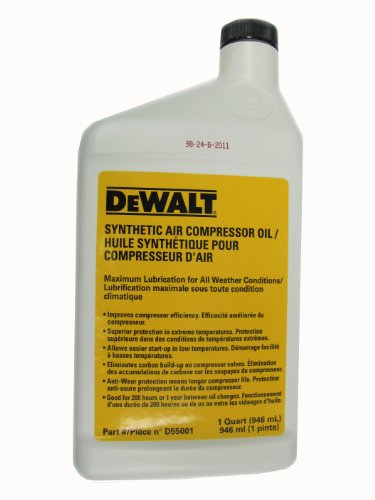 DeWalt D55001 1-Quart Compressor Oil
|
9.1/10 | Buy |
| Best Premium |
 Triax Kompressor ISO 100 SAE 30 Oil (5 Gal)
|
9.1/10 | Buy |
 Campbell Hausfeld 16 oz Non-Detergent 30W ISO-100
|
8.8/10 | Buy | |
 Milton 1002 SAE 30W Compressor Oil, 1 Gallon
|
8.8/10 | Buy | |
 TRIAX Kompressor ISO 46 SAE 20 Full Synthetic Air
|
8.8/10 | Buy | |
 Campbell Hausfeld ST1253 Compressor Oil (16 oz)
|
8.6/10 | Buy | |
 TRIAX Kompressor ISO 68 Full Synthetic Air
|
8.6/10 | Buy | |
 Milton 1002-32 ISO-100 Compressor Oil, 32 oz
|
8.4/10 | Buy |
Mag 1 1-Gallon Air Compressor Oil
Formulated for reliable workshop maintenance, Mag 1 Air Compressor Oil uses refined petroleum base stocks paired with anti-foam additives to maintain stable lubrication. The generous one-gallon volume makes it a practical choice for keeping reciprocating or stationary compressors running smoothly over time.
Pros
- Anti-foam additives maintain steady lubrication
- Refined petroleum stocks promote smooth operation
- Formula helps extend compressor service life
- Generous 1-gallon volume handles multiple refills
Cons
- Jug weighs 7.25 pounds and can be heavy to pour
- One-gallon size may exceed small top-off needs
Triax Kompressor ISO 46 SAE 20 Full Synthetic Air
Triax Kompressor ISO 46 SAE 20 is a commercial-grade, full synthetic non-detergent compressor oil engineered for oil-lubricated reciprocating, rotary screw, and vane pumps operating in temperatures from -49°F to over 140°F. It provides exceptional thermal protection and extended component life for garage mechanics and shop owners maintaining heavy-duty pneumatic systems.
Pros
- Extreme all-weather operating range from -49°F to 140°F+ prevents cold-start motor stalling and high-heat viscosity breakdown
- Non-detergent full synthetic formula protects internal bearings and provides up to 20,000 hours of service longevity
- Lowers operating pump temperatures by 30% and actively sheds condensation to prevent internal crankcase rust
- Compatible with oil-lubricated reciprocating, rotary screw, and rotary vane compressor pumps from major manufacturers
Cons
- Not suitable for oil-free or maintenance-free dual-piston compressor designs that do not use crankcase oil
- Explicitly prohibited for use in breathing air systems, oxygen compressors, or liquid natural gas (LNG) units
- Single-quart volume may require purchasing multiple bottles for larger stationary 60-gallon or 80-gallon shop pump crankcases
DeWalt D55001 1-Quart Compressor Oil
Formulated for regular air compressor maintenance, the DeWalt D55001 comes in a handy one-quart bottle to keep pump components operating smoothly. It is a solid choice for workshops and job sites running oil-lubricated compressors that require dedicated manufacturer-grade fluid.
Pros
- Convenient 1-quart size for routine maintenance
- OEM formulation from an established tool brand
- Compact bottle design stores easily
Cons
- Not applicable for oil-free compressor models
- May require multiple bottles for high-capacity industrial tanks
Triax Kompressor ISO 100 SAE 30 Oil (5 Gal)
Engineered for rotary, vane, screw, and reciprocating systems, this industrial-grade synthetic fluid provides up to 20,000 hours of continuous service across extreme temperatures. Its non-detergent formula lowers operating heat by 30 percent while guarding vital bearings against friction and moisture.
Pros
- Extended 20,000-hour life span minimizes maintenance cycles
- Reliable all-season operation across wide temperature swings
- Substantially reduces operating temperatures and oil burnoff
- Non-detergent blend prevents bearing wear and vibration
Cons
- Not compatible with oxygen air or LNG compressors
- Large 5-gallon volume exceeds small workshop requirements
Campbell Hausfeld 16 oz Non-Detergent 30W ISO-100
Campbell Hausfeld 30-weight ISO-100 non-detergent air compressor oil (model MATST125312AV) protects reciprocating pumps and air tools from premature wear and carbon buildup. Packaged in a 16-ounce bottle and made in the USA, it provides essential protection for garage mechanics and shop owners running oil-lubricated compressors.
Pros
- High-grade 30-weight ISO-100 non-detergent formulation resists valve carbon buildup
- Dual-purpose utility for both compressor crankcases and pneumatic tool maintenance
- Packaged in a convenient 16-ounce pour bottle that fits neatly on shop shelves
- Compatible with synthetic compressor oil lubrication systems
- Manufactured in the USA by a long-standing pneumatic equipment brand
Cons
- Not intended for modern oil-free compressor pumps that require zero crankcase lubrication
- Bottle lacks an elongated spout or funnel attachment for recessed oil fill ports
- 16-ounce volume may require multiple bottles for large commercial stationary pump oil changes
Milton 1002 SAE 30W Compressor Oil, 1 Gallon
Milton 1002 is a non-detergent ISO-100 SAE 30W conventional lubricant engineered specifically for reciprocating air compressors. The one-gallon capacity makes it a sensible option for regular workshop equipment upkeep.
Pros
- Non-detergent formula tailored for reciprocating compressors
- Standard ISO-100 SAE 30W viscosity rating
- Generous one-gallon volume covers multiple refills
Cons
- Conventional mineral formula instead of synthetic blend
- Heavy container can be awkward to pour directly
TRIAX Kompressor ISO 46 SAE 20 Full Synthetic Air
TRIAX Kompressor ISO 46 SAE 20 is a commercial-grade, full-synthetic non-detergent lubricant engineered for oil-lubricated reciprocating, rotary screw, and vane air compressors. It provides reliable extreme-temperature wear protection and multi-viscosity all-season performance, making it an excellent maintenance choice for auto shops, contractors, and home garage workshops.
Pros
- Full synthetic non-detergent formulation extends pump life across severe operating conditions
- True all-season multi-viscosity rating maintains fluid flow from -49 deg F up to 140 deg F+
- Formulated to lower operating temperatures by up to 30% and eliminate oil vapor odor
- Compatible with a wide array of compressor pumps including reciprocating and rotary screw designs
Cons
- Not formulated for oil-free air compressors, breathing air systems, oxygen setups, or LPG gas pipelines
- Users must verify whether their pump manufacturer specifically calls for ISO 46 (SAE 20) rather than heavier ISO 68 or ISO 100 weights
- Requires careful manual crankcase draining and filling without an included pour spout
Campbell Hausfeld ST1253 Compressor Oil (16 oz)
Formulated for workshop and industrial setups, this 30-weight lubricant protects compressor pumps against rust, sludge, and component wear. The compact 16-ounce bottle makes routine top-offs and crankcase servicing straightforward.
Pros
- Formulated specifically for compressor pumps and motors
- 30-weight viscosity helps minimize component wear
- Inhibits rust, sludge, and internal corrosion
- Compact bottle enables controlled, mess-free pouring
Cons
- 16-ounce volume may require multiple bottles for large units
- Single 30-weight viscosity is not suitable for all models
TRIAX Kompressor ISO 68 Full Synthetic Air
TRIAX Kompressor ISO 68 is a commercial-grade, full synthetic compressor lubricant engineered for oil-lubricated reciprocating, rotary screw, and vane pumps operating between -49°F and 140°F+. It is an excellent maintenance solution for auto mechanics, shop owners, and contractors seeking lower pump operating temperatures and up to 20,000 hours of service life.
Pros
- Extended 20,000-hour service life minimizes routine maintenance intervals on high-demand shop compressors
- All-season stability from -49°F to 140°F+ prevents cold-morning motor drag and high-heat viscosity breakdown
- Non-detergent formulation separates condensation cleanly to safeguard internal crankcase bearings
- Broad compatibility across major reciprocating, rotary screw, and rotary vane compressor manufacturers
Cons
- Not suitable for maintenance-free oil-free compressor designs or oxygen and Liquid Natural Gas (LNG) systems
- One-gallon container size exceeds the immediate refill capacity of small single-stage DIY splash-lube pumps
Milton 1002-32 ISO-100 Compressor Oil, 32 oz
Formulated specifically for oil-lubricated reciprocating compressors, this ISO-100 non-detergent lubricant shields pumps against wear and deposit buildup. It separates easily from moisture and remains fluid down to -15°F for dependable cold-weather starts.
Pros
- Protects internal components against wear and corrosion
- Non-detergent formula resists foaming and separates water
- Inhibits sludge and carbon deposit formation
- Maintains fluidity in temperatures down to -15°F
Cons
- Designed strictly for reciprocating pump mechanisms
- Conventional oil base rather than full synthetic
Understanding Compressor Oil Chemistry, Viscosity Grades, and Pump Protection
Selecting the correct lubricant for an oil-lubricated air compressor is critical to maintaining pump efficiency and preventing expensive mechanical failures. The fundamental answer to what type of oil is used in an air compressor centers on non-detergent, high-flash-point lubricants engineered specifically for pneumatic compression cylinders. Unlike internal combustion engines, air compressors do not burn fuel or produce soot, meaning they require distinct chemical properties to manage heat and moisture. Using an incorrect lubricant quickly leads to valve carbonization, foaming in the crankcase, and reduced volumetric airflow. Understanding these core lubrication principles helps shop owners preserve cylinder seals and avoid unnecessary pump rebuilds.
The Fundamental Requirement: Why Non-Detergent Lubrication Is Essential
The defining distinction between compressor lubricants and standard engine oils is the complete absence of detergent additives in compressor formulas. Automotive engine oils rely on detergents like calcium and magnesium sulfonates to suspend combustion contaminants so an oil filter can trap them. Because most reciprocating compressors lack internal oil filters in their splash-lubricated sumps, suspended contaminants would continually circulate across wrist pins and cylinder sleeves. Dedicated compressor oils allow debris, carbon particles, and condensed moisture to settle harmlessly to the bottom of the crankcase sump instead of recirculating through bearing surfaces. This settling mechanism keeps the active fluid layer remarkably clean across hundreds of operational hours.
Detergents also introduce aggressive foaming problems when churned by high-speed connecting rod dippers inside a compact crankcase. Foaming creates pockets of air within the oil bath, reducing fluid film thickness and leaving metal components vulnerable to friction wear. High-quality compressor lubricants, such as Mag 1 Air Compressor Oil, incorporate specialized anti-foam agents that keep the liquid body dense and stable under heavy splash conditions. Maintaining a solid liquid barrier prevents direct metal-to-metal contact between the connecting rod and the crankshaft journal during continuous running cycles. Furthermore, non-detergent chemistry ensures rapid moisture separation, allowing condensed water to separate from the oil rather than creating a harmful emulsion that clogs narrow oil passages.
Viscosity Grades Decoded: ISO 100, ISO 68, and ISO 46 Compared
Pneumatic compressor oils are categorized using both the International Organization for Standardization (ISO) viscosity grading system and traditional SAE weight ratings. The most prevalent grade across single-stage and two-stage reciprocating compressors is ISO 100, which closely aligns with standard SAE 30 non-detergent weight. Formulations like Campbell Hausfeld ST1253 and Milton 1002 utilize this ISO 100 SAE 30 viscosity profile to provide optimal film strength under high-temperature operating conditions. The heavier viscosity maintains an airtight hydraulic seal between piston rings and cast-iron cylinder walls, preventing compression blow-by. This durable hydrodynamic barrier ensures the pump sustains maximum CFM delivery as tank pressure rises toward cut-off thresholds.
Lighter viscosity grades, including ISO 68 and ISO 46, serve specialized operating environments and alternative pump designs. An ISO 68 fluid corresponds approximately to an SAE 20 weight and is frequently recommended for moderate ambient temperatures or medium-duty rotary equipment. For severe cold-weather applications, formulations like TRIAX Kompressor ISO 46 maintain fluid movement at sub-zero temperatures where heavier ISO 100 oils would thicken and starve internal bearings. If a pump operates in an unheated garage where winter temperatures drop significantly, a lighter ISO grade helps prevent high startup inrush current that trips household circuit breakers. Selecting the correct viscosity grade ensures the splash dipper distributes lubricant immediately upon startup without straining the electric motor.
Standard Automotive Motor Oil Versus Dedicated Compressor Fluid
Home mechanics often wonder whether standard motor oil can substitute for dedicated compressor fluid during an emergency refill. While pouring automotive 5W-30 or 10W-40 into a compressor crankcase might seem convenient, doing so creates severe operational risks. Automotive motor oils possess lower thermal flash points compared to specialized compressor lubricants, causing them to vaporize when exposed to extreme cylinder head temperatures. As vaporized oil passes over superheated discharge valves, it bakes onto valve plates and forms hardened carbon deposits. These carbon layers gradually reduce airflow passage dimensions and degrade overall pump compression efficiency.
Carbon accumulation on discharge reed valves prevents them from seating tightly against the valve plate during the intake stroke. When reed valves fail to close completely, compressed air leaks back into the cylinder, causing the pump to run continuously without reaching normal cut-out pressure. This continuous operation generates intense thermal buildup that can warp aluminum heads, destroy valve gaskets, and scorch cylinder walls. Dedicated products like DEWALT Compressor Oil are engineered without volatile multi-grade polymers, significantly reducing the rate of valve carbonization. Eliminating these additives also prevents oil mist carryover from entering air hoses and ruining spray finishes or pneumatic tool mechanisms.
Full Synthetic Formulations Versus Conventional Mineral Oils
Choosing between conventional petroleum-based lubricants and advanced synthetic blends depends heavily on your daily operating duty cycle and ambient shop conditions. Conventional mineral oils, such as Milton 1002-32 or Mag 1 Air Compressor Oil, rely on highly refined petroleum base stocks enriched with anti-wear additives. These mineral lubricants offer dependable performance for light-duty hobbyists, intermittent home garage projects, and low-frequency tire inflation tasks. They provide adequate thermal protection at an affordable investment level, making them economical for routine maintenance cycles. Regular oil changes ensure that conventional base stocks remain clean and free of oxidized breakdown byproducts.
Full synthetic compressor oils utilize engineered polyalphaolefin or ester base stocks that resist thermal oxidation far better than mineral oils. Formulations like TRIAX Kompressor ISO 100 SAE 30 deliver significantly higher load-bearing capacity and maintain viscosity stability across extreme temperature ranges. Synthetic fluids do not degrade or form varnish when subjected to continuous discharge temperatures exceeding two hundred degrees Fahrenheit. When assessing workshop equipment demands, reviewing air compressor sizing for workshop tools can help determine whether your expected air consumption warrants the superior thermal protection of full synthetic oil. The extended operating life of synthetic fluids often reduces annual maintenance downtime in high-demand shop environments.
Matching Lubricants to Pump Architectures: Reciprocating Pistons Versus Rotary Screws
The mechanical design of your compressor pump dictates specific lubrication requirements that must be respected to avoid internal failure. Reciprocating piston compressors utilize crankshaft-mounted splash dippers or pressurized oil pumps to throw oil droplets onto cylinder walls and wrist pins. These reciprocating pumps experience severe cyclical pressure spikes and require higher film strength, making ISO 100 SAE 30 non-detergent fluid the standard specification. The oil must withstand rapid reciprocating motion while forming an effective seal against compression rings. Without this robust fluid barrier, cylinder wall scoring and premature ring wear will quickly compromise tank recovery speeds.
Rotary screw and vane compressors function on an entirely different mechanical principle, utilizing intermeshing helical rotors to compress atmospheric air continuously. In oil-injected rotary screw systems, the lubricant seals rotor clearances, lubricates roller bearings, and absorbs the intense heat of continuous compression. Exploring broader industrial air compressor considerations highlights how rotary screw systems demand specialized synthetic fluids engineered to release entrained air rapidly. Using a heavy ISO 100 oil in a rotary screw pump can cause excessive fluid drag, overheated drive motors, and plugged air-oil separator filters. Matching the fluid viscosity to the specific compression mechanism prevents catastrophic equipment failure and preserves energy efficiency.
Environmental Operating Conditions and Temperature Tolerance
Ambient workspace temperatures dramatically influence how compressor oil behaves during startup and under continuous operational loads. When an air compressor sits inside an unheated garage or on an outdoor jobsite during winter, conventional ISO 100 mineral oil thickens significantly. This high fluid viscosity creates massive mechanical resistance against the crankshaft dipper when the electric motor attempts to spin. The resulting startup inrush current frequently exceeds breaker thresholds, tripping fifteen-amp or twenty-amp workshop circuits before the pump reaches operating speed. Cold, sluggish oil also fails to splash onto upper cylinder walls immediately, causing momentary dry friction wear during the first few seconds of operation.
Operating in cold climates requires either switching to a lighter ISO 46 fluid or upgrading to a broad-spectrum multi-viscosity full synthetic lubricant. Advanced synthetic formulas maintain fluidity at sub-zero temperatures, ensuring the lubricant flows freely over wrist pins and bearings upon initial motor rotation. Conversely, high summer ambient temperatures present severe thermal breakdown challenges for crankcase oil. When ambient temperatures exceed ninety degrees Fahrenheit, pump head temperatures climb rapidly, making thermally stable ISO 100 lubricants essential to prevent boundary lubrication failure and cylinder wall scoring. Maintaining proper ventilation around the compressor pump helps dissipate excess heat and preserves oil viscosity during hot summer workdays.
Practical Crankcase Maintenance: Monitoring Sight Glasses and Fluid Intervals
Maintaining proper crankcase oil levels requires regular visual inspection before initiating demanding pneumatic tasks. Most modern oil-lubricated compressor pumps feature a transparent acrylic sight glass located near the bottom of the cast-iron crankcase. The fluid level should rest precisely at the center red dot or within the upper boundary of the indicator ring when the machine sits level. Operating a pump with low oil levels starves splash dippers, leading to rapid bearing overheating, while overfilling causes excessive oil aeration and elevated discharge carryover. Consistent sight-glass checks prevent unexpected oil starvation during prolonged continuous tool operation.
Establishing a disciplined oil change schedule protects internal components from cumulative particulate contamination and acid buildup. For newly installed pumps, manufacturers universally recommend an initial break-in fluid change after the first eight to twenty hours of operation. This break-in drain purges manufacturing debris, microscopic metal shavings, and casting dust that shed from newly seated piston rings. After completing the initial break-in interval, standard conventional oils should be drained and refilled every three months or three hundred operating hours, whichever arrives first. Synthetic fluids can often remain in service longer, but regular visual checks ensure that contamination does not compromise pump protection.
Identifying Contamination, Sludge, and Lubrication Breakdown Symptoms
Recognizing the visual and physical symptoms of lubricating fluid breakdown enables operators to correct problems before catastrophic mechanical failure occurs. Fresh compressor oil exhibits a pale amber or transparent appearance when viewed through the crankcase sight glass. Over time, heat and particulate accumulation gradually darken the oil to a deep brown or black color. If the oil turns dark and emits a sharp acrid or burnt odor, thermal breakdown has occurred, signaling an immediate need for a complete fluid flush. Continuing to operate a compressor with burned oil will rapidly destroy crankshaft bearings and score cylinder bores.
A milky, cloudy, or frothy white appearance in the sight glass indicates severe water contamination within the crankcase reservoir. This condition arises when the compressor operates for brief intervals that fail to bring pump temperatures above the boiling point of water, allowing condensed atmospheric moisture to accumulate. Running the compressor under longer, sustained duty cycles allows internal heat to vaporize trapped moisture through the crankcase breather vent. Adhering strictly to dedicated non-detergent ISO 100 or synthetic formulations preserves seal integrity and maintains high volumetric pumping performance over years of reliable service. Draining moisture from both the tank and the crankcase sump keeps the entire pneumatic system clean and efficient.
Matching the specific chemical properties of dedicated non-detergent compressor oil to your pump architecture is the most reliable way to protect your pneumatic investment. Whether you select a conventional ISO 100 formula from brands like Milton and Campbell Hausfeld or invest in multi-viscosity full synthetics from TRIAX, prioritizing clean, non-detergent lubrication prevents costly valve damage and maintains optimal air delivery across every workshop project. Taking time to monitor fluid levels and adhere to regular oil change intervals ensures your equipment delivers consistent pressure whenever you power up your air tools.
About the author
Clint DeBoer is an experienced tool-industry specialist with decades of involvement in technical media, hands-on product evaluation, and testing methodology. His focus on performance, practical usability, and data-driven comparisons makes his expertise highly relevant to professional air compressors, pneumatic tools, and workshop equipment.