
What Size Compressor for Air Impact Wrench: Practical Sizing Guide for 2026
What Size Compressor For Air Impact Wrench needs depend on CFM ratings and tank size. Learn how to match shop tools and compressors in October 2026.
 By Tom Scalisi
Updated October 8, 2026
By Tom Scalisi
Updated October 8, 2026
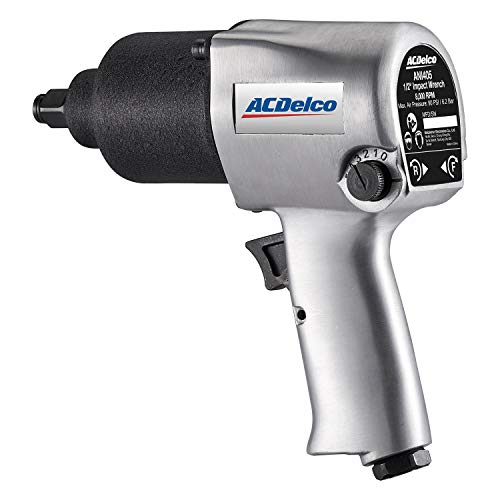
Pneumatic impact wrenches deliver massive breakaway torque in short bursts, but they consume substantial volumes of pressurized air each second the trigger stays pulled. When air supply falls short, even the highest-rated half-inch impact gun quickly bogs down, struggles on stubborn lug nuts, and forces you to wait while the pressure switch recovers. Determining what size compressor for air impact wrench setups require means balancing continuous air delivery against storage buffer volume. Matching these tool specifications prevents annoying pressure drops in your garage and avoids burning out small motors that cannot keep pace with heavy automotive work.
A standard half-inch pneumatic impact wrench typically calls for an operating pressure around 90 PSI while consuming anywhere from 4 to 6 CFM during active use. Selecting the correct pump involves evaluating running horsepower, recovery speeds, and whether you need single-stage and two-stage compressor options for sustained workshop demands. Investing in adequate tank capacity ensures you have enough immediate air volume to zip off all four car wheels without tripping branch circuit breakers or running your pump non-stop. Understanding these baseline operating mechanics allows home mechanics and tire technicians to get full torque out of their pneumatic air tools every single time.
| Award | Product | ACR Score About ACR ScoreThe ACR Score is our own rating from 0 to 10, based on performance, design and build, ease of use, and value. It reflects independent research and is never influenced by manufacturers, retailers, or affiliate commissions. Learn more › | |
|---|---|---|---|
| Best Overall |
ACDelco ANI405A Heavy Duty Twin Hammer ½” 500
|
9.2/10 | Buy |
| Best Premium |
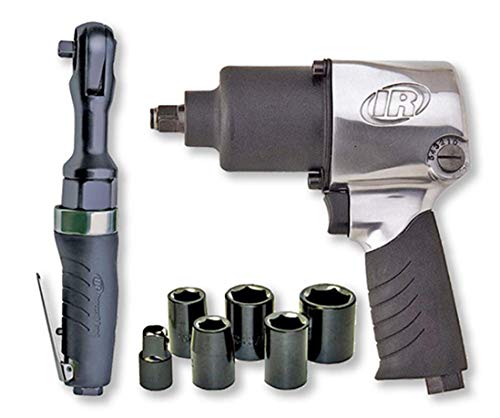 Ingersoll Rand 2317G 1/2" Drive Air Impact Wrench
|
9.1/10 | Buy |
| Best Value |
 VEVOR 1/2-Inch Air Impact Wrench
|
8.9/10 | Buy |
 Ingersoll Rand 231C 1/2" Drive Air Impact Wrench
|
8.9/10 | Buy | |
 DYNAMIC POWER 50 Pieces Air Tool Kit. 1-1/2''
|
8.8/10 | Buy | |
| Best Budget |
 AEROPRO TOOLS 1/2-Inch Air Impact Wrench
|
8.6/10 | Buy |
 BESWELL® BW-112BN 1/2-Inch Air Impact Wrench
|
8.3/10 | Buy | |
 AEROPRO TOOLS 1/2-Inch Aluminum Air Impact
|
8.3/10 | Buy | |
 Trivd Frol Air Impact Wrench 1/2“
|
8.3/10 | Buy | |
 Ingersoll Rand 231HA-2 1/2"-Drive Air Impact
|
8.3/10 | Buy |
Compressor Sizing Principles for Air Impact Wrenches
Selecting the right power source for a pneumatic impact gun requires matching air volume, operating pressure, and storage reserve directly to your garage workload. Many hobbyists assume that any small utility compressor can power a half-inch impact wrench simply because the tank reaches ninety pounds per square inch. While compact jobsite units build sufficient static pressure, they frequently lack the continuous airflow required to sustain twin-hammer mechanisms during stubborn fastener removal. Determining what size compressor for air impact wrench operation is necessary prevents severe torque drops, excessive pump cycling, and premature motor burnout.
The Core Sizing Formula: Balancing CFM Output Against Impact Consumption
Cubic feet per minute, abbreviated as CFM, indicates the true volume of pressurized air delivered to your pneumatic tools at a specified operating pressure. Pneumatic impact wrenches operate under sudden dynamic airflow demands, meaning their rotary air motors consume substantial air volume whenever you squeeze the trigger. Most standard half-inch impact wrenches, including models from Ingersoll Rand and VEVOR, require between 4 and 6 CFM at 90 PSI to achieve their rated torque output. If your compressor pump only supplies 2.5 CFM at 90 PSI, the wrench will quickly starve for air and lose breakaway power during tough automotive jobs.
A widespread mistake among automotive DIYers involves relying on manufacturer average CFM ratings rather than continuous consumption figures. Average air consumption numbers assume an intermittent usage pattern, such as operating the impact wrench for only ten to fifteen seconds out of every working minute. In real garage situations, breaking loose seized suspension bolts, rusty lug nuts, or stubborn crank pulleys often requires continuous trigger engagement for much longer periods. Multiplying the impact wrench rated average CFM by at least 1.3 to 1.5 provides a safe continuous delivery target that your compressor pump should deliver.
Operating pressure represents the force behind that moving volume of air and directly impacts internal hammer velocity. Most pneumatic impact wrenches specify optimal performance at an operating pressure of 90 PSI measured directly at the tool air inlet. If your compressor has a low cut-in pressure setting, regulated line pressure may dip into the 60 to 70 PSI range while the motor tries to catch up. Ensuring that your air compressor maintains a cut-in pressure safely above 90 PSI guarantees that the impact mechanism delivers consistent striking energy on every single blow.
Tank Capacity and Buffer Reserves: Why Gallon Size Dictates Burst Performance
Air receiver tanks act as mechanical energy buffers that instantly supply massive volumes of pressurized air during burst operation. When you squeeze the trigger on high-torque tools like the ACDelco ANI405A or AEROPRO units, the air motor draws immediately from stored tank volume before the pressure switch triggers the electric motor. A compact six-gallon pancake tank holds only enough stored air to remove three or four lug nuts before tank pressure plummets below functional operating levels. Once that reserve drops, you are forced to stop working and wait for the pump to complete a full recovery cycle.
For general home automotive maintenance, an air tank capacity between 20 and 30 gallons provides an effective balance of storage and garage space efficiency. A 20-gallon receiver tank holds sufficient air volume to remove all five lug nuts on four vehicle wheels without dropping below operating pressure. If you run multiple automotive shop tools or plan on operating heavier machinery, reviewing dedicated air compressor sizing for automotive equipment offers valuable setup insights for expanded garage layouts. Larger vertical storage tanks between 30 and 60 gallons store substantial reserves that reduce frequent motor cycling and keep tool torque consistent.
Tank orientation and garage footprint also influence overall workshop functionality and ease of maintenance. Vertical receiver tanks occupy minimal floor space along shop walls while keeping the motor and pump elevated away from ground debris. Horizontal tanks often include integrated wheels and transport handles, making them much easier to reposition near vehicle repair bays or driveways. Regardless of which physical form factor you select, sufficient storage volume prevents rapid pressure drops and ensures your impact wrench operates at peak mechanical efficiency.
Matching Compressor Output to Impact Wrench Drive Sizes and Torque Levels
Different drive anvil sizes demand vastly different air volume rates to produce their advertised torque output. Compact 3/8-inch air ratchets and smaller impact tools generally consume between 2.5 and 3.5 CFM at 90 PSI, making them compatible with smaller 10 to 15 gallon compressors. These compact tools are ideal for tight engine bays and interior automotive assembly where torque demands rarely exceed 50 to 100 foot-pounds. Secondary pneumatic tools, such as the ratchet wrench found in the Ingersoll Rand 2317G kit, place much lower demands on your compressor than heavy half-inch impact guns.
Half-inch pneumatic impact wrenches serve as the primary workhorse for standard garage mechanics, automotive shops, and light truck service. High-torque models like the Ingersoll Rand 231C or BESWELL BW-112BN generate between 600 and 1,180 foot-pounds of breakaway torque by utilizing twin-hammer impact assemblies. Powering these heavy-duty tools reliably requires an air compressor that outputs at least 4.5 to 5.5 CFM at 90 PSI paired with a 20-gallon or larger receiver tank. Attempting to run a powerful half-inch impact gun on an undersized compressor limits tool rotational speed and prevents the hammers from generating maximum breakaway force.
Heavy-duty 3/4-inch and 1-inch commercial impact wrenches belong to an entirely different class of pneumatic air consumption. These industrial fasteners tools service heavy equipment, commercial transport trailers, and agricultural machinery, often demanding between 8 and 12 CFM at 90 PSI under continuous load. Operating these large commercial tools requires a stationary two-stage air compressor with a dedicated 60 to 80 gallon storage tank and a powerful multi-horsepower motor. Knowing the exact drive size and torque rating of your pneumatic tools prevents purchasing an undersized unit that cannot handle your daily mechanical tasks.
Downstream Air Delivery: The Impact of Hose Diameter and Quick Couplers
Many mechanics invest in a powerful air compressor but experience poor impact wrench performance because of restrictive downstream air hoses. A standard quarter-inch internal diameter hose causes substantial dynamic friction, resulting in a dramatic pressure drop between the compressor regulator and the tool inlet. Manufacturer instructions for tools like the Ingersoll Rand 231HA-2 explicitly require a minimum 3/8-inch internal diameter hose to deliver adequate airflow volume. Upgrading your air delivery lines from a 1/4-inch hose to a 3/8-inch or 1/2-inch hose instantly restores lost torque to your pneumatic impact wrench.
Quick-connect fittings and regulator discharge ports represent another common bottleneck in garage air distribution setups. Standard 1/4-inch body couplers restrict the physical passage of air, creating a noticeable pressure drop every time the impact wrench motor spins up. High-flow quick couplers, often designated as V-style fittings, feature wider internal orifices that allow substantially higher air volume without altering thread sizes. Equipping your hoses and tool inlets with high-flow couplers ensures that full pump delivery reaches your impact gun without unnecessary mechanical restriction.
Air hose length also plays a vital role in determining dynamic pressure stability at the impact wrench handle. A 50-foot coiled hose creates significantly more internal air resistance and line pressure loss than a straight 25-foot rubber or hybrid line. When servicing vehicles in a home garage, keeping your air line as short and direct as possible ensures crisp hammer actuation and rapid anvil rotation. If you need air delivery across a wide workshop space, installing permanent aluminum or copper pipe lines preserves working pressure far better than linking multiple flexible hoses.
Electrical Considerations, Motor Horsepower, and Pump Duty Cycles
Electric air compressor motors draw significant electrical current, especially when starting against head pressure inside the pump cylinders. Most portable 120-volt garage compressors draw between 13 and 15 running amps, which operates very close to the trip threshold of a standard 15-amp household circuit. Cold garage temperatures can stiffen pump lubrication, creating high startup inrush current spikes that trip residential circuit breakers unexpectedly. Powering your air compressor through a dedicated 20-amp garage branch circuit ensures reliable motor starts and prevents frustrating electrical disruptions during repair projects.
Compressor pump duty cycles indicate how many minutes per hour a pump mechanism can operate without risking thermal overload or premature valve damage. Many consumer-grade oil-free compressors carry a 50 percent duty cycle rating, which means the pump should rest for equal amounts of running time during each work cycle. In contrast, heavy-duty cast-iron oil-lubricated pumps often support 70 to 100 percent duty cycles designed for continuous automotive repair shop environments. Operating an undersized compressor continuously to keep up with an impact wrench generates excessive operating heat and shortens pump service life.
Using undersized electrical extension cords represents one of the most common causes of motor overheating and electrical breaker failure. Lightweight extension cords introduce substantial voltage drops, starving the electric motor of power and generating damaging internal winding heat. When you need greater reach to service vehicles in an outdoor driveway, always extend your pneumatic air hose rather than the electrical power cord. Keeping your air compressor plugged directly into a sturdy wall outlet protects motor windings and ensures maximum compression performance.
Essential Maintenance Habits for Consistent Air Pressure and Tool Life
Ambient atmospheric air contains humidity that naturally condenses into liquid water inside the steel storage tank during regular compression cycles. Allowing water to pool in the bottom of your tank reduces usable storage volume and promotes internal rust and structural corrosion. Establishing a regular routine for draining moisture from an air compressor tank protects internal metal surfaces and keeps moisture from entering your pneumatic tools. Purging the tank drain valve after every automotive project ensures clean, dry air delivery while extending the overall lifespan of your equipment.
Oil-lubricated compressor pumps demand periodic oil checks through the crankcase sight glass to ensure moving components stay properly lubricated. Using non-detergent synthetic compressor oil prevents carbon deposits on reed valves and ensures smooth piston operation across varying seasonal temperatures. Clean intake air filters are equally critical, since shop dust and metal shavings can easily score cylinder walls and diminish pump CFM production. Inspecting and cleaning air intake filters every month maintains optimal airflow and protects internal pump cylinders from abrasive wear.
Pneumatic impact wrenches also require consistent lubrication to protect their internal air motors and twin-hammer mechanisms from excessive friction. Adding four to six drops of clean pneumatic tool oil directly into the tool inlet before each session keeps rotor vanes spinning freely. Tools like the VEVOR 1/2-inch wrench include dedicated oiling ports to simplify routine maintenance and prevent premature internal wear. Pairing clean, dry compressor air with disciplined tool lubrication ensures your impact wrench produces maximum breakaway torque whenever you confront stubborn automotive hardware.
Practical Sizing Recommendations for DIY and Professional Mechanics
Determining the ideal compressor configuration comes down to matching your intended workload with appropriate pump CFM and receiver tank capacity. For DIY mechanics performing seasonal tire rotations and occasional brake maintenance, a portable compressor delivering 4 to 5 CFM at 90 PSI with a 20-gallon tank provides dependable power. Professional repair facilities and restoration workshops handling daily suspension work benefit significantly from a 60-gallon stationary compressor delivering 10 to 14 CFM at 90 PSI. Sizing your air compressor to exceed your impact wrench consumption ratings guarantees consistent breakaway torque, minimal motor strain, and reliable performance across every automotive project.
About the author
Tom Scalisi brings more than two decades of experience in construction, building maintenance, contracting, and hands-on tool use. His practical understanding of power tools, automotive work, repairs, and jobsite equipment helps readers evaluate compressors based on real workloads rather than specifications alone.