
How to Get Water out of Air Compressor Tank: Practical Maintenance Guide for 2026
Learn how to get water out of air compressor tank safely and prevent tank rust this October 2026 with practical draining steps and hardware upgrades.
 By Clint DeBoer
Updated October 8, 2026
By Clint DeBoer
Updated October 8, 2026
Operating pneumatic equipment in humid garage environments naturally draws ambient moisture directly into the steel air reservoir during each compression cycle. When warm compressed air cools inside the receiver, water vapor condenses into liquid pooling along the tank bottom, leading to line spitting, pneumatic tool corrosion, and internal metal scaling. Understanding how to get water out of air compressor tank is essential for preserving tank integrity and keeping pneumatic nailers, paint sprayers, and impact wrenches running efficiently. Checking our air compressor tank sizing guide can help clarify how air volume demands impact total moisture generation. Regular maintenance prevents catastrophic steel vessel thinning over years of active shop operation.
Many workshop owners overlook daily condensation drainage until brown water begins discharging through quick-connect couplers or sticking factory petcocks become impossible to turn by hand. Upgrading from stiff needle valves to accessible quarter-turn ball valves or electronic timed drain systems makes routine maintenance effortless while protecting air lines. When setting up workshop air distribution or connecting auxiliary air storage tanks, proper moisture management forms the frontline defense against equipment breakdown. Taking a proactive approach to tank condensation ensures consistent working pressure, extends tool life, and maintains a safe pneumatic workspace.
| Award | Product | ACR Score About ACR ScoreThe ACR Score is our own rating from 0 to 10, based on performance, design and build, ease of use, and value. It reflects independent research and is never influenced by manufacturers, retailers, or affiliate commissions. Learn more › | |
|---|---|---|---|
| Best Overall |
2 Pack Extended Tank Drain Valve Assembly Kit
|
9.1/10 | Buy |
| Best Value |
 QWORK 2 Pack Extended Tank Drain Valve Assembly
|
9.1/10 | Buy |
| Best Budget |
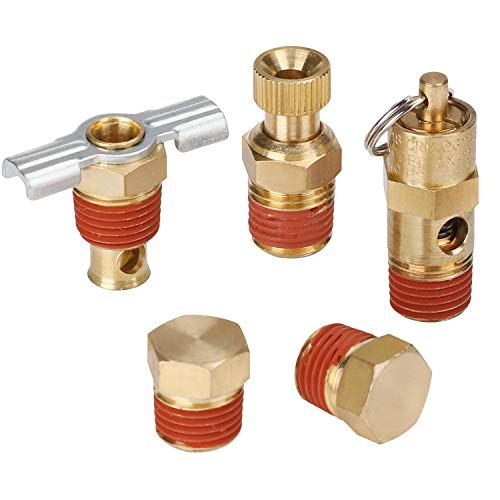 Hromee 5 Piece 1/4 Inch Compressor Air Tank Port
|
8.9/10 | Buy |
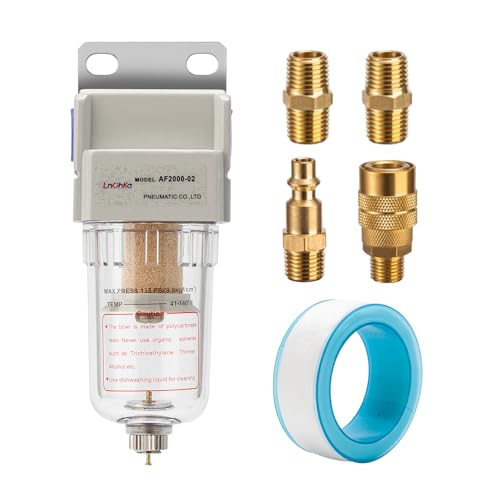 LNCHKA Air Compressor Water Separator
|
8.9/10 | Buy | |
| Best Premium |
 Hromee Automatic Air Compressor Tank Drain Valve
|
8.6/10 | Buy |
 Extended Tank Drain Valve Assembly Kit for Air
|
8.3/10 | Buy | |
 Automatic Electronic Tank Drain Kit
|
8.3/10 | Buy | |
 1/4" NPT Timer Operated Compressor Air Drain
|
8.3/10 | Buy | |
 Litorange Lead-Free Brass Winterize Sprinkler
|
8.0/10 | Buy | |
 QWORK Electronic Drain Valve
|
8.0/10 | Buy |
Complete Guide to Draining and Managing Air Compressor Tank Moisture
Purging water from an air compressor receiver is one of the most critical maintenance tasks for any workshop, garage, or jobsite. Atmospheric air naturally holds moisture in the form of water vapor, which transforms into standing liquid once compressed and cooled inside the steel storage vessel. Left unchecked, this pooled condensate promotes internal rust, reduces usable air storage volume, and eventually contaminates downstream air tools. Mastering how to get water out of air compressor tank systems preserves equipment longevity and ensures clean, dry air delivery for every pneumatic project.
Why Condensation Forms Inside Air Compressor Tanks
Compressing atmospheric air forces gas molecules into a much tighter volume, which significantly elevates both internal pressure and temperature. As the ambient intake air enters the pump cylinder, it brings relative humidity along with it into the mechanical compression stroke. Once this hot compressed air enters the cooler storage receiver, the air drops below its dew point, causing water vapor to condense out onto the interior tank walls. The resulting liquid slides down the curved walls and collects at the absolute lowest point of the tank floor.
High humidity environments and prolonged compressor run cycles accelerate this liquid pooling dramatically during continuous operations. Unlike continuous tools that exhaust air quickly, closed tanks act as condensation collectors that hold standing water alongside trace oil residues from lubricated pumps. For operators balancing equipment options, understanding oil-free versus oil-lubricated compressor designs helps explain how pump lubrication impacts the acidity and sludge consistency of tank drainage. Without a clear path to purge this accumulated mixture, standing water slowly eats away at internal steel welds from the inside out.
Safety Precautions Before Draining Stored Moisture
Draining compressed air vessels requires strict adherence to workshop safety protocols to prevent personal injury and avoid hearing or eye damage. Air receiver tanks store immense potential energy under pressures commonly ranging between 90 and 175 PSI. Opening a drain valve under full operating pressure can blast rust scale, oily sludge, and high-velocity water directly into your face or across workshop surfaces. Always put on ANSI-approved eye protection and heavy-duty work gloves before reaching underneath any pressurized air vessel.
Hearing protection is equally essential because high-pressure air rushing through a small orifice produces high-decibel noise that can cause immediate ear discomfort. If you are working on an unfamiliar machine, verify the operational condition of the factory safety relief valve before adjusting lower drain fittings. Pulling the brass safety valve ring briefly confirms that the spring-loaded relief mechanism moves freely and does not stick under pressure. Taking these basic protective measures ensures that removing water remains a controlled, clean, and safe workshop task.
Step-by-Step Manual Tank Draining Procedure
Executing a manual tank drain begins by shutting off electrical power to the compressor motor and disconnecting the main power plug. Turn off the compressor power switch to prevent the motor from cycling on unexpectedly while you work near the base of the machine. Next, reduce stored tank pressure by bleeding air through an open pneumatic tool or by adjusting the line regulator downward until the tank pressure gauge reads approximately 10 to 20 PSI. Leaving a small amount of residual pressure inside the tank is advantageous because that mild positive pressure helps push heavy sludge and pooled water out through the drain port.
Locate the factory drain petcock positioned at the absolute bottom center of the air receiver tank. Position a shallow catch pan or thick workshop towel directly beneath the drain outlet to capture dirty water and oily residue. Slowly rotate the drain valve counterclockwise using your fingers or appropriate pliers until you hear air hissing and see liquid discharging into the container. Allow the valve to remain open until all visible water stops flowing and only dry air escapes from the port. Once the discharge is completely dry, close the valve securely clockwise by hand and tilt portable tanks slightly forward to verify that no trapped pockets of water remain behind.
Overcoming Stuck, Seized, or Leaking Factory Drain Valves
Factory drain fittings on budget or portable air compressors often consist of miniature brass needle petcocks or winged thumb valves. These small fittings are notoriously prone to corrosion, internal rust scale jamming, and rubber O-ring degradation over repeated duty cycles. Stiff petcocks can seize completely when neglected, making it nearly impossible to twist the valve open without stripping the delicate brass wings. For replacement purposes, the Hromee 5 Piece 1/4 Inch Compressor Air Tank Port Fittings Kit provides solid brass winged tank drain cocks and knurled twist petcocks rated to handle standard operating pressures.
If a factory petcock seizes completely, never force it open with excessive torque while the tank remains fully pressurized. Fully depressurize the vessel to zero PSI by lifting the safety relief valve ring or exhausting air through an attached blowgun. Apply penetrating fluid to the external threads of the seized valve and allow several minutes for the lubricant to seep into the brass interface. Using a proper open-end wrench on the brass hex body, carefully unthread the stuck valve counterclockwise from the tank bung. Clean the female tank threads thoroughly with a wire brush to remove rust debris before installing a fresh replacement fitting wrapped in thread seal tape.
Upgrading to Extended Ball Valve Drain Assemblies
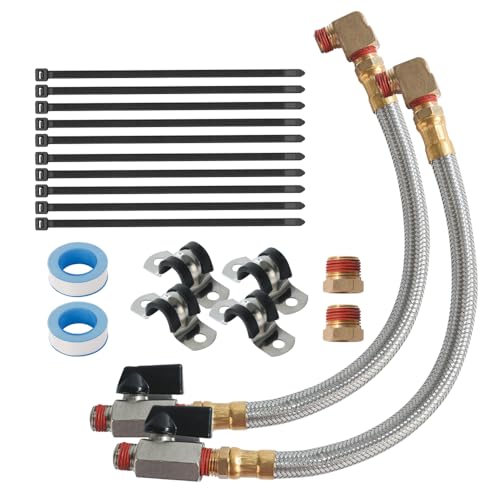
Crouching on dirty garage floors to reach awkward, recessed drain plugs discourages regular maintenance for many compressor owners. Upgrading the factory needle petcock with an extended drain assembly relocates the valve handle to an easily accessible position on the side of the compressor frame. Kits like the SUNROAD 2 Pack Extended Tank Drain Valve Assembly Kit and the QWORK 2 Pack Extended Tank Drain Valve Assembly provide a 10-inch flexible braided steel drain hose with standard 1/4-inch NPT threads. These braided hoses are rated for a maximum working pressure of 175 PSI and a blasting pressure of 475 PSI, ensuring robust durability under heavy workshop conditions.
Installation involves threading a 1/4-inch brass street elbow into the bottom tank port, connecting the braided hose, and securing a quarter-turn brass ball valve at the opposite end. Kits also include 1/4-inch to 3/8-inch brass bushing adapters, vibration-damping routing clamps, and rolls of thread seal tape to accommodate diverse tank bungs. Quarter-turn ball valves feature chrome-plated brass construction and rubber-wrapped lever handles that provide effortless on-and-off flow control. With an extended valve mounted securely to the exterior leg or frame, purging daily moisture takes mere seconds without requiring you to reach underneath the machine.
Automating Condensation Removal with Electronic Timed Drain Valves
Busy commercial shops and serious DIYers often benefit from automating condensation removal completely using an electronic timed drain valve. Devices such as the Hromee Automatic Air Compressor Tank Drain Valve and the SUNROAD Timer Operated Compressor Air Drain Valves eliminate manual tasks entirely. These automated valves feature an integrated electronic solenoid timer housed inside an IP65 water-resistant casing powered by standard 110V to 120V AC electrical supplies. Operating across ambient temperatures from 32 degrees to 140 degrees Fahrenheit, these units operate reliably in diverse garage climates.
The electronic timer allows users to customize drainage intervals precisely to suit ambient humidity and compressor workload. You can set the OFF interval between 0.5 and 45 or 50 minutes, while adjusting the ON discharge duration between 0.5 and 10 seconds. Units like the QWORK Electronic Drain Valve incorporate an integrated ball valve strainer that filters out rust scale and debris before it can clog the sensitive internal solenoid orifice. A built-in test button allows quick manual cycling to verify that the solenoid opens and clears moisture without disturbing the pre-set timing cycle.
Downstream Protection with Moisture Separators and Line Dryers
Draining the bottom of the receiver tank removes the vast majority of liquid condensate, but high-velocity airflow can still carry airborne water vapor downstream into sensitive tools. Installing an inline air line filter like the LNCHKA Air Compressor Water Separator provides essential secondary protection for pneumatic tools and paint spraying equipment. This 1/4-inch NPT compressed air line filter uses a 5-micron brass filter element housed inside a transparent polycarbonate cup to capture fine droplets, dirt, and particulate matter. Rated for up to 145 PSI with an airflow capacity of 18 SCFM, it handles the demands of light to medium duty pneumatic setups.
Moisture carried through air hoses strips away lubricating oils inside pneumatic tools, leading to premature motor wear, cylinder scoring, and sticking internal vanes. Reviewing our pneumatic air tool lubrication guide highlights how clean, dry air preserves tool mechanisms when paired with appropriate pneumatic oiling routines. Combining regular tank purging with a dedicated inline moisture separator ensures that impact wrenches, nailers, and finish guns receive clean air without moisture contamination. Inspect the transparent filter bowl periodically and depress the manual drain valve whenever liquid reaches the indicated fill line.
Seasonal Maintenance and Purging Air Lines for Winter
Cold weather introduces serious freezing risks for air compressor tanks, stationary plumbing lines, and external pneumatic installations. When ambient temperatures drop below 32 degrees Fahrenheit, residual condensation pooled along the tank bottom freezes into solid ice, blocking drain valves and distorting lower tank seams. Ice expansion inside closed brass valves can crack valve bodies, shatter petcock seals, and prevent pressure relief mechanisms from actuating safely. Keeping your air compressor inside a climate-controlled space or thoroughly draining all moisture immediately after every winter session prevents destructive freeze damage.
Air compressors are also widely employed during autumn to blow out underground sprinkler pipes, RV water systems, and outdoor garden plumbing before sub-freezing temperatures arrive. Tools such as the LitOrange Lead-Free Brass Winterize Sprinkler blow out plug adapter fitting connect standard compressor quick-connect fittings directly to 3/4-inch garden hose threads. Regulate air pressure down between 20 and 50 PSI during winterizing blowout tasks to prevent over-pressurizing delicate plastic plumbing lines. Always ensure that the air compressor tank itself has been drained of accumulated water before using it to blow out seasonal plumbing systems.
Recommended Draining Frequency and Long-Term Tank Care
Maintaining a consistent moisture drainage schedule is the single most effective way to prevent internal corrosion and extend the working life of an air receiver. Commercial shops running continuous rotary sanders or spray equipment should drain their compressor tanks at the conclusion of every single workday. Occasional hobbyists and DIY users should drain the tank after every project session, never leaving pressurized air and standing liquid stored inside the tank between uses. In high-humidity coastal or summer environments, opening the drain valve mid-day during heavy continuous use provides additional protection against moisture buildup.
Periodic visual inspections of discharged drain water provide valuable diagnostic insight into internal tank health. Clear or slightly cloudy water indicates healthy interior steel walls, whereas dark brown, muddy discharge signals advancing internal rust corrosion. If you notice heavy flaking rust chunks or deep metallic pitting around the bottom bung, the structural integrity of the pressure vessel may be severely compromised. Steel air tanks cannot be safely welded or patched once compromised by internal rust, making timely replacement of the vessel necessary for workshop safety. Consistent drainage habits and reliable hardware upgrades keep your air compressor running smoothly and safely for years to come.
About the author
Clint DeBoer is an experienced tool-industry specialist with decades of involvement in technical media, hands-on product evaluation, and testing methodology. His focus on performance, practical usability, and data-driven comparisons makes his expertise highly relevant to professional air compressors, pneumatic tools, and workshop equipment.