
What Size Air Compressor for Impact Tools: Practical Sizing Guide for 2026
Learn what size air compressor for impact tools you need in October 2026 based on CFM ratings, tank capacity, and working pressure requirements.
 By Bob Beacham
Updated October 8, 2026
By Bob Beacham
Updated October 8, 2026
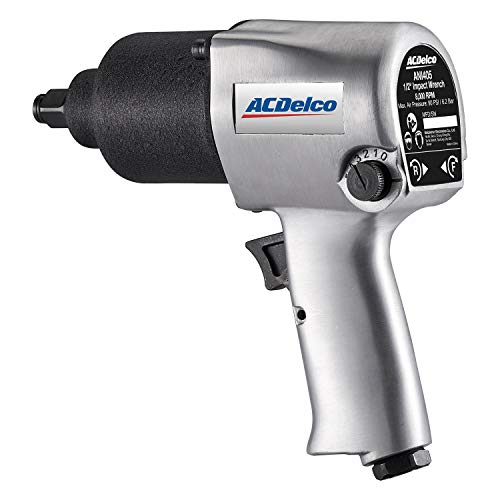
Operating pneumatic tools like high-torque impact wrenches requires far more than just basic line pressure; it demands adequate sustained air volume. When evaluating what size air compressor for impact tools makes the most sense for your garage or shop, the primary consideration begins with cubic feet per minute rather than maximum pounds per square inch. An undersized pump will leave you waiting for tank recovery after loosening just a few stubborn lug nuts, while an appropriately sized unit maintains steady torque output without excessive cycling. For those new to workshop pneumatics, understanding air compressor CFM requirements is the most reliable way to avoid underpowered tool operation.
Impact wrenches rely on sudden, high-volume bursts of compressed air to drive their internal hammer mechanisms and generate rated breakaway torque. A standard half-inch pneumatic impact wrench typically requires between four and five cubic feet per minute at ninety pounds per square inch to deliver its full power. Pairing such tools with an undersized portable tank often leads to rapid pressure drop, sluggish fastener removal, and unnecessary motor strain. Investing in the correct compressor size ensures that your pneumatic impact guns, ratchets, and accessories operate reliably during demanding automotive maintenance tasks.
| Award | Product | ACR Score About ACR ScoreThe ACR Score is our own rating from 0 to 10, based on performance, design and build, ease of use, and value. It reflects independent research and is never influenced by manufacturers, retailers, or affiliate commissions. Learn more › | |
|---|---|---|---|
| Best Overall |
ACDelco ANI405A Heavy Duty 1/2-Inch Pneumatic
|
9.2/10 | Buy |
| Best Premium |
 Milton EX5005KIT 50-Piece Air Tool Kit
|
9.1/10 | Buy |
| Best Value |
 VEVOR 1/2-Inch 1400 Ft-Lb Air Impact Wrench
|
8.9/10 | Buy |
 VEVOR 71-Piece Air Tool Kit
|
8.9/10 | Buy | |
| Best Budget |
 JASTIND Industrial Air Blow Gun Kit
|
8.8/10 | Buy |
 Dynamic Power 50-Piece Pneumatic Air Tool Kit
|
8.8/10 | Buy | |
 BESWELL BW-112BN 1/2-Inch Air Impact Wrench
|
8.3/10 | Buy | |
 AEROPRO A398 1/2-Inch Air Impact Wrench
|
8.3/10 | Buy | |
 Trivd Frol 1/2-Inch Air Impact Wrench
|
8.3/10 | Buy | |
 Ingersoll Rand 231HA-2 1/2-Inch Drive Air Impact
|
8.3/10 | Buy |
ACDelco ANI405A Heavy Duty 1/2-Inch Pneumatic
The ACDelco ANI405A is a heavy-duty 1/2-inch pneumatic impact wrench engineered with a twin hammer clutch mechanism that delivers up to 500 ft-lbs of torque with a 5-speed regulator for controlled shop fastening. It offers dependable lug nut busting power and workshop utility for auto mechanics, DIYers, and garage hobbyists paired with a compatible air compressor setup.
Pros
- Rugged twin hammer mechanism delivers dependable impact force rated up to 500 ft-lbs
- Integrated 5-speed regulator provides adjustable power control for diverse fastening tasks
- Substantial 5.72-pound chassis provides durable metallic heft for demanding mechanical work
- Standard 1/2-inch square drive accepts widely available automotive impact sockets
Cons
- Requires an air compressor with adequate air volume and storage to maintain continuous operating pressure during heavy duty cycles
- At 5.72 pounds, it may cause hand fatigue during extended overhead mechanical jobs compared to lightweight composite alternatives
Milton EX5005KIT 50-Piece Air Tool Kit
Milton bundles four core pneumatic tools and essential accessories into a comprehensive workshop collection. It offers home mechanics and automotive hobbyists a versatile setup for fastening, cutting, and grinding tasks.
Pros
- Broad assortment covers multiple automotive maintenance jobs
- High torque rating on the half-inch impact wrench
- Comes with durable molded case for tool organization
- Includes M-style plugs and necessary drive adapters
Cons
- Full kit is relatively heavy at 20 pounds
- Included tire gauge is limited to 50 PSI
VEVOR 1/2-Inch 1400 Ft-Lb Air Impact Wrench
Delivering up to 1,400 foot-pounds of nut-busting torque, this pneumatic impact wrench pairs high breakaway power with a compact 4.6-pound body. The included 11-piece CR-V metric socket set and dedicated carry case make it a practical kit for automotive maintenance.
Pros
- High 1,400 ft-lbs breakaway torque for tough fasteners
- Lightweight 4.6-pound body reduces arm fatigue
- Includes 11 durable CR-V impact sockets
- Four-position regulator provides straightforward power control
- Integrated lubrication adaptor simplifies tool oiling
Cons
- Requires an external air compressor to operate
- Socket set includes metric sizes only without SAE options
VEVOR 71-Piece Air Tool Kit
This comprehensive pneumatic package bundles five essential air tools and dozens of accessories into a single organized carry case. It offers home mechanics and DIYers a versatile foundation for vehicle maintenance, grinding, and light demolition.
Pros
- Includes five core pneumatic tools in one package
- Generous accessory assortment eliminates separate bit purchases
- Compact ratchet design suits cramped mechanical spaces
- Sturdy molded storage case aids transport and organization
Cons
- Impact torque tops out at 230 ft-lbs
- Requires a compatible air compressor setup to run
- Carrying case is somewhat heavy at nearly 17 pounds
JASTIND Industrial Air Blow Gun Kit
The JASTIND Industrial Air Blow Gun delivers powerful workshop blow-off performance with a durable chromed zinc alloy body, an adjustable brass airflow nozzle, and two protective-tipped extensions. It is an affordable, metal-built pneumatic accessory ideal for DIYers, mechanics, and woodworkers needing versatile cleanup reach.
Pros
- Solid all-metal zinc alloy and copper construction resists cracking compared to plastic blow guns
- Adjustable brass nozzle provides convenient airflow throttling right at the tool tip
- Protective rubber tips on extension wands help prevent scratching delicate finishes and sensitive components
- Integrated top hook makes bench and wall storage simple and accessible
Cons
- Does not state OSHA safety relief bypass compliance, so line pressure should be regulated safely before use
- All-metal zinc alloy body can transfer cold to the hand during extended continuous blowing sessions
- Specific quick coupler interchange style is not detailed in specifications, requiring fit verification for some shop air lines
Dynamic Power 50-Piece Pneumatic Air Tool Kit
The Dynamic Power D-W3-50K 50-piece pneumatic air tool kit bundles an impact wrench, ratchet wrench, air hammer with chisels, and a blow gun into a portable 17-pound organized case. It is a practical starter set for DIY garage owners and home mechanics who need versatile air tools for fastening, cutting, and workshop cleanup.
Pros
- Comprehensive 50-piece pneumatic tool and accessory selection for diverse garage and DIY jobs
- Includes core air tools: an impact wrench, ratchet wrench, air hammer with 5 chisels, and a blow gun
- Sturdy organized blow-molded carrying case ensures quick access and secure vehicle transport
- Practical all-in-one value for home mechanics setting up their first pneumatic workshop collection
Cons
- Requires pairing with an adequately sized workshop air compressor to sustain continuous tool operation
- Compact pancake air compressors may struggle to supply sufficient continuous CFM for the impact wrench and air hammer
- Does not include an air hose inside the carrying case
BESWELL BW-112BN 1/2-Inch Air Impact Wrench
Built for heavy-duty automotive and industrial jobs, this pneumatic wrench delivers 1,180 ft-lbs of nut-busting torque in a manageable 4.62-pound composite frame. Its twin-hammer mechanism and three-speed forward regulator give mechanics balanced power and vibration control for all-day use.
Pros
- High breakaway torque quickly frees seized fasteners
- Lightweight composite frame reduces arm fatigue
- Smooth twin-hammer design dampens operating vibration
- Internal cooling system supports prolonged heavy use
Cons
- Requires a compatible high-pressure shop air compressor
- Full-size housing can be cumbersome in tight clearances
AEROPRO A398 1/2-Inch Air Impact Wrench
The AEROPRO A398 is a 1/2-inch pneumatic impact wrench delivering up to 1380 ft-lbs of loosening torque and 810 ft-lbs of working torque at 90 PSI via a twin-hammer mechanism. Weighing 5.28 pounds with an aluminum body, it suits DIY mechanics and garage hobbyists who have an air compressor capable of supplying steady 90 PSI pneumatic line pressure.
Pros
- High breakaway power with up to 1380 ft-lbs of loosening torque at 90 PSI
- Twin-hammer design delivers balanced, smooth impact strikes on heavy fasteners
- Manageable 5.28-pound aluminum body reduces fatigue during vehicle maintenance
- Rear exhaust directs exhaust air and debris away from the immediate work area
- Includes a 1/4-inch NPT air fitting, spanner, and oil bottle out of the box
Cons
- Requires a dedicated air compressor with sufficient CFM reserves, as small pancake units can only manage very short bursts
- Pneumatic tool oil is not pre-installed, requiring routine manual oiling before each use
- High torque output demands caution on smaller automotive fasteners to avoid stripped threads
Trivd Frol 1/2-Inch Air Impact Wrench
The Trivd Frol 1/2-inch air impact wrench combines a twin-hammer mechanism with a lightweight 4.73-pound composite body, delivering up to 1500 ft-lbs of advertised torque at 90 PSI. It is a practical, budget-conscious choice for garage hobbyists and DIY auto mechanics tackling lug nuts and suspension hardware with a capable pneumatic air setup.
Pros
- High advertised torque output of up to 1500 ft-lbs for breaking loose seized vehicle fasteners and stubborn lug nuts
- Lightweight 4.73-pound composite housing reduces user arm and wrist strain compared to heavier all-metal impact guns
- Twin-hammer impact mechanism and 45mm cylinder provide balanced, smooth blows during heavy fastener work
- Multi-speed adjustment knob offers three forward speeds and full reverse power for precise fastening control
Cons
- Requires a substantial air supply at 90 PSI; compact pancake compressors will struggle to sustain air volume during continuous impact use
- Manufacturer indicates reaching maximum torque requires higher airflow and pressure than standard 90 PSI regulation
- Bare-tool package requires users to provide their own air hose, quick-connect fittings, and pneumatic tool oil
Ingersoll Rand 231HA-2 1/2-Inch Drive Air Impact
The Ingersoll Rand 231HA-2 is a heavy-duty 1/2-inch pneumatic impact wrench delivering up to 600 ft-lbs of reverse torque with an extended 2-inch anvil and twin-hammer mechanism. Designed for automotive garages and workshop tire service, it requires an air compressor supplying at least 90 PSI through a 3/8-inch air hose.
Pros
- Delivers up to 600 ft-lbs of reverse torque for breaking loose stubborn lug nuts and heavy chassis hardware.
- Twin-hammer mechanism and pressure-fed lubrication provide reliable durability and smooth power delivery.
- The 2-inch extended anvil offers practical clearance when servicing deep wheel wells and automotive rims without extra adapters.
- Adjustable power regulator gives operators straightforward forward torque management.
Cons
- Requires a minimum of 90 PSI and a 3/8-inch air hose, demanding more continuous air volume than standard compact pancake compressors can typically sustain.
- Sold as a bare tool without pneumatic couplers, air hose, or air compressor included.
- At 6.1 pounds, extended one-handed overhead use under a vehicle lift may contribute to arm fatigue.
Sizing an Air Compressor for Pneumatic Impact Wrenches and Workshop Tools
Choosing the correct compressor capacity for pneumatic impact tools requires balancing instantaneous airflow demand with overall storage volume. While impact wrenches operate intermittently rather than continuously, their internal air motors demand an intense volume of air to actuate twin-hammer mechanisms effectively. Understanding how delivery volume, tank capacity, and operating pressure interact will help you select an air system that unlocks the full torque potential of your tools without constant interruptions.
The Core Sizing Equation: Delivered CFM versus Tank Volume
Air compressor performance is fundamentally governed by two separate specifications: delivered airflow measured in cubic feet per minute at ninety pounds per square inch, and storage tank volume measured in gallons. The CFM rating dictates how quickly the compressor pump can generate air, while the tank provides a pressurized buffer that absorbs high-demand tool cycles. For impact tools, both metrics play distinct yet interconnected roles during mechanical work.
When an impact wrench trigger is pulled, air leaves the tank significantly faster than most small electric pumps can produce it. A typical half-inch impact tool consumes air at an instantaneous rate of four to eight CFM at ninety PSI. If your compressor pump only delivers two CFM, the storage tank must bridge that deficit until the fastener breaks loose. When the tank volume is insufficient, line pressure drops rapidly below ninety PSI, causing the tool to lose its striking torque.
A reliable sizing approach for impact equipment involves calculating continuous demand against intermittent burst demand. For tasks such as loosening automotive wheel lug nuts, the tank acts as an accumulator that sustains working pressure for ten to fifteen seconds of run time. If the compressor pump cannot replenish that stored volume before you move to the next wheel, you will spend valuable shop time waiting for the motor to complete its recovery cycle.
Air Consumption Profiles for Common Automotive Air Tools
Pneumatic tools vary substantially in how much air volume they consume across various mechanical applications. Standard three-eighths-inch drive impact wrenches and air ratchets generally demand between three and four CFM at ninety PSI. These lighter tools are often used for general engine bay maintenance where accessibility matters more than extreme breakaway force. Because of their modest air requirements, smaller compressors can manage short bursts of ratchet use without immediate pressure loss.
Heavy-duty half-inch impact wrenches, such as those delivering five hundred to fifteen hundred foot-pounds of torque, require substantially more air to operate at peak efficiency. Professional twin-hammer units commonly consume between four and seven CFM under load, and high-output models can demand even more during heavy reverse breakaway. Running these tools on inadequate air volume prevents the internal hammers from cycling at maximum speed, which severely diminishes fastening power.
Comprehensive garage kits often include other pneumatic tools alongside impact wrenches, such as die grinders, air hammers, and high-flow blow guns. While an air hammer operates in short bursts similar to an impact wrench, pneumatic die grinders and rotary cut-off tools consume continuous air at rates exceeding six to ten CFM. If your workshop plans involve using die grinders for rust removal or surface prep, sizing your compressor solely for an impact wrench will leave you underpowered for continuous tools.
Can a Small Portable Compressor Run an Impact Wrench?
Many homeowners wonder whether a compact six-gallon pancake compressor can successfully power a half-inch pneumatic impact wrench. In emergency or light-duty scenarios, a portable compressor delivering two to three CFM at ninety PSI can technically spin an impact wrench for a brief moment. You can often break loose one or two stubborn lug nuts before the storage tank pressure drops below the minimum operating threshold. However, this configuration introduces major operational limitations that make regular automotive maintenance frustrating.
Once the pressure inside a six-gallon tank falls below ninety PSI, the impact wrench quickly loses its striking momentum. The compressor motor will switch on immediately, running continuously in an attempt to recover tank pressure against a low displacement pump. This forces the user to pause after nearly every fastener, turning a simple tire rotation into an agonizingly slow process.
Portable twin-stack or hot-dog compressors encounter similar difficulties due to their limited buffer volume. While these compact units excel at driving intermittent brad nailers or framing tools that consume less than one CFM, they simply do not hold enough air mass for heavy rotary mechanisms. Operating a low-duty-cycle portable pump continuously against heavy rotary tools can also lead to thermal overload and premature wear on oil-free piston rings.
The Ideal Tank Capacity for Home Garages and DIY Mechanics
For automotive DIYers working in a standard home garage, an air compressor with a twenty to thirty-gallon tank represents the ideal sweet spot. A twenty-gallon reservoir stores enough compressed air at one hundred and fifty PSI to power through an entire set of four automotive wheels without pausing for pressure recovery. Even if the pump delivers around four to five CFM at ninety PSI, the stored reserve absorbs the rapid tool demand smoothly. This balance ensures steady tool output during suspension teardowns and brake jobs.
Larger tank capacities also allow the air inside the reservoir to cool before it enters your delivery lines. When air compresses, it generates considerable heat and condenses atmospheric moisture against the steel tank walls. In smaller six-gallon tanks, warm, moisture-laden air is swept directly into the pneumatic tool, accelerating corrosion inside the precision motor.
Vertical tank configurations in the twenty to thirty-gallon range also maximize available floor space in residential garages. These upright compressors provide ample air capacity for stubborn axle nuts while occupying a compact physical footprint. They typically operate on standard household electrical circuits, making them accessible without requiring expensive breaker panel upgrades.
Single-Stage versus Two-Stage Compressors for Automotive Shops
When evaluating air equipment for heavy mechanical work, understanding pump compression staging is essential. Single-stage compressors draw atmospheric air into the cylinder and compress it directly to final tank pressure in a single stroke, typically topping out around one hundred and thirty-five to one hundred and fifty PSI. These units are cost-effective, relatively compact, and well suited for general hobbyist work and moderate impact tool duty.
In busy automotive repair facilities or restoration shops, two-stage compressors provide significant advantages in airflow volume and pressure stability. Comparing two-stage versus single-stage air compressors highlights how two-stage pumps compress air in two sequential cylinders with an intermediate cooling fin, reaching operating pressures of one hundred and seventy-five PSI. That higher internal tank pressure packs more usable air into the same physical tank volume, extending tool run time significantly.
Two-stage pumps also boast superior recovery speeds, delivering eight to fifteen CFM or more to sustain continuous shop workflows. If you frequently operate multiple air tools simultaneously or combine high-torque impact wrenches with continuous die grinders and paint guns, a two-stage cast-iron compressor is the standard recommendation. The reduced heat buildup and robust cast-iron construction also translate to exceptional service longevity under commercial duty cycles.
Expanding Capacity by Adding an Auxiliary Air Tank
If you already own an air compressor with sufficient CFM output but a tank that is slightly too small, you do not necessarily need to replace the entire machine. Setting up your garage by adding an auxiliary air tank allows you to double or triple your stored air reserve at a fraction of the cost of a new stationary unit. This approach is particularly effective for users who require extra burst capacity for occasional heavy-duty impact tasks.
An auxiliary storage tank plumbs directly into your existing air delivery system, effectively increasing the total gallons available before the system pressure drops. When tackling stubborn suspension bolts, the combined reservoir sustains full ninety-PSI line pressure through prolonged trigger pulls. The impact wrench maintains consistent hammer blows without suffering from the gradual torque fade common with standalone portable compressors.
However, adding auxiliary storage volume does not increase the continuous CFM output of your pump. While the added tank extends your initial work window, the compressor pump will require proportionally more time to fill the expanded system from cut-in to cut-out pressure. For intermittent automotive repair, this trade-off is often acceptable, but it requires mindful pacing to avoid exceeding the pump duty cycle limits.
Preventing Dynamic Pressure Drop in Air Lines and Couplers
An adequately sized air compressor can still deliver underwhelming tool performance if the air delivery system restricts flow. Pneumatic impact wrenches are exceptionally sensitive to dynamic pressure drop, which occurs when air travels through restrictive hoses, fittings, and regulators under load. Even if your tank gauge displays one hundred and twenty PSI, a narrow air line can choke flow, dropping active working pressure at the tool inlet to sixty PSI or less.
To prevent this bottleneck, half-inch impact wrenches should always be supplied through an air hose with an inside diameter of at least three-eighths of an inch. Using standard one-quarter-inch hose significantly restricts CFM delivery, especially across lengths exceeding twenty-five feet. Manufacturers of professional impact wrenches explicitly specify three-eighths-inch supply lines to ensure the motor receives unimpeded air volume when demand spikes.
Quick-connect couplers and regulator ports also contribute to airflow restriction if undersized. Upgrading from standard industrial quarter-inch couplers to high-flow style fittings allows substantially more air mass to pass through the connection points. Ensuring that all intermediate fittings, inline oilers, and moisture traps match the flow capacity of your hose prevents unnecessary friction losses between the compressor tank and the impact gun.
Electrical Requirements and Continuous Duty Cycle Limits
Compressor motor power directly dictates how fast a pump can produce compressed air to replenish the tank. Most portable and mid-sized compressors run on standard one-hundred-and-twenty-volt household electrical circuits. These units are typically limited to genuine running horsepower ratings between one and two horsepower due to the fifteen to twenty-amp limit of residential wiring. Squeezing higher continuous CFM from a one-hundred-and-twenty-volt motor is physically constrained by electrical supply limits.
Beware of inflated marketing terminology that emphasizes peak or surge horsepower rather than continuous running horsepower. A motor advertised with five peak horsepower might only deliver one and a half true running horsepower under continuous compression load. If you require sustained air output exceeding five or six CFM at ninety PSI, investing in a stationary compressor wired for a dedicated two-hundred-and-forty-volt circuit becomes necessary to avoid nuisance breaker trips.
Duty cycle ratings also define how long a compressor pump can run safely within a given operational window. Many consumer-grade oil-free compressors feature a fifty percent duty cycle, meaning the pump should rest for as long as it runs to prevent thermal overload. Operating an undersized compressor continuously against heavy impact tool demands generates excessive friction heat, which degrades reed valves and risks tripping thermal reset switches.
Moisture Management and Daily Maintenance for Air Tools
Moisture condensation is an inevitable byproduct of air compression that poses a serious threat to pneumatic tool mechanisms. As high-pressure air cools inside the storage tank, water vapor condenses into liquid pools at the bottom of the steel vessel. If this condensation is not drained regularly, it travels through air hoses and enters the impact wrench, washing away protective lubricants and causing premature internal corrosion.
Modern compressors equipped with quarter-turn brass ball drain valves make daily moisture purging fast and straightforward. Threaded needle petcocks, by contrast, are prone to clogging and seizing, which often leads to neglected tank maintenance. Depressurizing the system slightly and opening the drain valve after every work session ensures that water is fully purged from the tank before internal rust can take hold.
In addition to tank drainage, maintaining proper lubrication is vital for pneumatic impact wrenches. Adding several drops of pneumatic tool oil into the air inlet before each use protects the motor vanes, cylinder walls, and twin-hammer striking pins. For high-volume automotive shops, installing an inline filter, regulator, and lubricator station near the hose reel provides consistent moisture separation and automatic oil delivery without manual intervention.
Summary of Sizing Recommendations for Impact Wrenches
Selecting the right compressor configuration ultimately depends on the specific scale of your mechanical projects. For occasional DIY fastener removal and basic maintenance, a compressor delivering at least four CFM at ninety PSI paired with a twenty-gallon tank provides dependable operation without frustrating pressure drops. This setup easily manages tire rotations, brake caliper bolts, and light suspension work while fitting comfortably inside residential garages.
For serious automotive restoration, commercial repair facilities, or heavy truck maintenance, upgrading to a stationary sixty-gallon two-stage compressor delivering ten or more CFM at ninety PSI is the gold standard. Pairing this robust air source with a three-eighths-inch air hose and high-flow couplers ensures that your impact tools deliver their full rated breakaway torque. Investing in adequate compressor capacity from the start saves time, protects your tools, and ensures reliable performance on every project.
About the author
Bob Beacham is an experienced tools and workshop writer with deep knowledge of power equipment, mechanical systems, and practical DIY applications. His coverage of air compressors, welding equipment, saws, and workshop tools helps translate technical specifications into useful guidance for homeowners and serious DIYers.