
What Kind of Oil to Use in an Air Compressor: Practical Guide for 2026
Understand what kind of oil to use in an air compressor in October 2026 to avoid pump wear, reduce carbon buildup, and protect internal cylinders.
 By Kenny Koehler
Updated October 8, 2026
By Kenny Koehler
Updated October 8, 2026

Piston pumps generate intense friction and thermal stress inside the crankcase during continuous compression cycles. Choosing unsuitable lubricants leads to rapid carbonization on valve plates, foaming in the oil reservoir, and early bearing seizure. Knowing what kind of oil to use in an air compressor ensures proper heat dissipation and prevents catastrophic pump failure. Many workshop owners mistakenly pour standard automotive motor oil into their cast-iron pumps without realizing the severe mechanical risks involved. Consulting a dedicated compressor oil selection guide helps clarify these essential viscosity and additive requirements before operating under heavy workshop loads.
Air compressor crankcases require specialized non-detergent oils formulated to withstand continuous heat without producing foaming or moisture emulsion. High-grade synthetic and mineral compressor lubricants actively protect reciprocating cylinders, rotary screws, and pump bearings from excessive friction. Understanding proper viscosity ratings, such as ISO 46 or ISO 100, allows pneumatic systems to start smoothly in freezing garages while resisting thermal breakdown during extended runtimes. Selecting the proper lubricant preserves cylinder wall integrity, stabilizes line pressure, and protects your mechanical investment across thousands of operating hours.
| Award | Product | ACR Score About ACR ScoreThe ACR Score is our own rating from 0 to 10, based on performance, design and build, ease of use, and value. It reflects independent research and is never influenced by manufacturers, retailers, or affiliate commissions. Learn more › | |
|---|---|---|---|
| Best Overall |
Mag 1 1-Gallon Air Compressor Oil
|
9.2/10 | Buy |
| Best Budget |
 Triax Kompressor ISO 46 SAE 20 Full Synthetic Air
|
9.1/10 | Buy |
| Best Premium |
 Triax Kompressor ISO 100 SAE 30 Oil (5 Gal)
|
9.1/10 | Buy |
| Best Value |
 Milton 1002 SAE 30W Compressor Oil, 1 Gallon
|
8.8/10 | Buy |
 TRIAX Kompressor ISO 46 SAE 20 Full Synthetic Air
|
8.8/10 | Buy | |
 Compressed Air USA Breathing Safe Oil, 2 Quart
|
8.8/10 | Buy | |
 Campbell Hausfeld ST1253 Compressor Oil (16 oz)
|
8.6/10 | Buy | |
 TRIAX Kompressor ISO 68 Full Synthetic Air
|
8.6/10 | Buy | |
 Milton 1002-32 ISO-100 Compressor Oil, 32 oz
|
8.4/10 | Buy | |
 MAG 1 Air Compressor Oil 16 oz
|
7.8/10 | Buy |
Mag 1 1-Gallon Air Compressor Oil
Formulated for reliable workshop maintenance, Mag 1 Air Compressor Oil uses refined petroleum base stocks paired with anti-foam additives to maintain stable lubrication. The generous one-gallon volume makes it a practical choice for keeping reciprocating or stationary compressors running smoothly over time.
Pros
- Anti-foam additives maintain steady lubrication
- Refined petroleum stocks promote smooth operation
- Formula helps extend compressor service life
- Generous 1-gallon volume handles multiple refills
Cons
- Jug weighs 7.25 pounds and can be heavy to pour
- One-gallon size may exceed small top-off needs
Triax Kompressor ISO 46 SAE 20 Full Synthetic Air
Triax Kompressor ISO 46 SAE 20 is a commercial-grade, full synthetic non-detergent compressor oil engineered for oil-lubricated reciprocating, rotary screw, and vane pumps operating in temperatures from -49°F to over 140°F. It provides exceptional thermal protection and extended component life for garage mechanics and shop owners maintaining heavy-duty pneumatic systems.
Pros
- Extreme all-weather operating range from -49°F to 140°F+ prevents cold-start motor stalling and high-heat viscosity breakdown
- Non-detergent full synthetic formula protects internal bearings and provides up to 20,000 hours of service longevity
- Lowers operating pump temperatures by 30% and actively sheds condensation to prevent internal crankcase rust
- Compatible with oil-lubricated reciprocating, rotary screw, and rotary vane compressor pumps from major manufacturers
Cons
- Not suitable for oil-free or maintenance-free dual-piston compressor designs that do not use crankcase oil
- Explicitly prohibited for use in breathing air systems, oxygen compressors, or liquid natural gas (LNG) units
- Single-quart volume may require purchasing multiple bottles for larger stationary 60-gallon or 80-gallon shop pump crankcases
Triax Kompressor ISO 100 SAE 30 Oil (5 Gal)
Engineered for rotary, vane, screw, and reciprocating systems, this industrial-grade synthetic fluid provides up to 20,000 hours of continuous service across extreme temperatures. Its non-detergent formula lowers operating heat by 30 percent while guarding vital bearings against friction and moisture.
Pros
- Extended 20,000-hour life span minimizes maintenance cycles
- Reliable all-season operation across wide temperature swings
- Substantially reduces operating temperatures and oil burnoff
- Non-detergent blend prevents bearing wear and vibration
Cons
- Not compatible with oxygen air or LNG compressors
- Large 5-gallon volume exceeds small workshop requirements
Milton 1002 SAE 30W Compressor Oil, 1 Gallon
Milton 1002 is a non-detergent ISO-100 SAE 30W conventional lubricant engineered specifically for reciprocating air compressors. The one-gallon capacity makes it a sensible option for regular workshop equipment upkeep.
Pros
- Non-detergent formula tailored for reciprocating compressors
- Standard ISO-100 SAE 30W viscosity rating
- Generous one-gallon volume covers multiple refills
Cons
- Conventional mineral formula instead of synthetic blend
- Heavy container can be awkward to pour directly
TRIAX Kompressor ISO 46 SAE 20 Full Synthetic Air
TRIAX Kompressor ISO 46 SAE 20 is a commercial-grade, full-synthetic non-detergent lubricant engineered for oil-lubricated reciprocating, rotary screw, and vane air compressors. It provides reliable extreme-temperature wear protection and multi-viscosity all-season performance, making it an excellent maintenance choice for auto shops, contractors, and home garage workshops.
Pros
- Full synthetic non-detergent formulation extends pump life across severe operating conditions
- True all-season multi-viscosity rating maintains fluid flow from -49 deg F up to 140 deg F+
- Formulated to lower operating temperatures by up to 30% and eliminate oil vapor odor
- Compatible with a wide array of compressor pumps including reciprocating and rotary screw designs
Cons
- Not formulated for oil-free air compressors, breathing air systems, oxygen setups, or LPG gas pipelines
- Users must verify whether their pump manufacturer specifically calls for ISO 46 (SAE 20) rather than heavier ISO 68 or ISO 100 weights
- Requires careful manual crankcase draining and filling without an included pour spout
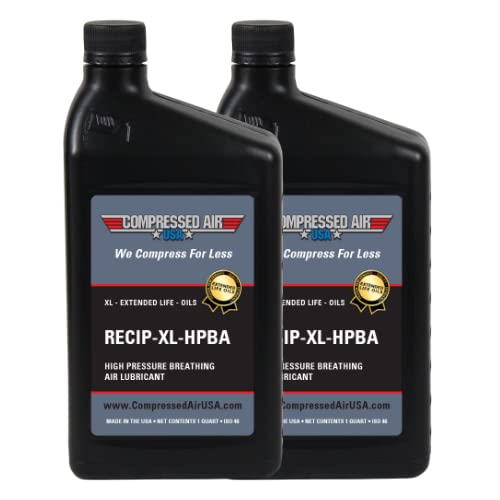
Compressed Air USA Breathing Safe Oil, 2 Quart
Formulated for critical breathing air applications like SCUBA, firefighting, and medical systems, this ISO 100 oil delivers robust wear protection under extreme temperatures and pressures. Its non-toxic composition and high flash point ensure dependable safety for specialized reciprocating compressors.
Pros
- Safe formulation suitable for SCUBA and medical air systems
- High flash and auto-ignition points enhance operational safety
- Resists carbon and varnish buildup under extreme temperatures
- Non-toxic formula provides strong wear and rust protection
Cons
- Restricted to reciprocating units rather than rotary screw systems
- ISO 100 rating unsuitable for low-viscosity compressor setups
Campbell Hausfeld ST1253 Compressor Oil (16 oz)
Formulated for workshop and industrial setups, this 30-weight lubricant protects compressor pumps against rust, sludge, and component wear. The compact 16-ounce bottle makes routine top-offs and crankcase servicing straightforward.
Pros
- Formulated specifically for compressor pumps and motors
- 30-weight viscosity helps minimize component wear
- Inhibits rust, sludge, and internal corrosion
- Compact bottle enables controlled, mess-free pouring
Cons
- 16-ounce volume may require multiple bottles for large units
- Single 30-weight viscosity is not suitable for all models
TRIAX Kompressor ISO 68 Full Synthetic Air
TRIAX Kompressor ISO 68 is a commercial-grade, full synthetic compressor lubricant engineered for oil-lubricated reciprocating, rotary screw, and vane pumps operating between -49°F and 140°F+. It is an excellent maintenance solution for auto mechanics, shop owners, and contractors seeking lower pump operating temperatures and up to 20,000 hours of service life.
Pros
- Extended 20,000-hour service life minimizes routine maintenance intervals on high-demand shop compressors
- All-season stability from -49°F to 140°F+ prevents cold-morning motor drag and high-heat viscosity breakdown
- Non-detergent formulation separates condensation cleanly to safeguard internal crankcase bearings
- Broad compatibility across major reciprocating, rotary screw, and rotary vane compressor manufacturers
Cons
- Not suitable for maintenance-free oil-free compressor designs or oxygen and Liquid Natural Gas (LNG) systems
- One-gallon container size exceeds the immediate refill capacity of small single-stage DIY splash-lube pumps
Milton 1002-32 ISO-100 Compressor Oil, 32 oz
Formulated specifically for oil-lubricated reciprocating compressors, this ISO-100 non-detergent lubricant shields pumps against wear and deposit buildup. It separates easily from moisture and remains fluid down to -15°F for dependable cold-weather starts.
Pros
- Protects internal components against wear and corrosion
- Non-detergent formula resists foaming and separates water
- Inhibits sludge and carbon deposit formation
- Maintains fluidity in temperatures down to -15°F
Cons
- Designed strictly for reciprocating pump mechanisms
- Conventional oil base rather than full synthetic
MAG 1 Air Compressor Oil 16 oz
MAG 1 Air Compressor Oil is a specialized 16-ounce petroleum lubricant formulated with anti-foam agents and rust inhibitors to protect oil-lubricated compressor pumps under heavy operating conditions. It offers essential wear protection and thermal stability for home garage hobbyists, auto mechanics, and shop owners maintaining oil-lubricated pneumatic equipment.
Pros
- Formulated specifically for compressor pump crankcases rather than generic detergent automotive motor oils
- Anti-foam chemistry helps prevent oil foaming and maintains steady lubrication under rapid piston strokes
- Helps protect internal metal components against rust and oxidation caused by ambient moisture buildup
- Convenient 16-ounce bottle size fits easily into garage maintenance cabinets and tool chests
Cons
- Not suitable for maintenance-free oil-free air compressors
- A 16-ounce volume may require multiple bottles for larger stationary multi-stage shop compressors with high crankcase capacities
Understanding Air Compressor Lubrication Requirements
Determining what kind of oil to use in an air compressor requires matching the specific pump mechanism to a properly formulated non-detergent industrial lubricant. Air compressor pumps do not possess oil filters, so they rely entirely on the chemical stability and physical properties of the fluid inside the crankcase. Operating a reciprocating or rotary screw pump with improper lubricants causes severe thermal breakdown, fouled discharge valves, and permanent cylinder scoring. By understanding viscosity classifications, additive packages, and manufacturer recommendations, operators can keep their pneumatic equipment running efficiently under demanding duty cycles.
Non-Detergent Formulations Versus Standard Automotive Motor Oils
Automotive engine oils contain heavy detergent additive packages engineered specifically to scrub carbon deposits and hold combustion byproducts in liquid suspension. In an internal combustion engine, the oil filter captures these suspended particles before the fluid circulates back through the bearings. Air compressor pumps do not have internal oil filters to remove suspended debris from circulation. When detergent motor oil is poured into a compressor crankcase, the detergents carry metal particles and carbon sludge continuously through the wrist pins, rod bearings, and cylinder walls.
Non-detergent lubricants allow solid contaminants to settle quietly to the bottom of the crankcase sump where they remain isolated from moving parts. Products like Milton 1002 and Campbell Hausfeld ST1253 provide clean, non-detergent lubrication designed specifically to let metallic wear particles drop out of active circulation. Detergents also cause oil to emulsify rapidly when exposed to the high levels of atmospheric moisture generated during air compression. Non-detergent compressor lubricants resist emulsification, allowing accumulated water condensation to separate cleanly from the oil base so it can be drained during routine maintenance.
Automotive oils also contain complex viscosity index improvers and friction modifiers that tend to carbonize under the extreme discharge temperatures of a compressor pump. When these automotive additives reach hot compressor discharge valves, they bake into hard carbon crusts that prevent reed valves from sealing properly. Valve blow-by develops quickly, causing the pump to run hotter, lose volumetric efficiency, and cycle constantly without building full cut-out pressure. Using a dedicated non-detergent compressor fluid eliminates these volatile additives and keeps the reed valves seating cleanly against the valve plate.
Viscosity Grades Explained: ISO 46, ISO 68, and ISO 100
Compressor lubricants are categorized under the International Organization for Standardization (ISO) viscosity grading system rather than standard automotive classifications. The ISO viscosity grade measures the kinematic viscosity of the oil in centistokes at an operating temperature of 40 degrees Celsius. Industrial equipment operators frequently translate these industrial ratings into common SAE equivalents to understand fluid weight better. Selecting the correct grade ensures that the splash dipper or pressure oiling system can deliver an adequate lubricating film without creating excessive mechanical drag during cold startups.
An ISO 46 lubricant matches roughly to an SAE 20 weight oil and is engineered primarily for cold-weather operation or rotary screw systems requiring rapid fluid circulation. Formulations like Triax Kompressor ISO 46 SAE 20 flow freely in unheated garages and sub-freezing jobsite conditions. When a heavy-weight oil is subjected to winter temperatures, the fluid thickens dramatically and creates severe resistance against the connecting rod dippers. This hydraulic drag can overload electric motors during startup, leading to nuisance breaker tripping on standard household circuits before the pump reaches operating speed.
An ISO 100 lubricant corresponds directly to an SAE 30 weight oil and represents the universal standard for most single-stage and two-stage reciprocating pumps operating in moderate climates. Blends like Mag 1 Air Compressor Oil and Milton 1002 ISO-100 maintain sufficient film thickness under continuous, high-heat industrial workloads. When ambient garage temperatures exceed 70 degrees Fahrenheit, thinner fluids thin out excessively and risk boundary lubrication failure along the cast-iron cylinder walls. ISO 100 fluid provides the heavy boundary layer needed to prevent piston ring micro-welding and bearing wear during sustained tool operation.
An ISO 68 grade provides a versatile medium-weight alternative that sits directly between SAE 20 and SAE 30 ratings. Fluids such as Triax Kompressor ISO 68 work well in variable seasonal environments where summer heat and winter chill occur in the same workshop. This intermediate viscosity provides dependable cold-flow protection while retaining adequate shear strength when the pump head reaches full operating temperature. Checking the compressor pump nameplate or technical manual confirms whether the factory clearances require an ISO 46, ISO 68, or ISO 100 viscosity grade.
Full Synthetic Formulations Compared to Conventional Petroleum Lubricants
Conventional compressor oils are refined from petroleum mineral base stocks enriched with rust inhibitors, anti-oxidation agents, and anti-foaming chemistry. Mineral options like Mag 1 provide reliable crankcase protection for hobbyist woodworkers and light-duty workshop applications where the compressor runs intermittently. Highly refined mineral stocks perform dependably within moderate temperature boundaries, but they degrade faster when subjected to prolonged, high-duty-cycle operation. Over time, high cylinder discharge heat causes mineral molecules to shear and oxidize, forming varnish along crankcase walls and valve passages.
Full synthetic compressor oils use synthesized hydrocarbon base stocks designed to resist thermal breakdown and chemical shearing under extreme operating pressures. Formulations such as Triax Kompressor feature broad multi-viscosity stability that functions across wide temperature spans without thinning out under intense cylinder friction. Synthetic lubricants significantly lower carbon deposit formation across discharge ports, reducing the risk of valve sticking or restricted airflow. The uniform molecular structure of synthetic fluid also reduces internal fluid friction, allowing the pump mechanism to run cooler and consume less electrical power under heavy load.
Synthetic lubricants generally provide extended operational lifespans compared to standard petroleum options, reducing the frequency of necessary crankcase fluid changes. Industrial-grade synthetics resist vaporization and thermal boil-off, which drastically decreases the amount of oil aerosol carried downstream into air hoses. For automotive painters and precision woodworkers, reducing oil carryover helps prevent finish contamination and extends the life of downstream air filtration cartridges. While conventional petroleum remains perfectly adequate for casual garage tasks, synthetic lubricants provide superior thermal protection for continuous-demand commercial environments.
Lubrication Demands in Reciprocating Versus Rotary Screw Pumps
Reciprocating piston compressors utilize splash lubrication systems where a small metal dipper attached to the bottom of the connecting rod strikes the oil pool. This mechanical impact atomizes the fluid into a fine mist that coats the cylinder walls, crankshaft journals, and wrist pin bushings. Splash systems require stable anti-foaming chemistry because aerated oil cannot support high bearing loads. High-performance lubricants feature specialized anti-foam additives that collapse air bubbles quickly, preventing air pockets from starving vital wear surfaces inside the crankcase.
Rotary screw air compressors operate on a completely different mechanical principle that requires continuous, high-volume fluid circulation. In an oil-flooded rotary screw unit, the lubricant is injected directly into the compression chamber between the intermeshing helical rotors. The oil acts simultaneously as a mechanical sealant between the rotor lobes, a thermal cooling medium to absorb compression heat, and a lubricant for the roller bearings. Matching oil specifications to your equipment geometry is especially critical when comparing the internal thermal loads found between single-stage and two-stage compressors.
Using improper oil in a rotary screw compressor causes catastrophic foaming and rapid separator filter clogging. The high rotational speeds of screw rotors shear light-duty oils quickly, reducing viscosity and allowing metal contact between high-precision tolerances. Multi-viscosity synthetic fluids like Triax Kompressor are specifically engineered to endure these severe shearing forces while separating rapidly from compressed air inside the coalescing filter. Choosing an oil certified for both reciprocating and rotary screw mechanisms ensures broad versatility across mixed commercial workshops containing different compressor types.
Specialized Applications and Breathing Air Compliance
Standard industrial compressor lubricants must never be introduced into high-pressure breathing air systems used for diving, firefighting, or medical applications. Conventional mineral and synthetic compressor oils release trace volatile organic vapors that become highly toxic when inhaled under pressure from SCUBA or SCBA cylinders. Breathing air compressors operate at extreme pressures often exceeding 3,000 to 5,000 PSI across three or four compression stages. These extreme compression ratios generate elevated internal temperatures capable of igniting standard petroleum vapors inside the cylinder heads.
Specialized breathing air lubricants like Compressed Air USA Breathing Safe Lubricating Oil are formulated specifically to meet stringent air purity standards. This ISO 100 fluid utilizes non-toxic, non-hazardous base stocks engineered with high flash points and auto-ignition thresholds to prevent crankcase explosions. The formulation controls carbon formation on microscopic valve tolerances and prevents the release of noxious fumes into downstream filtration towers. High-pressure reciprocating breathing air systems require this dedicated chemical profile to safeguard human life during critical emergency operations.
Paintball field operators, commercial dive shops, and emergency rescue facilities must maintain strict separation between utility workshop oils and breathing-grade fluids. Even microscopic cross-contamination from an oily funnel can foul chemical purification catalyst beds and contaminate air storage cylinders. Facilities operating breathing air apparatus must always inspect the product certification label to ensure the lubricant is explicitly rated for human respiration safety. Using dedicated transfer pumps and clearly marked storage containers prevents dangerous fluid mix-ups around high-pressure breathing equipment.
Recognizing Signs of Degraded Oil and Crankcase Contamination
Monitoring the oil sight glass or dipstick provides critical insight into the internal mechanical health of your air compressor pump. Fresh compressor oil appears amber, transparent, and completely free of suspended particulate matter or cloudy discoloration. If the fluid in the sight glass turns milky white or beige, water condensation has emulsified into the crankcase oil. This condition frequently occurs in humid shops where the compressor runs for short intervals that never generate enough heat to boil off internal moisture.
Moisture buildup in the crankcase mirrors the condensation accumulation that makes draining moisture from an air tank an essential daily maintenance chore. When water mixes with degraded oil, it strips the lubricating film from the cylinder walls and initiates internal rust along steel crankshaft journals. Conversely, oil that has turned pitch black and smells acrid indicates severe thermal breakdown and oxidized carbon contamination. Running an air compressor with blackened, burnt oil accelerates piston ring wear and leads directly to rod bearing galling.
Operators should also check the oil reservoir regularly for signs of excessive surface foaming or drop in fluid level. Foaming oil creates false readings on the sight glass while allowing trapped air bubbles to displace vital lubricating film on bearing surfaces. Rapid oil consumption indicates worn piston rings, cracked crankcase gaskets, or excessive oil carryover past the cylinder head into downstream tools. Catching these fluid changes early prevents expensive pump rebuilds and ensures consistent compressed air delivery during heavy workshop projects.
Recommended Maintenance Schedules and Proper Oil Change Procedures
New oil-lubricated air compressors require an initial break-in period to allow piston rings to seat properly against the honed cylinder walls. Most manufacturers recommend performing the first complete crankcase oil change after the initial 20 to 50 hours of pump operation. This break-in change purges microscopic metal flakes, casting debris, and manufacturing residues that naturally slough off during early mechanical break-in. Neglecting this crucial early maintenance keeps abrasive wear particles circulating through the splash dipper system, causing premature bearing wear.
Following break-in, conventional petroleum oils should be drained and replaced every 300 to 500 operating hours or at least once every six months in typical garage environments. High-performance synthetic lubricants can safely operate for extended intervals, but annual fluid changes remain best practice for residential and light-commercial users. Before draining the oil, run the compressor for ten minutes to warm the crankcase fluid and suspend settled particulates in the oil bath. Depressurize the air tank completely, disconnect electrical power, place a catch basin under the drain plug, and allow the hot oil to drain thoroughly.
Refill the crankcase slowly through the oil fill port using a clean funnel until the fluid level reaches the center red dot on the sight glass. Never fill the crankcase above the top indicator line on the sight glass or dipstick. Overfilling causes the connecting rod dippers to churn the oil excessively, resulting in severe fluid aeration, elevated operating temperatures, and hydraulic resistance. Excess oil also forces its way past the piston rings into the compression chamber, contaminating downstream air lines and blowing oil mist out through pneumatic exhaust ports.
Selecting the Right Lubricant for Your Operating Environment
Your operating environment plays a decisive role in determining the ideal oil viscosity and chemical base for your equipment. Unheated detached garages and mobile service trucks operating in cold winter conditions benefit greatly from free-flowing ISO 46 synthetic oils. The low pour point of synthetic ISO 46 prevents starting motor stalls and protects bearings from cold starvation during initial morning startup cycles. For heated production facilities and high-ambient summer workshops, heavy-bodied ISO 100 non-detergent oils provide the thick boundary layer required to prevent cylinder scuffing under constant tool draw.
Investing in reputable, non-detergent compressor formulations from established brands like Milton, Campbell Hausfeld, Triax, or Mag 1 protects your pump investment. Always check the factory specifications stamped on your pump data tag before adding fluid to ensure viscosity compatibility. Avoid automotive motor oils, hydraulic fluids, and transmission fluids under all circumstances to prevent rapid valve carbonization and bearing damage. Maintaining clean, correctly graded non-detergent oil in your crankcase guarantees smooth pump cycles, lower operating temperatures, and dependable pneumatic performance across years of rigorous workshop service.
About the author
Kenny Koehler is a power-tool specialist with more than a decade of hands-on evaluation experience and a science-based approach to product testing. His expertise in repeatable testing, tool performance, impact wrenches, and professional equipment brings a practical, data-focused perspective to compressor and pneumatic-tool comparisons.