
What Is Air Compressor and Its Importance on Ships
What is air compressor and its importance on ships? Understand compressed-air uses, safety, and equipment choices with guidance for November 2026.
 By Tony Carrick
Updated November 19, 2026


Shipboard compressed air supports more than one kind of work. Depending on the vessel and its systems, air can serve control equipment, maintenance tasks, cleaning, and pneumatic tools. The right equipment depends on the job: a compact portable compressor is not automatically suitable for every shipboard system, and portable models should not be treated as substitutes for engineered vessel air systems.
The question of what is air compressor and its importance on ships comes down to producing and storing pressurized air for a defined task, then delivering it at the pressure and flow that task requires. Buyers comparing portable units should check output, tank size, power requirements, and noise rather than relying on maximum PSI alone. For more on matching equipment to pneumatic tools, see our portable compressors for air tools guide, or explore portable compressor power options for applications away from a standard outlet.
Product Shortcode
| Award | Product | ACR Score About ACR ScoreThe ACR Score is our own rating from 0 to 10, based on performance, design and build, ease of use, and value. It reflects independent research and is never influenced by manufacturers, retailers, or affiliate commissions. Learn more › | |
|---|---|---|---|
| Best Overall |
Rolair FC2002 2 HP Twin Stack Compressor
|
9.2/10 | Buy |
| Best Premium |
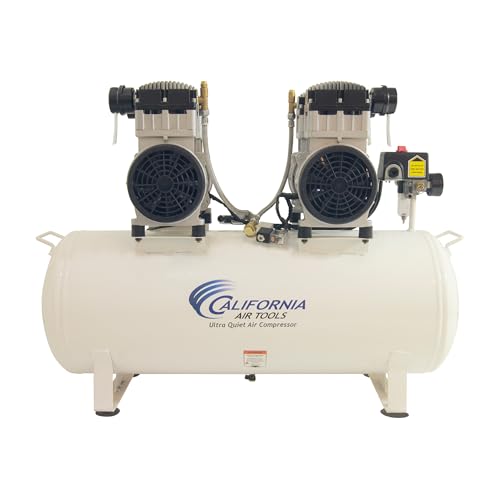 California Air Tools 20040C 20-Gallon Compressor |
9.2/10 | Buy |
| Best Budget |
 maXpeedingrods 120 PSI Air Compressor Kit |
8.3/10 | Buy |
 CRAFTSMAN 1.5-Gallon 135 PSI Air Compressor |
8.3/10 | Buy | |
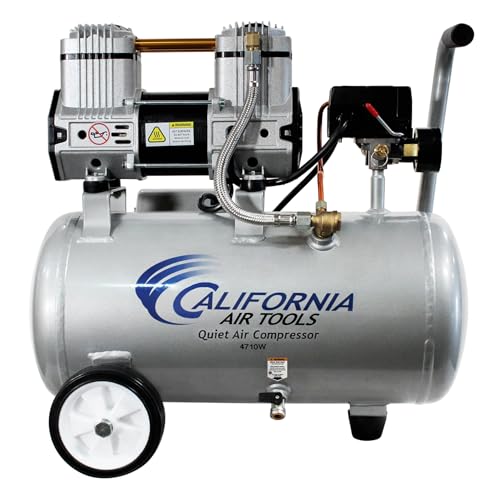 California Air Tools CAT-4710W 4.7-Gal Compressor |
8.3/10 | Buy | |
| Best Value |
 California Air Tools 4620AC 2.0 HP Ultra-Quiet Air |
8.1/10 | Buy |
 California Air Tools 10020C 10-Gallon Compressor |
8.1/10 | Buy | |
 California Air Tools 60040CAD 60-Gallon Quiet Air |
8.1/10 | Buy | |
 BUNKER INDUST 12V Twin Motor Air Compressor |
8.0/10 | Buy |
Rolair FC2002 2 HP Twin Stack Compressor
Engineered for workshop and job-site tasks, this Rolair twin-stack compressor provides 4.1 CFM at 90 psi via a 2 HP motor. Its cast-iron cylinder and splash-lubricated design offer dependable durability for pneumatic fastening and inflation duties.
Pros
- Solid 4.1 CFM output at 90 psi
- Durable cast-iron cylinder build
- Splash lubrication system extends pump life
- Built-in overload protection with manual reset
Cons
- Heavy 62-pound weight reduces portability
- Splash-lubricated pump requires regular oil maintenance
California Air Tools 20040C 20-Gallon Compressor
Built for workshops needing serious airflow without extreme noise, this unit pushes 10.60 CFM at 90 PSI while maintaining a moderate 75 dB sound level. Its oil-free dual-piston pump and 20-gallon steel tank handle demanding air tools smoothly, provided you have a 220V power supply.
Pros
- Quiet 75 dB output for enclosed shops
- Strong 10.60 CFM delivery at 90 PSI
- Low-maintenance oil-free dual piston pump design
- Extended pump life cycle exceeding 3000 hours
Cons
- Requires a 220V electrical outlet
- Heavy 140-pound weight reduces portability
- Large physical footprint demands dedicated floor space
maXpeedingrods 120 PSI Air Compressor Kit
Designed for truck and van owners managing heavy loads, this tankless 12V system enables convenient in-cab pressure adjustments for dual air springs. Its 120 PSI maximum output quickly restores ride height without needing a dedicated storage tank.
Pros
- Inflates air springs in one to two minutes
- In-cab analog gauge offers convenient push-button inflation
- Tankless design saves mounting space underneath the vehicle
- Broad compatibility with major air spring brands
- Complete package includes all necessary lines and hardware
Cons
- Single-path configuration cannot adjust left and right sides independently
- Analog gauge lacks precise digital pressure readouts
- Recommended working pressure is restricted to 70 PSI
CRAFTSMAN 1.5-Gallon 135 PSI Air Compressor
Built for light workshop duties and quick inflation tasks, this compact Craftsman unit delivers up to 135 PSI with a maintenance-free motor. Its three-layer steel tank and integrated thermal overload protection make it a dependable pick for finish nailing and topping off tires.
Pros
- Low-maintenance oil-free motor
- Compact and easily portable footprint
- Built-in thermal overload and auto shut-off protection
- Sturdy three-layer steel tank construction
Cons
- Low 1.5 CFM output limits continuous tool operation
- Small 1.5-gallon tank requires frequent motor cycling
California Air Tools CAT-4710W 4.7-Gal Compressor
Built for garage workshops and DIY tasks, this mobile unit features an oil-free dual-piston pump that fills its 4.7-gallon steel tank in 78 seconds. Its low 7.5-amp motor draw ensures smooth startups on standard household circuits without tripping breakers.
Pros
- Fast 78-second tank fill time from empty
- Low 7.5-amp draw prevents tripped breakers
- Low-maintenance oil-free pump operation
- Wheels and pull handle ease transport at 35 pounds
Cons
- Delivers only 2.2 CFM at 90 PSI for demanding tools
- Steel tank construction is heavier than aluminum alternatives
California Air Tools 4620AC 2.0 HP Ultra-Quiet Air
Delivering an impressive 5.30 CFM at 90 PSI with an operating noise level of just 70 dB, the California Air Tools 4620AC provides robust pneumatic output without deafening workshop noise. Its 4.6-gallon aluminum twin-tank design and low-maintenance dual-piston pump make it an outstanding pick for indoor woodworkers, auto hobbyists, and finish carpenters.
Pros
- Delivers 5.30 CFM at 90 PSI, providing higher sustained airflow than standard compact pancake units
- Operates at a low 70 dB sound level that significantly reduces hearing fatigue in enclosed workshops
- Rust-resistant aluminum twin tanks reduce overall weight and prevent premature corrosion from tank moisture
- Low-RPM oil-free dual-piston pump requires no oil additions and is rated for over 3000 operating hours
- Compatible with standard 110V electrical outlets thanks to its manageable 14-amp draw
Cons
- Weighing between 64 and 68 pounds without integrated wheels, moving the unit requires dedicated two-handed lifting
- The 14-amp draw operates near the capacity of standard 15-amp household breakers during continuous running cycles
- A 4.6-gallon air reserve is not designed for continuous high-demand airflow applications like production media blasting or continuous rotary sanding
California Air Tools 10020C 10-Gallon Compressor
Delivering 5.30 CFM at 90 PSI at a low 70-decibel sound level, this wheeled unit is well suited for noise-sensitive garages and workshops. Its low-RPM, oil-free dual-piston pump offers clean airflow with minimal regular maintenance demands.
Pros
- Quiet 70 dBA rating suitable for indoor work
- Generates 5.30 CFM at 90 PSI
- Low-maintenance oil-free dual piston pump design
- Built-in wheels simplify moving the tank around
Cons
- Heavy 82.5-pound weight makes lifting into vehicles difficult
- Tall 35.9-inch height demands dedicated vertical storage room
California Air Tools 60040CAD 60-Gallon Quiet Air
Delivering a rated 10.60 CFM at 90 PSI at an ultra-quiet 75 dBA, the California Air Tools CAT-60040CAD combines a 60-gallon ASME steel tank with an oil-free dual-piston twin-motor pump. It is an ideal match for home garages, woodworking shops, and auto mechanics seeking high-volume airflow without deafening noise.
Pros
- Exceptionally quiet 75 dBA sound output for a high-output 4.0 HP workshop air compressor
- Substantial airflow rating of 10.60 CFM at 90 PSI handles demanding continuous pneumatic air tools
- Factory-installed EZ-1 timed automatic drain valve prevents tank corrosion without manual effort
- Oil-free dual-piston design eliminates crankcase oil changes, messy spills, and downstream oil contamination
Cons
- Maximum operating pressure is capped at 125 PSI compared to 150 to 175 PSI found on traditional two-stage compressors
- Hefty 213-pound stationary vertical build requires dedicated shop floor space and careful freight delivery handling
BUNKER INDUST 12V Twin Motor Air Compressor
Built for off-road rigs and overlanding vehicles, this twin-motor compressor airs up a 33-inch tire in under 2.5 minutes with its 100 percent duty cycle. The included 25-foot hose and ARB-friendly mounting make it a capable on-board or portable air source.
Pros
- Rapid inflation powered by dual cylinders and twin motors
- Continuous operation supported by 100 percent duty cycle
- Generous 25-foot hose easily reaches all four wheels
- Built-in bleeder valve allows precise tire pressure adjustments
Cons
- Heavier 29-pound build limits effortless handheld portability
- Requires substantial space for under-seat or engine-bay mounting
How Shipboard Compressed Air Works and Where Portable Units Fit
An air compressor takes in ambient air, compresses it with a pump, and delivers it through a pressure-controlled outlet or stores it in a tank for later use. That basic process makes compressed air a useful energy source, but the air itself is not the end goal. Its value aboard a vessel depends on which equipment needs it, whether the compressor can supply the required pressure and flow, and whether the installation is appropriate for the marine environment.
Why ships use compressed air
Ships may use compressed air for pneumatic controls, equipment operation, maintenance tools, and other systems designed around a pressurized air supply. Specific applications vary by vessel, system design, and operating procedure. A portable compressor can be useful for limited maintenance or support tasks, but it should not be assumed to operate safety-critical controls or replace a dedicated shipboard system.
Compressed air offers a practical way to deliver energy through hoses to tools or compatible equipment. That convenience brings a dependency: the supply has to remain within the pressure and airflow requirements of the connected device. If pressure falls too far or flow is inadequate, a tool may slow, cycle, or fail to do its intended work.
Shipboard use also makes the operating environment part of the decision. Available electrical power, ventilation, exposure to moisture, secure placement, and noise near occupied areas can all matter. Vessel procedures and equipment specifications take priority over general advice for a garage or jobsite.
Pressure, airflow, and stored air do different jobs
Pressure is commonly stated in pounds per square inch, or PSI. It describes the force available in the compressed-air system, but maximum PSI alone does not reveal how much air a compressor can deliver while a tool is running. For air-hungry equipment, the compressor’s delivered airflow rating, often listed in CFM at a stated pressure such as 90 PSI, is a key comparison point.
Tank capacity, stated in gallons, describes how much air the vessel stores, not how much air the pump can produce continuously. A larger tank can provide a larger reserve before the pump needs to replenish it, but it cannot make a low-output pump deliver high airflow indefinitely. Once a tool draws air steadily, the pump’s actual output and duty limitations determine whether pressure can be maintained.
The distinction matters on ships because an occasional short burst and sustained consumption place different demands on a compressor. An intermittent-use tool may draw air briefly, allowing stored air to cover a burst. A continuous-use device consumes air for longer periods, so buyers need to compare its stated demand with the compressor’s delivered output at the same operating pressure.
Specifications should be compared on matching terms. A CFM figure at 40 PSI is not interchangeable with a figure at 90 PSI, and an unqualified airflow claim may not provide the information needed to assess a particular tool. Consult the tool and compressor documentation, including pressure requirements, airflow demand, and any operating limits.
Portable compressor examples and their limits
The products listed here cover several formats and applications, but their specifications do not make them interchangeable shipboard equipment. For example, the Rolair FC2002 2 HP Twin Stack Compressor is listed with a 4.3-gallon tank and 4.1 CFM at 90 PSI. Those figures provide useful context for evaluating compatible air tools, but the supplied information does not establish that it is approved for a vessel’s installed systems.
Some California Air Tools models emphasize lower listed sound output and oil-free pumps. The California Air Tools 10020C 2.0 HP Ultra Quiet is listed at 70 dBA, with a 10-gallon tank and airflow of 5.30 CFM at 90 PSI. The California Air Tools CAT-4710W 1.0 HP Quiet is listed at 75 dBA and 2.20 CFM at 90 PSI, with a 4.7-gallon tank. These are product specifications, not a guarantee of noise levels in a particular compartment or of suitability for a specific shipboard task.
Tank capacity and sound figures should be considered alongside power requirements and the intended location. The CAT-4710W is listed for a 110-volt, 60-hertz outlet, while the 20040C is listed for 220-volt, 60-hertz power. A vessel’s electrical supply may differ, so voltage, frequency, circuit capacity, and installation requirements need to be confirmed before connecting any unit.
For small portable tasks, the CRAFTSMAN 1.5 Gallon 3/4HP Oil-Free Portable Air is listed at 1.5 CFM at 90 PSI and 135 PSI maximum pressure. Its compact tank can be convenient to move, but the airflow figure is modest compared with the larger units listed here. That distinction is relevant when a task requires sustained air rather than a brief burst.
Not every product in the listing is a general-purpose tank compressor. The maXpeedingrods On Board Air Compressor System is described as an air-spring controller kit with a 12V compressor and a 120 PSI maximum. The BUNKER INDUST 12V Twin Motor Air Compressor is presented as an off-road tire inflator with a 150 PSI maximum. Their stated purposes and configurations make them poor assumptions for a ship’s pneumatic service needs unless the specific application and manufacturer documentation support that use.
Match the compressor to the connected equipment
Start with the equipment that will consume the air, not with a compressor’s maximum pressure. Check its required operating pressure, airflow demand, connection requirements, and whether use is intermittent or continuous. Then compare those requirements with the compressor’s output at the relevant pressure and its stated operating limits.
Air tools can have very different consumption patterns. A fastener tool that fires occasionally may use air in short bursts, while a grinder, sander, or spray tool can draw air for longer periods. A small tank may support a short task yet require frequent pump cycles under continuous demand. If the tool’s airflow requirement exceeds the compressor’s delivery, a larger tank may only delay the pressure drop rather than solve the mismatch.
Hoses, couplers, and regulators are part of the air path too. A restriction or leak can reduce useful air at the tool even if the compressor’s outlet pressure appears adequate. Use compatible rated components, inspect connections for damage, and follow equipment instructions for pressure regulation. A pressure gauge reading at the tank does not by itself confirm that the tool receives the pressure and flow it needs under load.
Buyers who need a broader look at tank-style portable options can consult our portable tank compressor overview. For shipboard decisions, however, product-category comparisons are only a starting point. The vessel’s engineering requirements, approved equipment list, electrical system, and operating procedures determine what may be connected and where.
Power, noise, and placement aboard a vessel
Electric compressors require a supply that matches the listed voltage and frequency, as well as adequate circuit capacity. The supplied product information does not provide startup surge figures for these models, so do not assume that a unit will start reliably on every circuit simply because its running current appears manageable. A qualified person should confirm the electrical connection against the compressor rating and vessel requirements.
Extension cords can create voltage drop, particularly when they are too long or too light for the equipment’s electrical demand. Follow the compressor manufacturer’s instructions for cord type and length, and avoid using an unsuitable cord to reach a distant outlet. Where practical and permitted, arranging the compressor closer to its approved power source and using an appropriate air hose can avoid relying on a long electrical run.
Noise ratings help compare listed models, but they do not describe every installation. Reflections from hard bulkheads, nearby machinery, and distance from the operator can change what people hear. Even a compressor described as quiet remains powered machinery with a pump and motor; consider nearby crew, work schedules, ventilation, and hearing protection requirements.
Placement should also account for secure footing, access to controls, cooling airflow, hose routing, and protection from water or damage. A tank compressor needs stable placement and the clearance required by its manufacturer. Do not block ventilation openings or leave hoses where they can create a trip hazard or interfere with vessel operations.
Moisture, inspection, and safe operation
Compressing air can leave moisture in a tank, and retained water can contribute to internal corrosion. Follow the compressor manual’s directions for draining condensation, including how often to drain and how to safely release pressure. Keep the drain accessible, and do not treat a portable unit’s maintenance routine as a substitute for a vessel system’s prescribed inspection schedule.
Before operation, inspect the power lead, tank, hose, couplers, and visible controls for damage. Use the compressor only within its stated maximum pressure and intended duty limits. Never modify a pressure switch or relief valve, and do not operate a tank that appears damaged or seriously corroded; seek qualified service or follow the manufacturer’s retirement guidance.
Wear appropriate eye and hearing protection for the work, and secure loose clothing and hoses away from moving or hot components. Disconnect the power supply before maintenance, and fully depressurize the tank as directed by the manufacturer before transporting or servicing it. Pressurized air can cause injury, so never point a hose at a person or use compressed air in a way the equipment instructions prohibit.
Vessel-specific air systems may be subject to procedures and inspection requirements that do not apply to a portable shop compressor. Do not connect a consumer unit to control, starting, or other critical ship systems unless the responsible technical authority has approved the equipment and connection. If the task involves a permanent installation, high-pressure system, or uncertain electrical compatibility, pause and consult the vessel’s qualified maintenance personnel.
What to conclude from the product specifications
The product data can help screen portable compressors for limited, noncritical tasks by showing tank size, listed airflow, sound level, voltage, and maximum pressure. It cannot establish marine certification, saltwater resistance, safe installation aboard a vessel, or compatibility with a particular ship system. Those details are not supplied for the listed products and should not be inferred from brand, tank size, or a high PSI number.
For a task with a known air demand, prioritize a compressor whose delivered airflow at the operating pressure matches the equipment, then consider tank reserve, power supply, noise, and portability. For a system with no clearly stated requirements, identify the system documentation before buying. Guessing based on a portable compressor’s apparent size can lead to poor performance or an unsafe connection.
Compressed air is important aboard ships because it can power or support equipment designed to use it, but the application dictates the required system. A portable compressor may assist with an approved maintenance job; it is not automatically a replacement for engineered shipboard air. Confirm the task, specifications, electrical compatibility, and vessel approval before putting a unit to work.
About the author
Tony Carrick is an experienced product researcher and writer specializing in tools, home improvement, automotive maintenance, and consumer equipment. With extensive experience reviewing tools and tackling hands-on renovation projects, he brings a buyer-focused perspective to compressor performance, usability, and overall value.