
What Can You Do With an Air Compressor: Practical Guide for 2026
What Can You Do With An Air Compressor? Explore practical pneumatic tool uses, tire care, spray painting, and workshop tasks updated for October 2026.
 By Tony Carrick
Updated October 7, 2026
By Tony Carrick
Updated October 7, 2026
Pneumatic power transforms standard garage tasks by delivering consistent mechanical force without the bulk of heavy electric motors on handheld tools. Many homeowners and DIY builders wonder what can you do with an air compressor when setting up their first dedicated workspace. A reliable air compressor acts as a central utility hub, storing pressurized atmospheric air in a steel or aluminum receiver tank to drive everything from high-speed impact wrenches to delicate brad nailers. Understanding how continuous air delivery, regulated line pressure, and tank buffer volume work together helps you match the right pneumatic tasks to your equipment.
Beyond simple vehicle tire inflation, compressed air powers finish carpentry nail guns, high-volume spray finishing equipment, and abrasive cleanup tasks. Compact portable machines like the California Air Tools 2010A 1.0 HP Ultra Quiet deliver clean, oil-free air for trim nailing, while larger workshop units supply the continuous CFM needed for automotive maintenance. Because different air tools demand vastly different air volumes measured at 40 PSI or 90 PSI, knowing the operational capabilities of your machine prevents premature motor cycling and severe pressure drops. Selecting suitable tasks ensures both tool efficiency and long-term compressor pump reliability.
| Award | Product | ACR Score About ACR ScoreThe ACR Score is our own rating from 0 to 10, based on performance, design and build, ease of use, and value. It reflects independent research and is never influenced by manufacturers, retailers, or affiliate commissions. Learn more › | |
|---|---|---|---|
| Best Overall |
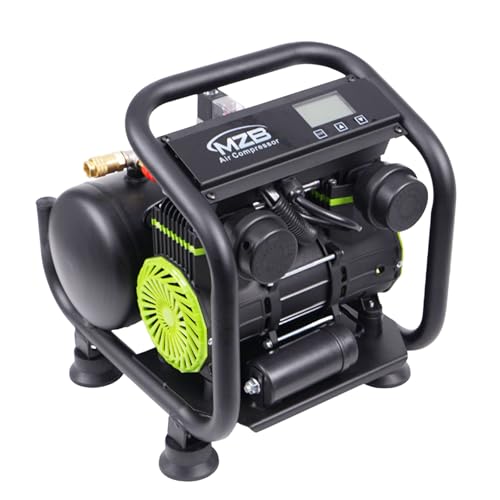
MZB MZB-900H-6 1.6-Gallon Air Compressor
|
9.2/10 | Buy |
| Best Premium |
 California Air Tools 2010A 2-Gallon Compressor
|
9.1/10 | Buy |
| Best Budget |
 MZB MZB-900H-24 6.4-Gallon Air Compressor
|
8.6/10 | Buy |
| Best Value |
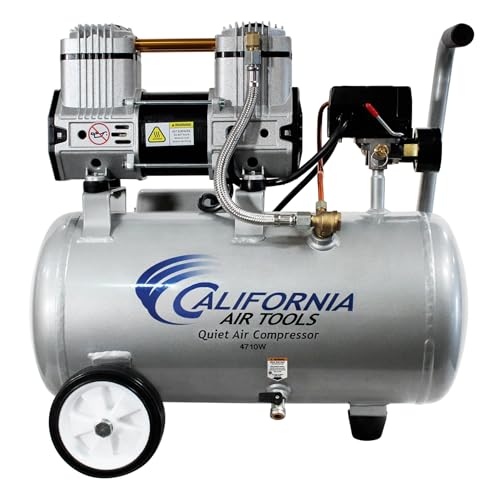 California Air Tools CAT-4710W 4.7-Gal Compressor
|
8.3/10 | Buy |
 MZB MZB-1100H-24 6.4-Gallon Air Compressor
|
7.8/10 | Buy | |
 California Air Tools 20020 Ultra-Quiet 2.0 HP
|
7.8/10 | Buy |
MZB MZB-900H-6 1.6-Gallon Air Compressor
Built for trim carpentry and light pneumatic tasks, this compact MZB unit pairs a 1.6-gallon steel tank with an oil-free pump. It produces up to 115 PSI while keeping operating sound around 70 decibels.
Pros
- Low-maintenance oil-free pump design
- Moderate 70 dB operating sound level
- Compact footprint is convenient to transport
- Sturdy steel air tank construction
Cons
- Small 1.6-gallon capacity limits continuous air tool runtimes
- Modest maximum output pressure of 115 PSI
California Air Tools 2010A 2-Gallon Compressor
Operating at just 60 decibels, this compact unit delivers reliable airflow with minimal noise disruption. Its rust-free aluminum tank and oil-free dual-piston pump make it well suited for indoor trim work and noise-sensitive spaces.
Pros
- Exceptionally quiet operation at only 60 decibels
- Lightweight rust-free aluminum tank design
- Low-maintenance oil-free dual-piston system
- Quick 14-second recovery time between cycles
Cons
- Modest 2-gallon tank limits continuous heavy tool use
- 120 PSI maximum pressure is below heavy-duty standards
- Air output is insufficient for sustained high-demand air tools
MZB MZB-900H-24 6.4-Gallon Air Compressor
Delivering 5.65 CFM at 115 psi, this 1.2 HP oil-free unit rapidly pressurizes its 6.4-gallon tank in about one minute while maintaining a low 70-decibel noise output. It serves well for home garages and workshops handling nail guns, air tools, and light painting.
Pros
- Quiet 70 dB operating volume
- Fast tank recovery under 65 seconds
- Generous 5.65 CFM output at 115 psi
- Low-maintenance oil-free motor design
- Integrated wheels assist mobility
Cons
- Steel construction adds significant carrying weight
- Tank capacity limits continuous heavy spraying sessions
- Corded operation requires standard electrical outlet
California Air Tools CAT-4710W 4.7-Gal Compressor
Built for garage workshops and DIY tasks, this mobile unit features an oil-free dual-piston pump that fills its 4.7-gallon steel tank in 78 seconds. Its low 7.5-amp motor draw ensures smooth startups on standard household circuits without tripping breakers.
Pros
- Fast 78-second tank fill time from empty
- Low 7.5-amp draw prevents tripped breakers
- Low-maintenance oil-free pump operation
- Wheels and pull handle ease transport at 35 pounds
Cons
- Delivers only 2.2 CFM at 90 PSI for demanding tools
- Steel tank construction is heavier than aluminum alternatives
MZB MZB-1100H-24 6.4-Gallon Air Compressor
Built with an oil-free 1.5 HP motor and a 6.4-gallon steel tank, this compressor delivers 7.41 CFM at 115 PSI while keeping operating noise down to 70 decibels. It is a solid choice for workshops, auto detailing, and spray painting where quick recovery and quiet operation matter.
Pros
- Fast 60-second tank recovery time
- Quiet 70 dB operation with dual silencers
- High 7.41 CFM output at 115 PSI
- Low-maintenance oil-free motor design
- Durable three-layer coated steel tank
Cons
- Maximum 115 PSI limits high-pressure tools
- Steel tank adds weight compared to aluminum
California Air Tools 20020 Ultra-Quiet 2.0 HP
The California Air Tools 20020 provides a 20-gallon air reserve powered by a low-RPM 2.0 HP motor, delivering 5.30 CFM at 90 PSI at an ultra-quiet 70 dB sound level. Featuring an oil-free dual-piston pump and a 14-amp draw on standard 110V power, it suits home garage hobbyists and woodworkers seeking quiet, dependable pneumatic volume.
Pros
- Quiet 70 dB acoustic rating makes indoor garage and residential basement operation comfortable without extreme ear fatigue
- Strong air delivery of 5.30 CFM at 90 PSI effortlessly handles finish nailers, impact wrenches, and common pneumatic garage tools
- Long-life dual-piston oil-free pump is rated for over 3,000 hours of operation with zero crankcase oil maintenance
- Low 14-amp draw is compatible with standard 110V household power under proper dedicated circuit conditions
- Vertical 20-gallon steel tank with no-flat wheels combines substantial air storage with a compact shop footprint
Cons
- At 114 pounds, loading this vertical compressor into a pickup truck bed or moving it upstairs requires two people
- Not intended for continuous-duty high-consumption tools like uninterrupted sandblasters or production rotary sanders
- The tall 45-inch vertical profile requires deliberate handling when rolling across uneven outdoor terrain
Practical Applications and Capabilities of Modern Air Compressors
Pressurized air provides a versatile source of mechanical energy capable of operating a diverse range of workshop equipment, construction gear, and household maintenance tools. Rather than housing a heavy electric motor in every single handheld tool, a pneumatic setup centralizes power generation inside one motorized pump and storage vessel. This mechanical arrangement delivers exceptional torque, rapid tool cycling, and remarkable durability across demanding trade environments. Understanding the breadth of tasks an air compressor can accomplish helps you get the maximum utility from your workshop investment.
Inflating Vehicle Tires, Equipment, and Inflatables
Tire inflation represents one of the most frequent uses for a residential or light commercial air compressor. Standard automobile tires, heavy-duty truck tires, motorcycle wheels, and lawn tractor tires require regular pressure maintenance to ensure safety and prevent uneven tread wear. Using a dedicated compressor with a clip-on tire chuck and an accurate inline pressure gauge allows you to seat beads and top off tire pressures within seconds. Small portable units like the MZB Ultra Quiet Air Compressor 110V/60Hz MAX excel at these mobile inflation duties because they reach 115 PSI easily without requiring a massive storage tank.
In addition to automotive tires, pneumatic systems handle high-volume recreational inflatables, wheelbarrow tires, and sports equipment effortlessly. Inflatable paddleboards, large pool floats, and air mattresses can take considerable manual effort to fill with hand pumps, but a regulated air nozzle completes the task in moments. Adjusting your compressor pressure regulator down to modest levels prevents over-pressurizing delicate vinyl seams or rubber bladders. Maintaining proper pressure control protects both the item being filled and the air supply line from sudden stress.
Powering Fasteners for Carpentry and Construction
Woodworking and structural carpentry rely heavily on pneumatic fastening tools because air power drives nails and staples flush with consistent force. Brad nailers, pin nailers, and narrow-crown staplers are indispensable for installing delicate interior baseboards, crown molding, and custom cabinetry without splitting fine grain. These trim-level fasteners consume very little air volume per discharge, making them ideal companions for compact, low-noise units like the California Air Tools 2010A 1.0 HP Ultra Quiet. The dual-piston pump on this model produces 2.20 CFM at 90 PSI, which easily supports rapid nailing runs on interior job sites.
Heavy framing nailers and roofing coil nailers demand slightly more air volume to sink larger collated nails into dense lumber and decking. While an intermittent framing gun operates comfortably on a modest tank buffer, sequential high-speed bump firing requires a pump that recovers pressure rapidly between cycles. A mid-sized mobile unit such as the California Air Tools CAT-4710W 1.0 HP Quiet provides 4.7 gallons of storage capacity to cushion continuous fastener demands without stalling your carpentry pace. Consistent regulated line pressure guarantees that nail heads seat to the exact depth required by local building codes.
Running Automotive Mechanics Tools and Impact Wrenches
Automotive repair shops and home garages benefit substantially from the raw rotational power delivered by pneumatic impact wrenches and air ratchets. Loosening stubborn lug nuts, rusted suspension bolts, and tight engine bracket hardware is significantly easier with a pneumatic impact gun delivering instant rotational hammer blows. Because pneumatic tools lack heavy electric motor windings, they offer a superior power-to-weight ratio that reduces user wrist fatigue during extended mechanical repairs. The slim design of pneumatic angle ratchets also allows mechanics to reach restricted spaces inside modern engine bays that bulky cordless tools cannot access.
Automotive air tools fall into two distinct air consumption categories that affect compressor selection. While an impact wrench fires in brief bursts and requires modest continuous air, tools like die grinders, cut-off wheels, and pneumatic polishers demand sustained airflow. A larger unit like the California Air Tools 20020 2.0 HP Ultra Quiet supplies 5.30 CFM at 90 PSI along with a 20-gallon storage vessel to support continuous garage maintenance. Having ample air volume prevents tool bogging and maintains the rotational speed necessary to cut metal cleanly or torque fasteners accurately.
Spray Painting, Furniture Finishing, and Protective Coating
Applying professional spray finishes on furniture, automotive panels, or decorative cabinetry is one of the most rewarding uses of an air compressor. High-volume low-pressure (HVLP) spray guns atomize liquid paints, lacquers, and primers into a fine mist that creates an ultra-smooth finish without visible brush strokes. This atomization process requires a continuous stream of dry, oil-free air delivered at steady pressures between 20 PSI and 40 PSI. Oil-free pump designs eliminate the risk of oil droplets contaminating expensive paint reservoirs, ensuring clean adhesion on wood or metal substrates.
Continuous paint spraying places substantial demands on air volume because the trigger remains depressed for long passes. A high-output unit like the MZB 6.4 Gallon Ultra Quiet Air Compressor, delivering 7.41 CFM with its 1.5 HP motor, provides the driving force needed to keep spray nozzles atomizing smoothly. Pairing your compressor with an inline moisture filter and an accurate diaphragm regulator stabilizes atomization pressure throughout each spray pass. Proper pressure regulation prevents orange-peel texture, overspray fog, and sudden paint splotches across your finished workpiece.
Abrasive Cleaning, Sanding, and Surface Preparation
Surface preparation tasks such as rotary sanding, orbital finishing, and light abrasive media blasting require continuous pneumatic energy. Pneumatic dual-action sanders are beloved in auto body and woodworking shops because they produce minimal vibration and run cool during lengthy smoothing sessions. Unlike electric sanders that can overheat under heavy pressure, pneumatic sanders spin steadily as long as adequate air volume feeds the turbine. Operating these tools requires careful consideration of pump displacement, as continuous rotary tools consume significant CFM compared to intermittent nailers.
Abrasive blasting cabinets and small siphon blasters also depend on compressed air to propel media like glass beads or walnut shells against rusted parts. Blasting removes stubborn surface rust, mill scale, and old coatings from automotive brackets and antique hardware quickly. Because blasting consumes massive quantities of pressurized air, matching the nozzle orifice to your compressor CFM output is vital to avoid stalling the pump. Users undertaking continuous surface prep benefit from substantial receiver tank buffers to prevent severe line pressure drops.
Blowing Dust, Clearing Debris, and Workshop Housekeeping
Compressed air blow guns serve as essential cleaning utilities for clearing sawdust from machinery, cleaning lawn mower decks, and drying washed components. Directing a focused air stream cleans out trapped wood chips inside table saw trunnions and miter saw slides far faster than manual sweeping. Mechanics frequently use blow guns to purge moisture from brake calipers or blow abrasive grit out of machined bolt holes before final assembly. A compact unit like the MZB 6.4 Gallon Ultra Quiet Air Compressor delivers 5.65 CFM at 115 PSI to clear heavy shop debris efficiently.
Safety considerations remain paramount whenever operating high-pressure blow guns in an enclosed shop environment. Standard safety regulations recommend using OSHA-compliant nozzles that feature safety relief bypass holes to limit dead-end pressure below 30 PSI in case of accidental tip contact. Operators should always wear protective eyewear and hearing protection to guard against flying chips and high-frequency nozzle hissing. Additionally, you should never use compressed air to blow dust directly off skin or clothing due to the risk of air embolism or particulate injury.
Seasonal Home Care and Sprinkler Winterization
Homeowners in cold climates frequently employ air compressors to protect outdoor plumbing and irrigation systems from catastrophic freeze damage. Blowing out underground sprinkler lines removes trapped water from lateral pipes and delicate sprinkler heads before winter frost can crack them. Connecting an air hose to the sprinkler manifold through an approved quick-connect backflow fitting allows you to purge individual irrigation zones sequentially. The key to successful sprinkler winterization lies in using moderate pressure paired with sufficient air volume rather than excessive line pressure.
Excessive air pressure can easily rupture PVC pipes or damage delicate internal sprinkler seals during the blowout procedure. Regulating the compressor output down to 40 or 50 PSI protects residential plumbing lines while providing the necessary velocity to push standing water out of the heads. A mid-sized compressor with several gallons of storage capacity gives you the steady air flow required to clear residential zones safely. Always open zone valves before applying air pressure to prevent sudden pressure spikes across closed pipe sections.
Sizing Air Consumption and Understanding CFM at 90 PSI
Determining what you can do with a specific air compressor comes down to understanding two critical metrics: delivered CFM and operating PSI. Cubic feet per minute (CFM) measures the volume of air the pump delivers, while pounds per square inch (PSI) measures the force of that air. Most pneumatic tools specify an air consumption rating at 90 PSI, which serves as the standard industrial operating threshold. For example, the California Air Tools 2010A 1.0 HP Ultra Quiet produces 2.20 CFM at 90 PSI, which is ideal for finish nailers but insufficient for continuous sanders.
Tool duty cycle also dictates how much tank buffer you need between motor run intervals. Intermittent tools like framing nailers or impact wrenches fire briefly, allowing smaller tanks to replenish pressure during natural work pauses. In contrast, continuous tools like paint sprayers, die grinders, and sanders draw air non-stop, quickly exhausting undersized receivers. To prevent tool stalling and pump overheating, select a compressor rated for at least 1.25 to 1.5 times the continuous CFM requirement of your most demanding tool. This buffer ensures reliable tool performance and prevents excessive duty cycle strain on the motor.
Managing Operational Noise, Electrical Circuits, and Moisture
Operational decibel levels play a major role in deciding where you can comfortably run your pneumatic equipment. Traditional high-RPM universal motors can scream at 80 to 90 decibels, causing severe ear fatigue inside residential garages or basements. In contrast, ultra-quiet designs like the California Air Tools 2010A 1.0 HP Ultra Quiet operate at just 60 dBA, allowing normal conversation while the pump recharges. Even mid-sized units like the California Air Tools CAT-4710W 1.0 HP Quiet maintain moderate sound levels around 75 dBA, making them excellent choices for noise-sensitive suburban neighborhoods.
Electrical compatibility is another vital consideration when setting up a compressor in a home garage. Many portable 1.0 HP compressors draw modest electricity, such as the CAT-4710W which operates at only 7.5 amps on standard 110V household circuits. However, larger 2.0 HP models like the California Air Tools 20020 2.0 HP Ultra Quiet draw 14 amps, requiring a clean, dedicated 15-amp or 20-amp branch circuit to avoid nuisance breaker trips. Avoiding light-gauge extension cords and using longer air delivery hoses instead preserves motor voltage and ensures smooth cold-weather starts.
Managing air line moisture is essential for protecting pneumatic tools from internal corrosion and preventing paint defects. Atmospheric air contains humidity that naturally condenses into liquid water inside the steel or aluminum storage tank during compression. Opening the bottom drain valve after each work session purges accumulated condensation before internal rust can degrade the tank walls. Installing an inline water separator directly at your regulator outlet provides an extra defense, guaranteeing dry, high-quality airflow for sensitive finishing equipment.
Essential Safety Habits and Long-Term Compressor Maintenance
Safe operation of pneumatic power equipment requires consistent adherence to manufacturer protocols and pressure ratings. Never tamper with the factory ASME safety relief valve or attempt to adjust the automatic pressure switch cut-off threshold beyond rated limits. Inspecting the safety valve ring periodically ensures the pop-off mechanism moves freely without binding under internal pressure. Always disconnect electrical power and bleed all stored tank pressure completely through the drain valve or coupler before performing any maintenance or transporting the machine.
Routine maintenance keeps modern oil-free and oil-lubricated compressors running smoothly across years of demanding service. For oil-free dual-piston designs, maintenance primarily involves inspecting intake air filters, blowing dust off cooling fins, and checking hose fittings for micro-leaks. Storing your machine in a clean, dry environment prevents moisture damage to electrical switches and structural steel components. By pairing realistic tool demands with disciplined daily draining, you can safely deploy your air compressor across dozens of practical workshop, automotive, and home improvement projects.
About the author
Tony Carrick is an experienced product researcher and writer specializing in tools, home improvement, automotive maintenance, and consumer equipment. With extensive experience reviewing tools and tackling hands-on renovation projects, he brings a buyer-focused perspective to compressor performance, usability, and overall value.