
Single Stage vs Two Stage Air Compressor of 2026 Workshop Guide
Steady airflow matters when comparing Single Stage Vs Two Stage Air Compressor models for October 2026 to match CFM output and tank PSI to your shop tools.
 By Kenny Koehler
Updated October 8, 2026
By Kenny Koehler
Updated October 8, 2026

Air tools starve for pressure when a pump fails to keep up with heavy demand, leaving impact wrenches sputtering and paint guns spitting mid-stroke. Choosing between a single stage vs two stage air compressor setup determines whether your shop maintains steady pneumatic pressure or suffers through frustrating recovery delays. Single-stage pumps compress ambient air directly into the storage receiver in one piston stroke, typically topping out around 135 to 150 PSI. In contrast, two-stage units route air through an intercooler into a smaller high-pressure cylinder, pushing working pressures up to 175 PSI. Before you plan to buy air compressor machinery for serious workshop duties, matching the compression cycle to your actual air tool consumption keeps you from burning out your motor.
Continuous-demand tools like dual-action sanders, die grinders, and automotive blast cabinets generate massive heat that can overwhelm basic single-stage cast iron pumps. Two-stage engineering lowers internal air discharge temperatures, extending valve plate life while delivering the sustained CFM at 90 PSI needed for professional garage tasks. Cooler compressed air also makes it easier to manage condensation buildup in your receiver, especially if you learn how to stop moisture in air compressor lines before rust ruins downstream pneumatic valves. Evaluating motor horsepower, electrical breaker capacity, and realistic duty cycle ratings ensures your equipment handles daily workloads without unexpected thermal shutdowns.
| Award | Product | ACR Score About ACR ScoreThe ACR Score is our own rating from 0 to 10, based on performance, design and build, ease of use, and value. It reflects independent research and is never influenced by manufacturers, retailers, or affiliate commissions. Learn more › | |
|---|---|---|---|
| Best Overall |
VEVOR Air Compressor Pump, 3HP 11 CFM
|
9.2/10 | Buy |
| Best Premium |
 DEWALT 60-Gallon Vertical Electric Stationary Air
|
9.2/10 | Buy |
| Best Budget |
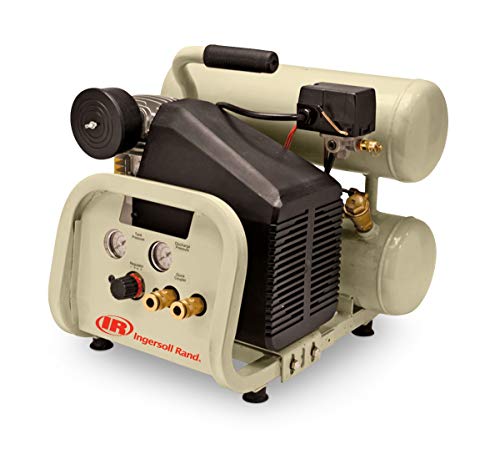 Ingersoll Rand 42672949 2 HP Portable Twin-Stack
|
9.1/10 | Buy |
 NorthStar Air Compressor Pump, 1-Stage
|
8.9/10 | Buy | |
| Best Value |
 Campbell Hausfeld 60-Gallon 2-Stage Air
|
8.9/10 | Buy |
 Campbell Hausfeld 80-Gallon Air Compressor, 5 HP
|
8.8/10 | Buy | |
 NorthStar Air Compressor Pump, 175 Max. PSI
|
8.6/10 | Buy | |
 DEWALT 27-Gallon Vertical Portable Air Compressor
|
8.4/10 | Buy | |
 Ingersoll Rand 2475N7.5 7.5 HP Two-Stage Air
|
8.1/10 | Buy | |
 Air Compressor Head Pump
|
8.0/10 | Buy |
Frequently Asked Questions
What is the primary operational difference in a single stage vs two stage air compressor comparison?
Single-stage units compress air once per stroke up to around 150 PSI, while two-stage compressors use two separate cylinders to reach 175 PSI. The first cylinder conducts initial compression before sending the air through an intercooler tube to a smaller cylinder for secondary pressurization. This staging process produces cooler discharge air and greater efficiency at elevated pressures. Commercial shops rely on this two-stage approach for continuous operation.
Does a two-stage air compressor deliver more CFM than a single-stage model?
Not necessarily, because CFM airflow volume depends primarily on cylinder displacement and motor horsepower rather than compression stages alone. A large 5 HP single-stage cast iron pump can deliver 16 CFM at 90 PSI, easily outpacing a compact 3.7 HP two-stage unit delivering 7.6 CFM. Two-stage pumps truly excel at maintaining stable volume above 100 PSI where single-stage units experience sharp volumetric drops. For light intermittent tasks or small finish trim work, comparing portable models like a 1-gallon vs 2-gallon air compressor reveals that compact tank size and portability often matter more than high pressure stages.
Can a single-stage air compressor run continuous pneumatic tools like sanders and paint sprayers?
Yes, provided the pump delivers sufficient CFM at 90 PSI to match the tool specification and features an adequate duty cycle rating. Rotary sanders and HVLP spray guns frequently draw 10 to 15 CFM continuously, which quickly depletes small receivers. A stationary 60-gallon single-stage unit with a high-output pump can support these tools, though it runs hotter than an equivalent two-stage machine. Heavy daily commercial production still favors two-stage systems to prevent excessive pump wear.
Why do two-stage compressors require 230V electrical circuits?
Two-stage pumps require high-torque motors of 3.7 running HP or larger to overcome steep secondary cylinder compression resistance. Standard 120V residential circuits cannot supply enough amperage to start and run these heavy induction motors without tripping household breakers. Stationary workshop compressors running on dedicated 208V or 230V single-phase lines ensure reliable cold-weather starting and prevent voltage drops under full tank loads.
How does pump stage design influence moisture accumulation in the receiver?
Two-stage compressors reduce moisture delivery into the air tank by utilizing an intercooler that condenses water vapor between stages. Single-stage cylinders discharge significantly hotter air straight into the tank, causing moisture to condense along internal tank walls as the air cools. Regular draining through a bottom quarter-turn ball valve remains essential on all ASME receiver tanks to prevent internal corrosion and extend tank life.
Which compressor style offers a better value for home garages in 2026?
Single-stage compressors provide the best overall value for typical DIY maintenance, pneumatic nailers, and general automotive repair. They deliver higher airflow volume per dollar below 135 PSI and feature lower replacement pump costs. Unless your routine projects demand sustained high pressure over 150 PSI or nonstop sandblasting, a solid single-stage upright compressor meets typical home garage demands efficiently.
About the author
Kenny Koehler is a power-tool specialist with more than a decade of hands-on evaluation experience and a science-based approach to product testing. His expertise in repeatable testing, tool performance, impact wrenches, and professional equipment brings a practical, data-focused perspective to compressor and pneumatic-tool comparisons.