
Oil Free vs Oil Lube Air Compressor of 2026 Workshop Guide
Review oil free vs oil lube air compressor models in November 2026 to balance pump maintenance, running noise, and steady tool CFM output.
 By Kenny Koehler
Updated October 8, 2026


Reliable Air Delivery for Workshop Pneumatic Tools
Motor racket and sudden pressure drops inside an enclosed garage quickly derail a productive workday. Evaluating an oil free vs oil lube air compressor requires understanding how pump lubrication impacts thermal buildup, recovery speed, and long-term durability. Dry Teflon-coated pistons eliminate messy fluid maintenance, while oil-lubricated cast-iron pumps handle continuous heat dissipation much better during demanding tasks. Reviewing manufacturer CFM ratings and duty cycles helps you prevent air starvation before you buy air compressor equipment for your shop.
Moisture accumulation and extreme temperatures also influence daily pump reliability. Oil-lubricated pumps demand regular fluid checks with non-detergent oil to prevent premature cylinder wear and stuck valves. In contrast, oil-free designs start smoothly in freezing garage temperatures without tripping 15-amp household breakers. Keeping any unit in top shape means learning how to stop moisture in air compressor tanks through routine valve draining. Comparing these mechanical differences ensures your pneumatic setup delivers consistent airflow without unexpected breakdowns.
| Award | Product | ACR Score About ACR ScoreThe ACR Score is our own rating from 0 to 10, based on performance, design and build, ease of use, and value. It reflects independent research and is never influenced by manufacturers, retailers, or affiliate commissions. Learn more › | |
|---|---|---|---|
| Best Overall |
Mag 1 1-Gallon Air Compressor Oil
|
9.2/10 | Buy |
| Best Budget |
 Triax Kompressor ISO 46 SAE 20 Full Synthetic Air |
9.1/10 | Buy |
| Best Value |
 Milton 1002 SAE 30W Compressor Oil, 1 Gallon |
8.8/10 | Buy |
| Best Premium |
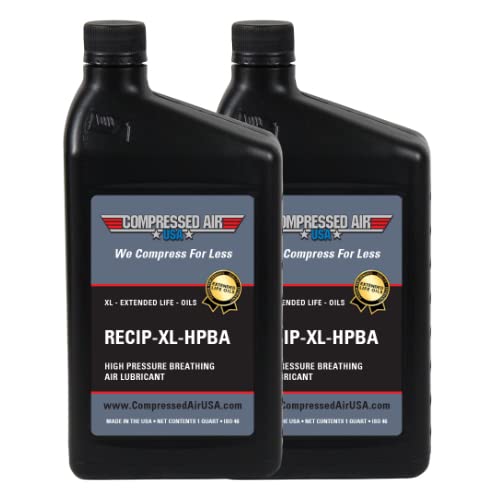 Compressed Air USA Breathing Safe Oil, 2 Quart |
8.8/10 | Buy |
 TRIAX Kompressor ISO 68 Full Synthetic Air |
8.6/10 | Buy | |
 Ingersoll Rand All Season Select Lubricant, 1L |
8.6/10 | Buy | |
 Mobil Rarus 427 ISO 100 Compressor Oil, 1 Qt |
8.3/10 | Buy | |
 Sta-Lube SL22133 SAE 30 Compressor Oil, 1 Gal |
8.3/10 | Buy | |
 Silentaire Synthetic Compressor Oil, 24 oz |
8.0/10 | Buy | |
 Qucship Silicone Airsoft Oil (2 oz + 1 oz) |
7.8/10 | Buy |
Mag 1 1-Gallon Air Compressor Oil
Formulated for reliable workshop maintenance, Mag 1 Air Compressor Oil uses refined petroleum base stocks paired with anti-foam additives to maintain stable lubrication. The generous one-gallon volume makes it a practical choice for keeping reciprocating or stationary compressors running smoothly over time.
Pros
- Anti-foam additives maintain steady lubrication
- Refined petroleum stocks promote smooth operation
- Formula helps extend compressor service life
- Generous 1-gallon volume handles multiple refills
Cons
- Jug weighs 7.25 pounds and can be heavy to pour
- One-gallon size may exceed small top-off needs
Triax Kompressor ISO 46 SAE 20 Full Synthetic Air
Triax Kompressor ISO 46 SAE 20 is a commercial-grade, full synthetic non-detergent compressor oil engineered for oil-lubricated reciprocating, rotary screw, and vane pumps operating in temperatures from -49°F to over 140°F. It provides exceptional thermal protection and extended component life for garage mechanics and shop owners maintaining heavy-duty pneumatic systems.
Pros
- Extreme all-weather operating range from -49°F to 140°F+ prevents cold-start motor stalling and high-heat viscosity breakdown
- Non-detergent full synthetic formula protects internal bearings and provides up to 20,000 hours of service longevity
- Lowers operating pump temperatures by 30% and actively sheds condensation to prevent internal crankcase rust
- Compatible with oil-lubricated reciprocating, rotary screw, and rotary vane compressor pumps from major manufacturers
Cons
- Not suitable for oil-free or maintenance-free dual-piston compressor designs that do not use crankcase oil
- Explicitly prohibited for use in breathing air systems, oxygen compressors, or liquid natural gas (LNG) units
- Single-quart volume may require purchasing multiple bottles for larger stationary 60-gallon or 80-gallon shop pump crankcases
Milton 1002 SAE 30W Compressor Oil, 1 Gallon
Milton 1002 is a non-detergent ISO-100 SAE 30W conventional lubricant engineered specifically for reciprocating air compressors. The one-gallon capacity makes it a sensible option for regular workshop equipment upkeep.
Pros
- Non-detergent formula tailored for reciprocating compressors
- Standard ISO-100 SAE 30W viscosity rating
- Generous one-gallon volume covers multiple refills
Cons
- Conventional mineral formula instead of synthetic blend
- Heavy container can be awkward to pour directly
Compressed Air USA Breathing Safe Oil, 2 Quart
Formulated for critical breathing air applications like SCUBA, firefighting, and medical systems, this ISO 100 oil delivers robust wear protection under extreme temperatures and pressures. Its non-toxic composition and high flash point ensure dependable safety for specialized reciprocating compressors.
Pros
- Safe formulation suitable for SCUBA and medical air systems
- High flash and auto-ignition points enhance operational safety
- Resists carbon and varnish buildup under extreme temperatures
- Non-toxic formula provides strong wear and rust protection
Cons
- Restricted to reciprocating units rather than rotary screw systems
- ISO 100 rating unsuitable for low-viscosity compressor setups
TRIAX Kompressor ISO 68 Full Synthetic Air
TRIAX Kompressor ISO 68 is a commercial-grade, full synthetic compressor lubricant engineered for oil-lubricated reciprocating, rotary screw, and vane pumps operating between -49°F and 140°F+. It is an excellent maintenance solution for auto mechanics, shop owners, and contractors seeking lower pump operating temperatures and up to 20,000 hours of service life.
Pros
- Extended 20,000-hour service life minimizes routine maintenance intervals on high-demand shop compressors
- All-season stability from -49°F to 140°F+ prevents cold-morning motor drag and high-heat viscosity breakdown
- Non-detergent formulation separates condensation cleanly to safeguard internal crankcase bearings
- Broad compatibility across major reciprocating, rotary screw, and rotary vane compressor manufacturers
Cons
- Not suitable for maintenance-free oil-free compressor designs or oxygen and Liquid Natural Gas (LNG) systems
- One-gallon container size exceeds the immediate refill capacity of small single-stage DIY splash-lube pumps
Ingersoll Rand All Season Select Lubricant, 1L
Engineered as an all-weather OEM fluid, this synthetic lubricant protects reciprocating compressors during continuous duty while resisting carbon buildup on critical valves. It is a solid pick for equipment owners who want fewer oil changes and reliable year-round operation.
Pros
- Maintains stable viscosity in hot and cold seasons
- Lasts four times longer than petroleum oil
- Keeps valves and rings free of carbon deposits
- Protects bearings under continuous duty cycles
Cons
- Formulated specifically for reciprocating compressor systems
- One-liter bottle requires buying multiples for large pumps
Mobil Rarus 427 ISO 100 Compressor Oil, 1 Qt
Mobil Rarus 427 provides an ISO 100 viscosity grade lubricant designed for compressor applications. Packaged in a 1-quart container and made in the United States, it suits routine automotive and shop maintenance jobs.
Pros
- Convenient 1-quart volume for routine top-offs
- Standard ISO 100 viscosity formulation
- Manufactured in the United States
- Lightweight and easy to store
Cons
- Limited 1-quart volume for large compressor reservoirs
- ISO 100 viscosity is not universally compatible with all compressors
Sta-Lube SL22133 SAE 30 Compressor Oil, 1 Gal
Formulated for reciprocating and rotary compressors, this professional SAE 30 lubricant cleans valve seat deposits while shielding internal parts from wear and corrosion. It is an ideal maintenance supply for workshops requiring dependable, large-volume fluid protection during active operation and prolonged shutdown.
Pros
- Protects equipment during both operation and shutdown
- Helps prevent deposit buildup on valve seats
- Compatible with reciprocating and rotary systems
- Formulated with anti-wear and anti-rust additives
Cons
- Single SAE 30 viscosity does not suit all compressor types
- One-gallon container can be cumbersome to pour without a pump
Silentaire Synthetic Compressor Oil, 24 oz
Silentaire offers this 24-ounce synthetic lubricant to keep compatible air compressors operating smoothly. The container includes a dedicated pouring tip and cap to assist with clean, precise refills during maintenance.
Pros
- Special pouring tip enables neat dispensing
- Included cap seals bottle securely
- Synthetic formulation suited for compressor upkeep
- Convenient 24-ounce size for standard maintenance
Qucship Silicone Airsoft Oil (2 oz + 1 oz)
Engineered for airsoft and airgun maintenance, this pure silicone lubricant set provides targeted conditioning for rubber O-rings and internal seals. The dual-bottle package combines a 2-ounce twist-top dispenser with a 1-ounce needle tip for pinpoint application in tight chambers.
Pros
- Includes pinpoint needle oiler for tight spaces
- Pure silicone protects delicate rubber seals and O-rings
- Low-viscosity blend spreads evenly across small surfaces
- Compatible with a wide range of airgun platforms
Cons
- Thin consistency can run if overapplied
- Requires manual refilling of the needle oiler
Frequently Asked Questions
Does an oil-free air compressor last as long as an oil-lubricated model?
No, oil-lubricated air compressors generally offer a noticeably longer operating lifespan. Cast-iron cylinders lubricated with oil shed friction heat effectively and can run for thousands of hours with regular maintenance. Oil-free units rely on friction-reducing piston coatings that gradually degrade over time, making them better suited for intermittent DIY projects.
Which compressor pump design operates quieter in an enclosed garage?
Oil-lubricated compressors are usually much quieter than standard oil-free models. The crankcase oil bath dampens mechanical vibrations, and these pumps typically spin at lower motor RPMs. Traditional oil-free pumps run at high speeds to maintain output, creating a louder, higher-pitched operational noise.
Can you run continuous air tools on an oil-free compressor?
Yes, but only if the pump delivers sufficient CFM at 90 PSI and you observe duty cycle limits. High-demand tools like sanders and paint sprayers cause rapid heat buildup. Because oil-free pumps lack liquid cooling, continuous use can lead to thermal shutdown unless you allow adequate cooling intervals.
What routine maintenance does an oil free vs oil lube air compressor setup require in 2026?
Oil-lubricated pumps require regular fluid checks, oil changes, and intake filter cleaning to avoid cylinder scoring. Oil-free units require no fluid upkeep, offering plug-and-play convenience for mobile jobsites. Both designs still demand daily condensation draining to prevent bottom-tank rust.
How does tank capacity influence pump performance across compact models?
Tank capacity determines reserve air volume and dictates how frequently the pump must cycle. Smaller setups, such as those covered in our comparison of 1-gallon vs 2-gallon air compressor units, pair well with lightweight oil-free pumps for easy transport. Larger workshop tanks pair naturally with heavy oiled pumps for sustained pneumatic demands.
About the author
Kenny Koehler is a power-tool specialist with more than a decade of hands-on evaluation experience and a science-based approach to product testing. His expertise in repeatable testing, tool performance, impact wrenches, and professional equipment brings a practical, data-focused perspective to compressor and pneumatic-tool comparisons.