
Is It Bad to Leave an Air Compressor Full: Guide for 2026
Is it bad to leave an air compressor full? Find out in our October 2026 guide covering tank rust, condensation risks, valve wear, and safety rules.
 By Kenny Koehler
Updated October 8, 2026
By Kenny Koehler
Updated October 8, 2026

Pneumatic tools depend on stored pressurized air to drive framing nails, spin impact sockets, and lay down clean coats of paint. Many garage hobbyists and jobsite contractors finish a project, shut off the power switch, and wonder whether is it bad to leave an air compressor full of air overnight or across several weeks. Leaving compressed air inside a receiver tank traps liquid condensation directly against the metal floor. Over time, that pooled moisture degrades internal tank coatings, corrodes welded seams, and stresses sensitive valve seals.
Air receivers undergo immense mechanical pressure during daily cycles, and moisture accumulation is an inevitable byproduct of atmospheric compression. Steel tanks suffer the most because standing water promotes severe oxidation, whereas aluminum tanks resist rust but still expose unloader valves and check valves to constant pneumatic strain. Depressurizing the system after work protects mechanical components and ensures your air compressor tank drain valve purges damaging water before scale forms. Understanding how pressurized storage impacts longevity helps you preserve equipment reliability and maintain safe garage operating conditions.
| Award | Product | ACR Score About ACR ScoreThe ACR Score is our own rating from 0 to 10, based on performance, design and build, ease of use, and value. It reflects independent research and is never influenced by manufacturers, retailers, or affiliate commissions. Learn more › | |
|---|---|---|---|
| Best Overall |
California Air Tools 2010A 2-Gallon Compressor
|
9.1/10 | Buy |
| Best Budget |
 MZB MZB-1100H-50 13.2-Gallon Air Compressor
|
8.8/10 | Buy |
 California Air Tools CAT-4710W 4.7-Gal Compressor
|
8.3/10 | Buy | |
| Best Premium |
 California Air Tools 4620AC 2.0 HP Ultra-Quiet Air
|
8.1/10 | Buy |
 California Air Tools 20020 Ultra-Quiet 2.0 HP
|
7.8/10 | Buy |
California Air Tools 2010A 2-Gallon Compressor
Operating at just 60 decibels, this compact unit delivers reliable airflow with minimal noise disruption. Its rust-free aluminum tank and oil-free dual-piston pump make it well suited for indoor trim work and noise-sensitive spaces.
Pros
- Exceptionally quiet operation at only 60 decibels
- Lightweight rust-free aluminum tank design
- Low-maintenance oil-free dual-piston system
- Quick 14-second recovery time between cycles
Cons
- Modest 2-gallon tank limits continuous heavy tool use
- 120 PSI maximum pressure is below heavy-duty standards
- Air output is insufficient for sustained high-demand air tools
MZB MZB-1100H-50 13.2-Gallon Air Compressor
Designed for indoor workshops and residential garages, this compressor keeps operating noise down to a manageable 70 decibels. Its 13.2-gallon steel tank and wheeled frame suit DIY woodworkers, painters, and mechanics needing reliable airflow without regular pump maintenance.
Pros
- Quiet 70dB sound level ideal for indoor spaces
- Maintenance-free oil-free pump design
- Large 13.2-gallon durable steel tank
- Wheels and handle make transport manageable
Cons
- Hefty 72-pound weight makes vehicle loading difficult
- 115 PSI maximum pressure is modest for heavy-duty pneumatic tools
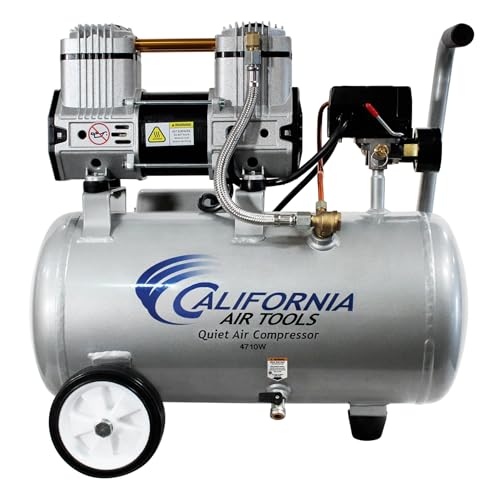
California Air Tools CAT-4710W 4.7-Gal Compressor
Built for garage workshops and DIY tasks, this mobile unit features an oil-free dual-piston pump that fills its 4.7-gallon steel tank in 78 seconds. Its low 7.5-amp motor draw ensures smooth startups on standard household circuits without tripping breakers.
Pros
- Fast 78-second tank fill time from empty
- Low 7.5-amp draw prevents tripped breakers
- Low-maintenance oil-free pump operation
- Wheels and pull handle ease transport at 35 pounds
Cons
- Delivers only 2.2 CFM at 90 PSI for demanding tools
- Steel tank construction is heavier than aluminum alternatives
California Air Tools 4620AC 2.0 HP Ultra-Quiet Air
Delivering an impressive 5.30 CFM at 90 PSI with an operating noise level of just 70 dB, the California Air Tools 4620AC provides robust pneumatic output without deafening workshop noise. Its 4.6-gallon aluminum twin-tank design and low-maintenance dual-piston pump make it an outstanding pick for indoor woodworkers, auto hobbyists, and finish carpenters.
Pros
- Delivers 5.30 CFM at 90 PSI, providing higher sustained airflow than standard compact pancake units
- Operates at a low 70 dB sound level that significantly reduces hearing fatigue in enclosed workshops
- Rust-resistant aluminum twin tanks reduce overall weight and prevent premature corrosion from tank moisture
- Low-RPM oil-free dual-piston pump requires no oil additions and is rated for over 3000 operating hours
- Compatible with standard 110V electrical outlets thanks to its manageable 14-amp draw
Cons
- Weighing between 64 and 68 pounds without integrated wheels, moving the unit requires dedicated two-handed lifting
- The 14-amp draw operates near the capacity of standard 15-amp household breakers during continuous running cycles
- A 4.6-gallon air reserve is not designed for continuous high-demand airflow applications like production media blasting or continuous rotary sanding
California Air Tools 20020 Ultra-Quiet 2.0 HP
The California Air Tools 20020 provides a 20-gallon air reserve powered by a low-RPM 2.0 HP motor, delivering 5.30 CFM at 90 PSI at an ultra-quiet 70 dB sound level. Featuring an oil-free dual-piston pump and a 14-amp draw on standard 110V power, it suits home garage hobbyists and woodworkers seeking quiet, dependable pneumatic volume.
Pros
- Quiet 70 dB acoustic rating makes indoor garage and residential basement operation comfortable without extreme ear fatigue
- Strong air delivery of 5.30 CFM at 90 PSI effortlessly handles finish nailers, impact wrenches, and common pneumatic garage tools
- Long-life dual-piston oil-free pump is rated for over 3,000 hours of operation with zero crankcase oil maintenance
- Low 14-amp draw is compatible with standard 110V household power under proper dedicated circuit conditions
- Vertical 20-gallon steel tank with no-flat wheels combines substantial air storage with a compact shop footprint
Cons
- At 114 pounds, loading this vertical compressor into a pickup truck bed or moving it upstairs requires two people
- Not intended for continuous-duty high-consumption tools like uninterrupted sandblasters or production rotary sanders
- The tall 45-inch vertical profile requires deliberate handling when rolling across uneven outdoor terrain
The Mechanics and Risks of Storing Air Compressors Under Pressure
Leaving an air compressor fully charged between work sessions may seem convenient, but keeping high pressure trapped in the receiver tank causes avoidable mechanical strain and safety hazards. Every compression cycle concentrates atmospheric moisture inside the vessel, turning ambient air into liquid water that sits directly against structural metal. While modern pressure vessels are engineered to withstand substantial pneumatic force, chronic pressurized storage accelerates internal rust, fatigues mechanical seals, and increases the danger of unexpected component failure.
The Direct Answer: Why Pressurized Storage Harms Your Equipment
Storing an air compressor full of compressed air is genuinely bad for the tank, the pump fittings, and the control valves. Ambient air contains natural humidity that condenses into liquid water whenever the pump compresses air molecules into a compact volume. When you leave the unit pressurized after turning off the motor, that trapped moisture cannot escape and pools along the tank floor. Over days and weeks, standing water corrodes steel walls from the inside out, weakening the vessel without showing visible exterior signs until structural integrity is compromised.
Static pressure also forces mechanical components to remain under continuous load rather than resting in an unpressurized state. The one-way tank check valve, the rubber diaphragm inside the pressure switch, and internal manifold seals must constantly resist 100 to 125 PSI. This steady tension promotes seal hardening, micro-leaks, and premature elasticity loss. Depressurizing the tank after each session removes that mechanical stress and creates the necessary airflow to blow accumulated condensation out of the bottom drain.
Internal Condensation Physics and Vessel Corrosion
Atmospheric air contains water vapor that cannot remain suspended when air volume shrinks under high compression ratios. As a compressor pump draws in cubic feet of ambient air, mechanical heat causes the intake air temperature to rise rapidly. Once that hot, dense air enters the storage tank, the steel or aluminum walls act as a heat sink, causing the air temperature to plummet below its dew point. This temperature drop forces moisture to condense into liquid droplets that run down the tank walls and collect at the base.
Carbon steel receiver tanks are especially vulnerable to this moisture because untreated interior steel oxidizes rapidly when exposed to water and oxygen. Because the corrosion process happens internally, a tank can look pristine on the outside while rust flakes dissolve its floor plate. Over time, rust pits penetrate the steel until small pinholes develop, or worse, thin spots weaken the pressure boundary. Draining the air completely pulls that pooled water through the drain valve, stopping prolonged acid-forming oxidation in its tracks.
Mechanical Fatigue on Valves, Seals, and Regulators
The receiver tank is not the only component subjected to wear when you leave an air compressor pressurized. The one-way check valve installed at the tank intake port relies on an internal spring and rubber or brass disc to prevent stored air from rushing backward into the pump head. When you leave 115 or 120 PSI in the vessel for days, that check valve disc remains under continuous backpressure. Over time, the elastomer face indents or stiffens, allowing air to leak backward past the unloader valve the next time the motor cycles.
Regulator diaphragms and line pressure gauges also suffer from uninterrupted static loads. Pressure regulators utilize an internal rubber diaphragm backed by a calibrated coil spring to throttle downstream airflow to tools. Leaving line pressure dialed to working levels causes the spring to take a slight mechanical set and weakens the flexible rubber membrane. Releasing tank pressure and turning the regulator knob counterclockwise relieves tension on internal calibration springs, preserving accurate pressure control for subsequent tasks.
Safety Hazards and Garage Pressure Vessel Risks
Compressed air represents potential energy that must be respected inside residential garages and professional workshops. A 13.2-gallon or 20-gallon receiver holding 115 to 120 PSI stores thousands of foot-pounds of energy waiting to release. If an unmonitored hose ruptures or a corroded fitting cracks while you are away from the shop, the explosive decompression can throw debris, damage nearby property, and pose serious risks to pets or family members. Depressurizing the equipment eliminates stored energy when the tool is unattended.
Thermal fluctuations in enclosed workshops compound this safety concern during changing seasons. A garage that sits at 50 degrees Fahrenheit overnight may climb to 90 degrees during a hot summer afternoon. As ambient temperatures rise, air molecules inside a sealed vessel expand, driving internal tank pressure beyond the original shut-off point. Although ASME safety relief valves protect vessels from catastrophic over-pressurization, subjecting factory relief valves to routine thermal pressure spikes creates unnecessary safety risks.
Steel Tanks Versus Rust-Free Aluminum Tanks
Tank construction material influences how a compressor tolerates moisture exposure, though it does not eliminate the need for depressurization. Steel tanks, such as the 4.7-gallon vessel on the California Air Tools CAT-4710W or the large 20-gallon steel reservoir on the California Air Tools 20020, provide rugged durability and high capacity at accessible price points. However, steel inherently reacts with moisture to generate red iron oxide rust. Regular drainage is essential on steel models to keep internal wall thickness within safe factory specifications.
Aluminum tanks offer a major advantage in corrosion resistance. Models like the California Air Tools 2010A feature a 2.0-gallon rust-free aluminum tank, while the California Air Tools 4620AC uses a 4.6-gallon aluminum twin-tank layout. Aluminum develops a protective oxide film that prevents rust scaling, eliminating the threat of rust pinholes. Even so, leaving moisture inside an aluminum tank is still problematic because stagnant water carries into downstream hoses, degrades pneumatic nailer O-rings, and ruins paint finishes when moisture reaches spray nozzles.
Impact on Oil-Free Dual Piston Pumps and Startup Cycling
Modern quiet air compressors frequently utilize oil-free dual piston pump designs operating at low rotational speeds. For example, California Air Tools units run at 1680 RPM with Teflon-coated piston rings to produce sound levels as quiet as 60 to 70 dB while delivering clean airflow. These pumps rely on an unloader valve to bleed trapped head pressure every time the electric motor shuts off. If a stuck check valve allows tank pressure to bleed backward into the pump head during storage, the motor faces massive starting resistance when restarted.
When an electric motor attempts to rotate a pump against trapped head pressure, it draws excessive inrush current that can trip standard 15-amp household circuit breakers. Electric motors drawing 7.5 to 14 amps during normal compression demand immediate free rotation during their first few revolutions to overcome inertia. Trapped backpressure stalls the rotor, triggers internal thermal overload protectors, and puts extreme mechanical shear on connecting rods. Depressurizing the system ensures that the pump cylinder remains completely unburdened for reliable, clean starts.
Proper Shutdown Procedure: Draining Moisture and Pressure
Establishing an effective end-of-day shutdown routine takes less than two minutes and extends the operational life of your equipment. First, always switch off the main power toggle on the pressure switch rather than unplugging the electrical cord from the wall. Using the dedicated switch allows the mechanical unloader valve to release head pressure automatically. Next, disconnect connected air hoses and pneumatic tools to eliminate strain on quick-connect couplers.
Once air tools are detached, slowly open the tank drain valve located on the bottom curve of the receiver. Crack the valve open just enough to allow trapped air to push accumulated water droplets and oily residue outward into a catch pan or shop towel. Let the air vent until the tank pressure drops to zero and no further moisture mists from the port. Once depressurized, leave the drain valve cracked slightly during humid months or close it finger-tight to keep dirt and shop dust from entering the orifice.
Drain Valve Designs: Ball Valves Versus Needle Petcocks
The physical design of the tank drain valve directly affects how easily a user can maintain their compressor. Budget compressors frequently feature threaded brass needle petcocks with tiny wing nuts positioned awkwardly beneath the tank. These petcocks are notoriously stiff to twist, scrape knuckles against floor brackets, and easily clog when rust particles lodge in their narrow passages. As a result, many operators neglect daily draining simply because the valve is difficult to access and operate.
Quarter-turn brass ball valves provide a superior user experience by allowing quick, tool-free drainage with a simple ninety-degree lever turn. Their wide internal bore lets sludge, water, and mineral deposits escape freely without jamming the valve core. If your compressor came factory-equipped with a stiff thumb petcock, upgrading to an accessible brass ball valve makes daily draining effortless. Regular purging also prevents water from freezing solid inside the valve during cold winters, which can split brass housings and destroy seals.
Recognizing Early Symptoms of Long-Term Pressure Damage
Catching pressure and moisture damage early allows you to address faulty fittings before severe failure happens. One obvious warning sign is rust-colored liquid or reddish mist blowing out of your air blower or spray nozzle when you trigger a tool. This discoloration confirms that oxidation is actively occurring inside the tank and scale is circulating through your manifold. Installing an inline moisture filter helps capture debris, but the primary solution is draining the tank thoroughly every single day.
Another common symptom is pressure loss where a charged compressor loses 20 to 30 PSI overnight while standing idle. If the tank loses pressure without active use, check the unloader valve port for a continuous soft hiss. A hissing unloader valve indicates that the internal tank check valve has failed to seal, allowing stored air to escape backward through the pump. Replacing a leaking check valve restores pressure retention, but depressurizing the tank after work prevents the check valve seal from fatiguing in the first place.
Project Pauses Versus Overnight Storage: When to Drain
Understanding the difference between a temporary work pause and end-of-day storage helps you balance convenience against machine protection. Leaving an air compressor pressurized for thirty minutes or an hour while you eat lunch or cut lumber is standard practice and will not harm the equipment. During active work days, the tank stays warm, and the air demand from finish nailers or impact wrenches keeps air cycling regularly through the reservoir without creating long-term stagnant moisture pockets.
The danger begins when tools are put away and the machine sits pressurized overnight, over the weekend, or across several months of storage. As the pump cools to ambient room temperature, massive condensation occurs, and standing water begins reacting with the metal. Making it a standard rule to purge tank pressure whenever you wrap up your final project ensures your air compressor remains safe, rust-free, and ready for reliable service for years to come.
About the author
Kenny Koehler is a power-tool specialist with more than a decade of hands-on evaluation experience and a science-based approach to product testing. His expertise in repeatable testing, tool performance, impact wrenches, and professional equipment brings a practical, data-focused perspective to compressor and pneumatic-tool comparisons.