
Is a Two Stage Air Compressor Worth It: Practical Workshop Guide for 2026
Wondering if is a two stage air compressor worth it for your garage? Explore performance, CFM output, and pressure trade-offs for October 2026.
 By Glenda Taylor
Updated October 8, 2026
By Glenda Taylor
Updated October 8, 2026

Operating air tools that demand continuous airflow often exposes the physical limits of standard garage machinery. Pneumatic rotary sanders, paint spray guns, and abrasive blasters pull steady streams of cubic feet per minute, rapidly draining small storage tanks and leaving single-stage pumps struggling to catch up. When line pressure plunges and motors overheat, workshop owners frequently ask: is a two stage air compressor worth it? Deciding whether to upgrade involves evaluating air consumption patterns, required tool pressures, and the physical reality of dual-piston intercooled compression.
Single-stage compressors generally compress ambient air directly to an operating pressure around 125 to 150 PSI in a single stroke. Two-stage units, by contrast, utilize a stepped process where a large cylinder compresses air before sending it through an intercooler into a smaller cylinder that boosts it up to 175 PSI. Reviewing our air tool CFM requirements guide helps clarify whether your pneumatic tools actually demand this elevated pressure or if standard single-stage equipment will suffice. Pairing that knowledge with proper workshop air compressor sizing recommendations allows you to invest wisely without overspending on commercial machinery you might never fully utilize.
| Award | Product | ACR Score About ACR ScoreThe ACR Score is our own rating from 0 to 10, based on performance, design and build, ease of use, and value. It reflects independent research and is never influenced by manufacturers, retailers, or affiliate commissions. Learn more › | |
|---|---|---|---|
| Best Overall |
Campbell Hausfeld 60-Gallon 2-Stage Air
|
8.9/10 | Buy |
| Best Premium |
 Campbell Hausfeld 80-Gallon Air Compressor, 5 HP
|
8.8/10 | Buy |
| Best Budget |
 8 Gallon Portable Air compressor
|
8.6/10 | Buy |
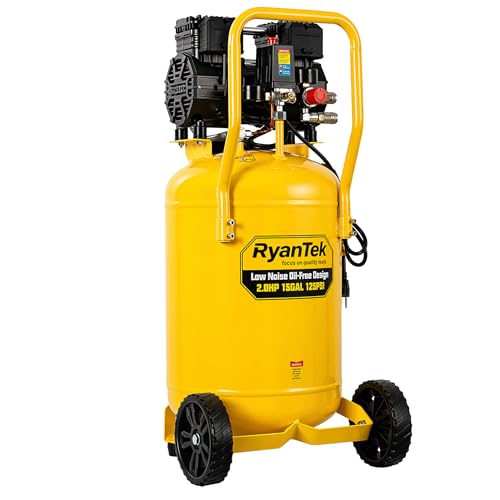 RyanTek 15-Gallon Air Compressor, 2HP, Quiet 66dB
|
8.6/10 | Buy | |
| Best Value |
 NorthStar Air Compressor Pump, 175 Max. PSI
|
8.6/10 | Buy |
 DEWALT 27-Gallon Vertical Portable Air Compressor
|
8.4/10 | Buy | |
 Ingersoll Rand 2340L5-V 5 HP Type 30 Two-Stage Air
|
8.3/10 | Buy | |
 Ingersoll Rand 2475N7.5 7.5 HP Two-Stage Air
|
8.1/10 | Buy | |
 VEVOR Air Compressor Pump Head
|
8.0/10 | Buy | |
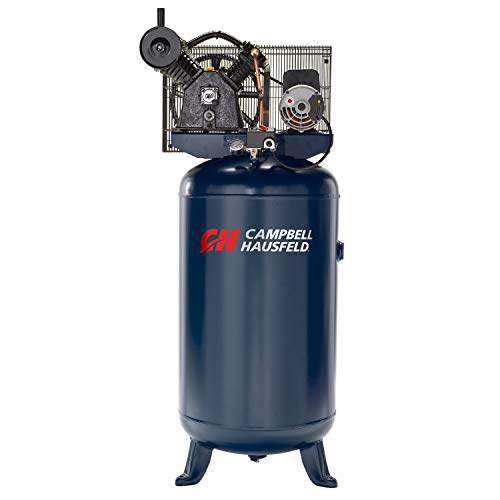 Campbell Hausfeld 80-Gallon Vertical Electric Air
|
8.0/10 | Buy |
Evaluating Two-Stage Air Compressors for Workshop and Garage Performance
Investing in a heavy stationary compressor represents a substantial step up from portable jobsite equipment. Deciding whether is a two stage air compressor worth it requires understanding how two-stage engineering differs from basic single-stage pumps. The answer depends heavily on the specific air tools you operate, your daily workflow duty cycle, and your workshop electrical setup.
The Mechanical Principle Behind Two-Stage Compression
A single-stage compressor draws ambient air into a cylinder and compresses it to final tank pressure in one single stroke before discharging it through a reed valve into the receiver tank. Whether that single-stage unit has one cylinder, two twin cylinders, or three radial cylinders, the compression ratio remains single-stage if all cylinders discharge directly to final pressure. Two-stage pumps operate on a fundamentally different mechanical principle by dividing the compression workload between two distinctly sized cylinders.
The first stage features a larger bore piston that pulls in atmospheric air and compresses it to an intermediate level, typically around 40 to 60 PSI. That partially compressed air leaves the first cylinder and flows across an external finned intercooler copper tube. This intercooler tube uses cooling airflow from the pump flywheel fan blades to shed significant heat before the charge enters the second stage. Lowering the air temperature between stages increases air density, making the subsequent compression stroke substantially more efficient.
The second stage utilizes a smaller bore piston that receives this pre-cooled, dense air and compresses it to final storage pressure, commonly between 175 and 185 PSI. Because the high-pressure piston works on already concentrated air, the mechanical stress on individual piston wrist pins, rings, and connecting rods is distributed more evenly. Heavy industrial units, such as the Ingersoll Rand Type 30 series or cast-iron Campbell Hausfeld two-stage pumps, rely on this mechanical division of labor to deliver continuous output under demanding conditions.
Stored Air Reserves and Maximum Pressure Advantage
The most obvious operational distinction between single-stage and two-stage designs is maximum cut-out pressure. Most consumer and prosumer single-stage compressors shut off between 125 and 150 PSI, with cut-in thresholds around 90 to 100 PSI. Two-stage units, such as the Campbell Hausfeld 60-gallon vertical or Ingersoll Rand 80-gallon models, run to an operating cutoff of 175 PSI. That additional 25 to 50 PSI differential creates a substantially larger buffer of usable compressed air.
Because Boyle’s law dictates that air volume compresses proportionally with absolute pressure, a 60-gallon tank at 175 PSI holds significantly more cubic feet of standard air than the same 60-gallon tank pressurized to only 135 PSI. When you operate an air regulator dialed to 90 PSI for an impact wrench or spray gun, the two-stage tank delivers an extended drawdown buffer before the motor must engage. That extra cushion allows intermittent tools to run longer without triggering frequent pressure switch cycles.
This higher pressure buffer also prevents tools from starving when line demand spikes. If a single-stage tank cuts in at 95 PSI, dynamic pressure drop across regulators, filters, and standard 3/8-inch air hoses can easily pull operating pressure at the tool nozzle below 80 PSI. A two-stage system cutting in at 140 PSI maintains a generous pressure overhead, ensuring your regulator consistently delivers full working pressure regardless of line friction.
Thermal Efficiency, Pump RPM, and Extended Duty Cycles
Heat is the primary enemy of pneumatic pump longevity. When air is compressed rapidly in a single cylinder, compression temperatures can soar beyond 350 degrees Fahrenheit, accelerating oil breakdown, cooking valve reed deposits, and degrading rubber gasket seals. Single-stage oil-free compressors often run at high motor speeds around 3,400 RPM to produce acceptable CFM, generating substantial friction and noise in the process.
Two-stage pumps counter heat buildup through lower pump speeds, intercooling, and heavy cast-iron cylinder mass. Many two-stage cast-iron pumps operate between 700 and 1,000 RPM, driven by a large belt pulley attached to an industrial induction motor. The slower rotational speed dramatically reduces internal friction and cylinder wall wear while giving the cooling fins more time to dissipate thermal energy. Finned intercoolers drop the air temperature significantly before the second cylinder ever engages.
Lower operational temperatures directly translate to superior duty cycle ratings. While standard consumer compressors frequently carry intermittent 50% duty cycle limits to prevent thermal shutdown, heavy-duty two-stage pumps like the Ingersoll Rand 2340L5-V are engineered for 100% continuous duty operation. If your projects involve continuous blasting or body sanding, a pump that can run non-stop without thermal damage is indispensable.
Matching Continuous Pneumatic Tools to CFM Output
Pneumatic tools fall into two distinct air consumption categories: intermittent tools and continuous-draw tools. Intermittent tools, such as framing nailers, brad nailers, and grease guns, consume small bursts of air followed by recovery pauses. Even modest portable compressors like a DEWALT 27-gallon portable or RyanTek 15-gallon quiet unit can easily manage intermittent fastener cycling without falling behind.
Continuous tools place vastly greater strain on an air system. Dual-action orbital sanders, die grinders, rotary cutoff tools, media blast cabinets, and HVLP paint spray guns pull continuous airflow for minutes at a time. A typical automotive sander can easily consume 12 to 16 CFM at 90 PSI, which exceeds the delivery capacity of almost every single-stage 120V compressor on the market. Understanding these consumption demands and calculating pump CFM delivery helps workshop owners determine if their tools will stall under lower-tier equipment.
When you attempt to operate high-draw tools on an undersized compressor, line pressure steadily drops below the tool stall threshold. The operator is forced to stop working every minute to wait for the tank to rebuild pressure, causing uneven sanding patterns and paint finish flaws. Two-stage commercial units delivering 11 to 24 CFM at 90 PSI supply the steady volume required to keep high-demand tools running smoothly without interruption.
Electrical Demands and Workshop Power Infrastructure
Evaluating a two-stage air compressor requires looking closely at your available electrical service. Genuine two-stage pumps require heavy induction motors ranging from 3.7 to 7.5 running horsepower or higher to overcome the mechanical resistance of compressing air to 175 PSI. These industrial electric motors cannot operate on standard 120V 15-amp or 20-amp household branch circuits.
Connecting a unit like the Campbell Hausfeld 80-gallon 5 HP compressor demands a dedicated 230V or 240V single-phase electrical line. Depending on the motor rating, you will likely need a 30-amp to 50-amp dedicated double-pole circuit breaker wired with appropriately sized copper conductor wire. The startup inrush amperage of a 5 HP motor can be substantial, requiring robust electrical wiring that avoids line voltage drop during cold starts.
If your workspace is a rented garage or an outbuilding with only a shared 120V circuit, installing a two-stage compressor will necessitate significant electrical upgrades. For users with limited electrical service, high-output portable single-stage units or smaller quiet dual-piston designs remain practical alternatives. However, for established home workshops or automotive shops already equipped with 240V power, dedicated electrical wiring unlocks the full capabilities of commercial two-stage power.
Workshop Footprint, Storage Tank Capacity, and Air Piping
Stationary two-stage compressors are large, heavy machines that command permanent real estate on a shop floor. Units equipped with 60-gallon or 80-gallon vertical ASME receiver tanks can weigh between 300 and 500 pounds, requiring a solid concrete foundation and vibration isolator pads. Their upright profile helps preserve valuable horizontal floor space compared to horizontal tanks, but they cannot be easily moved once bolted down.
Because these machines remain stationary, planning an effective air distribution system becomes part of the setup. Long flexible rubber air hoses draped across a garage floor create safety hazards and introduce noticeable pressure drop over distance. Many fabricators and woodworkers install rigid copper, aluminum, or black iron piping networks that route high-pressure air around the shop perimeter, dropping regulated lines right to workbenches and vehicle bays.
A typical workshop piping layout routes 175 PSI air directly through main headers before passing through a moisture filter and a dedicated pressure regulator at each workstation drop. This architecture allows the main receiver tank to store air at maximum pressure while individual tools receive exactly the 90 PSI or 40 PSI they need. In contrast, smaller portable compressors must be wheeled directly next to the workspace, limiting convenience in busy multi-bay shops.
Moisture Condensation and Long-Term Maintenance Routines
Compressing atmospheric air squeezes moisture vapor out of suspension, causing water droplets to collect rapidly inside the receiver tank. Because two-stage compressors achieve significantly higher storage pressures, condensation rates inside the tank can be substantial, particularly in humid regions. If this accumulated water is neglected, internal tank corrosion can weaken the steel vessel and contaminate downstream paint or sandblasting lines.
Managing tank condensation requires a consistent maintenance schedule and accessible drainage hardware. While basic compressors often feature recessed, stiff needle petcocks that discourage regular draining, stationary two-stage tanks benefit from quarter-turn brass ball valves or an automated tank drain valve setup that purges accumulated water on an automated timer. Keeping moisture out of the air supply protects precision pneumatic cylinders, rotary air motors, and spray finishes from rust and water contamination.
Pump lubrication also requires disciplined oversight to ensure long service life. Cast-iron two-stage pumps rely on splash lubrication and require periodic oil checks through a crankcase sight glass. Using non-detergent synthetic compressor oil designed to withstand elevated compression temperatures prevents carbon formation on valve plates. With regular oil changes, clean intake air filters, and diligent tank draining, heavy-duty cast-iron two-stage pumps frequently achieve thousands of operating hours over decades of reliable service.
The Bottom Line: Who Truly Benefits from a Two-Stage Compressor?
Determining whether is a two stage air compressor worth it ultimately depends on your pneumatic workload and tool selection. If your regular garage tasks consist of filling vehicle tires, blowing dust, installing trim with finish nailers, or occasionally removing lug nuts with an impact wrench, a single-stage compressor is more than adequate. A quality 15-gallon to 27-gallon portable unit will satisfy those intermittent needs without requiring 240V wiring or permanent floor anchoring.
However, for auto restoration enthusiasts, professional mechanics, metal fabricators, and production woodworkers, a two-stage compressor delivers distinct operational advantages. The ability to run continuous tools without stalling, enjoy a massive 175 PSI air reserve, and rely on a 100% continuous duty cast-iron pump transforms workshop productivity. You spend less time waiting for tanks to recover and more time completing fabrication and finishing work without pressure drop frustrations.
While the initial financial commitment, dedicated electrical setup, and physical footprint are larger, the durability and airflow of a two-stage compressor provide peace of mind. For workshops that demand uninterrupted air volume day in and day out, the investment pays dividends in tool performance and long-term mechanical reliability.
About the author
Glenda Taylor has extensive experience in residential construction, remodeling, home improvement, and tool use. Her practical approach to equipment evaluation focuses on usability, performance, safety, and value—helping DIYers and workshop users make better-informed decisions about compressors and related tools.