
How to Prevent Water in Air Compressor: Practical Guide for 2026
Learn how to prevent water in air compressor lines and protect pneumatic tools with proven filtration and piping techniques in October 2026.
 By Bob Beacham
Updated October 8, 2026
By Bob Beacham
Updated October 8, 2026
Moisture accumulation inside compressed air systems represents one of the most persistent frustrations for home workshops and commercial jobsites alike. When ambient air enters a compressor pump, atmospheric humidity gets squeezed under intense pressure, transforming ambient vapor into liquid runoff that settles at the base of the storage receiver. Understanding how to prevent water in air compressor setups is critical for preventing internal tank corrosion, ruined paint jobs, and premature failure of pneumatic tools. Without proactive moisture management, liquid water quickly migrates down delivery lines, washing away essential tool lubricants and causing severe air pressure drops.
Managing this condensation requires a layered defense combining consistent tank drainage, point-of-use filtration, and dry air piping geometry. Utilizing dedicated equipment such as a particulate water trap or an inline coalescing dryer captures suspended aerosol droplets before they enter sensitive air tools. Incorporating proper filtration hardware helps maintain consistent pneumatic power across high-demand tools such as HVLP spray guns, plasma cutters, and framing nailers. Implementing reliable moisture control preserves valuable shop tools and ensures consistent performance across every pneumatic task.
| Award | Product | ACR Score About ACR ScoreThe ACR Score is our own rating from 0 to 10, based on performance, design and build, ease of use, and value. It reflects independent research and is never influenced by manufacturers, retailers, or affiliate commissions. Learn more › | |
|---|---|---|---|
| Best Overall |
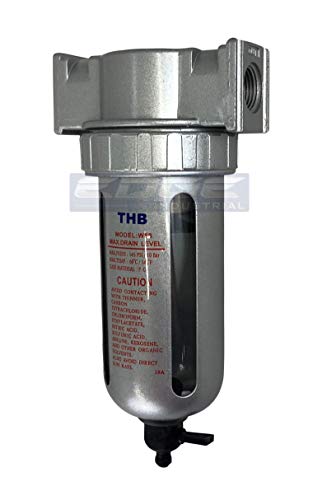
THB 1/2-Inch NPT Compressed Air Moisture Filter
|
9.1/10 | Buy |
| Best Budget |
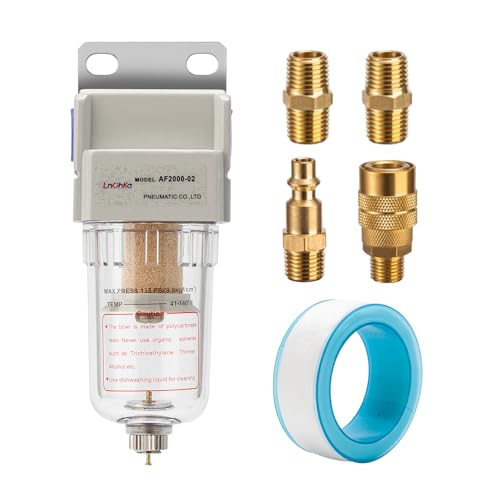 LNCHKA 1/4-Inch NPT Air Compressor Water Separator
|
8.9/10 | Buy |
| Best Value |
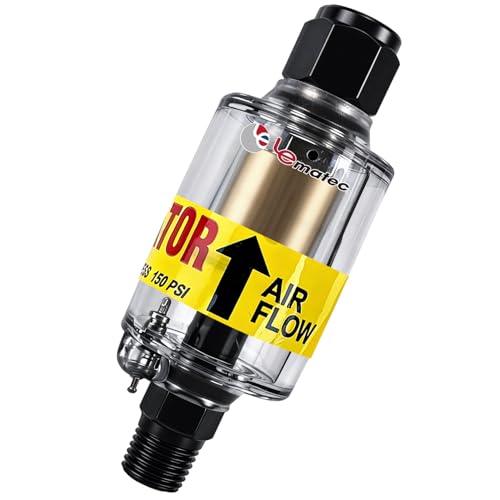 LE LEMATEC 1/4" NPT Inline Air Dryer
|
8.9/10 | Buy |
 RIH AF2000-02 1/4-Inch NPT Air Filter
|
8.3/10 | Buy | |
| Best Premium |
 LE LEMATEC AI-304 1/4-Inch Water Separator
|
8.3/10 | Buy |
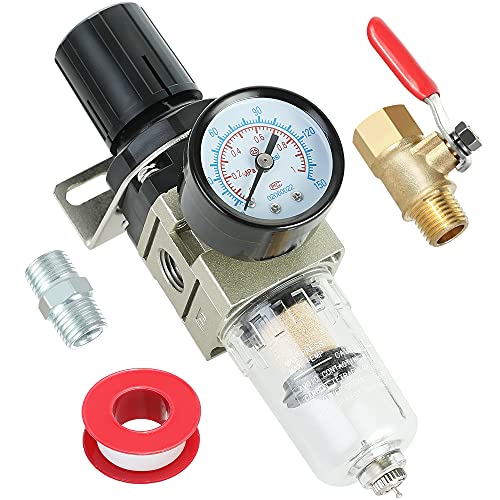 Hromee AW2000-02 1/4-Inch Filter Regulator
|
8.1/10 | Buy | |
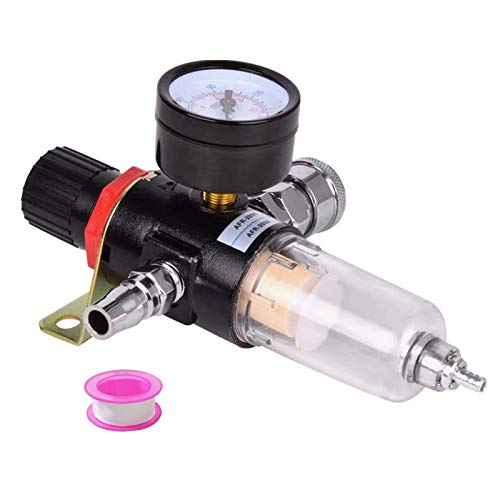 Hotusi 1/4" BSP Air Filter Regulator
|
7.8/10 | Buy | |
 DAIERTEK 3/4-Inch NPT 3-Stage Air Compressor Dryer
|
7.8/10 | Buy |
THB 1/2-Inch NPT Compressed Air Moisture Filter
The THB 1/2-inch NPT particulate filter and moisture trap delivers clean, dry compressed air with a generous 106 CFM flow rating, 5-micron particulate filtration, and a 175 PSI maximum input tolerance. It is a dependable addition to any home garage, automotive workshop, or woodworking setup looking to safeguard pneumatic tools against moisture and line scale.
Pros
- High 106 CFM flow capacity prevents severe pressure drops on high-demand pneumatic tools.
- 5-micron element traps up to 95 percent of liquid moisture, scale, and pipe debris.
- Semi-automatic drain allows easy manual purges under pressure and drains automatically when the line depressurizes.
- Metal bowl guard adds structural protection to the 5-ounce polycarbonate reservoir.
- Standard 1/2-inch NPT female ports suit mid-sized and primary workshop air drops.
Cons
- Polycarbonate bowl requires caution around harsh aerosol solvents and synthetic compressor oils.
- Requires adapter bushings if connecting directly to common 1/4-inch or 3/8-inch air fittings.
- Maximum regulated output is capped at 145 PSI, which may limit specialized ultra-high-pressure applications.
LNCHKA 1/4-Inch NPT Air Compressor Water Separator
The LNCHKA 1/4-inch NPT air line filter is a compact moisture separator engineered to trap condensation and particulates using a durable 5-micron brass element. Supporting up to 145 PSI and an 18 SCFM flow rate, it is an effective, budget-friendly addition for DIYers and home garage mechanics looking to protect pneumatic tools from water damage.
Pros
- Durable 5-micron porous brass filter element resists corrosion better than paper or plastic cartridges
- Generous 18 SCFM flow capacity easily accommodates common DIY and small-shop pneumatic tools
- Includes brass quick-connect fittings, bracket, and Teflon tape for straightforward installation out of the box
- Transparent polycarbonate bowl provides effortless visual inspection of fluid buildup
Cons
- Polycarbonate bowl can be vulnerable to cracking if exposed to harsh synthetic solvents or chemical fumes
- Manual drain requires proactive monitoring and regular physical purging to prevent water re-entry into the line
- 1/4-inch NPT port size and 18 SCFM rating are not suitable for large multi-operator industrial airline networks
LE LEMATEC 1/4" NPT Inline Air Dryer
Built for spray painting and plasma cutting setups, this compact inline separator captures oil and moisture down to 1 micron across a 2-150 PSI range. Its standard 1/4-inch NPT threading and built-in check valve help protect downstream pneumatic equipment from contamination.
Pros
- Filters oil and moisture down to 1 micron
- Wide operating range from 2 to 150 PSI
- Integrated one-way valve prevents backflow
- Standard 1/4-inch NPT fitting
- Extremely lightweight and compact profile
Cons
- Requires adapters for larger air line sizes
- Drain requires manual clearing and maintenance
RIH AF2000-02 1/4-Inch NPT Air Filter
Built for pneumatic setups, the RIH AF2000-02 uses a 5-micron brass element and aluminum body to trap moisture and particulate matter. It delivers a 20 SCFM flow rate at 90 PSI, providing straightforward filtration for light to moderate compressor lines.
Pros
- Sturdy aluminum housing construction
- Fine 5-micron brass filter element
- Lightweight design at 0.35 pounds
- Broad operating temperature range up to 140°F
Cons
- Manual drain requires routine maintenance
- Polycarbonate bowl is less durable than metal
- Flow rate capped at 20 SCFM
LE LEMATEC AI-304 1/4-Inch Water Separator
Designed for compact end-of-line protection, this lightweight moisture trap mounts directly to spray guns and pneumatic tools to stop water and oil contamination. Its 200 PSI aluminum housing and push-button drain deliver dependable filtration for automotive painting and general shop tasks.
Pros
- Lightweight build prevents wrist fatigue during painting
- Heavy-duty 200 PSI rated aluminum construction
- Push-button drain allows fast, tool-free emptying
- Transparent housing offers easy visual monitoring
Cons
- Small bowl capacity requires frequent draining during prolonged tasks
- Fixed 1/4-inch NPT threads require adapters for other hose sizes
Hromee AW2000-02 1/4-Inch Filter Regulator
Designed for compact workspaces, this piggyback system integrates moisture filtration and pressure regulation into a single unit. Its brass filter element helps protect pneumatic tools from water and debris, while the included bracket and shutoff valve simplify setup.
Pros
- Durable brass filter element resists wear over time
- Dual-unit gauge provides clear pressure readings
- Compact piggyback design suits space-constrained setups
- Includes shutoff valve, bracket, and seal tape
Cons
- Requires manual operation to drain collected fluids
- Pressure capacity is capped at 150 PSI
Hotusi 1/4" BSP Air Filter Regulator
Built for pneumatic equipment, this compact Hotusi unit integrates moisture filtration, lubrication, and pressure regulation into a single setup. It maintains stable air delivery between 30 and 120 PSI to protect pneumatic tools from particulates and excess pressure.
Pros
- Combines filtration, regulation, and lubrication
- Lightweight design at roughly 0.71 pounds
- Maintains stable output pressure during fluctuations
- Filters fine debris to safeguard downstream tools
Cons
- Restricted to 1/4-inch BSP connection sizes
- Maximum pressure ceiling is limited to 130 PSI
DAIERTEK 3/4-Inch NPT 3-Stage Air Compressor Dryer
This DAIERTEK 3-stage air drying system combines 5-micron particulate filtration, a 0.01-micron coalescing oil separator, and color-changing desiccant beads with an integrated 0-240 PSI locking regulator. It is a solid upgrade for auto painters, plasma cutter operators, and workshop owners looking to eliminate moisture and oil aerosols from their compressed air lines.
Pros
- Comprehensive three-stage filtration removes debris and aerosol oil down to 0.01 microns before desiccant drying
- Rugged aluminum housing and metal bowl guards offer dependable impact resistance in workshop settings
- Supplied with multiple replacement filter elements, desiccant packs, and fittings for immediate setup
- Full 3/4-inch NPT porting prevents restrictive bottlenecks along high-flow distribution lines
Cons
- Must be mounted strictly vertically to ensure the automatic moisture drain functions properly
- Substantial vertical and horizontal footprint requires dedicated wall mounting space near your drop station
- Plumbing into standard 1/4-inch or 3/8-inch hoses requires pipe reducer fittings
Comprehensive Moisture Control Strategies for Compressed Air Systems
Compressed air systems generate substantial volumes of water as an unavoidable byproduct of mechanical air compression. Managing this liquid requires a comprehensive approach addressing thermodynamic condensation, plumbing layout, and multi-stage filtration hardware. Without an intentional moisture strategy, water vapor condenses into liquid droplets that wash away pneumatic tool lubricants, cause internal tank corrosion, and ruin spray finishes. Setting up a dependable moisture control system protects valuable equipment while maintaining consistent pressure across your pneumatic network.
The Thermodynamics of Condensation in Compressed Air
Ambient atmospheric air naturally contains moisture in the form of invisible water vapor. When a compressor pump draws in cubic feet of atmospheric air, it compacts that volume into a fraction of its original size while increasing pressure and temperature. Because hot air holds more water vapor than cold air, the moisture stays in a gaseous state as it exits the pump head. Once pressurized air enters the storage receiver and cools, its capacity to retain water drops dramatically. This thermodynamic shift forces the vapor to condense into liquid water droplets against the steel tank walls.
The volume of water produced depends heavily on ambient relative humidity and compressor runtime. High ambient temperatures combined with high humidity force the compression pump to ingest significant volumes of suspended water vapor during each cycle. As compressed air travels downstream through delivery hoses, additional temperature drops cause secondary condensation inside the lines. This delayed condensation explains why moisture often appears at tool connections even when an upstream tank seems clear. Understanding this cooling cycle is the foundation for placing filtration equipment where it operates most effectively.
Implementing Daily Tank Drain Maintenance Protocols
The primary receiver tank functions as the first mechanical moisture separator in any compressed air setup. As compressed air cools within the large volume of the tank, heavy liquid droplets fall out of suspension and pool at the bottom. Discharging this accumulated water on a daily basis prevents internal tank rust and stops liquid from entering the discharge manifold. Standard thumb petcocks can become stiff, corroded, or difficult to reach, which frequently leads operators to neglect routine draining. Replacing an awkward petcock with a quarter-turn brass ball valve or an automatic drain mechanism encourages consistent daily purging.
Proper drainage procedure requires specific attention to workshop safety and system depressurization. Opening a drain valve while the tank holds full pressure can blast abrasive rust scale and oily sludge across the floor. Releasing the bulk of air pressure before opening the drain allows liquid to exit smoothly without violent splashing. In commercial workshops, semi-automatic drains or electronic timed solenoid valves purge moisture automatically whenever the compressor cycles or powers down. Units like the 1/2″ Particulate filter water trap seperator include semi-automatic drain valves that seal under working pressure and vent collected liquid once line pressure drops overnight.
Primary Line Filtration and Particulate Moisture Traps
Mechanical water traps represent the first active line of defense positioned directly downstream from the compressor tank outlet. These devices utilize internal directional baffles to create a spinning cyclonic airflow that forces heavy water droplets and solid debris outward against the bowl walls. The separated liquid runs down the interior surfaces into a quiet collection zone below a baffle plate, preventing airflow from picking the moisture back up. High-quality primary traps typically feature 5-micron filter elements that capture both liquid water and solid rust particles. This mechanical separation eliminates the bulk of free-flowing liquid before air moves further into the distribution network.
Selecting the correct port size and flow capacity for a primary filter prevents restrictive bottlenecks in shop lines. Compact units such as the LNCHKA Air Compressor Water Separator utilize 1/4-inch NPT connections and a 5-micron brass element suited for compressors rated up to 2.68 horsepower and flow demands up to 18 SCFM. For larger main lines feeding multiple drops, a high-flow unit like the 1/2″ Particulate filter water trap seperator delivers up to 106 CFM at a maximum operating pressure of 175 PSI. Sizing the primary filter to exceed the peak CFM consumption of your tools keeps line velocity moderate, allowing the centrifugal baffle to separate moisture efficiently.
Filter bowl construction and element materials play a major role in long-term reliability and workshop safety. Sintered brass filter elements, found in models like the RIH 1/4″ NPT Air Dryer for Compressor, provide corrosion resistance and can be cleaned and reused multiple times. Transparent polycarbonate bowls allow quick visual inspection of accumulated liquid, but they require physical protection in active garage environments. Polycarbonate bowls equipped with metal bowl guards resist incidental impact damage from dropped tools or moving hoses. Inspecting the clear bowl regularly ensures fluid levels never rise above the separator baffle, where air turbulence could re-entrain water into outgoing air.
Air Distribution Piping Geometry and Condensation Drop Legs
Filtration hardware works best when combined with an intentionally planned air distribution piping layout. Running flexible rubber hoses directly from the compressor receiver to tools traps warm air that continues to condense downstream past your filters. A permanent piping system constructed from copper, black steel, or smooth-bore aluminum tubing allows hot compressed air to cool naturally against pipe walls before reaching filtration points. Installing at least 25 to 30 feet of rigid piping between the compressor and the first filter drop provides adequate cooling distance for suspended vapor to become liquid droplets.
The physical slope of the main overhead distribution header is critical for directional moisture control. Pitching the main trunk line slightly downward, roughly 1/4 inch for every 10 feet of horizontal run, directs condensing water toward a dedicated low-point drain leg rather than toward tools. Workstation branch lines should always rise vertically off the top of the main trunk line in an upward loop before descending to tool height. This top-takeoff geometry prevents gravity-fed water flowing along the bottom of the main pipe from spilling into individual tool drops.
Every vertical workstation drop should terminate in a dedicated moisture drop leg extending 6 to 12 inches below the tool outlet. Water running down the vertical pipe bypasses the horizontal tool connection and falls into the bottom drop pipe where a manual drain valve captures it. Placing your primary water trap and regulator combo on the horizontal branch coming off this drop leg isolates the filter from direct slugging by pooled liquid. Purging these drop-leg valves weekly keeps the distribution system clean and significantly extends the service life of sensitive inline filter elements.
Multi-Stage Coalescing and Desiccant Drying Systems
Certain pneumatic operations demand air that is completely free of liquid droplets and microscopic aerosol mists. Applications like automotive paint spraying, sandblasting, and plasma cutting show immediate defects if even trace amounts of moisture or compressor oil pass through the nozzle. While standard 5-micron particulate filters capture bulk liquid, they cannot catch atomized oil aerosols or sub-micron water vapor. Overcoming this limitation requires a progressive multi-stage filtration system that cleans compressed air through increasingly fine stages of separation.
Industrial three-stage drying units combine particulate separation, fine coalescing filtration, and chemical desiccant absorption into a single continuous assembly. An assembly like the 3/4″ NPT Air Compressor Dryer utilizes a 5-micron pre-filter to catch coarse debris, followed by a 0.01-micron coalescing filter that removes 99.98% of microscopic liquid and oil aerosols. The final stage passes air through activated silica desiccant beads that physically pull residual water vapor out of the airflow, lowering the pressure dew point significantly. This progressive setup prevents premature clogging of the fine coalescing element and keeps the desiccant from becoming saturated with oil.
Maintaining a desiccant drying system requires monitoring the condition of the chemical absorption media. Quality desiccant beads incorporate humidity indicators that change color, shifting from bright blue to pink as they absorb moisture to full capacity. Saturated beads can be replaced with fresh media or baked in a dedicated oven according to manufacturer guidance to drive off trapped moisture for reuse. Installing the drying system vertically ensures proper operation of automatic float drains that vent separated liquid from pre-filter stages without manual intervention.
Point-of-Use Inline Filters for Sensitive Pneumatic Tools
Even with centralized workshop filtration, moisture can still condense inside long extension hoses running across cold garage floors. Connecting a dedicated point-of-use inline filter directly to the base of your pneumatic tool serves as the final barrier against water damage. Compact inline separators trap residual droplets that form within flexible hoses immediately before air enters the tool motor or spray nozzle. This localized protection is vital when using HVLP spray guns, where a single droplet of water can ruin a basecoat and force extensive sanding.
Tool-mounted filters must balance filtration efficiency against physical size and operator ergonomics. The LE LEMATEC Inline Air Compressor Water Separator addresses this balance with a slim 2.94-inch profile and a lightweight 4.2-ounce aluminum alloy body that mounts to paint guns and impact wrenches without disrupting balance. Rated for operating pressures up to 200 PSI, this compact unit uses a specialized sintered bronze element to capture water, oil, and dust particles. An integrated push-button drain valve allows the operator to eject accumulated moisture instantly during a painting session without unscrewing the unit or depressurizing the supply hose.
For broader workshop use, inline dryers like the LE LEMATEC Inline Air Dryer & Water Separator feature a 1-micron reusable element and universal 1/4-inch NPT threading. Operating across a broad pressure range from 2 to 150 PSI, these units include internal one-way valves that prevent backflow into the air line. Reusable elements can be rinsed and cleared of debris, making them practical for DIY mechanics and woodworkers powering finish nailers and plasma cutters. Installing these lightweight units directly ahead of expensive pneumatic tools prevents internal corrosion on cylinder walls, rotor vanes, and delicate valve seats.
Pressure Regulation and Flow Dynamics in Moist Environments
Pneumatic systems frequently integrate filtration directly with pressure regulation using compact piggyback filter-regulator assemblies. Units such as the Hromee 1/4 Inch Air Compressor Filter Regulator combine a 5-micron brass filter element with an adjustable pressure regulator in a space-saving modular body. Adjusting line pressure down from high tank storage levels to specific tool requirements directly impacts the moisture dynamics of the air. When compressed air expands across a regulator seat, its pressure drops and temperature decreases, which can trigger additional localized condensation right at the regulator outlet.
Positioning the filter element ahead of the regulator valve seat ensures that liquid water and abrasive pipe scale are captured before they can damage precision regulator diaphragms. The Hromee AW2000-02 assembly includes an accurate pressure gauge rated up to 150 PSI, a forged brass ball valve for positive shutoff, and a transparent filter cup for visual fluid monitoring. Regulating pressure accurately keeps pneumatic tools operating within their intended operating ranges, avoiding the excessive airflow consumption that accelerates moisture generation. Units like the Hotusi 1/4″ BSP Air Compressor Moisture Filter provide basic pressure regulation across a 30 to 120 PSI range, stabilizing working pressure while venting over-pressurized conditions.
Matching regulator port sizing to air consumption profiles prevents dynamic pressure drops that reduce tool torque and drive speed. While 1/4-inch NPT units handle light-duty tools and intermittent fastening operations smoothly, high-draw tools like continuous dual-action sanders require generous internal airflow. A restrictive filter-regulator body causes line pressure to plummet under load, forcing the compressor to cycle continuously and heat the air further. Selecting components that support your required CFM delivery maintains stable line pressure and prevents the high air velocity that carries liquid water past filter baffles.
Environmental Controls and Compressor Intake Optimization
Preventing moisture in compressed air systems begins before atmospheric air ever enters the compressor pump cylinder. The ambient environment surrounding the compressor intake directly dictates the total volume of water vapor that enters the compression cycle. Placing an air compressor in an unventilated, humid basement or directly adjacent to wet washing areas forces the pump to draw in saturated air. Relocating the compressor or routing its intake air filter to a cooler, drier location noticeably reduces the volume of condensation generated inside the receiver tank.
Managing pump operating temperature and duty cycle limits also plays an important role in moisture management. Running a small oil-free compressor continuously beyond its rated duty cycle generates intense thermal energy that keeps vapor superheated until it travels deep into delivery hoses. Allowing the pump adequate recovery time keeps operating temperatures moderate, enabling the primary receiver tank to cool air and drop out liquid before air leaves the tank. Maintaining clean intake filters prevents vacuum restrictions that can alter pump operating temperatures and accelerate mechanical wear.
System Verification and Preventative Maintenance Procedures
Verifying that your moisture control setup is performing properly requires routine visual and functional checks across all installed components. A simple practical test involves holding a clean sheet of cardboard or a dry mirror several inches from an open air blow gun for thirty seconds under full line pressure. If any damp spots, oil sheen, or fogging appear on the surface, moisture is slipping past your filtration stages and requires immediate adjustment. This quick diagnostic test confirms whether your point-of-use dryers, desiccant beads, or primary water traps are functioning correctly before you connect a sensitive paint gun or plasma cutter.
Regular maintenance of filtration hardware prevents saturated elements from creating excessive pressure drops or dumping collected moisture downstream. Polycarbonate bowls should be washed using mild soap and warm water only, as harsh solvents and synthetic compressor oils can cause plastic crazing and structural cracking. Sintered brass filter elements should be removed, soaked in solvent to clear trapped particulates, and blown dry from the inside out using low-pressure air. Float-style automatic drains must be inspected periodically to ensure that rust sludge has not jammed the valve mechanism in an open or closed position.
Prioritizing workshop safety during all maintenance and filter cleaning routines protects against accidental injury from pressurized fittings. Always depressurize distribution lines completely and disconnect the air supply before unthreading filter bowls or replacing desiccant cartridges. Never attempt to adjust or service filter hardware while lines remain under full operating pressure. Combining systematic tank draining, engineered piping geometry, and quality multi-stage filtration hardware establishes a reliable defense against water, ensuring clean air delivery and extended lifespan for all your pneumatic power equipment.
About the author
Bob Beacham is an experienced tools and workshop writer with deep knowledge of power equipment, mechanical systems, and practical DIY applications. His coverage of air compressors, welding equipment, saws, and workshop tools helps translate technical specifications into useful guidance for homeowners and serious DIYers.