
How to Make a Vacuum With an Air Compressor: Practical Workshop Guide for 2026
Learn how to make a vacuum with an air compressor using the Venturi effect, pneumatic fittings, and precise pressure regulation for October 2026.
 By Clint DeBoer
Updated October 7, 2026
By Clint DeBoer
Updated October 7, 2026

Workshop air lines normally push high-pressure air forward to run impact wrenches, nailers, and blow guns, yet pneumatic setups can also generate powerful suction on demand. Learning how to make a vacuum with an air compressor allows mechanics and woodworkers to clean up metal shavings, evacuate fluid reservoirs, clamp delicate workpieces, and bag composite laminates without buying a dedicated electric vacuum pump. The entire process relies on fundamental fluid dynamics where pressurized shop air passes through a specialized constriction to produce negative atmospheric pressure. Because pneumatic suction devices consume a continuous stream of pressurized air, evaluating your setup with a clear look at understanding air compressor SCFM ratings ensures the pump does not stall or overheat during extended operation.
Commercial pneumatic tools like dual-action vacuum blow guns and standalone Venturi ejector blocks convert standard shop line pressure into deep suction in seconds. These compact tools eliminate the electrical fire risks of running motorized shop vacuums around volatile solvent vapors, damp bilges, or fuel spills. Understanding the mechanical differences between DIY plumbing tee ejectors, factory Venturi vacuum kits, and inline pressure regulators gives you complete control over suction levels. Whether you need a quick benchtop cleanout tool or a steady hold-down system for woodworking, mastering this pneumatic conversion unlocks incredible versatility from your existing air tank.
| Award | Product | ACR Score About ACR ScoreThe ACR Score is our own rating from 0 to 10, based on performance, design and build, ease of use, and value. It reflects independent research and is never influenced by manufacturers, retailers, or affiliate commissions. Learn more › | |
|---|---|---|---|
| Best Overall |
Omquot Cordless Mini Electric Compressed Air
|
9.2/10 | Buy |
| Best Value |
 Fafeicy Digital Pneumatic Vacuum Regulator Valve
|
9.2/10 | Buy |
 THINKWORK 20V Cordless Tire Inflator and Handheld
|
9.2/10 | Buy | |
| Best Budget |
 LeeQinersw 2-in-1 Pneumatic Air Vacuum and Blow
|
9.1/10 | Buy |
 Jiawu SMC-Type Pneumatic Vacuum Pressure Regulator
|
9.1/10 | Buy | |
| Best Premium |
 SAKAI 2-in-1 Pneumatic Air Vacuum and Blow Gun Kit
|
8.6/10 | Buy |
 Zendex Tool QuickSpiff Pneumatic Venturi Air
|
8.4/10 | Buy | |
 NVIXS Air Compressor Detailing Blow Gun
|
8.3/10 | Buy | |
 Air Capital 12169 Aluminum Air Vac
|
8.3/10 | Buy | |
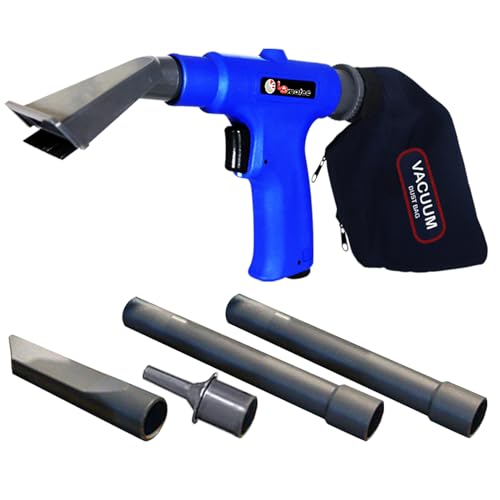 LE LEMATEC Pneumatic Air Vacuum and Blow Gun
|
8.1/10 | Buy |
Omquot Cordless Mini Electric Compressed Air
The Omquot Electric Mini Compressed Air Duster delivers cordless cleaning utility through a 130,000 RPM high-speed motor producing up to 200 grams of blowing force. Powered by a rechargeable 6000 mAh battery with three airflow settings, it provides an eco-friendly benchtop blowout solution for DIYers, electronics repair technicians, and auto detailers.
Pros
- Compact cordless design allows rapid benchtop cleanup without dragging out heavy pneumatic hoses
- High-speed 130,000 RPM motor generates up to 200 g of blowing force with 3 speed modes
- 6000 mAh rechargeable battery eliminates the recurring cost and waste of disposable canned air
- Includes versatile nozzle and brush attachments suitable for electronics, car seats, and light inflation
- Impact-resistant ABS plastic casing offers lightweight protection in mobile tool kits
Cons
- Not a replacement for high-CFM pneumatic air compressors required for driving air tools or continuous heavy blowout
- Runtime drops to approximately 13 minutes when operated continuously at maximum power setting
- Battery requires up to 3 hours for a complete recharge cycle between extended cleaning sessions
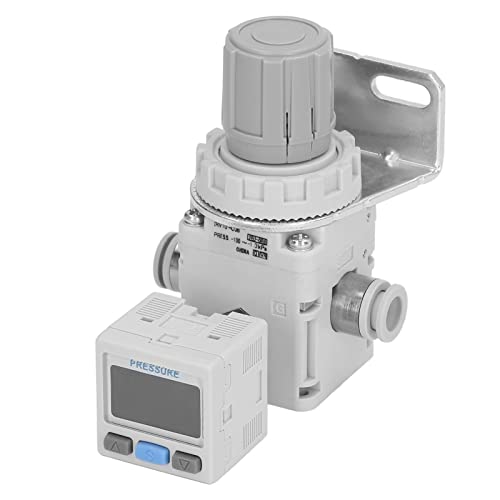
Fafeicy Digital Pneumatic Vacuum Regulator Valve
The Fafeicy Digital Pneumatic Vacuum Regulator provides precise negative pressure control from -100 to -1.3 kPa with a high-visibility digital display and push-lock adjustment knob. It is a practical upgrade for workshop hobbyists and pneumatic technicians managing vacuum clamping, automation pipelines, or delicate air systems.
Pros
- Clear digital display eliminates the parallax errors common with small analog vacuum dials
- Three-step locking handwheel prevents accidental setting drift from equipment vibration
- Broad negative pressure adjustment range covers standard vacuum holding and evaluation applications
- Lightweight ABS construction offers dependable sensitivity and resistance to shop impacts
Cons
- Designed strictly for vacuum regulation and cannot be used as a standard positive high-pressure shop air regulator
- Composite ABS threaded ports require careful alignment to prevent cross-threading during installation
THINKWORK 20V Cordless Tire Inflator and Handheld
The THINKWORK 20V cordless handheld unit combines an integrated 150 PSI digital tire inflator with an 18,000Pa brushless vacuum for vehicle care. It serves car owners, mobile DIYers, and garage hobbyists who need a compact emergency tool for tire top-offs and quick cleanups without hauling a bulky shop compressor.
Pros
- Reaches up to 150 PSI with digital preset modes and custom pressure settings for controlled inflation
- Brushless motor architecture offers improved efficiency and durability compared to standard brushed motors
- Combines interior vacuum cleaning and tire maintenance into one compact portable unit
- Comes supplied with four inflation adapters and multiple vacuum attachments for immediate utility
Cons
- Tankless design cannot operate standard pneumatic shop tools like nail guns or impact wrenches
- Air output volume is tailored for tires and inflatables rather than high-flow industrial blowing tasks
- Requires keeping the 20V battery pack charged to ensure roadside emergency readiness
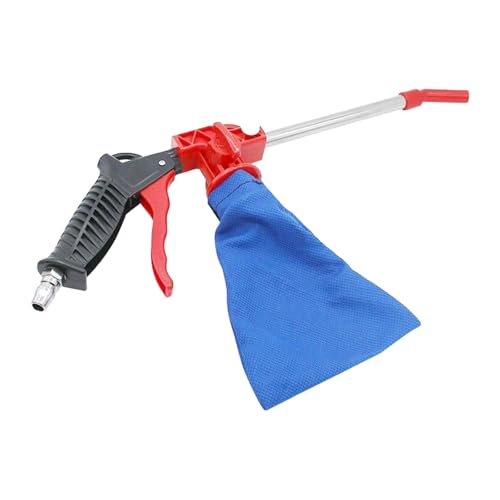
LeeQinersw 2-in-1 Pneumatic Air Vacuum and Blow
The LeeQinersw 2-in-1 Pneumatic Vacuum and Air Blow Tool delivers dual blowing and suction capabilities in an ultra-lightweight 0.59-pound body. It is an ideal pneumatic accessory for auto detailers, mechanics, and DIYers needing to clear debris from tight crevices using their existing shop air supply.
Pros
- 2-in-1 design switches between high-velocity air dusting and vacuum collection
- Weighs only 0.59 pounds for fatigue-free one-handed operation
- Extended 15.39-inch length accesses narrow automotive and machinery crevices
- Quick-disconnect components make maintenance and unclogging simple
- Included dust collection bag captures loose dirt without needing an electric shop vac
Cons
- Requires continuous airflow from an air compressor, which may quickly drain small portable tanks
- Designed primarily for fine dust and small particles rather than heavy, wet debris
- Listing does not state exact CFM air consumption or inlet thread specifications
Jiawu SMC-Type Pneumatic Vacuum Pressure Regulator
The Jiawu Vacuum Pressure Regulator Valve provides fine negative-pressure adjustment from -100 kPa to -1.3 kPa with a three-step self-locking knob and an 8mm OD connection. Built for pneumatic vacuum lines, air receivers, and workshop automation setups, it offers stable regulation for small-shop fabricators and hobbyists.
Pros
- Smooth three-step push-pull locking collar prevents accidental pressure drift during tool operation
- Wide vacuum adjustment range between -100 kPa and -1.3 kPa suits delicate negative pressure setups
- Supplied with a dedicated metal mounting bracket for tidy integration into control panels or machine frames
- Tough ABS composite housing resists typical garage and shop floor impacts
Cons
- Engineered strictly for negative pressure vacuum systems rather than standard positive-pressure high-PSI airline regulation
- Fitted for 8mm metric tubing, which may require push-to-connect adapters if integrating into standard Imperial 1/4-inch lines
- Composite outer shell lacks the heavy-duty thread wear resistance of full cast-iron or brass regulator bodies
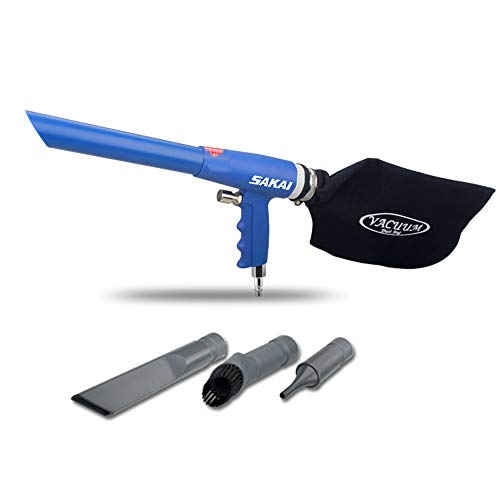
SAKAI 2-in-1 Pneumatic Air Vacuum and Blow Gun Kit
The SAKAI 2-in-1 Pneumatic Air Vacuum Kit converts seamlessly between a high-velocity blow gun and a suction vacuum using a directional valve, operating at 100 to 150 PSI. It provides an efficient, lightweight cleanup solution for garage woodworkers, machinists, and automotive detailers connected to an air compressor line.
Pros
- Simple 2-in-1 valve allows fast transition between high-velocity blowing and suction vacuuming without swapping tools
- Rated for 100 to 150 PSI line pressure to deliver dependable pneumatic suction and debris clearing
- Comprehensive attachment bundle includes five modular tubes and nozzles plus a rotatable brush for tight crevices
- Lightweight composite construction at approximately 1.57 pounds prevents fatigue during repetitive cleanup tasks
Cons
- Requires a compressor capable of supplying steady continuous line pressure at 100 to 150 PSI for optimal suction
- Compact dust collection bag requires frequent emptying during larger workshop cleaning sessions
- Pneumatic venturi design generates noticeable air exhaust noise during sustained operation
Zendex Tool QuickSpiff Pneumatic Venturi Air
The Zendex Tool QuickSpiff is a lightweight, pneumatic Venturi air vacuum designed to connect directly to an air compressor line for cord-free, spark-free debris cleanup. Ideal for auto mechanics, woodworkers, and industrial shop owners, it provides reliable suction in damp or hazardous garage environments without relying on electric motors.
Pros
- Pneumatic Venturi operation eliminates electrical motor sparks in damp or volatile garage bays
- Heavy-duty injection-molded ABS handle resists cracking and abrasive shop abuse
- Extremely lightweight at just 1.6 pounds for effortless one-handed maneuvering
- Backed by an industry-leading 7-year manufacturer warranty from Zendex Tool Corp.
Cons
- Requires an active air compressor supply and pneumatic hose to function
- Continuous suction demands can cause smaller portable compressors to cycle frequently
- Compact dust bag is sized for localized spot cleanups rather than high-volume bulk extraction
NVIXS Air Compressor Detailing Blow Gun
The NVIXS Air Detailing Blow Gun is a pneumatic crevice duster designed for automotive interiors and vehicle drying, operating at 60 to 90 PSI with a recommended 4 to 5 CFM compressor delivery. Weighing just 0.54 pounds with a cone-shaped vortex nozzle, it offers DIY auto enthusiasts and garage detailers an efficient, chemical-free way to blast dust and trapped water from tight spaces.
Pros
- Dislodges deep dirt from narrow vehicle seams without abrasive brush bristles or harsh cleaning chemicals
- Lightweight 0.54-pound construction provides comfortable maneuverability in tight automotive interiors
- Vortex cone nozzle provides broader cleaning coverage than standard narrow-tip air blow guns
- Quick and hassle-free self-cleaning process using a basic soapy water purge
Cons
- Requires an air compressor supplying 4 to 5 CFM at 60 to 90 PSI, which will quickly deplete small 1 to 3 gallon pancake tanks
- Pneumatic supply hose and 1/4-inch quick-connect fittings are not included and must be sourced separately
- High-velocity air stream disperses loose particulate into the workspace, making safety glasses and ear protection essential
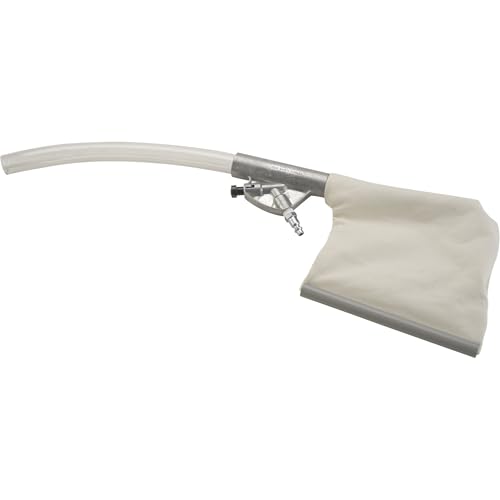
Air Capital 12169 Aluminum Air Vac
The Air Capital 12169 Aluminum Air Vac is a pneumatic cleanup tool that uses an efficient Venturi design to turn standard shop air into dependable suction. Built with heavy-wall aluminum and a locking trigger, it is an ideal choice for mechanics and woodworkers who need quick spot cleanup without dragging out a bulky electric vacuum.
Pros
- Solid heavy-wall aluminum body provides rugged durability over plastic blow guns and vacuums
- No electric motor or moving internal parts, preventing mechanical motor burnout
- Lightweight 1-pound build allows effortless one-handed control
- Comes complete with air fitting, 12-inch flexible hose, collection bag, and clip ready for shop air
Cons
- Continuous Venturi suction draws steady air volume, requiring an adequate shop compressor supply
- Compact collection bag requires frequent emptying during larger cleanup tasks
- 12-inch hose reach is designed strictly for localized spot clearing rather than broad floor cleaning
LE LEMATEC Pneumatic Air Vacuum and Blow Gun
The LE LEMATEC Pneumatic Air Vacuum Blow Gun is a dual-action cleanup accessory rated up to 150 PSI that toggles between an air-powered vacuum and a concentrated blow gun. Featuring standard 1/4-inch NPT threading and six specialized nozzles, it provides fast, practical debris management for auto mechanics and woodworkers.
Pros
- Fast transition between vacuum and blow gun modes without requiring multiple shop tools.
- Standard 1/4-inch NPT inlet threads right into common pneumatic workshop quick-connect fittings.
- Six included nozzle attachments offer practical flexibility for automotive interiors and woodworking machinery.
- Lightweight 1.36-pound build ensures comfortable handheld operation in cramped working quarters.
Cons
- Continuous vacuuming relies on constant compressor airflow, which may quickly drain smaller portable air tanks.
- Pneumatic venturi-style suction is tailored for small debris, metal shavings, and dust rather than heavy bulk vacuuming.
- Requires a regulated air compressor supply and appropriate quick-connect fittings that are sold separately.
The Mechanics, Hardware, and Methods of Pneumatic Vacuum Generation
Converting pressurized air into reliable suction sounds counterintuitive until you examine the physics of pneumatic flow. Pneumatic vacuum generators require no motorized fans or secondary power cords, making them durable in demanding garage environments. By routing compressed air through an engineered restriction, you can create steady negative pressure for benchtop cleanup, fluid evacuation, vacuum hold-down fixtures, or composite lamination. Achieving dependable performance requires balancing your air compressor air volume against generator consumption while managing line condensation and exhaust filtration.
How the Venturi Effect Creates Negative Pressure from Compressed Air
The foundation of all pneumatic suction tools rests upon the Venturi effect, an application of Bernoulli’s principle that governs fluid velocity. When pressurized air travels through a narrowed internal nozzle, its velocity increases dramatically. As the speed of the air rises at this constriction point, its static pressure drops proportionately. When this localized pressure falls below atmospheric pressure, a strong partial vacuum forms inside the chamber surrounding the nozzle throat.
A secondary port positioned at this low-pressure constriction allows external air or debris to be pulled directly into the stream. The high-velocity primary air jet collides with the incoming ambient air, drawing it forward through momentum transfer. Both air streams then enter an expanding diffuser tube that slows the combined airflow while exhausting it out the discharge port. Because there are no spinning fan impellers or motor brushes in the stream, the mechanism resists mechanical jamming from coarse debris.
Ultimate vacuum level and evacuation speed depend directly on nozzle geometry and supply line pressure. Higher supply pressure generates deeper ultimate vacuum up to the limits of supersonic airflow expansion, while larger nozzle diameters yield greater suction volume at the cost of higher air consumption. If your compressor line pressure drops below the design threshold of the nozzle, static pressure inside the chamber rises, causing suction to diminish quickly.
Choosing Commercial Pneumatic Vacuums Versus Custom Venturi Assemblies
Commercial pneumatic vacuum tools provide ready-to-run suction in rugged handheld configurations. Tools such as the Zendex QuickSpiff Venturi air vacuum, the SAKAI air powered vacuum kit, and the LE LEMATEC dual-action vacuum blow gun incorporate precision-machined internal venturi orifices directly into composite bodies. These models feature reversible airflow valves that allow you to switch quickly between blowing high-pressure air and drawing vacuum suction. They also include collection bags, extension wands, and crevice nozzles designed for rapid automotive or workshop cleanup.
Metal-bodied tools like the Air Capital aluminum air vac utilize heavy-wall cast construction that stands up to abrasive metal shavings, glass fragments, and wet shop sludge without cracking. The complete absence of an electric motor makes pneumatic air vacs safe for environments where combustible dust or solvent vapors might ignite from motor brush sparks. Handheld tools like the LeeQinersw pneumatic duster offer lightweight handling for cleaning machinery crevices, electronics enclosures, and automotive interiors where delicate components require controlled air movement.
Building a custom Venturi assembly offers distinct advantages when you require sustained vacuum for stationary fixtures like woodworking hold-down tables, veneering presses, or brake bleeding canisters. Commercial handheld guns exhaust dirty air directly into attached fabric dust bags, which cannot handle closed fluid collection or continuous clamping cycles. Custom assemblies allow you to direct the high-speed exhaust through dedicated mufflers, fluid traps, or exterior venting. Choosing between commercial vacuum guns and custom blocks depends on whether your project requires mobile cleanup or steady mechanical clamping.
Fabricating a Custom Venturi Vacuum Generator with Workshop Fittings
Assembling a basic pneumatic vacuum generator requires standard brass plumbing components, a small brass nozzle or welding contact tip, and an air line fitting. The central housing uses a standard 1/2-inch or 3/8-inch female NPT brass tee fitting. One inline port serves as the high-pressure air inlet, the opposite inline port functions as the exhaust outlet, and the perpendicular branch port acts as the vacuum suction intake. Applying PTFE thread tape or liquid pneumatic sealant across every joint prevents parasitic pressure leaks.
The critical mechanical component is the internal nozzle, which must terminate just past the centerline of the perpendicular vacuum port. You can fabricate this nozzle by threading a brass reducer bushing into the inlet and inserting a brass tube with an orifice restricted to roughly 1/16-inch. The tip of this orifice must align precisely near the entrance of the exhaust fitting to create the required pressure drop across the tee. If the nozzle sits too far back, turbulent air spills into the side port; if it extends too far forward, suction volume drops sharply.
On the exhaust side, installing a slightly larger diameter nipple helps the compressed jet expand smoothly into ambient air without generating backpressure. Any restriction on the exhaust outlet will disrupt the Venturi effect by backing pressurized air into the vacuum suction port. Adding a porous sintered bronze pneumatic muffler to the exhaust helps dampen the loud hiss of escaping air without choking flow. Once assembled, attaching an air hose fitting allows you to connect standard workshop quick-disconnect couplers directly to the intake.
Testing the custom assembly involves connecting a standard shop air hose, setting line pressure around 80 to 90 PSI, and placing your finger over the side branch. You should feel immediate suction as atmospheric pressure pushes toward the internal low-pressure zone. If air blows out through the suction port instead of pulling inward, either the internal nozzle is misaligned or the exhaust path presents too much downstream resistance. Fine-tuning the nozzle depth inside the tee fitting allows you to balance maximum negative pressure with stable airflow.
Air Compressor Sizing, Continuous CFM Draw, and Duty Cycle Limits
Operating any pneumatic vacuum places an unusually heavy load on workshop air compressors because Venturi nozzles consume air continuously. Unlike pneumatic finish nailers that fire for a fraction of a second, an air-powered vacuum acts as an open orifice that steadily drains the storage tank. Typical compact Venturi tools draw between 4 and 9 CFM at 90 PSI to maintain effective suction. If your air compressor delivers less volume than the nozzle consumes, tank pressure will steadily drop until the vacuum loses holding power.
Users attempting to run a continuous Venturi tool on a small portable tank often face rapid pressure dropouts. In our portable six-gallon air compressor guide, we explain how compact pancake tanks deliver ample pressure for intermittent fasteners but struggle under continuous CFM drains. A six-gallon unit will typically sustain a handheld vacuum gun for twenty to thirty seconds before line pressure falls below the threshold needed for suction. The compressor pump must then run continuously to recover, which quickly pushes the electric motor past its rated duty cycle.
Most consumer-grade oil-free compressors operate with a 50 percent duty cycle, meaning the pump should rest as long as it runs to avoid severe thermal stress. Running a continuous Venturi vacuum for extended laminating or clamping sessions on a small compressor can overheat pump valves and trip thermal overload switches. For prolonged vacuum applications, a stationary workshop compressor with a two-stage cast-iron pump or a large receiver tank is recommended. If you only own a smaller portable unit, restrict vacuum operation to short cleanup pulses rather than uninterrupted tasks.
Regulating Vacuum Levels and Integrating Control Valves
Unrestricted Venturi ejectors generate maximum negative pressure relative to supplied air volume, but delicate workpieces often require precise vacuum control. Applying full suction to thin wood veneers or fragile plastics can crush the material, while fluid evacuation tanks risk collapsing under extreme negative pressure. Installing an inline vacuum regulator allows you to dial in specific negative pressure thresholds and maintain consistent hold-down force across changing workpiece surface areas.
Specialized components like the Fafeicy air pressure regulator with digital gauge and the Jiawu vacuum regulator valve give operators fine adjustment control between -100 kPa and -1.3 kPa. These dedicated pneumatic vacuum valves utilize sensitive internal diaphragms and self-locking adjustment knobs that isolate system suction from fluctuations in compressor supply line pressure. The digital displays provide instant visual confirmation of holding force, which is essential when securing parts for CNC routing or checking automotive system seals.
Setting up a controlled pneumatic vacuum circuit requires placing the regulator between the Venturi suction port and the working fixture. You should also incorporate a manual ball valve or foot pedal switch on the compressed air supply line to turn the vacuum on and off instantly without venting line air. Adding a small vacuum reservoir tank between the regulator and the workpiece helps smooth out minor line pulses and provides a temporary safety reserve if the compressor cycles or loses electrical power.
Managing Air Line Condensation, Filtration, and Tank Maintenance
Moisture management plays a critical role in pneumatic vacuum reliability because damp air degrades internal nozzle geometry and damages vacuum regulators. As an air compressor pump squeezes ambient air, water vapor condenses into liquid droplets inside the receiver tank and travels down the supply line. If this wet air reaches the high-velocity Venturi throat, water droplets cause turbulence that disrupts the jet stream and deposits mineral scale inside the narrow orifice. Installing an inline particulate filter and water separator directly before the vacuum tool prevents moisture contamination.
Moisture buildup inside the compressor tank also accelerates internal corrosion and reduces overall storage capacity over time. Routine maintenance like draining moisture from an air compressor tank protects downstream pneumatic valves from rust flakes that can clog delicate 1/16-inch Venturi nozzles. Opening the tank drain valve at the end of every working session expels accumulated water before it can enter the distribution hose. Replacing stiff needle petcocks with accessible quarter-turn brass ball valves makes this preventative task much easier to perform consistently.
Intake air filtration on the suction side is equally essential to prevent debris from fouling the generator or damaging the exhaust muffler. Handheld tools like the SAKAI pneumatic vacuum include fabric collection bags that catch large shavings, but fine particulate applications require dedicated inline canister filters. Without a proper intake screen, abrasive sawdust, drywall powder, or metal grit passing through the suction port will quickly scour the internal nozzle walls and erode the sealing edges of downstream vacuum regulators.
Workshop Applications, Efficiency Tradeoffs, and Safety Protocols
Pneumatic vacuum generators excel in specific workshop roles where electric shop vacuums or dedicated rotary vane pumps are impractical. Woodturners frequently use compressed air Venturi chucks to hold finished bowls on lathe spindles without leaving jaw marks. Automotive technicians use air-driven vacuum bleeders to purge air bubbles from brake calipers cleanly without pumping pedals manually. In composite fabrication, pneumatic ejectors provide reliable negative pressure for carbon fiber vacuum bagging without the overheating risks common to small electric diaphragm pumps.
Despite these advantages, pneumatic vacuums carry inherent energy efficiency tradeoffs that every workshop owner should recognize. Air compressors convert electrical energy into mechanical compression with substantial heat loss, making compressed air an expensive way to generate continuous suction. Running a five-horsepower compressor continuously to draw ten inches of mercury vacuum consumes far more electricity than a dedicated 1/4-horsepower electric rotary vane pump. For this reason, pneumatic vacuum generation is best suited for intermittent cleanup, volatile hazard zones, mobile field work, or setups where simplicity outweighs electrical efficiency.
Safe operation requires proper personal protective equipment and adherence to pressure boundaries. Venturi tools discharge air at high velocity, which can project fine particles out of exhaust ports if collection bags tear or dislodge; always wear ANSI-approved eye and ear protection during operation. Never connect a pneumatic vacuum generator to closed containers not explicitly rated for negative pressure, as unreinforced metal drums and plastic jugs can implode violently under deep vacuum. Always relieve air line pressure and disconnect hoses before servicing fittings or cleaning out clogged internal nozzles.
Mastering pneumatic suction generation transforms your standard air compressor into a dual-purpose power center capable of both high-pressure blowing and deep vacuum holding. By understanding the fluid mechanics of the Venturi effect, selecting commercial tools or constructing durable brass fittings, and respecting continuous CFM limits, you can tackle diverse workshop challenges efficiently. Verify your compressor capacity, maintain clean and dry supply lines, and implement proper vacuum regulation to achieve reliable suction whenever your projects require it.
About the author
Clint DeBoer is an experienced tool-industry specialist with decades of involvement in technical media, hands-on product evaluation, and testing methodology. His focus on performance, practical usability, and data-driven comparisons makes his expertise highly relevant to professional air compressors, pneumatic tools, and workshop equipment.