
How to Keep Air Compressor Cool: A Practical Guide
How to keep air compressor cool: reduce heat stress with sensible airflow, workload, and maintenance practices. Practical guidance for November 2026.
 By Tony Carrick
Updated November 10, 2026

Long compressor run times, blocked ventilation, and heavy workloads can raise pump and motor temperatures, sometimes triggering a thermal shutdown or shortening component life. Knowing how to keep air compressor cool starts with treating heat as a symptom to manage, not a reason to bypass a safety device or push a pump beyond its operating limits.
Give the compressor room to move air, use it within the manufacturer’s duty-cycle guidance, and address problems that make it run continuously. The products listed below include an airbrush compressor whose description specifically highlights two cooling fans, as well as two automotive A/C compressors. Those vehicle A/C parts are not shop air compressors, so fitment and purpose matter. For broader equipment context, see our portable compressor options for air tools.
Readers working through this often check do you need teflon tape for air compressor fittings next.
Top Products
| Award | Product | ACR Score About ACR ScoreThe ACR Score is our own rating from 0 to 10, based on performance, design and build, ease of use, and value. It reflects independent research and is never influenced by manufacturers, retailers, or affiliate commissions. Learn more › | |
|---|---|---|---|
| Best Overall |
Master Airbrush Cool Runner II 3-Airbrush Kit
|
8.9/10 | Buy |
 SCITOO AC Compressor fit for Jeep for Grand |
8.9/10 | Buy | |
 SCITOO AC Compressor fit for BMW for 528i 3.0L |
8.9/10 | Buy |
Master Airbrush Cool Runner II 3-Airbrush Kit
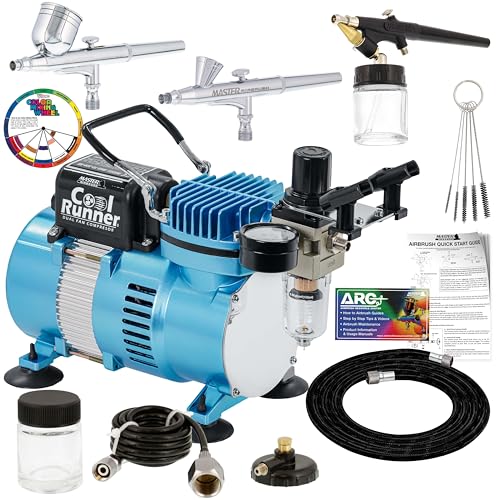
Equipped with three specialized airbrushes and a dual-fan compressor, this comprehensive set provides steady airflow for extended creative sessions. It is well suited for hobbyists, decorators, and crafters needing versatile nozzle sizes for both broad coverage and fine detail.
Pros
- Dual cooling fans reduce heat during long sessions
- Versatile selection of three distinct nozzle sizes
- Includes helpful accessories like cleaning brushes and guide
- Built-in holder keeps airbrushes secure while working
Cons
- Relatively bulky setup requires considerable workspace
- Single-piston 1/5 HP motor limits heavy industrial use
For more on a connected point, our page on chicago pneumatic cps 750 360 high pressure towable air compressor goes into it separately.
Keeping an Air Compressor Cool in Real Use
A compressor stays within its intended operating range when cooling air can reach its motor and pump, the workload suits its design, and required maintenance is current. Heat alone does not identify the cause of a problem: unusually long running, restricted ventilation, an unsuitable electrical supply, or a mechanical fault can all warrant attention. Follow the compressor manual’s placement, duty-cycle, and service instructions rather than relying on a generic run-time rule.
Why compressed air equipment gets hot
Compressing air produces heat, and the pump and motor also warm during operation. The amount of heat a machine can shed depends on its construction, cooling arrangement, workload, and the time it has to rest between operating cycles. A compact compressor running frequently may have less opportunity to cool than one used briefly and intermittently, but the safe limits vary by model.
Warm pump surfaces and hot discharge air during operation do not, by themselves, prove that a compressor is overheating. Warning signs deserve a different response: an overload protection device that trips repeatedly, a burning smell, smoke, unusual mechanical noise, or a sudden change in operation should prompt you to stop and consult the manual or a qualified repair professional. Never defeat thermal protection to keep the machine running.
Temperature can also be affected by where the compressor sits. A corner with little air circulation, a space beside a heater, or a sunlit enclosure can make it harder for the machine to release heat. Dust and debris around openings may further restrict airflow, so regular visual checks are useful without taking apart guarded or electrical components.
Set up a clear, ventilated operating area
Place the compressor on a stable surface in a dry, well-ventilated area, with the clearances specified in its manual. Keep fan inlets, motor openings, and pump cooling surfaces unobstructed. Do not cover the compressor with a tarp or store it inside a small cabinet while it is operating, even if a cover seems like an easy way to reduce noise.
Keep loose material, rags, packaging, and dust away from ventilation openings. If the manufacturer permits cleaning, follow its directions and disconnect the electrical supply before cleaning accessible exterior areas. Avoid directing water or cleaning fluid into the motor, switch, or pump openings, and do not remove protective covers to reach internal parts unless the service instructions specifically authorize that work.
Ambient conditions count. A hot garage, a poorly ventilated basement, or a confined work area can limit heat dissipation even when the compressor itself is in good condition. Improve room ventilation where practical, but do not position the unit where rain, standing water, flammable vapors, or other hazards can reach it. Follow the specified installation location and electrical safety guidance.
Match run time to the compressor’s duty limits
Duty cycle is the amount of operating time a compressor is designed to handle over a stated period. The exact definition and limit depend on the manufacturer, so check the manual or product label rather than assuming every small compressor can run continuously. If the instructions call for rest periods, observe them, especially during demanding jobs or in warm conditions.
Tool demand can explain why a compressor seems to run without a break. Intermittent tasks, such as occasional airbrush work or short bursts from certain air tools, differ from sustained air consumption. A tool that draws more air than the compressor can supply may keep the pump running and pressure falling, which increases heat exposure instead of allowing a normal recovery pause.
Use the tool’s stated air requirement and the compressor’s documented delivered airflow at the relevant pressure to judge whether the pairing is suitable. Do not treat tank size or maximum pressure as a substitute for adequate airflow. If the available specifications do not state the needed delivery figure, contact the manufacturer or choose equipment with clearly documented output rather than guessing.
Frequent operation can be a reason to stop and reassess the application, not merely an invitation to add a fan. Reduce demand where the tool settings allow it, use an appropriately sized compressor, or schedule work so the unit can recover as its instructions require. Never exceed the recommended duty cycle to avoid pausing a job.
Electrical supply and extension-cord issues
An unsuitable electrical supply can cause poor starting or repeated interruptions, which may add stress and make operation unreliable. Use only the voltage and circuit arrangement specified by the manufacturer, and avoid sharing a circuit with other high-demand equipment unless the manual and applicable electrical guidance allow it. Do not guess at startup current or assume a standard household circuit suits every compressor.
Extension cords can contribute to voltage drop, particularly if they are too long or not rated for the compressor’s load. Use the manual’s cord guidance, or plug the unit directly into an appropriately located outlet when instructed. Do not compensate for a tripping breaker by installing a larger breaker, bypassing protection, or using an undersized cord.
If a breaker trips repeatedly, disconnect the compressor and investigate the cause safely instead of repeatedly resetting it. Other loads on the circuit, a damaged cord, a motor or starting fault, or an electrical installation issue may be involved. A qualified electrician or service technician can assess issues that cannot be resolved by following the manufacturer’s basic checks.
Maintenance that supports normal cooling
Follow the maintenance schedule for the exact compressor. Depending on its design, the manual may call for checking or replacing an intake filter, inspecting fittings, or servicing pump oil. A restricted intake, neglected service item, or air leak may contribute to extended running, but the correct inspection and repair steps are model-specific.
Oil requirements differ across compressors. An oil-lubricated pump needs the specified lubricant and service interval, while an oil-free design has different maintenance needs and should not be filled with oil. Never use an assumed oil type, change a service interval, or open a pump assembly based on general advice. Follow the manufacturer’s instructions and ask a service provider if the correct procedure is unclear.
Leaks can make a compressor cycle more often because stored air escapes through a hose, fitting, regulator, or connected tool. Check accessible connections using the manufacturer’s recommended method, and isolate or repair a leak only when it is safe to do so. Before servicing or moving a tank, follow the manual’s shutdown and depressurization instructions; stored air can cause serious injury.
Moisture can collect inside an air tank during normal use. Drain it according to the compressor manual and applicable safety instructions, with the unit shut down and the tank handled as directed. Do not remove a drain fitting or service a pressurized tank. Moisture management does not directly cool the pump, but it is part of routine care that helps protect the tank and downstream air system.
How the listed products relate to cooling
The air compressor accessories overview can help readers distinguish shop air equipment and supporting components from parts intended for a vehicle’s air-conditioning system. That distinction matters here because similar names do not mean similar functions: a shop compressor supplies compressed air to tools, while an automotive A/C compressor is part of a refrigerant circuit.
The Master Airbrush Cool Runner II Airbrush Kit with 3 is the product in this group that is described as an airbrush system. Its listed compressor is a 1/5 HP single-piston unit with two cooling fans, which the product description says are intended to help it run cooler during longer continuous operation. That feature is relevant to the cooling topic, but it does not remove the need to follow the manual’s workload and maintenance directions.
The supplied product information does not state airflow figures, a duty-cycle rating, or specific electrical requirements for this airbrush compressor. Buyers should therefore verify those details with the manufacturer before planning a sustained workload. A fan feature alone cannot establish how long a pump can run, what tools it can support, or whether its output suits a particular application.
The two SCITOO items are vehicle A/C compressors listed for specific BMW and Jeep applications. Their product descriptions address refrigerant-system fitment and cooling inside those vehicles, not shop compressed-air delivery or keeping a pneumatic tool compressor cool. They should not be selected as replacements for a workshop air compressor.
When repeated overheating needs service
A compressor that repeatedly trips thermal protection, stops before expected, or develops an unusual smell should be shut down and allowed to cool in accordance with the manual. Check only straightforward external conditions, such as whether ventilation openings are blocked or whether the workload exceeds the stated operating guidance. If the issue returns after those conditions are addressed, arrange qualified service rather than continuing to run it.
Do not open electrical enclosures, alter pressure-switch settings, bypass an overload device, or modify the safety relief valve as a cooling remedy. Pressure vessels and electrical components require appropriate handling, and incorrect adjustments can create serious hazards. If there is visible damage, smoke, persistent burning odor, or unusual mechanical noise, keep the unit out of service until it has been assessed.
For routine operation, clear airflow, a suitable electrical supply, leak-free connections, and work within the specified duty cycle are the practical foundations. The two-fan airbrush compressor is specifically described as having a cooling feature, but its operating limits still need confirmation from its instructions. Treat recurring heat-related shutdowns as a maintenance or sizing issue to investigate, not as a condition to override.
Readers working through this often check how to pump a tire with an air compressor next.
About the author
Tony Carrick is an experienced product researcher and writer specializing in tools, home improvement, automotive maintenance, and consumer equipment. With extensive experience reviewing tools and tackling hands-on renovation projects, he brings a buyer-focused perspective to compressor performance, usability, and overall value.