
How Much Does Air Compressor Cost: Practical Breakdown for 2026
Understand how much does air compressor cost in November 2026 with our guide covering equipment tiers, CFM specs, power needs, and accessories.
 By Bob Beacham
Updated October 8, 2026

Selecting pneumatic equipment requires balancing air delivery with practical budget constraints, especially when factoring in the specific tools you plan to operate. Understanding how much does air compressor cost involves looking beyond the initial sticker price to evaluate motor horsepower, airflow delivery at 90 PSI, tank volume, and pump design. A compact inflator for emergency roadside use demands far less engineering than a dual-piston quiet compressor designed for indoor trim carpentry or continuous automotive maintenance. Evaluating your actual airflow requirements prevents the common frustration of buying an undersized compressor that runs constantly, overheats, and stalls high-demand tools like paint sprayers or orbital sanders.
Operating costs also depend heavily on long-term mechanical reliability, tank moisture protection, and garage electrical infrastructure. Comparing 110-volt and 220-volt compressor power requirements helps clarify whether your existing workshop outlets can handle motor startup current without tripping breakers or requiring expensive panel rewiring. Routine tank moisture maintenance practices also protect internal steel tanks from premature rust and extend pump longevity. Reviewing pump architecture, noise mitigation features, and tank capacity allows workshop owners and DIY enthusiasts to secure dependable pneumatic power without overspending on unnecessary industrial capacity.
| Award | Product | ACR Score About ACR ScoreThe ACR Score is our own rating from 0 to 10, based on performance, design and build, ease of use, and value. It reflects independent research and is never influenced by manufacturers, retailers, or affiliate commissions. Learn more › | |
|---|---|---|---|
| Best Overall |
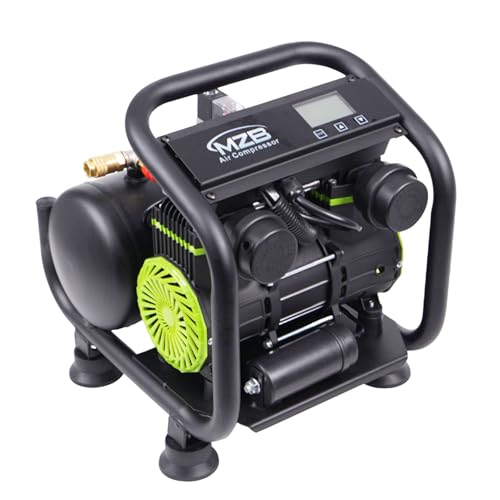
MZB MZB-900H-6 1.6-Gallon Air Compressor
|
9.2/10 | Buy |
| Best Premium |
 California Air Tools 2010A 2-Gallon Compressor |
9.1/10 | Buy |
 California Air Tools CAT-4610S Ultra-Quiet 1.0 HP |
9.1/10 | Buy | |
| Best Value |
 MZB MZB-1100H-50 13.2-Gallon Air Compressor |
8.8/10 | Buy |
| Best Budget |
 MZB MZB-900H-24 6.4-Gallon Air Compressor |
8.6/10 | Buy |
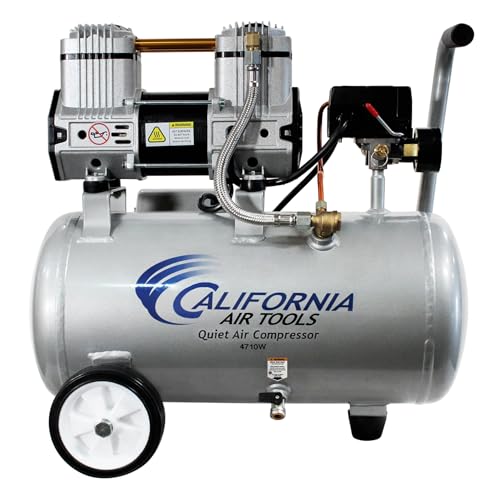 California Air Tools CAT-4710W 4.7-Gal Compressor |
8.3/10 | Buy | |
 California Air Tools 20020AD 20-Gallon Ultra Quiet |
8.3/10 | Buy | |
 AstroAI Dual Power Portable Tire Inflator |
8.1/10 | Buy | |
 MZB MZB-850H-9 2.4-Gallon Air Compressor |
8.1/10 | Buy | |
 MZB MZB-1100H-24 6.4-Gallon Air Compressor |
7.8/10 | Buy |
MZB MZB-900H-6 1.6-Gallon Air Compressor
Built for trim carpentry and light pneumatic tasks, this compact MZB unit pairs a 1.6-gallon steel tank with an oil-free pump. It produces up to 115 PSI while keeping operating sound around 70 decibels.
Pros
- Low-maintenance oil-free pump design
- Moderate 70 dB operating sound level
- Compact footprint is convenient to transport
- Sturdy steel air tank construction
Cons
- Small 1.6-gallon capacity limits continuous air tool runtimes
- Modest maximum output pressure of 115 PSI
California Air Tools 2010A 2-Gallon Compressor
Operating at just 60 decibels, this compact unit delivers reliable airflow with minimal noise disruption. Its rust-free aluminum tank and oil-free dual-piston pump make it well suited for indoor trim work and noise-sensitive spaces.
Pros
- Exceptionally quiet operation at only 60 decibels
- Lightweight rust-free aluminum tank design
- Low-maintenance oil-free dual-piston system
- Quick 14-second recovery time between cycles
Cons
- Modest 2-gallon tank limits continuous heavy tool use
- 120 PSI maximum pressure is below heavy-duty standards
- Air output is insufficient for sustained high-demand air tools
California Air Tools CAT-4610S Ultra-Quiet 1.0 HP
The California Air Tools CAT-4610S delivers a remarkably quiet 60 dB sound profile with 2.20 CFM at 90 PSI from an oil-free dual-piston pump and a 4.6-gallon steel twin tank. Drawing only 8.5 amps, it is an excellent pneumatic choice for trim carpenters, woodworkers, and garage hobbyists working in noise-sensitive spaces.
Pros
- Ultra-quiet 60 dB sound level allows normal conversation while the pump runs
- Low 8.5-amp electrical draw prevents nuisance circuit breaker trips on 110V household lines
- Oil-free dual-piston pump requires no crankcase oil changes and boasts a 3000-plus hour life cycle
- Durable 4.6-gallon steel twin-tank configuration delivers steady air storage for sequential fastening
Cons
- Rated 2.20 CFM @ 90 PSI is insufficient for continuous-demand pneumatic tools like sanders or paint sprayers
- Weighs 56.2 pounds without transport wheels, requiring a solid two-handed carry between work areas
MZB MZB-1100H-50 13.2-Gallon Air Compressor
Designed for indoor workshops and residential garages, this compressor keeps operating noise down to a manageable 70 decibels. Its 13.2-gallon steel tank and wheeled frame suit DIY woodworkers, painters, and mechanics needing reliable airflow without regular pump maintenance.
Pros
- Quiet 70dB sound level ideal for indoor spaces
- Maintenance-free oil-free pump design
- Large 13.2-gallon durable steel tank
- Wheels and handle make transport manageable
Cons
- Hefty 72-pound weight makes vehicle loading difficult
- 115 PSI maximum pressure is modest for heavy-duty pneumatic tools
MZB MZB-900H-24 6.4-Gallon Air Compressor
Delivering 5.65 CFM at 115 psi, this 1.2 HP oil-free unit rapidly pressurizes its 6.4-gallon tank in about one minute while maintaining a low 70-decibel noise output. It serves well for home garages and workshops handling nail guns, air tools, and light painting.
Pros
- Quiet 70 dB operating volume
- Fast tank recovery under 65 seconds
- Generous 5.65 CFM output at 115 psi
- Low-maintenance oil-free motor design
- Integrated wheels assist mobility
Cons
- Steel construction adds significant carrying weight
- Tank capacity limits continuous heavy spraying sessions
- Corded operation requires standard electrical outlet
California Air Tools CAT-4710W 4.7-Gal Compressor
Built for garage workshops and DIY tasks, this mobile unit features an oil-free dual-piston pump that fills its 4.7-gallon steel tank in 78 seconds. Its low 7.5-amp motor draw ensures smooth startups on standard household circuits without tripping breakers.
Pros
- Fast 78-second tank fill time from empty
- Low 7.5-amp draw prevents tripped breakers
- Low-maintenance oil-free pump operation
- Wheels and pull handle ease transport at 35 pounds
Cons
- Delivers only 2.2 CFM at 90 PSI for demanding tools
- Steel tank construction is heavier than aluminum alternatives
California Air Tools 20020AD 20-Gallon Ultra Quiet
Delivering 5.30 CFM at 90 PSI with a quiet 70 dB sound profile, the California Air Tools 20020AD features a 2.0 HP low-RPM motor, oil-free dual-piston pump, and automatic drain valve. It is an outstanding pick for home garage mechanics and workshop woodworkers needing clean, high-volume air on standard 120V power.
Pros
- Remarkably quiet 70 dB operating volume suitable for residential garages and enclosed woodshops
- Delivers 5.30 CFM at 90 PSI to easily support impact wrenches, ratchets, nail guns, and inflation chores
- Automated moisture drain valve simplifies routine condensation maintenance
- Low 1680 RPM motor speed reduces pump heat, vibration, and mechanical wear
- Oil-free pump architecture ensures clean discharge air without oil residue
Cons
- Substantial 115-pound overall weight makes vehicle transport and stair climbing difficult
- Sustained continuous tools like production sandblasters or rotary sanders can outpace the pump recovery rate
- Requires a dedicated 15-amp or 20-amp outlet to handle the 14-amp continuous electrical draw
AstroAI Dual Power Portable Tire Inflator
Designed for both home garages and roadside needs, this inflator operates on 120V AC and 12V DC power. It offers dual pressure modes with automatic shut-off, making it a dependable choice for standard vehicles and household inflatables.
Pros
- Runs on both home outlets and car sockets
- Dual modes handle tires and high-volume inflatables
- Accurate digital preset with automatic shut-off
- Lightweight and compact 2.6-pound design
- Built-in LED light aids emergency roadside repairs
Cons
- Not suitable for heavy-duty truck tires
- Continuous runtime capped at 15 minutes
MZB MZB-850H-9 2.4-Gallon Air Compressor
Built for carpentry, auto repair, and painting tasks, this compact compressor pairs a 1.2 HP oil-free motor with rapid 30-second tank recovery. Its steel frame and dual silencers balance durability with manageable 70 dB operation for portable workshop use.
Pros
- Fast 28 to 32 second tank fill time
- Maintenance-free oil-free motor design
- Solid 5.65 CFM output for its footprint
- Durable three-layer rust-resistant steel construction
Cons
- Maximum pressure is limited to 115 PSI
- Modest 2.4-gallon tank limits continuous heavy airflow
MZB MZB-1100H-24 6.4-Gallon Air Compressor
Built with an oil-free 1.5 HP motor and a 6.4-gallon steel tank, this compressor delivers 7.41 CFM at 115 PSI while keeping operating noise down to 70 decibels. It is a solid choice for workshops, auto detailing, and spray painting where quick recovery and quiet operation matter.
Pros
- Fast 60-second tank recovery time
- Quiet 70 dB operation with dual silencers
- High 7.41 CFM output at 115 PSI
- Low-maintenance oil-free motor design
- Durable three-layer coated steel tank
Cons
- Maximum 115 PSI limits high-pressure tools
- Steel tank adds weight compared to aluminum
Detailed Breakdown of Air Compressor Investment and Ownership Costs
Determining total expenditure for pneumatic equipment involves balancing upfront equipment pricing against long-term operational performance, tool compatibility, and maintenance needs. Anyone asking how much does air compressor cost must recognize that prices span several distinct performance tiers, ranging from ultra-portable 12-volt inflators to high-capacity wheeled shop machines and stationary multi-stage units. Higher initial investments typically reflect superior engineering, including low-RPM induction motors, oil-free dual-piston pump assemblies, heavy-gauge steel or rust-resistant aluminum tanks, and specialized sound-dampening intake mufflers. Analyzing how specific features influence overall price ensures you invest in adequate air volume without paying for excessive industrial capacity you will never use.
Equipment Categories and Initial Investment Tiers
Portable handheld inflators and mini compressors represent the most accessible entry point into pneumatic equipment. These compact units typically utilize small 12-volt direct current motors or dual-voltage power supplies designed specifically for topping off passenger vehicle tires, bicycle tires, and recreational sports equipment. Because these models lack dedicated air storage reservoirs and deliver limited airflow volume, their manufacturing and retail costs remain low. While they provide superb portability for vehicle trunks or emergency kits, their continuous operating duration is strictly constrained by heat buildup in miniature pump cylinders.
Stepping up to light-duty portable electric compressors introduces dedicated air storage tanks ranging from one to six gallons. This category includes traditional pancake, hot dog, and twin-stack configurations engineered to power intermittent finish carpentry tools like brad nailers and narrow-crown staplers. Moving further up into medium and large wheeled units, equipment with six to twenty gallons of capacity provides the air delivery needed for automotive impact wrenches and paint sprayers. These higher-tier consumer machines feature heavier steel or aluminum tanks, integrated wheels, and high-output pumps that command a greater upfront investment.
Air Delivery and Motor Engineering Costs
Continuous air delivery, measured in cubic feet per minute at 90 PSI, serves as the single primary engineering factor influencing production and purchase costs. Delivering higher CFM requires larger motor displacements, precision-honed cylinders, and dual-piston configurations capable of compressing more air volume per revolution. Basic entry compressors often provide less than two CFM at standard operating pressures, which limits their utility to intermittent fastener guns and tire filling. In contrast, higher-output units generating five to seven CFM or more incorporate larger electric motors and reinforced pump heads capable of sustaining demanding pneumatic equipment without immediate pressure drop.
Motor engineering and operating speed also create distinct cost separations among modern air compressors. Traditional economy compressors employ open universal motors spinning at roughly 3,400 RPM, which generates excessive mechanical friction, rapid thermal buildup, and piercing noise levels exceeding 80 decibels. Higher-end models feature four-pole induction motors operating at a relaxed 1,680 RPM, substantially extending component lifespans and reducing operational vibration. Investing in a low-RPM motor requires more copper winding and precision internal balancing, which naturally raises manufacturing expenses while providing a dramatically quieter workspace.
Acoustic Engineering and Ultra-Quiet Compressor Costs
Operational noise reduction has transformed consumer air compressor designs, but specialized acoustic suppression adds measurable manufacturing expense. Standard consumer compressors frequently produce sound levels between 78 and 85 decibels, which quickly causes auditory fatigue and disturbs household members in residential attached garages. Achieving ultra-quiet ratings between 60 and 70 decibels requires comprehensive mechanical re-engineering rather than simple exterior baffling. Manufacturers must invest in dual-piston counter-balanced pumps, precision-ground crankshafts, heavy cast-aluminum housings, and dual high-efficiency intake silencers.
The dual-piston pump design splits the compression workload across two opposing cylinders, allowing the pump to generate adequate airflow while operating at half the rotational speed of traditional universal units. Thick air intake filters with dense acoustic foam baffling further dampen high-frequency valve reed flutter and incoming air intake pulses. Low-noise compressors also incorporate heavy-duty rubber isolator feet and custom-molded motor mounts that decouple pump mechanical resonance from the steel air reservoir. These acoustic innovations increase production costs through tighter mechanical tolerances, but they create a far more comfortable work environment in enclosed spaces.
Tank Materials and Reservoir Fabrication Expenses
Storage tank materials and architectural configurations represent another significant hardware cost factor in pneumatic equipment design. Most standard compressors utilize welded carbon steel tanks coated with protective exterior powder finishes to prevent surface corrosion. Welded steel offers exceptional structural strength and handles high internal pressures safely over thousands of pressure cycles. However, steel tanks add substantial weight to portable units and remain vulnerable to internal condensation rust if regular moisture purging is neglected by the operator.
Premium portable models frequently feature rust-proof aluminum tanks, which dramatically reduce overall carry weight while completely eliminating internal rust hazards from moisture condensation. The precision forming, specialized welding techniques, and higher raw material costs of aluminum reservoirs create a premium price profile that mobile contractors and finish carpenters often find well worth the investment for jobsite transport. Tank volume also influences pricing, as larger horizontal and vertical reservoirs require thicker steel plate walls, certified ASME safety pressure relief valves, and reinforced mounting brackets to ensure long-term structural integrity.
Oil-Free Convenience Versus Oil-Lubricated Durability Costs
Pump lubrication architecture significantly influences both initial acquisition prices and ongoing maintenance expenses over the life of the machine. Oil-free compressors utilize advanced PTFE piston ring coatings and permanently sealed, grease-packed bearings that require zero lubrication checks throughout their operational service lives. These oil-free configurations dominate the portable and quiet compressor markets because they operate reliably on uneven surfaces and eliminate the risk of oil mist contaminating air delivery lines. Eliminating routine crankcase oil checks reduces user maintenance labor and prevents ruined woodworking or paint finishes caused by oil blow-by.
Traditional splash-lubricated cast-iron pumps require a slightly higher initial manufacturing investment in precision crankcases, oil sight glasses, and breather tubes. However, these oil-lubricated pumps generally offer longer total mechanical lifespans under continuous commercial workloads because oil actively dissipates frictional heat and cushions moving internal components. Maintaining these machines involves purchasing proper compressor pump lubrication, monitoring oil clarity, and conducting periodic oil flushes to remove metal particulates. For buyers seeking an appliance-like experience without maintenance tasks, modern dual-piston oil-free pumps rated for thousands of operating hours represent an economical, hassle-free alternative.
Electrical Infrastructure and Workshop Circuit Expenses
An often overlooked component of pneumatic equipment expenditure involves evaluating workshop electrical supply and branch circuit compatibility. Small portable compressors operating on seven to eight running amps integrate seamlessly with common 15-amp household wall circuits without modifications. However, larger two-horsepower electric motors draw up to fourteen running amps and produce heavy startup inrush current spikes that can easily trip standard household circuit breakers. Operating a heavy-draw motor on an overloaded circuit or through a light-gauge extension cord creates severe voltage drop, causing the motor to hum, overheat, and prematurely trigger its thermal overload protector.
Upgrading a residential garage or basement workshop to accommodate higher-capacity compressors may require electrical contractor service and panel modifications. Dedicated 20-amp branch circuits utilizing heavy twelve-gauge copper wiring provide the necessary electrical headroom to handle motor starting surges without flickering lights or nuisance tripping. For extensive professional setups, investing in dedicated two-stage workshop air compressor models often demands dedicated 240-volt single-phase power connections to maximize continuous motor efficiency and reduce running current. Factoring potential electrical installation expenses into your equipment budget ensures your compressor receives clean, stable voltage from the first startup cycle.
Essential Accessories and Air Distribution Infrastructure
Purchasing the compressor itself represents only the core component of a fully functioning pneumatic power delivery system. To operate tools effectively, buyers must budget for essential accessories including durable air hoses, precision pressure regulators, quick-connect couplers, and air chucks. Inexpensive PVC hoses tend to become extremely stiff and unmanageable in cold garage environments, creating frustrating trip hazards and awkward handling. Premium hybrid polymer or reinforced polyurethane hoses cost slightly more initially but remain supple and flexible across extreme temperatures, delivering superior maneuverability and lasting durability.
Couplers and manifold fittings also exhibit significant quality variations that influence both airflow performance and system longevity. Budget brass-plated steel couplers frequently corrode or develop nagging air leaks around their internal O-rings, forcing the compressor to cycle repeatedly even when tools sit idle. High-flow brass or anodized aluminum quick-connect couplers maximize delivered airflow to high-draw pneumatic tools while maintaining airtight seals under working pressures. Installing an inline moisture filter or water separator also protects expensive impact wrenches and paint spray guns from moisture damage, representing a modest upfront investment that prevents costly tool replacements.
Ongoing Maintenance and Condensation Prevention
Long-term maintenance requirements directly impact total cost of ownership across all air compressor configurations. Every air compressor draws in ambient humidity during operation, causing water to pool at the bottom of the pressure reservoir as compressed air cools. Failing to purge accumulated water accelerates internal tank corrosion, reduces usable air storage volume, and eventually leads to pinhole tank failure. High-end compressors often incorporate automatic electric drain valves that purge condensation on scheduled intervals, protecting the pressure vessel without requiring manual intervention from the operator.
On manual drain systems, the style of the factory drain valve significantly influences maintenance compliance and replacement expenses. Budget compressors frequently feature inexpensive threaded brass petcock valves that are difficult to grip, prone to road grime clogging, and awkward to turn beneath low tank clearances. Upgrading to a smooth quarter-turn brass ball valve provides effortless daily moisture purges, ensuring users actually drain their tanks after every work session. Investing a small amount in accessible plumbing fittings protects the integrity of the pressure vessel and eliminates the safety risk of structural rust weakening the tank walls.
Sizing Air Output Correctly to Maximize Budget Value
Achieving true cost-effectiveness requires matching compressor capacity precisely to the air consumption demands of your specific pneumatic tools. Intermittent tools such as brad nailers, finish nailers, and tire inflators require relatively small bursts of air volume with long rest periods between cycles. For these light-duty applications, a compact one-to-six-gallon compressor delivering two to three CFM at 90 PSI provides outstanding performance without unnecessary equipment expense. Spending extra on an oversized twenty-gallon unit for occasional trim nailing represents an unnecessary capital expense and consumes valuable garage floor space.
Conversely, continuous-demand tools like orbital sanders, die grinders, abrasive blasters, and HVLP paint spray guns draw massive volumes of uninterrupted air. Attempting to operate a continuous rotary sander on an entry-level compact compressor leads to immediate air starvation, severe line pressure drops, and constant motor cycling that can burn out pump windings. Operating high-consumption tools requires a robust compressor delivering five CFM or more backed by a larger air reservoir to buffer sudden demand surges. Accurately tallying the CFM requirements of your most demanding tool before buying ensures you select a machine capable of getting the job done efficiently without costly mid-project interruptions.
Long-Term Ownership Costs and Selection Strategy
Evaluating total value rather than just the initial equipment sticker price leads to smarter investments that serve your workshop for decades. Factoring in energy efficiency, low-maintenance oil-free pump designs, durable tank coatings, and modular replacement components ensures your machine delivers reliable service without surprise repair bills. A well-built compressor with low-RPM dual-piston architecture may require a slightly higher initial outlay, but it pays dividends through reduced ear fatigue, zero oil maintenance costs, and exceptional mechanical longevity.
Balancing your immediate pneumatic needs against anticipated workshop projects prevents the costly mistake of buying twice. If your future plans include automotive restoration or extensive wood finishing, choosing a compressor with expandable capacity and solid CFM output saves money over replacing an undersized unit later. By carefully assessing pump design, tank construction, electrical requirements, and necessary air delivery accessories, you can invest with complete confidence in a setup tailored to your specific mechanical goals.
About the author
Bob Beacham is an experienced tools and workshop writer with deep knowledge of power equipment, mechanical systems, and practical DIY applications. His coverage of air compressors, welding equipment, saws, and workshop tools helps translate technical specifications into useful guidance for homeowners and serious DIYers.