
How Long Can a Tow-Behind Air Compressor Run: Practical Answers and Guide for 2026
Learn how long can a tow-behind air compressor run, what governs continuous runtime, and how portable alternatives compare in October 2026.
 By Bob Beacham
Updated October 7, 2026
By Bob Beacham
Updated October 7, 2026

Heavy pneumatic demolition, industrial sandblasting, and utility pipeline purging demand uninterrupted airflow that small garage compressors simply cannot sustain. When contractors and equipment operators ask how long can a tow-behind air compressor run, the practical answer depends on fuel capacity, engine efficiency, and jobsite air consumption. Most commercial diesel trailer units are specifically engineered to run continuously for a full eight- to ten-hour work shift on a single tank of fuel under moderate load. Their heavy-duty rotary screw air ends are rated for a 100 percent duty cycle, meaning they can compress air nonstop without requiring thermal cooling breaks like standard reciprocating workshop pumps.
For smaller jobsites, finish carpentry, and mobile shop maintenance, dragging a massive towable compressor to a work area often proves impractical and unnecessarily loud. Portable wheeled and twin-tank electric compressors provide a clean, whisper-quiet alternative when working near residential zones or inside finished buildings. Units such as the California Air Tools CAT-4610S Ultra Quiet and the wheeled California Air Tools CAT-4710W 1.0 HP Quiet deliver reliable 2.20 CFM at 90 PSI while drawing only 7.5 to 8.5 amps on standard household circuits or compact generators. Understanding how runtime dynamics differ between diesel towable rigs and portable electric compressors helps jobsite managers match the right pneumatic power to their operational requirements.
| Award | Product | ACR Score About ACR ScoreThe ACR Score is our own rating from 0 to 10, based on performance, design and build, ease of use, and value. It reflects independent research and is never influenced by manufacturers, retailers, or affiliate commissions. Learn more › | |
|---|---|---|---|
| Best Overall |
California Air Tools CAT-4610S Ultra-Quiet 1.0 HP
|
9.1/10 | Buy |
| Best Value |
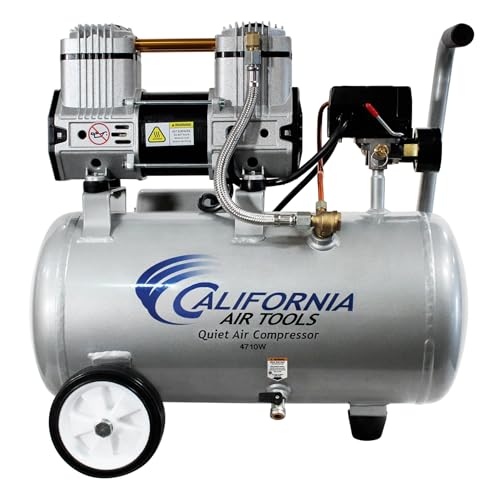 California Air Tools CAT-4710W 4.7-Gal Compressor
|
8.3/10 | Buy |
California Air Tools CAT-4610S Ultra-Quiet 1.0 HP
The California Air Tools CAT-4610S delivers a remarkably quiet 60 dB sound profile with 2.20 CFM at 90 PSI from an oil-free dual-piston pump and a 4.6-gallon steel twin tank. Drawing only 8.5 amps, it is an excellent pneumatic choice for trim carpenters, woodworkers, and garage hobbyists working in noise-sensitive spaces.
Pros
- Ultra-quiet 60 dB sound level allows normal conversation while the pump runs
- Low 8.5-amp electrical draw prevents nuisance circuit breaker trips on 110V household lines
- Oil-free dual-piston pump requires no crankcase oil changes and boasts a 3000-plus hour life cycle
- Durable 4.6-gallon steel twin-tank configuration delivers steady air storage for sequential fastening
Cons
- Rated 2.20 CFM @ 90 PSI is insufficient for continuous-demand pneumatic tools like sanders or paint sprayers
- Weighs 56.2 pounds without transport wheels, requiring a solid two-handed carry between work areas
California Air Tools CAT-4710W 4.7-Gal Compressor
Built for garage workshops and DIY tasks, this mobile unit features an oil-free dual-piston pump that fills its 4.7-gallon steel tank in 78 seconds. Its low 7.5-amp motor draw ensures smooth startups on standard household circuits without tripping breakers.
Pros
- Fast 78-second tank fill time from empty
- Low 7.5-amp draw prevents tripped breakers
- Low-maintenance oil-free pump operation
- Wheels and pull handle ease transport at 35 pounds
Cons
- Delivers only 2.2 CFM at 90 PSI for demanding tools
- Steel tank construction is heavier than aluminum alternatives
Understanding Tow-Behind Compressor Runtime and Mobile Air Delivery
Pneumatic power on heavy jobsites relies heavily on portable trailer-mounted machinery that delivers massive air volume over long working shifts. When determining how long can a tow-behind air compressor run, the primary limiting constraint is almost always usable fuel capacity rather than mechanical pump endurance. Commercial rotary screw towable units are engineered for continuous full-shift duty cycles without needing periodic cooling shutdowns. Understanding the mechanical, environmental, and operational factors that govern continuous runtime helps project managers avoid costly jobsite downtime.
Core Factors That Determine Tow-Behind Compressor Runtime
Fuel tank volume and engine consumption rates serve as the foundational variables governing continuous towable compressor operation. Most commercial diesel tow-behind compressors feature onboard fuel reservoirs holding between 15 and 30 gallons of diesel fuel. Under standard working conditions, these diesel powerplants burn between one and three gallons per hour depending directly on total CFM air demand. This fuel economy allows most standard mobile compressors to run continuously for eight to twelve hours before requiring a fuel top-off.
The pneumatic load placed on the system directly impacts fuel burn rates and overall operating duration. When operating at partial load or idling between tool cycles, modern engine speed controllers throttle back the diesel engine to conserve fuel. If multiple 90-pound pavement breakers or high-volume abrasive blasting nozzles pull continuous air, the engine runs at maximum governed RPM and consumes fuel at its highest rated burn rate. Operators planning full-day operations must account for these variations to ensure the compressor does not run dry during critical pours or blasting runs.
Rotary Screw Duty Cycles vs. Reciprocating Piston Pump Limits
Mechanical architecture represents the biggest operational difference between commercial tow-behind compressors and portable workshop units. Tow-behind compressors utilize oil-flooded rotary screw air ends that feature two interlocking helical rotors compressing air in continuous smooth sweeps. Because rotary screws do not generate the violent friction and heat spikes common in reciprocating pistons, they feature a 100 percent continuous duty cycle rating. A rotary screw compressor can run constantly under load all day as long as oil levels, cooling airflow, and fuel supply remain stable.
Reciprocating piston compressors operate under much tighter thermal constraints that limit continuous operation. Standard consumer and prosumer piston pumps generate substantial heat inside cylinder sleeves, meaning they typically carry duty cycle ratings between 50 and 70 percent. Running a standard piston compressor continuously without cut-out rest intervals can cause valve plate warping, ring fatigue, and thermal overload tripping. While industrial towable rotary screws thrive under continuous uninterrupted air demand, piston pumps rely on air tanks to buffer delivery and allow motor rest periods.
Calculating Fuel Consumption Under Varied Tool Demands
Pneumatic tool consumption dictates how frequently the compressor transitions between idle, modulation, and full-load operating states. Heavy tools such as pneumatic rock drills or structural sandblasting pots demand 100 to 185 CFM continuously at 90 to 100 PSI. Under such severe draws, the compressor throttle valve stays fully open, holding the diesel engine at peak fuel consumption. In contrast, running intermittent tools such as post pounders or impact wrenches allows the compressor unloader to cycle the engine down to low idle, extending fuel tank runtime significantly.
Field crews often calculate run hours by evaluating the average tool consumption against the manufacturer fuel consumption chart. Running a towable compressor at a 50 percent average duty cycle typically extends a ten-hour tank to twelve or fourteen hours of intermittent jobsite work. However, allowing a diesel compressor to run completely dry of fuel introduces air into the fuel injection system, requiring manual bleeding and priming before restarting. Keeping an accurate log of operating hours and refueling at the quarter-tank mark prevents unexpected jobsite delays.
Environmental and Operational Variables Affecting Machine Runtime
Ambient temperatures dramatically influence how long a towable compressor can operate without experiencing automatic shutdown protection. In scorching summer heat exceeding 100 degrees Fahrenheit, the cooling system must dissipate immense thermal loads generated by both the diesel engine and the compressor oil cooler. If dust, dry slurry, or jobsite debris clogs the radiator fins, oil temperatures can climb toward the thermal safety shutoff threshold. Maintaining adequate airflow around the trailer housing is vital to preventing sudden high-temperature shutdowns mid-shift.
Operating at high elevations also alters diesel engine combustion efficiency and available pneumatic output volume. As atmospheric air becomes thinner at higher altitudes, naturally aspirated and even turbocharged diesel engines experience reduced oxygen intake, slightly increasing specific fuel consumption per delivered CFM. Dusty work environments present another runtime hazard by rapidly loading intake air filters and starving the compressor of clean airflow. Regularly clearing intake pre-cleaners and checking air restriction gauges ensures the engine and compressor maintain optimal volumetric efficiency.
Maintenance Checks Required During Extended Continuous Operation
Running a tow-behind compressor through long, multi-shift jobs requires dedicated daily fluid inspections to protect high-value internal components. Operators must verify engine oil levels, coolant reservoirs, and compressor oil sight glasses before starting each extended shift. The compressor oil lubricates the rotary screws, seals the rotor clearances, and carries away the heat of compression. Allowing compressor fluid to drop below the sight glass indicator risks permanent air-end rotor scoring and severe mechanical damage.
Moisture separation and fuel filtration also demand strict operator attention during lengthy operating cycles. Diesel engines are sensitive to water contamination, making daily draining of the primary fuel-water separator bowl an essential jobsite task. Additionally, operators must inspect the air-oil separator element differential pressure to prevent excessive oil carryover into downstream pneumatic hoses. Catching minor fluid leaks or restricted filter elements early ensures the machine completes its planned runtime without emergency mechanical shutdowns.
When a Tow-Behind Compressor Is Overkill for Jobsite Pneumatics
While massive towable compressors excel at heavy demolition and continuous industrial media blasting, they are often impractical for lighter construction tasks. Towing a multi-thousand-pound trailer requires heavy hitch setups, dedicated parking space, and substantial logistical overhead. Furthermore, commercial diesel compressors produce noticeable exhaust fumes and high operational noise that violate local municipal sound ordinances in residential areas. Setting up a large diesel trailer just to run a finish nailer or inflate vehicle tires wastes fuel and creates unnecessary jobsite clutter.
Interior trim carpentry, cabinetry installation, and residential punch-list work require compact, highly portable pneumatic solutions. Smaller tasks do not consume hundreds of cubic feet of air per minute, making high-output towables completely unnecessary. For these lighter applications, contractors and maintenance technicians benefit far more from electric portable air compressors. Modern compact units provide the exact air pressure needed for pneumatic fastening while operating cleanly indoors without emissions or fuel storage concerns.
Electric Jobsite Alternatives: Continuous Power Without Diesel Logistics
Electric jobsite compressors provide continuous operational readiness without the fuel monitoring and engine maintenance required by towable trailers. When connected to standard electrical power, an electric compressor can cycle indefinitely to maintain pressurized air tanks as needed. For mobile jobsites without grid power, these efficient electric units operate smoothly using compact, portable power generators. This flexibility allows crews to work in remote locations without hauling dedicated fuel trailers or oversized diesel machinery.
The California Air Tools CAT-4610S Ultra Quiet exemplifies this portable efficiency by drawing only 8.5 amps on standard household 110V circuits. Its low electrical demand also allows it to run smoothly on a modest 2500-watt generator without tripping circuit breakers or overloading temporary power boxes. Similarly, the California Air Tools CAT-4710W 1.0 HP Quiet operates on a modest 7.5-amp draw from standard 110V / 60 Hz electrical outlets. Both units eliminate diesel fuel costs while delivering steady pneumatic power for small-scale jobsite requirements.
Dual-Piston Duty Cycles and Motor Longevity
Electric compressors rely on precision motor engineering and advanced cylinder materials to achieve reliable operational lifespans without oil lubrication. The California Air Tools CAT-4610S Ultra Quiet features an oil-free dual-piston pump system designed for exceptional durability across diverse temperatures and terrains. Operating with a 1.0 HP motor that turns at a low 1680 RPM, this pump mechanism reduces friction and thermal stress, boasting a life cycle exceeding 3000 hours. The slower motor speed reduces internal mechanical wear compared to aggressive high-RPM universal motors found in traditional noisy jobsite compressors.
The California Air Tools CAT-4710W 1.0 HP Quiet also incorporates an oil-free dual-piston pump assembly engineered for minimal maintenance and clean air delivery. Manufacturer specifications list its oil-free pump with an expected life cycle of 1000 plus hours, providing dependable service for small businesses, DIYers, and homeowners. Both compressors feature thermal overload protection to guard against motor damage if extended duty cycles generate excessive heat. This protective mechanism automatically cuts power before electrical winding insulation or cylinder seals suffer permanent thermal breakdown.
Tank Buffer and Rapid Recovery Dynamics
Air tank volume acts as an energy reservoir that balances pneumatic tool consumption against the continuous output of the compressor pump. The California Air Tools CAT-4610S Ultra Quiet uses a 4.6-gallon steel twin tank configuration that stabilizes regulated air pressure during rapid fastener firing. Delivering 3.10 CFM at 40 PSI and 2.20 CFM at 90 PSI, this twin-tank setup comfortably handles finish nailers, staple guns, and tire inflation chucks. The steel twin-tank architecture provides a rigid, balanced footprint that resists tipping during active jobsite transport.
The California Air Tools CAT-4710W 1.0 HP Quiet incorporates a 4.7-gallon steel tank and delivers 3.00 CFM at 40 PSI alongside 2.20 CFM at 90 PSI. A major operational advantage of this wheeled unit is its rapid recovery speed, filling the 4.7-gallon tank from completely empty to full in just 78 seconds. Fast recovery minimizes waiting intervals between cycles, allowing workers to maintain steady productivity without experiencing line pressure drop. Weighing just 35 pounds and equipped with durable transport wheels and an integrated handle, it maneuvers easily across cluttered shop floors.
Acoustic Impact and Residential Compliance
Operational noise levels represent one of the most critical factors separating commercial diesel towable compressors from quiet electric units. Industrial tow-behind diesel compressors typically generate sound levels between 76 and 85 decibels or higher even with sound-attenuated canopy enclosures. In enclosed residential basements, attached garages, or occupied office renovations, that volume creates severe operator fatigue and disturbs nearby occupants. High sound pressure levels also mandate mandatory hearing protection and prevent clear communication among jobsite crew members.
In stark contrast, the California Air Tools CAT-4610S Ultra Quiet operates at an ultra-low sound rating of only 60 decibels. At 60 decibels, the pump operates at the volume of a standard conversational voice, making it ideal for noise-sensitive indoor environments. The California Air Tools CAT-4710W 1.0 HP Quiet operates at a quiet 75 dBA noise level, which remains significantly quieter than traditional pancake compressors. Low-noise operation allows contractors to work early mornings or late evenings inside occupied residential structures without generating noise complaints.
Moisture Purging and System Protection for Daily Operation
Compressing atmospheric air naturally draws in ambient humidity, which condenses into liquid water inside the steel storage tank as compressed air cools. Allowing moisture to pool inside an air tank accelerates internal rust and can send water droplets through air hoses into sensitive pneumatic tools. To preserve tank integrity and safeguard equipment, operators should depressurize tanks completely and purge accumulated moisture through the bottom tank drain valve after every work session. Regular draining prevents corrosion, extends tank service life, and ensures downstream air lines deliver dry, consistent air.
Routine inspection of air filtration components also plays a vital role in sustaining pneumatic efficiency and preventing pump contamination. The California Air Tools CAT-4710W 1.0 HP Quiet comes complete with two air filters that keep abrasive airborne dust from entering the cylinders. Keeping intake filters clean ensures unrestricted airflow, which directly helps the pump achieve its rated recovery speeds and prevents unnecessary motor strain. Combined with regular moisture drainage and periodic safety valve testing, simple preventative care keeps portable electric compressors performing reliably for years.
Matching Jobsite Air Demand to Equipment Capacity
Selecting the right pneumatic power source ultimately comes down to accurately matching tool CFM consumption to compressor capabilities. For high-volume continuous industrial work requiring dozens of cubic feet of air per minute, a tow-behind rotary screw unit delivers the necessary uninterrupted airflow. Its full-shift diesel runtime and 100 percent duty cycle justify the added logistical complexity, fuel management, and higher operational sound levels. When continuous sandblasting, pavement breaking, or commercial utility excavation is on the schedule, towable compressors provide unmatched air volume.
When projects involve finish woodworking, trim installation, automotive tire maintenance, or general shop tasks, portable electric units offer superior practical convenience. The California Air Tools CAT-4610S Ultra Quiet and California Air Tools CAT-4710W 1.0 HP Quiet deliver clean, quiet, and fuel-free performance on standard household power. Choosing an electric compressor sized properly for moderate air tools eliminates diesel exhaust, simplifies transport, and provides all the runtime needed for daily trade and DIY productivity.
About the author
Bob Beacham is an experienced tools and workshop writer with deep knowledge of power equipment, mechanical systems, and practical DIY applications. His coverage of air compressors, welding equipment, saws, and workshop tools helps translate technical specifications into useful guidance for homeowners and serious DIYers.