
How Does a Air Compressor Work: Complete Guide for 2026
Learn how does a air compressor work with this practical guide to pump stages, tank storage, and airflow for October 2026.
 By Kenny Koehler
Updated October 7, 2026
By Kenny Koehler
Updated October 7, 2026

Operating pneumatic nailers, automotive impact wrenches, or simple tire chucks requires a reliable source of mechanical energy, yet many workshop owners rarely examine the mechanical principles driving their equipment. Understanding how does a air compressor work demystifies the transition from ambient atmospheric air into high-pressure energy capable of driving heavy shop machinery. Whether you run an ultra-quiet dual-piston unit for indoor trim carpentry or rely on a compact 12V inflator for roadside emergencies, the underlying physics centers on volume reduction and thermal energy management. Recognizing these internal mechanics helps users troubleshoot sluggish recovery times, avoid circuit overloads, and protect valuable air tools from pressure drops.
Every compression system converts electrical or mechanical power into kinetic energy by trapping air within a sealed chamber and forcing it into a smaller volume. As molecules crowd together, internal air pressure climbs rapidly, creating potential energy that sits ready inside a storage tank or discharges directly through a pneumatic hose. Knowing how your pump, one-way check valves, and pressure switches coordinate ensures you select the correct tank capacity and delivered CFM at 90 PSI for your specific pneumatic tasks. This practical guide breaks down the physical stages of air compression, detailing each critical component from atmospheric intake to regulated tool delivery.
| Award | Product | ACR Score About ACR ScoreThe ACR Score is our own rating from 0 to 10, based on performance, design and build, ease of use, and value. It reflects independent research and is never influenced by manufacturers, retailers, or affiliate commissions. Learn more › | |
|---|---|---|---|
| Best Overall |
AstroAI H2 Pro Cordless Tire Inflator 150 PSI
|
9.2/10 | Buy |
| Best Value |
 DEWALT Cordless Tire Inflator Portable Air
|
9.1/10 | Buy |
| Best Budget |
 AstroAI Dual Power 110V/12V Tire Inflator
|
8.9/10 | Buy |
 GSPSCN Dual-Cylinder 12V Tire Inflator
|
8.8/10 | Buy | |
| Best Premium |
 ECOMAX 6-Gallon 150 PSI Portable Pancake Air
|
8.8/10 | Buy |
 JASTIND 4-Piece Air Nozzle Blow Gun Kit
|
8.6/10 | Buy | |
 Baococo 8 Gallon Portable Air Compressor
|
8.6/10 | Buy | |
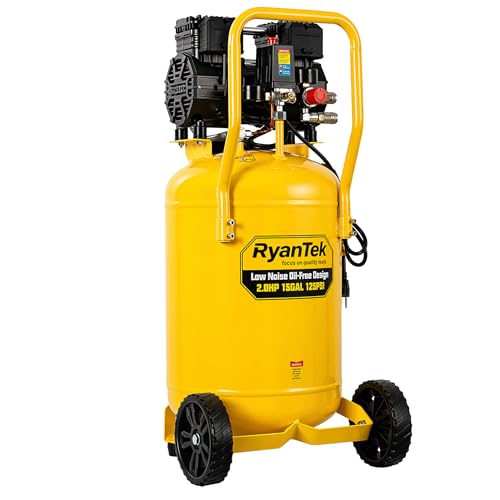 RyanTek 15-Gallon 2HP Air Compressor
|
8.6/10 | Buy | |
 CARSUN Dual Power AC/DC Portable Tire Inflator
|
8.3/10 | Buy | |
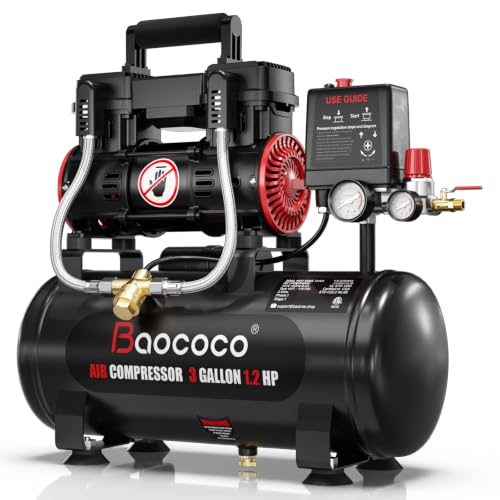 Baococo 3-Gallon Ultra Quiet Air Compressor
|
7.8/10 | Buy |
AstroAI H2 Pro Cordless Tire Inflator 150 PSI
The AstroAI H2 Pro is a versatile dual-power portable tire inflator delivering up to 150 PSI via an internal rechargeable lithium battery or 12V DC vehicle plug. Featuring digital auto shut-off, accurate dual pressure displays, and onboard accessory storage, it is an ideal roadside emergency and garage solution for vehicle owners and cyclists.
Pros
- Dual power supply provides cordless convenience with a 12V DC vehicle fallback for roadside emergencies.
- Automatic shut-off and dual digital display prevent overinflation and eliminate manual pressure monitoring.
- ToughUltra internal components improve mechanical durability compared to standard plastic gear assemblies.
- Integrated nozzle storage compartment keeps bicycle adapters and ball needles organized inside the unit.
Cons
- Tankless high-pressure inflator design is not compatible with pneumatic workshop air tools like nailers or impact wrenches.
- Cordless runtime is limited to approximately 18 minutes before requiring a recharge or switching to the 12V DC vehicle cord.
- Direct-drive high-pressure pump requires cool-down pauses during continuous multi-tire inflation tasks.
DEWALT Cordless Tire Inflator Portable Air
This compact DEWALT portable tire inflator delivers up to 150 PSI with smart auto shut-off, powered by an internal rechargeable battery or an included 10-foot 12V car plug. It provides an efficient, pocket-sized solution for vehicle owners, cyclists, and DIYers wanting rapid roadside top-offs without hauling a bulky tank compressor.
Pros
- True cordless freedom with an internal rechargeable battery plus a 10-foot 12V DC vehicle plug backup
- Accurate digital pressure gauge with 5 smart presets and automatic shut-off to eliminate overinflation
- Ultra-compact handheld design weighing just 0.63 kg for easy storage in glove boxes or saddlebags
- Integrated LED work light and emergency USB power bank functionality for travel safety
- Generous accessory bundle backed by a 3-year limited warranty
Cons
- Engineered exclusively for high-pressure inflation rather than operating pneumatic air tools or nailers
- Does not include a 120V AC residential wall outlet power adapter
- Compact tankless pump requires periodic cooling breaks during heavy multi-tire inflation runs
AstroAI Dual Power 110V/12V Tire Inflator
Versatile dual-power support lets this lightweight inflator run from either a garage wall outlet or a vehicle cigarette lighter. An automatic shutoff and onboard cord storage make routine tire top-offs straightforward for any driver.
Pros
- Flexible dual AC and DC power options
- Automatic shutoff prevents over-inflation
- Compact and lightweight at 2.2 pounds
- Integrated cord and nozzle storage
Cons
- Requires a 10-minute cooldown after 15 minutes of runtime
- Must be plugged into a power source to operate
GSPSCN Dual-Cylinder 12V Tire Inflator
Built with an all-metal dual-cylinder motor, this 12V portable compressor delivers a fast 70 L/Min airflow alongside a digital auto shut-off gauge. It is an ideal roadside tool for drivers needing rapid inflation for cars, SUVs, and light trucks without excessive vibration.
Pros
- Fast 70 L/Min dual-cylinder airflow
- Durable all-metal motor and cylinder construction
- Automatic shut-off prevents accidental over-inflation
- Includes 11.5-foot extension hose and carry bag
- Anti-slip base stabilizes pump during operation
Cons
- Relatively heavy to carry at 6.5 pounds
- Requires a wired 12V connection without cordless option
ECOMAX 6-Gallon 150 PSI Portable Pancake Air
The ECOMAX 6-Gallon 150 PSI Pancake Air Compressor delivers portable, low-maintenance pneumatic power with its 1.5 HP oil-free pump, dual quick-connect couplers, and bundled 10-piece accessory kit. Featuring cold-weather starting support and a flip-up handle, it is an accessible choice for DIYers, trim carpenters, and garage tire maintenance.
Pros
- Comes with a 10-piece accessory kit including an air hose, tire chuck, and blow gun ready out of the box
- Dual quick-connect couplers enable two operators to run pneumatic lines simultaneously
- Oil-free pump design requires zero motor oil maintenance and prevents oil discharge into air lines
- Low-voltage and cold-weather startup capability helps ensure reliable motor turnover in chilly garages
- Flip-up carrying handle and built-in cord bracket simplify transport and tidy storage
Cons
- PVC air hose included in the kit can become stiff and difficult to manage in freezing temperatures
- Not intended for continuous high-demand air tools such as rotary sanders or automotive paint sprayers
- Standard universal motor noise level makes hearing protection advisable during indoor use
JASTIND 4-Piece Air Nozzle Blow Gun Kit
Built with an all-metal chrome body and an internally pressurized tapered nozzle, the JASTIND blow gun delivers concentrated airflow for clearing debris and dust. The included protective rubber tip prevents surface marring, making it well suited for workshop tasks and electronics cleaning.
Pros
- Durable chrome-plated alloy construction resists wear
- Protective rubber tip prevents scratches on workpieces
- Dual 1/4-inch connection options enhance tool versatility
- Tapered nozzle design easily reaches narrow gaps
Cons
- Requires manual Teflon tape wrapping to prevent air leaks
- Compact body provides limited reach in deep engine bays
Baococo 8 Gallon Portable Air Compressor
The Baococo 8-gallon portable air compressor pairs a 2HP electric motor with a 150 PSI receiver tank, delivering 2.8 SCFM at 90 PSI. It provides a solid, accessible air source for garage DIYers tackling tire inflation, car detailing, and pneumatic finish nailing.
Pros
- Useful 8-gallon tank capacity cushions air demand better than smaller pancake style compressors
- 150 PSI peak tank pressure accommodates common automotive tire inflators and pneumatic nailers
- Standard 120V 60Hz power compatibility allows easy plug-and-play use in residential garages
- Sufficient airflow rating of 2.8 SCFM at 90 PSI for light woodworking, trim carpentry, and cleaning tasks
Cons
- Continuous high-CFM pneumatic tools like rotary sanders and heavy-duty 1/2-inch impact wrenches will quickly deplete tank reserves
- Contradictory product listing notes an oil-free tank in the title while mentioning regular oil checks in the description, requiring users to inspect pump details before first start
- Does not include an air hose, quick-connect fittings, or downstream regulator accessories in the box
RyanTek 15-Gallon 2HP Air Compressor
Built for garage workshops and indoor tasks, this vertical compressor combines a quiet 66 dBA dual-cylinder motor with a spacious 15-gallon tank. It supplies a dependable 4.5 CFM at 90 PSI for continuous nailing, spraying, and inflation while conserving floor space.
Pros
- Quiet 66 dBA operation suitable for indoor spaces
- Generous 4.5 CFM output at 90 PSI
- Compact vertical tank saves workshop floor space
- Maintenance-free oil-free pump design
- Integrated wheels make rolling transport straightforward
Cons
- Heavy at 68.3 pounds to lift manually
- Maximum pressure caps at 125 PSI
CARSUN Dual Power AC/DC Portable Tire Inflator
The CARSUN Dual Power Tire Inflator delivers up to 150 PSI of high-pressure air running from either a 110V household outlet or a 12V vehicle socket. With digital pressure presets, automatic shutoff, and a lightweight 2.1-pound frame, it is an ideal maintenance pump for passenger vehicles, bicycles, and household inflatables.
Pros
- Versatile dual-voltage operation works seamlessly in the home garage or on the road without requiring an external converter
- Accurate auto-shutoff mechanism protects tires from accidental over-pressurization during routine top-offs
- Compact 2.1-pound build packs away easily in car trunks, under vehicle seats, or on garage shelving
- Clear digital display allows fast switching across four standard pressure measurement units
Cons
- Requires a mandatory 10-minute cooldown period after every 15 minutes of continuous operation
- Manufacturer explicitly states it does not support heavy truck tires, tractor tires, or stand-up paddleboards (SUP)
- Tankless inflator design cannot run standard workshop pneumatic air tools like brad nailers or paint sprayers
Baococo 3-Gallon Ultra Quiet Air Compressor
The Baococo 3-Gallon Ultra Quiet Air Compressor delivers up to 115 PSI at approximately 70dB, powered by a 1.2HP copper motor and an oil-free pump. With a 20-second recovery cycle, dual quick couplers, and integrated transport wheels, it is a practical, budget-friendly choice for indoor trim work, DIY repairs, and garage tire maintenance.
Pros
- Operates at roughly 70dB, allowing conversation and indoor use without deafening noise
- Rapid 20-second tank recovery cycle helps keep intermittent nailing projects moving
- Dual quick-connect couplers allow quick tool changes or running two air lines at once
- Built-in wheels and sturdy carry handle make rolling or lifting across the workspace easy
- Oil-free pump eliminates messy crankcase checks and prevents oil leaks during vehicle transport
Cons
- Maximum tank pressure tops out at 115 PSI, lower than 135 to 175 PSI contractor-grade units
- Manufacturer does not publish continuous CFM at 90 PSI, making it unsuited for continuous air tools like sanders or grinders
- Compact 3-gallon air reserve requires frequent motor cycling under rapid pneumatic demand
The Mechanics and Engineering Behind Compressed Air Systems
Compressing air relies on the foundational thermodynamic principle known as Boyle’s law, which states that the absolute pressure of a gas is inversely proportional to its volume when temperature remains controlled. In practical workshop equipment, an electric motor or gasoline engine supplies mechanical force to drive a pump mechanism, drawing ambient air from the surrounding room and packing it into a confined space. This process transforms ordinary atmospheric air into a dense, high-energy fluid capable of powering heavy pneumatic tools, inflating vehicle tires, and operating finish sprayers.
Grasping the complete compression cycle requires examining how mechanical components move air through intake, compression, storage, regulation, and delivery. While portable tire inflators and large workshop compressors look vastly different externally, they share core engineering solutions designed to manage friction, heat, and pneumatic pressure. Exploring these mechanical stages clarifies how modern compressors maximize airflow efficiency while minimizing long-term mechanical wear.
Atmospheric Intake and Air Filtration Mechanics
The compression cycle begins with the intake stroke, where ambient air enters the compressor pump from the surrounding workspace. In reciprocating piston designs, an electric motor rotates a crankshaft that pulls a piston downward within a precision cylinder bore. This downward movement creates a partial vacuum, causing internal cylinder pressure to drop below the ambient atmospheric pressure outside the machine. Because atmospheric air naturally travels toward lower pressure zones, outside air rushes inward to fill the expanding cylinder volume.
Before incoming air enters the cylinder chamber, it passes through an intake air filter that captures airborne particulates, sawdust, and shop debris. If abrasive grit bypasses this filtration barrier, it can quickly score cylinder walls, wear down piston rings, and foul delicate valve plates. Once filtered, the air flexes open a thin intake reed valve, which acts as a one-way gate permitting inward airflow while preventing reverse leakage. When the piston reaches the bottom of its stroke, pressure equalizes, and the intake valve snaps shut.
The Compression Stroke and Valve Dynamics
Once the intake reed valve seals, the electric motor drives the crankshaft past bottom dead center, forcing the piston back upward through the cylinder. As the piston ascends, it continuously reduces the space available to the trapped air molecules. Because the air cannot escape through the sealed intake valve or past tight piston seals, its molecular density increases rapidly, driving up internal pressure alongside intense thermal energy. Compression inherently generates heat, which is why pump heads and copper discharge tubes become noticeably hot during operation.
As the rising piston pushes the trapped air toward maximum pressure, internal chamber pressure surpasses the standing pressure in the downstream discharge line. This differential force flexes open the exhaust reed valve, allowing hot, pressurized air to escape into the discharge manifold. In multi-cylinder pumps, such as dual-cylinder designs on quiet workshop compressors, two pistons work in tandem or alternating strokes to deliver a continuous stream of pressurized air. When the piston reaches top dead center, the discharge valve closes firmly, preventing air from collapsing back into the cylinder.
Single-Stage Versus Two-Stage Compression Principles
Reciprocating compressors generally feature either single-stage or two-stage pump architectures, depending on their operating pressure and airflow volume. Single-stage compressors draw atmospheric air into the cylinder and compress it to final working pressure in one continuous stroke. Most portable jobsite pancake compressors, small shop tanks, and tire inflators employ single-stage pumps, which typically generate maximum pressures between 115 and 150 PSI. These units deliver dependable power for light to medium pneumatic tasks, including operating finish nailers, inflating tires, and running blow guns.
Two-stage air compressors split the compression task across two separate cylinders of differing dimensions to achieve higher pressures and improved thermodynamic efficiency. The first, larger low-pressure cylinder compresses ambient air to an intermediate level, typically between 40 and 90 PSI. That moderately compressed air travels through a finned intercooler tube where cooling airflow from the fan sheds thermal heat before reaching the second, smaller cylinder. The high-pressure piston then boosts the pre-compressed air to final tank pressures reaching 175 PSI, providing industrial workshops with dense energy reserves for continuous-draw air tools.
Oil-Free Versus Oil-Lubricated Pump Architecture
The mechanical design of the pump dictates how internal friction and thermal buildup are managed during extended operation. Oil-free air compressors use specialized synthetic materials, such as self-lubricating polytetrafluoroethylene (PTFE) piston rings and precision aluminum cylinder sleeves, to operate without liquid oil in the crankcase. This design provides significant convenience for home garages and mobile jobsites because the machine requires zero oil level monitoring and can be transported in any orientation without leaking fluids. Oil-free pumps also eliminate oil vapor from the discharge line, protecting paint spraying and fine woodworking projects.
Oil-lubricated compressors rely on a traditional cast-iron crankcase filled with non-detergent compressor oil, utilizing splash pins to coat bearings, wrist pins, and cylinder walls. The liquid oil acts as both a lubricating barrier to minimize metal friction and a thermal transfer fluid that draws heat away from working components. While oil-lubricated pumps demand regular maintenance, including checking oil sight glasses and conducting seasonal fluid changes, their heat dissipation supports substantially higher continuous duty cycles. Consequently, workshops requiring continuous air delivery for heavy pneumatic tools often favor oil-lubricated cast-iron pumps for mechanical endurance.
Direct-Drive Inflators Versus Tank-Based Compressor Systems
Compressors also diverge significantly in how they deliver pressurized output to the end-use application. Direct-drive portable tire inflators, including compact 12V DC vehicle pumps and rechargeable cordless models, operate without an internal air storage reservoir. Instead, a miniature high-speed motor drives a small metal piston that pumps pressurized air directly into the connected tire or inflatable object through an attached air hose. Because there is no storage buffer, these units must run continuously during inflation, relying on integrated digital pressure gauges and automatic shut-off controls to stop the motor once target pressure is reached.
Tank-based systems utilize an electric motor and pump assembly to fill a dedicated pressure vessel before air is delivered to downstream pneumatic equipment. This configuration separates air production from immediate consumption, allowing the operator to draw high volumes of air instantaneously without bogging down the pump motor. Tank systems can deliver sudden bursts of high CFM that far exceed the pump’s immediate displacement capacity by drawing upon stored reserves. For workshop tasks involving intermittent high-draw tools like framing nailers or air blow nozzles, a dedicated tank buffer is indispensable for steady power.
The Role of Storage Tanks and Pressure Buffers
An air compressor tank acts as both a storage battery for pneumatic energy and a mechanical stabilizer for the entire delivery system. Because reciprocating pistons pump air in pulsing waves corresponding to each upward stroke, running air tools directly from an open pump cylinder would produce turbulent, fluctuating air delivery. Storing compressed air inside a rigid steel or aluminum vessel dampens these rapid pressure oscillations, yielding a steady, predictable supply of pressurized fluid to downstream hoses. The tank buffer also gives the motor essential rest periods between cycles, preventing continuous motor operation.
Tanks also serve a critical secondary thermodynamic role by acting as cooling chambers where moisture separates from the air stream. When atmospheric air is compressed, its moisture-holding capacity drops relative to its elevated density, and as hot compressed air cools against the metal walls of the tank, water vapor condenses into liquid droplets. This moisture naturally settles at the bottom of the vessel, preventing substantial liquid water from migrating down pneumatic lines into delicate air tools. Proper tank management requires regular purging of this condensation through a bottom drain valve, preserving the vessel against internal rust.
The Pressure Switch, Check Valve, and Unloader Mechanism
Automating the compression cycle without manual intervention requires precise coordination between the pressure switch, check valve, and unloader valve. The pressure switch serves as the master electromechanical brain, continuously sensing internal pressure within the air tank. When the tank fills to its factory cut-out setting, typically 125 to 150 PSI on standard workshop units, an internal diaphragm trips an electrical switch that shuts off power to the drive motor. When air tool usage drains tank pressure down to the cut-in threshold, usually 25 to 30 PSI below cut-out, the switch closes the circuit and restarts the motor.
Working alongside the pressure switch is the one-way check valve, installed at the entry port where the discharge tube enters the tank. This valve allows compressed air to pass freely into the tank during pumping, but a spring-loaded seal snaps shut when the pump stops, preventing stored air from rushing backward into the pump head. Simultaneously, a mechanical or solenoid-driven unloader valve vents residual high-pressure air trapped in the discharge tube between the pump and check valve. Releasing this trapped head pressure produces a brief hissing sound, ensuring the motor starts with zero resistance during the next refill cycle.
Pressure Regulation and Downstream Air Delivery
Pressurized air stored inside the tank cannot be routed directly to most pneumatic tools without regulation, as excessive pressure can damage tool seals or cause erratic operation. Workshop compressors feature an integrated manifold containing two separate pressure gauges: one displaying standing tank pressure and the other indicating regulated working line pressure. The line regulator incorporates an adjustable spring and diaphragm mechanism that restricts airflow to maintain a constant, user-selected output pressure, regardless of higher pressure inside the tank. Setting the regulator ensures tools receive precisely the operating pressure recommended by their manufacturer, commonly 90 PSI for nailers.
Understanding air delivery also requires distinguishing between operating pressure (measured in PSI) and air volume (measured in CFM or SCFM). PSI represents the physical force exerted by compressed air molecules, while CFM indicates the actual volume of air flowing through the system each minute. High-draw pneumatic equipment, such as dual-action orbital sanders, die grinders, and paint spray guns, consume massive volumes of air continuously, often requiring 4 to 8 CFM or more at 90 PSI. If a compressor pump cannot produce sufficient CFM to match tool consumption, the tank reserve quickly depletes and line pressure drops.
Essential Maintenance and Safe Operating Practices
Maintaining an air compressor’s operating efficiency and mechanical safety requires adhering to consistent inspection and operating routines. The most critical daily task involves draining accumulated condensation from the bottom of the air tank after every work session. Water left pooling inside a steel pressure vessel accelerates internal oxidation, eventually compromising the structural integrity of the tank walls. Modern compressors frequently incorporate accessible quarter-turn brass ball valves at the lowest point of the tank, allowing operators to quickly blow out pooled water and sediment while the tank retains slight residual pressure.
Electrical supply management is equally vital for protecting compressor motors from early failure and preventing annoying breaker trips. Heavy electric motors draw substantial inrush amperage during startup, especially when spinning up in cold garage environments where internal mechanical components resist initial movement. Powering a compressor through long, thin extension cords causes severe voltage drop, starving the motor of required electrical current and tripping 15-amp household circuit breakers. Operators should plug the compressor directly into a dedicated wall outlet and run longer air hoses to reach distant workstations. Testing the ring on the ASME safety relief valve ensures emergency overpressure protection remains functional.
About the author
Kenny Koehler is a power-tool specialist with more than a decade of hands-on evaluation experience and a science-based approach to product testing. His expertise in repeatable testing, tool performance, impact wrenches, and professional equipment brings a practical, data-focused perspective to compressor and pneumatic-tool comparisons.