
How Big Air Compressor Do I Need: Sizing Guide for 2026
Determine how big air compressor do i need for your tools with our pneumatic sizing guide covering CFM, tank size, and electrical needs for October 2026.
 By Kenny Koehler
Updated October 8, 2026
By Kenny Koehler
Updated October 8, 2026
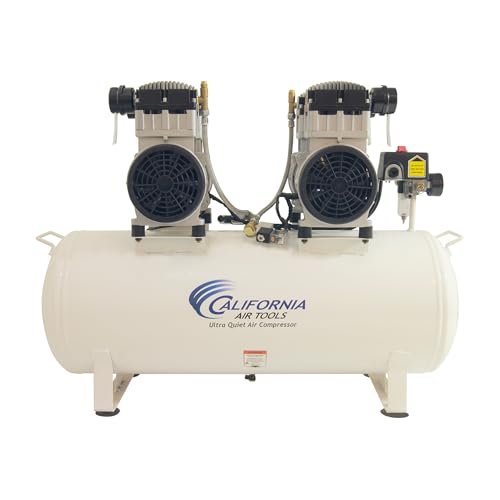
Running out of compressed air in the middle of a project creates frustrating tool stalling, uneven finishes, and excessive pump cycling. Determining how big air compressor do i need starts with understanding that compressor size is not just about physical tank dimensions or marketing horsepower ratings. Real-world air capacity hinges on the volume of air delivered under pressure, measured in cubic feet per minute, and how well that volume matches your specific pneumatic equipment. Matching your tool lineup against proper pump output prevents premature motor wear and keeps line pressure stable throughout demanding jobs.
Operating pneumatic tools like framing nailers, impact wrenches, or continuous spray guns requires balancing stored tank capacity against active pump recovery. A compact two-gallon or four-gallon compressor handles intermittent fastening tasks with ease, but continuous tools like paint sprayers or dual-action orbital sanders demand substantially higher air reserves and continuous airflow. Considering your workspace electrical power and acceptable sound levels also ensures the machine functions reliably without overloading household breakers or causing severe noise fatigue. Taking the time to evaluate these core operational factors helps you select the right compressor configuration for your workshop or jobsite.
| Award | Product | ACR Score About ACR ScoreThe ACR Score is our own rating from 0 to 10, based on performance, design and build, ease of use, and value. It reflects independent research and is never influenced by manufacturers, retailers, or affiliate commissions. Learn more › | |
|---|---|---|---|
| Best Overall |
California Air Tools 20040C Powerful 4.0 HP
|
9.2/10 | Buy |
| Best Value |
 California Air Tools 2010A 1.0 HP Ultra Quiet
|
9.1/10 | Buy |
| Best Budget |
 MZB 13.2 Gallon Ultra Quiet Air Compressor 115PSI
|
8.8/10 | Buy |
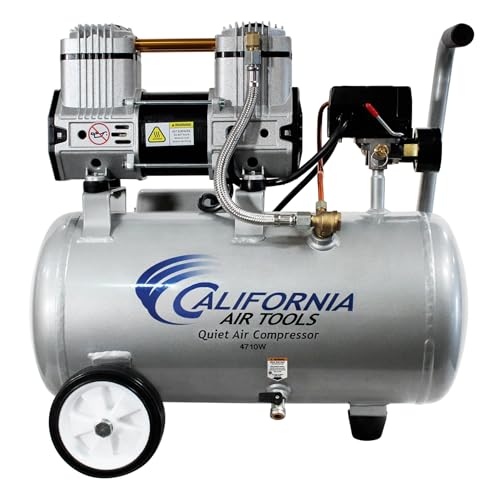 California Air Tools CAT-4710W 1.0 HP Quiet
|
8.3/10 | Buy | |
| Best Premium |
 California Air Tools CAT-60040CAD 4.0 HP
|
8.1/10 | Buy |
 California Air Tools 20020 2.0 HP Ultra Quiet
|
7.8/10 | Buy |
Sizing an Air Compressor for Your Tools and Workspace
Choosing the correct air compressor size comes down to matching your pneumatic tools to pump output and storage capacity. Many buyers assume a larger tank automatically equates to more power, but airflow volume and pressure delivery dictate real performance. Evaluating your intended applications alongside electrical requirements prevents costly mismatches in the workshop. Answering the question of how big air compressor do i need requires examining air consumption, pressure thresholds, and electrical limits.
Understanding CFM and PSI Requirements Across Pneumatic Tools
Air delivery volume, measured in cubic feet per minute (CFM), represents the most critical specification when selecting an air compressor. Pneumatic tools specify a minimum CFM rating at a specific operating pressure, commonly measured at 90 PSI for heavy tools and 40 PSI for paint sprayers. Compact units like the California Air Tools 2010A deliver 2.20 CFM at 90 PSI to support finish nailers and tire inflation. Checking the CFM requirements of your most demanding tool establishes the baseline capacity your compressor must provide.
Pounds per square inch (PSI) measures the air pressure delivered to your equipment. Most standard pneumatic tools operate efficiently between 70 and 90 PSI, while tire inflation on heavy vehicles may require 100 PSI or higher. Maximum tank pressure ratings typically range from 115 PSI on models like the MZB 13.2 Gallon compressor up to 125 PSI on the California Air Tools CAT-60040CAD. Ensuring the compressor maintains a higher cut-in pressure than tool operating pressure prevents unexpected power drops during operation.
Experienced tradespeople frequently apply a safety margin when sizing compressor output. A reliable standard is to multiply the highest tool CFM requirement by 1.25 to 1.5 to calculate minimum pump delivery. This calculation accounts for line friction, hose fitting restrictions, and atmospheric changes. Incorporating a buffer ensures your compressor runs without continuous strain and prevents premature mechanical fatigue.
Storage Buffer vs Continuous Flow: How Tank Gallons Affect Performance
Air compressor tank capacity, expressed in gallons, serves as a pressurized storage buffer rather than an air generator. The pump produces compressed air, while the tank stores that energy to provide short bursts of high-volume airflow. A small tank holding 2 to 4.7 gallons, such as the California Air Tools CAT-4710W, recharges rapidly but depletes quickly under heavy demand. Tank capacity determines how long you can operate a tool before the pump engages to rebuild pressure.
The relationship between tank volume and pump recovery time directly affects workflow speed. On smaller models like the California Air Tools 2010A, the two-gallon aluminum tank refills from 90 PSI to 120 PSI in approximately 14 seconds. This rapid cycling works exceptionally well for intermittent nailing where the pump catches up between individual shots. However, running a continuous air tool on a small tank drains stored pressure rapidly, causing the tool to stall while the pump runs constantly.
Tank orientation and construction materials also influence daily handling and installation. Vertical stationary tanks, like the 60-gallon California Air Tools CAT-60040CAD, minimize workshop floor footprint while maximizing reserve volume. Horizontal wheeled tanks, like the California Air Tools 20020, offer balanced transport across rough concrete or jobsite dirt. Aluminum tanks resist internal rust naturally and reduce carry weight, making portable units easy to transport.
Intermittent Tools vs Continuous Tools: Identifying Air Profiles
Pneumatic tools fall into two distinct operational categories: intermittent-demand tools and continuous-demand tools. Intermittent tools consume air in quick, isolated bursts, allowing the compressor tank time to recover between cycles. Examples include brad nailers, framing nailers, pneumatic staplers, and standard tire inflators. These tools operate effectively on compressors delivering between 1.0 and 2.5 CFM, paired with compact tanks as small as 2 to 5 gallons.
Continuous-demand tools require an uninterrupted stream of high-volume compressed air to perform their work. Rotary sanders, die grinders, HVLP spray guns, and abrasive blasters consume air continuously for minutes at a time. An HVLP spray gun or dual-action sander can easily demand 8 to 12 CFM at 90 PSI, which quickly empties small compressor tanks. Demanding applications require heavy-duty compressors with 20-gallon or 60-gallon tanks capable of delivering over 10 CFM at 90 PSI.
Automotive impact wrenches and air ratchets sit in an intermediate category. These tools consume substantial airflow when breaking stubborn bolts loose, but technicians typically use them in short bursts. A medium-capacity unit delivering 5.30 CFM at 90 PSI, like the California Air Tools 20020 with its 20-gallon tank, handles automotive maintenance smoothly. Identifying whether your tool profile leans toward intermittent bursts or continuous draw remains the single most helpful sizing decision.
Evaluating Motor Horsepower and Pump RPM Without Marketing Hype
Motor horsepower ratings on air compressors have historically caused confusion due to misleading marketing terms. Many promotional descriptions highlight peak or surge horsepower, which represents instantaneous power drawn during startup rather than steady work. True continuous running horsepower provides the only accurate measurement of the motor ability to drive the compression pump under sustained load. A genuine 1.0 HP motor, found on models like the California Air Tools CAT-4710W, draws manageable current while delivering reliable output.
Pump operating speed, measured in revolutions per minute (RPM), directly influences durability, heat buildup, and sound output. Traditional high-speed compressors operate at 3,400 RPM or higher, which accelerates cylinder wear and produces a harsh pitch. In contrast, modern quiet compressors operate at lower rotational speeds, typically around 1,680 RPM. Slower operating speeds extend the operational lifespan of the pump components well past 3,000 hours before major maintenance is required.
Oil-free dual-piston pump mechanisms have largely replaced messy splash-lubricated pumps for residential and light-contractor applications. These systems utilize wear-resistant composite piston rings that require zero oil changes, eliminating the risk of oil contamination in paint finishes. Furthermore, oil-free designs start smoothly in cold weather where traditional compressor oil thickens and strains the electric motor. Looking for low-RPM designs paired with oil-free dual-piston pumps provides a dependable balance of performance and low maintenance.
Electrical Circuit Compatibility and Startup Inrush Current
Electrical circuit limitations represent one of the most common oversights when buyers choose a garage air compressor. Electric compressor motors require high inrush current during startup to overcome head pressure in the pump. A standard household outlet provides 110V to 120V on a 15-amp branch circuit, which can trip if shared with lighting or other power tools. Compact 1.0 HP units, like the California Air Tools CAT-4710W, draw only 7.5 amps, allowing reliable operation on shared household circuits.
Larger 110V compressors push household electrical supply to its operational threshold. The California Air Tools 20020 features a powerful 2.0 HP motor that draws 14 amps, representing the largest practical size for a standard 110V circuit. For heavy workshop equipment delivering over 10 CFM, such as the California Air Tools 20040C, manufacturers transition to a dedicated 220V 60Hz electrical supply. Operating on a 220V circuit allows the 4.0 HP motor to draw a modest 14 amps while generating industrial-grade air volume.
Using electrical extension cords with air compressors poses serious operational risks to the motor. Long, thin cords create significant voltage drops, starving the electric motor of power and triggering thermal overload switches. If you need mobility across a large garage, plug the compressor directly into a wall receptacle and extend your reach using longer air hoses. Standard 3/8-inch air hoses maintain excellent airflow over 50 or 100 feet without compromising electrical voltage.
Operating Sound Levels and Workshop Noise Management
Operational noise levels play a major role in user comfort, particularly in attached residential garages, basements, or occupied indoor jobsites. Traditional oil-free jobsite compressors produce noise levels exceeding 80 to 90 decibels, which causes ear fatigue and disturbs neighbors. Because the decibel scale is logarithmic, an increase of 10 dB represents a tenfold increase in sound intensity and roughly double the perceived loudness. Modern low-noise engineering has made quiet compressors an essential consideration for residential workshops.
Advanced quiet compressors incorporate specialized motor damping, precision cylinder machining, and low-RPM rotation to lower noise output dramatically. The California Air Tools 2010A operates at an exceptionally quiet 60 decibels, allowing normal conversation directly beside the running machine. Medium-capacity units like the MZB 13.2 Gallon compressor operate at roughly 70 dB, which remains vastly quieter than conventional jobsite models. Investing in a low-decibel machine preserves household harmony and prevents hearing fatigue over long work sessions.
Reduced vibration accompanies low-noise compressor designs, offering further structural benefits in home workshops. Standard high-RPM pumps vibrate violently, walking across concrete garage floors and fatiguing brass air fittings over time. Low-RPM dual-piston units generate smooth, balanced mechanical motion that minimizes frame movement and fitting stress. High-density rubber isolator feet and rugged pneumatic wheels absorb remaining vibrations, preventing noise transfer through wooden floors into adjacent rooms.
Moisture Drainage and Tank Longevity Considerations
Compressing atmospheric air concentrates natural ambient humidity, causing water vapor to condense inside the metal storage tank. As air cools after compression, moisture pools at the lowest point of the tank, creating conditions for internal corrosion. If left unmanaged, standing water reduces storage capacity, accelerates rust scale, and sprays moisture directly into your pneumatic tools. Draining your compressor tank after every work session is an essential maintenance task that preserves tank integrity and prevents rust pinholes.
Drain valve design heavily influences how easily and reliably you can discharge accumulated tank condensation. Budget compressors frequently use stiff, threaded needle petcocks that prove difficult to turn and seize up from grit. Higher-end models feature accessible quarter-turn brass ball valves that open smoothly and purge water quickly under residual tank pressure. Premium stationary compressors, such as the California Air Tools CAT-60040CAD, include factory-installed automatic drain valves like the EZ-1 system that purge moisture on pre-set timers.
Safety inspections must accompany regular moisture purging to ensure safe pressure vessel operation. Always inspect the safety relief valve by gently pulling the release ring to confirm the internal spring mechanism moves freely. Never attempt to weld, patch, or modify a rusted or damaged compressor tank, as weakened vessels present catastrophic rupture hazards under pressure. When transporting portable units, always bleed remaining tank air down to zero pressure using the regulator or drain valve.
Matching Compressor Configurations to Real-World Applications
Selecting the optimal compressor size ultimately requires aligning your specific project goals with the right equipment profile. For light DIY maintenance, trim carpentry, and craft hobbies, a compact 1.0 HP compressor with a 2 to 4.7-gallon tank excels. Units in this category, such as the California Air Tools 2010A or CAT-4710W, weigh around 35 pounds and run quietly on modest 7.5-amp circuits. They deliver roughly 2.20 CFM at 90 PSI, which effortlessly operates brad nailers, airbrushes, and tire chucks while remaining easy to carry and store.
Home mechanics running a wider array of garage tools require intermediate air capacity. A 13.2-gallon to 20-gallon compressor delivering between 5.0 and 6.5 CFM at 90 PSI provides the versatility needed for automotive maintenance. The MZB 13.2 Gallon model and the California Air Tools 20020 fit this intermediate profile, powering impact wrenches and ratchets without constant pressure collapse. These wheeled units balance mobility with sufficient storage reserves, operating comfortably on dedicated 110V 15-amp or 20-amp circuits.
Dedicated fabrication shops and auto restoration bays demand heavy stationary power. Operating continuous tools like sanders and commercial spray guns requires a 4.0 HP pump producing at least 10 CFM at 90 PSI, paired with a 20-gallon or 60-gallon tank. The California Air Tools 20040C and CAT-60040CAD deliver 10.60 CFM at 90 PSI, providing continuous airflow that prevents pressure drop during large spray jobs. Sizing your compressor to your most demanding continuous tool guarantees you never run out of compressed air mid-job.
Taking the time to tally your required tool CFM, check your garage electrical capacity, and consider noise preferences leads to the best long-term investment. Avoid purchasing an undersized unit simply for initial cost savings, as upgrading later costs significantly more than buying proper capacity initially. Conversely, refrain from buying a stationary 60-gallon unit if your primary work involves transporting finish nailers to job sites. Balancing true air delivery, tank buffer volume, electrical supply, and portable convenience ensures you select the perfect compressor size for your projects.
About the author
Kenny Koehler is a power-tool specialist with more than a decade of hands-on evaluation experience and a science-based approach to product testing. His expertise in repeatable testing, tool performance, impact wrenches, and professional equipment brings a practical, data-focused perspective to compressor and pneumatic-tool comparisons.