
What Size Air Compressor Do I Need to Inflate Tires: Practical Guide for 2026
Determine what size air compressor do i need to inflate tires requirements for your vehicle with our detailed breakdown of PSI, CFM, and tank capacities for October 2026.
 By Kenny Koehler
Updated October 8, 2026
By Kenny Koehler
Updated October 8, 2026

Tire inflation seems straightforward until you stand in front of an aisle of air compressors wondering whether a compact handheld inflator, a six-gallon pancake unit, or a heavy garage workshop compressor makes the most sense. When drivers ask what size air compressor do i need to inflate tires, the answer depends heavily on tire volume, target pressure, and whether the job involves routine roadside top-offs or seating tire beads in a garage. Most standard passenger vehicle tires operate between 30 and 35 PSI, requiring adequate pressure rather than massive air volume to reach safe highway levels. Choosing the correct capacity prevents frustratingly slow inflation cycles and keeps equipment from overheating under load.
Portable tire inflators and dedicated pneumatic workshop compressors tackle inflation tasks through very different mechanical designs. Dedicated battery-powered units and 12-volt accessory plug models deliver pressurized air directly without a storage tank, making them convenient for trunk storage and emergency roadside adjustments. In contrast, tank-based compressors store compressed air at 125 to 150 PSI, allowing rapid inflation bursts that seat stubborn beads or fill larger truck tires quickly. Understanding these performance differences ensures you select an inflator that meets your vehicle needs without wasting workshop space or budget.
| Award | Product | ACR Score About ACR ScoreThe ACR Score is our own rating from 0 to 10, based on performance, design and build, ease of use, and value. It reflects independent research and is never influenced by manufacturers, retailers, or affiliate commissions. Learn more › | |
|---|---|---|---|
| Best Overall |
Fanttik X8 APEX Tire Inflator Portable Air
|
9.2/10 | Buy |
| Best Premium |
 ETENWOLF VORTEX S7 Tire Inflator for Heavy-duty
|
9.2/10 | Buy |
| Best Budget |
 FORTEM Tire Inflator Portable Air Compressor
|
8.8/10 | Buy |
| Best Value |
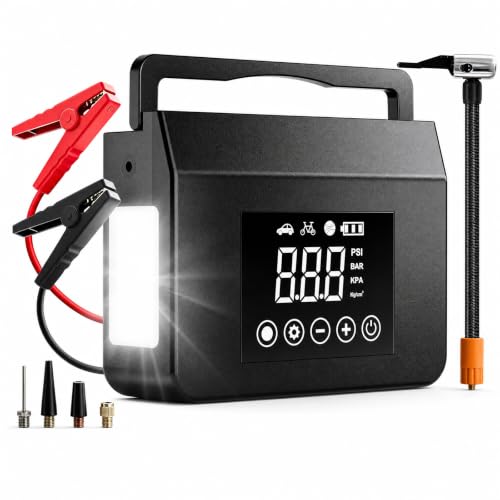 Tire Inflator Portable Air Compressor 150 PSI
|
8.4/10 | Buy |
 Slime 40047 Tire Inflator
|
7.8/10 | Buy |
Determining the Right Compressor Size and Capacity for Tire Inflation
Selecting the correct equipment to inflate vehicle tires requires balancing air volume, operating pressure, and portability. Many motorists assume that tire inflation demands a massive shop compressor with a heavy steel tank, but modern engineering has produced specialized high-pressure portable inflators that handle everyday automotive tires with ease. Knowing what size air compressor do i need to inflate tires begins with evaluating the difference between air pressure and volumetric delivery.
Understanding Pressure Versus Air Volume in Tire Inflation
Air compressors are rated primarily by two metrics: pounds per square inch (PSI) and cubic feet per minute (CFM). Pressure represents the force the compressor generates, while CFM measures the volume of air delivered at a specified pressure level. Most passenger cars require operating pressures between 30 and 35 PSI, which almost any functional compressor can produce. Large pickup trucks, commercial vans, and heavy trailers may demand pressures between 60 and 80 PSI, making maximum output ratings a critical specification.
Volume requirements determine how fast the tire reaches the target pressure. A small tire contains fewer total gallons of air volume, meaning a lower CFM output still inflates it within a reasonable timeframe. In contrast, large all-terrain or commercial tires hold substantial air volume and can cause low-volume pumps to run for extended periods. When a pump operates too slowly against backpressure, internal heat accumulates quickly, which can trigger thermal protection shutoffs.
Air delivery ratings at zero PSI indicate free-flowing air speed, but performance under load reveals actual inflation capability. For example, high-output portable units delivering around 1.85 CFM at 0 PSI or roughly 52 liters per minute can fill a 30-inch sport utility vehicle tire in thirty seconds. Smaller emergency inflators moving closer to 25 liters per minute require around five minutes to bring a compact car tire from zero to 35 PSI under specified test conditions. Matching the volume rate to your vehicle profile prevents unnecessary waiting during roadside emergencies or routine seasonal adjustments.
Tankless Inflators Versus Tank-Based Air Compressors
Tankless tire inflators rely on direct-displacement pistons that pump pressurized air straight through the hose into the tire valve stem. Because these units do not store compressed air in an external vessel, they remain exceptionally compact and lightweight. Motorists can easily stow them in a glove box, center console, or trunk cargo organizer without sacrificing luggage space. However, direct-drive pumps must run continuously throughout the inflation process, generating mechanical friction and heat in the cylinder head.
Tank-based compressors, such as one-gallon to six-gallon pancake or hot dog models, store air under high pressure before delivery. Stored tank pressure allows for instantaneous airflow when connected to a valve stem, which makes topping off multiple tires quick and effortless. A tank reserve is especially valuable when attempting to seat a stubborn tire bead onto a wheel rim, where a sudden burst of high-volume air is necessary to establish an airtight seal. The trade-off is substantial physical weight, bulky footprint, and the necessity of connecting to standard household AC electrical outlets.
For routine maintenance, seasonal pressure corrections, and emergency roadside punctures, a dedicated tankless portable inflator provides far greater practicality than a heavy workshop tank. Direct-drive units eliminate the need to lug heavy steel tanks across the driveway or stretch fifty feet of pneumatic hose from a garage wall. Tank-based systems remain superior in dedicated mechanical garages where pneumatic tools like air ratchets and impact wrenches share the air supply. Deciding between the two depends on whether your priority is dedicated roadside mobility or multi-purpose workshop capability.
How Tank Size Affects Bead Seating and Rapid Top-Offs
Bead seating presents an entirely different pneumatic challenge than routine pressure top-offs. When mounting a new tire or re-seating an unseated tire bead, an instantaneous rush of high-volume air is necessary to force the rubber bead outward against the wheel rim flange. A small tankless inflator cannot accomplish this task because air escapes around the unsealed rim faster than the miniature pump can supply it. A compressor equipped with a three-gallon to six-gallon tank charged to 125 PSI delivers the rapid burst of CFM required to snap the bead into position securely.
Rapid top-offs during multi-vehicle maintenance or fleet checks also benefit from stored tank reserves. When an air tank holds a pressurized buffer, adding five PSI to four passenger car tires takes only seconds per wheel because stored air equalizes rapidly into the tire. Direct-drive pumps must compress every cubic inch of air on demand, requiring several minutes per corner. If you manage multiple work trucks or frequently adjust tire pressures on farm trailers, a larger storage tank saves considerable time during maintenance routines.
Deciding whether you need a pressurized storage tank depends largely on whether you mount tires yourself or strictly maintain operating pressures. Most drivers never mount their own tires at home and leave tire bead seating to professional tire shops with dedicated equipment. If your workflow focuses exclusively on topping off low tires, maintaining seasonal pressure, and emergency preparedness, purchasing a large tank compressor adds needless weight, maintenance, and storage bulk. A quality portable inflator handles pressure adjustments perfectly without the burden of draining condensation from a steel tank daily.
Matching Compressor Size to Vehicle Tire Categories
Compact passenger vehicles, sedans, and light hatchbacks use smaller tire dimensions like 195/65R15 or 215/55R17. These tire sizes hold modest air volume and operate at standard consumer pressures around 32 PSI. Compact portable inflators powered by internal lithium batteries or 12-volt vehicle sockets handle these tires effortlessly. High-performance compact inflators can raise a standard 215/55R17 tire from 28 to 33 PSI in under a minute, making daily maintenance fast and convenient.
Full-size pickup trucks, off-road vehicles, and three-row sport utility vehicles present a significantly greater workload for any air compressor. Tires measuring 31 inches or larger, such as 245/70R17 configurations common on half-ton pickups, contain massive internal air volume. Using a standard mini-inflator on these large tires can cause the small motor to run for ten to fifteen minutes per corner, risking motor strain. Drivers of half-ton and three-quarter-ton trucks benefit greatly from dual-cylinder or high-wattage inflators capable of continuous output up to 160 PSI.
Recreational vehicles, heavy fifth-wheel trailers, and dual-axle utility trailers require specialized pressure considerations. Trailer tires frequently call for cold inflation pressures between 65 and 80 PSI, and certain commercial ratings require 110 PSI or more. Operating near the upper limit of a low-grade 100 PSI pump causes steep drops in airflow and excessive thermal strain. For heavy towing setups, choosing an inflator rated for at least 150 to 160 PSI ensures adequate headroom to reach proper highway pressure safely.
Evaluating Duty Cycle, Motor Power, and Heat Dissipation
The duty cycle of an air compressor defines the percentage of time a pump can safely operate within a given period before requiring a cool-down rest. Many compact emergency inflators carry modest duty cycles that permit five to six minutes of continuous pumping before thermal protection pauses operation. This operational limit works well for topping off a single low tire on a morning commute. Attempting to inflate four completely flat tires consecutively on a limited duty cycle unit will trigger overheat safeguards.
Heavy-duty portable compressors incorporate dual-cylinder mechanisms and active cooling systems to overcome duty cycle limitations. Robust units equipped with 260-watt dual motors can achieve continuous operation with full duty cycles, allowing drivers to inflate four large truck tires from zero to 35 PSI without mandatory resting intervals. Efficient heat dissipation prevents premature piston seal wear and preserves cylinder sleeve integrity over years of use. Metal cylinder construction and dedicated internal fans help transfer heat away from sensitive electronic controllers.
Understanding duty cycle limits helps you avoid damaging equipment during demanding inflation tasks. If your vehicle uses large tires or you frequently adjust pressures across multiple vehicles, prioritize compressors engineered with dedicated cooling features. Built-in thermal shut-off sensors protect the motor from burning out, but waiting for a hot inflator to cool down on the side of a busy highway is inconvenient. Investing in higher power output and proper thermal design ensures reliable performance when you need it most.
Power Source Tradeoffs: Cordless Battery, 12V DC, and 120V AC
Power delivery directly affects the convenience, mobility, and operating speed of your tire inflator. Modern cordless lithium-ion inflators offer unmatched freedom of movement because they eliminate trailing power cords entirely. Units powered by substantial battery packs, such as high-capacity 38,400 mAh assemblies, can top off dozens of vehicle tires on a single charge. Many cordless inflators also feature two-way USB-C fast charging, allowing the device to double as an emergency power bank for mobile phones during roadside delays.
Direct 12-volt DC inflators connect directly to a vehicle accessory outlet or cigarette lighter receptacle. These units draw power directly from the vehicle battery and alternator, ensuring consistent electrical output without worrying about keeping an internal battery charged. Most 12-volt models include ten to fourteen feet of power cord to reach all four vehicle tires comfortably. The trade-off is the restriction of working within the physical radius of your vehicle power outlet and running the engine to prevent battery drain.
Dual-power inflators that combine 12-volt vehicle adapters with 110-volt or 230-volt home wall plugs provide maximum garage flexibility. Drivers can plug into an ordinary household outlet for routine weekend tire maintenance in the driveway without starting the car engine. When traveling, the 12-volt vehicle adapter provides reliable roadside readiness from the trunk. For multi-function emergency kits, hybrid jump-starter compressors pack a 4,000-amp engine boost capability alongside an air pump, solving dead battery and flat tire crises in a single compact package.
Key Functional Features: Auto Shut-Off, Gauges, and Safety
Digital automatic shut-off technology represents one of the most valuable innovations in modern consumer tire inflators. Analog needle gauges require constant monitoring to avoid dangerous overinflation or underinflation. With automatic shut-off systems, you set the desired target pressure on a digital display, activate the pump, and let the device shut down automatically upon reaching that exact value. This set-and-forget capability allows you to monitor surrounding traffic or pack up roadside gear while the tire inflates safely.
Gauge accuracy and pressure calibration are essential for proper vehicle handling and tread life. Advanced inflators incorporate precision digital sensors offering accuracy within plus or minus one PSI across varied elevations. Altitude adaptive calibration ensures that pressure readings remain precise whether you are checking tires at sea level or high in mountain passes. Clear backlit digital screens that display both real-time pressure and target settings eliminate guesswork during nighttime emergencies.
Integrated safety features add substantial practical value to emergency tire pumps. High-output LED work lights ranging from standard illumination to 1,000-lumen floodlights provide crucial visibility when working beside dark roadways. Many digital units also include flashing amber or red emergency SOS light modes to alert approaching traffic to your presence. Multi-piece accessory nozzle kits, including Presta bicycle adapters and ball needles, extend functionality to sports equipment, inflatable recreation gear, and bicycles without requiring separate pumps.
Practical Sizing Takeaways and Long-Term Ownership
Choosing what size air compressor you need ultimately comes down to balancing tire volume against your typical operating location. For standard sedans and daily commuters, a compact cordless or 12-volt direct-drive inflator with a 100 to 150 PSI rating provides optimal convenience without occupying trunk space. Owners of heavy pickups, off-road rigs, or camper trailers should look toward high-output dual-cylinder inflators delivering over 1.5 CFM and supporting 160 PSI continuous duty cycles. Dedicated workshop owners who regularly seat beads or power air tools will still benefit from keeping a five-gallon or six-gallon garage compressor alongside a portable vehicle unit.
Proper maintenance and thoughtful storage ensure your chosen tire inflator remains dependable across all seasons. Store battery-powered models in moderate temperatures whenever possible, topping up lithium cells every few months to prevent deep discharge in cold weather. Inspect air hoses and brass valve connectors periodically for grit, thread damage, or worn rubber seals that cause pressure leaks. Keeping your tire equipment ready guarantees smooth highway travel, optimal fuel efficiency, and peace of mind whenever pressure warnings light up your dashboard.
About the author
Kenny Koehler is a power-tool specialist with more than a decade of hands-on evaluation experience and a science-based approach to product testing. His expertise in repeatable testing, tool performance, impact wrenches, and professional equipment brings a practical, data-focused perspective to compressor and pneumatic-tool comparisons.