
Do All Air Compressors Need Oil: Practical Guide for 2026
Learn if do all air compressors need oil in this November 2026 guide comparing oil-free portability and oil-lubricated pump longevity for pneumatic tools.
 By Tom Scalisi
Updated October 8, 2026


Setting up a home workshop or selecting pneumatic equipment often leads buyers to question pump maintenance and lubrication requirements. Many hobbyists and contractors wonder whether do all air compressors need oil before investing in a new setup for framing, tire inflation, or finish carpentry. The straightforward answer is no, because modern manufacturers produce both oil-free and oil-lubricated compressor designs to serve distinct operating environments. Understanding how these mechanical configurations differ helps you protect your pneumatic equipment, avoid premature motor burnout, and prevent costly workflow interruptions.
Oil-free models rely on specialized friction-reducing coatings to keep pistons moving smoothly without any fluid reservoir. In contrast, heavy-duty cast-iron pumps use dedicated non-detergent lubricants to dissipate friction heat during long operating cycles. Consulting a detailed compressor lubricant guide clarifies which fluid types work best when servicing traditional crankcases. Choosing the correct pump mechanism ensures your air delivery matches your specific tools while keeping maintenance demands manageable.
| Award | Product | ACR Score About ACR ScoreThe ACR Score is our own rating from 0 to 10, based on performance, design and build, ease of use, and value. It reflects independent research and is never influenced by manufacturers, retailers, or affiliate commissions. Learn more › | |
|---|---|---|---|
| Best Overall |
Mag 1 1-Gallon Air Compressor Oil
|
9.2/10 | Buy |
| Best Budget |
 Triax Kompressor ISO 46 SAE 20 Full Synthetic Air |
9.1/10 | Buy |
| Best Premium |
 Triax Kompressor ISO 100 SAE 30 Oil (5 Gal) |
9.1/10 | Buy |
| Best Value |
 Milton 1002 SAE 30W Compressor Oil, 1 Gallon |
8.8/10 | Buy |
 TRIAX Kompressor ISO 46 SAE 20 Full Synthetic Air |
8.8/10 | Buy | |
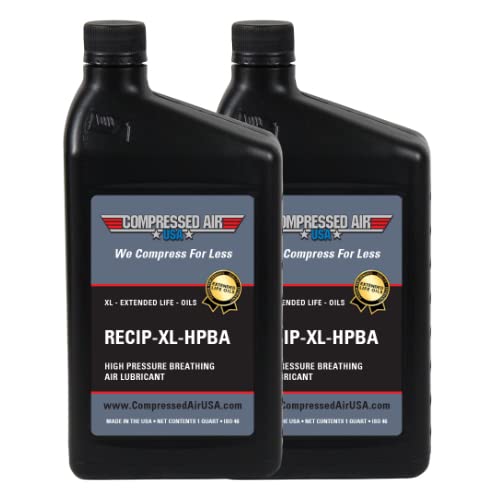 Compressed Air USA Breathing Safe Oil, 2 Quart |
8.8/10 | Buy | |
 TRIAX Kompressor ISO 68 Full Synthetic Air |
8.6/10 | Buy | |
 Ingersoll Rand All Season Select Lubricant, 1L |
8.6/10 | Buy | |
 Freeman PTTO 8 oz. Air Tool Oil |
8.3/10 | Buy | |
 Mobil Rarus 427 ISO 100 Compressor Oil, 1 Qt |
8.3/10 | Buy |
Mag 1 1-Gallon Air Compressor Oil
Formulated for reliable workshop maintenance, Mag 1 Air Compressor Oil uses refined petroleum base stocks paired with anti-foam additives to maintain stable lubrication. The generous one-gallon volume makes it a practical choice for keeping reciprocating or stationary compressors running smoothly over time.
Pros
- Anti-foam additives maintain steady lubrication
- Refined petroleum stocks promote smooth operation
- Formula helps extend compressor service life
- Generous 1-gallon volume handles multiple refills
Cons
- Jug weighs 7.25 pounds and can be heavy to pour
- One-gallon size may exceed small top-off needs
Triax Kompressor ISO 46 SAE 20 Full Synthetic Air
Triax Kompressor ISO 46 SAE 20 is a commercial-grade, full synthetic non-detergent compressor oil engineered for oil-lubricated reciprocating, rotary screw, and vane pumps operating in temperatures from -49°F to over 140°F. It provides exceptional thermal protection and extended component life for garage mechanics and shop owners maintaining heavy-duty pneumatic systems.
Pros
- Extreme all-weather operating range from -49°F to 140°F+ prevents cold-start motor stalling and high-heat viscosity breakdown
- Non-detergent full synthetic formula protects internal bearings and provides up to 20,000 hours of service longevity
- Lowers operating pump temperatures by 30% and actively sheds condensation to prevent internal crankcase rust
- Compatible with oil-lubricated reciprocating, rotary screw, and rotary vane compressor pumps from major manufacturers
Cons
- Not suitable for oil-free or maintenance-free dual-piston compressor designs that do not use crankcase oil
- Explicitly prohibited for use in breathing air systems, oxygen compressors, or liquid natural gas (LNG) units
- Single-quart volume may require purchasing multiple bottles for larger stationary 60-gallon or 80-gallon shop pump crankcases
Triax Kompressor ISO 100 SAE 30 Oil (5 Gal)
Engineered for rotary, vane, screw, and reciprocating systems, this industrial-grade synthetic fluid provides up to 20,000 hours of continuous service across extreme temperatures. Its non-detergent formula lowers operating heat by 30 percent while guarding vital bearings against friction and moisture.
Pros
- Extended 20,000-hour life span minimizes maintenance cycles
- Reliable all-season operation across wide temperature swings
- Substantially reduces operating temperatures and oil burnoff
- Non-detergent blend prevents bearing wear and vibration
Cons
- Not compatible with oxygen air or LNG compressors
- Large 5-gallon volume exceeds small workshop requirements
Milton 1002 SAE 30W Compressor Oil, 1 Gallon
Milton 1002 is a non-detergent ISO-100 SAE 30W conventional lubricant engineered specifically for reciprocating air compressors. The one-gallon capacity makes it a sensible option for regular workshop equipment upkeep.
Pros
- Non-detergent formula tailored for reciprocating compressors
- Standard ISO-100 SAE 30W viscosity rating
- Generous one-gallon volume covers multiple refills
Cons
- Conventional mineral formula instead of synthetic blend
- Heavy container can be awkward to pour directly
TRIAX Kompressor ISO 46 SAE 20 Full Synthetic Air
TRIAX Kompressor ISO 46 SAE 20 is a commercial-grade, full-synthetic non-detergent lubricant engineered for oil-lubricated reciprocating, rotary screw, and vane air compressors. It provides reliable extreme-temperature wear protection and multi-viscosity all-season performance, making it an excellent maintenance choice for auto shops, contractors, and home garage workshops.
Pros
- Full synthetic non-detergent formulation extends pump life across severe operating conditions
- True all-season multi-viscosity rating maintains fluid flow from -49 deg F up to 140 deg F+
- Formulated to lower operating temperatures by up to 30% and eliminate oil vapor odor
- Compatible with a wide array of compressor pumps including reciprocating and rotary screw designs
Cons
- Not formulated for oil-free air compressors, breathing air systems, oxygen setups, or LPG gas pipelines
- Users must verify whether their pump manufacturer specifically calls for ISO 46 (SAE 20) rather than heavier ISO 68 or ISO 100 weights
- Requires careful manual crankcase draining and filling without an included pour spout
Compressed Air USA Breathing Safe Oil, 2 Quart
Formulated for critical breathing air applications like SCUBA, firefighting, and medical systems, this ISO 100 oil delivers robust wear protection under extreme temperatures and pressures. Its non-toxic composition and high flash point ensure dependable safety for specialized reciprocating compressors.
Pros
- Safe formulation suitable for SCUBA and medical air systems
- High flash and auto-ignition points enhance operational safety
- Resists carbon and varnish buildup under extreme temperatures
- Non-toxic formula provides strong wear and rust protection
Cons
- Restricted to reciprocating units rather than rotary screw systems
- ISO 100 rating unsuitable for low-viscosity compressor setups
TRIAX Kompressor ISO 68 Full Synthetic Air
TRIAX Kompressor ISO 68 is a commercial-grade, full synthetic compressor lubricant engineered for oil-lubricated reciprocating, rotary screw, and vane pumps operating between -49°F and 140°F+. It is an excellent maintenance solution for auto mechanics, shop owners, and contractors seeking lower pump operating temperatures and up to 20,000 hours of service life.
Pros
- Extended 20,000-hour service life minimizes routine maintenance intervals on high-demand shop compressors
- All-season stability from -49°F to 140°F+ prevents cold-morning motor drag and high-heat viscosity breakdown
- Non-detergent formulation separates condensation cleanly to safeguard internal crankcase bearings
- Broad compatibility across major reciprocating, rotary screw, and rotary vane compressor manufacturers
Cons
- Not suitable for maintenance-free oil-free compressor designs or oxygen and Liquid Natural Gas (LNG) systems
- One-gallon container size exceeds the immediate refill capacity of small single-stage DIY splash-lube pumps
Ingersoll Rand All Season Select Lubricant, 1L
Engineered as an all-weather OEM fluid, this synthetic lubricant protects reciprocating compressors during continuous duty while resisting carbon buildup on critical valves. It is a solid pick for equipment owners who want fewer oil changes and reliable year-round operation.
Pros
- Maintains stable viscosity in hot and cold seasons
- Lasts four times longer than petroleum oil
- Keeps valves and rings free of carbon deposits
- Protects bearings under continuous duty cycles
Cons
- Formulated specifically for reciprocating compressor systems
- One-liter bottle requires buying multiples for large pumps
Freeman PTTO 8 oz. Air Tool Oil
Formulated specifically for daily pneumatic maintenance, Freeman PTTO reduces internal friction while preventing gumming and corrosion inside air tools. It dispenses easily into the air inlet directly or through an in-line lubricator to keep internal components clean.
Pros
- Includes anti-gumming and anti-foaming additives
- Integrated rust inhibitor dissolves interior deposits
- Supports direct inlet or in-line lubricator application
- Reduces friction to extend pneumatic tool lifespan
Cons
- Non-synthetic formulation rather than synthetic blend
- Requires daily manual reapplication for continuous protection
- Compact 8 oz. volume suits light to moderate use
Mobil Rarus 427 ISO 100 Compressor Oil, 1 Qt
Mobil Rarus 427 provides an ISO 100 viscosity grade lubricant designed for compressor applications. Packaged in a 1-quart container and made in the United States, it suits routine automotive and shop maintenance jobs.
Pros
- Convenient 1-quart volume for routine top-offs
- Standard ISO 100 viscosity formulation
- Manufactured in the United States
- Lightweight and easy to store
Cons
- Limited 1-quart volume for large compressor reservoirs
- ISO 100 viscosity is not universally compatible with all compressors
Air Compressor Lubrication Dynamics: Oil-Free Versus Oil-Lubricated Systems
Understanding pump lubrication is fundamental when selecting pneumatic machinery or establishing a workshop maintenance routine. The short answer to whether do all air compressors need oil is an unequivocal no, as the industry divides pumps into oil-free and oil-lubricated categories. Each configuration solves specific operational challenges, ranging from zero-maintenance portability on residential jobsites to continuous thermal endurance in industrial machine shops. Choosing between them requires examining how each pump handles internal friction, manages mechanical heat, and delivers clean air to downstream pneumatic tools.
The Fundamental Difference Between Oil-Free and Oil-Lubricated Pumps
Mechanical friction between moving metal components generates intense heat during compression cycles. Oil-lubricated compressors manage this friction by bathing the crankshaft, connecting rods, and piston cylinder walls in specialized lubricating oil. In contrast, oil-free compressors bypass liquid lubricants entirely by utilizing self-lubricating materials such as polytetrafluoroethylene coatings along the cylinder sleeves and piston rings. These distinct engineering paths create significant differences in pump longevity, maintenance duties, and air discharge purity.
Oil-free designs dominate the consumer and portable jobsite markets where users prioritize lightweight portability and zero fluid maintenance. Conversely, oil-lubricated pumps remain the standard for commercial workshops, auto body facilities, and high-demand industrial production floors. A buyer seeking a light trim carpentry unit will rarely need an oil-bathed crankcase. However, running continuous air tools like rotary sanders or heavy impact wrenches usually necessitates the thermal protection that only fluid lubrication can provide.
How Oil-Free Air Compressors Function Without Crankcase Fluid
Oil-free compressors rely on permanent factory lubrication within sealed bearings combined with low-friction composite materials. The piston rings are typically manufactured from specialized fluoropolymer compounds that slide smoothly against precision-machined aluminum cylinder sleeves without galling. Because there is no oil sump beneath the piston, these units can be transported on their sides without spilling messy fluids inside vehicle trunks. This design simplifies operation dramatically for homeowners, DIY hobbyists, and mobile trim carpenters who need rapid jobsite setup.
Operating without liquid oil introduces definite thermodynamic limitations that affect compressor operation. Without oil to carry away friction heat, oil-free pumps experience higher internal operating temperatures and faster wear on their composite piston rings. Most oil-free consumer models operate at high motor speeds, often turning universal motors at over 3,000 RPM to compress sufficient volume. Readers exploring lightweight options can consult our compact air compressor overview to see how portable designs balance output against operational limits.
Mechanics and Thermal Advantages of Oil-Lubricated Compressor Pumps
Oil-lubricated compressors utilize an internal crankcase filled with non-detergent compressor oil to protect rotating assemblies. As the crankshaft turns, a small dipper attached to the connecting rod splashes oil across the cylinder walls, wrist pins, and main bearings. This continuous oil bath creates a microscopic hydraulic cushion between metal surfaces, reducing friction and preventing mechanical galling. In larger commercial machines, pressurized oil pumps or rotary screw oil injection systems circulate fluid to achieve continuous lubrication under heavy industrial loads.
The circulating fluid serves as an essential coolant by absorbing compression heat directly from the cylinder head and piston crown. Premium synthetic fluids, such as TRIAX Kompressor ISO 100 or Ingersoll Rand All Season Select, maintain stable viscosity profiles even under severe thermal stress. By removing heat effectively, oil-lubricated pumps can operate at lower motor speeds, often running heavy-duty induction motors at roughly 1,750 RPM. This slower operating speed substantially reduces pump noise, lowers vibration, and extends mechanical pump life over thousands of operating hours.
Why Heavy-Duty Applications Demand Oil-Lubricated Equipment
Continuous pneumatic operations generate sustained heat loads that degrade unlubricated composite components rapidly. Automotive repair shops, manufacturing plants, and metal fabrication facilities rely on continuous-duty tools such as dual-action sanders, die grinders, and plasma cutters. These tools consume high cubic feet per minute volumes of air, forcing the compressor pump to run almost continuously. An oil-free pump subjected to a continuous duty cycle under heavy commercial load would suffer rapid thermal breakdown and piston ring failure.
Oil-lubricated cast-iron pumps handle severe duty cycles because their crankcases dissipate thermal energy through cooling fins and heavy metal castings. The oil film seals microscopic imperfections between the piston rings and cylinder wall, improving volumetric compression efficiency over time. Products such as Milton 1002 High Performance Conventional Air Compressor Oil provide the robust non-detergent lubrication needed to prevent carbon build-up on reciprocating intake and exhaust valves. Facilities running equipment for hours every day inevitably choose oil-lubricated pumps to protect their capital investment.
When Zero-Oil Compression Is Mandatory for Air Quality
Certain pneumatic tasks cannot tolerate even trace amounts of aerosolized oil vapor in the compressed air stream. High-end automotive spray painting, fine furniture lacquer finishing, and cleanroom manufacturing require pristine air delivery. In oil-lubricated compressors, a small amount of oil blow-by past the piston rings into the air tank is normal and expected. If oil droplets travel down the air hose into a spray gun, they cause severe paint defects like fish-eyes, bubbling, and poor finish adhesion.
While coalescing filters and oil-water separators can remove most suspended oil aerosols from lubricated systems, oil-free compressors eliminate the contamination risk at the source. Woodworkers applying delicate finishes frequently choose modern ultra-quiet dual-piston oil-free compressors for their workshops. These specialized oil-free units produce quiet operating sound levels while delivering completely oil-free air to sensitive pneumatic instruments. For clean air environments without complex filtration banks, oil-free technology provides significant practical advantages.
Specialized Breathing Air Applications and Certified Lubricants
Compressing air for human respiration introduces strict safety standards that standard workshop lubricants cannot meet. High-pressure reciprocating compressors used for scuba diving, fire department self-contained breathing apparatus bottles, and medical facilities require specialized breathing-safe fluids. Standard automotive or industrial oils release hazardous volatile compounds, carbon monoxide, or toxic vapors when exposed to extreme compression temperatures. These contaminants can prove fatal when inhaled from a pressurized breathing cylinder.
Dedicated breathing air formulations, such as Compressed Air USA Breathing Safe Lubricating Oil, utilize high-flash-point, non-toxic synthetic base stocks engineered for high-pressure breathing equipment. These specialized lubricants control carbon formation while resisting oxidation under extreme cylinder pressures. Operating breathing air systems requires strict adherence to manufacturer specifications, multi-stage air purification filters, and rigorous air quality testing. Never use conventional compressor lubricants in equipment intended to supply respiratory air supplies.
Pump Crankcase Lubrication Versus Downstream Air Tool Oiling
Many novice compressor owners confuse the lubrication requirements of the pump itself with the oiling requirements of pneumatic tools. Even if your air compressor is completely oil-free, your pneumatic tools may still require regular daily lubrication. Rotary air tools, framing nailers, and impact wrenches contain miniature internal air motors or piston assemblies that spin at high speeds. These tool mechanisms need lightweight pneumatic oil, such as Freeman PTTO Air Tool Oil, introduced directly through the air inlet fitting before use.
Pump crankcase oil and pneumatic tool oil are engineered for entirely different mechanical environments and cannot be swapped. Crankcase oils like Mobil Rarus 427 or Mag 1 Air Compressor Oil are heavy non-detergent formulations designed to withstand high heat inside the compressor pump cylinder. In contrast, air tool oils are thin, non-gumming lubricants designed to atomize quickly inside pneumatic motor vanes without leaving sticky residue. Pouring air tool oil into a compressor pump crankcase or putting heavy ISO 100 compressor oil into an air nailer will cause severe equipment damage.
Choosing the Correct Viscosity and Formulation for Oil-Bathed Pumps
Using the proper fluid formulation is critical for the operational health of any oil-lubricated compressor pump. Standard automotive motor oils contain detergent additives engineered to keep combustion soot suspended in engine oil until it reaches an oil filter. In a compressor pump without an oil filter, these detergent additives cause moisture to emulsify into a milky sludge that damages bearings and forms valve carbon. Compressor manufacturers universally specify non-detergent industrial oils that allow moisture condensation to separate cleanly at the bottom of the oil reservoir.
Compressor fluids are rated by ISO viscosity grades, commonly ISO 46, ISO 68, or ISO 100, which correspond roughly to SAE 20, SAE 30, and SAE 40 weights. Selecting the right grade depends on ambient workshop temperatures and pump design, with lighter ISO 46 fluids facilitating cold-weather starting and heavier ISO 100 fluids protecting high-temperature commercial pumps. Our detailed guide on compressor oil versus motor oil explains the exact chemical reasons why automotive fluids harm reciprocating pumps. Selecting an OEM-recommended synthetic fluid, such as TRIAX Kompressor ISO 46 or ISO 68, helps prevent valve fouling across shifting seasonal temperatures.
How to Determine If Your Compressor Requires Oil
Determining whether an unfamiliar or newly acquired air compressor requires oil begins with a visual inspection of the pump housing. Oil-lubricated compressors feature a distinct crankcase at the base of the pump cylinder equipped with an oil fill port, a drain plug, and an oil level indicator. This indicator will appear either as a clear glass sight window or as a threaded dipstick located near the bottom of the pump casting. If your compressor pump possesses an oil fill breather cap and a glass sight window showing an oil level mark, it requires oil.
Oil-free compressors display completely sealed pump housings without any visible fluid fill plugs, drain ports, or sight glasses. Many compact pancake, hot dog, and twin-stack units enclose the motor and pump entirely within plastic shrouds or metal roll cages. The manufacturer label on these machines will almost always state oil-free or oilless in prominent lettering near the serial plate. If you do not see an oil sight glass or dipstick, do not attempt to pour oil into the intake filter or pressure switch ports.
Maintenance Protocols for Oil-Lubricated Compressor Owners
Maintaining an oil-lubricated compressor requires a consistent schedule of fluid inspections and scheduled oil changes. Operators should check the oil level sight glass before every operating session to verify that the fluid rests at the center of the red indicator ring. Running an oil-bathed pump with low oil levels leads to rapid friction welding of the connecting rods and catastrophic pump seizure. Conversely, overfilling the crankcase forces excess oil past the piston rings, contaminating the storage tank and fouling discharge check valves.
New oil-lubricated compressors require an initial break-in period, typically involving twenty to fifty hours of operation before the first complete oil change. This initial fluid flush removes microscopic metal shavings created as new piston rings seat against the cylinder walls. After break-in, conventional petroleum compressor oils should be replaced every three to six months, or every 250 to 500 operating hours. High-grade synthetic fluids, such as TRIAX Kompressor ISO 100, can extend change intervals significantly while providing superior resistance against thermal varnish and oxidation.
Summary of Practical Tradeoffs for Prospective Buyers
Deciding between an oil-free and an oil-lubricated compressor comes down to balancing maintenance effort against intended duty cycle and tool demand. Homeowners inflating vehicle tires, running occasional finish nailers, or clearing seasonal sprinkler lines will appreciate the zero-maintenance simplicity of oil-free models. These units store easily, eliminate messy oil spills in vehicle trunks, and start reliably during cold winter mornings. However, buyers should expect higher operational noise and a finite pump lifespan when using budget oil-free equipment.
Contractors, automotive technicians, and production woodworkers benefit substantially from investing in heavy-duty oil-lubricated machinery. The increased pump lifespan, quieter low-RPM motor operation, and superior heat dissipation easily justify the minor routine chore of checking an oil sight glass. Pairing an oil-lubricated pump with proper coalescing air filters provides durable airflow for demanding tools while keeping air lines clean. By matching your compressor pump mechanism to your specific pneumatic workload, you ensure dependable performance and maximum equipment longevity.
About the author
Tom Scalisi brings more than two decades of experience in construction, building maintenance, contracting, and hands-on tool use. His practical understanding of power tools, automotive work, repairs, and jobsite equipment helps readers evaluate compressors based on real workloads rather than specifications alone.