
Can You Use Motor Oil in Air Compressor? Practical Guide for 2026
Learn whether can you use motor oil in air compressor systems in October 2026, covering detergent hazards, pump wear, and proper non-detergent lubricants.
 By Bob Beacham
Updated October 8, 2026
By Bob Beacham
Updated October 8, 2026

Compressor crankcase maintenance often catches workshop owners off guard right when oil levels drop below the sight glass mid-project. While reaching for an open bottle of automotive 5W-30 or 10W-40 sitting on the garage shelf seems like a quick solution, asking whether can you use motor oil in air compressor pumps involves understanding how compression heat and moisture affect lubrication. Standard automotive engine oil contains detergent chemistry and viscosity modifiers formulated specifically for internal combustion engines rather than high-pressure pneumatic cylinders. If you have ever considered using 10W-30 in an air compressor, reviewing the mechanical differences between automotive engines and air pumps reveals why standard motor oil often causes severe long-term pump damage.
Reciprocating air pumps compress ambient air under intense mechanical pressure, generating concentrated heat and internal condensation without the benefit of an oil filter. Understanding how reciprocating air compressors work clarifies why non-detergent oils, such as dedicated ISO 68 or ISO 100 formulations, remain standard for splash-lubricated cast-iron pumps. Detergents in automotive motor oil keep moisture and carbon particulate suspended in the fluid, turning the crankcase oil into an acidic, milky emulsion that erodes brass reed valves and bearings. Choosing the right lubricant protects internal piston rings, prevents thermal carbon buildup on discharge valves, and ensures your pneumatic system delivers dependable airflow across demanding workshop jobs.
| Award | Product | ACR Score About ACR ScoreThe ACR Score is our own rating from 0 to 10, based on performance, design and build, ease of use, and value. It reflects independent research and is never influenced by manufacturers, retailers, or affiliate commissions. Learn more › | |
|---|---|---|---|
| Best Overall |
Mag 1 1-Gallon Air Compressor Oil
|
9.2/10 | Buy |
| Best Premium |
 Baococo 4-Gallon 0.5 HP Air Compressor
|
9.2/10 | Buy |
| Best Budget |
 Triax Kompressor ISO 46 SAE 20 Full Synthetic Air
|
9.1/10 | Buy |
 Triax Kompressor ISO 100 SAE 30 Oil (5 Gal)
|
9.1/10 | Buy | |
| Best Value |
 Milton 1002 SAE 30W Compressor Oil, 1 Gallon
|
8.8/10 | Buy |
 TRIAX Kompressor ISO 46 SAE 20 Full Synthetic Air
|
8.8/10 | Buy | |
 TSI Supercool 24940 Synthetic Hybrid A/C
|
8.6/10 | Buy | |
 TRIAX Kompressor ISO 68 Full Synthetic Air
|
8.6/10 | Buy | |
 Milton 1002-32 ISO-100 Compressor Oil, 32 oz
|
8.4/10 | Buy | |
 Silentaire Synthetic Compressor Oil, 24 oz
|
8.0/10 | Buy |
Mag 1 1-Gallon Air Compressor Oil
Formulated for reliable workshop maintenance, Mag 1 Air Compressor Oil uses refined petroleum base stocks paired with anti-foam additives to maintain stable lubrication. The generous one-gallon volume makes it a practical choice for keeping reciprocating or stationary compressors running smoothly over time.
Pros
- Anti-foam additives maintain steady lubrication
- Refined petroleum stocks promote smooth operation
- Formula helps extend compressor service life
- Generous 1-gallon volume handles multiple refills
Cons
- Jug weighs 7.25 pounds and can be heavy to pour
- One-gallon size may exceed small top-off needs
Baococo 4-Gallon 0.5 HP Air Compressor
Built for light household maintenance and quick inflation tasks, this compact 4-gallon unit pairs a quiet 0.5 HP motor with an automatic overpressure safety shut-off. Its modest air delivery handles small nailers and tire filling without creating excessive workshop noise.
Pros
- Quiet operation suitable for residential spaces
- Automatic overpressure shut-off enhances operational safety
- Compact footprint stores easily in tight spaces
- Stable base minimizes movement during use
Cons
- Low airflow output limits heavy pneumatic tool use
- Maximum pressure capped at 110 PSI
- Modest 0.5 HP motor lacks heavy-duty capability
Triax Kompressor ISO 46 SAE 20 Full Synthetic Air
Triax Kompressor ISO 46 SAE 20 is a commercial-grade, full synthetic non-detergent compressor oil engineered for oil-lubricated reciprocating, rotary screw, and vane pumps operating in temperatures from -49°F to over 140°F. It provides exceptional thermal protection and extended component life for garage mechanics and shop owners maintaining heavy-duty pneumatic systems.
Pros
- Extreme all-weather operating range from -49°F to 140°F+ prevents cold-start motor stalling and high-heat viscosity breakdown
- Non-detergent full synthetic formula protects internal bearings and provides up to 20,000 hours of service longevity
- Lowers operating pump temperatures by 30% and actively sheds condensation to prevent internal crankcase rust
- Compatible with oil-lubricated reciprocating, rotary screw, and rotary vane compressor pumps from major manufacturers
Cons
- Not suitable for oil-free or maintenance-free dual-piston compressor designs that do not use crankcase oil
- Explicitly prohibited for use in breathing air systems, oxygen compressors, or liquid natural gas (LNG) units
- Single-quart volume may require purchasing multiple bottles for larger stationary 60-gallon or 80-gallon shop pump crankcases
Triax Kompressor ISO 100 SAE 30 Oil (5 Gal)
Engineered for rotary, vane, screw, and reciprocating systems, this industrial-grade synthetic fluid provides up to 20,000 hours of continuous service across extreme temperatures. Its non-detergent formula lowers operating heat by 30 percent while guarding vital bearings against friction and moisture.
Pros
- Extended 20,000-hour life span minimizes maintenance cycles
- Reliable all-season operation across wide temperature swings
- Substantially reduces operating temperatures and oil burnoff
- Non-detergent blend prevents bearing wear and vibration
Cons
- Not compatible with oxygen air or LNG compressors
- Large 5-gallon volume exceeds small workshop requirements
Milton 1002 SAE 30W Compressor Oil, 1 Gallon
Milton 1002 is a non-detergent ISO-100 SAE 30W conventional lubricant engineered specifically for reciprocating air compressors. The one-gallon capacity makes it a sensible option for regular workshop equipment upkeep.
Pros
- Non-detergent formula tailored for reciprocating compressors
- Standard ISO-100 SAE 30W viscosity rating
- Generous one-gallon volume covers multiple refills
Cons
- Conventional mineral formula instead of synthetic blend
- Heavy container can be awkward to pour directly
TRIAX Kompressor ISO 46 SAE 20 Full Synthetic Air
TRIAX Kompressor ISO 46 SAE 20 is a commercial-grade, full-synthetic non-detergent lubricant engineered for oil-lubricated reciprocating, rotary screw, and vane air compressors. It provides reliable extreme-temperature wear protection and multi-viscosity all-season performance, making it an excellent maintenance choice for auto shops, contractors, and home garage workshops.
Pros
- Full synthetic non-detergent formulation extends pump life across severe operating conditions
- True all-season multi-viscosity rating maintains fluid flow from -49 deg F up to 140 deg F+
- Formulated to lower operating temperatures by up to 30% and eliminate oil vapor odor
- Compatible with a wide array of compressor pumps including reciprocating and rotary screw designs
Cons
- Not formulated for oil-free air compressors, breathing air systems, oxygen setups, or LPG gas pipelines
- Users must verify whether their pump manufacturer specifically calls for ISO 46 (SAE 20) rather than heavier ISO 68 or ISO 100 weights
- Requires careful manual crankcase draining and filling without an included pour spout
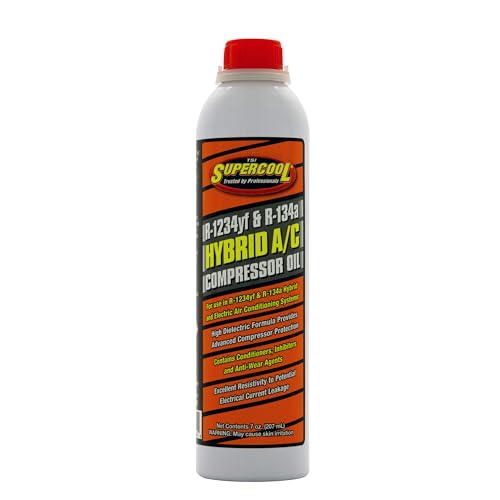
TSI Supercool 24940 Synthetic Hybrid A/C
TSI Supercool 24940 is a specialized synthetic lubricant engineered for electric hybrid air conditioning compressors, featuring high dielectric resistivity to prevent electrical leakage. It provides essential anti-wear protection for automotive mechanics and DIYers servicing high-voltage automotive A/C systems.
Pros
- Engineered with high dielectric resistivity to safeguard high-voltage vehicle electrical systems against current leakage
- Proprietary blend of conditioners, inhibitors, and anti-wear additives helps extend internal compressor life
- Durable aluminum can protects the synthetic fluid from contamination and moisture prior to installation
- Convenient 7 oz container size supports precise measuring for routine maintenance top-offs and system recharges
Cons
- Specialized formulation is intended strictly for hybrid electric A/C compressors, not for standard shop air tools or pneumatic compressors
- Injecting lubricant into sealed automotive A/C lines requires compatible manifold gauges or dedicated oil injector tools
- Total volume of 7 ounces may require multiple cans depending on the specific vehicle manufacturer oil capacity specification
TRIAX Kompressor ISO 68 Full Synthetic Air
TRIAX Kompressor ISO 68 is a commercial-grade, full synthetic compressor lubricant engineered for oil-lubricated reciprocating, rotary screw, and vane pumps operating between -49°F and 140°F+. It is an excellent maintenance solution for auto mechanics, shop owners, and contractors seeking lower pump operating temperatures and up to 20,000 hours of service life.
Pros
- Extended 20,000-hour service life minimizes routine maintenance intervals on high-demand shop compressors
- All-season stability from -49°F to 140°F+ prevents cold-morning motor drag and high-heat viscosity breakdown
- Non-detergent formulation separates condensation cleanly to safeguard internal crankcase bearings
- Broad compatibility across major reciprocating, rotary screw, and rotary vane compressor manufacturers
Cons
- Not suitable for maintenance-free oil-free compressor designs or oxygen and Liquid Natural Gas (LNG) systems
- One-gallon container size exceeds the immediate refill capacity of small single-stage DIY splash-lube pumps
Milton 1002-32 ISO-100 Compressor Oil, 32 oz
Formulated specifically for oil-lubricated reciprocating compressors, this ISO-100 non-detergent lubricant shields pumps against wear and deposit buildup. It separates easily from moisture and remains fluid down to -15°F for dependable cold-weather starts.
Pros
- Protects internal components against wear and corrosion
- Non-detergent formula resists foaming and separates water
- Inhibits sludge and carbon deposit formation
- Maintains fluidity in temperatures down to -15°F
Cons
- Designed strictly for reciprocating pump mechanisms
- Conventional oil base rather than full synthetic
Silentaire Synthetic Compressor Oil, 24 oz
Silentaire offers this 24-ounce synthetic lubricant to keep compatible air compressors operating smoothly. The container includes a dedicated pouring tip and cap to assist with clean, precise refills during maintenance.
Pros
- Special pouring tip enables neat dispensing
- Included cap seals bottle securely
- Synthetic formulation suited for compressor upkeep
- Convenient 24-ounce size for standard maintenance
Air Compressor Lubrication and Motor Oil Compatibility
Maintaining proper pump lubrication is essential for keeping an air compressor running smoothly and delivering reliable pneumatic pressure. Many operators wonder whether standard automotive oil can substitute for specialized compressor fluid during routine garage maintenance. The short answer is that conventional motor oil should generally be kept far away from reciprocating compressor crankcases. Examining the chemical properties of compressor lubricants explains why dedicated formulations ensure safe operation and long pump life.
The Direct Answer: Why Automotive Motor Oil Harms Compressor Pumps
Standard automotive motor oil is formulated for internal combustion engines that experience heavy fuel combustion, exhaust soot, and extreme thermal cycling. These motor oils rely heavily on detergent additives designed to scavenge contaminants and keep them suspended in the liquid so an oil filter can capture them. An air compressor crankcase lacks both combustion blow-by and an active filtration system. When detergent motor oil is poured into a compressor pump, those detergent additives immediately create serious mechanical problems inside the compression chamber.
Moisture condensation and heat breakdown create immediate hazards when using car oil in an air pump. When ambient air is compressed to high pressure, moisture naturally condenses out of the air volume and collects inside the crankcase sump. Detergents in automotive oil cause this water to emulsify into a milky, acidic sludge that circulates through bearings instead of separating cleanly. Furthermore, the extreme heat at the discharge valve plate bakes motor oil into carbon deposits across the reed valves, causing severe pressure loss and pump overheating.
The Critical Role of Detergent vs Non-Detergent Formulations
The distinction between detergent and non-detergent oils forms the core reason automotive oil fails in pneumatic equipment. In an automobile engine, detergents act like cleaning agents that keep carbon and soot suspended in the oil stream until reaching the paper filter. A compressor pump relies purely on splash lubrication from a dipper attached to the connecting rod, meaning suspended debris never gets filtered out. Circulating suspended dirt and moisture through the bearings rapidly scores polished metal surfaces and wears down cylinder walls.
Non-detergent compressor oils, such as Milton 1002 High Performance Conventional Air Compressor Oil, work on completely different lubrication principles. These specialized fluids allow dirt, metal particles, and condensed moisture to separate naturally from the oil and settle at the bottom of the crankcase sump. The dipper splashes clean lubricant from the upper layer while contaminants remain safely trapped beneath the pickup point until drained. Formulations like Mag 1 Air Compressor Oil also include anti-foam agents that prevent the fluid from frothing under continuous reciprocating action.
Understanding Viscosity Ratings: ISO Grades versus SAE Weights
Selecting the correct compressor oil requires translating industrial ISO viscosity grades into familiar automotive SAE weight ratings. The International Organization for Standardization rates industrial lubricants by kinematic viscosity measured at 40 degrees Celsius, while automotive engine oils use the Society of Automotive Engineers grading scale. The most common rating for single-stage and two-stage workshop compressors is ISO 100, which corresponds closely to a straight SAE 30 non-detergent oil weight. Heavy cast-iron pumps operating in typical indoor garage temperatures thrive on ISO 100 fluids like Milton 1002-32 High Performance Conventional Air Compressor Oil because the thick oil film cushions connecting rods under heavy load.
Lighter viscosity grades serve specific operational environments and pump designs that encounter colder operating conditions. An ISO 46 lubricant, such as TRIAX Kompressor ISO 46 SAE 20, corresponds roughly to an SAE 20 weight fluid and is engineered for cold-weather starting or rotary screw compressors. If you run pneumatic equipment on unheated jobsites during winter, a lighter ISO 46 fluid allows the electric motor to spin the pump freely without tripping household breakers. An intermediate grade like TRIAX Kompressor ISO 68 provides a balanced viscosity roughly equivalent to an SAE 20W-30 for moderate climate conditions.
Synthetic Compressor Oil versus Conventional Mineral Lubricants
Compressor owners must also evaluate the functional differences between conventional mineral-based oils and modern synthetic formulations. Conventional petroleum lubricants, such as Mag 1 Air Compressor Oil, are refined from crude base stocks and enriched with basic rust and oxidation inhibitors. These conventional fluids offer dependable performance for light hobbyists and intermittent garage projects where the compressor runs only a few hours per month. They provide reliable lubrication at an economical price point while requiring regular seasonal drain intervals to prevent oxidation.
Synthetic compressor lubricants deliver significantly higher thermal stability and extended service intervals for demanding shop environments. Formulations like TRIAX Kompressor ISO 100 SAE 30 Full Synthetic resist thermal breakdown under extreme cylinder head temperatures and maintain steady viscosity across wide temperature swings. Specialized equipment may also require dedicated synthetic formulations tailored to unique operational demands. For example, studio artists rely on Silentaire Compressor Oil Synthetic for whisper-quiet indoor units, while automotive technicians use TSI Supercool 24940 Hybrid A/C Compressor Oil for high dielectric protection in electric hybrid compressors.
Oil-Free versus Oil-Lubricated Compressor Architectures
Before shopping for crankcase oil, verify whether your compressor pump actually requires any liquid lubricant at all. Many modern portable units, such as the Baococo 4 Gallon Portable Air compressor, utilize oil-free dual-piston designs. These oil-free systems rely on permanently lubricated sealed bearings and Teflon or PTFE coated piston rings that slide smoothly against cylinder sleeves. Adding oil to an oil-free compressor will contaminate the air delivery, ruin the internal coatings, and blow oily mist into pneumatic tools and spray guns.
Oil-lubricated cast-iron pumps are heavier and louder than compact portable models, but they offer dramatically longer lifespans for rigorous workshop duty. Exploring single-cylinder versus two-cylinder compressor pump designs helps highlight how multi-stage cast-iron pumps manage compression heat through generous crankcase oil capacity. When properly maintained with clean non-detergent oil, an oil-lubricated cast-iron pump can run for thousands of operating hours without losing compression. This durability makes oil-lubricated units the gold standard for dedicated automotive garages and commercial woodshops.
Emergency Scenarios: Can You Use Non-Detergent Motor Oil in a Pinch?
Unexpected workshop emergencies sometimes leave operators with an empty compressor crankcase and no dedicated compressor oil on hand. In this specific scenario, a straight-weight non-detergent motor oil can serve as a temporary emergency substitute. Look specifically for automotive bottles marked as non-detergent SAE 30 or API SB service rating, which lack modern detergent and dispersant chemistry. These non-detergent motor oils will not emulsify moisture or cause severe valve carbonization during short-term operation.
Never use standard multi-grade automotive engine oil, such as 5W-30, 10W-30, or 10W-40, even for a brief emergency task. Multi-grade motor oils contain polymer viscosity index improvers that shear rapidly under compressor piston forces, causing the oil to thin out and lose protective film strength. Furthermore, avoid automotive transmission fluids, hydraulic fluids, and gear oils when refilling an air compressor crankcase. If you are forced to use non-detergent SAE 30 motor oil in an emergency, plan to drain it and refill with dedicated compressor oil as soon as possible.
Step-by-Step Compressor Oil Inspection and Replacement Routine
Regular oil maintenance protects your investment and ensures your compressor delivers clean, consistent air pressure across every project. Begin by unplugging the compressor from electrical power and opening the tank drain valve to depressurize the air reservoir completely. Allow the pump cylinder head to cool down to a safe touch temperature before inspecting the crankcase. Check the oil level through the clear sight glass or by removing the dipstick, confirming that the fluid appears amber and translucent rather than dark or cloudy.
To perform an oil change, place an approved oil catch pan beneath the lower crankcase drain plug. Thread out the drain plug using the proper wrench, allowing the warm oil to flow freely into the container. Inspect the drained fluid carefully for milky discoloration, which indicates excessive moisture accumulation, or metallic flakes that signal bearing wear. Once the sump drains completely, clean the drain plug threads, reinstall the plug securely, and verify that the sealing washer sits flush against the crankcase housing.
Refill the crankcase using a clean funnel and fresh non-detergent compressor oil matching the manufacturer recommended ISO grade. Pour slowly through the breather port or fill hole while watching the sight glass closely to prevent overfilling. The oil level should rest precisely in the center of the sight glass red dot or between the dipstick fill marks. Overfilling the pump causes the oil dipper to splash excessively, pushing liquid oil past the piston rings and blowing aerosolized droplets directly into your air lines.
Maintaining proper pump lubrication ensures reliable airflow when making an air compressor selection for pneumatic tools that demand sustained CFM output. After refilling the crankcase, wipe away any spilled oil from the pump exterior to keep the cooling fins clean. Reconnect the electrical power, start the motor, and let the compressor build to full shut-off pressure while checking the drain plug for leaks. Establish a routine of checking the oil level before every major project to catch low fluid levels before friction damages internal bearings.
Long-Term Consequences of Running Incorrect Lubricants
Operating an air compressor with standard automotive motor oil triggers a cascade of mechanical failures that shorten equipment life. The most frequent failure point occurs at the discharge valve plate, where high compression temperatures bake motor oil into hard carbon crust. As carbon builds up on the thin reed valves, the valves can no longer close flat against the valve seat. This valve leakage allows pressurized air to backflow into the cylinder, causing the pump to run continuously without reaching cut-out pressure.
Downstream air tools and pneumatic accessories also suffer when incorrect oils are used in the compressor pump. Detergent motor oil that bypasses worn piston rings travels through your air hose and enters expensive nail guns, spray guns, and impact wrenches. The detergents and sulfur additives in motor oil degrade delicate nitrile O-rings and rubber seals inside air tools, causing premature tool air leaks. In paint spraying applications, atomized engine oil ruins basecoats and clearcoats by causing persistent fish eyes and surface contamination.
Practical Takeaways for Workshop Compressor Reliability
Protecting your pneumatic setup requires treating the compressor pump as a specialized machine with unique lubrication needs. Never pour standard automotive motor oil into your compressor crankcase, as detergent additives and unstable viscosity modifiers cause rapid pump failure. Choose high-quality, non-detergent compressor oils such as ISO 100 or ISO 46 formulations engineered specifically to handle compression heat and moisture separation. Always verify whether your compressor is an oil-lubricated cast-iron unit or a zero-maintenance oil-free model before opening an oil bottle.
Combine regular oil inspections with daily tank moisture draining to maximize the operating lifespan of your air delivery system. Purging water from the bottom drain valve prevents tank corrosion while checking the crankcase sight glass ensures bearings stay protected under heavy workloads. Following proper lubrication practices keeps your compressor running quietly, preserves critical reed valves, and guarantees dependable air pressure for all your workshop tools.
About the author
Bob Beacham is an experienced tools and workshop writer with deep knowledge of power equipment, mechanical systems, and practical DIY applications. His coverage of air compressors, welding equipment, saws, and workshop tools helps translate technical specifications into useful guidance for homeowners and serious DIYers.