
Can You Run an Air Compressor off a Generator? Generator Sizing & Setup Guide (2026)
Can can you run an air compressor off a generator safely? Calculate startup surge wattage, running amps, and generator capacity for jobsites in October 2026.
 By Tom Scalisi
Updated October 7, 2026
By Tom Scalisi
Updated October 7, 2026

Operating pneumatic tools on remote jobsites or during sudden utility power outages often requires bridging workshop machinery with portable engine power. Many contractors and homeowners wonder, can you run an air compressor off a generator without stalling the engine or destroying the motor. The short answer is yes, but electric air compressors represent one of the most demanding inductive electrical loads any portable generator can face. Because an electric compressor motor must physically overcome trapped air pressure across the pump cylinders during startup, initial inrush current can easily surge to three times its normal running draw.
Matching equipment successfully depends on understanding running wattage, peak surge capacity, and mechanical components like unloader valves. Connecting a portable unit such as an oil-free pancake compressor or a workshop tank to an undersized generator often causes voltage drop, sluggish motor rotation, and tripped circuit breakers. Selecting an appropriately rated generator protects both your power plant and your pneumatic equipment from severe electrical stress. Taking the time to calculate real-world startup demands ensures seamless airflow for framing nailers, tire chucks, and paint sprayers anywhere you work.
| Award | Product | ACR Score About ACR ScoreThe ACR Score is our own rating from 0 to 10, based on performance, design and build, ease of use, and value. It reflects independent research and is never influenced by manufacturers, retailers, or affiliate commissions. Learn more › | |
|---|---|---|---|
| Best Overall |
Stealth SAQ-1234 2-Gallon Air Compressor
|
9.2/10 | Buy |
| Best Budget |
 Limodot 1-Gallon Quiet Air Compressor
|
9.1/10 | Buy |
 ALL-TOP 12V 7.06 CFM Air Compressor
|
8.8/10 | Buy | |
| Best Premium |
 ALL-TOP 12V Dual-Cylinder Air Compressor
|
8.8/10 | Buy |
| Best Value |
 VEVOR 8-Gallon 1HP Air Compressor
|
8.6/10 | Buy |
 VEVOR 2HP Oil-Free Air Compressor Motor
|
8.4/10 | Buy | |
 WOLFBOX HyperFlow60D 12V Air Compressor
|
8.3/10 | Buy | |
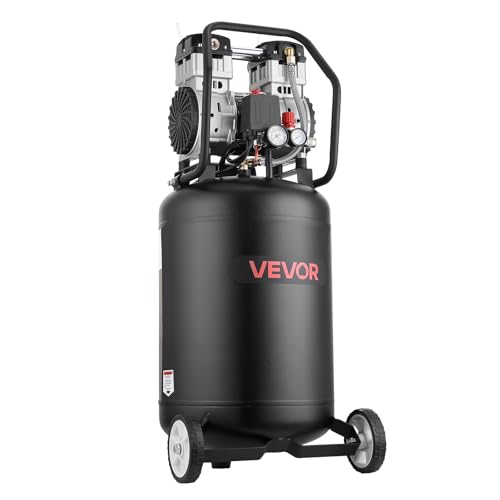 VEVOR 20-Gallon 2 HP Air Compressor
|
8.3/10 | Buy | |
 VEVOR 10.6 CFM Dual-Cylinder Air Compressor
|
7.8/10 | Buy |
Stealth SAQ-1234 2-Gallon Air Compressor
Operating at under 60 decibels, this compact unit provides exceptionally quiet performance for garage DIY tasks, brad nailing, and tire inflation. Its oil-free motor reaches up to 125 PSI while keeping routine maintenance to a minimum.
Pros
- Quiet operation suitable for indoor workspaces
- Maintenance-free oil-free pump design
- Durable steel tank with rubber vibration dampening
- Reliable pressure recovery for intermittent nailing
Cons
- Relatively heavy to carry at nearly 42 pounds
- Small two-gallon tank limits continuous tool use
- Modest 1.8 CFM flow rate at 90 PSI
Limodot 1-Gallon Quiet Air Compressor
Engineered for low noise output at 68 decibels, this 1-horsepower Limodot compressor delivers quick recovery times and an oil-free motor for light pneumatic tools. Its compact form factor and bundled 11-piece accessory kit make it a practical option for trim carpentry and home workshop projects.
Pros
- Quiet 68 dB operation suitable for indoor jobs
- Rapid 15-second pressure recovery time
- Oil-free design requires minimal routine maintenance
- Generous accessory bundle included out of the box
- Reliable cold-weather starting capability
Cons
- Small 1-gallon capacity restricts continuous heavy use
- Relatively heavy at nearly 30 pounds
ALL-TOP 12V 7.06 CFM Air Compressor
Built for heavy-duty off-road rigs and large tires, this 12V inflator delivers a rapid 7.06 CFM output with auto-thermal protection. Its generous 26-foot rubber hose and rugged metal housing make it well suited for remote trail maintenance.
Pros
- High 7.06 CFM flow rate fills large tires quickly
- Long 26-foot hose easily reaches all vehicle tires
- Auto-thermal shutoff prevents motor from overheating
- Durable aluminum cylinder enhances heat dissipation
- Includes storage bag and versatile nozzle adapters
Cons
- Heavy 16-pound weight makes transport cumbersome
- Short 6.5-foot power cord requires proximity to vehicle battery
- Limited to 12V vehicle power without AC compatibility
ALL-TOP 12V Dual-Cylinder Air Compressor
The ALL-TOP 12V Dual-Cylinder Air Compressor delivers a manufacturer-rated 12.35 CFM airflow and 150 PSI maximum pressure with an integrated digital LCD auto-stop controller. Powered via direct battery alligator clamps, this heavy-duty portable pump is built for overlanders, off-road enthusiasts, and truck owners needing rapid tire reinflation on remote trails.
Pros
- High rated airflow output of 12.35 CFM (350 L/min) significantly speeds up multi-tire trail reinflation
- Accurate digital auto-stop feature prevents over-inflation without requiring manual gauge checks
- Robust dual-cylinder motor with 221-degree Fahrenheit thermal shutdown and 120A circuit protection
- Anti-vibration metal base can be left portable or permanently bolted into an overland rig
Cons
- Substantial 26.5-pound weight makes it bulkier to stow than compact emergency inflators
- High current draw requires hooking directly to vehicle battery terminals with the engine running
- Normal 2 to 4 pause intervals during the digital inflation cycle may surprise unfamiliar users
VEVOR 8-Gallon 1HP Air Compressor
Built with an 8-gallon steel tank and a maintenance-free motor, this compressor delivers consistent airflow for DIY nailing, inflating, and painting tasks. Automatic shut-off and thermal overload protection make it a durable, practical pick for residential garages.
Pros
- Maintenance-free oil-free pump mechanism
- Durable three-layer steel tank construction
- Automatic thermal shut-off and safety relief valves
- Adequate airflow for standard pneumatic tools
Cons
- Heavy at over 45 pounds for frequent carrying
- 80 dB operation remains noticeable in closed spaces
- 120 PSI ceiling limits continuous high-demand tools
VEVOR 2HP Oil-Free Air Compressor Motor
Delivering 5.2 CFM at 90 PSI with a 1680 RPM motor, this oil-free VEVOR pump head provides clean, low-maintenance air output for garage shops and pneumatic tools. Its cold-rolled steel build and dedicated cooling fans make it a dependable drop-in motor for woodworking, spray painting, and automotive repairs.
Pros
- Low-maintenance oil-free operation
- Generates 5.2 CFM at 90 PSI
- Sturdy steel and aluminum construction
- Effective cooling via built-in fans and heat sinks
Cons
- Heavier unit at over 36 pounds to install
- Single-stage design limits peak pressure to 145 PSI
- At 78 dB, operating volume is still noticeable indoors
WOLFBOX HyperFlow60D 12V Air Compressor
Built for off-roaders and overland rigs, this dual-cylinder inflator delivers 5.1 CFM of airflow alongside an impressive 60-minute continuous runtime. Its digital LED gauge and automatic shut-off simplify airing up large 4x4 and trailer tires without constant monitoring.
Pros
- High 5.1 CFM airflow enables fast inflation
- Generous 60-minute runtime handles multiple large tires
- Automatic shut-off prevents accidental over-inflation
- Long 25.4-foot air hose reaches full-size rigs
- Universal 1/4-inch NPT connector fits standard tools
Cons
- Heavier build at 18.1 pounds to transport
- Bulky dimensions take up notable cargo space
VEVOR 20-Gallon 2 HP Air Compressor
Built for home workshops and auto DIYers, this vertical unit pairs an oil-free 2 HP motor with steady 4.5 SCFM output at 90 PSI. Its wheeled upright design saves floor space while supplying reliable airflow for tire inflation, nailing, and light spray painting.
Pros
- Zero-maintenance oil-free motor design
- Fast tank fill time under four minutes
- Solid 4.5 SCFM flow at 90 PSI
- Heavy-gauge carbon steel tank construction
- Compact vertical profile saves shop floor space
Cons
- Heavy unit weighing nearly 91 pounds
- Max pressure limited to 125 PSI
- Targeted primarily at light-duty pneumatic tasks
VEVOR 10.6 CFM Dual-Cylinder Air Compressor
Built for large trucks, 4x4s, and RVs, this high-output dual-cylinder inflator pushes up to 10.6 CFM of airflow to reseat or inflate heavy-duty tires rapidly. An extended 26-foot air hose and integrated thermal cutoff make trailside tire management reliable and straightforward.
Pros
- High 10.6 CFM airflow inflates large tires quickly
- Generous 26-foot air hose offers excellent reach
- Built-in thermal protection safeguards the motor
- Includes dedicated storage bag and nozzle adapters
Cons
- Heavier than standard inflators at over 25 pounds
- Power cord is relatively short at 6.5 feet
- Mechanical gauge lacks precise digital readout
Generator Sizing, Electrical Dynamics, and Safe Operation for Air Compressors
Connecting an air compressor to a portable generator is completely practical, provided the generator produces adequate starting wattage to overcome initial mechanical pump resistance. Electric air compressors rely on high-torque motors that demand substantially more current during startup than during continuous pumping. When a generator cannot deliver this brief electrical surge, its engine bogs down, system voltage drops, and the compressor fails to start. Knowing how to calculate running wattage, manage inrush current spikes, and choose suitable generator types ensures your pneumatic tools run reliably on any jobsite.
Understanding Inrush Current and Electric Motor Startup Surge
Electric air compressors use induction motors designed to deliver strong rotational torque against mechanical backpressure. When you switch an air compressor on, the stationary motor rotor creates a momentary condition known as Locked Rotor Amps (LRA). During these opening fractions of a second, the motor draws three to five times its normal running amperage to overcome inertia and spin up. While standard household utility power absorbs this instantaneous spike effortlessly, a portable generator relies strictly on its engine displacement and alternator headroom to supply that surge. Without sufficient transient overhead, the generator cannot maintain stable electrical frequency.
If a generator lacks sufficient transient capacity, this heavy current draw causes an immediate drop in output voltage known as voltage sag. Voltage drop deprives the compressor motor of essential torque right when resistance is highest. Instead of accelerating cleanly to full operating speed, the motor hums, overheats, and stalls in place. Within seconds, the compressor thermal overload switch or the generator circuit breaker will trip to prevent winding damage. Accommodating this startup inrush phase is the single most important rule when configuring off-grid pneumatic power.
Calculating Wattage: Running Watts Versus Peak Surge Capacity
Accurately sizing a generator for an air compressor requires calculating both continuous running watts and peak starting watts from motor specifications. Running wattage equals voltage multiplied by full-load running amperage. For example, a compact oil-free compressor drawing 8 running amps on a standard 120-volt circuit requires 960 continuous running watts. Factoring in a typical three-times startup surge multiplier means that same unit demands roughly 2,880 peak starting watts the instant the motor kicks on. Checking the motor nameplate for running amperage provides the foundational number for these power calculations.
Equipment size dramatically shifts these electrical requirements across different air compressor categories. A compact 3/4 horsepower unit like the Stealth 2-gallon oil-free compressor typically demands under 1,000 running watts and around 2,200 starting watts. Stepping up to 1 horsepower models like the Limodot 1-gallon or VEVOR 8-gallon steel tank units requires at least 2,500 to 3,000 peak surge watts. Larger 2 horsepower shop models, such as the VEVOR 20-gallon portable compressor or standalone 2 horsepower pump heads, draw 14 to 15 running amps, demanding at least 1,800 running watts and 4,500 to 5,500 starting surge watts. Adding a 25 percent buffer beyond your calculated surge figure prevents generator engine bogging during unexpected load spikes.
Inverter Generators Versus Conventional Open-Frame Models
Choosing between an inverter generator and a conventional open-frame model involves distinct tradeoffs in surge tolerance and electrical quality. Traditional open-frame generators feature heavy rotating alternators that store mechanical inertia inside their physical flywheel mass. This mechanical momentum helps open-frame units absorb severe inrush spikes from compressor induction motors without dropping engine speed as drastically. However, open-frame units produce higher Total Harmonic Distortion, which can generate electrical noise and heat in sensitive electrical circuits. They also run at constant high speeds, producing significant noise on quiet jobsites.
Digital inverter generators produce exceptionally clean power with Total Harmonic Distortion levels below 3 percent, closely matching pure household utility sine waves. This clean power protects contemporary digital controls, including LCD pressure displays and automatic preset switches found on modern compressors. Inverter generators are also noticeably quieter, making them pleasant for indoor or residential jobsite tasks. However, inverter generators use sensitive electronic overload protectors that trip quickly if an induction surge exceeds rated limits. Locking an inverter generator out of eco-throttle mode ensures immediate engine response when the compressor cycles on under pressure.
The Critical Role of Unloader Valves in Generator Starts
The mechanical component that most directly impacts generator starting performance is the compressor unloader valve. Positioned between the pump head and the tank check valve, the unloader valve releases trapped air pressure from the discharge line whenever the motor stops. When working properly, the valve emits a distinct, sharp hiss of escaping air when the pressure switch shuts off. Purging this trapped pressure allows the motor to restart against atmospheric pressure rather than fighting static tank pressure on its next cycle. This momentary pressure release drastically lowers motor startup torque.
If an unloader valve fails to release line pressure, the compressor motor faces a high-resistance deadhead startup condition. Starting an air compressor against 90 or 100 PSI of trapped head pressure multiplies motor starting torque demand and inrush current draw. Even a large generator capable of starting the compressor empty will frequently stall or trip its breaker under deadhead load. A failing tank check valve causes similar issues by allowing stored tank air to leak back into the discharge tube. Checking that the discharge line fully depressurizes between cycles preserves generator stability and motor life over extended jobsite use.
Powering 12V High-Volume Offroad Compressors Versus 120V AC Units
Jobsite and overland pneumatic setups often involve 12-volt direct current (DC) inflators rather than standard 120-volt alternating current (AC) workshop compressors. Heavy-duty portable units, including the ALL-TOP dual cylinder inflators, the WOLFBOX HyperFlow60D, and VEVOR 10.6 CFM overland pumps, are engineered for high-volume tire inflation. These specialized units do not connect to 120-volt generator outlets and cannot run from standard generator 12-volt accessory ports. Their internal wiring is designed specifically for high-amperage direct battery connection.
High-volume 12-volt air compressors equipped with 1080-watt motors draw massive direct current, frequently pulling 45 to 90 amps under working pressures up to 150 PSI. The auxiliary 12-volt DC outlets on portable generators are designed strictly for low-amperage battery maintenance, typically maxing out around 8 to 10 amps. Attempting to run a high-output offroad inflator directly from a generator DC outlet will blow internal fuses or overheat wiring. To power these compressors off-grid, connect heavy alligator clamps directly to a 12-volt vehicle battery while using the generator to keep the battery charged via an auxiliary charger. This two-stage setup isolates the heavy DC draw while utilizing generator power to sustain battery voltage.
Extension Cord Voltage Drop and Safe Jobsite Wiring
Connecting an air compressor to a generator using an undersized extension cord is a frequent cause of off-grid motor failure. Electrical current flowing through small copper conductors encounters resistance, which produces a measurable voltage drop over long distances. When an induction motor demands massive starting current through a thin cord, available voltage plummets at the motor terminals. This voltage loss limits starting torque and causes the motor to draw higher current for longer durations.
Running a compressor on a lightweight 16-gauge or 14-gauge extension cord can cause line voltage to drop from 120 volts to under 100 volts during startup. Severe voltage drops force the motor to draw higher current to compensate, generating extreme winding heat and tripping thermal protectors. The safest jobsite practice is placing the compressor right beside the generator using its heavy factory power cord. If extension is unavoidable, use a short 10-gauge or 12-gauge cord, or run longer 3/8-inch air hoses instead of electrical cords to eliminate voltage loss completely. Air hoses transport pneumatic energy across long distances with virtually no electrical risk.
Cold Weather Starting and Environmental Challenges
Cold weather introduces severe mechanical resistance that complicates running an air compressor on portable generator power. In freezing conditions, pump lubricating oil thickens dramatically in splash-lubricated units, forcing the electric motor to push against viscous fluid. Even oil-free compressors experience stiff Teflon piston seals and sluggish valve flappers when temperatures drop below freezing. This elevated friction raises baseline starting torque, forcing the compressor to draw higher startup current on every single cycle. In unheated winter workspaces, this extra resistance can easily push starting draw past a generator limit.
Cold temperatures also hinder generator performance by slowing engine throttle response when electrical loads engage suddenly. A cold generator engine cannot ramp up throttle fast enough to prevent stalling during sudden inrush spikes. High elevation presents an additional challenge, as thinner atmospheric air reduces generator engine horsepower by roughly 3.5 percent for every 1,000 feet of altitude. Storing the compressor in a warm space before use, warming up the generator fully, and accounting for elevation derating ensures reliable cold-weather starting. Bringing equipment up to ambient room temperature before starting makes a tremendous difference.
Step-by-Step Generator Startup and Operational Sequence
Following a careful startup sequence prevents equipment strain and avoids nuisance breaker trips on portable power setups. Position your generator outdoors on a level, dry surface well away from windows, doors, and flammable materials. Inspect engine oil and fuel levels, and confirm that all generator output breakers are switched off before starting the engine. Allowing clear ventilation around the generator exhaust prevents dangerous carbon monoxide accumulation and keeps the engine cool.
Start the generator engine and let it run unloaded for three to five minutes until it reaches stable operating temperature and smooth governed speed. While the engine warms up, open the compressor tank drain valve to exhaust any residual air pressure. Starting an air compressor against zero tank pressure allows the pump to spin up freely with minimal resistance, significantly reducing initial electrical surge on the generator. This zero-pressure start gives the generator alternator an easy ramp-up into full rotation.
Close the drain valve securely once the tank is fully empty, and ensure the compressor power switch is in the off position. Plug the compressor directly into the generator receptacle, turn the generator circuit breaker on, and disengage any eco-throttle modes. Turn the compressor switch on, allowing the unit to charge smoothly to cut-out pressure while monitoring the generator for signs of excessive engine surging or voltage instability. Once the compressor reaches cut-out pressure, verify that the unloader valve vents discharge line pressure cleanly.
Equipment Sizing and Duty Cycle Takeaways
Matching air compressor specifications to generator capabilities requires considering tank volume, CFM output, and operational duty cycles. For light finish nailing and tire inflation, low-noise portable compressors provide excellent off-grid usability. Compact units like the Stealth 2-gallon compressor operating at 60 decibels or the Limodot 1-gallon unit at 68 decibels feature efficient motors that pair easily with smaller 2,500-watt inverter generators. Their low sound output also prevents noise fatigue on outdoor jobsites. These compact options represent ideal grab-and-go setups for remote carpentry.
For tasks requiring higher sustained airflow, larger tanks provide an essential buffer that reduces generator cycling frequency. Models with larger reservoirs, such as the VEVOR 8-gallon or 20-gallon portable units, hold enough air to handle intermittent tool demands without forcing the motor to restart constantly. Fewer motor starts directly reduce the number of high-amp inrush surges your generator must absorb over a workday. Always calculate surge requirements carefully, maintain mechanical unloader valves, and drain tank condensation regularly to enjoy dependable off-grid pneumatic power on every project. Following these basic electrical guidelines ensures long equipment life and steady air pressure wherever you work.
About the author
Tom Scalisi brings more than two decades of experience in construction, building maintenance, contracting, and hands-on tool use. His practical understanding of power tools, automotive work, repairs, and jobsite equipment helps readers evaluate compressors based on real workloads rather than specifications alone.