
Can I Use 5w30 in My Air Compressor? Risks, Oil Types, and Guidelines
Wondering can i use 5w30 in my air compressor? Learn why motor oil causes pump damage and find the proper compressor oil for your garage setup in October 2026.
 By Glenda Taylor
Updated October 8, 2026
By Glenda Taylor
Updated October 8, 2026
Maintaining proper crankcase lubrication is essential for keeping workshop air compressors running smoothly during demanding tasks. Reaching for an open bottle of automotive motor oil from the garage shelf often seems convenient, leading many equipment owners to wonder: can i use 5w30 in my air compressor? Automotive motor oil protects internal combustion engines under unique highway driving conditions, but reciprocating air compressor pumps operate in an entirely different physical environment. Air compressors subject crankcase fluid to rapid splash lubrication and high operating temperatures without the benefit of an automotive oil filter.
Standard multi-grade automotive lubricants contain specialized chemical detergents and polymer modifiers that can trigger severe complications inside a compressor pump. These additives often cause premature carbonization on delicate valve plates, rapid oil breakdown under mechanical shear, and accelerated cylinder wear. Understanding why dedicated non-detergent oils are necessary protects your equipment investment, preserves steady air pressure, and avoids unexpected pump breakdowns. Taking time to evaluate your compressor pump design ensures reliable performance across all your pneumatic projects.
| Award | Product | ACR Score About ACR ScoreThe ACR Score is our own rating from 0 to 10, based on performance, design and build, ease of use, and value. It reflects independent research and is never influenced by manufacturers, retailers, or affiliate commissions. Learn more › | |
|---|---|---|---|
| Best Overall |
AAIN 6.3-Gallon 1.5HP Air Compressor
|
8.8/10 | Buy |
| Best Value |
 DEWALT 60-Gallon Stationary Air Compressor
|
7.8/10 | Buy |
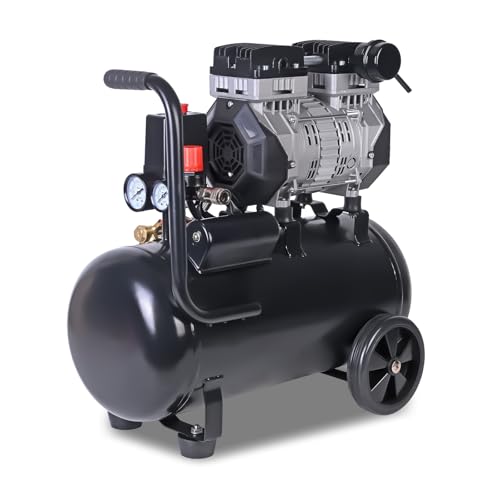
AAIN 6.3-Gallon 1.5HP Air Compressor
Delivering up to 6 CFM at 116 PSI, this unit fills its 6.3-gallon tank in under three minutes while running at an unobtrusive 70 dB. Its oil-free motor makes it a low-maintenance setup for garage tire inflation and light pneumatic chores.
Pros
- Quiet operation rated at only 70 dB
- Fast tank fill time under three minutes
- Oil-free pump eliminates messy maintenance
- Solid airflow delivery up to 6 CFM
Cons
- Maximum working pressure capped at 116 PSI
- Heavy to move around at 46.3 pounds
- Limited to short-duty runs with air tools
DEWALT 60-Gallon Stationary Air Compressor
The DEWALT 60-gallon vertical stationary air compressor pairs a 3.7 HP 240V electric motor with an oil-lubricated pump delivering 11.5 SCFM at 90 PSI and 155 max PSI. It provides substantial air reserves for workshop mechanics, auto hobbyists, and woodworkers operating demanding pneumatic tools.
Pros
- Substantial airflow rating of 11.5 SCFM at 90 PSI handles demanding pneumatic tools
- Generous 60-gallon vertical tank stores ample air reserves to reduce pump cycling
- Oil-lubricated pump design offers dependable mechanical durability for shop use
- Compact 24-inch by 24-inch footprint minimizes dedicated floor space in garages and workshops
Cons
- Stationary 239-pound design is not intended for jobsite mobility or easy transport
- Requires a dedicated 240V electrical connection, preventing use on standard 120V household outlets
- Oil-lubricated pump requires periodic oil level monitoring and scheduled maintenance
Air Compressor Lubrication Guide: Risks, Compatibility, and Alternatives
Evaluating whether to use standard automotive engine oil in a workshop air compressor requires understanding how compressor pumps differ from vehicle engines. Pouring automotive lubricants into a reciprocating pump frequently leads to severe operational headaches, ranging from carbon buildup on valves to complete cylinder seizure. The short answer to whether you can use 5W-30 in your compressor is almost universally no, especially when dealing with standard automotive formulations containing detergent packages. Taking time to inspect your pump specifications protects your investment and ensures consistent pneumatic performance across all workshop tools.
The Short Answer: Why Automotive 5W-30 Is Not Recommended
Standard automotive 5W-30 motor oil is specifically formulated for internal combustion engines rather than reciprocating air compressors. Automotive engines rely on forced-feed pressurized lubrication circuits, oil filters, and operating temperatures that differ drastically from ambient workshop air compression. When an equipment owner asks, can i use 5w30 in my air compressor, the general recommendation from pump manufacturers is an emphatic negative. Using engine oil introduces chemical additives that active compressor pumps cannot tolerate over extended run cycles.
Reciprocating pumps depend on splash lubrication pins attached to the connecting rods to fling oil across cylinder walls and wrist pins. Unlike car engines that burn fuel and produce combustion blow-by, air compressors ingest atmospheric air and compress it into high-pressure storage tanks. The operating physics inside an air compressor crankcase demand a clean, non-detergent fluid with stable thermal properties. Substituting automotive multi-grade oil for dedicated compressor oil compromises the structural integrity of internal pump components.
The Hazard of Detergent Additives in Filterless Crankcase Systems
The primary chemical reason automotive motor oils fail inside air compressors is the presence of detergent additives. Engine oils contain high concentrations of metallic detergents, primarily calcium and magnesium compounds, designed to scrub carbon and keep combustion contaminants suspended in the oil. In an automobile, suspended soot and carbon travel through an oil filter where they are trapped and removed from circulation. Air compressors lack oil filters, meaning any suspended contaminant remains in the crankcase indefinitely.
Detergents in 5W-30 cause dirt, metallic dust, and moisture to circulate continuously through the pump journals and cylinder sleeves. Instead of settling safely to the bottom of the crankcase sump, abrasive particles grind against wrist pins, needle bearings, and cylinder walls. This abrasive slurry accelerates internal wear, causing scoring on cast-iron pump sleeves and loose clearances on connecting rod journals. Non-detergent compressor oils, by contrast, allow heavy particulates to fall harmlessly to the sump floor where they remain until the next oil flush.
Viscosity Breakdown and Polymer Shear in Reciprocating Pumps
Multi-grade engine oils like 5W-30 achieve their wide viscosity range through artificial polymer additives known as viscosity index improvers. These coiled polymers expand as temperature rises, preventing the base oil from thinning out excessively under engine operating heat. However, the mechanical shearing action generated by reciprocating compressor pistons and scraper rings exerts severe physical stress on these polymer chains. Over repeated compression cycles, mechanical shear tears the polymer chains apart, causing the oil to lose its designated operating viscosity.
Once the polymer chains break down, 5W-30 rapidly thins out below the minimum hydrodynamic film thickness required to separate moving metal parts. Thin oil slips past the piston rings, entering the compression chamber and traveling directly into your air lines, air tools, or paint sprayers. Furthermore, thinned oil fails to cushion the connecting rod bearings during the intake and compression strokes. Reciprocating pumps require straight-weight oils, typically ISO 68 or ISO 100, which maintain stable viscosity purely through high-quality base oil stock without fragile polymer improvers.
Moisture Contamination, Emulsification, and Foaming Risks
Every cubic foot of atmospheric air drawn into a compressor crankcase carries ambient humidity. During normal operation, air compressors produce significant quantities of water condensation as ambient air cools inside the crankcase and air tank. Detergent additives in automotive 5W-30 oil act as emulsifiers, binding water molecules directly into the lubricant. This process turns the oil into a thick, milky froth resembling mayonnaise rather than a clean lubricating fluid.
Emulsified motor oil loses its load-bearing capability almost instantly, allowing metal-to-metal contact across crankshaft journals. In addition to emulsification, detergents cause the oil to foam aggressively when struck by splash dippers spinning at high revolutions per minute. Aerated oil foam cannot maintain a protective boundary layer on cylinder walls or wrist pins. Dedicated air compressor oils contain robust anti-foaming agents and demulsifying additives that actively separate water, allowing clean oil to lubricate vital components while moisture settles to the bottom of the sump for drainage.
Discharge Valve Carbonization and High-Heat Flash Points
Cylinder head temperatures on single-stage and two-stage air compressors routinely reach extreme levels, often exceeding 250 to 300 degrees Fahrenheit at the discharge ports. Automotive 5W-30 engine oil features a lower flash point and lower thermal stability than dedicated non-detergent compressor lubricants. When microscopic droplets of 5W-30 splash past the piston rings and encounter red-hot discharge valve plates, the oil vaporizes and cooks onto the metal surfaces. This rapid thermal degradation leaves behind brittle, baked-on carbon crusts known as valve carbonization.
Carbon deposits prevent intake and exhaust reed valves from sealing completely against the valve plate. When a discharge valve fails to seat cleanly, hot compressed air leaks back into the cylinder during the intake stroke. This re-compression of already heated air triggers rapid thermal runaway, driving head temperatures higher and causing severe loss of delivered CFM. In extreme cases, baked carbon chunks flake off and jam open valves, or volatile oil vapor creates a combustion hazard inside the discharge manifold and air tank.
Oil-Free vs. Oil-Lubricated Compressors: Knowing Your Pump Design
Before worrying about oil viscosity, every compressor owner must verify whether their pump actually requires lubricating fluid. Many modern portable units, such as the AAIN Ultra Quiet Air Compressor, 6.3 Gallon, feature completely oil-free pump mechanisms. The AAIN unit utilizes a 1.5HP dual-piston induction motor engineered with low-friction Teflon or PTFE piston sleeves and sealed precision bearings. Pouring any oil, whether 5W-30 or dedicated compressor fluid, into an oil-free model like the AAIN will instantly ruin the dry PTFE cylinder sleeves, gum up the intake filters, and void the equipment warranty.
Conversely, heavy-duty stationary workshop units, such as the DEWALT 60 Gallon Vertical Air Compressor, 3.7 HP, feature rugged splash-lubricated cast-iron pumps built for continuous shop duty. The DEWALT stationary pump delivers 11.5 SCFM at 90 PSI and operates up to 155 PSI, creating intense internal heat that demands proper crankcase lubrication. For large cast-iron pumps like the DEWALT, using the exact manufacturer-specified compressor oil ensures the 3.7 HP motor can turn the pump freely without thermal overload or bearing seizure. Always inspect your compressor pump housing for an oil fill plug and sight glass before purchasing or adding any lubricant.
What Specific Oils Should You Actually Use in Your Compressor?
Choosing the correct lubricant requires matching the ambient temperature of your workshop to the appropriate ISO viscosity grade. For moderate indoor workshop temperatures ranging between 40 and 90 degrees Fahrenheit, most single-stage and two-stage reciprocating pumps require an ISO 100 non-detergent industrial compressor oil, which equates roughly to an SAE 30 weight. In unheated winter garages or sub-freezing jobsite conditions, manufacturers typically specify an ISO 68 non-detergent compressor oil, which corresponds roughly to an SAE 20 weight.
Full synthetic non-detergent compressor lubricants offer the highest level of protection across fluctuating workshop environments. Synthetic compressor oils resist carbonization at discharge temperatures up to 400 degrees Fahrenheit while maintaining fluid pour characteristics down to sub-zero temperatures. Unlike automotive synthetic oils, synthetic compressor fluids are completely free of metallic detergents and multi-weight viscosity improvers. Investing in a bottle of genuine non-detergent reciprocating compressor oil provides clean lubrication, protects reed valves, and maximizes pump service life.
What to Do If You Accidentally Added 5W-30 to Your Air Compressor
If you inadvertently poured automotive 5W-30 into an oil-lubricated compressor crankcase, do not panic, but do not operate the pump under heavy pneumatic load. Operating the unit for extended periods with motor oil will coat internal reed valves in carbon and turn crankcase moisture into emulsified sludge. The first step is disconnecting the compressor from electrical power and ensuring the air tank is completely depressurized using the tank drain valve. Once safe, position a drain pan beneath the pump crankcase and remove the oil drain plug.
Allow the contaminated 5W-30 to drain completely, inspecting the drained fluid for metallic glitter or thick white emulsion. To flush residual detergents, fill the crankcase halfway with fresh ISO 100 non-detergent compressor oil and replace the drain plug. Run the compressor without air load for two to three minutes by opening the tank drain valve or leaving an outlet coupler open, allowing the clean oil to circulate and lift remaining detergent residues. Drain the flushing oil while warm, re-install the drain plug with fresh thread sealant, and fill the crankcase to the red center dot on the oil sight glass with proper compressor lubricant.
Cold-Weather Starting and Breaker-Tripping Considerations
Many DIYers consider using 5W-30 because of its low-temperature pour point during cold winter mornings. Heavy SAE 30 or ISO 100 oil thickens in unheated garages, placing tremendous rotational drag on the electric motor during startup. When an induction motor struggles to turn a stiff, cold pump, startup inrush amperage spikes significantly, frequently tripping standard 15-amp or 20-amp garage circuit breakers. While 5W-30 motor oil flows easily in freezing conditions, the detergent hazards make it the wrong solution for cold startup challenges.
The safe solution for winter garage operation is switching to an ISO 68 non-detergent compressor oil or a dedicated full-synthetic compressor lubricant. Full synthetic ISO 68 compressor oils flow smoothly at sub-zero temperatures without requiring detergent additives or polymer viscosity improvers. Additionally, warming the garage workspace slightly before startup or bleeding all tank head pressure through the unloader valve allows the pump to spin freely without overloading the electrical circuit. Never sacrifice valve and bearing longevity by substituting automotive motor oil merely to overcome cold morning startup drag.
Long-Term Maintenance Routines and Manufacturer Warranty Protection
Maintaining an oil-lubricated compressor requires consistent inspection of both oil level and oil clarity through the crankcase sight glass. The oil level should always sit squarely in the center of the indicator dot; running a pump low causes splash starvation, while overfilling forces excess fluid past piston rings and into downstream air tools. Most manufacturers recommend changing compressor oil after the initial 20 to 50 operating hours of pump break-in, followed by regular oil changes every 300 to 500 hours or annually.
Using automotive motor oil in your air compressor pump routinely voids manufacturer warranties on major equipment brands. Service centers can quickly detect detergent additives, severe valve carbonization, or emulsified crankcase sludge when inspecting failed pumps submitted for warranty claims. Along with maintaining proper non-detergent lubricants, make a daily habit of purging tank condensation through the bottom drain valve to prevent internal corrosion. Practicing responsible maintenance routines keeps your reciprocating pump operating smoothly, protects sensitive pneumatic tools from oil blow-by, and ensures dependable compressed air for years to come.
About the author
Glenda Taylor has extensive experience in residential construction, remodeling, home improvement, and tool use. Her practical approach to equipment evaluation focuses on usability, performance, safety, and value—helping DIYers and workshop users make better-informed decisions about compressors and related tools.