
Can a Portable Generator Power an Air Compressor? A Practical Guide
Can a portable generator power an air compressor? Match generator output to the compressor’s startup and running needs, with practical guidance for November 2026.
 By Clint DeBoer
Updated November 21, 2026

A compressor that starts reliably on a household outlet may behave differently on a portable generator because the motor can draw extra power during startup. The answer to can a portable generator power an air compressor is yes, provided the generator can supply the compressor’s required starting and running power and the connection follows both manufacturers’ instructions. A generator that is too small may overload, shut down, or struggle to start the motor. The compressor’s power source matters too: a gas-powered compressor does not need a generator to run its pump.
Check the compressor nameplate or manual for electrical requirements, then compare them with the generator’s continuous and surge ratings rather than relying on its advertised peak output alone. Also consider the tool’s air demand, because a generator can power a compressor without making the compressor capable of supplying enough air for every pneumatic tool. The gas-powered options listed below include different tank capacities and stated output details, while the tire inflators use separate power arrangements. For broader context, see our portable compressors for air tools guide and AC/DC portable inflator overview.
Top Products
| Award | Product | ACR Score About ACR ScoreThe ACR Score is our own rating from 0 to 10, based on performance, design and build, ease of use, and value. It reflects independent research and is never influenced by manufacturers, retailers, or affiliate commissions. Learn more › | |
|---|---|---|---|
| Best Overall |
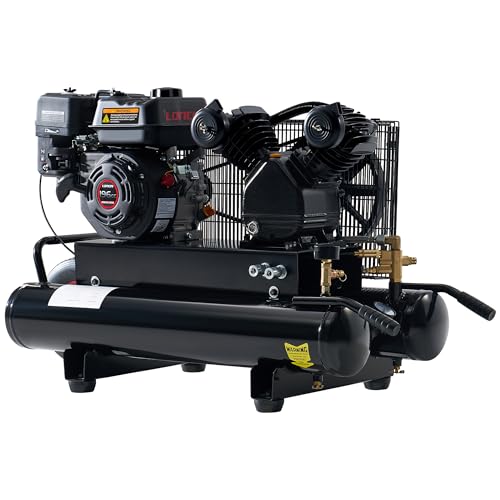
Albott 6.5HP 8-Gallon Gas Air Compressor
|
9.1/10 | Buy |
| Best Value |
 VEVOR 9-Gallon 6.5HP Gas Air Compressor |
8.9/10 | Buy |
| Best Budget |
 CARSUN AC/DC Portable Tire Inflator |
8.8/10 | Buy |
| Best Premium |
 Albott 13HP Gas Air Compressor |
8.6/10 | Buy |
 WOLFBOX HyperFlow60D 12V Air Compressor |
8.3/10 | Buy | |
 EGO Power+ IF1600 160 PSI Inflator |
8.0/10 | Buy | |
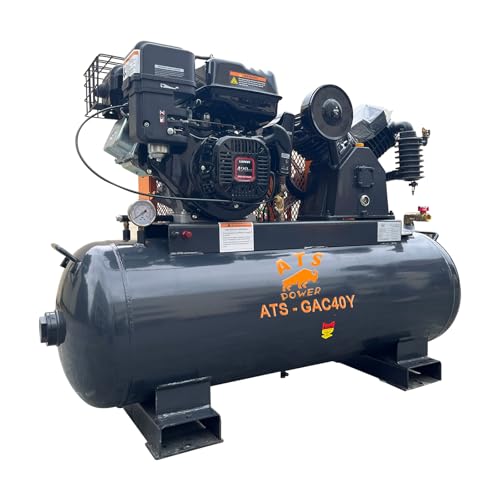 Generic 40-Gallon 15HP Gas Air Compressor |
8.0/10 | Buy |
Albott 6.5HP 8-Gallon Gas Air Compressor
Built for off-grid job sites, this gas-powered unit delivers reliable pneumatic power with a 6.5 HP engine and a two-cylinder cast iron pump. Dual air outlets let two operators run tools simultaneously without depending on electrical hookups.
Pros
- Rugged cast iron pump and frame construction
- Dual air outlets support two simultaneous tools
- Gas-powered design eliminates need for electrical outlets
- Automatic safety valve ensures steady pressure management
Cons
- Very heavy at 166 pounds
- Modest 115 PSI maximum working pressure
- Substantial footprint requires ample vehicle cargo space
VEVOR 9-Gallon 6.5HP Gas Air Compressor
Built for remote jobsites without electrical access, this gas-driven unit supplies a dependable 9 CFM output from its 6.5HP engine. Dual outlets let two operators work simultaneously, though managing its 145-pound frame demands notable physical effort.
Pros
- High 9 CFM output drives demanding air tools
- Dual outlets support two operators at once
- Independent gas power works anywhere outdoors
- Fast 105-second tank fill time
Cons
- Heavy weight exceeds 145 pounds
- Maximum pressure capped at 115 PSI
- Produces gas exhaust requiring strict outdoor use
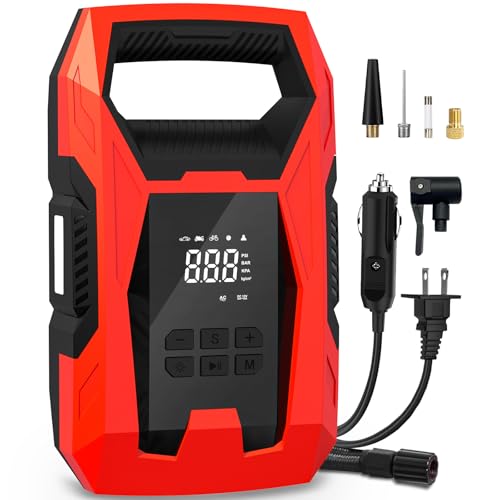
CARSUN AC/DC Portable Tire Inflator
Equipped with dual power inputs for 110V household outlets and 12V car sockets, this portable compressor delivers up to 150 PSI with auto-shutoff presets. It is a practical solution for drivers, cyclists, and households needing dependable inflation for standard vehicle tires and sports gear.
Pros
- Dual 110V AC and 12V DC power compatibility
- Automatic shutoff with memory preset function
- Clear backlit screen visible in direct sunlight
- Integrated LED light for nighttime emergencies
- Includes multiple adapters and dedicated carrying bag
Cons
- Not compatible with truck, tractor, or SUP board tires
- Requires 10-minute cooldown after 15 minutes of use
Albott 13HP Gas Air Compressor
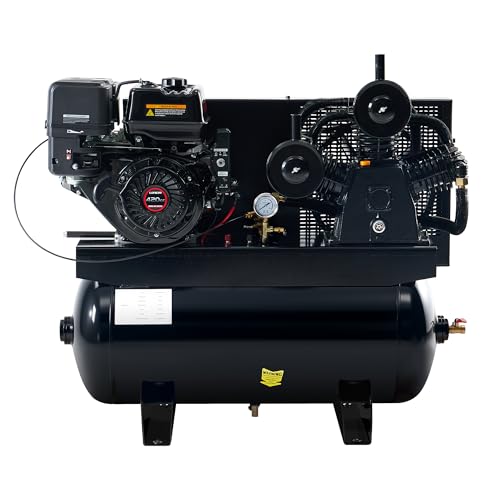
The Albott 13HP Gas Air Compressor combines a 30-gallon ASME-certified tank with a 3-cylinder cast iron pump delivering 18 CFM at 90 PSI and up to 180 PSI maximum pressure. It is designed for service truck operators, mobile mechanics, and remote jobsite crews needing high-volume pneumatic airflow without electrical grid access.
Pros
- Delivers a listed 18 CFM at 90 PSI to easily operate high-demand pneumatic tools like heavy impact wrenches and spray guns off the grid
- Rugged 3-cylinder cast iron pump and frame reduce deformation and wear under demanding work conditions
- Substantial 30-gallon ASME-certified horizontal tank provides a reliable air buffer and reduces engine cycle frequency
- Total independence from 120V electrical outlets, eliminating blown household breakers and extension cord voltage drops
Cons
- Substantial dry weight of 344 pounds requires mechanical lifting equipment or permanent truck bed mounting rather than hand carrying
- Internal combustion engine produces exhaust fumes and high sound levels, restricting operation strictly to well-ventilated outdoor areas
- Requires dual routine maintenance schedules for both the gas engine and the oil-lubricated 3-cylinder compressor pump
WOLFBOX HyperFlow60D 12V Air Compressor
Built for off-roaders and overland rigs, this dual-cylinder inflator delivers 5.1 CFM of airflow alongside an impressive 60-minute continuous runtime. Its digital LED gauge and automatic shut-off simplify airing up large 4x4 and trailer tires without constant monitoring.
Pros
- High 5.1 CFM airflow enables fast inflation
- Generous 60-minute runtime handles multiple large tires
- Automatic shut-off prevents accidental over-inflation
- Long 25.4-foot air hose reaches full-size rigs
- Universal 1/4-inch NPT connector fits standard tools
Cons
- Heavier build at 18.1 pounds to transport
- Bulky dimensions take up notable cargo space
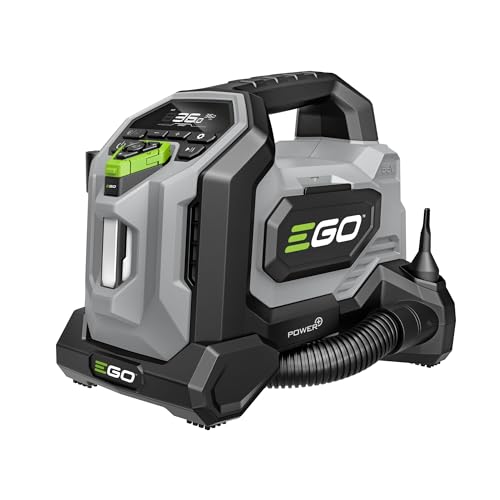
EGO Power+ IF1600 160 PSI Inflator
Designed for high-pressure and high-volume tasks, the EGO Power+ IF1600 tops off tires rapidly while handling inflatables and deflation. It serves as a versatile utility tool for homeowners already invested in the EGO 56V battery system.
Pros
- High-pressure output reaches up to 160 PSI
- Four programmable PSI memory presets
- Includes high-volume and deflation capabilities
- Versatile removable magnetic work light
- Generous five-year limited warranty
Cons
- Battery and charger are sold separately
- Relatively heavy tool body at over six pounds
Generic 40-Gallon 15HP Gas Air Compressor
Built for demanding pneumatic tools like sandblasters and impact wrenches, this two-stage compressor pairs a 420cc RATO gas engine with a 40-gallon ASME tank. It delivers 24 CFM at up to 175 psi, providing reliable air delivery for off-grid job sites and busy workshops.
Pros
- High 24 CFM output powers demanding pneumatic tools
- Electric and recoil start provide flexible operation
- Durable ASME-certified steel pressure tank
- Oil-free pump minimizes routine maintenance tasks
- Integrated low-oil shutdown protects the engine
Cons
- Very heavy unit at 360 pounds
- Gas engine requires outdoor or well-ventilated placement
- Large footprint demands significant floor space
Generator and Compressor Power Requirements
Yes, a portable generator can power an air compressor when the generator’s electrical output is compatible with the compressor’s requirements. The decisive details are the compressor’s voltage, running amperage or wattage, and startup demand, together with the generator’s continuous and surge capacity. A motor may need more power briefly as it starts than it uses while running. Because the supplied product descriptions do not provide electrical input ratings for the gas-powered compressors, those figures must come from the equipment nameplate or manufacturer documentation before you select a generator.
Do not treat a generator’s largest advertised wattage as its continuous output. Compare the compressor’s running demand with the generator’s continuous rating, and check whether the generator can accommodate the motor’s starting demand without exceeding its surge rating. If the manual lists amps rather than watts, use its stated electrical guidance or consult the equipment manufacturer for help interpreting the requirements. Avoid guessing from tank size, horsepower, or maximum PSI: those figures describe other aspects of compressor operation and do not establish the electrical supply a particular motor needs.
Why startup demand is different from running demand
At startup, an electric motor can draw a brief surge while it accelerates. That short demand can cause a generator overload even when its continuous rating appears adequate for the compressor’s normal running load. A loaded pump may also be harder to restart than a pump that has stopped under ordinary operating conditions, so consult the compressor manual for its starting and unloading behavior. If the generator voltage or frequency is outside the compressor manufacturer’s permitted range, operation may be unreliable or could damage equipment.
A generator’s output can be shared with other connected devices, so add their electrical loads to the operating plan rather than sizing around the compressor alone. A tool charger, work light, or other appliance can reduce the capacity available for motor startup. Keep the generator within its rated limits and follow the specified connection and grounding instructions. Never bypass grounding, overload protection, or other safety features to force a compressor to run.
Read the compressor label before choosing a generator
Find the compressor’s electrical rating on its data plate or in its manual. Record the voltage and any listed amperage, watts, or starting requirements, then check the generator documentation for matching output and allowable load. The relevant figures need to apply to the outlet you plan to use, not just to the generator’s total output across all receptacles. If the compressor manual does not state a starting requirement, ask the compressor manufacturer rather than inventing a multiplier.
Use a properly rated cord only if the manufacturers permit one, and follow the specified wire gauge and maximum length. Long or undersized cords can contribute to voltage drop, especially when a motor starts. A longer air hose may be a better way to place the compressor near the work area, as long as the hose, couplers, and tool are suitable for the pressure and airflow involved. Keep the electrical connection protected from rain, standing water, and jobsite damage.
Generator Power Does Not Determine Airflow
Electrical compatibility answers whether the generator can run the compressor; it does not answer whether the compressor can keep a particular air tool working. Air tools have consumption requirements, often stated as SCFM at a specified pressure. Compare the tool’s stated requirement with the compressor’s delivered airflow at the same pressure, using manufacturer specifications rather than a maximum-pressure figure or a tank-size number. The products in this listing do not all provide delivered CFM at a common pressure, so the available descriptions are not enough to establish continuous tool compatibility.
A brad nailer typically uses air in short bursts, while a sander or spray tool can draw air continuously. That difference matters because a tank stores compressed air, but it does not create additional ongoing pump capacity. A larger tank may provide a longer reserve before pressure falls, yet the pump still has to recover the air consumed during work. If a tool uses air faster than the compressor can deliver it, expect pressure loss, frequent pump cycling, pauses, or unsatisfactory tool operation.
Set the regulator to the pressure specified for the tool, and do not exceed the compressor, hose, fitting, or tool ratings. Pressure and airflow are related in the working system, but maximum tank PSI alone is not a substitute for an SCFM rating at the tool’s operating pressure. A regulator can reduce pressure to a suitable level; it cannot make a low-output pump deliver more air. Buyers comparing compressors for air tools can use our portable tank compressor selection guide to consider the role of stored air and intended use.
What the listed compressor options tell you
The Albott 6.5HP Gas Powered Air Compressor 8 Gallon is listed as a gas piston compressor with an 8-gallon tank and a maximum pressure of 115 PSI. Its description identifies nail guns, spray guns, and pneumatic tools as applications, and notes dual air outlets. The VEVOR 9 Gallon Twin-Tank Gas Powered Air is listed with a 6.5HP engine, 9 CFM airflow, 115 PSI maximum pressure, twin tanks, and two outlets. The supplied description does not specify the pressure at which its 9 CFM figure is measured, so do not assume it is a delivered rating at 90 PSI.
The Albott 13HP Gas Air Compressor 30 Gallon is listed at 18 CFM at 90 PSI, with a 30-gallon tank and 180 PSI maximum pressure. The 40 Gallon Air Compressor is listed at 24 CFM, 175 PSI maximum, and a 40-gallon tank. Those air delivery figures offer more useful context for tool matching than horsepower or tank capacity alone, but you still need to compare them with the tool’s requirements and operating pattern. These are gas-powered compressors, so their pump does not require generator electricity; follow their manuals for engine operation, ventilation, fueling, and safe placement.
The CARSUN AC/DC Tire Inflator Portable Air is described as accepting a 110V or 120V wall outlet or a 12V vehicle socket. The WOLFBOX HyperFlow60D is a 12V portable inflator, and the EGO POWER+ 160 PSI Compact Inflator is compatible with EGO 56V batteries, sold separately. Those product descriptions identify alternate power sources, not permission to connect the units to a generator in any way you choose. Check each manual for allowed supply, adapters, and operating limits; do not treat a tire inflator as a substitute for a compressor intended to run pneumatic tools.
Choosing Between Electric and Gas-Powered Setups
A generator-powered electric compressor may suit a location without utility service when the generator and compressor ratings match. It also adds a second engine or motor system to transport, position, fuel or maintain, and operate. For indoor or enclosed areas, engine exhaust creates a serious hazard: operate fuel-burning equipment outdoors and follow the generator and compressor manufacturers’ clearance and ventilation requirements. Never run a gasoline generator in a garage, vehicle, tent, or other enclosed space.
A gas-powered air compressor combines the engine and pump in one machine, so it does not need a generator to produce compressed air. The listed Albott and VEVOR models use gas engines, while the 40 Gallon Air Compressor is also described as gas-engine powered. That can simplify electrical planning at an outdoor worksite, but it does not remove the need to assess airflow, pressure, noise, exhaust, fuel handling, transport, and maintenance. Read the specific machine’s operating instructions before use.
Tank volume and maximum pressure influence stored air, but neither independently predicts how long a tool can run. A larger tank can buffer intermittent demand, while a compressor’s delivered airflow determines how quickly the pump can replenish the supply under a stated operating condition. A high-pressure rating may allow more air to be stored within the equipment’s design, but tank pressure must remain within the manufacturer’s limit. Never adjust factory pressure controls or defeat a relief valve to increase capacity.
Account for where and how the equipment will run
At an outdoor site, noise and exhaust can affect workers and nearby occupants. The supplied descriptions do not give sound-level ratings for the listed compressors, so there is no supported basis for calling one quiet or assigning a decibel level. Use hearing protection as appropriate, particularly around operating engines and compressors, and follow workplace safety practices. Keep bystanders clear of hot surfaces and moving parts.
Transport plans matter as well. The VEVOR description mentions wheels and push handles, while the gas-powered Albott descriptions state that the machines can be transported on trucks or service vehicles. The 40-gallon unit is listed at 360 pounds, which makes its mass a material handling consideration. Confirm vehicle payload, tie-down arrangements, loading equipment, and the manufacturer’s transport instructions; do not assume a machine can safely be lifted or secured by its tank or fittings.
For tire inflation away from a workshop, a dedicated 12V or battery-powered inflator may avoid the need to bring a generator and a larger compressor. The CARSUN listing specifically excludes truck and tractor tires, while WOLFBOX lists off-road vehicles, pickups, trailers, and RVs among its intended uses. Such statements do not establish suitability for every tire size, pressure, or repeated inflation task. Follow the inflator’s duty and cooling instructions, and never inflate beyond the tire manufacturer’s specified limit.
Connection, Operation, and Safety Checks
Before connecting equipment, inspect the generator outlet, plug, cord, and compressor cable for damage, and confirm the ratings and connection method in both manuals. Place the generator outdoors in a location that keeps exhaust away from people, buildings, doors, and windows, following its instructions for clearance. Position the compressor on a stable surface and keep its intake and cooling areas unobstructed as directed by the manufacturer. Make sure the work area is clear of fuel spills and ignition sources.
Start and stop the generator and compressor in the order specified by their manufacturers. Do not connect or disconnect a loaded plug in a way that risks arcing, and do not exceed the generator’s rated output. If a breaker, overload device, or generator protection trips, disconnect loads and investigate the cause instead of repeatedly resetting it. A trip can indicate overload, a fault, or a supply problem; continued attempts may damage equipment or create a hazard.
Once the compressor is operating, monitor its behavior and pressure gauges. A motor that labors, a generator that surges or shuts down, or repeated overload protection calls for stopping and checking the equipment manuals and ratings. Do not bypass a pressure switch, thermal protection, grounding, or the safety relief valve. If the system cannot run normally with correctly rated equipment and connections, discontinue use and contact the manufacturer or a qualified service provider.
Compressed air systems also need routine moisture management. Follow the compressor manual for draining tank condensation, and depressurize the tank fully before maintenance or transport as the manufacturer directs. Never repair a pressure vessel by welding, patching, or other improvised methods. Inspect hoses and couplers for damage, use fittings rated for the system, and wear eye protection when working with compressed air or pneumatic tools.
How to Make the Practical Match
Start with the work requirement, not a generator marketing number. Identify whether the compressor is electric or engine-powered, determine the tool’s air consumption and operating pressure, and verify that the compressor’s documented delivered airflow can support the expected use. For an electric model, match its nameplate voltage and running and starting requirements to the generator’s continuous and surge capacity, including other connected loads. If a required rating is missing, obtain it from the manufacturer before purchase or operation.
For intermittent nailing, a tank may help bridge short bursts, but a sustained air tool places a different demand on pump output and recovery. For mobile tire inflation, a dedicated inflator may be more practical than a generator plus shop compressor, provided its stated applications and limitations fit the vehicle and tire. For outdoor pneumatic work, a gas compressor can eliminate the generator as a power source, though its engine still requires safe outdoor operation and proper handling. Each setup solves a different problem.
So, a portable generator can power an air compressor when the electrical ratings, startup capacity, connection, and operating environment all check out. It cannot compensate for insufficient delivered airflow, and it is unnecessary for a compressor whose pump is powered by its own gas engine. Verify the nameplates and manuals before connecting equipment, then choose the air source based on the tool’s real demand and the jobsite’s safety constraints.
About the author
Clint DeBoer is an experienced tool-industry specialist with decades of involvement in technical media, hands-on product evaluation, and testing methodology. His focus on performance, practical usability, and data-driven comparisons makes his expertise highly relevant to professional air compressors, pneumatic tools, and workshop equipment.