
What Size Hose for Porter Cable Air Compressor: Practical Guide for 2026
Determine what size hose for porter cable air compressor setups you need for nailers and internal repairs in October 2026 with our sizing guide.
 By Clint DeBoer
Updated October 26, 2026
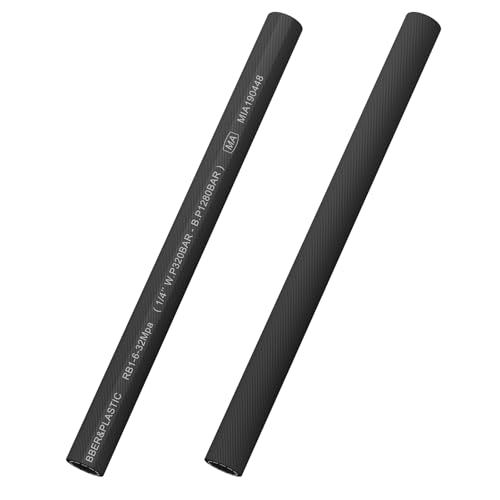
Matching the correct airline diameter to your pneumatic setup ensures that tools receive adequate airflow without sudden pressure drops. When researching what size hose for porter cable air compressor equipment, the answer depends on whether you are connecting external air tools or replacing an internal manifold line. Most portable Porter-Cable pancake models feature a standard 1/4-inch quick-connect coupler, but choosing between a 1/4-inch and a 3/8-inch inside diameter hose affects pneumatic tool performance significantly. If you are servicing worn tubing between the pump and the tank, our air compressor hose replacement guide details the proper steps for safe maintenance.
Selecting an undersized airline often restricts airflow volume, causing framing nailers to sink fasteners inconsistently and rotary tools to stall under load. In contrast, oversized lines add unnecessary bulk and weight when you are maneuvering finish nailers around delicate indoor trim projects. Understanding the mechanical differences between internal transfer tubes and external delivery hoses helps protect your compressor motor from prolonged recovery cycles and premature wear. Taking time to inspect fitting diameters, working pressure ratings, and hose materials ensures reliable pneumatic power across all your workshop tasks.
| Award | Product | ACR Score About ACR ScoreThe ACR Score is our own rating from 0 to 10, based on performance, design and build, ease of use, and value. It reflects independent research and is never influenced by manufacturers, retailers, or affiliate commissions. Learn more › | |
|---|---|---|---|
| Best Overall |
RO6G A16223 25-Foot Air Compressor Hose
|
9.2/10 | Buy |
| Best Value |
 Hxszk A16223 3.2-Foot Compressor Hose Kit |
9.1/10 | Buy |
| Best Budget |
 PieeTics A16223 Replacement Hose 6-Pack |
8.8/10 | Buy |
| Best Premium |
 WYNNsky 3/8-Inch x 25ft PVC Air Hose Kit |
8.4/10 | Buy |
 FYCQER 25-Foot Coiled Air Hose (1/4 Inch) |
8.1/10 | Buy | |
 DMKJIDP A16223 Air Compressor Coil Hose |
8.0/10 | Buy | |
 Hromee 1/4-Inch x 25-Ft Recoil Air Hose |
8.0/10 | Buy |
RO6G A16223 25-Foot Air Compressor Hose
Engineered as a direct replacement for Porter Cable and DeWalt units, this RO6G hose provides a 25-foot reach with a reinforced coil design. It facilitates quick installation and disassembly for straightforward maintenance.
Pros
- Direct fit replacement for original A16223 hoses
- Thicker coil design resists pressure and wear
- Quick installation and hassle-free disassembly
- Full 25-foot reach for workshop flexibility
Cons
- Compatibility limited to select Porter Cable and DeWalt models
- Fixed 25-foot length may limit larger work areas
Hxszk A16223 3.2-Foot Compressor Hose Kit
Serving as a direct replacement for part A16223, this Hxszk kit includes a 3.2-foot reinforced rubber hose and two clamps tailored for select Porter Cable and DeWalt compressors. It offers a straightforward solution for repairing internal lines, rated to handle up to 150 PSI.
Pros
- Complete kit with two clamps included
- Durable 3-ply rubber resists cracking under 150 PSI
- Easy to cut to exact required dimensions
- Direct fit for specific Porter Cable and DeWalt compressors
Cons
- Short 3.2-foot length limited to internal repairs
- Compatibility limited strictly to a few specific compressor models
- Requires manual trimming for precise installation
PieeTics A16223 Replacement Hose 6-Pack
Designed for specific Porter-Cable and DeWalt air compressors, this PieeTics multipack supplies reinforced spiral hoses paired with dedicated CAC-1206-1 clamps. It serves as a practical repair option for workshops needing to maintain stable pneumatic airflow and reduce leakage risks.
Pros
- Thick reinforced spiral walls resist cracking under pressure
- Includes matching CAC-1206-1 clamps for secure fitting
- Six-pack bundle offers backup hoses for future repairs
- Installs quickly with basic hand tools
Cons
- Limited to specific Porter-Cable and DeWalt compressor models
- Requires manual verification of exact model numbers before ordering
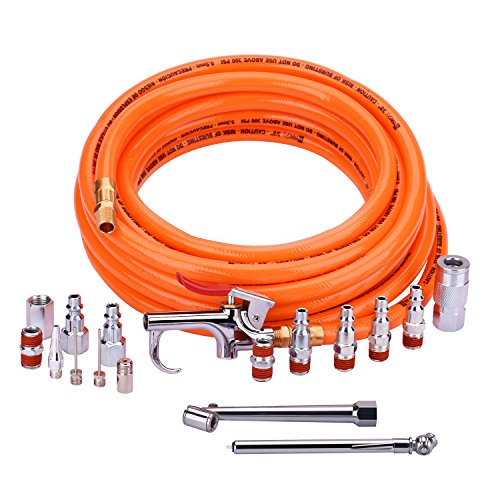
WYNNsky 3/8-Inch x 25ft PVC Air Hose Kit
Equipped with a lightweight PVC hose and a 17-piece accessory bundle, this package delivers the essential fittings needed for home workshop DIY projects. Solid brass connections ensure dependable seals, supported by a 300 PSI maximum working pressure.
Pros
- Solid brass fittings resist corrosion and seal reliably
- Complete accessory set provides essential starter fittings
- Lightweight hose design allows easy transport and handling
- Handles up to 300 PSI maximum working pressure
Cons
- 25-foot length provides limited reach across larger workshops
- PVC construction is typically less flexible than rubber hoses
FYCQER 25-Foot Coiled Air Hose (1/4 Inch)
Built from flexible polyurethane, this self-storing coiled hose extends your reach up to 25 feet without tangling. Its 300 PSI rating and pre-sealed brass fittings make it a dependable pick for light garage work and tire inflation.
Pros
- Pre-sealed brass fittings ensure secure, leak-resistant connections
- Compact coil profile snaps back quickly for easy storage
- Rated up to 300 PSI for high-pressure tools
- Wide operating temperature range prevents cold-weather kinking
Cons
- Coil tension may pull back when stretched near 25 feet
- 1/4-inch inner diameter limits high-CFM air tools
- 25-foot length may feel short for larger workshop layouts
DMKJIDP A16223 Air Compressor Coil Hose
This replacement coil hose restores reliable airflow to Porter Cable, DeWalt, and Craftsman pancake compressors with matching 1/4-inch ports. It provides a simple fix for worn lines and disassembles easily for regular workshop maintenance.
Pros
- Broad compatibility across major compressor brands
- Standard 1/4-inch connection fits common models
- Simple disassembly for routine upkeep
- Durable build handles standard operating pressure
Cons
- Requires model verification to avoid mismatch
- Restricted to units using 1/4-inch fittings
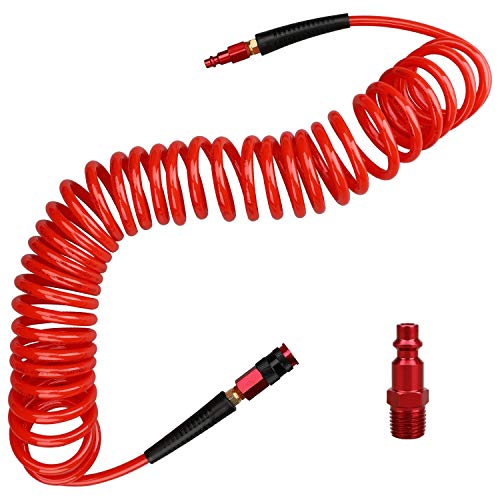
Hromee 1/4-Inch x 25-Ft Recoil Air Hose
Engineered for home garages and tight workspaces, this self-coiling polyurethane hose automatically snaps back to keep floors clear. Its included universal coupler and bend restrictors deliver a dependable, tangle-free connection for everyday pneumatic tools.
Pros
- Self-coiling profile saves storage space and prevents tripping hazards
- Included universal coupler fits multiple plug types out of the box
- Bend restrictors relieve stress and prolong hose life
- Flexible down to -20 degrees Celsius in cold conditions
Cons
- Maximum working pressure capped at 120 PSI
- 25-foot length limits mobility in larger workshops
Air Compressor Hose Sizing, Compatibility, and Replacement
Finding the correct hose for a Porter-Cable air compressor begins with identifying whether you need an external airline for running pneumatic tools or an internal transfer hose for pump repairs. Most portable pancake compressors, including the popular six-gallon C2002 model, utilize a standard 1/4-inch quick-connect coupler on the output manifold. For external tool operation, homeowners and contractors generally choose between a 1/4-inch and a 3/8-inch inside diameter line depending on tool airflow demands. If you are addressing an internal failure between the pump and the tank, the correct component is typically an A16223 replacement tube rated for operating pressures up to 150 PSI.
Distinguishing Between External Air Delivery Lines and Internal Transfer Hoses
Air compressor owners often experience confusion when searching for replacement hoses because the terminology covers two distinct pneumatic parts. External air hoses connect directly to the regulated quick-connect port on the front console and deliver pressurized air across your work area. These flexible lines extend anywhere from twenty-five to one hundred feet and connect directly to nailers, tire chucks, and blowguns. In contrast, the internal transfer hose remains hidden beneath the plastic shroud of the compressor assembly.
The internal transfer hose connects the mechanical pump cylinder to the pressure switch manifold and the steel storage tank. When this internal tube cracks or deteriorates from heat and vibration, pressurized air escapes before it can be stored in the tank. Replacing this component requires a specific factory-style reinforced hose, such as the A16223 part, rather than a generic air tool hose. Understanding this distinction prevents purchasing an external coiled hose when your compressor actually requires an internal mechanical repair.
Selecting External Hose Diameters for Pneumatic Air Tools
External pneumatic air hoses are classified by their inside diameter, with 1/4-inch and 3/8-inch being the two standard workshop dimensions. A 1/4-inch inside diameter hose is exceptionally lightweight, flexible, and easy to manage during overhead trim carpentry or detail work. This smaller diameter delivers sufficient volume for intermittent pneumatic tools such as brad nailers, pin nailers, and basic tire inflators. However, the narrower passage creates friction that restricts total cubic feet per minute when powering higher-demand equipment.
A 3/8-inch inside diameter air hose provides a substantially larger pathway for compressed air to travel from the regulator to the tool. This increased internal volume reduces dynamic pressure loss during high-volume operations such as framing nailing, roofing, or light impact wrench cycling. While the 3/8-inch hose weighs more and feels slightly stiffer in tight spaces, it ensures that high-draw tools do not stall mid-stroke. For general garage tasks where multiple tool types are used, a 3/8-inch line offers the most adaptable airflow performance.
Hose Length, Friction Loss, and Dynamic Pressure Drop
Every foot of hose introduces friction against the moving air column, leading to what pneumatic technicians call dynamic pressure drop. When air flows through a twenty-five-foot line, pressure loss remains minimal under standard intermittent fastener operation. As hose length extends to fifty or one hundred feet, that internal wall friction compounds and significantly reduces operating pressure at the tool inlet. Operating a framing nailer on a long 1/4-inch hose often causes fasteners to remain proud of the workpiece even when the tank gauge reads full pressure.
Pneumatic tool operators often make the mistake of using long, undersized electrical extension cords instead of extending their air delivery lines. Undersized extension cords cause voltage drops that can overheat the compressor motor or trip household circuit breakers during cold starts. The recommended approach is to plug the compressor directly into a dedicated wall outlet and run a longer air hose to your working area. When running lines beyond fifty feet, switching to a 3/8-inch inside diameter hose keeps pressure drop to a minimum while protecting electrical components.
Understanding Internal Replacement Hose Part Number A16223
Owners of Porter-Cable C2002 six-gallon pancake compressors frequently discover that air leaks originate from the internal manifold jumper line. The factory specification for this component corresponds to part number A16223, which connects the pump outlet to the check valve and manifold assembly. This specialized tube must withstand constant mechanical vibration, elevated discharge temperatures, and cyclic pressure changes up to 150 PSI. After years of thermal cycling, original rubber lines can stiffen, develop micro-cracks, and leak air continuously during compression cycles.
Replacement kits for the A16223 hose, such as options from Hxszk and PieeTics, feature heavy-duty multi-ply reinforced rubber or spiral-wound construction. These replacement hoses typically measure approximately 3.2 feet in total length and allow users to cut them down to match specific pump layouts. Upgraded replacement kits also include CAC-1206-1 style crimp or screw clamps designed to grip the barbed fittings securely without cutting into the rubber outer jacket. Installing a properly reinforced replacement tube restores airtight compression and allows the tank to reach its factory cut-out threshold without stalling.
Compatibility for the A16223 hose extends beyond standard Porter-Cable pancake units to several sister models manufactured under shared platform designs. Compatible units include the Porter-Cable C2002-WK 6G, various 1-horsepower 6-gallon configurations, and DeWalt D55168 15-gallon workshop compressors. Similar fittings also appear on select Craftsman, Makita, and Black & Decker models featuring 1/4-inch connection barbs. Checking your compressor model tag before ordering ensures that the internal line diameter and fitting dimensions match your machine’s layout.
Material Considerations: Polyurethane, PVC, and Reinforced Rubber
Choosing the right hose material directly impacts maneuverability, kink resistance, and durability across varying workshop temperature ranges. Polyurethane recoil hoses, such as models from Hromee and FYCQER, are lightweight and spring back into a compact spiral when released. These hoses excel in garage workbenches and automotive service bays because they prevent clutter and will not scuff finished wood or painted vehicle surfaces. Polyurethane also remains remarkably flexible in cold weather down to sub-zero temperatures, eliminating the stiff coiling common with cheaper plastics.
Polyvinyl chloride (PVC) air hoses, like the WYNNsky 3/8-inch assembly, provide an economical and abrasion-resistant option for general DIY home projects. PVC resists oil and grease well, making it suitable for standard garage floors and driveway maintenance tasks. However, PVC lines become notably stiff and difficult to uncoil in unheated workshops during winter months. If you frequently work outdoors in changing weather conditions, hybrid polymer or reinforced rubber hoses remain far easier to handle throughout the year.
Heavy-duty reinforced rubber represents the traditional standard for rugged jobsites and continuous pneumatic tool operation. Rubber lines lay flat on the floor right out of storage, reducing tripping hazards and preventing frustrating coils from snagging on workpieces. Three-layer reinforced rubber construction withstands high internal working pressures up to 150 PSI or 300 PSI depending on the specific model rating. While rubber hoses add noticeable carry weight to your tool bag, their puncture resistance and longevity make them dependable for heavy framing and remodeling work.
Fitting Standards and Quick-Connect Coupler Compatibility
Air hose fittings must match the regulator manifold ports to establish an airtight seal and prevent energy-wasting pneumatic leaks. Most consumer and prosumer compressors utilize 1/4-inch National Pipe Taper (NPT) threaded connections on their couplers and hose ends. The quick-connect fittings themselves generally adhere to the Industrial interchange profile, commonly designated as I/M style plugs and couplers. Using mismatched profiles, such as pairing an Automotive (T-style) plug with an Industrial coupler, leads to poor engagement and persistent hissing leaks.
Solid brass fittings offer superior corrosion resistance and seal integrity compared to softer aluminum or stamped steel alternatives. Many upgraded hose kits come with pre-applied thread sealant or Teflon tape on the 1/4-inch male NPT ends to ensure rapid, leak-free installation. Integrated swivel fittings and molded bend restrictors near the hose ends also relieve mechanical stress where the tubing bends against the tool inlet. Inspecting your quick couplers regularly and replacing worn O-rings keeps line pressure steady and prevents unintended hose disconnects during operation.
Step-by-Step Procedure for Replacing an Internal A16223 Compressor Hose
Servicing the internal transfer hose on a pancake compressor requires strict attention to pneumatic safety procedures before loosening any fasteners. Begin by disconnecting the electrical power cord from the wall receptacle to eliminate the risk of accidental motor startup. Next, pull the brass ring on the safety relief valve to discharge all pressurized air stored inside the tank. You should also open the bottom drain cock to release trapped moisture, and our air compressor drain valve replacement guide highlights how proper valve care protects the tank interior from rust.
Once the air tank is completely depressurized, use a screwdriver to remove the protective plastic shroud housing the motor and pump cylinder. Locate the damaged A16223 hose running between the pump discharge head and the brass check valve assembly. Use pliers or side cutters to loosen the existing factory crimp clamps, taking care not to gouge the barbed metal brass fittings beneath. Carefully slice the old, hardened rubber lengthwise with a utility knife and slide the deteriorated hose off the barbed stems.
Measure the old tube against your new reinforced replacement hose and cut the new piece cleanly to match the original length using sharp shears. Slip the new hose clamps over each end of the replacement line before pressing the hose fully over the barbed metal fittings. Position the clamps directly behind the barb ridges and tighten them firmly with a nut driver to prevent blow-offs under pressure. Reassemble the plastic safety shroud, reconnect the electrical power, and run the compressor to verify that the pump reaches full cut-out pressure without audible hissing.
Compressor Duty Cycles, Airflow Requirements, and Line Restriction Risks
A portable six-gallon pancake compressor is engineered primarily for light-duty, intermittent pneumatic tasks rather than continuous industrial tool operation. Operating continuous-demand tools like rotary sanders or paint sprayers quickly depletes the small air reserve and forces the pump to run without rest. If you are comparing air delivery between compact units and large workshop systems, our two-stage vs one-stage air compressor guide explains how pump design and compression stages influence continuous airflow capabilities. Pairing an undersized hose with an already modest CFM output compounds tool starvation and accelerates thermal motor stress.
When an air delivery line restricts airflow volume, the pneumatic tool must work harder to complete each mechanical cycle. This restriction causes extended recovery times because the tool consumes stored air faster than the narrow line can replenish dynamic pressure. Furthermore, running a compressor continuously beyond its rated fifty percent duty cycle generates excessive heat inside the pump cylinder. Selecting a 3/8-inch hose for demanding jobs helps the system deliver maximum available CFM without forcing the pump into premature thermal overload.
Practical Troubleshooting for Air Leaks and Pressure Starvation
Differentiating between tool starvation and pneumatic air leaks is essential when your compressor fails to power equipment as expected. If the compressor builds pressure normally to cut-out but drops drastically the moment a tool trigger is pulled, a restricted hose diameter or excessive line length is the likely cause. Conversely, if the pump cycles periodically while sitting idle with no tools connected, pressurized air is escaping through a loose fitting or cracked hose. Pinpointing the root symptom saves valuable time and prevents unnecessary component replacements.
To locate subtle air leaks across hose connections, apply a mild solution of dish soap and water to the fittings, clamps, and regulator joints using a small brush. Escaping compressed air will produce expanding soap bubbles immediately around loose hose clamps, cracked tubing, or worn quick-connect couplers. If bubbles form around the internal A16223 hose barbs, tighten the CAC-1206-1 clamps slightly or replace the tubing if the rubber has split. Fixing minor leaks promptly reduces electrical cycling and ensures that your Porter-Cable compressor maintains steady pressure throughout your workday.
Practical Summary for Choosing the Right Compressor Hose
Selecting the ideal hose for your Porter-Cable setup comes down to matching the physical component to your immediate workshop objective. For general finish carpentry, brad nailing, and tire inflation within twenty-five feet of the tank, a flexible 1/4-inch polyurethane or hybrid hose delivers excellent mobility. For framing nailers, heavier shop tools, or long airline runs, stepping up to a durable 3/8-inch inside diameter line prevents performance-robbing pressure drops. When internal hissing reveals a split jumper tube inside the housing, installing a reinforced A16223 replacement kit restores your compressor to reliable operation.
About the author
Clint DeBoer is an experienced tool-industry specialist with decades of involvement in technical media, hands-on product evaluation, and testing methodology. His focus on performance, practical usability, and data-driven comparisons makes his expertise highly relevant to professional air compressors, pneumatic tools, and workshop equipment.