
How to Make an Air Compressor Quiet: Practical Guide for 2026
Learn how to make an air compressor quiet with intake mufflers, vibration pads, and low-RPM motor upgrades in this November 2026 workshop guide.
 By Kenny Koehler
Updated October 28, 2026


Ear-splitting pump noise echoing off concrete garage walls turns basic pneumatic projects into an exhausting headache for home DIYers and woodworkers. Standard oil-free jobsite compressors frequently register between 80 and 90 decibels, which quickly causes auditory fatigue and disturbs anyone living in the household. Learning how to make an air compressor quiet starts with identifying whether the racket comes from high-frequency intake suction, structural tank vibration, or a high-speed universal motor. Exploring a detailed belt-drive versus direct-drive compressor comparison reveals how pump engineering dramatically influences baseline sound output during heavy cycle runs.
Simple mechanical retrofits and dampening strategies can significantly tame harsh operating noise without compromising line pressure or CFM delivery. Upgrades such as aftermarket sound mufflers, high-density rubber isolation pads, and sound-absorbing baffles allow workshops to operate pneumatic nailers or sprayers peacefully. Dedicated low-RPM dual-piston motors engineered for low decibel thresholds also provide a clean alternative when modifying an existing screaming unit is not practical. Combining targeted intake filtration with smart placement transforms an abrasive noise source into a manageable shop tool.
| Award | Product | ACR Score About ACR ScoreThe ACR Score is our own rating from 0 to 10, based on performance, design and build, ease of use, and value. It reflects independent research and is never influenced by manufacturers, retailers, or affiliate commissions. Learn more › | |
|---|---|---|---|
| Best Overall |
Limodot 1-Gallon Quiet Air Compressor
|
9.1/10 | Buy |
| Best Value |
 Master Airbrush Cool Runner II Airbrush Compressor |
9.1/10 | Buy |
| Best Budget |
 Tnuocke 1/4-Inch Thread Air Compressor Intake |
8.9/10 | Buy |
| Best Premium |
 DEWALT DWFP55130 2.5-Gallon 200 PSI Quiet Trim Air |
8.4/10 | Buy |
 OwnMy 1/2" PT 20mm Metal Air Compressor Intake |
8.3/10 | Buy | |
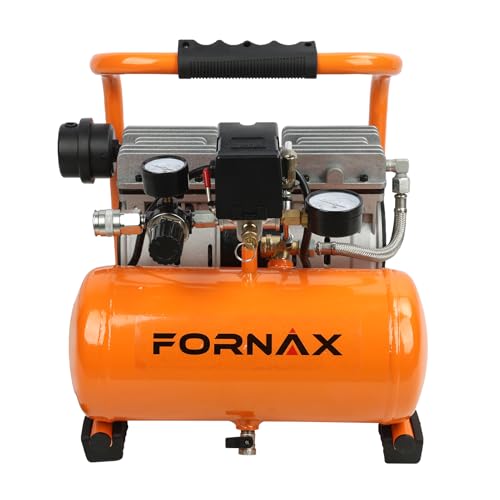 FORNAX 1.3-Gallon Ultra-Quiet Portable Air |
8.1/10 | Buy | |
 VELPAX 8-Gallon Quiet Air Compressor |
7.8/10 | Buy |
Limodot 1-Gallon Quiet Air Compressor
Engineered for low noise output at 68 decibels, this 1-horsepower Limodot compressor delivers quick recovery times and an oil-free motor for light pneumatic tools. Its compact form factor and bundled 11-piece accessory kit make it a practical option for trim carpentry and home workshop projects.
Pros
- Quiet 68 dB operation suitable for indoor jobs
- Rapid 15-second pressure recovery time
- Oil-free design requires minimal routine maintenance
- Generous accessory bundle included out of the box
- Reliable cold-weather starting capability
Cons
- Small 1-gallon capacity restricts continuous heavy use
- Relatively heavy at nearly 30 pounds
Master Airbrush Cool Runner II Airbrush Compressor
The Master Airbrush Cool Runner II system centers on a 1/5 HP single-piston compressor featuring dual cooling fans designed for extended painting sessions without overheating. Bundled with three specialized airbrushes and acrylic paints, this 11.75-pound kit offers an accessible, all-in-one setup for hobbyists, scale modelers, and studio craft painters.
Pros
- Dual integrated cooling fans help manage operating temperatures during prolonged spraying sessions
- All-in-one system includes three distinct airbrushes, primary acrylic paints, reducer, cleaner, and maintenance brushes
- Supports varied spray techniques ranging from precision 0.3mm fine lines to broader 0.8mm spray patterns
- Built-in twin airbrush dock keeps loaded tools elevated and prevents messy desktop spills
Cons
- Dedicated 1/5 HP airbrush pump is strictly designed for hobby spraying and cannot power pneumatic shop tools or nail guns
- Compact single-piston setup lacks a large storage air tank, requiring the pump to cycle during active airbrushing
- Larger nozzle sizes such as the 0.8mm tip may require proper paint reduction to ensure smooth, unhindered atomization
Tnuocke 1/4-Inch Thread Air Compressor Intake
The Tnuocke 1/4-inch intake filter silencer features coated metal housing designed to muffle intake chug while blocking airborne dust from compressor pump cylinders. It is a solid, budget-friendly replacement for DIYers and garage mechanics looking to replace cracked plastic OEM intake filters.
Pros
- Coated metal outer housing provides superior durability over brittle plastic factory filters
- Helps dampen loud intake suction noise on small workshop air compressors
- Comes in a convenient two-pack suitable for twin-cylinder pumps or keeping a workshop spare
- Compact footprint installs easily in tight spaces around cylinder heads and cooling fins
Cons
- Product listings cite both 1/4-inch and 16mm threading, requiring careful thread pitch and diameter verification prior to purchase
- The manufacturer does not state an exact micron filtration rating or replacement internal element part number
- Compact sizing is not suited for high-displacement, high-CFM industrial air compressor pumps
DEWALT DWFP55130 2.5-Gallon 200 PSI Quiet Trim Air
The DEWALT DWFP55130 delivers a capable 3.0 SCFM at 90 PSI with a 200 max PSI 2.5-gallon tank, running at a quiet 71.5 dBA on an efficient 12-amp motor. It is an ideal pneumatic power source for trim carpenters, punch-list contractors, and DIYers working on residential circuits.
Pros
- Delivers 3.0 SCFM at 90 PSI with a high 200 max PSI ceiling for rapid pressure recovery during sequential fastening
- Quiet 71.5 dBA sound output makes indoor trim carpentry and remodeling far less disruptive to homeowners
- Low 12-amp draw reduces breaker trips when running on shared 15-amp household circuits
- Integrated roll cage and console protect critical components while supporting horizontal or vertical operation
- Dual quick couplers allow two trim carpenters to connect and work off a single compressor
Cons
- Bare-tool configuration means you must supply your own air hoses, couplers, and pneumatic nail guns
- At 36 pounds, it is heavier to haul up flights of stairs than ultra-compact 1-gallon finish compressors
- Air output of 3.0 SCFM is built for intermittent finish fastening and will not support continuous tools like rotary sanders or sprayers
OwnMy 1/2" PT 20mm Metal Air Compressor Intake
Featuring rugged metal housings and 1/2-inch PT (20mm) male threads, this OwnMy intake silencer kit dampens pump roar while filtering out dust and shop grit. It is a reliable, cost-effective maintenance upgrade for garage DIYers and mechanics running belt-driven air compressors.
Pros
- Rugged all-metal exterior housing offers far superior heat and vibration resistance compared to brittle factory plastic breathers
- Supplied with two complete metal muffler assemblies and six total replaceable paper filter cartridges for extended service life
- Two-piece canister disassembles smoothly, allowing quick filter inspection without unthreading the base from the pump head
- Effectively baffles low-frequency pump intake pulse noise while screening out harmful garage dust
Cons
- Thread standard is 1/2-inch PT (approximately 20mm outer diameter), which may require an adapter bushing if mating to domestic 1/2-inch NPT pump castings
- Paper filter media can load up quickly in heavy woodworking or drywall sanding environments, requiring frequent inspection to prevent intake restriction
FORNAX 1.3-Gallon Ultra-Quiet Portable Air
The FORNAX 1.3-gallon portable air compressor delivers 1.7 CFM at 90 PSI with a 125 PSI maximum operating pressure, powered by a low-speed 1450 RPM oil-free 1 HP motor rated at just 65 dB. It is an excellent choice for DIY homeowners, finish woodworkers, and garage hobbyists seeking quiet, clean operation for brad nailers, staplers, and tire inflators.
Pros
- Low 65 dB operating sound level allows conversation-friendly use in enclosed garages and indoor work areas
- Low-speed 1450 RPM pump architecture minimizes heat buildup and vibration during operation
- Oil-free pump design requires zero crankcase fluid maintenance or scheduled oil refills
- Compact 31.8-pound design fits easily onto garage shelves, under workbenches, or into vehicle trunks
- Reaches up to 125 PSI maximum pressure for reliable tire topping and finish nailing
Cons
- 1.7 CFM at 90 PSI airflow rating is insufficient for continuous-demand pneumatic tools such as rotary sanders, die grinders, or paint sprayers
- Compact 1.3-gallon air reserve requires frequent motor cycling during sustained air consumption bursts
- Lack of transport wheels means the unit must be carried manually between work areas
VELPAX 8-Gallon Quiet Air Compressor
Delivering 115 PSI at an approachable 68 decibels, this oil-free unit suits indoor spaces like home workshops and garages. Its 8-gallon tank and 1.75HP motor supply clean air for tire inflation, woodwork nailing, and basic pneumatic tools without excessive noise.
Pros
- Quiet 68 dB motor fits home workshops
- Oil-free design requires minimal regular maintenance
- Integrated overload protection supports safe operation
- Standard G1/4 outlet enables easy tool connections
Cons
- Maximum working pressure tops out at 115 PSI
- Lacks wheels for moving the 8-gallon tank
Engineering a Quieter Pneumatic Workspace
Excessive noise remains one of the most frustrating side effects of operating pneumatic machinery in confined residential spaces. High sound levels not only induce rapid operator fatigue, but they can also make prolonged workshop tasks nearly unbearable without constant hearing protection. Understanding how to make an air compressor quiet requires breaking down the exact physics of compressor acoustics rather than applying random dampening materials. When you isolate the specific mechanical actions responsible for the din, you can implement targeted acoustic remedies that preserve complete pump performance.
A typical direct-drive air compressor generates sound across three distinct mechanical channels. Atmospheric air rushing past inlet valves creates sharp, pulsing suction waves that radiate outward at high frequencies. At the same time, reciprocating pistons and rotating crankshaft components produce mechanical friction and metal-on-metal clatter. Finally, the hollow steel air tank acts like an acoustic resonator, amplifying pump vibrations and projecting them directly through workshop flooring.
Diagnosing the Three Primary Sources of Compressor Noise
Pinpointing the dominant noise path is the crucial initial step before buying parts or building acoustic barriers. Intake noise usually presents as a rhythmic, harsh snapping or thumping sound timed precisely with each piston intake stroke. This air turbulence escapes directly into the open room because the intake port must remain exposed to ambient atmosphere. If you cup a hand safely near an unbaffled intake port without restricting airflow, you will instantly notice a perceptible drop in high-frequency harshness.
Mechanical pump racket stems from the internal motor assembly, cooling fans, and piston rings sliding against cylinder walls. In traditional oil-free compressors, universal motors spin at rapid velocities exceeding 3,000 RPM, producing a high-pitched mechanical scream. Oil-lubricated cast-iron pumps or low-RPM induction configurations tend to produce a lower, less grating operational drone. This mechanical noise radiates outward through the pump housing, roll-cage framing, and motor shroud.
Resonance and structural vibration represent the third major sound component in any garage or jobsite setup. As the motor runs, harmonic vibrations travel down the pump mounting brackets and directly energize the thin walls of the air tank. The tank functions much like a hollow drum, turning subtle mechanical oscillations into booming acoustic energy. When the compressor sits directly on a hard concrete slab or wooden workbench, those vibrations transmit into the building structure, shaking surrounding walls and tools.
Installing Intake Air Silencers and Filtration Mufflers
Upgrading the factory intake filter is the easiest and most cost-effective modification for subduing open-air thumping. Many standard compressors ship with minimal plastic intake caps that do almost nothing to attenuate acoustic pulses. Aftermarket metal silencers, such as the Tnuocke 2 pcs 1/4″ Thread Air Compressor Silencer, replace cheap caps with durable coated-metal housings. Threading a dedicated 1/4-inch NPT intake muffler into the cylinder head forces incoming air through sound-dampening channels, smoothing intake pulses before they escape into the shop.
Larger compressors with higher CFM intake demands benefit substantially from increased filtration surface area and sound-absorbing media. The OwnMy 2 Set Air Compressor Silencer with 6 Air kit uses 1/2-inch PT threads packed with dense, replaceable sound-absorbing paper filter elements. Heavy-duty metal canisters create internal tortuous air pathways that trap acoustic energy while capturing ambient dust and airborne debris. Clean filtration elements are essential because a severely clogged intake restricts cylinder airflow, starving the pump and increasing thermal operating stress.
When installing an aftermarket silencer, always verify the port thread size and ensure the replacement does not choke intake volume. Restricting intake CFM can cause the pump to run longer recovery cycles, negating the benefits of noise reduction by extending motor run times. Wrapping male muffler threads with standard PTFE thread-sealing tape ensures an airtight seal that prevents secondary whistling leaks. If space around the cylinder head is constrained, adding a brief pipe elbow allows vertical or horizontal muffler positioning without contacting hot cylinder cooling fins.
Isolating Mechanical Vibration from Garage Floors and Benches
Decoupling the compressor from hard physical surfaces eliminates the low-frequency humming that penetrates nearby rooms. Thin factory rubber feet often compress under load or harden over time, losing their ability to absorb mechanical shocks. Placing the entire unit on high-density vibration isolation pads made of composite rubber or recycled tire material breaks the physical transmission path. Dense rubber pads absorb energy before it can vibrate concrete slabs, floor joists, or metal shelving.
Mounting configurations demand careful attention to prevent introducing new structural rattle points into the workspace. Never bolt a portable or small workshop compressor rigidly to a wooden floor or hollow bench surface without rubber isolators. Wood amplifies motor harmonics, transforming a workbench into a massive sounding board that doubles perceived volume. If your setup requires permanent floor anchors, use specialized elastomeric spring mounts or thick sandwich isolator bushings to float the tank mounting feet.
Securing loose ancillary hardware around the compressor frame provides an immediate reduction in annoying chatter. Fasteners securing the pressure switch, manifold gauges, belt guards, and tubing clamps frequently loosen from steady pump harmonics. Tightening loose structural bolts and placing thin foam gaskets between rattling plastic shrouds and metal frames removes unnecessary buzzing sounds. A quiet pump mechanism can still sound cacophonous if loose sheet metal or vibrating tubing vibrates against the air receiver.
Building and Ventilating a Dedicated Compressor Enclosure
Constructing a soundproof baffle box or dedicated compressor cabinet yields the most dramatic reduction in perceived workshop decibels. Enclosing the unit behind walls built from medium-density fiberboard (MDF) or double-layered plywood effectively blocks airborne sound radiation. Lining the interior surfaces with open-cell acoustic foam or rockwool insulation captures internal reflections rather than bouncing sound waves outward. Proper cabinet construction can knock harsh mid-frequency motor screams down to a gentle background murmur.
Adequate ventilation remains the absolute highest priority when designing any compressor enclosure. Electric motors and compression cylinders generate immense heat that must dissipate rapidly into surrounding air to prevent thermal overload shutdown. A completely sealed box will cook pump components within minutes, degrading piston cups, scorching valve plates, and triggering motor thermal breakers. Incorporating dual baffled intake and exhaust air ducts lined with sound-dampening foam allows cool air to enter while trapping sound waves.
Installing an active electric cooling fan wired to the compressor circuit ensures constant cross-ventilation during long cycle times. Position the cooling fan to pull fresh ambient air across the pump cylinder heads and exhaust heated air out of the enclosure top. Always preserve clear visual access to tank pressure gauges, regulator knobs, and the primary electrical disconnect switch. Easy access allows you to shut down the system immediately if an unexpected pressure surge or thermal fault occurs.
Relocating the Unit and Routing Extended Air Lines
Distance is one of the most powerful acoustic dampeners available to workshop owners and DIY enthusiasts. Moving a noisy compressor into a separate utility shed, ventilated closet, or outdoor covered lean-to isolates the sound completely from your immediate workspace. The inverse square law dictates that doubling the distance from a noise source reduces sound pressure levels substantially. Operating a pneumatic impact wrench next to a quiet workbench is vastly more pleasant when the pump cycles thirty feet away.
Relocating the machine requires extending air plumbing rather than running long, thin electrical cords across the shop. Using light-duty extension cords causes substantial voltage drops that can overheat electric motors and trip household circuit breakers during high startup inrush. Instead, keep the compressor near a dedicated electrical receptacle and run a durable, high-flow air hose to your working area. Reviewing proper air hose selection and maintenance helps you choose the correct internal hose diameter to prevent dynamic line pressure drop over extended runs.
When running pneumatic lines through walls or along garage framing, use flexible rubber or hybrid polymer jumper hoses between the compressor and rigid piping. Connecting a vibrating compressor directly to rigid copper, aluminum, or PVC lines transmits motor pulses through the building skeleton. A flexible two-foot jumper hose absorbs mechanical vibrations, preventing rigid air lines from humming against wall studs. Secure pipe hangars with rubber-lined clamps to decouple pneumatic runs from framing members completely.
Operating Pressures, Duty Cycles, and Mechanical Maintenance
Regular pneumatic maintenance prevents worn components from generating abnormal squeals, hisses, and grinding noises. A leaking unloader valve or faulty in-tank check valve forces the pump to work harder, extending recovery times and increasing overall noise exposure. When an unloader valve sticks, trapped head pressure can also cause the electric motor to grunt and struggle during initial startup cycles. Understanding single-stage and two-stage compressor differences helps clarify how pressure switch calibration and staging mechanics impact operational strain and pump recovery duration.
Purging tank condensation daily through the bottom drain valve prevents internal reservoir rust and preserves full air volume capacity. Standing water inside the receiver reduces usable air storage space, forcing the pump to cycle on and off far more frequently. Replacing stiff thumb petcocks with accessible quarter-turn brass ball valves simplifies daily draining routines. Draining accumulated moisture protects downstream air tools from water contamination while maintaining factory pressure buffer thresholds.
Checking belt tension and pump lubrication on belt-driven shop models is another crucial maintenance factor for acoustic control. A slipping drive belt emits an ear-piercing squeal during heavy compression cycles when head pressures reach maximum cut-out thresholds. Keep belt sheaves properly aligned, adjust belt tension to manufacturer recommendations, and maintain non-detergent compressor oil at the center of the sight glass. Proper fluid levels cushion reciprocating components, preventing premature bearing knock and valve plate clatter.
Factory-Built Quiet Compressors Versus Standard High-RPM Units
Sometimes retrofitting a screeching universal-motor compressor proves less practical than upgrading to a purpose-built quiet machine. Modern ultra-quiet air compressors achieve low sound ratings by pairing dual-piston oil-free pumps with slow-turning four-pole induction motors. For example, the FORNAX Ultra Quiet Air Compressor, 1.3Gallon, 1HP operates at an impressive 65 dB due to a low-speed 1450 RPM motor configuration. In contrast, standard pancake compressors turn at speeds over 3,400 RPM, which naturally produces much higher acoustic agitation.
Slightly larger workshop tasks requiring more tank volume and sustained airflow benefit from multi-gallon quiet configurations. The Quiet Oil-Free Electric Air Compressor, 68 dB from Limodot pairs a 1-gallon tank and 1HP motor with smooth 68 dB operation, refilling rapidly without disrupting conversations. For mid-sized garage pneumatic chores, the Ultra Quiet Air Compressor, Only 68dB from VELPAX delivers a generous 8-gallon capacity while maintaining that same subdued 68 dB operating envelope. Heavy-duty jobsite trim contractors often select the DEWALT Air Compressor for Trim, 200-PSI Max, which delivers 3.0 SCFM at 90 PSI at a rated 71.5 dBA tested per ISO3744.
Delicate artistic applications like studio airbrushing demand whisper-level quiet that even standard low-noise workshop compressors cannot match. The Master Airbrush Cool Runner II Airbrush Kit with 3 features a compact 1/5 HP single-piston compressor equipped with dual cooling fans. Operating smoothly on an indoor tabletop, this compact design supplies continuous low-pressure airflow without startling family members or shaking craft desks. Matching your compressor design to your actual air consumption profile ensures you achieve the quietest operation possible without overpaying for excessive pump capacity.
Practical Verification and Safe Sound Reduction Practices
Verifying your silencing modifications requires a systematic check of system pressures, cycling durations, and operating temperatures. After adding an intake silencer or positioning the unit inside a baffled box, run the compressor from empty to automatic cut-off pressure. Confirm that the recovery time matches factory specifications and verify that the pump reaches maximum cut-out pressure without stalling. Inspect all fittings with a soapy water solution to guarantee that new muffler or elbow connections have not introduced air leaks.
Safety must always remain uncompromised throughout any sound-dampening project. Never tamper with or muffle the ASME safety relief valve ring, as this critical device protects the tank from catastrophic overpressurization. Always ensure the compressor receives adequate ventilation to prevent the motor thermal overload breaker from tripping under extended tool use. Depressurize the air receiver completely and disconnect the power supply before servicing fittings, installing silencers, or adjusting hardware mounts.
Taking a comprehensive approach that combines intake silencer mufflers, dense vibration isolation pads, and strategic placement provides the most reliable acoustic relief. Whether you upgrade an existing compressor or invest in a factory-engineered low-RPM quiet model, reducing decibel output transforms your workspace into an efficient, pleasant environment. Consistent maintenance and sensible pneumatic planning allow you to power nailers, inflators, and sprayers without sacrificing peace and quiet.
About the author
Kenny Koehler is a power-tool specialist with more than a decade of hands-on evaluation experience and a science-based approach to product testing. His expertise in repeatable testing, tool performance, impact wrenches, and professional equipment brings a practical, data-focused perspective to compressor and pneumatic-tool comparisons.