
Single Stage vs Two Stage Air Compressor of 2026 Workshop Guide
Steady airflow matters when comparing Single Stage Vs Two Stage Air Compressor models for November 2026 to match CFM output and tank PSI to your shop tools.
 By Kenny Koehler
Updated October 8, 2026


Air tools starve for pressure when a pump fails to keep up with heavy demand, leaving impact wrenches sputtering and paint guns spitting mid-stroke. Choosing between a single stage vs two stage air compressor setup determines whether your shop maintains steady pneumatic pressure or suffers through frustrating recovery delays. Single-stage pumps compress ambient air directly into the storage receiver in one piston stroke, typically topping out around 135 to 150 PSI. In contrast, two-stage units route air through an intercooler into a smaller high-pressure cylinder, pushing working pressures up to 175 PSI. Before you plan to buy air compressor machinery for serious workshop duties, matching the compression cycle to your actual air tool consumption keeps you from burning out your motor.
Continuous-demand tools like dual-action sanders, die grinders, and automotive blast cabinets generate massive heat that can overwhelm basic single-stage cast iron pumps. Two-stage engineering lowers internal air discharge temperatures, extending valve plate life while delivering the sustained CFM at 90 PSI needed for professional garage tasks. Cooler compressed air also makes it easier to manage condensation buildup in your receiver, especially if you learn how to stop moisture in air compressor lines before rust ruins downstream pneumatic valves. Evaluating motor horsepower, electrical breaker capacity, and realistic duty cycle ratings ensures your equipment handles daily workloads without unexpected thermal shutdowns.
| Award | Product | ACR Score About ACR ScoreThe ACR Score is our own rating from 0 to 10, based on performance, design and build, ease of use, and value. It reflects independent research and is never influenced by manufacturers, retailers, or affiliate commissions. Learn more › | |
|---|---|---|---|
| Best Overall |
VEVOR 3HP 11 CFM Air Compressor Pump
|
9.2/10 | Buy |
| Best Premium |
 DEWALT 60-Gallon Stationary Air Compressor |
9.2/10 | Buy |
| Best Budget |
 Ingersoll Rand 42672949 Twin-Stack Compressor |
9.1/10 | Buy |
 NorthStar 1-Stage 13.7 CFM Compressor Pump |
8.9/10 | Buy | |
| Best Value |
 Campbell Hausfeld 60-Gallon Air Compressor |
8.9/10 | Buy |
 Campbell Hausfeld 80-Gallon Stationary Air |
8.8/10 | Buy | |
 NorthStar 2-Stage 24.4 CFM Compressor Pump |
8.6/10 | Buy | |
 DeWalt DXCM271.COM 27-Gallon Air Compressor |
8.4/10 | Buy | |
 Ingersoll Rand 2475N7.5 7.5 HP 80-Gallon Two-Stage |
8.1/10 | Buy | |
 InSyoForeverEC 175 PSI 21 CFM Compressor Pump |
8.0/10 | Buy |
VEVOR 3HP 11 CFM Air Compressor Pump
Built for industrial and workshop setups, this twin-cylinder replacement pump delivers up to 11 CFM using a reliable belt-driven mechanism. Its cast-iron crankcase paired with an aluminum head provides dependable durability and heat dissipation, though it tops out at 116 PSI.
Pros
- Strong 11 CFM output for heavy-duty pneumatic tools
- Cast iron crankcase resists wear and tear
- Aluminum components help dissipate operational heat quickly
- Smooth and reliable belt-driven piston operation
Cons
- Maximum pressure peaks at only 116 PSI
- Single-stage setup lacks high-pressure dual-stage capability
- Heavy bare pump assembly at over 30 pounds
DEWALT 60-Gallon Stationary Air Compressor
The DEWALT DXCM602.COM is a heavy-duty 60-gallon vertical stationary air compressor engineered for dedicated workshops, featuring an oil-lubricated pump and a 3.7 HP motor delivering 11.5 CFM at 90 PSI up to 175 max PSI. Powered by 208V or 230V electrical service, it is an ideal stationary air source for mechanics, fabricators, and woodworkers running demanding pneumatic tools.
Pros
- High rated air output of 11.5 CFM at 90 PSI easily handles air-hungry continuous tools
- Durable oil-lubricated pump engineered for cooler operation and extended service life
- ASME-certified 60-gallon vertical steel pressure vessel ensures verified safety and high capacity
- Dual-voltage spread-volt motor simplifies integration into 208V or 230V electrical systems
Cons
- Stationary 200-pound footprint requires permanent shop placement and lacks mobility wheels
- Requires a dedicated 208V or 230V high-voltage circuit and cannot run on standard 120V household outlets
- Requires routine maintenance including oil level inspections and periodic pump oil changes
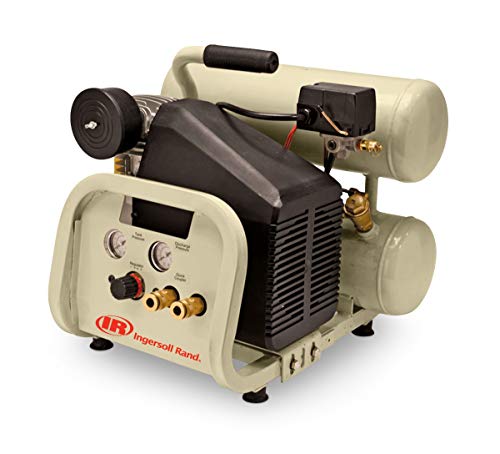
Ingersoll Rand 42672949 Twin-Stack Compressor
Built for job sites and workshops needing reliable air delivery, this unit provides 3.2 CFM at 90 PSI with a 100 percent continuous duty rating. Dual quick disconnect couplers allow two operators to run tools simultaneously, though its 77 pound frame requires deliberate effort to transport.
Pros
- 100 percent continuous duty rating prevents downtime
- Dual couplers enable simultaneous two tool operation
- Long 2,000 hour oil change intervals
- User friendly front control panel design
Cons
- Heavy 77 pound weight limits easy mobility
- 79 dBA noise level remains loud indoors
- Extended warranty requires proprietary synthetic lubricant
NorthStar 1-Stage 13.7 CFM Compressor Pump
Engineered for thermal efficiency and long service life, this twin-cylinder cast iron replacement pump delivers 13.7 CFM at 90 PSI. Its slow-running design and Swedish steel valves make it well suited for demanding shop environments.
Pros
- Solid FC35 grade cast iron construction
- V-style design optimizes cylinder cooling
- Swedish steel valves enhance component longevity
- Low-RPM operation minimizes mechanical wear
Cons
- Heavy 53.2-pound weight makes installation demanding
- Single-stage design is unsuitable for high-pressure setups
- Bulky 16-inch cube profile requires substantial space
Campbell Hausfeld 60-Gallon Air Compressor
Built for demanding garage and workshop tasks, this stationary compressor combines a 3.7 HP motor with a two-stage cast-iron pump reaching 175 PSI. It provides steady airflow to support high-demand air tools like sprayers, grinders, and sanders.
Pros
- High 175 PSI maximum output pressure
- Durable cast-iron pump rated for longevity
- Large 60-gallon capacity supports sustained pneumatic tool use
- Vertical tank design saves workshop floor space
Cons
- Requires a dedicated 230V to 240V electrical connection
- Heavy 255-pound stationary build is difficult to move
Campbell Hausfeld 80-Gallon Stationary Air
Engineered for automotive repair shops and serious home garages, this stationary Campbell Hausfeld unit combines an 80-gallon ASME tank with a 5 HP motor delivering 16.0 CFM at 90 PSI. Its oil-lubricated cast-iron pump runs at a low 950 RPM, making it a dependable choice for continuous paint spraying, sanding, and air tool operation.
Pros
- Substantial 16.0 CFM delivery at 90 PSI easily powers continuous pneumatic tools like sanders and paint sprayers
- Heavy-duty cast-iron two-cylinder pump runs at a low 950 RPM for smoother operation and reduced thermal stress
- ASME-certified 80-gallon vertical tank maximizes air storage while minimizing workshop floor footprint
- Single-phase 208-230V motor includes overload protection and eliminates the need for an external magnetic starter
Cons
- Stationary footprint and substantial 460-pound weight require permanent shop placement and mechanical assistance during unloading
- Requires dedicated 208-230V single-phase electrical wiring and cannot run on standard 120V household outlets
- Maximum operating pressure caps at 140 PSI, which is lower than some two-stage compressors that reach 175 PSI
NorthStar 2-Stage 24.4 CFM Compressor Pump
Built with full cast iron construction and Swedish steel valves, this NorthStar two-stage pump delivers 24.4 CFM at 90 PSI for demanding pneumatic setups. Its low-RPM operation and V-style cylinder layout prioritize cooling and mechanical durability during heavy use.
Pros
- High airflow rating of 24.4 CFM at 90 PSI
- Heavy-duty FC35 cast iron construction
- Durable Swedish steel floating valve design
- V-style cylinders promote effective heat dissipation
- Low-RPM operation minimizes wear and running temperatures
Cons
- Heavy 135-pound weight complicates mounting and handling
- Substantial 21-inch cubic dimensions require ample space
DeWalt DXCM271.COM 27-Gallon Air Compressor
Built for home workshops and garage tasks, this vertical compressor delivers 5.1 SCFM at 90 PSI with a low-maintenance oil-free pump. Its space-saving upright tank fits tight corners, though the 136-pound heft demands effort to transport.
Pros
- Maintenance-free oil-free pump design
- Solid airflow output of 5.1 SCFM at 90 PSI
- Space-saving vertical orientation for garages
- Reliable low-voltage start on standard 110V circuits
Cons
- Heavy 136-pound build limits quick portability
- At 78 dBA, operation remains noticeable indoors
- Tall vertical frame requires ample overhead clearance
Ingersoll Rand 2475N7.5 7.5 HP 80-Gallon Two-Stage
The Ingersoll Rand 2475N7.5 is an industrial-grade 7.5 HP two-stage stationary air compressor pairing an 80-gallon ASME receiver tank with a rugged cast-iron pump rated for 100% continuous duty at up to 175 psig. It provides dependable, high-capacity air storage for professional auto mechanics, commercial garages, and demanding fabrication shops.
Pros
- Durable solid cast-iron two-stage pump engineered for over 15,000 hours of heavy-duty shop service
- True 100% continuous duty rating supports non-stop production in multi-bay automotive and fabrication environments
- Spacious 80-gallon ASME-certified vertical receiver tank stores ample air volume at up to 175 psig
- Extended 2,000-hour oil service intervals when utilizing All Season Select synthetic lubricant
- Individual cylinder casting and one-piece connecting rod simplify preventative maintenance and component access
Cons
- Substantial 611-pound dry weight requires dedicated floor anchoring, mechanical lifting gear for positioning, and a permanent shop footprint
- Demands high-power dedicated electrical service and professional stationary hardwiring rather than standard outlet convenience
- Extended two-year pump warranty coverage requires the separate purchase of the official lubricant start-up kit
InSyoForeverEC 175 PSI 21 CFM Compressor Pump
Built for heavy-duty pneumatic setups, this cast-iron twin-cylinder pump delivers 21 CFM at up to 175 PSI. Its V-type dual-stage design maximizes cooling efficiency, making it a solid replacement head for industrial workshops running a 5.5 horsepower motor.
Pros
- Heavy-duty cast iron build handles continuous operation
- High 21 CFM output at 175 PSI pressure
- V-style twin cylinder design provides effective cooling
- Durable high-temperature steel valves ensure reliable airflow
Cons
- Requires a powerful 5.5 HP motor to operate
- Motor pulley sizing must be matched to motor RPM
- Heavy cast iron construction makes mounting demanding
Frequently Asked Questions
What is the primary operational difference in a single stage vs two stage air compressor comparison?
Single-stage units compress air once per stroke up to around 150 PSI, while two-stage compressors use two separate cylinders to reach 175 PSI. The first cylinder conducts initial compression before sending the air through an intercooler tube to a smaller cylinder for secondary pressurization. This staging process produces cooler discharge air and greater efficiency at elevated pressures. Commercial shops rely on this two-stage approach for continuous operation.
Does a two-stage air compressor deliver more CFM than a single-stage model?
Not necessarily, because CFM airflow volume depends primarily on cylinder displacement and motor horsepower rather than compression stages alone. A large 5 HP single-stage cast iron pump can deliver 16 CFM at 90 PSI, easily outpacing a compact 3.7 HP two-stage unit delivering 7.6 CFM. Two-stage pumps truly excel at maintaining stable volume above 100 PSI where single-stage units experience sharp volumetric drops. For light intermittent tasks or small finish trim work, comparing portable models like a 1-gallon vs 2-gallon air compressor reveals that compact tank size and portability often matter more than high pressure stages.
Can a single-stage air compressor run continuous pneumatic tools like sanders and paint sprayers?
Yes, provided the pump delivers sufficient CFM at 90 PSI to match the tool specification and features an adequate duty cycle rating. Rotary sanders and HVLP spray guns frequently draw 10 to 15 CFM continuously, which quickly depletes small receivers. A stationary 60-gallon single-stage unit with a high-output pump can support these tools, though it runs hotter than an equivalent two-stage machine. Heavy daily commercial production still favors two-stage systems to prevent excessive pump wear.
Why do two-stage compressors require 230V electrical circuits?
Two-stage pumps require high-torque motors of 3.7 running HP or larger to overcome steep secondary cylinder compression resistance. Standard 120V residential circuits cannot supply enough amperage to start and run these heavy induction motors without tripping household breakers. Stationary workshop compressors running on dedicated 208V or 230V single-phase lines ensure reliable cold-weather starting and prevent voltage drops under full tank loads.
How does pump stage design influence moisture accumulation in the receiver?
Two-stage compressors reduce moisture delivery into the air tank by utilizing an intercooler that condenses water vapor between stages. Single-stage cylinders discharge significantly hotter air straight into the tank, causing moisture to condense along internal tank walls as the air cools. Regular draining through a bottom quarter-turn ball valve remains essential on all ASME receiver tanks to prevent internal corrosion and extend tank life.
Which compressor style offers a better value for home garages in 2026?
Single-stage compressors provide the best overall value for typical DIY maintenance, pneumatic nailers, and general automotive repair. They deliver higher airflow volume per dollar below 135 PSI and feature lower replacement pump costs. Unless your routine projects demand sustained high pressure over 150 PSI or nonstop sandblasting, a solid single-stage upright compressor meets typical home garage demands efficiently.
About the author
Kenny Koehler is a power-tool specialist with more than a decade of hands-on evaluation experience and a science-based approach to product testing. His expertise in repeatable testing, tool performance, impact wrenches, and professional equipment brings a practical, data-focused perspective to compressor and pneumatic-tool comparisons.