
How to Tell If an Air Compressor Is 2 Stage: Practical Guide for 2026
Learn how to tell if an air compressor is 2 stage using simple visual checks, cylinder sizing rules, and pressure ratings for October 2026.
 By Tom Scalisi
Updated October 8, 2026
By Tom Scalisi
Updated October 8, 2026

Operating pneumatic machinery requires a steady supply of clean, pressurized air, but workshop demands often outgrow basic consumer equipment. Many woodworkers and auto mechanics discover that running continuous air tools like rotary sanders, paint guns, or high-torque impact wrenches causes smaller pumps to run constantly and lose working pressure. Understanding how to tell if an air compressor is 2 stage is essential when evaluating whether a machine can support sustained commercial workloads or if it is limited to light, intermittent cycling. Learning the mechanical differences helps buyers avoid costly equipment mismatches when choosing an air compressor for home use or commercial service.
Visual cues provide the fastest way to confirm pump architecture, yet marketing terminology frequently creates confusion around piston counts and pressure capabilities. A machine equipped with dual cylinders is not automatically a two-stage unit, as many popular portable compressors utilize twin cylinders operating in parallel to increase airflow volume rather than final delivery pressure. By inspecting cylinder diameters, cooling tubes, maximum tank pressure ratings, and motor electrical configurations, anyone can accurately verify the true internal engineering of an air compressor. This practical assessment ensures you invest in the right air volume, operating pressure, and thermal endurance for your garage or professional workspace.
| Award | Product | ACR Score About ACR ScoreThe ACR Score is our own rating from 0 to 10, based on performance, design and build, ease of use, and value. It reflects independent research and is never influenced by manufacturers, retailers, or affiliate commissions. Learn more › | |
|---|---|---|---|
| Best Overall |
Stealth Air Compressor 2 Gallon
|
9.2/10 | Buy |
| Best Budget |
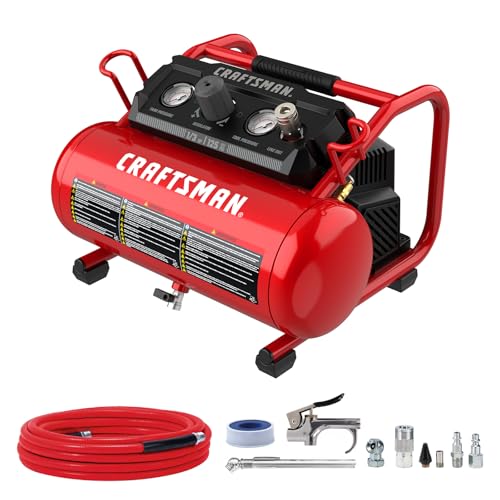 CRAFTSMAN Air Compressor
|
9.1/10 | Buy |
 California Air Tools 2010A 1.0 HP Ultra Quiet
|
9.1/10 | Buy | |
| Best Value |
 VIAIR TLC BOOST XL Portable Air Compressor
|
9.1/10 | Buy |
| Best Premium |
 Campbell Hausfeld 60-Gallon 2-Stage Air
|
8.9/10 | Buy |
 VIAIR 150 PSI High-Flow Air Source Kit
|
8.6/10 | Buy | |
 Klutch 20-Gallon Air Compressor, 2 HP, 120V
|
8.4/10 | Buy | |
 Ingersoll Rand 2340L5-V 5 HP Type 30 Two-Stage Air
|
8.3/10 | Buy | |
 Ingersoll Rand 2475N7.5 7.5 HP Two-Stage Air
|
8.1/10 | Buy | |
 VEVOR Air Compressor, 2 Gallon Steel Tank
|
7.8/10 | Buy |
How to Identify a Two-Stage Air Compressor: Mechanical Checks and Visual Indicators
Confirming whether an air compressor utilizes a true two-stage pump or a standard single-stage configuration comes down to physical anatomy and pressure dynamics. Deceptive retail marketing often emphasizes cylinder counts rather than genuine compression stages, creating confusion for equipment buyers. A methodical inspection of the pump exterior, air transfer lines, and tank rating plates reveals exactly how the machine compresses air. Taking a few moments to trace the internal airflow path definitively reveals the operating mechanism of the pump.
Series Versus Parallel Compression Mechanics
Single-stage compressors draw atmospheric air into one or more cylinders and compress that air directly into the receiver tank during a single piston stroke. In contrast, a two-stage air compressor divides the compression cycle into two distinct, sequential steps to achieve higher pressures with greater mechanical efficiency. The primary cylinder draws in ambient air, compresses it to an intermediate pressure, and then forces that pre-compressed air into a secondary cylinder for final compression. This sequential process allows the compressor to reach elevated storage pressures without placing excessive thermal stress on the internal pump components.
Thermal management explains why two-stage compression engineering is standard across commercial and industrial workshops. Compressing air generates intense friction and heat, which accelerates wear on piston rings, reed valves, and head gaskets when attempted in a single stroke above standard pressures. By dividing the compression ratio across two stages, the internal mechanical stress and discharge temperatures are dramatically reduced. This thermodynamic advantage allows two-stage pumps to deliver superior volumetric efficiency, sustained duty cycles, and extended operational lifespans under heavy daily workloads.
The Unequal Cylinder Size Rule
The most reliable visual indicator of a two-stage reciprocating pump is the presence of two cylinders with noticeably different diameters. In a two-stage system, the low-pressure cylinder is substantially larger because it must ingest a full volume of atmospheric air at ambient density. The high-pressure cylinder is visibly smaller in diameter because it receives air that has already been compressed and condensed by the first stage. If you look at the cast-iron pump housing and observe two side-by-side or V-twin cylinders of mismatched sizes, you are examining a genuine two-stage machine.
Conversely, single-stage compressors that feature two cylinders will always have identical cylinder diameters and symmetrical cylinder heads. Portable models such as ultra-quiet dual-piston electric compressors use two matching cylinders to double intake volume, compressing air simultaneously in parallel rather than in series. Both pistons sweep identical air volumes and discharge directly into a shared manifold connected to the receiver tank. Recognizing that identical cylinder bores signify parallel single-stage operation prevents costly buying mistakes when inspecting new or second-hand machinery.
Tracing the Finned Intercooler Tube
Every genuine two-stage reciprocating compressor incorporates an external transfer line known as an intercooler to connect the primary stage to the secondary stage. This intercooler is a specialized metal pipe, typically crafted from copper or aluminum, that runs directly from the exhaust port of the large cylinder to the intake port of the smaller cylinder. Because the air exiting the first cylinder is hot, this tubing is almost always equipped with extruded cooling fins to radiate heat into the surrounding air before the second compression stroke begins.
You can easily distinguish an intercooler tube from a standard tank discharge line by tracing its path across the pump assembly. An intercooler line never connects directly into the air receiver tank or into a one-way check valve; instead, it loops strictly between the two cylinder heads. If the compressor pump only features a single discharge pipe leading from the cylinder head straight down to the tank, the unit operates strictly as a single-stage pump. Checking for this finned interstage loop provides an immediate, foolproof mechanical confirmation on any workshop floor.
Maximum Operating Pressure Clues
The maximum cut-out pressure listed on the machine’s tank gauge and pressure switch provides another dependable indicator of pump architecture. Standard single-stage electric compressors generally shut off between 125 and 150 PSI, with a typical cut-in threshold between 90 and 100 PSI. Pushing a single-stage piston pump beyond 150 PSI generates extreme operating heat and poor volumetric efficiency, making higher pressures impractical for standard consumer pumps. If a compressor is rated for a maximum cutoff of 120 PSI or 125 PSI, it is virtually guaranteed to be a single-stage system.
True two-stage air compressors, on the other hand, are engineered specifically to achieve maximum tank pressures of 175 PSI. Commercial units like stationary cast-iron workshop compressors rely on this elevated cutoff pressure to store a larger mass of air inside the same tank volume. This stored air provides a substantial high-pressure buffer that helps sustain demanding pneumatic equipment before the motor restarts. When evaluating pump specifications, a factory shut-off rating of 175 PSI represents the clear industry hallmark of a two-stage compression system.
Motor Voltage and Electrical Supply Requirements
The electrical supply requirements of an air compressor frequently reveal the type of pump mechanism installed on the receiver tank. Two-stage pumps require substantial continuous torque to compress air from intermediate levels up to the final 175 PSI threshold. Consequently, true two-stage compressors almost exclusively feature heavy-duty induction motors operating on dedicated 230-volt or 240-volt single-phase power, or commercial three-phase circuits. They rarely operate on standard 120-volt 15-amp household wall outlets because standard residential circuits cannot supply the necessary running amperage.
Motor horsepower ratings also reflect this mechanical demand when comparing continuous running power against misleading consumer marketing labels. Authentic two-stage stationary pumps typically require a true continuous running motor of 3.7 horsepower, 5 horsepower, or 7.5 horsepower to maintain pump speed under high cylinder back-pressure. In contrast, portable consumer compressors that run on 120-volt circuits generally produce between 1/3 horsepower and 2 running horsepower. If an electric compressor plugs into a normal 15-amp household outlet, its pump is a single-stage mechanism designed for lighter intermittent duty.
Debunking Common Equipment Misconceptions
Many compressor owners mistakenly assume that having two air tanks, such as a twin-stack or pontoon configuration, means the compressor is a two-stage machine. Tank layout has absolutely nothing to do with compression stages, as twin tanks merely provide a lower center of gravity and easier jobsite transport. Similarly, the presence of two quick-connect hose couplers on the regulator manifold only indicates dual-tool capability, not dual-stage compression. These external convenience features exist across countless single-stage portable units without reflecting any internal staging.
Another frequent source of confusion comes from marketing descriptions that highlight dual-piston or twin-cylinder quiet technology. Ultra-quiet consumer compressors frequently utilize two opposed or side-by-side pistons operating at lower motor speeds to minimize operational noise levels around 60 decibels. While these pumps feature two pistons, both pistons operate simultaneously as single-stage pumps feeding a common manifold to supply air tools. Consulting an air tool CFM sizing guide helps verify whether the volume delivered by a quiet single-stage pump can meet your workshop air requirements or if you truly need commercial two-stage power.
Airflow Dynamics and CFM Performance Curves
Air delivery volume, measured in cubic feet per minute (CFM) at specific pressure points, behaves differently in single-stage versus two-stage systems. A single-stage compressor experiences a steep drop-off in delivered CFM as tank pressure rises from 40 PSI toward 90 PSI and higher. Because the piston struggles against increasing cylinder back-pressure, volumetric efficiency falls sharply near the top of the compression cycle. This drop-off explains why single-stage machines often struggle when powering continuous-demand tools like dual-action sanders or rotary grinders.
Two-stage compressors maintain a remarkably stable CFM delivery curve across their entire operating range, delivering robust airflow even past 90 PSI and up to 175 PSI. The intercooled primary stage ensures that dense, pre-chilled air enters the second cylinder, minimizing volumetric loss during the final compression stroke. This stable air production allows automotive restoration shops and production woodworkers to operate continuous-consumption pneumatic tools without encountering sudden pressure drops. Checking manufacturer CFM flow ratings at both 90 PSI and 175 PSI clearly reveals the flatter, more capable performance curve of a two-stage unit.
Reading Nameplates, Pump Castings, and ASME Stamps
When visual inspection leaves any lingering uncertainty, the manufacturer data plate attached to the pump casting or tank shell provides definitive proof. Nameplates on industrial compressors list critical engineering parameters, including the pump model number, rated operating speed, maximum working pressure, and stage configuration. Prominent industrial manufacturers like Ingersoll Rand clearly denote their two-stage models with specific pump family codes, such as the venerable Type 30 series. Checking the metal data tag will usually state whether the pump is designated as single-stage or two-stage.
The American Society of Mechanical Engineers (ASME) certification plate stamped directly onto the receiver tank also provides crucial context. Because two-stage compressors generate up to 175 PSI, their storage tanks must be fabricated with heavier gauge steel to earn high-pressure ASME certification ratings. Single-stage portable tanks, especially compact aluminum or lightweight steel designs, are rated for much lower maximum working pressures. When inspecting used industrial air compressors, always verify that the tank pressure rating matches the operating output of the pump to ensure equipment safety.
Matching Compressor Stages to Workshop Applications
Deciding whether you genuinely need a two-stage air compressor depends heavily on the specific pneumatic equipment you plan to operate. Tasks such as filling passenger tires, operating brad nailers, clearing dust with blow guns, and occasional impact wrench maintenance are handled comfortably by portable single-stage compressors. These compact units offer convenient mobility, zero-maintenance oil-free pumps, and low power consumption on standard household electrical circuits. For these intermittent applications, the added weight, footprint, and dedicated wiring of a two-stage stationary unit are rarely justified.
On the other hand, workshops engaged in vehicle body repair, abrasive sandblasting, commercial paint spraying, and continuous CNC machinery require the sustained output of a two-stage compressor. These continuous-draw tools consume significant air volume that will rapidly exhaust small receiver tanks and overheat single-stage pump assemblies. A two-stage compressor provides the high-pressure reserve and continuous duty cycle necessary to prevent workflow interruptions and motor burnout. Matching your actual tool consumption profile against the capabilities of the machine ensures efficient, trouble-free operation over the lifespan of the equipment.
Maintenance and Condensation Management
Regardless of whether your workshop relies on a single-stage portable compressor or an industrial two-stage stationary machine, consistent maintenance protects the pump against premature wear. Daily purging of accumulated condensation through the bottom tank drain valve prevents moisture buildup and internal tank corrosion. Because compressing air concentrates atmospheric humidity inside the receiver, failing to drain the tank can rust the vessel walls and contaminate downstream air hoses with rusty water. Utilizing an accessible drain valve ensures that daily moisture purging becomes a quick, effortless habit.
Oil-lubricated two-stage pumps also require routine lubrication management to safeguard their heavy cast-iron crankcases, connecting rods, and piston assemblies. Regularly checking the oil level through the crankcase sight glass and using manufacturer-recommended non-detergent synthetic compressor oil prevents carbon buildup on sensitive reed valves. Additionally, keeping intake air filters free of shop dust ensures that the cylinders receive unrestricted airflow during heavy duty cycles. Proper maintenance and safe pressure switch operation guarantee reliable pneumatic power across years of demanding garage and workshop projects.
About the author
Tom Scalisi brings more than two decades of experience in construction, building maintenance, contracting, and hands-on tool use. His practical understanding of power tools, automotive work, repairs, and jobsite equipment helps readers evaluate compressors based on real workloads rather than specifications alone.