
What Size Air Compressor for Framing Nail Gun: Practical Guide for 2026
Determine what size air compressor for framing nail gun setups in October 2026 by comparing operating PSI, CFM flow, and tank recovery speed.
 By Kenny Koehler
Updated October 8, 2026
By Kenny Koehler
Updated October 8, 2026

Driving heavy fasteners into engineered lumber demands instant pneumatic force that can quickly drain an undersized air system. When an air tank loses pressure halfway through a wall framing run, nail heads remain proud, forcing crews to stop and manually hammer fasteners flush. Knowing what size air compressor for framing nail gun work requires calculating air volume rather than just glancing at maximum pressure labels. A framing gun consumes air in rapid bursts, which means tank capacity and compressor recovery speed dictate how fast you can work without interruption.
Most full round head framing tools operate between 80 and 120 PSI, but sustaining that range during rapid sequential or bump firing depends heavily on continuous cubic feet per minute ratings. Small trim compressors often struggle to replenish storage tanks fast enough when sinking heavy ring shank fasteners. By matching tank gallons, motor recovery thresholds, and pump output to your nailing tempo, you can keep tools firing smoothly without stalling your build. The following pneumatic tools and portable compressors illustrate how these air volume and pressure demands operate on the job.
| Award | Product | ACR Score About ACR ScoreThe ACR Score is our own rating from 0 to 10, based on performance, design and build, ease of use, and value. It reflects independent research and is never influenced by manufacturers, retailers, or affiliate commissions. Learn more › | |
|---|---|---|---|
| Best Overall |
Metabo HPT NR90AES1 21-Degree Framing Nailer
|
9.2/10 | Buy |
| Best Budget |
 3PLUS H2190SP 21 Degree Framing Nailer
|
9.1/10 | Buy |
| Best Premium |
 Metabo HPT EC28M Quiet Air Compressor
|
9.1/10 | Buy |
 Metabo HPT NH90AB Palm Nailer
|
8.9/10 | Buy | |
| Best Value |
 meite V1015B Picture Frame V-Nailer
|
8.9/10 | Buy |
 Dotool 21-Degree Framing Nailer
|
8.8/10 | Buy | |
 VEVOR 21-Degree Pneumatic Framing Nailer
|
8.8/10 | Buy | |
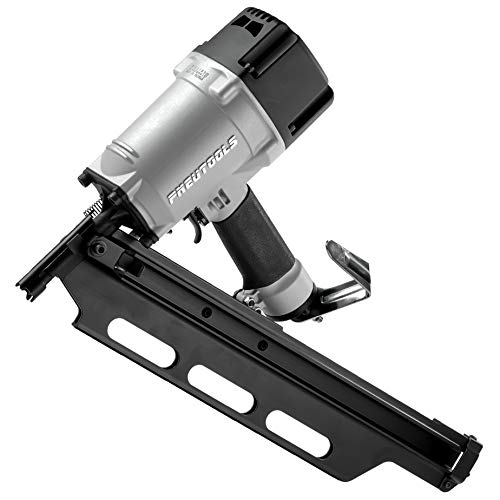 PneuTools SN2283H 21-Degree Framing Nailer
|
8.4/10 | Buy | |
 Metabo HPT EC914S 6-Gallon 200 PSI Pancake Air
|
8.3/10 | Buy | |
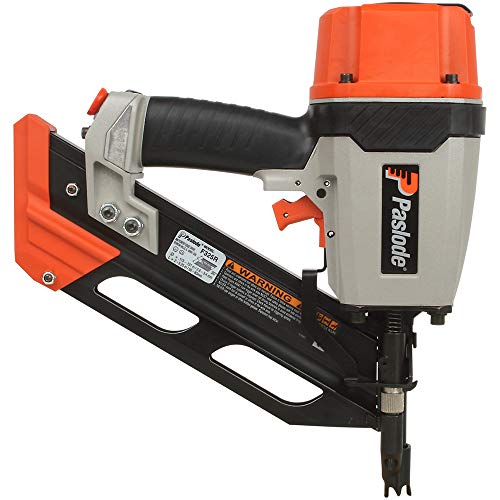 Paslode F325R Pneumatic Framing Nailer
|
8.1/10 | Buy |
Metabo HPT NR90AES1 21-Degree Framing Nailer
Weighing just 7.5 pounds, the Metabo HPT NR90AES1 provides rapid switching between sequential and contact firing for heavy framing jobs. Its tool-less depth drive and balanced body make it a practical workhorse for residential construction.
Pros
- Lightweight 7.5-pound frame reduces arm fatigue
- Fast switching between bump and sequential firing
- Tool-less depth adjustment simplifies flush driving
- Accommodates fasteners from 2 to 3.5 inches
- Backed by a 5-year professional warranty
Cons
- Limited exclusively to 21-degree plastic collated nails
- Pneumatic operation requires a compatible air compressor
3PLUS H2190SP 21 Degree Framing Nailer
Framing crews and DIY builders will appreciate the 3PLUS H2190SP for its quick-switching actuation switch between bump and sequential firing. Designed for 21-degree full round head nails up to 3.5 inches, it includes useful jobsite features like a 360-degree exhaust, a hardened toe-nailing claw, and dry-fire protection.
Pros
- Tool-free depth adjustment enables precise nail placement
- Simple switch toggles bump and sequential fire modes
- Dry-fire lockout prevents blank firing damage
- Hardened claw tip provides dependable toe-nailing grip
Cons
- Relatively heavy tool body at 10.69 pounds
- Bulky 19.7-inch frame can be awkward in tight spots
Metabo HPT EC28M Quiet Air Compressor
Operating at an ultra-quiet 59 dB, the Metabo HPT EC28M 1-gallon oil-free air compressor provides low-noise pneumatic air power in a compact 25.2-pound roll-cage frame. It is an ideal portable match for trim carpenters, punch-list contractors, and residential DIYers needing peaceful indoor fastening.
Pros
- Remarkably quiet 59 dB operation makes it well-suited for occupied residential job sites
- Lightweight 25.2-pound weight and ergonomic rubber grip make carrying up stairs straightforward
- Sturdy steel roll cage provides reliable physical protection around gauges and controls
- Oil-free pump mechanism eliminates pump lubrication maintenance and avoids messy oil leaks
- Universal quick-connect coupler simplifies tool connections across standard pneumatic lines
Cons
- Compact 1-gallon tank capacity is intended for intermittent fastening rather than continuous air tools
- Small air storage volume causes frequent motor cycling during rapid nailing sequences
- Bare-tool configuration does not include an air hose or pneumatic finish nailers
Metabo HPT NH90AB Palm Nailer
Weighing just 1.3 pounds, the Metabo HPT NH90AB palm nailer drives bulk nails into tight framing spots such as joist hangers and metal connectors. A magnetic nose holds fasteners securely for accurate positioning, while the 360 degree swivel fitting keeps hoses from binding during overhead work.
Pros
- Weighs only 1.3 pounds for effortless handling
- Magnetic nose holds nails securely for precise placement
- 360 degree swivel fitting prevents air hose binding
- Over-molded rubber grip helps dampen vibration
- Compact dimensions fit into tight framing spaces
Cons
- Limited to 2-1/2 to 3-1/2 inch fasteners
- Requires loose bulk nails instead of collated strips
- Optimal operation calls for brand specific fasteners
meite V1015B Picture Frame V-Nailer
Built for assembling picture frames and lightweight doors, this pneumatic joiner holds up to 200 fasteners for efficient corner joining. Its 3.2-pound balanced body and ergonomic rubber grip help minimize user fatigue during repetitive framing work.
Pros
- Large 200-piece fastener capacity saves reloading time
- Lightweight 3.2-pound frame reduces arm strain
- Accommodates multiple nail lengths for versatile framing
- Comfortable rubber grip provides secure control
Cons
- Requires a dedicated air compressor to operate
- V-nails are not included with the tool
Dotool 21-Degree Framing Nailer
Built for structural tasks like subflooring and framing, this Dotool pneumatic nailer drives 2-inch to 3-1/2-inch nails with tool-free depth adjustment. A sequential trigger and slip-reducing nose sleeve provide steady control for contractors and ambitious DIYers.
Pros
- Tool-free jam clearance and depth adjustments
- Rubber nose sleeve prevents slipping while toe-nailing
- 360-degree adjustable exhaust for user comfort
- Sequential trigger allows precise fastener placement
Cons
- Heavier build at 8.9 pounds
- Lacks a selectable bump-fire trigger mode
VEVOR 21-Degree Pneumatic Framing Nailer
Built for heavy construction and renovation projects, this pneumatic nailer supports multiple nail styles with selectable firing modes. Its tool-free depth control and open-nose jam release keep framing, decking, and subfloor tasks moving efficiently.
Pros
- Versatile compatibility with three nail shank types
- Tool-free depth adjustment wheel
- Dual sequential and bump firing modes
- Accessible open nose design clears jams quickly
- Durable aluminum magazine construction
Cons
- Weighs 9 pounds, which can tire arms overhead
- Magazine capacity holds only up to 60 nails
- Requires an external air compressor to operate
PneuTools SN2283H 21-Degree Framing Nailer
Engineered for straightforward durability, the PneuTools SN2283H features a hardened end cap and a single-mode trigger suited for heavy-duty framing. It drives standard 21-degree plastic collated nails and includes a dedicated rafter hook for convenient staging.
Pros
- Hardened end cap enhances overall durability
- Integrated rafter hook allows easy hanging
- One-piece safety mechanism operates smoothly at speed
- Uses economical full round head fasteners
Cons
- Single-mode trigger lacks selectable firing options
- Restricted to 21-degree plastic collated nails only
Metabo HPT EC914S 6-Gallon 200 PSI Pancake Air
The Metabo HPT EC914S delivers an impressive 200 PSI maximum pressure and 4 CFM at 90 PSI from a 6-gallon tank, giving trim carpenters and remodelers the air volume needed to drive multiple nailers simultaneously. At roughly 41 pounds, it successfully combines high-pressure air storage with practical job-site portability.
Pros
- High 200 PSI tank ceiling stores substantially more usable air than conventional 150 PSI pancake models
- Generous 4 CFM at 90 PSI airflow rating supports multi-tool operation and reduces nailer drive hesitation
- Manageable 41-pound carry weight offers better portability than heavier twin-stack compressor configurations
- Engineered by Metabo HPT to support both lightweight trim nailers and larger framing or roofing guns
Cons
- At 41 pounds, it is noticeably heavier to carry than minimalist 1-to-3 gallon trim-only compressors
- Tank volume and CFM output remain inadequate for continuous high-demand air tools like HVLP sprayers or sanders
- Ships as a bare-tool compressor without included air hoses, pneumatic fittings, or nail guns
Paslode F325R Pneumatic Framing Nailer
Remodelers working overhead or within narrow stud bays will appreciate the Paslode F325R for its lightweight build and compact profile. Powered by an air compressor, it drives 30-degree framing nails smoothly and features a quick two-step reloading mechanism.
Pros
- Exceptionally lightweight design minimizes overhead fatigue
- Easily navigates tight 16-inch on-center framing bays
- Fast two-step reloading mechanism
- Engineered for low jamming with 30-degree nails
Cons
- Requires a compatible air compressor and air hose
- Limited specifically to 30-degree framing nails
Key Sizing Factors for Framing Nailer Air Compressors
Selecting the proper air compressor for structural framing requires balancing working pressure, air delivery rate, and storage volume. Sinking full round head nails up to 3-1/2 inches into dense framing lumber demands significant pneumatic power from each trigger pull. An undersized setup causes rapid pressure drops, leaving fasteners sticking out and forcing work to stop while the pump recovers.
Air Volume Demand: Why CFM Outweighs Tank Gallons
Cubic feet per minute (CFM) measures the volume of air a compressor pump produces under continuous operation. While tank size indicates storage volume, the pump CFM rating determines how quickly that reserve is replenished. Framing nail guns are intermittent tools that consume air in distinct pulses. Sinking a typical 3-1/2-inch framing nail uses between 0.5 and 0.8 cubic feet of air, which quickly depletes small reservoirs during steady work.
A single carpenter driving nails at a measured sequential pace generally needs an air compressor delivering roughly 2.0 to 2.5 CFM at 90 PSI. At this delivery rate, the pump can keep up with framing studs, headers, and corner assemblies without stalling. When nailing speed increases during sheathing or subfloor installation, air consumption spikes. If tool demand exceeds pump CFM, tank pressure drops until the nailer lacks force to seat fasteners flush.
Higher production framing demands greater airflow to sustain multiple tools or fast firing. For example, the Metabo HPT Portable Pancake Air Compressor delivers 4 CFM at 90 PSI from its 6-gallon tank, which manufacturer specifications rate to run two framing nailers simultaneously. That airflow volume replenishes the tank quickly between bursts, preventing tool starvation. Targeting at least 4 CFM at 90 PSI provides a reliable buffer for rapid work or multi-gun crews.
Operating Pressure Requirements: Maintaining the 80 to 120 PSI Range
Pneumatic framing nailers require a precise pressure range to drive long fasteners through framing lumber. Tools such as the VEVOR Framing Nailer and Metabo HPT Framing Nailer operate within an industry-standard window of 80 to 120 PSI. If regulated line pressure falls below 80 PSI, the nailer piston cannot generate sufficient force to countersink nails. Operating above 120 PSI accelerates internal O-ring wear and risks damaging internal bumpers.
Maximum tank pressure dictates how long a compressor can supply that 80 to 120 PSI window before cycling on. Basic jobsite units often shut off around 135 to 150 PSI, whereas higher-pressure models like the Metabo HPT Portable Pancake Air Compressor store air up to 200 PSI. Storing air at 200 PSI creates a larger reservoir of usable air in a 6-gallon tank. This higher pressure threshold extends nailing sequences before the motor cut-in switch engages.
Regulator stability is just as important as tank storage pressure when framing walls. Pulling the trigger on a heavy framing nailer causes an instant dynamic pressure drop across the air line. A reliable dual-gauge regulator allows you to monitor regulated tool pressure independently from internal tank pressure. Setting your working regulator between 90 and 105 PSI generally ensures clean, flush nail drives across various lumber densities.
Tank Capacity and Form Factor: 1-Gallon vs. 6-Gallon Systems
Tank capacity provides an air buffer before the motor must engage to rebuild pressure. Ultra-compact options like the Metabo HPT Quiet Air Compressor feature a 1-gallon oil-free tank and run quietly at approximately 59 dB. While a 1-gallon compressor handles occasional framing nails for punch-list repairs or pick-up tasks, it lacks volume for continuous building. Driving several heavy nails in rapid sequence quickly exhausts a 1-gallon tank, forcing the motor to cycle constantly.
A 6-gallon pancake or twin-stack tank offers the practical sweet spot between jobsite portability and usable air volume. Pancake tanks maintain a broad, low center of gravity that resists tipping on uneven subfloors or rough terrain. The 6-gallon buffer allows a carpenter to nail off multiple wall studs before the pressure switch triggers. Weighing around 40 to 45 pounds, these units remain easy for a single worker to transport.
Stationary workshop compressors and gas-powered wheelbarrow units enter the picture for production framing crews. Wheeled compressors feature twin tanks or horizontal cylinders holding 8 to 20 gallons or more. These high-capacity systems deliver continuous volume to support multiple carpenters framing simultaneously without thermal strain. For residential remodeling and single-carpenter tasks, however, a 6-gallon electric portable compressor remains the most convenient, balanced setup.
Nailing Tempo and Trigger Modes: Bump Fire vs. Sequential Actuation
Your firing method directly dictates air consumption rates and compressor sizing needs. Nailers equipped with sequential triggers, such as the PneuTools SN2283H Framing Nailer, require releasing and depressing the nose contact before each shot. This mechanism naturally regulates firing speed, giving the compressor pump adequate time to replenish the tank. Sequential mode works well for careful framing tasks like setting window cripples and structural blocking.
Contact actuation, commonly called bump firing, increases pneumatic air demand significantly. Tools like the 3PLUS H2190SP Framing Nailer and Metabo HPT Framing Nailer include mode switches allowing users to bounce the nose along framing members with the trigger held down. When tacking wall sheathing or subfloor panels, a worker can drive multiple nails per second. This rapid pace rapidly empties small tanks, requiring high compressor recovery speed to avoid protruding fasteners.
Recovery time measures how quickly the pump recharges the tank from cut-in to cut-out pressure. If the recovery cycle is sluggish, regulated line pressure drops below the 80 PSI needed for dense studs. When pressure lags, nail heads remain proud and require manual hammering that eliminates the speed benefits of bump fire. Sizing your compressor to match your intended firing tempo prevents unexpected delays on the job.
Electrical Circuit Demands and Jobsite Voltage Drop
Most portable electric framing compressors run on 120V motors suited for 15-amp or 20-amp household branch circuits. Electric compressor motors draw substantial inrush current during startup, especially when starting against pump head pressure. Sharing a circuit with heavy tools like miter saws or table saws can easily trip household breakers. Connecting the compressor to a dedicated 20-amp outlet prevents nuisance breaker trips and keeps the motor operating smoothly.
Running undersized extension cords is a frequent jobsite error that damages compressor motors over time. Long, thin cords create electrical resistance that drops voltage at the motor terminals. Low voltage causes the motor to draw higher amperage, leading to excess heat and tripped thermal overload switches. A safer jobsite practice is plugging the compressor directly into the outlet and utilizing a longer air hose to extend your reach.
Cold weather brings additional electrical starting challenges on unheated jobsites. Chilly temperatures stiffen mechanical components and increase motor starting resistance. Compressors with functional unloader valves release head pressure cleanly after each cycle, allowing the motor to spin up freely before compressing air. Verifying smooth startup in freezing conditions ensures reliable operation without repeated trips to the electrical panel.
Air Delivery Systems: Hose Diameter, Couplers, and Line Losses
The air hose connecting the compressor to your framing nailer directly influences tool performance. Standard 1/4-inch internal diameter hoses are lightweight but cause significant dynamic pressure loss across 50 to 100 feet during high-flow bursts. Upgrading to a 3/8-inch internal diameter air hose provides better volume delivery to heavy framing tools. This larger hose cross-section minimizes friction loss, ensuring full tank pressure reaches the nailer driver blade.
Quick-connect couplers and fittings can also restrict airflow if they feature narrow internal passages. High-flow couplers allow sudden air bursts to pass without bottlenecking line pressure at the connection points. Regularly checking fittings for leaks and using quality thread sealant keeps stored tank air from bleeding off while resting between tasks. Efficient connections ensure that every cubic foot delivered by the pump reaches the nailer.
Moisture buildup inside the air tank affects both storage capacity and internal tool longevity. Compressing ambient air creates water condensation that collects at the base of the tank cylinder over time. If left unaddressed, moisture enters the air hose, washing away tool oil and corroding nailer O-rings. Purging the tank daily through the bottom drain valve maintains maximum air volume and protects pneumatic tools from internal water damage.
Fastener Variations and Specialized Pneumatic Tool Demands
Nail size and shank design significantly affect the pneumatic energy required per drive. Full round head 21-degree framing guns, such as the DOTOOL Framing Nail Gun or 3PLUS H2190SP, handle fasteners from 2 inches up to 3-1/2 inches. Driving 3-1/2-inch ring shank nails into engineered lumber requires maximum air volume and pressure. Shorter 2-inch smooth shank nails for temporary bracing require less energy, allowing smaller compressors to keep up.
Certain structural fastening tasks use specialized tools with differing air demands. Installing joist hangers and metal connectors often involves tools like the Metabo HPT Palm Nailer. Because a palm nailer uses rapid, micro-impact strikes to drive individual bulk nails, its air flow profile differs from the single burst of a framing gun. Maintaining regulated pressure above 80 PSI remains critical to seat hanger nails tightly against structural steel plates.
Specialized indoor tools like the meite V-Nailer picture frame joiner consume minimal air compared to construction nailers. A picture frame nailer drives small v-shaped fasteners and operates comfortably on low air volume. In contrast, framing models like the Paslode Pneumatic Framing Nailer F325R need robust airflow to sink framing fasteners in tight 16-inch stud bays. Understanding these tool differences prevents assuming a light hobby compressor can power structural framing nailers.
Choosing an air compressor for a framing nail gun comes down to matching your work pace with tool air requirements. For single-operator framing and remodeling projects, a 6-gallon compressor delivering roughly 2.5 to 4 CFM at 90 PSI provides an ideal mix of air buffer, pressure stability, and portability. Combining this compressor size with a 3/8-inch air hose and regulated pressure around 90 to 105 PSI ensures consistent, flush nail drives all day.
About the author
Kenny Koehler is a power-tool specialist with more than a decade of hands-on evaluation experience and a science-based approach to product testing. His expertise in repeatable testing, tool performance, impact wrenches, and professional equipment brings a practical, data-focused perspective to compressor and pneumatic-tool comparisons.