
How to Hook up an Air Compressor Hose: Practical Guide for 2026
Learn how to hook up an air compressor hose safely in October 2026. Master quick couplers, thread sealing, whip hoses, and air tool fittings.
 By Kenny Koehler
Updated October 8, 2026
By Kenny Koehler
Updated October 8, 2026

Leaking couplers, sudden pressure drops, or an unexpectedly disconnected air line can halt any workshop project in seconds. Connecting pneumatic lines requires understanding quick-disconnect couplers, pipe thread standards, and proper line pressure management. When DIY builders and shop mechanics learn how to hook up an air compressor hose properly, air tools receive consistent volume while eliminating annoying hissing leaks. A secure connection also protects pneumatic motors from pressure starvation and guards the operator against hazardous hose whipping. Understanding basic air compressor mechanics makes it much easier to configure a reliable delivery setup from the tank manifold to the tool trigger.
Most pneumatic systems rely on standard quarter-inch National Pipe Taper threads combined with quick-connect couplers to route pressurized air efficiently. Making a tight connection involves far more than simply snapping two metal fittings together under pressure. Thread sealants, hose diameter selection, bend restrictors, and proper depressurization sequences all contribute to a safe, durable pneumatic line. Whether running an intermittent brad nailer or setting up high-flow lines for automotive work, following the correct attachment procedure prevents damaged regulator threads and premature fitting wear. The following guide outlines the top hardware choices and provides complete instructions for establishing clean, leak-free pneumatic connections.
| Award | Product | ACR Score About ACR ScoreThe ACR Score is our own rating from 0 to 10, based on performance, design and build, ease of use, and value. It reflects independent research and is never influenced by manufacturers, retailers, or affiliate commissions. Learn more › | |
|---|---|---|---|
| Best Overall |
ZKZX 1/4-Inch to 3/4-Inch Blowout Adapter Pair
|
9.2/10 | Buy |
| Best Value |
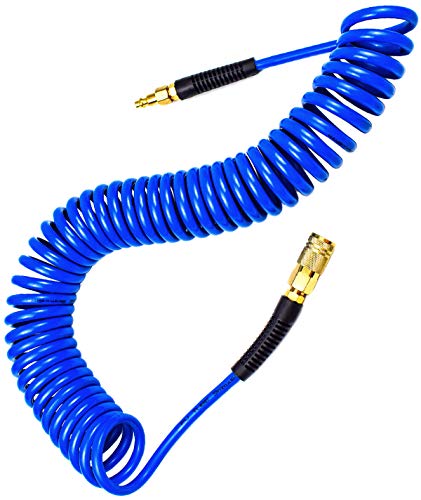 YOTOO 1/4-Inch x 25-Foot Polyurethane Recoil Air
|
9.2/10 | Buy |
 WYNNsky 3/8" x 30" Hybrid Lead-in Air Hose
|
9.1/10 | Buy | |
| Best Premium |
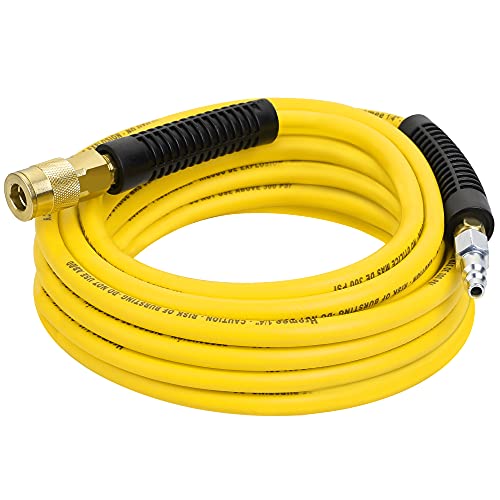 Hromee 1/4-Inch x 25-Foot Hybrid Air Compressor
|
8.6/10 | Buy |
 FYPower 18-Piece Air Compressor Accessories Kit
|
8.6/10 | Buy | |
| Best Budget |
 ZKZX 1/4" to 3/4" GHT Blowout Adapter 2-Pack
|
8.4/10 | Buy |
 LUMITECO 9.8-Foot Recoil Air Hose Adapter
|
8.4/10 | Buy | |
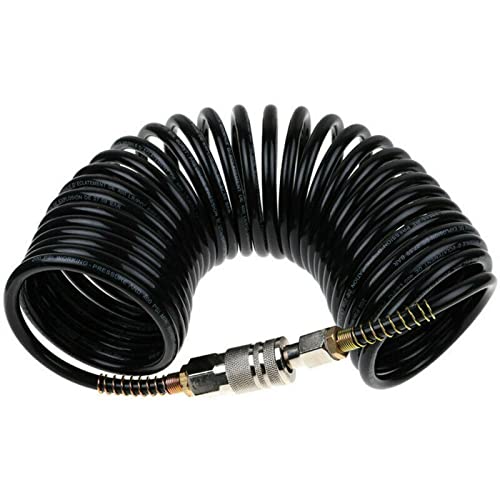 ELEGICKLIP 25ft Coiled Air Compressor Hose
|
8.4/10 | Buy | |
 Hromee 3/8-In x 6-Ft Hybrid Lead-In Air Hose
|
8.4/10 | Buy | |
 QWORK 3/8-Inch by 15-Inch Rubber Air Compressor
|
8.3/10 | Buy |
ZKZX 1/4-Inch to 3/4-Inch Blowout Adapter Pair
Designed for winterizing outdoor plumbing, this brass ZKZX adapter set connects standard air compressors to garden hose fittings to clear standing water. The male and female pair accommodates various sprinkler systems, RVs, and spigots to help prevent freezing damage.
Pros
- Includes both male and female hose adapters
- Compatible with standard 1/4-inch compressor fittings
- Sturdy brass construction
- Versatile for RVs, sprinklers, and faucets
Cons
- Requires a compatible air compressor
- Limited to 3/4-inch garden hose threads
YOTOO 1/4-Inch x 25-Foot Polyurethane Recoil Air
The YOTOO 1/4-inch by 25-foot polyurethane recoil air hose provides a lightweight, tangle-resistant pneumatic connection rated for up to 150 PSI. Equipped with pre-installed 1/4-inch industrial quick-connect fittings and flexible operation down to -40 degrees Fahrenheit, it is a convenient, space-saving accessory for garage hobbyists, trim carpenters, and workbench setups.
Pros
- Self-retracting coil design eliminates manual hose winding and prevents messy shop floor clutter
- Comes ready to work with factory-installed 1/4-inch industrial quick-connect coupler and plug
- Retains pliability in freezing conditions down to -40 degrees Fahrenheit
- Durable bend restrictors protect high-wear junction points from premature cracking or kinking
- Lightweight polyurethane build significantly minimizes hand and wrist fatigue during detailed tool work
Cons
- 1/4-inch inner diameter restricts airflow volume required for continuous high-demand tools like dual-action sanders or spray guns
- Coil tension increases when stretched near the full 25-foot reach, which can pull back against lightweight pneumatic tools
- Not intended for severe rough-framing jobsite abuse where heavy-duty reinforced rubber hoses are typically preferred
WYNNsky 3/8" x 30" Hybrid Lead-in Air Hose
Designed to link compressors and hose reels, this hybrid lead-in hose combines rubber flexibility with lightweight PVC durability. Its 300 PSI rating and brass ball swivel fitting provide reliable airflow for garage and workshop setups.
Pros
- Flexible hybrid blend is lighter than solid rubber
- Durable brass fittings resist corrosion
- Integrated ball swivel prevents hose binding
- Handles high working pressure up to 300 PSI
- Backed by a two-year limited warranty
Cons
- Short 30-inch length limits reach to nearby connections
- Female NPT end lacks rotational swivel capability
Hromee 1/4-Inch x 25-Foot Hybrid Air Compressor
The Hromee 1/4-Inch x 25-Foot Hybrid Air Compressor Hose provides a flexible, lightweight pneumatic connection with a 300 PSI working pressure, bend restrictors, and pre-attached industrial fittings. Rated for -40°F to 150°F, it is well-suited for trim carpenters, home mechanics, and DIYers seeking kink-resistant hose handling.
Pros
- Pliable hybrid polymer stays flexible in cold weather down to -40°F without severe memory coils
- Comes ready to use out of the box with pre-connected brass coupler and industrial steel plug
- Integrated bend restrictors minimize strain and kink points near the MNPT fittings
- Lightweight two-pound design makes overhead nailing and portable trim work easy on user arms
Cons
- The 25-foot length provides limited reach across larger garages or multi-room jobsite setups without an extension
- A 1/4-inch inner diameter creates higher airflow restriction than 3/8-inch hoses when supplying high-CFM continuous tools
- Bright yellow exterior easily shows garage grime, motor oil, and jobsite dirt over time
FYPower 18-Piece Air Compressor Accessories Kit
The FYPower 18-Piece Air Compressor Accessories Kit combines a 25-foot recoil poly hose rated at 120 PSI with standard Industrial Type M brass and steel fittings, a 100 PSI tire gauge, and multi-tip blow gun attachments. It serves as an accessible starter set for garage DIYers and homeowners handling benchtop cleanups and routine tire maintenance.
Pros
- Comprehensive all-in-one starter bundle covers inflation, dusting, and standard airline connections
- Self-coiling 25-foot polyurethane recoil design retracts automatically to prevent shop floor clutter
- Standard 1/4-inch Industrial Type M couplers and plugs match standard American garage air setups
- Supplied with solid brass fittings and thread sealing tape to help prevent immediate airline leaks
Cons
- The 120 PSI maximum working pressure rating is unsuitable for high-pressure systems operating above standard home compressor thresholds
- The 1/4-inch inner diameter recoil hose introduces airflow restriction that may starve continuous high-CFM air tools like impact wrenches or grinders
- Recoil polyurethane hoses pull back with spring tension during extended reaching across large work areas
ZKZX 1/4" to 3/4" GHT Blowout Adapter 2-Pack
Designed for winterizing outdoor plumbing, this brass fitting connects standard air compressors to garden hose lines to clear remaining water. It provides a straightforward solution for safeguarding RVs, camper water lines, and sprinkler systems against freezing temperatures.
Pros
- Solid brass build resists rust and corrosion
- Fits standard 1/4-inch compressor quick-connect couplers
- Threads directly into 3/4-inch female hose ports
- Includes two blowout adapters per pack
Cons
- Only fits female garden hose connections
- Requires a separate air compressor to operate
LUMITECO 9.8-Foot Recoil Air Hose Adapter
Connecting directly to standard tire inflators, this 9.8-foot coiled PU extension provides extra reach and hands-free convenience for awkward valve stems. Solid brass chucks and an included Presta adapter make it a versatile upgrade for bicycle, motorcycle, and automotive tires.
Pros
- Generous 9.8-foot coiled reach provides working flexibility
- Brass locking chuck seals tightly without leaking
- Supports both Schrader and Presta valve stems
- Durable PU construction resists wear and oil
Cons
- Recoil tension pulls back when stretched to maximum length
- Requires compatible threaded connection on the host inflator
ELEGICKLIP 25ft Coiled Air Compressor Hose
Equipped with solid copper connectors and bend restrictors, this coiled PE hose delivers tangle-free flexibility for workshop air tools. Its standard quarter-inch quick coupler provides immediate compatibility for automotive and home garage projects.
Pros
- Solid copper connectors offer durable connections
- Bend restrictors reduce strain at the joints
- Coiled profile keeps work areas clear
- Pre-attached quick coupler allows immediate use
Cons
- Polyethylene hose material is stiffer than rubber
- Narrow 5mm diameter limits high-volume air tools
Hromee 3/8-In x 6-Ft Hybrid Lead-In Air Hose
Built to bridge compressors and hose reels, this hybrid whip hose absorbs tool vibration and minimizes user fatigue. Its lightweight rubber-PVC construction and pre-attached brass coupler make it a dependable connection for garage setups.
Pros
- Stays flexible in extreme temperatures down to -40°F
- Pre-attached brass quick coupler saves setup time
- Built-in bend restrictors reduce kinking at connection points
- Lightweight hybrid build prevents user fatigue
Cons
- Short six-foot length limits use strictly to connector applications
- Steel plug is more prone to rust than full brass fittings
QWORK 3/8-Inch by 15-Inch Rubber Air Compressor
This QWORK two-pack features 3/8-inch rubber leader hoses rated up to 300 PSI with solid brass 1/4-inch male NPT fittings for vibration dampening and flexible connections. It provides practical strain relief for DIYers, woodworkers, and garage mechanics looking to isolate rigid air lines or compressor manifolds.
Pros
- Solid brass 1/4-inch male NPT threads resist corrosion and provide secure seals with standard shop fittings
- Generous 300 PSI maximum working pressure accommodates typical garage and contractor air systems
- Flexible rubber build helps absorb motor vibration and reduces strain on rigid pipe joints
- Two-pack bundle allows users to plumb both a primary compressor connection and an auxiliary line or reel
Cons
- Fixed 1/4-inch male NPT ends require adapter bushings if your system uses larger 3/8-inch NPT ports
- Short length of roughly 14 to 15 inches is specifically intended for leader setups, not general tool extension runs
- Does not include pre-installed quick-connect couplers or thread sealant tape
Complete Guide to Connecting Air Compressor Lines and Fittings
Pressurized air systems demand secure mechanical joints to transfer energy safely from the compression cylinder to your pneumatic equipment. Attempting to force unmatched fittings together or connecting lines while the compressor runs at maximum tank pressure creates immediate safety hazards and leaks. Knowing how to hook up an air compressor hose involves selecting the correct couplers, establishing airtight threads, and managing line pressure step by step. When you understand the operational mechanics behind pneumatic connections, your workshop tools run smoother and maintain consistent working torque.
Identifying Fitting Thread Types and Coupler Standards
Every air delivery layout relies on two distinct connection methods: permanent threaded pipe fittings and quick-disconnect couplers. Most consumer and workshop equipment uses standard 1/4-inch National Pipe Taper (NPT) threads on tank manifolds, regulator outlets, and tool inlets. Male pipe threads (MNPT) feature a tapered outer profile that wedges into matching female pipe threads (FNPT) as you tighten the joint. Because NPT threads seal along their helical flanks rather than against a flat rubber gasket, metal-on-metal contact alone rarely creates a complete airtight barrier without a specialized sealing agent.
Quick-disconnect fittings bridge the gap between stationary pipe threads and flexible hoses for instant tool changes. The standard industrial interchange profile, commonly designated as Type I/M, represents the most widespread format in automotive and woodworking shops. A complete quick-disconnect assembly consists of a spring-loaded female coupler and a mating male plug. High-grade couplers feature solid brass bodies with stainless steel locking balls to resist corrosion, while steel plugs provide hardened contact surfaces that withstand repetitive impacts without deforming.
Sealing Threaded Joints with PTFE Tape and Liquid Thread Sealant
Preventing microscopic air leaks at NPT joints requires applying polytetrafluoroethylene (PTFE) thread seal tape or pneumatic liquid thread sealant. Wrap thread tape clockwise around the male threads when viewing the fitting from the open end so the tape tightens as you thread the piece into the female port. Three to four complete wraps of standard white or heavy-duty yellow PTFE tape usually provide sufficient thickness to deform into the microscopic thread roots. Be sure to leave the initial two male threads bare to prevent frayed tape shreds from entering the pneumatic system and jamming internal valve seats.
Tightening brass fittings requires a measured touch because over-torquing can easily crack cast aluminum regulator manifolds or strip soft brass threads. Thread the components together by hand first to ensure proper alignment and avoid cross-threading the fine tapered ridges. Use two open-ended wrenches to finish the joint, using one wrench to hold the regulator body stationary while the second wrench turns the fitting hex nut. Turn the fitting until snug, typically one to two full rotations past hand-tight, positioning the quick coupler sleeve in an easily accessible orientation.
Step-by-Step Procedure for Connecting Hose to Compressor Regulators
Before attaching any air hose to your compressor, verify that the tank pressure switch is set to the off position. Depressurize the regulator outlet by turning the pressure adjustment knob fully counterclockwise until it spins freely with zero output tension. If the compressor tank already contains pressurized air, inspect the tank pressure gauge to confirm it remains well within safe operational limits. Ensuring that the regulator port holds zero line pressure prevents unexpected hose kickback when you mate the mechanical fittings.
Take the male plug located on your primary air hose or lead-in whip hose and inspect the sealing surface for dirt, grit, or burrs. Slide back the spring-loaded collar on the compressor female coupler with your thumb and forefinger, exposing the internal locking chamber. Push the hose plug firmly into the coupler socket until the plug shoulder seats completely against the internal rubber seal ring. Release the outer collar and allow its internal spring to snap the sleeve forward over the locking balls, producing a distinct mechanical click. Gently pull back on the hose to verify that the fitting has locked securely before opening any airflow.
Utilizing Hybrid Lead-in Whip Hoses to Isolate Tool Vibration
Directly attaching a rigid quick coupler to high-vibration pneumatic tools like impact wrenches or air hammers causes rapid fitting fatigue. Heavy vibration creates micro-movements between the coupler locking balls and the plug groove, leading to air leaks, wallowed metal, and accidental hose release. Placing a short, flexible lead-in whip hose between the tool handle and the primary supply line isolates mechanical vibration effectively. Whip hoses measuring between eighteen inches and six feet in length absorb pulsating shock waves while reducing operator wrist strain during extended projects.
When selecting a whip hose, options constructed from rubber and PVC hybrid blends offer excellent flexibility without coiling memory. Products like the WYNNsky hybrid lead-in hose or the Hromee six-foot whip hose feature integrated ball swivels and heavy-duty bend restrictors. The ball swivel fitting allows the pneumatic tool to rotate freely without twisting the supply line into awkward knots. For heavier workshop applications involving continuous air tools, checking compressor requirements for automotive air tools ensures your delivery lines and tank volume can sustain the required volume without severe line pressure loss.
Attaching Pneumatic Tools and Verifying Coupler Engagement
The working end of your primary air hose typically terminates in a female quick coupler designed to receive various pneumatic attachments. Before connecting a nailer, spray gun, or tire inflator, check the tool inlet for built-in debris screens and clear any dust. Retract the hose coupler collar, insert the male plug attached to the tool base, and push firmly until the sleeve snaps shut. Many modern couplers incorporate push-to-connect mechanisms that allow you to snap the plug directly into the coupler body using one hand without retracting the collar manually.
Always perform a quick manual tug test on the connection before introducing pressurized air to the tool chamber. Pull the tool and hose in opposite directions to confirm that the hardened steel balls remain locked behind the plug shoulder. A partially seated plug can violently eject under eighty to ninety pounds per square inch of operating pressure, potentially damaging work surfaces or causing physical injury. Ensuring complete mechanical engagement takes only a second and guarantees reliable performance during intense shop operations.
Connecting Specialty Attachments and Blowout Winterization Adapters
Compressed air hoses frequently connect to utility devices other than standard nailing and grinding tools. Specialized blowout plug adapters, such as quarter-inch quick-connect plugs matched to three-quarter-inch garden hose threads, allow compressors to winterize plumbing systems. These fittings connect your air hose directly to recreational vehicle water inlets, outdoor spigots, or underground sprinkler manifolds to blow standing water out of pipes before freezing weather arrives. When using blowout plugs, always dial down the compressor regulator to low pressure, typically between twenty and forty PSI, to prevent rupturing fragile plastic water lines.
Tire maintenance represents another common task requiring specialized hose attachments. Auxiliary coiled hose adapters, such as extension lines with locking brass chucks and Presta valve converters, connect directly to quick-disconnect hoses to service automotive and bicycle tires. The locking air chuck clips securely onto valve stems to prevent tedious air leakage during inflation, allowing hands-free pressure monitoring. Make sure all downstream inflation accessories feature pressure ratings that meet or exceed the maximum regulated output of your compressor system.
Pressurization Protocol, Regulator Calibration, and Leak Testing
Once all mechanical connections are latched and verified, you can safely introduce compressed air into the delivery hose. Turn the compressor power switch on and allow the pump to build tank pressure until the automatic pressure switch cuts out at factory specifications. Slowly rotate the output regulator knob clockwise to increase line pressure until the working gauge displays the exact operating pressure specified by your tool manufacturer. Most intermittent pneumatic nailers require seventy to ninety PSI, while heavy-duty impact tools often require ninety to one hundred PSI.
Listen carefully along the hose run, quick couplers, and threaded joints for any audible hissing sounds that indicate escaping air. If you suspect an air leak, spray a small mixture of mild dish soap and water onto the suspect threaded joints and coupler sleeves. Expanding soap bubbles immediately pinpoint the precise location of air loss without creating messy residue. If a fitting bubbles, shut off the compressor, vent the air lines, and apply fresh PTFE tape before retightening the connection.
Safely Disconnecting and Depressurizing Compressed Air Lines
Disconnecting an air hose while under high pressure without proper technique can cause the hose end to whip wildly and strike nearby objects. Begin the disconnection procedure by shutting down the compressor and closing the regulator output or disconnecting the main hose from the tank manifold. Discharge the remaining pressurized air trapped inside the hose line by depressing the trigger on an attached blow gun or dry-firing a connected pneumatic tool into scrap wood until the line gauge drops to zero.
Once the line gauge reads zero PSI, firmly grasp the hose body directly behind the female coupler with one hand while holding the male plug with the other. Pull the sliding coupler sleeve backward toward the hose to release the internal locking balls. Because residual pressure might still lurk behind the valve seat, holding both sides firmly prevents the plug from launching out of the coupler socket. Store disconnected hoses neatly on dedicated wall reels or coiled hooks to protect fitting faces from grit and impact damage.
Selecting Hose Materials and Sizing Lines for Minimum Pressure Drop
Choosing the right air hose material and inside diameter directly impacts how easily you can maneuver around your workshop and how much air volume reaches your tools. Polyurethane recoil hoses offer lightweight self-coiling convenience that snaps back automatically for clean, compact storage in small work areas. In contrast, hybrid rubber and PVC hoses lay completely flat on concrete floors, resist kinking, and maintain flexible handling even in sub-zero shop environments. Bend restrictors installed at both hose ends prevent sharp pinching near rigid metal fittings, dramatically extending hose operating life.
Hose diameter plays an equally critical role in preventing dynamic pressure drop over extended distances. A standard quarter-inch inner diameter hose works well for short runs under twenty-five feet when operating low-consumption tools like brad nailers or tire inflators. However, high-demand tools such as rotary sanders, paint sprayers, and half-inch impact wrenches require three-eighths-inch inner diameter hoses to maintain adequate air volume. For detailed guidance on matching tool air consumption to tank capacity and hose delivery, review our guide on sizing an air compressor for pneumatic tools.
Mastering proper hose hookup practices ensures that your pneumatic system operates with maximum efficiency, reliable pressure delivery, and total workshop safety. Always take time to inspect sealing O-rings inside couplers, apply thread sealant correctly, and bleed trapped air before pulling quick-release collars. Maintaining your hoses and fittings eliminates costly pressure losses, allowing your compressor pump to cycle less frequently and last longer. With quality hybrid or polyurethane lines and secure industrial connections, your pneumatic equipment will perform smoothly across every home improvement or automotive task.
About the author
Kenny Koehler is a power-tool specialist with more than a decade of hands-on evaluation experience and a science-based approach to product testing. His expertise in repeatable testing, tool performance, impact wrenches, and professional equipment brings a practical, data-focused perspective to compressor and pneumatic-tool comparisons.