
What Is a Reciprocating Air Compressor: A Practical Guide for 2026
Learn what is a reciprocating air compressor in October 2026, including piston mechanics, single versus two-stage designs, and proper shop setup.
 By Bob Beacham
Updated October 8, 2026
By Bob Beacham
Updated October 8, 2026

Air delivery problems often trace back to choosing the wrong pump architecture for intermittent or continuous shop demands. Understanding what is a reciprocating air compressor helps clarify how positive displacement piston pumps generate reliable pneumatic pressure for everything from framing nailers to automotive impact wrenches. Unlike rotary screw units engineered for continuous non-stop airflow in large industrial plants, reciprocating models use a crankshaft, connecting rod, and piston assembly that compresses ambient air inside closed cylinders. Exploring common air compressor applications shows that these piston-driven machines dominate home garages, carpentry jobsites, and light commercial workshops.
Operating a piston compressor requires balancing tank buffer capacity, delivered cubic feet per minute at 90 PSI, and rated motor duty cycles to avoid premature heat fatigue. Many workshop owners discover that undersized branch circuits or extreme startup inrush current can trip breakers before the pump reaches operating cut-out pressure. Reviewing standard air compressor electrical power requirements ensures your dedicated garage outlet can handle both continuous running horsepower and cold-weather startup surges. Whether you choose an oil-free dual-piston pancake unit or a heavy-duty splash-lubricated cast-iron pump, knowing how piston stroke displacement works protects your pneumatic equipment investment over years of demanding service.
| Award | Product | ACR Score About ACR ScoreThe ACR Score is our own rating from 0 to 10, based on performance, design and build, ease of use, and value. It reflects independent research and is never influenced by manufacturers, retailers, or affiliate commissions. Learn more › | |
|---|---|---|---|
| Best Overall |
BairDplusL 8 Gallon Ultra Quiet Air Compressor
|
9.2/10 | Buy |
| Best Budget |
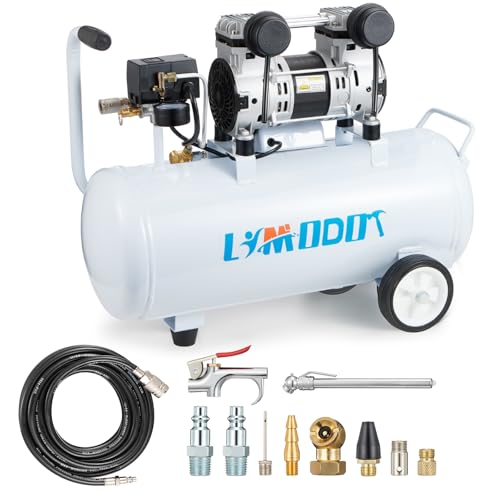 Quiet Oil-Free Air Compressor, 68 dB
|
9.1/10 | Buy |
| Best Value |
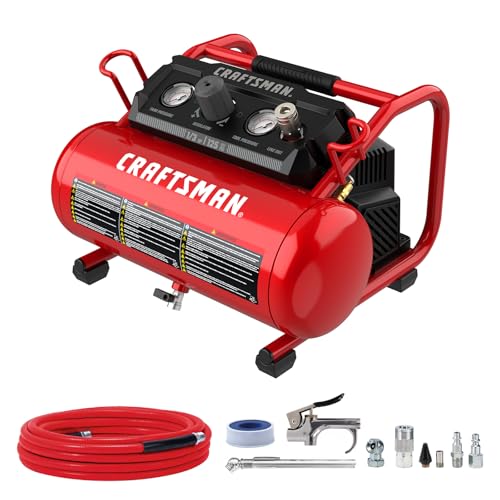 CRAFTSMAN Air Compressor
|
9.1/10 | Buy |
| Best Premium |
 Klutch 29-Gallon Air Compressor, 2.5 HP, 120V
|
8.9/10 | Buy |
 Ingersoll Rand All Season Select Synthetic Air
|
8.6/10 | Buy | |
 Metabo HPT Pancake Air Compressor
|
8.6/10 | Buy | |
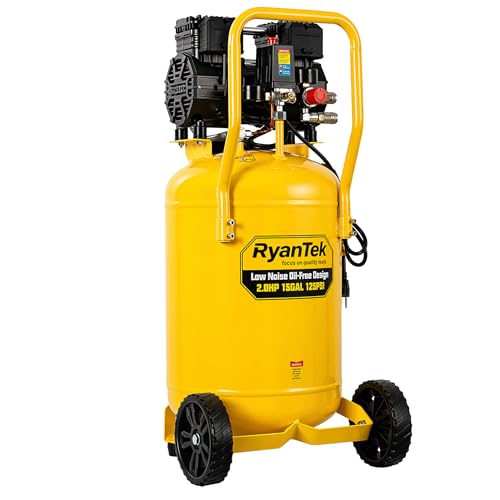 RyanTek 15-Gallon Air Compressor, 2HP, Quiet 66dB
|
8.6/10 | Buy | |
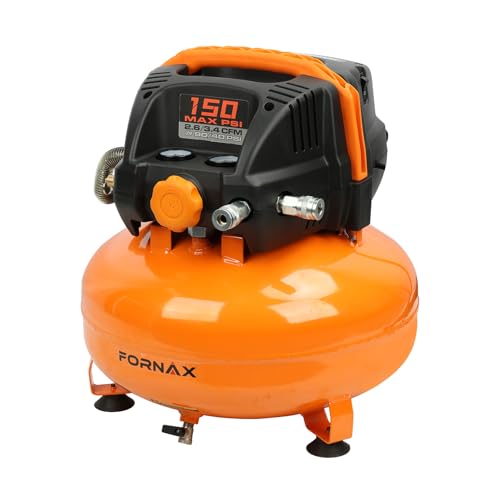 FORNAX Pancake Air Compressor with two couplers
|
8.4/10 | Buy | |
 VEVOR Air Compressor Motor
|
8.4/10 | Buy | |
 TRIAX Kompressor ISO 100 SAE 30, Full Synthetic
|
8.3/10 | Buy |
The Mechanics, Engineering, and Operation of Reciprocating Air Compressors
A reciprocating air compressor is a positive-displacement machine that uses a piston driven by a crankshaft to compress atmospheric air into a storage tank. As the crankshaft rotates, it converts rotary motion from an electric motor or gas engine into linear back-and-forth motion within an enclosed cylinder. This mechanical action repeatedly draws in ambient air, compresses it inside the cylinder bore, and pushes the pressurized air past a discharge valve into a storage reservoir. Piston compressors represent the most common pneumatic power source found across home workshops, construction jobsites, and garages due to their reliable pressure capabilities and straightforward design.
Core Operating Principles of Piston-Driven Positive Displacement
Positive displacement operates on the fundamental rule that decreasing the volume of a gas directly increases its pressure. Within a reciprocating compressor pump, cylinder volume alternates between its maximum capacity at bottom dead center and minimum capacity at top dead center. Flexible spring-steel reed valves regulate air movement into and out of the cylinder head based on pressure differentials. When the piston travels downward, internal cylinder pressure drops below atmospheric pressure, drawing in ambient air through the intake port.
The mechanical efficiency of this cycle depends on cylinder sealing, valve response, and heat dissipation. Compressing air generates substantial thermal energy, which is why pump cylinders feature deep aluminum or cast-iron cooling fins to disperse heat into the surrounding air stream. High-output units often incorporate integrated fan blades directly into the drive motor pulley to wash air across the cylinder fins during active cycles. Efficient thermal shedding protects cylinder walls from distortion and prevents accelerated wear on synthetic piston rings in oil-free configurations.
Reciprocating compressors generate pulsing airflow rather than a smooth continuous stream. Each complete revolution of the crankshaft produces discrete compression pulses that travel through the pump manifold toward the receiver tank. The steel tank functions as a pneumatic reservoir, smoothing out pressure oscillations so connected tools receive stable, regulated air delivery. In setups ranging from compact 2-gallon trim carpentry units to 29-gallon garage tanks, the storage tank ensures pneumatic tools operate without erratic pressure drops.
The Compression Cycle: From Intake Stroke to Tank Check Valve
The operational sequence begins at the intake air filter, which prevents airborne dust, sawdust, and shop debris from entering the cylinder chamber. As the piston begins its downward intake stroke, expanding space within the cylinder creates a partial vacuum that draws air through the intake port. The intake reed valve flexes open smoothly under this pressure differential, admitting air into the chamber. Durable intake filters, such as the screw-mounted filters on the RyanTek 15-gallon compressor, protect internal cylinder walls from abrasive particles that could score polished surfaces.
At the bottom of the stroke, the intake valve snaps shut due to spring tension and equalized chamber pressure. The upward compression stroke immediately begins squeezing the trapped air charge against the cylinder head plate. As the piston crown approaches top dead center, internal air pressure spikes until it overcomes the pressure holding the discharge reed valve closed. This differential forces the discharge valve open, venting hot, pressurized air into the discharge tube leading toward the receiver vessel.
Before entering the storage tank, compressed air passes through a heavy-duty brass check valve threaded directly into the tank bung. This one-way valve allows air to enter the tank during compression while preventing stored air from backflowing into the pump head when the motor shuts down. If a check valve becomes fouled with carbon or debris, air bleeds backward into the pump head, creating starting resistance that can trip household breakers on the next cycle. Regular inspection of the tank check valve prevents trapped head pressure and motor strain.
Single-Stage Versus Two-Stage Compression Architecture
Reciprocating air compressors fall into two primary categories based on how many compression steps occur before air enters the tank. In a single-stage compressor, air is drawn into one or more cylinders, compressed to working pressure in a single stroke, and discharged directly into the tank. Units such as the CRAFTSMAN 2-gallon portable compressor and pancake models from Metabo HPT or FORNAX utilize single-stage architecture. Single-stage machines typically top out between 125 and 165 PSI maximum pressure, making them compact, lightweight, and well-suited for general nailing and tire inflation.
Two-stage reciprocating compressors divide the total compression workload between two distinct cylinders connected in series. The first cylinder, featuring a larger diameter bore, pulls in ambient air and compresses it to an intermediate pressure around 40 to 60 PSI. This warm air travels through a finned intercooler tube that dissipates heat before entering a second, smaller high-pressure cylinder. The second piston compresses the cooled air to its final cut-out threshold, frequently reaching 175 PSI on larger shop units like the Klutch 29-gallon vertical model.
The primary advantage of two-stage compression lies in thermodynamic efficiency and reduced mechanical stress. Compressing air generates intense heat, and cooling the air between stages allows the second cylinder to compress denser air using less energy. This staging minimizes operating temperatures, protects pump valves from carbonization, and delivers higher air volume at elevated pressures. For auto restoration shops running heavy impact wrenches or continuous paint sprayers, two-stage architecture delivers superior sustained performance.
Oil-Free Dual-Piston Systems Versus Splash-Lubricated Cast-Iron Pumps
Pump lubrication methods represent one of the most critical engineering divides among reciprocating air compressors. Modern oil-free compressors rely on dual-piston configurations utilizing permanently lubricated sealed bearings and flexible polytetrafluoroethylene (PTFE) piston cup seals. Models such as the Limodot 8-gallon quiet compressor and the BairDplusL 8-gallon unit utilize dual opposed pistons driven by low-speed induction motors. Because these pumps operate without liquid oil in the crankcase, they produce clean air ideal for finish carpentry, spray painting, and cold-weather jobsite startups.
In contrast, traditional workshop reciprocating compressors feature splash-lubricated crankcases with cast-iron cylinders, forged connecting rods, and metal piston rings. A dipper attached to the bottom of each connecting rod splashes oil throughout the crankcase with every revolution, coating cylinder walls and bearings. These systems require specialized non-detergent lubricants, such as Ingersoll Rand All Season Select synthetic lubricant or TRIAX Kompressor ISO 100 SAE 30 oil, to maintain high film strength under heavy thermal loads without foaming. Proper oil viscosity prevents metal wear during extended high-duty cycles.
Choosing between these lubrication designs involves weighing maintenance convenience against duty cycle longevity. Oil-free dual-piston pumps run remarkably quiet, often between 66 and 70 decibels as demonstrated by the RyanTek and Limodot models, making them pleasant for indoor basements and attached garages. However, oil-lubricated cast-iron pumps handle continuous heavy-duty cycling far better, offering thousands of operational hours before requiring ring replacement. For woodworkers running finish nailers, oil-free convenience wins, while automotive shops demanding continuous pneumatic power often benefit from lubricated cast-iron longevity.
Managing Air Delivery, Duty Cycles, and Pneumatic Tool Demand
Pneumatic tools consume air at widely varying rates depending on whether they operate intermittently or continuously. Fastening tools like framing nailers, brad nailers, and staplers draw quick bursts of air, allowing small portable compressors with ratings of 2.6 to 2.8 CFM at 90 PSI to keep pace comfortably. In contrast, continuous air tools like random orbital sanders, die grinders, and HVLP paint spray guns demand continuous airflow ranging from 5 to 12 CFM or more. Performing accurate air compressor CFM sizing calculations ensures that your reciprocating pump can deliver the necessary volume without stalling mid-cut or losing line pressure.
Most reciprocating compressors are designed around intermittent duty cycles, commonly rated between 50 percent and 75 percent continuous operation. A 50 percent duty cycle means the pump should run no more than 30 minutes out of any given hour, with the remaining time reserved for cooling. Exceeding rated duty cycles causes cylinder temperatures to soar, leading to premature reed valve fatigue, thermal overload shutdown, and rapid degradation of piston seals. Large air receivers, such as the 15-gallon tank on the RyanTek or the 29-gallon tank on the Klutch compressor, act as crucial air buffers that allow tools to run without forcing the pump motor to cycle constantly.
Tank recovery time serves as a practical indicator of pump health and air delivery capability. For instance, the Metabo HPT 6-gallon pancake compressor lists a rapid recovery time of approximately 46 seconds to replenish its tank from cut-in pressure back to cut-out pressure. When an air tool consumes air faster than the pump can compress it, line pressure drops until the tool loses operational torque. Matching the sustained CFM requirement of your tools to the pump delivery curve prevents workflow interruptions and extends compressor life.
Electrical Inrush, Unloader Valves, and Workshop Circuit Demands
Starting an electric motor connected to a reciprocating pump requires significantly more current than keeping it spinning under steady load. During startup, electric motors experience an instantaneous current spike known as inrush amperage that can easily reach two to three times the running motor rating. On standard 120-volt, 15-amp household circuits, this surge frequently trips residential breakers, especially when long, light-gauge extension cords cause voltage drop. Dedicated 20-amp workshop circuits or heavier 12-gauge extension cords help maintain voltage stability and prevent annoying breaker trips during cold morning startups.
The mechanical component that makes electric starting possible on reciprocating compressors is the unloader valve. Located on the pressure switch manifold, the unloader valve connects directly to the pump head via a thin copper or nylon tube. When the pressure switch reaches its cut-out setting and cuts power to the motor, the unloader valve momentarily opens, venting high-pressure air trapped between the pump discharge valve and the tank check valve. You will normally hear a brief, sharp hiss of air when the compressor shuts off.
Venting this head pressure allows the electric motor to restart from a zero-pressure condition on its next cycle. If an unloader valve sticks closed, or if the tank check valve leaks and allows stored tank pressure back into the discharge line, the electric motor will attempt to start against massive trapped head resistance. In this scenario, the motor hums loudly, draws excessive amperage, and quickly trips either the onboard thermal overload reset button or the main building breaker. Understanding how the unloader valve operates simplifies troubleshooting when a compressor refuses to restart smoothly.
Moisture Management and Essential Preventative Maintenance
Whenever atmospheric air is compressed, its relative humidity spikes dramatically as the air volume shrinks, forcing moisture vapor to condense into liquid water inside the steel receiver tank. Over time, standing water inside the tank causes internal rust, weakens structural steel welds, and contaminates downstream pneumatic lines with water droplets that ruin paint finishes and corrode internal air tool parts. Implementing reliable methods for preventing moisture in air compressor tanks protects your pneumatic investment and guarantees clean, dry air delivery.
Draining the receiver tank at the end of every operating session represents the single most important maintenance routine for any reciprocating compressor owner. Modern compressors feature either a bottom quarter-turn brass ball valve or a threaded brass thumb petcock to release condensed water. Quarter-turn ball valves are significantly easier to open and close, making routine purging quick and effortless, whereas stiff needle petcocks can become clogged with rust flakes and are prone to seizing. Always depressurize the tank partially before opening the drain valve, and direct the discharge stream into a catch pan to collect rusty condensation.
Routine maintenance routines differ noticeably between oil-free and oil-lubricated pump designs. Oil-free units require minimal pump maintenance beyond keeping air intake filters clean, checking fitting connections for leaks, and periodically inspecting the ASME safety relief valve ring. Splash-lubricated pumps require regular oil level checks through an inspection sight-glass, along with periodic oil changes using specialized synthetic compressor oil like Ingersoll Rand All Season Select or TRIAX Kompressor. Regular maintenance also includes wiping down cylinder cooling fins, ensuring drive belt tension remains tight on belt-driven shop models, and testing the automatic pressure switch cut-off threshold.
Practical Takeaways for Sizing and Workshop Integration
Selecting the right reciprocating compressor configuration comes down to matching the physical footprint, noise tolerance, and air delivery requirements to your typical pneumatic tasks. For finish carpenters, DIYers, and residential woodworkers operating in living spaces, compact oil-free models operating around 66 to 73 decibels provide sufficient pressure for nailers while keeping operating noise down. Units like the 6-gallon pancake compressors from FORNAX and Metabo HPT offer balanced portability, dual quick couplers, and dependable cold-weather startups without crankcase oil hassles.
For home mechanics, fabrication shops, and automotive restoration projects, step up to larger vertical receivers with higher CFM delivery and two-stage pump options. A vertical 15-gallon or 29-gallon tank provides the pneumatic reserve needed to operate continuous impact wrenches, blow guns, and paint sprayers without running into continuous motor cycling. By understanding how the reciprocating piston mechanism works, respecting rated duty cycles, and maintaining proper electrical supply and tank drainage, you can ensure that your piston compressor provides reliable, high-pressure air for decades of workshop productivity.
About the author
Bob Beacham is an experienced tools and workshop writer with deep knowledge of power equipment, mechanical systems, and practical DIY applications. His coverage of air compressors, welding equipment, saws, and workshop tools helps translate technical specifications into useful guidance for homeowners and serious DIYers.