
How to Remove Moisture From Air Compressor: Practical Guide for 2026
How To Remove Moisture From Air Compressor practical techniques and drying setups to eliminate water from compressed air lines for October 2026.
 By Glenda Taylor
Updated October 8, 2026
By Glenda Taylor
Updated October 8, 2026
Compressed air naturally generates heat and pulls ambient humidity into the receiver tank during every compression cycle. When warm compressed air cools down inside metal tanks and distribution lines, water vapor condenses into liquid droplets that contaminate pneumatic lines, ruin automotive paint finishes, and corrode expensive air tools from the inside out. Learning how to remove moisture from air compressor is essential for any workshop owner, automotive hobbyist, or contractor seeking clean, reliable air delivery without line spitting or pressure loss. Understanding how moisture forms also connects directly to properly sizing your setup, which is why understanding air compressor CFM ratings helps ensure your pump is not cycling constantly and generating excess heat.
Water management requires a layered approach rather than relying on a single quick fix. Modern setups combine daily tank purging routines, water traps, coalescing filters, and dedicated desiccant dryers to strip both liquid bulk water and lingering water vapor from the pneumatic stream. By configuring the right inline filtration and maintaining your tank drain valves, you can protect your tools, avoid fish-eye paint defects, and maintain steady system pressure across heavy workloads.
| Award | Product | ACR Score About ACR ScoreThe ACR Score is our own rating from 0 to 10, based on performance, design and build, ease of use, and value. It reflects independent research and is never influenced by manufacturers, retailers, or affiliate commissions. Learn more › | |
|---|---|---|---|
| Best Overall |
In LINE Desiccant AIR Dryer for Compressed AIR
|
9.2/10 | Buy |
| Best Premium |
 1/2" NPT 4 Stage Air Drying System for Air
|
9.2/10 | Buy |
| Best Budget |
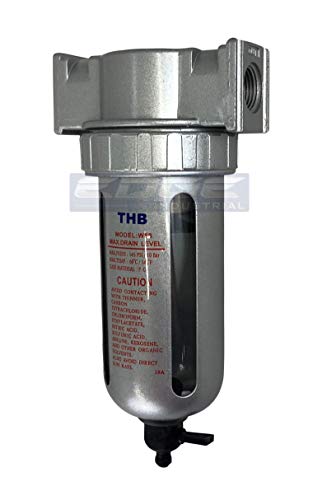 1/2" Particulate filter water trap seperator
|
9.1/10 | Buy |
| Best Value |
 NANPU Zinc Alloy Desiccant Dryer
|
9.1/10 | Buy |
 1/2" NPT Air Compressor Dryer
|
9.1/10 | Buy | |
 RIH 1/4" NPT Air Dryer for Compressor
|
8.3/10 | Buy | |
 LE LEMATEC Inline Air Compressor Water Separator
|
8.3/10 | Buy | |
 DEWALT Inline Dessicant Dryer with Viewing Window
|
8.1/10 | Buy | |
 NANPU Industrial Grade Heavy Duty Compressed Air
|
8.1/10 | Buy | |
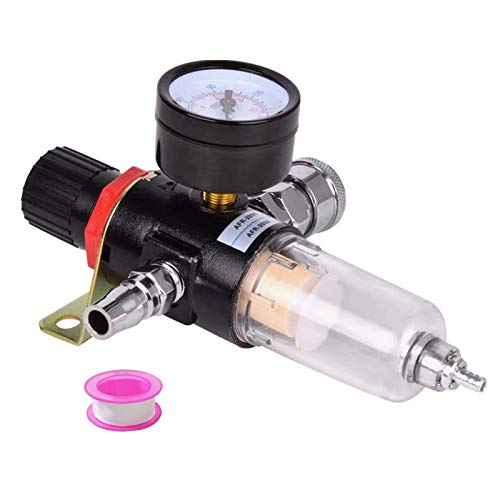 Hotusi 1/4" BSP Air Compressor Moisture Filter
|
7.8/10 | Buy |
Pneumatic Moisture Control: How to Remove Moisture from Air Compressor Lines
Moisture in compressed air is an unavoidable physical byproduct of atmospheric compression. When ambient air enters a compressor pump, natural atmospheric humidity travels with it and becomes concentrated under high pressure. As this hot air travels downstream, it cools, forcing dissolved vapor to condense into liquid water inside receiver tanks, hoses, and pneumatic tools. Successfully managing this moisture requires a systematic layout that cools the air, captures liquid droplets, and absorbs residual humidity before it reaches sensitive equipment.
Why Moisture Accumulates in Compressed Air Systems
Every cubic foot of atmospheric air contains moisture in the form of invisible water vapor. When a compressor pump draws in ambient air and compacts it into a smaller volume, the air temperature spikes dramatically due to friction and compression heat. Warm air holds significantly more water vapor than cold air, meaning moisture remains vaporized while passing through the pump head. Once the pressurized air enters the storage tank and begins to cool toward ambient room temperature, its relative humidity surpasses one hundred percent. This transition point forces suspended water vapor to condense into liquid water droplets against the metal interior of the receiver tank.
Operating conditions heavily influence how much water your compressor creates during a standard work session. High-humidity summer weather and hot shop environments force air compressors to ingest substantially more moisture per cycle than cool, dry conditions. Furthermore, continuous-duty tasks like sandblasting or rotary sanding force the pump to cycle continuously without adequate cooling intervals. Operating single-stage and two-stage compressor systems under heavy workloads accelerates heat buildup, which keeps water vapor suspended longer until it reaches your air lines. Without active separation techniques, this liquid pushes directly through quick-connect couplers and into connected tools.
Primary Defense: Draining the Air Receiver Tank
The receiver tank acts as the initial cooling chamber and primary moisture reservoir for your entire pneumatic system. As warm air enters the tank from the discharge tube, it expands and cools against the expansive steel walls, causing condensation to collect along the tank floor. If this pooled water is not discharged regularly, it reduces internal tank volume and creates severe rust that weakens the structural steel from the inside out. Threaded needle petcocks installed at the base of many consumer tanks often become stiff or clogged with rust sediment. Replacing a factory needle valve with an accessible quarter-turn brass ball valve encourages routine draining after every work session.
Draining a pressurized tank requires standard safety precautions to avoid flying debris and loud discharge blasts. Always reduce operating pressure or open the drain valve slowly while aiming the discharge port away from your face and body. Many workshop owners install automatic electronic drain valves or semi-automatic float drains to remove human error from the maintenance routine. Semi-automatic drains vent accumulated moisture whenever system pressure drops to zero at the end of the day. A properly maintained tank drain handles up to seventy percent of total system condensation before air ever travels down the piping network.
Air Line Plumbing and Passive Cooling Layouts
Warm air cannot be effectively filtered by mechanical moisture traps because water vapor passes directly through standard filter elements. Filtration equipment requires the compressed air stream to cool down so that suspended vapor condenses into liquid droplets prior to entering the filter bowl. Installing at least twenty to thirty feet of rigid metal piping between the compressor outlet and your first filter station provides the necessary surface area for heat exchange. Copper tubing or black iron pipe dissipates thermal energy far more effectively than rubber hoses or plastic tubing. Running rubber hoses directly from the tank outlet to a spray gun guarantees water will condense inside the hose downstream of any filter.
Piping geometry plays an equally critical role in isolating condensation along workshop air distribution lines. Air lines should pitch slightly downward back toward the compressor or toward dedicated vertical drop legs equipped with drain valves. Take-off lines feeding individual workstations must always branch out from the top of the main header pipe using an inverted loop. This top-takeoff configuration prevents liquid traveling along the bottom of the main line from draining into your tool drop. Each vertical drop leg should terminate with a manual ball valve at the base to catch gravity-fed liquid before it enters inline regulators or filter bowls.
Stage One Filtration: Mechanical Water Separators and Particulate Traps
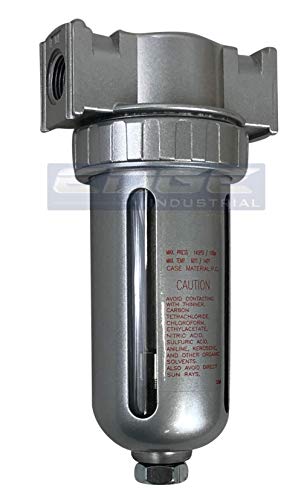
Mechanical water separators use centrifugal force and physical baffling to strip liquid water and coarse debris from the cooled air stream. As incoming air enters the filter housing, internal directional louvers force the air into a high-speed swirling motion. Heavier liquid droplets and solid particles fling outward against the bowl walls, lose momentum, and settle harmlessly into the quiet zone at the base of the bowl. Units such as the THB 1/2-inch particulate filter water trap utilize a 5-micron filter element that captures both liquid water and solid rust flakes. This THB unit supports flow rates up to 106 CFM and operates up to 175 PSI, making it well-suited for high-demand garage headers.
Compact filtration options offer targeted moisture defense for smaller workshop installations or dedicated air drops. The RIH 1/4-inch NPT air dryer features a 5-micron sintered brass element housed within an aluminum body, delivering 20 SCFM at 90 PSI. Brass filter elements offer reliable corrosion resistance and can be removed, cleaned, and reinstalled without requiring frequent replacement cartridges. Both manual twist drains and semi-automatic overnight drains allow technicians to eject collected liquid without depressurizing the main air line. However, mechanical separators only remove liquid bulk water; they cannot eliminate microscopic vapor or oil aerosols.
Stage Two Filtration: Coalescing Filters for Oil and Micro-Mist
Coalescing filters target the sub-micron water aerosols and atomized compressor oil that escape standard 5-micron mechanical separators. These fine oil and water droplets are small enough to stay suspended in high-velocity airflow without settling out through centrifugal action. A coalescing filter forces the compressed air through a dense borosilicate micro-glass matrix, causing microscopic droplets to collide, coalesce, and grow into larger liquid beads. These larger beads migrate to the outer surface of the element and drop into the collection sump. Without a coalescing filter, oil aerosols will coat downstream desiccant media, completely destroying its ability to absorb water vapor.
High-efficiency multi-stage setups combine particulate filtration, coalescing filtration, and pressure regulation into a single unified manifold. The DAIERTEK 1/2-inch NPT 3-stage air compressor dryer integrates a 5-micron pre-filter, a 0.01-micron coalescing filter, and an adjustable 0-240 PSI regulator. Its 0.01-micron coalescing stage strips 99.98 percent of remaining moisture and oil aerosols to safeguard precision tools. Visible sight glasses on the metal bowls allow operators to monitor liquid levels, while pop-up differential pressure indicators signal when the coalescing element is clogged. Multi-stage filtration provides the essential bridge between basic water separation and chemical vapor absorption.
Stage Three Drying: Desiccant Air Dryers for Deep Moisture Removal
Desiccant air dryers are mandatory whenever compressed air must achieve extremely low dew points for critical tasks like spray painting or plasma cutting. Unlike mechanical traps that only separate liquid droplets, desiccant dryers utilize porous chemical beads to adsorb gaseous water vapor directly from the air stream. Units like the NANPU zinc alloy desiccant dryer feature a durable metal bowl filled with indicating silica gel beads that change color from blue to pink as they absorb moisture. This NANPU model flows up to 105 SCFM at 90 PSI and operates across a 0-145 PSI pressure range, providing clean, dry air across demanding workshop applications.
High-flow and industrial installations often demand larger desiccant reservoirs to handle sustained pneumatic airflow without frequent bead replacement. The NANPU industrial grade heavy-duty compressed air desiccant dryer utilizes 3/4-inch NPT fittings and flows up to 140 CFM within a 7-215 PSI pressure range. Similarly, the THB inline desiccant air dryer provides 3/8-inch NPT connectivity and handles up to 88 CFM at pressures up to 215 PSI. Because desiccant beads have a finite moisture holding capacity, inspecting the transparent polycarbonate bowl or metal sight glass ensures you know exactly when to replace or regenerate the media. Running air through saturated, pink desiccant allows water vapor to pass directly into your spray gun.
Point-of-Use Protection: Mini Inline Filters for Air Tools and Spray Guns
Even when a central filtration manifold is installed, condensation can still form inside long rubber hoses between the wall drop and your pneumatic tool. Point-of-use mini filters install directly onto the air inlet of your paint spray gun, plasma torch, or impact wrench to provide an ultimate line of defense. The LE LEMATEC inline air compressor water separator weighs just 4.2 ounces and features a compact 2.94-inch profile that mounts cleanly without throwing off tool balance. Rated up to 200 PSI, this LE LEMATEC filter utilizes a sintered bronze element inside an impact-resistant polycarbonate bowl to trap moisture, oil, and dust at the tool handle.
Spray painting and plasma cutting exhibit immediate visible flaws whenever microscopic water droplets reach the nozzle tip. Water in an HVLP paint gun creates bubbling, blistering, and fish-eye defects in clear coats, ruining hours of surface preparation and painting. Plasma cutters suffer from erratic arc stability, premature nozzle erosion, and heavy dross buildup when fed wet air. Using a dedicated point-of-use filter like the DEWALT inline desiccant dryer with viewing window adds an extra layer of dry-air security right where the air enters the tool. Its 3/8-inch NPT female inlet and 175 PSI pressure limit make it an effective terminal safeguard for critical finishing tasks.
Matching Moisture Management Systems to Specific Pneumatic Applications
Air quality requirements vary significantly depending on whether you are firing framing nailers or applying custom automotive paint. Intermittent tools such as brad nailers, impact wrenches, and tire inflators function reliably with basic receiver tank draining and an inline particulate water trap. These mechanical tools tolerate moderate humidity, provided you lubricate internal seals with appropriate air tool oil to prevent oxidation. Consulting a pneumatic tool air consumption guide helps ensure your compressor pump can keep up with tool volume without overheating and generating excessive vapor.
High-demand, moisture-sensitive applications require comprehensive 3-stage or 4-stage filtration stations mounted downstream of the receiver tank. The RVMARINEPAT 1/2-inch NPT 4-stage air drying system represents a complete professional solution for painting and plasma cutting. This system combines a 5-micron particulate filter and regulator, a 0.01-micron coalescing stage, and a dual-capacity desiccant dryer with an integrated auto drain. For small garage shops, a combo unit like the Hotusi 1/4-inch BSP moisture filter trap offers basic regulation from 30 to 120 PSI for general hobbyist maintenance. Selecting the right drying system ensures your equipment operates reliably without premature wear or costly project rework.
Routine Maintenance and Desiccant Regeneration Procedures
Consistent maintenance routines are essential to keep your air drying equipment operating at peak efficiency. Mechanical filter bowls should be purged of accumulated water daily, or equipped with reliable auto-drain valves that eject water automatically during pressure cycles. Pre-filter and coalescing filter elements must be inspected periodically for oil saturation and particulate buildup. Sintered bronze elements can often be cleaned with solvent and blown dry, while micro-glass coalescing elements must be replaced once differential pressure indicators rise. Neglecting dirty filter elements creates severe line pressure drops that starve pneumatic tools of operating power.
Desiccant media requires careful monitoring to ensure it continues absorbing water vapor before reaching complete saturation. When indicating silica gel beads turn from deep blue to bright pink, they can no longer hold moisture and must be replaced or regenerated. Many desiccant beads can be reactivated by spreading them evenly on a baking sheet and heating them in an oven at moderate temperatures until their blue color returns. Always ensure the desiccant has fully cooled in an airtight container before pouring it back into the metal filter bowl. Maintaining fresh desiccant ensures your pneumatic lines remain dry, rust-free, and ready for high-performance workshop tasks.
Practical Verification and Pressure Testing After Setup
Once you install your moisture removal hardware, validating system performance under working pressure confirms your connections are airtight and fully operational. Pressurize your pneumatic system to standard cut-out pressure and listen carefully for hissing around threaded NPT fittings, drain ports, and filter bowl gaskets. Applying a mild soap-and-water solution to joints helps identify microscopic leaks that cause unnecessary pump cycling and drop line pressure. Any leaking joint should be depressurized completely, disassembled, and resealed using quality thread seal tape or pneumatic pipe sealant.
After confirming airtight fittings, test your air dryness by blowing compressed air onto a clean mirror or white paper towel for thirty seconds at working pressure. If the surface shows any mist, oil spotting, or discoloration, inspect your cooling drop legs and verify that your desiccant beads are still active blue. Regular testing gives you confidence that your downstream pneumatic tools, paint spray guns, and plasma torches receive pristine, dry air. Establishing this verification routine safeguards your projects from moisture defects and extends the operational life of your entire air delivery system.
Controlling moisture in compressed air is an achievable goal when you address both liquid condensation and invisible water vapor. A complete drying strategy starts with daily tank draining, incorporates rigid cooling pipe runs, and finishes with multi-stage particulate, coalescing, and desiccant filtration. Whether you run a comprehensive multi-stage workshop dryer or attach a lightweight inline separator directly to your spray gun, removing water protects your tools and guarantees consistent results. Taking the time to configure proper filtration turns your air compressor into a dependable source of clean, dry power for years to come.
About the author
Glenda Taylor has extensive experience in residential construction, remodeling, home improvement, and tool use. Her practical approach to equipment evaluation focuses on usability, performance, safety, and value—helping DIYers and workshop users make better-informed decisions about compressors and related tools.