
What Oil Do I Use for My Air Compressor: Complete Selection Guide for 2026
Learn what oil do i use for my air compressor with our October 2026 guide covering non-detergent ISO grades, synthetics, and maintenance.
 By Clint DeBoer
Updated October 8, 2026
By Clint DeBoer
Updated October 8, 2026

Operating an oil-lubricated compressor pump generates severe internal friction and rapid heat buildup inside the cast-iron cylinder assembly. Choosing an unsuitable lubricant can quickly cause valve carbonization, ring scoring, or thermal shutdown during heavy pneumatic tool cycles. When addressing what oil do i use for my air compressor, workshop owners must prioritize dedicated non-detergent compressor formulations over standard automotive motor oils. Learning how to read air compressor specifications helps operators interpret factory crankcase requirements and ensure dependable pressure delivery across long workdays.
Dedicated compressor lubricants feature zero detergent additives, allowing water condensation to separate cleanly in the sump reservoir instead of foaming across splash-lubricated bearings. Choosing between standard mineral oils and industrial-grade synthetic formulas directly affects crankcase operating temperatures, ring sealing, and cold-weather startup ease. Understanding the relationship between ambient garage temperatures and ISO viscosity ratings keeps your pump running smoothly without tripping circuit breakers or wearing out vital internal components. Regularly inspecting fluid levels protects your investment against friction and costly pump rebuilds.
| Award | Product | ACR Score About ACR ScoreThe ACR Score is our own rating from 0 to 10, based on performance, design and build, ease of use, and value. It reflects independent research and is never influenced by manufacturers, retailers, or affiliate commissions. Learn more › | |
|---|---|---|---|
| Best Overall |
Mag 1 1-Gallon Air Compressor Oil
|
9.2/10 | Buy |
| Best Budget |
 Triax Kompressor ISO 46 SAE 20 Full Synthetic Air
|
9.1/10 | Buy |
| Best Premium |
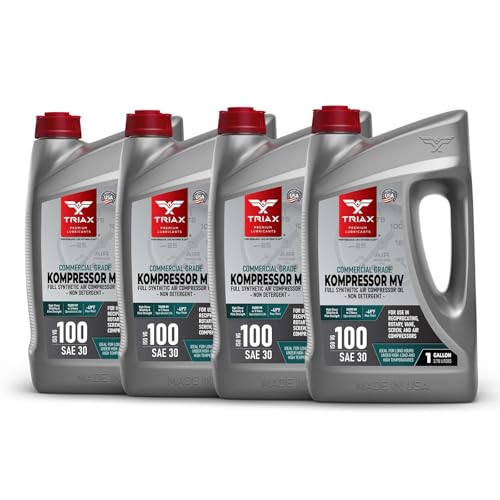 Triax Kompressor ISO 100 SAE 30 Oil (4 Gal)
|
9.1/10 | Buy |
 Triax Kompressor ISO 100 SAE 30 Oil (5 Gal)
|
9.1/10 | Buy | |
| Best Value |
 Quincy Quin-Cip 112543 SAE 30 Oil (1 Gal)
|
8.9/10 | Buy |
 Milton 1002 SAE 30W Compressor Oil, 1 Gallon
|
8.8/10 | Buy | |
 TRIAX Kompressor ISO 46 SAE 20 Full Synthetic Air
|
8.8/10 | Buy | |
 TRIAX Kompressor ISO 68 Full Synthetic Air
|
8.6/10 | Buy | |
 Milton 1002-32 ISO-100 Compressor Oil, 32 oz
|
8.4/10 | Buy | |
 Triax Kompressor ISO 46 Compressor Oil (5 Gal)
|
8.3/10 | Buy |
Mag 1 1-Gallon Air Compressor Oil
Formulated for reliable workshop maintenance, Mag 1 Air Compressor Oil uses refined petroleum base stocks paired with anti-foam additives to maintain stable lubrication. The generous one-gallon volume makes it a practical choice for keeping reciprocating or stationary compressors running smoothly over time.
Pros
- Anti-foam additives maintain steady lubrication
- Refined petroleum stocks promote smooth operation
- Formula helps extend compressor service life
- Generous 1-gallon volume handles multiple refills
Cons
- Jug weighs 7.25 pounds and can be heavy to pour
- One-gallon size may exceed small top-off needs
Triax Kompressor ISO 46 SAE 20 Full Synthetic Air
Triax Kompressor ISO 46 SAE 20 is a commercial-grade, full synthetic non-detergent compressor oil engineered for oil-lubricated reciprocating, rotary screw, and vane pumps operating in temperatures from -49°F to over 140°F. It provides exceptional thermal protection and extended component life for garage mechanics and shop owners maintaining heavy-duty pneumatic systems.
Pros
- Extreme all-weather operating range from -49°F to 140°F+ prevents cold-start motor stalling and high-heat viscosity breakdown
- Non-detergent full synthetic formula protects internal bearings and provides up to 20,000 hours of service longevity
- Lowers operating pump temperatures by 30% and actively sheds condensation to prevent internal crankcase rust
- Compatible with oil-lubricated reciprocating, rotary screw, and rotary vane compressor pumps from major manufacturers
Cons
- Not suitable for oil-free or maintenance-free dual-piston compressor designs that do not use crankcase oil
- Explicitly prohibited for use in breathing air systems, oxygen compressors, or liquid natural gas (LNG) units
- Single-quart volume may require purchasing multiple bottles for larger stationary 60-gallon or 80-gallon shop pump crankcases
Triax Kompressor ISO 100 SAE 30 Oil (4 Gal)
Engineered for rotary, vane, screw, and reciprocal compressors, this full synthetic ISO 100 fluid delivers up to 20,000 hours of commercial service life. Its non-detergent formula lowers operating temperatures and resists moisture to protect internal bearings under extreme workloads.
Pros
- Rated for over 20,000 hours of service life
- Broad temperature tolerance from -49°F to 140°F
- Reduces operating temperatures by up to 30%
- Compatible with rotary, vane, screw, and reciprocating models
Cons
- Not compatible with oxygen air or LNG compressors
- Four-gallon bulk packaging is excessive for smaller home tools
Triax Kompressor ISO 100 SAE 30 Oil (5 Gal)
Engineered for rotary, vane, screw, and reciprocating systems, this industrial-grade synthetic fluid provides up to 20,000 hours of continuous service across extreme temperatures. Its non-detergent formula lowers operating heat by 30 percent while guarding vital bearings against friction and moisture.
Pros
- Extended 20,000-hour life span minimizes maintenance cycles
- Reliable all-season operation across wide temperature swings
- Substantially reduces operating temperatures and oil burnoff
- Non-detergent blend prevents bearing wear and vibration
Cons
- Not compatible with oxygen air or LNG compressors
- Large 5-gallon volume exceeds small workshop requirements
Quincy Quin-Cip 112543 SAE 30 Oil (1 Gal)
Formulated specifically for reciprocating air compressors, this genuine Quincy Quin-Cip lubricant provides standard SAE 30 weight protection. The one-gallon jug offers ample volume for complete oil changes and routine pump maintenance.
Pros
- Genuine Quincy Quin-Cip formulation
- Standard SAE 30 viscosity grade
- One-gallon volume covers complete oil changes
- Dedicated lubricant for air compressor pumps
Cons
- Limited to equipment requiring SAE 30 oil
- One-gallon volume may exceed minor top-off needs
Milton 1002 SAE 30W Compressor Oil, 1 Gallon
Milton 1002 is a non-detergent ISO-100 SAE 30W conventional lubricant engineered specifically for reciprocating air compressors. The one-gallon capacity makes it a sensible option for regular workshop equipment upkeep.
Pros
- Non-detergent formula tailored for reciprocating compressors
- Standard ISO-100 SAE 30W viscosity rating
- Generous one-gallon volume covers multiple refills
Cons
- Conventional mineral formula instead of synthetic blend
- Heavy container can be awkward to pour directly
TRIAX Kompressor ISO 46 SAE 20 Full Synthetic Air
TRIAX Kompressor ISO 46 SAE 20 is a commercial-grade, full-synthetic non-detergent lubricant engineered for oil-lubricated reciprocating, rotary screw, and vane air compressors. It provides reliable extreme-temperature wear protection and multi-viscosity all-season performance, making it an excellent maintenance choice for auto shops, contractors, and home garage workshops.
Pros
- Full synthetic non-detergent formulation extends pump life across severe operating conditions
- True all-season multi-viscosity rating maintains fluid flow from -49 deg F up to 140 deg F+
- Formulated to lower operating temperatures by up to 30% and eliminate oil vapor odor
- Compatible with a wide array of compressor pumps including reciprocating and rotary screw designs
Cons
- Not formulated for oil-free air compressors, breathing air systems, oxygen setups, or LPG gas pipelines
- Users must verify whether their pump manufacturer specifically calls for ISO 46 (SAE 20) rather than heavier ISO 68 or ISO 100 weights
- Requires careful manual crankcase draining and filling without an included pour spout
TRIAX Kompressor ISO 68 Full Synthetic Air
TRIAX Kompressor ISO 68 is a commercial-grade, full synthetic compressor lubricant engineered for oil-lubricated reciprocating, rotary screw, and vane pumps operating between -49°F and 140°F+. It is an excellent maintenance solution for auto mechanics, shop owners, and contractors seeking lower pump operating temperatures and up to 20,000 hours of service life.
Pros
- Extended 20,000-hour service life minimizes routine maintenance intervals on high-demand shop compressors
- All-season stability from -49°F to 140°F+ prevents cold-morning motor drag and high-heat viscosity breakdown
- Non-detergent formulation separates condensation cleanly to safeguard internal crankcase bearings
- Broad compatibility across major reciprocating, rotary screw, and rotary vane compressor manufacturers
Cons
- Not suitable for maintenance-free oil-free compressor designs or oxygen and Liquid Natural Gas (LNG) systems
- One-gallon container size exceeds the immediate refill capacity of small single-stage DIY splash-lube pumps
Milton 1002-32 ISO-100 Compressor Oil, 32 oz
Formulated specifically for oil-lubricated reciprocating compressors, this ISO-100 non-detergent lubricant shields pumps against wear and deposit buildup. It separates easily from moisture and remains fluid down to -15°F for dependable cold-weather starts.
Pros
- Protects internal components against wear and corrosion
- Non-detergent formula resists foaming and separates water
- Inhibits sludge and carbon deposit formation
- Maintains fluidity in temperatures down to -15°F
Cons
- Designed strictly for reciprocating pump mechanisms
- Conventional oil base rather than full synthetic
Triax Kompressor ISO 46 Compressor Oil (5 Gal)
Formulated for severe commercial applications, this full-synthetic ISO 46 lubricant delivers up to 20,000 service hours across rotary, screw, and reciprocating compressors. It maintains a stable protective film in temperatures ranging from sub-zero cold to extreme heat while actively repelling water.
Pros
- Service life rated for over 20,000 operational hours
- Wide operating range from -49°F to over 140°F
- Compatible with major commercial compressor pump designs
- Water-repelling non-detergent formula reduces internal friction
Cons
- Not suitable for oxygen or LNG compression systems
- Heavy 37-pound container can be awkward to pour
Compressor Oil Selection, Viscosity Grades, and Crankcase Maintenance
Selecting the proper crankcase fluid requires knowing whether your pump uses splash lubrication or pressure delivery, alongside matching the fluid viscosity to your operating temperature. Most reciprocating piston air compressors require specialized non-detergent air compressor oil with an ISO 100 or SAE 30 viscosity rating. Standard automotive engine oil must never be used in a typical reciprocating compressor crankcase because modern automotive detergents suspend contaminants and create intense foaming that destroys internal pump components. Understanding these basic fluid mechanics ensures reliable pressure recovery and prevents premature cylinder scoring across thousands of operational hours.
Why Automotive Engine Oil Destroys Air Compressor Pumps
Automotive engine oils contain specialized detergent additives designed to clean combustion byproducts and hold particulate debris in suspension until the fluid passes through a micro-mesh filter. Reciprocating air compressor pumps lack internal automotive oil filters and instead rely on gravity settling inside the sump reservoir. When detergent motor oil is poured into a compressor crankcase, the rotating splash dippers churn the detergents into a frothy emulsion. This aerated foam collapses the protective lubricating wedge between the connecting rod bearings and the crankshaft journals, leading to rapid metal-to-metal contact.
Detergents also encourage the formation of heavy carbon crusts around the reed valves, discharge ports, and valve plates. Compression chambers generate localized heat exceeding several hundred degrees during continuous cycle runs, which causes automotive detergent packages to bake and char. These hardened carbon flakes can drop directly into the cylinder bore, scoring the cast-iron walls and degrading the compression seal. Dedicated non-detergent compressor formulations like Milton 1002 High Performance Conventional Air prevent this problem by resisting thermal carbonization under sustained pressure cycles.
Understanding ISO Viscosity Grades and SAE Equivalents
Industrial lubricants use the International Organization for Standardization (ISO) viscosity grading system, which measures kinematic viscosity in centistokes at 40 degrees Celsius. In pneumatic equipment, the three most common viscosity grades are ISO 46, ISO 68, and ISO 100. ISO 46 corresponds roughly to an SAE 20 weight fluid, while ISO 68 represents an intermediate weight, and ISO 100 aligns with an SAE 30 single-grade lubricant. Matching the correct ISO grade to your compressor pump design maintains adequate film strength without overtaxing the electric motor during startup.
Heavier ISO 100 oils provide robust boundary protection under high cylinder head temperatures, making them the standard choice for single-stage and two-stage reciprocating pumps. Conversely, lighter ISO 46 formulations, such as TRIAX Kompressor ISO 46 SAE 20, Full Synthetic, reduce internal fluid shear and allow easier startup in cold garages. If an operator installs an excessively thick oil in cold weather, the electric drive motor draws excessive inrush amperage and can trip standard 15-amp household breakers. Selecting the proper viscosity grade balances cold-crank fluidity against high-temperature mechanical shear resistance.
Synthetic Compressor Lubricants Compared to Conventional Mineral Oils
Conventional compressor oils are formulated from highly refined petroleum base stocks enriched with rust inhibitors and anti-foam chemistry. Products such as Mag 1 Air Compressor Oil 1 Gallon (Pack of 1) provide reliable, predictable lubrication for standard workshop duties and intermittent nailing tasks. Mineral oils offer dependable hydrodynamic protection at a budget-conscious price point, but they break down faster when exposed to continuous high thermal loads. Frequent cycle demands cause mineral basestocks to oxidize, requiring scheduled fluid flushes every few hundred operating hours.
Full synthetic compressor oils utilize engineered polyalphaolefin (PAO) or ester basestocks that maintain exceptional molecular stability across extreme temperature spans. Formulations like TRIAX Kompressor ISO 100 SAE 30, Full Synthetic deliver multi-viscosity performance capable of operating in sub-zero ambient conditions without thickening. Synthetic fluids significantly resist thermal oxidation, preventing sludge formation and valve lacquer across extended commercial maintenance intervals. For heavy-demand tasks where pumps run near continuous duty cycles, full synthetic lubrication reduces internal friction and helps the crankcase shed heat efficiently.
Demulsibility and Moisture Management Inside the Crankcase
Atmospheric air inherently contains water vapor that enters the pump cylinder through the intake filter during every suction stroke. When compressed air cools inside the receiver tank and crankcase, significant moisture condenses along internal iron surfaces. Quality compressor oils must possess superior demulsibility, meaning the fluid actively separates from liquid water rather than blending into an emulsion. If moisture remains emulsified in the oil, it promotes internal rust along the crankshaft bearings and reduces the load-bearing capacity of the lubricating film.
High demulsibility allows condensed water to pool cleanly at the lowest point of the crankcase sump beneath the oil layer. During periodic oil changes, this separated water drains out first, ensuring that internal mechanical components remain coated in pure lubricant. Routine intake filtration checks outlined in our compressor air filter cleaning guide help prevent airborne contaminants from mixing with moisture in the crankcase. Combining clean intake filtration with moisture-repelling non-detergent oil protects cylinder rings and valve plates from premature pitting.
Pump Mechanism Compatibility Across Reciprocating and Rotary Systems
Reciprocating piston pumps feature connecting rods with dippers that fling oil from the sump across cylinder walls, wrist pins, and bearings. These splash-lubricated setups demand specialized single-grade or multi-viscosity fluids like Quincy Compressor 112543G100 Quincy Quin-Cip to handle high piston speeds. Rotary screw and sliding vane compressors, by contrast, utilize continuous oil injection to cool the compression chamber, seal rotor clearances, and lubricate roller bearings. Rotary systems generate different internal shearing forces and often require lighter ISO 46 or ISO 68 synthetics to circulate freely through internal oil coolers.
Oil-free consumer compressors require no crankcase fluid whatsoever because their pistons use self-lubricating PTFE or Teflon composite rings. Attempting to pour oil into an oil-free pancake or twin-stack unit will ruin the motor and contaminate downstream pneumatic tools. Before purchasing lubricant, verify whether your compressor pump has an oil fill plug, a sight glass, and a lower drain plug. Knowing your specific mechanical configuration prevents costly mistakes while preparing your equipment for demanding shop operations.
Selecting Viscosity Based on Ambient Workshop Temperatures
Ambient room temperature exerts a dramatic influence on oil viscosity and pump startup friction. In unheated winter garages where temperatures drop near freezing, an ISO 100 mineral oil can become thick and sluggish. This sluggishness creates severe rotational drag, forcing the electric motor to pull heavy inrush current that can stall the drive shaft or trip circuit breakers. Using an all-season multi-viscosity synthetic or stepping down to an ISO 68 grade like TRIAX Kompressor ISO 68, Full Synthetic ensures reliable cold-weather starting without sacrificing hydrodynamic protection.
During hot summer months or inside tightly enclosed machine rooms, operating temperatures rise rapidly and thin out internal fluids. High heat lowers lubricant viscosity, which can compromise the thin protective layer between the piston rings and cylinder walls. Under sustained summer workloads, heavy ISO 100 fluids like Milton 1002-32 High Performance Conventional Air maintain essential film strength to prevent mechanical scoring. Matching your fluid viscosity to seasonal fluctuations ensures consistent pump protection and dependable airflow during prolonged pneumatic tool usage.
Step-by-Step Procedure for Changing Air Compressor Oil
Begin by running the compressor for several minutes to warm the crankcase fluid, which suspends fine sediments and allows the oil to drain freely. Disconnect the power cord from the wall outlet or switch off the dedicated circuit breaker to prevent accidental motor startup. Relieve all stored air pressure from the tank by opening the bottom drain valve completely before servicing the pump. Place a shallow catch pan underneath the crankcase drain plug, then carefully remove the threaded plug using an appropriate wrench.
Allow the spent lubricant and accumulated moisture to drain thoroughly until the discharge slows to an intermittent drip. Clean the drain plug threads, wrap them with a layer of PTFE thread sealant tape, and reinstall the plug securely into the crankcase casting. Remove the crankcase breather cap or top fill plug, then slowly pour in fresh non-detergent compressor oil using a narrow-neck funnel. Monitor the level through the clear sight glass or dipstick indicator, stopping exactly when the fluid reaches the center red dot. Wipe away any external spills, reinstall the breather cap securely, and verify there are no leaks before restoring electrical power.
Oil Sight Glass Inspection and Fluid Condition Signs
Checking the crankcase sight glass should be part of every pre-startup inspection routine before powering up pneumatic machinery. Fresh compressor oil appears clear to light amber in color and rests at the exact midpoint of the sight glass circle. If the oil takes on a milky, cloudy, or opaque white appearance, moisture has emulsified within the sump reservoir. Milky fluid indicates that the compressor is running short, intermittent cycles that never reach sufficient operating temperature to vaporize internal condensation.
Dark brown or blackened oil indicates severe thermal degradation, oxidation, and valve carbon contamination from extended operation under high duty cycles. A drop in fluid level below the minimum sight line risks bearing starvation, while overfilling causes excessive oil carryover into the compressed air lines. If fine metallic flakes appear suspended in the fluid, internal wrist pins, connecting rods, or cylinder walls are experiencing abrasive wear. Whenever discoloration, contamination, or metal flecking appears in the sight glass, flush and replace the crankcase oil immediately to prevent mechanical seizure.
Air Tool Protection and Downstream Oil Contamination
Splash-lubricated reciprocating pumps naturally discharge a minor amount of vaporized oil past the piston rings and into the receiver tank. Over time, this residual oil vapor travels through pneumatic delivery hoses and reaches connected air tools. When powering impact wrenches, ratchets, and framing nailers, trace compressor oil vapor is generally harmless, though inline lubricators are still recommended for dedicated tool lubrication. However, sensitive applications such as automotive spray painting or woodworking finish application require completely dry, oil-free delivery to prevent surface blemishes like fish eyes.
Installing coalescing oil filters and desiccant dryers along your garage piping captures aerosolized crankcase fluid before it ruins delicate finishes. Exploring diverse pneumatic equipment options in our guide on versatile air compressor applications helps determine what level of air filtration your specific tools require. Maintaining the correct crankcase oil level also minimizes downstream contamination by preventing excess fluid churning. Worn piston rings increase oil blow-by significantly, making regular crankcase maintenance a vital safeguard for both the pump and connected tools.
Best Practices for Crankcase Longevity and Safe Operation
Establishing a disciplined lubrication maintenance schedule dramatically extends the operating lifespan of any cast-iron air compressor pump. Conventional mineral oils should typically be replaced every 250 to 500 operating hours, while high-performance synthetic fluids can often remain in service significantly longer depending on operating environment cleanliness. Always depressurize the receiver tank completely before removing drain plugs or breather caps to eliminate the risk of accidental injury from escaping air pressure. Inspect the crankcase breather vent periodically to ensure dirt and debris have not clogged the ventilation passage.
Keeping a spare bottle of dedicated non-detergent ISO 100 or synthetic multi-viscosity compressor oil on your workshop shelf guarantees quick top-offs whenever levels dip. Regularly inspecting the sight glass prevents oil starvation before high-demand pneumatic projects begin. Using the proper lubricant preserves cylinder wall integrity, suppresses thermal breakdown, and keeps pneumatic power equipment delivering steady airflow for years to come.
About the author
Clint DeBoer is an experienced tool-industry specialist with decades of involvement in technical media, hands-on product evaluation, and testing methodology. His focus on performance, practical usability, and data-driven comparisons makes his expertise highly relevant to professional air compressors, pneumatic tools, and workshop equipment.