
How Does Air Compressor Work: A Practical Guide for 2026
Explore how does air compressor work along with piston strokes, pressure switch controls, and airflow delivery for garage pneumatic tools in October 2026.
 By Clint DeBoer
Updated October 8, 2026
By Clint DeBoer
Updated October 8, 2026

Operating pneumatic tools depends on converting atmospheric air into concentrated mechanical potential energy. Many workshop owners understand that an electric motor or gas engine spins a pump mechanism, yet understanding exactly how does air compressor work requires looking at gas dynamics, mechanical valves, and storage reserves. Ambient air enters the intake at normal atmospheric pressure, where mechanical displacement reduces its physical volume to increase internal pressure. This pressurized air collects inside a rigid storage vessel until an operator triggers a nail gun, impact wrench, or spray gun. Knowing this compression cycle helps buyers select suitable equipment while avoiding pressure drops and motor burnouts.
Different pneumatic tasks place unique demands on compressor pumps, electric motors, and storage vessels. Light maintenance jobs like tire inflation or finish nailing require intermittent bursts of pressure, whereas rotary sanders and paint sprayers demand sustained CFM delivery at 90 PSI. Matching tool air consumption to pump displacement ensures that the machine recovers quickly without tripping thermal protection switches. Factors like pump lubrication, tank capacity, and operating decibels directly determine how well a machine functions in a home garage or busy jobsite. Exploring the internal mechanical stages clarifies why different compressor designs perform best in specific working environments.
| Award | Product | ACR Score About ACR ScoreThe ACR Score is our own rating from 0 to 10, based on performance, design and build, ease of use, and value. It reflects independent research and is never influenced by manufacturers, retailers, or affiliate commissions. Learn more › | |
|---|---|---|---|
| Best Overall |
DEWALT Cordless Tire Inflator Portable Air
|
9.1/10 | Buy |
| Best Budget |
 AstroAI Dual Power 110V/12V Tire Inflator
|
8.9/10 | Buy |
 GSPSCN Dual-Cylinder 12V Tire Inflator
|
8.8/10 | Buy | |
| Best Premium |
 ECOMAX 6-Gallon 150 PSI Portable Pancake Air
|
8.8/10 | Buy |
| Best Value |
 Baococo 8 Gallon Portable Air Compressor
|
8.6/10 | Buy |
 Metabo HPT 6-Gallon Pancake Air Compressor Review
|
8.6/10 | Buy | |
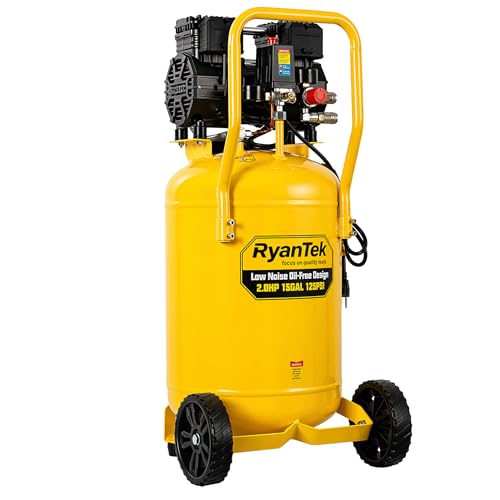 RyanTek 15-Gallon 2HP Air Compressor
|
8.6/10 | Buy | |
 CARSUN Dual Power AC/DC Portable Tire Inflator
|
8.3/10 | Buy | |
 Fogera 1-Gallon Cordless Air Compressor
|
8.3/10 | Buy | |
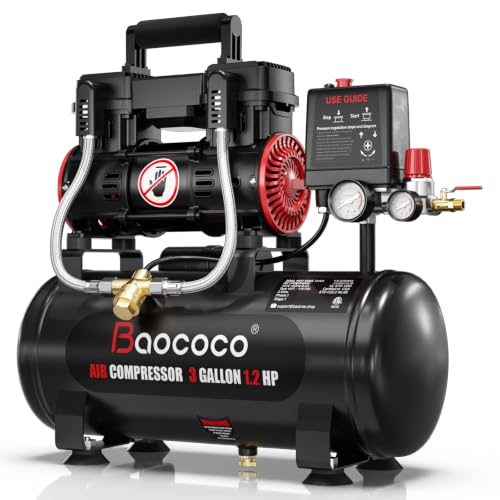 Baococo 3-Gallon Ultra Quiet Air Compressor
|
7.8/10 | Buy |
DEWALT Cordless Tire Inflator Portable Air
This compact DEWALT portable tire inflator delivers up to 150 PSI with smart auto shut-off, powered by an internal rechargeable battery or an included 10-foot 12V car plug. It provides an efficient, pocket-sized solution for vehicle owners, cyclists, and DIYers wanting rapid roadside top-offs without hauling a bulky tank compressor.
Pros
- True cordless freedom with an internal rechargeable battery plus a 10-foot 12V DC vehicle plug backup
- Accurate digital pressure gauge with 5 smart presets and automatic shut-off to eliminate overinflation
- Ultra-compact handheld design weighing just 0.63 kg for easy storage in glove boxes or saddlebags
- Integrated LED work light and emergency USB power bank functionality for travel safety
- Generous accessory bundle backed by a 3-year limited warranty
Cons
- Engineered exclusively for high-pressure inflation rather than operating pneumatic air tools or nailers
- Does not include a 120V AC residential wall outlet power adapter
- Compact tankless pump requires periodic cooling breaks during heavy multi-tire inflation runs
AstroAI Dual Power 110V/12V Tire Inflator
Versatile dual-power support lets this lightweight inflator run from either a garage wall outlet or a vehicle cigarette lighter. An automatic shutoff and onboard cord storage make routine tire top-offs straightforward for any driver.
Pros
- Flexible dual AC and DC power options
- Automatic shutoff prevents over-inflation
- Compact and lightweight at 2.2 pounds
- Integrated cord and nozzle storage
Cons
- Requires a 10-minute cooldown after 15 minutes of runtime
- Must be plugged into a power source to operate
GSPSCN Dual-Cylinder 12V Tire Inflator
Built with an all-metal dual-cylinder motor, this 12V portable compressor delivers a fast 70 L/Min airflow alongside a digital auto shut-off gauge. It is an ideal roadside tool for drivers needing rapid inflation for cars, SUVs, and light trucks without excessive vibration.
Pros
- Fast 70 L/Min dual-cylinder airflow
- Durable all-metal motor and cylinder construction
- Automatic shut-off prevents accidental over-inflation
- Includes 11.5-foot extension hose and carry bag
- Anti-slip base stabilizes pump during operation
Cons
- Relatively heavy to carry at 6.5 pounds
- Requires a wired 12V connection without cordless option
ECOMAX 6-Gallon 150 PSI Portable Pancake Air
The ECOMAX 6-Gallon 150 PSI Pancake Air Compressor delivers portable, low-maintenance pneumatic power with its 1.5 HP oil-free pump, dual quick-connect couplers, and bundled 10-piece accessory kit. Featuring cold-weather starting support and a flip-up handle, it is an accessible choice for DIYers, trim carpenters, and garage tire maintenance.
Pros
- Comes with a 10-piece accessory kit including an air hose, tire chuck, and blow gun ready out of the box
- Dual quick-connect couplers enable two operators to run pneumatic lines simultaneously
- Oil-free pump design requires zero motor oil maintenance and prevents oil discharge into air lines
- Low-voltage and cold-weather startup capability helps ensure reliable motor turnover in chilly garages
- Flip-up carrying handle and built-in cord bracket simplify transport and tidy storage
Cons
- PVC air hose included in the kit can become stiff and difficult to manage in freezing temperatures
- Not intended for continuous high-demand air tools such as rotary sanders or automotive paint sprayers
- Standard universal motor noise level makes hearing protection advisable during indoor use
Baococo 8 Gallon Portable Air Compressor
The Baococo 8-gallon portable air compressor pairs a 2HP electric motor with a 150 PSI receiver tank, delivering 2.8 SCFM at 90 PSI. It provides a solid, accessible air source for garage DIYers tackling tire inflation, car detailing, and pneumatic finish nailing.
Pros
- Useful 8-gallon tank capacity cushions air demand better than smaller pancake style compressors
- 150 PSI peak tank pressure accommodates common automotive tire inflators and pneumatic nailers
- Standard 120V 60Hz power compatibility allows easy plug-and-play use in residential garages
- Sufficient airflow rating of 2.8 SCFM at 90 PSI for light woodworking, trim carpentry, and cleaning tasks
Cons
- Continuous high-CFM pneumatic tools like rotary sanders and heavy-duty 1/2-inch impact wrenches will quickly deplete tank reserves
- Contradictory product listing notes an oil-free tank in the title while mentioning regular oil checks in the description, requiring users to inspect pump details before first start
- Does not include an air hose, quick-connect fittings, or downstream regulator accessories in the box
Metabo HPT 6-Gallon Pancake Air Compressor Review
The Metabo HPT EC711S is a portable 6-gallon pancake air compressor delivering 2.8 CFM at 90 PSI with a 165 PSI tank ceiling and an operating sound level of 73 dB. With its quick 46-second recovery cycle and dual quick couplers, it is an excellent choice for finish carpenters, punch-list contractors, and DIYers running pneumatic nailers.
Pros
- 73 dB operational sound rating is substantially quieter than standard job-site pancake units
- 165 PSI maximum pressure provides ample air storage with a swift 46-second recovery cycle
- Two 1/4-inch universal quick couplers support multi-tool setups right out of the box
- Sturdy steel roll cage protects gauges and the manifold assembly against knocks and drops
- Oil-free 1.0 HP motor ensures low maintenance and reliable cold-weather motor startup
Cons
- At 38.5 lbs, it is slightly heavier than ultra-compact 1-to-3-gallon trim compressors
- Airflow of 2.8 CFM at 90 PSI is designed for intermittent fastening, not continuous rotary tools or paint sprayers
- Bare-tool configuration means air hoses and pneumatic fastening tools must be purchased separately
RyanTek 15-Gallon 2HP Air Compressor
Built for garage workshops and indoor tasks, this vertical compressor combines a quiet 66 dBA dual-cylinder motor with a spacious 15-gallon tank. It supplies a dependable 4.5 CFM at 90 PSI for continuous nailing, spraying, and inflation while conserving floor space.
Pros
- Quiet 66 dBA operation suitable for indoor spaces
- Generous 4.5 CFM output at 90 PSI
- Compact vertical tank saves workshop floor space
- Maintenance-free oil-free pump design
- Integrated wheels make rolling transport straightforward
Cons
- Heavy at 68.3 pounds to lift manually
- Maximum pressure caps at 125 PSI
CARSUN Dual Power AC/DC Portable Tire Inflator
The CARSUN Dual Power Tire Inflator delivers up to 150 PSI of high-pressure air running from either a 110V household outlet or a 12V vehicle socket. With digital pressure presets, automatic shutoff, and a lightweight 2.1-pound frame, it is an ideal maintenance pump for passenger vehicles, bicycles, and household inflatables.
Pros
- Versatile dual-voltage operation works seamlessly in the home garage or on the road without requiring an external converter
- Accurate auto-shutoff mechanism protects tires from accidental over-pressurization during routine top-offs
- Compact 2.1-pound build packs away easily in car trunks, under vehicle seats, or on garage shelving
- Clear digital display allows fast switching across four standard pressure measurement units
Cons
- Requires a mandatory 10-minute cooldown period after every 15 minutes of continuous operation
- Manufacturer explicitly states it does not support heavy truck tires, tractor tires, or stand-up paddleboards (SUP)
- Tankless inflator design cannot run standard workshop pneumatic air tools like brad nailers or paint sprayers
Fogera 1-Gallon Cordless Air Compressor
Powered by DeWalt 20V Max batteries, this 11-pound portable unit supplies up to 120 PSI for trim nailing and roadside inflation. An oil-free pump paired with a brushless motor minimizes maintenance while keeping mobile tasks hassle-free.
Pros
- Runs on standard DeWalt 20V Max batteries
- Lightweight 11-pound build is easy to carry
- Brushless motor with maintenance-free oil-free pump
- Reaches up to 120 PSI output
- Comes with hose and multiple inflation attachments
Cons
- Battery and charger are not included
- Small 1-gallon tank limits continuous heavy-duty use
- Tied strictly to DeWalt 20V battery platform
Baococo 3-Gallon Ultra Quiet Air Compressor
The Baococo 3-Gallon Ultra Quiet Air Compressor delivers up to 115 PSI at approximately 70dB, powered by a 1.2HP copper motor and an oil-free pump. With a 20-second recovery cycle, dual quick couplers, and integrated transport wheels, it is a practical, budget-friendly choice for indoor trim work, DIY repairs, and garage tire maintenance.
Pros
- Operates at roughly 70dB, allowing conversation and indoor use without deafening noise
- Rapid 20-second tank recovery cycle helps keep intermittent nailing projects moving
- Dual quick-connect couplers allow quick tool changes or running two air lines at once
- Built-in wheels and sturdy carry handle make rolling or lifting across the workspace easy
- Oil-free pump eliminates messy crankcase checks and prevents oil leaks during vehicle transport
Cons
- Maximum tank pressure tops out at 115 PSI, lower than 135 to 175 PSI contractor-grade units
- Manufacturer does not publish continuous CFM at 90 PSI, making it unsuited for continuous air tools like sanders or grinders
- Compact 3-gallon air reserve requires frequent motor cycling under rapid pneumatic demand
The Mechanical and Physical Principles of Compressed Air
Air compression relies on fundamental physical principles governing gas behavior under mechanical force. When atmospheric air enters an enclosed chamber and undergoes volume reduction, internal pressure rises proportionally while generating friction heat. Understanding this transformation clarifies how pneumatic machinery converts electrical energy into versatile mechanical power for garage tools, nailers, and inflators. The following breakdown explores every stage of this sequence, from intake filtration to high-pressure pneumatic delivery.
Atmospheric Pressure and Boyle’s Law in Pneumatics
At sea level, ambient air exerts roughly 14.7 pounds per square inch of absolute atmospheric pressure. Air compressors do not generate air from nothing, but instead capture this ambient gas and force its dispersed molecules closer together. According to Boyle’s law, gas pressure increases inversely as the volume of its container decreases under consistent temperature. Reducing the mechanical chamber volume by several multiples causes trapped air molecules to collide against cylinder walls with intense force.
Compression naturally generates thermal energy as air molecules accelerate and collide under mechanical reduction. Because heated air expands and resists further compression, pump assemblies must dissipate thermal buildup to preserve volumetric efficiency. Efficient compressors feature aluminum cylinder heads, deep cooling fins, and motor-driven fan shrouds that pull heat away from the pump. Keeping the pump cool protects internal reed valves and prevents premature breakdown of lubricating films or composite seals.
The Reciprocating Piston Stroke: Intake and Discharge Cycles
Most consumer and commercial compressors utilize a reciprocating piston mechanism driven inside a precision cylinder bore. The operational cycle begins with the intake stroke as the crankshaft pulls the connecting rod and piston downward toward bottom dead center. This downward displacement creates a localized vacuum within the cylinder bore beneath atmospheric pressure. Ambient air enters through the intake filter, forcing a flexible spring-steel intake reed valve open so fresh air fills the chamber.
The compression stroke initiates immediately as the crankshaft continues rotating, driving the piston upward toward top dead center. Because the intake reed valve snaps closed against its seat, upward piston travel rapidly compresses the trapped air charge. Once internal cylinder pressure exceeds the pressure inside the discharge line, the exhaust reed valve flexes open. Pressurized air rushes through the cylinder head port into the transfer tube before the exhaust valve seals shut at top dead center.
Single-Stage versus Two-Stage Compression Architecture
Single-stage air compressors compress atmospheric air to final working pressure in a single upward piston stroke. These pumps typically achieve maximum working pressures between 90 PSI and 150 PSI, satisfying common residential and light-construction pneumatic needs. In dual-piston single-stage pumps, both cylinders draw ambient air simultaneously and discharge directly into the common storage tank. This parallel setup increases air delivery volume without requiring higher pressure staging.
Two-stage compressors utilize two distinct cylinders connected in series to reach higher operating pressures up to 175 PSI. The larger primary cylinder completes an initial compression stage, boosting ambient air to an intermediate pressure around 50 to 90 PSI. This warm air then routes through an external finned intercooler tube, cooling significantly before entering the smaller high-pressure cylinder. The secondary piston completes the final compression stroke, maximizing mechanical efficiency for heavy automotive tools and industrial manufacturing.
Pump Lubrication: Oil-Free PTFE versus Oil-Lubricated Cast Iron
Pump lubrication design dictates long-term maintenance requirements, noise generation, and downstream air purity. Oil-free compressors utilize self-lubricating piston rings made from polytetrafluoroethylene (PTFE) or specialized carbon composites. These synthetic compression rings slide smoothly inside heat-treated aluminum cylinders without requiring liquid crankcase lubrication. Because there is no oil sump, oil-free pumps deliver clean air free of oil aerosols, making them ideal for spray painting, finish woodworking, and cold-weather jobsite starts.
Oil-lubricated pumps feature durable cast-iron cylinders, precision crankshafts, and oil-filled crankcases with mechanical splash dippers. As the crankshaft spins, the dippers splash non-detergent compressor oil across internal cylinder walls, connecting wrist pins, and main bearings. This lubricating film creates a protective barrier that reduces friction wear and carries heat directly into the metal crankcase reservoir. Oil-lubricated cast-iron pumps provide exceptional longevity under high duty cycles, though operators must inspect oil sight glasses and change oil regularly.
Air Flow Control: Check Valves, Unloaders, and Transfer Tubes
After compressed air leaves the cylinder head, it travels through an aluminum or copper transfer tube toward the storage vessel. A one-way brass check valve installed at the tank intake port allows incoming air to enter freely while preventing stored tank air from escaping backward. Without this one-way valve, pressurized air would force its way back through the pump head, damaging flexible reed valves and spinning the motor in reverse. The internal check valve uses a spring-loaded fluorocarbon or brass disc that seals instantly when pump displacement ceases.
The unloader valve works alongside the tank check valve to protect the electric motor during subsequent startup cycles. When the pressure switch shuts off the motor at the cut-out threshold, it opens the unloader valve to bleed trapped air from the cylinder head. Releasing this trapped head pressure leaves atmospheric air in the pump chamber while the check valve keeps the main tank fully pressurized. When the motor restarts later, it can spin up to full operational RPM without fighting heavy resistance against the pistons. A malfunctioning unloader valve that fails to vent can cause the motor to hum and trip electrical breakers.
Air Receiver Tanks and Pressure Switch Automation
The air receiver tank serves as a vital energy accumulator and pressure dampener between the intermittent strokes of the pump and tool demand. As the pump forces air into the tank, internal pressure rises while the structural volume remains fixed. This storage buffer allows operators to draw intermittent bursts of air without requiring the motor to run continuously. Receiver tanks range from compact 1-gallon to 6-gallon portable vessels up to 15-gallon workshop tanks and stationary industrial reservoirs.
An electromechanical pressure switch manages automated compressor cycling based on internal tank pressure readings. The pressure switch features calibrated cut-in and cut-out thresholds that govern electrical power to the drive motor. For instance, a common workshop unit may feature a cut-out pressure of 150 PSI and a cut-in pressure of 120 PSI. When tank pressure reaches the cut-out limit, an internal diaphragm trips mechanical contacts to stop the motor, then resets power once pressure drops to the cut-in mark.
Pressure Regulators and Dual Manifold Gauges
Operating pneumatic tools directly from unregulated tank pressure can damage internal tool seals and cause inconsistent performance. Air compressors incorporate a pressure regulator assembly on the discharge manifold to step down high tank pressure to a stable working level. Turning the regulator knob adjusts spring tension against an internal diaphragm, controlling the air passage size to match tool specifications. This mechanical regulation ensures steady air delivery to the hose even as internal tank pressure fluctuates during compression cycles.
Compressor manifolds feature two distinct pressure gauges to provide operators with critical real-time performance feedback. The tank pressure gauge displays the total stored energy currently held inside the receiver vessel, indicating when the pump is nearing cut-out. The regulated working pressure gauge shows the exact line pressure delivered through the quick-connect couplers to the air hose. Monitoring both gauges helps woodworkers and mechanics diagnose pressure drops caused by restrictive hoses or undersized tool fittings. Dual quick-connect couplers allow multiple tools to operate simultaneously from the same regulated air supply.
Air Delivery Dynamics: CFM Volume versus Static PSI
A frequent misconception among equipment buyers is assuming that high maximum PSI ratings guarantee sufficient power for every pneumatic tool. Maximum PSI indicates the pressure threshold the compressor maintains inside its tank, whereas CFM measures the actual volume of air delivered. Pneumatic tools require specific CFM volume ratings at specific working pressures to operate continuously without stalling. For instance, finish nailers require very little air volume, using under 1 CFM at 90 PSI because they fire in brief, intermittent bursts.
Continuous-draw tools like rotary sanders, die grinders, and HVLP paint sprayers consume between 6 and 15 CFM at 90 PSI. If a small portable compressor only delivers 2.8 CFM at 90 PSI, a continuous rotary tool will drain the storage tank in seconds. The compressor pump will run continuously without catching up, overheating internal components and starving the pneumatic motor. Sizing an air compressor requires matching continuous tool CFM demand to pump displacement rather than relying purely on tank capacity.
Electrical Drive Motors and Startup Inrush Current
Electric motors powering air compressors face challenging starting loads because they must overcome mechanical pump friction and initial inertia. Induction motors are common on workshop compressors, offering quiet operation, low rotational speeds around 1,750 RPM, and long service lives. However, induction motors require high inrush amperage on startup, often drawing three to five times their normal running current for several fractions of a second. Starting an induction compressor on a shared 15-amp household circuit or using a light-gauge extension cord can cause voltage drops that trip breakers.
Universal electric motors spin at much higher speeds, often exceeding 3,400 RPM, allowing manufacturers to build lighter and more compact portable compressors. These high-speed motors run on standard 120V circuits and handle variable voltage better, though they produce significantly more operating noise. Modern cordless compressors use brushless DC motors powered by rechargeable lithium-ion battery packs, providing complete worksite mobility without cords. Dual-power 12V DC and 110V AC tire inflators use dedicated internal converter circuits to drive compact metal pumps from vehicle accessory sockets or household outlets.
Moisture Condensation and Safe Tank Drainage
Atmospheric air naturally contains water vapor in humidity levels that vary by climate and ambient temperature. When an air compressor takes in ambient air and compresses it into a fraction of its original volume, the air reaches its dew point rapidly. As the hot compressed air cools inside the steel receiver tank, water vapor condenses into liquid water and collects at the lowest point of the tank. If left unmanaged, this accumulated moisture causes internal tank corrosion, reduces usable air storage volume, and travels into downstream air hoses.
Liquid moisture in air lines damages pneumatic nailers by washing away lubricating oil and ruins paint spray finishes with water droplets. Every air compressor includes a bottom drain valve, typically designed as a threaded thumb petcock or an accessible quarter-turn brass ball valve. Operators should depressurize lines and open this drain valve after every working session to purge accumulated condensation and prevent tank rust. Quarter-turn ball valves are widely favored because their large internal ports resist clogging from rust flakes and allow quick, reliable draining.
Overpressure Protection and Thermal Overload Safeties
Because compressed air stores immense mechanical potential energy, compressors incorporate multiple redundant safety systems to prevent structural failure. The ASME safety relief valve is a spring-loaded pressure release device installed directly onto the receiver tank. If the electromechanical pressure switch fails to cut power at maximum pressure, the relief valve pops open automatically when pressure exceeds safe limits, venting air into the atmosphere. Operators can manually test this valve by gently pulling the metal release ring while the tank holds low pressure to verify that the internal valve seat remains unseized.
Electric drive motors include thermal overload protection devices to protect internal copper motor windings from catastrophic heat damage. If a compressor runs beyond its rated duty cycle or encounters low line voltage from an undersized extension cord, motor temperature spikes. The thermal protector trips the electrical circuit, shutting down the motor before insulation melts or fire risks develop. Once the motor housing cools to safe operating temperatures, the user can press the external reset button to resume normal operation. Respecting pump duty cycles ensures these protective switches remain emergency fail-safes rather than regular operational interruptions.
Understanding the mechanics of air compression clarifies how motor power, valve timing, and tank storage interact to deliver reliable pneumatic performance. Whether selecting a compact oil-free pancake compressor for trim carpentry, an ultra-quiet dual-piston unit for a residential garage, or a 12V inflator for vehicle tires, matching tool air consumption to pump output prevents costly equipment strain. Regular maintenance, such as draining daily condensation and checking intake filters, preserves system efficiency and ensures your pneumatic setup operates safely for years to come.
About the author
Clint DeBoer is an experienced tool-industry specialist with decades of involvement in technical media, hands-on product evaluation, and testing methodology. His focus on performance, practical usability, and data-driven comparisons makes his expertise highly relevant to professional air compressors, pneumatic tools, and workshop equipment.