
What Is an Oilless Air Compressor: Practical Guide for 2026
Learn what is an oilless air compressor technology, clean air delivery, and duty cycle limits for home workshops and jobsites in October 2026.
 By Bob Beacham
Updated October 8, 2026
By Bob Beacham
Updated October 8, 2026

Operating pneumatic tools without the burden of continuous pump maintenance has simplified how homeowners, woodworkers, and mobile contractors handle daily projects. Traditional workshop compressors rely on oil-filled crankcases that require routine fluid checks, seasonal oil changes, and careful leveling to avoid engine starvation. Asking what is an oilless air compressor reveals an engineering design that swaps wet crankcases for self-lubricating synthetic components. This mechanism delivers oil-free air directly to nailers, paint sprayers, and tire chucks while eliminating messy pump maintenance.
Eliminating lubrication fluid also solves common startup headaches when working in unheated garages during sub-freezing winter weather. Standard oil pumps often struggle to cycle when lubricant thickens in cold conditions, but dry compression chambers start reliably across varied temperatures. Modern oil-free air compressor systems range from handheld emergency inflators to multi-gallon jobsite units equipped with dual-piston sound suppression. Understanding how these machines generate pressure helps buyers match continuous CFM output and tank storage to their specific pneumatic tools.
| Award | Product | ACR Score About ACR ScoreThe ACR Score is our own rating from 0 to 10, based on performance, design and build, ease of use, and value. It reflects independent research and is never influenced by manufacturers, retailers, or affiliate commissions. Learn more › | |
|---|---|---|---|
| Best Overall |
VEVOR 13-Gallon 2HP Quiet Air Compressor
|
9.2/10 | Buy |
| Best Value |
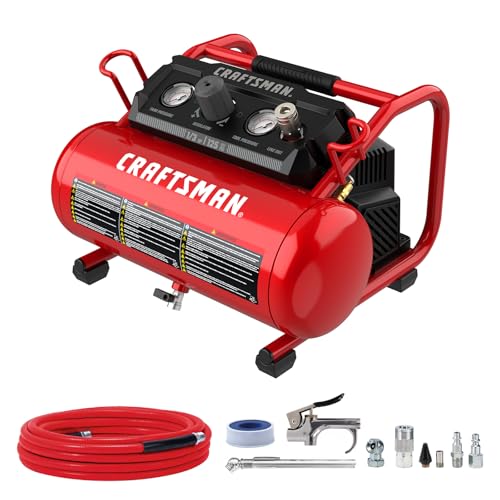 CRAFTSMAN 2-Gallon Portable Air Compressor
|
9.1/10 | Buy |
| Best Budget |
 Ipflin 160 PSI Portable Tire Inflator and Air
|
8.9/10 | Buy |
| Best Premium |
 Baococo 8 Gallon Portable Air Compressor
|
8.6/10 | Buy |
 Metabo HPT 6-Gallon Pancake Air Compressor Review
|
8.6/10 | Buy | |
 VEVOR 1-Gallon 1HP Portable Air Compressor
|
8.3/10 | Buy | |
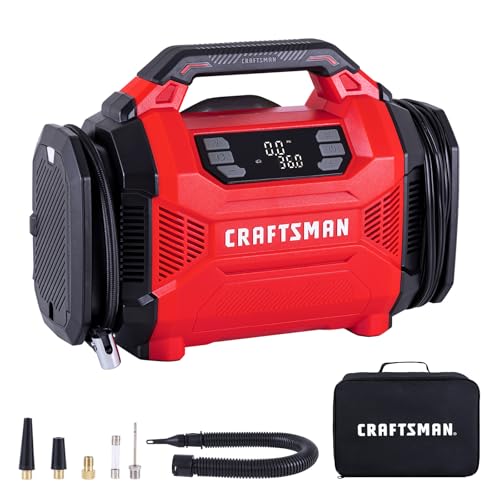 CRAFTSMAN Dual Power Tire Inflator
|
8.1/10 | Buy | |
 AstroAI L7 Cordless Tire Inflator Portable Air
|
8.0/10 | Buy | |
 Limodot 5-Gallon Quiet Portable Air Compressor
|
8.0/10 | Buy | |
 Cannon Sports 1/8 HP Electric Ball Inflator
|
7.8/10 | Buy |
VEVOR 13-Gallon 2HP Quiet Air Compressor
Delivering 4.6 SCFM at 90 PSI with a quiet 66-decibel sound profile, this 13-gallon compressor suits home garages and workshops needing steady air supply without disruptive motor noise. Its oil-free 2HP motor fills the tank in under three minutes, while large rubber wheels help maneuver its substantial 71-pound frame.
Pros
- Quiet 66-decibel noise level during operation
- Oil-free motor design eliminates routine maintenance
- Fast air buildup in under three minutes
- Sturdy 7-inch rubber wheels assist transport
Cons
- Heavy 71-pound weight makes vehicle loading difficult
- Maximum 125 PSI ceiling limits high-pressure tools
CRAFTSMAN 2-Gallon Portable Air Compressor
This CRAFTSMAN 2-gallon portable compressor package pairs a max 125 PSI oil-free pump with a versatile 10-piece pneumatic accessory kit using standard 1/4-inch NPT fittings. It is a practical, lightweight solution for DIYers and homeowners tackling tire inflation, air dusting, and light fastening.
Pros
- Complete out-of-the-box pneumatic package with air hose, blow gun, tire chuck, and 1/4-inch NPT quick-connect hardware
- Lightweight 19-pound carry weight makes moving between the garage, driveway, and workbench effortless
- Oil-free pump eliminates crankcase oil checks and prevents oil aerosol contamination in downstream air lines
- Dual quick couplings allow quick hookups without needing additional brass splitters
Cons
- Small 2-gallon receiver tank and 1/3 HP motor are limited to light-duty pneumatic tasks rather than continuous air-hungry tools
- The included starter air hose and accessories are entry-level components that high-volume shops may eventually want to upgrade
- Fittings utilize standard 1/4-inch auto profile plugs which require matching couplers if your shop uses alternate pneumatic profiles
Ipflin 160 PSI Portable Tire Inflator and Air
The Ipflin portable air compressor provides up to 160 PSI and 30 L/min airflow with a built-in 9600mAh battery and 12V DC vehicle backup. It is an ideal emergency inflator for motorists, garage DIYers, and cyclists who need quick tire pressure adjustments without hauling a heavy air tank.
Pros
- True dual-power flexibility allows cordless battery operation or direct 12V DC automotive corded power during roadside emergencies
- High 160 PSI maximum pressure rating handles high-pressure bike tires, trailer tires, and passenger vehicle inflation
- Automatic shutoff system prevents over-inflation by stopping airflow as soon as the preset pressure target is reached
- Built-in 9600mAh battery eliminates the need for separate external power tool batteries or standalone chargers
Cons
- High-pressure tire inflator design is strictly intended for inflation and cannot operate pneumatic tools like brad nailers or air ratchets
- Cordless lithium-ion battery requires periodic top-off charging during storage to maintain emergency readiness
- Continuous inflation runtime is capped at 30 minutes before requiring a short cool-down period
Baococo 8 Gallon Portable Air Compressor
The Baococo 8-gallon portable air compressor pairs a 2HP electric motor with a 150 PSI receiver tank, delivering 2.8 SCFM at 90 PSI. It provides a solid, accessible air source for garage DIYers tackling tire inflation, car detailing, and pneumatic finish nailing.
Pros
- Useful 8-gallon tank capacity cushions air demand better than smaller pancake style compressors
- 150 PSI peak tank pressure accommodates common automotive tire inflators and pneumatic nailers
- Standard 120V 60Hz power compatibility allows easy plug-and-play use in residential garages
- Sufficient airflow rating of 2.8 SCFM at 90 PSI for light woodworking, trim carpentry, and cleaning tasks
Cons
- Continuous high-CFM pneumatic tools like rotary sanders and heavy-duty 1/2-inch impact wrenches will quickly deplete tank reserves
- Contradictory product listing notes an oil-free tank in the title while mentioning regular oil checks in the description, requiring users to inspect pump details before first start
- Does not include an air hose, quick-connect fittings, or downstream regulator accessories in the box
Metabo HPT 6-Gallon Pancake Air Compressor Review
The Metabo HPT EC711S is a portable 6-gallon pancake air compressor delivering 2.8 CFM at 90 PSI with a 165 PSI tank ceiling and an operating sound level of 73 dB. With its quick 46-second recovery cycle and dual quick couplers, it is an excellent choice for finish carpenters, punch-list contractors, and DIYers running pneumatic nailers.
Pros
- 73 dB operational sound rating is substantially quieter than standard job-site pancake units
- 165 PSI maximum pressure provides ample air storage with a swift 46-second recovery cycle
- Two 1/4-inch universal quick couplers support multi-tool setups right out of the box
- Sturdy steel roll cage protects gauges and the manifold assembly against knocks and drops
- Oil-free 1.0 HP motor ensures low maintenance and reliable cold-weather motor startup
Cons
- At 38.5 lbs, it is slightly heavier than ultra-compact 1-to-3-gallon trim compressors
- Airflow of 2.8 CFM at 90 PSI is designed for intermittent fastening, not continuous rotary tools or paint sprayers
- Bare-tool configuration means air hoses and pneumatic fastening tools must be purchased separately
VEVOR 1-Gallon 1HP Portable Air Compressor
Built for quick tire top-offs and light pneumatic tasks, this compact unit pairs an oil-free 1HP motor with heavy-duty structural steel construction. Integrated thermal protection and a multi-layer intake silencer make it a reliable companion for home workshops.
Pros
- Maintenance-free oil-free motor design
- Sturdy triple-layer coated steel tank
- Automatic safety shut-off for overheating and pressure
- Compact footprint stores easily in tight spaces
Cons
- Small 1-gallon capacity depletes quickly during continuous work
- Relatively heavy at over 30 pounds for its size
- Low 1.5 CFM output limits use with demanding tools
CRAFTSMAN Dual Power Tire Inflator
The CRAFTSMAN Dual Power Tire Inflator delivers versatile high-pressure air delivery up to 150 PSI using either a 120V AC home outlet or a 12V DC vehicle plug. Featuring digital auto shut-off presets and an integrated LED work light, it is an essential portable air solution for DIYers, garage mechanics, and road commuters.
Pros
- Dual 120V AC and 12V DC power inputs offer exceptional flexibility for both driveway maintenance and unexpected roadside flats
- Accurate digital pressure gauge with automatic shut-off prevents over-pressurizing vehicle and bicycle tires
- Capable of reaching 150 PSI, making it suitable for high-pressure road bike tires as well as passenger car tires
- Built-in LED work light enhances nighttime safety and visibility when working alongside highway traffic
- Complete package includes dedicated air hose, multiple nozzle adapters, spare fuse, and a zippered storage bag
Cons
- Tankless direct-drive mechanism is engineered for tire inflation and cannot power pneumatic air tools such as nailers or impact wrenches
- Takes longer to fill large volume leisure items like oversized air mattresses or rafts compared to dedicated high-volume blowers
- Lacks an onboard cordless tool battery dock, requiring access to an active 120V wall outlet or 12V vehicle socket
AstroAI L7 Cordless Tire Inflator Portable Air
The AstroAI L7 is a lightweight, handheld cordless air compressor delivering up to 150 PSI with an integrated 4000mAh rechargeable battery and precise auto-shutoff. It provides dependable, pocket-sized inflation performance for motorists, cyclists, and DIYers needing quick roadside tire top-offs.
Pros
- Weighs only 0.96 pounds for effortless storage in vehicle consoles, toolbags, or cycling packs
- High-speed digital sensor samples tire pressure at 200 times per second to prevent over-inflation
- Internal 4000mAh battery provides cordless freedom without tangling 12V cigarette lighter cords
- Versatile secondary utility as an emergency LED flashlight and portable USB power bank
Cons
- Not intended for heavy-duty truck tires or commercial tires larger than 25 inches in diameter
- Duty cycle requires allowing the unit to cool for 10 minutes after 15 minutes of continuous run time
- Tankless micro-compressor design cannot power workshop pneumatic air tools
Limodot 5-Gallon Quiet Portable Air Compressor
The Limodot 5-Gallon Quiet Air Compressor delivers 2.8 CFM at 90 PSI with an operating noise level of just 68 dB, making it a great match for indoor trim work, tire maintenance, and home workshops. With an 80-second full tank fill time, an oil-free pump, and an included 13-piece accessory kit, this wheeled unit offers solid utility for DIYers seeking quiet performance without routine oil changes.
Pros
- Quiet 68 dB operational sound level suitable for indoor spaces and attached garages
- Strong airflow rating of 2.8 CFM at 90 PSI with rapid 25-second recovery duration
- Maintenance-free oil-free pump ensures hassle-free operation and easy vehicle transport
- Integrated wheel assembly improves mobility around the shop, garage, and jobsite
- Bundled package includes a 25-foot air hose and a 13-piece starter accessory collection
Cons
- Continuous air-hungry tools like rotary sanders or spray equipment will quickly exceed the 2.8 CFM output
- Included PVC air hose can be stiff and prone to kinking in cold garage environments compared to hybrid polymer hoses
- At 5 gallons with a wheeled frame, it has a larger storage footprint than compact pancake or twin-stack trim compressors
Cannon Sports 1/8 HP Electric Ball Inflator
Built for coaches and equipment managers, this 1/8 HP oil-less compressor rapidly fills sports gear and inflatables without manual pumping. An integrated pressure gauge makes it simple to hit target inflation levels accurately every time.
Pros
- Integrated gauge allows precise pressure monitoring
- Maintenance-free oil-less motor design
- Comes with adapters for balls and inflatables
- Significantly faster than manual hand pumps
Cons
- Requires a standard 120V electrical outlet
- Lacks cordless battery operation for remote fields
A Deep Exploration of Oil-Free Compression Technology
Explaining the Mechanical Principles of Oil-Free Compression
Understanding what is an oilless air compressor begins inside the compression cylinder where air pressure is physically generated. Unlike traditional automotive-style pumps that bathe a crankshaft and piston wrist pin in liquid oil, an oil-free compressor relies on self-lubricating synthetic materials. The piston ring is commonly machined from a specialized polytetrafluoroethylene compound, often known as Teflon, or a reinforced carbon composite. As the electric motor drives the piston upward, this low-friction ring seals tightly against a precision-machined aluminum or steel cylinder sleeve without requiring any liquid boundary layer. As a result, the pump generates substantial pressure while remaining completely dry inside.
The internal bearings supporting the connecting rod and motor shaft arrive permanently packed with high-temperature synthetic grease from the factory. These sealed bearings keep mechanical friction low while preventing grease from migrating into the compression chamber during high-speed rotation. Intake air enters through a filtered intake port, undergoes compression on the upward stroke, and discharges through a one-way reed valve into the storage tank. Because no liquid lubricant ever contacts the airstream, the generated pressure remains entirely free of aerosolized petroleum vapors. This clean compression sequence protects pneumatic equipment from gumming up with oily residue.
Comparing Dry Compression Pumps to Oil-Lubricated Systems
Traditional splash-lubricated compressors utilize cast-iron cylinders and an open oil bath to cool internal components during operation. This wet design allows commercial units to run at lower internal operating temperatures and sustain heavy duty cycles across thousands of continuous hours. However, oil-lubricated pumps demand regular fluid level checks, scheduled oil drain intervals, and upright storage to prevent lubricant from spilling. Spilled oil can ruin vehicle interiors during transport, and low fluid levels quickly lead to seized piston rings. For mobile contractors moving equipment between jobs, handling messy fluids introduces unnecessary maintenance overhead.
In contrast, an oil-less design prioritizes convenience, physical portability, and zero scheduled fluid maintenance. Contractors can lay a compact oil-free unit on its side in a truck bed without worrying about oily leaks soaking toolboxes or client floors. The primary trade-off centers on heat dissipation, as dry friction rings naturally endure higher thermal stresses than oil-bathed rings. Consequently, oil-free pumps typically carry lower operational lifespan ratings and stricter duty cycle restrictions than heavy cast-iron stationary pumps. Understanding these operational limitations ensures users do not overheat the pump during intense workloads.
Purity of Air Delivery and Preventing Downstream Contamination
A primary advantage of dry compression chambers is the delivery of clean, uncontaminated compressed air to downstream tools. In oil-lubricated compressors, microscopic oil aerosols bypass the piston rings over time, a process known to mechanics as oil blow-by. This vapor travels down air hoses and contaminates sensitive pneumatic operations unless expensive coalescing filters are installed along the line. For automotive spray painting, even tiny traces of oil cause paint fisheyes and peeling finishes that ruin hours of bodywork. Oil-free air eliminates this hazard at the pump, ensuring pristine paint atomization.
Woodworkers and finish carpenters also rely heavily on clean air delivery when assembling delicate cabinetry. Oil mist escaping from pneumatic nailers can stain raw hardwoods, preventing wood stains and clear finishes from adhering evenly to the grain. Medical clinics, cleanroom laboratories, and sports facilities similarly require oil-free air to prevent chemical contamination. Small inflation pumps, such as the Cannon Sports Electric Ball Inflator Pump with its 1/8 HP oil-less motor, ensure inflatable equipment stays completely free from greasy interior residue. Clean air delivery protects both delicate tools and finished workpieces from unexpected damage.
Reliable Cold-Weather Starts and Zero Crankcase Maintenance
Cold ambient temperatures present a severe challenge for standard oil-lubricated compressors operating in unheated workspaces. Conventional compressor oil thickens drastically when temperatures drop toward freezing, creating immense viscous drag against the motor. When an electric motor attempts to turn a stiff, oil-starved pump, the initial electrical surge often trips standard 15-amp household circuit breakers. Operators frequently waste valuable time waiting for warm conditions or dragging equipment into heated spaces. Cold-weather jobsite delays can disrupt entire work schedules when tools refuse to pressurize.
An oil-free compressor completely eliminates cold-viscosity drag because no oil reservoir exists to freeze or thicken. The Teflon piston seals and sealed bearings move freely regardless of sub-freezing garage or jobsite conditions. Routine maintenance is practically eliminated because owners never inspect oil sight glasses, purchase non-detergent synthetic compressor lubricants, or dispose of hazardous waste oil. This turn-key reliability makes oil-free units the preferred choice for homeowners who use their air equipment intermittently throughout the year. You simply plug the unit in, flip the power switch, and allow the pump to build pressure.
Noise Profiles: High-RPM Universal Motors Versus Low-Speed Dual Pistons
Historical consumer perception associated oil-free compressors with ear-splitting noise and intense vibration. Early jobsite pancake compressors paired small single-piston pumps with universal motors spinning at over 3,400 RPM to maximize air output from a small footprint. These high-speed units routinely generated noise levels between 78 dB and 85 dB, making indoor conversation impossible and causing rapid operator fatigue. Many tradespeople tolerated the noise solely because pancake designs were lightweight and easy to carry between job sites. Working near an 80-decibel compressor in an enclosed basement quickly became unbearable without heavy hearing protection.
Modern engineering has resolved this noise penalty through dual-piston low-RPM pump architectures. Units such as the VEVOR 13-Gallon Air Compressor operate at an ultra-quiet 66 dB, while the Limodot 5-gallon model delivers steady airflow at just 68 dB. By employing two opposed pistons driven by an induction motor running at roughly 1,700 RPM, these compressors produce high air volume without high-frequency motor screech. Thick intake mufflers and rubber vibration isolators further dampen mechanical harmonics, allowing comfortable operation in attached garages and basements. Low-noise operation transforms the workshop environment without sacrificing pressure delivery.
Understanding CFM Output, Operating Pressure, and Duty Cycle Limits
Selecting the right compressor requires analyzing airflow delivery measured in cubic feet per minute (CFM) at specific pressures. Most pneumatic tools specify an air consumption rating at 90 PSI, which represents standard operating line pressure for fastener guns and wrenches. For example, the Metabo HPT Pancake Air Compressor delivers 2.8 CFM at 90 PSI with a maximum tank pressure of 165 PSI. This output easily supports brad nailing, finish nailing, and intermittent framing tasks without experiencing pressure starvation. Higher maximum tank pressure also creates a denser storage buffer, prolonging the interval between motor recycles.
However, buyers must distinguish between intermittent fastener tools and continuous-demand pneumatic equipment. Continuous tools like dual-action rotary sanders, die grinders, and HVLP spray guns consume between 6 and 12 CFM continuously. Because most portable oil-free compressors produce under 5 CFM at 90 PSI and feature a 50 percent duty cycle, they cannot run continuous rotary tools without pausing. Exceeding the duty cycle causes the pump to overheat, triggering thermal overload safety shutoffs and accelerating piston ring wear. Matching tool air demand to the continuous CFM rating prevents equipment strain and tool stalling.
Managing Moisture Condensation and Proper Tank Drainage
A frequent misconception among novice compressor owners is that an oil-free system produces completely dry compressed air. While the pump generates air free of lubricating oil, atmospheric air always carries natural ambient humidity. When the pump compresses atmospheric air into a steel tank, moisture condenses rapidly into liquid water along the cooler tank walls. Over several operating cycles, ounces of water accumulate at the bottom of the air reservoir. High-humidity summer climates accelerate this condensation process dramatically inside the tank.
Allowing condensation to pool inside the tank creates severe internal rust that can compromise structural tank integrity over time. Furthermore, standing water can travel through the regulator and discharge into air tools, causing internal corrosion and sluggish tool performance. Daily tank draining via the underside drain valve remains mandatory for all oil-free compressors after every single working session. Operators should always depressurize the tank down to roughly 10 PSI before slowly opening the drain valve to purge trapped moisture safely. Clean, dry air delivery depends directly on regular condensation management.
Electrical Circuit Demands and Startup Inrush Current
Electric air compressors place significant electrical demands on standard 120-volt residential branch circuits during initial motor startup. When the pressure switch cuts in to refill an empty or partially depleted tank, the electric motor draws a brief spike of inrush current. If the circuit already powers garage lighting, freezers, or heavy tools, this momentary electrical surge can easily trip a 15-amp breaker. Dedicated 20-amp circuits provide the necessary headroom for larger 1.5 HP to 2 HP oil-free motors. Verifying circuit capacity before plugging in a powerful workshop compressor prevents frustrating breaker interruptions.
Using long, undersized electrical extension cords represents another common source of motor failure and nuisance circuit tripping. Light-duty 16-gauge cords create a severe voltage drop over distance, starving the compressor motor of essential operating voltage. This voltage starvation increases motor heat and causes the thermal overload switch to open prematurely. Technicians recommend plugging the compressor directly into a wall receptacle and extending reach using a longer 50-foot or 100-foot air hose instead of an electrical cord. Air hoses maintain full air pressure without exposing the electric motor to electrical voltage drops.
Form Factors from Cordless Inflators to High-Capacity Tanks
Oil-free pneumatic technology spans a diverse range of physical configurations tailored to specific operational requirements. Handheld digital inflators like the AstroAI L7 and Ipflin 160 PSI inflators utilize ultra-compact oil-free micro-pumps powered by lithium-ion battery packs. These devices provide convenient roadside tire maintenance, sports equipment inflation, and bicycle servicing without requiring access to electrical wall outlets. Dual-power models like the CRAFTSMAN Dual Power Tire Inflator allow seamless switching between 12-volt vehicle plugs and standard 120-volt home power. Compact cordless options bring pneumatic convenience directly into glove compartments and backpacks.
For workshop and construction tasks, tank-mounted compressors offer air reserve storage to buffer intermittent tool firing. Compact units like the CRAFTSMAN Air Compressor feature 2-gallon tanks and weigh under 20 pounds for effortless mobility around a house. Larger mobile workshop units, such as 8-gallon Baococo and 13-gallon VEVOR models, incorporate rugged wheels and balanced pull handles. These higher-capacity tanks store compressed air at pressures up to 125 or 150 PSI, reducing the frequency of motor restart cycles. Selecting the appropriate tank size balances physical portability against continuous air volume needs.
Matching Compressor Specifications to Real Pneumatic Applications
Matching an oil-free compressor to your actual workload prevents equipment frustration and premature mechanical wear. DIY homeowners focusing on automotive tire inflation, seasonal winterization blowouts, and brad nailing thrive with lightweight 1-gallon to 6-gallon tanks. These compact models draw minimal power, store neatly beneath garage workbenches, and require zero messy maintenance over years of intermittent operation. Fast recovery times, such as the 46-second recovery on the Metabo HPT pancake unit, keep trim carpentry moving smoothly. Investing in an oversized compressor for simple inflation tasks adds unnecessary weight and bulk.
For auto repair enthusiasts running impact wrenches or hobbyists operating detail paint guns, higher tank volume and CFM delivery become essential. An 8-gallon or 13-gallon oil-free compressor providing 2.8 to 4.6 CFM at 90 PSI delivers the air reservoir needed for short tool bursts. Always verify the rated operating pressure, check the manufacturer duty cycle recommendations, and wear approved hearing and eye protection during operation. Selecting an appropriately sized oil-free compressor guarantees clean air delivery and years of dependable pneumatic utility without pump maintenance headaches. Proper equipment matching ensures every pneumatic task runs smoothly and efficiently.
About the author
Bob Beacham is an experienced tools and workshop writer with deep knowledge of power equipment, mechanical systems, and practical DIY applications. His coverage of air compressors, welding equipment, saws, and workshop tools helps translate technical specifications into useful guidance for homeowners and serious DIYers.