
How to Drain Moisture From Air Compressor: Practical Guide for 2026
Master how to drain moisture from air compressor routines in October 2026. Learn manual valve steps, auto drain kits, and inline filters to protect tanks and tools.
 By Clint DeBoer
Updated October 8, 2026
By Clint DeBoer
Updated October 8, 2026
Pressurizing atmospheric air generates extreme friction and thermal heat, forcing airborne humidity to condense into liquid water inside the receiver vessel. When condensation sits at the bottom of a steel tank, it oxidizes the internal metal walls and travels down airlines to corrode delicate pneumatic tool cylinders. Learning how to drain moisture from air compressor is essential for preventing tank scale, maintaining steady pressure, and protecting pneumatic nailers, paint sprayers, and impact wrenches. Regular drainage routines protect both portable pancake units and stationary garage setups from premature component failure.
Many workshop owners avoid this basic maintenance task simply because stock thumb petcocks are difficult to turn or positioned in awkward locations beneath the tank. Upgrading to extended quarter-turn ball valves, timed electronic solenoids, or mechanical zero-air-loss float drains transforms this chore into a quick or automated habit. Routine purging also preserves total tank volume and prevents water from displacing usable air capacity during demanding pneumatic tasks. Following proper tank maintenance extends the operating lifespan of your equipment and delivers dry, reliable airflow for every project.
| Award | Product | ACR Score About ACR ScoreThe ACR Score is our own rating from 0 to 10, based on performance, design and build, ease of use, and value. It reflects independent research and is never influenced by manufacturers, retailers, or affiliate commissions. Learn more › | |
|---|---|---|---|
| Best Overall |
SUNROAD 2-Pack Extended Air Compressor Tank Drain
|
9.1/10 | Buy |
| Best Value |
 THB 1/2-Inch NPT Compressed Air Moisture Filter
|
9.1/10 | Buy |
| Best Premium |
 Electronic Automatic Tank Drain for Air
|
8.9/10 | Buy |
 DaierTek Electronic Timer Drain Valve Kit
|
8.6/10 | Buy | |
 Zero Air Loss 1/2-Inch NPT Automatic Float Drain
|
8.6/10 | Buy | |
| Best Budget |
 SUNROAD 10-Inch Compressor Tank Drain Kit
|
8.3/10 | Buy |
 QWORK Automatic Timed Condensate Drain Valve
|
8.3/10 | Buy | |
 DCYL G1/2 Zero-Air-Loss Automatic Drain Valve
|
8.0/10 | Buy | |
 QWORK 10-Inch Tank Drain Valve Kit
|
7.8/10 | Buy |
SUNROAD 2-Pack Extended Air Compressor Tank Drain
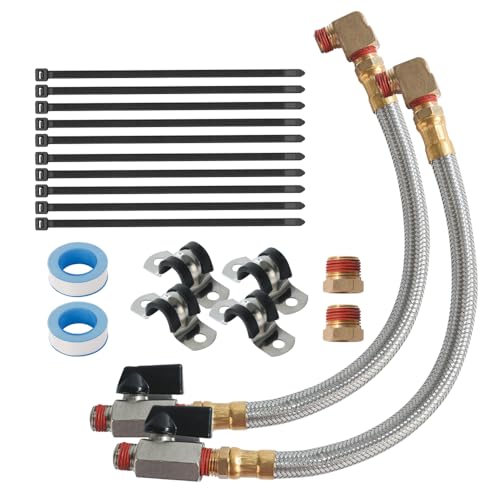
The SUNROAD 2-Pack Extended Tank Drain Valve Kit relocates awkward tank drain ports using a 10-inch braided steel hose rated to 175 PSI and a smooth quarter-turn brass ball valve rated to 300 PSI. It provides DIYers, garage mechanics, and woodworkers with a clean, ergonomic way to purge tank condensation and help protect air receiver vessels from internal rust.
Pros
- Eliminates having to reach or crawl beneath bulky air tanks to turn stiff factory drain screws
- Rugged 10-inch braided steel hose handles up to 175 PSI working pressure and 200 degrees Fahrenheit
- Smooth quarter-turn chrome-plated brass ball valve provides reliable shutoff without leaking air
- Supplied with 3/8-inch adapter bushings, thread seal tape, and vibration-damping mounting clamps
Cons
- Hose working pressure is capped at 175 PSI, making it unsuitable for high-pressure industrial systems operating above that threshold
- Initial installation into tight bottom bungs on low-clearance tanks may require tipping the compressor
- Thread connections require careful wrapping with the included Teflon tape to ensure an airtight seal
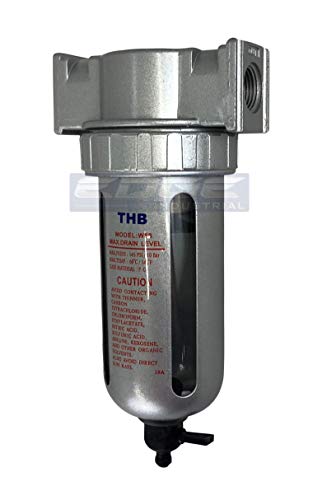
THB 1/2-Inch NPT Compressed Air Moisture Filter
The THB 1/2-inch NPT particulate filter and moisture trap delivers clean, dry compressed air with a generous 106 CFM flow rating, 5-micron particulate filtration, and a 175 PSI maximum input tolerance. It is a dependable addition to any home garage, automotive workshop, or woodworking setup looking to safeguard pneumatic tools against moisture and line scale.
Pros
- High 106 CFM flow capacity prevents severe pressure drops on high-demand pneumatic tools.
- 5-micron element traps up to 95 percent of liquid moisture, scale, and pipe debris.
- Semi-automatic drain allows easy manual purges under pressure and drains automatically when the line depressurizes.
- Metal bowl guard adds structural protection to the 5-ounce polycarbonate reservoir.
- Standard 1/2-inch NPT female ports suit mid-sized and primary workshop air drops.
Cons
- Polycarbonate bowl requires caution around harsh aerosol solvents and synthetic compressor oils.
- Requires adapter bushings if connecting directly to common 1/4-inch or 3/8-inch air fittings.
- Maximum regulated output is capped at 145 PSI, which may limit specialized ultra-high-pressure applications.
Electronic Automatic Tank Drain for Air
This electronic automatic tank drain valve features 1/4-inch ports, a self-cleaning solenoid mechanism, and an integrated strainer to resist clogging. It is a dependable upgrade for garage mechanics, woodworkers, and shop owners who want automated moisture purging to protect receiver tanks from internal rust.
Pros
- Automated moisture purging saves time and helps prevent severe internal tank corrosion
- Built-in strainer stops large rust scale from jamming the solenoid seat
- Standard 1/4-inch inlet and outlet sizing integrates easily into common shop plumbing
- Compact physical design allows installation in tight clearance areas beneath compressor tanks
Cons
- Requires an electrical power source and appropriate wiring connection to operate the solenoid valve
- Tanks with 3/8-inch or 1/2-inch bottom drain ports require separate reducer bushings
- Internal strainer requires periodic inspection and manual cleanout in older tanks with heavy rust scale
DaierTek Electronic Timer Drain Valve Kit
Designed to eliminate manual tank draining, this DaierTek kit uses an adjustable electronic timer to automatically purge moisture, oil, and condensate from compressed air setups. Equipped with a braided hose, isolation shut-off valve, and various NPT adapters, it delivers a turnkey solution for workshop compressors.
Pros
- Automates scheduled drainage to reduce maintenance
- Adjustable cycle interval from 0.5 to 50 minutes
- Discharge duration customizable up to 10 seconds
- Includes braided hose and manual shut-off valve
- Comes with assorted NPT adapters and tape
Cons
- Maximum drain interval is capped at 50 minutes
- Discharge duration limited to 10 seconds maximum
Zero Air Loss 1/2-Inch NPT Automatic Float Drain
This heavy-duty mechanical float drain valve automatically expels tank moisture through a 1/2-inch NPT connection without wasting compressed air or requiring electrical wiring. Forged from corrosion-resistant aluminum alloy with a dual-layer filter, it is a smart upgrade for garage workshops and auto shops wanting hands-free tank maintenance.
Pros
- Mechanical float operation expels water automatically without consuming electrical power or needing wall outlets
- Zero air loss design seals the valve before compressed air escapes, saving energy and preserving line pressure
- Durable aluminum alloy housing provides superior impact resistance compared to plastic bowl drainers
- Dual-layer internal filter helps prevent valve sticking caused by rust scale and workshop debris
- Standard 1/2-inch NPT connection adapts easily to stationary shop tanks and pneumatic moisture legs
Cons
- At ten inches in total length, installation requires sufficient ground clearance beneath the tank or an elbow extension pipe
- Requires periodic manual disassembly and screen rinsing to clear heavy sludge in older, rusting steel tanks
- Not practical for compact portable pancake compressors that lack ground clearance and standard 1/2-inch NPT drain ports
SUNROAD 10-Inch Compressor Tank Drain Kit
Draining moisture prevents compressor tank rust, and this SUNROAD kit simplifies routine maintenance with a flexible braided steel line and an accessible quarter-turn shutoff. It provides a practical upgrade for standard 1/4-inch and 3/8-inch drain ports operating under 175 PSI.
Pros
- Durable braided steel hose prevents kinks
- Corrosion-resistant chrome-plated brass valve
- Complete installation kit with clamps and tape
- Rubber-coated handle allows easy quarter-turn operation
Cons
- 10-inch hose may be short for large tanks
- Working pressure is limited to 175 PSI
- Requires manual operation after every compressor use
QWORK Automatic Timed Condensate Drain Valve
The QWORK Automatic Timed Condensate Drain Valve is an electric programmable purge valve engineered to automate moisture drainage on air compressor tanks, inline dryers, and filter drops. With adjustable open durations from 0.5 to 10 seconds and intervals from 0.5 to 45 minutes, it is ideal for busy workshop owners, mechanics, and woodworkers looking to prevent internal tank rust without manual petcock hassles.
Pros
- Programmable open and interval knobs provide flexible drainage schedules tailored to workshop humidity levels
- Built-in manual review button allows fast diagnostic cycling and confirms leak-free connections
- Comes packaged with connecting elbow, exhaust hose, and thread tape for simplified plumbing
- Standard 1/2-inch NPT inlet matches typical industrial air receiver tank drain ports
Cons
- Requires access to an electrical power source near the compressor base to operate the solenoid timer
- Discharges on a fixed timer rather than sensing actual water accumulation levels, resulting in minor air loss during dry runs
- Can experience valve seat sticking if heavy rust flakes or scale from older tanks enter without an upstream screen
DCYL G1/2 Zero-Air-Loss Automatic Drain Valve
The DCYL G1/2 automatic drain valve is a non-electric, mechanical condensate purge unit rated up to 1.6 MPa (232 PSI) that expels tank moisture without exhausting compressed air. It is a smart, low-maintenance upgrade for garage mechanics and workshop owners tired of manually turning bottom tank petcocks.
Pros
- Operates entirely on mechanical float action with zero electrical power required
- Conserves compressed air reserve by discharging condensate without exhausting pressurized air
- Durable powder-coated cast aluminum alloy body withstands shop floor wear and moisture
- Built-in manual sediment purge valve allows quick clearing of heavy rust flakes
Cons
- Uses G 1/2 straight threads, requiring a thread adapter to mate with standard U.S. NPT tank bungs
- Requires adequate vertical clearance of nearly 12 inches below the tank or drop leg for installation
- Internal sediment screen demands periodic manual cleaning in older tanks with severe internal rust
QWORK 10-Inch Tank Drain Valve Kit
This braided steel extension kit simplifies tank draining by relocating hard-to-reach compressor valves. Rated up to 175 PSI and packaged with an adapter, it offers a reliable setup for standard workshop compressors.
Pros
- Corrosion-resistant braided steel construction
- Pre-applied sealant speeds up installation
- Includes adapter for 3/8-inch ports
- Handles up to 175 PSI reliably
Cons
- Fixed 10-inch length restricts mounting flexibility
- Not rated for high-pressure industrial systems
Complete Guide to Draining Moisture from an Air Compressor Tank
Condensation forms inevitably whenever an air compressor compresses ambient atmospheric air. Ambient air naturally contains moisture vapor, and squishing large volumes of that air into a confined steel storage vessel reduces its moisture-holding capacity. Because cool compressed air cannot retain as much water vapor as hot intake air, droplets collect along the vessel walls and pool at the bottom. Understanding how to drain moisture from air compressor tanks is fundamental to preserving equipment, ensuring clean airflow, and maintaining safe workshop operating conditions.
Why Moisture Accumulates Inside Compressed Air Systems
Atmospheric air drawn into the compressor pump contains relative humidity that varies by geographic location, temperature, and seasonal weather. As the compression cylinder pressurizes ambient air up to 135 or 175 PSI, the air temperature rises rapidly. When this hot air enters the storage receiver, it begins to cool against the large surface area of the steel walls. Cooling causes the air to hit its pressure dew point, forcing moisture vapor to condense directly into liquid water.
The total volume of accumulated liquid depends heavily on ambient humidity levels and overall compressor runtime. A small compressor operating on a humid summer afternoon can produce several ounces of water in just a couple of hours. Because water is significantly denser than compressed air, gravity pulls every condensed droplet to the lowest point of the tank. Without a dedicated purging routine, that standing water remains trapped beneath the air cushion, steadily rising with each motor cycle.
Compressed air storage vessels are engineered to hold pressurized gas, not stagnant liquid reservoirs. When liquid water accumulates inside the receiver, it displaces usable pneumatic volume, reducing the effective gallon capacity of the tank. This volume reduction forces the electric motor and pump assembly to cycle much more frequently to satisfy tool demand. Frequent cycling increases motor wear, raises electrical power consumption, and generates even more thermal heat, worsening condensation issues.
The Hidden Risks of Neglecting Tank Drainage
Neglecting tank drainage creates serious long-term safety hazards for anyone working near pneumatic equipment. Liquid moisture reacts with the unlined carbon steel interior of the pressure vessel, triggering rapid chemical oxidation that forms rust scale. Over months and years, this corrosion eats away at the bottom of the tank shell, progressively thinning the structural metal walls. If left unaddressed, the weakened steel can eventually rupture under high working pressure, presenting an extreme safety hazard.
Corrosion is not the only problem caused by standing water in your compressed air reservoir. When water levels rise high enough, the compressor discharge pulls liquid droplets directly into the air delivery piping and supply hoses. Water entering pneumatic framing nailers, brad guns, or impact wrenches washes away internal lubricating oils and corrodes sensitive o-rings and valves. In painting and finishing applications, line moisture causes severe paint blistering, fish-eyes, and ruined surface finishes.
Internal rust scale also breaks free from the tank floor and travels toward mechanical fittings and valves. Loose rust flakes can easily lodge beneath the seating surface of the safety relief valve or tank check valve, creating persistent pressure leaks. Debris can also clog the regulator seat, causing downstream pressure creep that damages connected pneumatic tools. Establishing a dependable drainage routine protects both the structural integrity of your tank and the operational life of every connected tool.
Standard Manual Drainage Procedure
Draining a compressor manually requires following a safe, repeatable procedure to avoid personal injury or debris blowback. Begin by shutting off electrical power to the compressor or unplugging the power cord from the wall outlet. Allow the pump and motor to cool down if the machine was running recently, as discharge pipes and tank fittings can reach elevated temperatures. Always equip yourself with certified safety glasses and hearing protection before opening any pressurized valve assembly.
Never attempt to open a factory drain valve when the tank is pressurized to its maximum cut-out pressure. High pressure can blast rusty water, sharp scale, and fine grit across your workshop floor with violent force. Bleed off the majority of the air volume through a connected blowgun or regulator until tank pressure drops to a manageable 10 to 20 PSI. This low residual pressure provides sufficient pneumatic velocity to expel heavy sludge without creating an uncontrollable blast.
Locate the drain valve at the lowest point of your compressor tank and position a shallow catch basin or shop towel beneath the port. Slowly open the valve counterclockwise, allowing accumulated water, rust particles, and sediment to discharge into your container. Slightly tilting portable pancake or hot dog compressors toward the drain port helps pull stagnant water out of recessed corners. Keep the valve open until the discharge transitions from dirty water to clean air, then close the valve firmly to seal the vessel.
Upgrading Factory Petcocks with Extended Ball Valve Assemblies
Most portable and small workshop compressors come equipped from the factory with inexpensive threaded needle petcocks or wing-nut style drain plugs. These factory valves are notorious for seizing up, stripping threads, and pinching fingers in tight, poorly lit clearances beneath the tank belly. Because reaching underneath a heavy compressor to twist a stiff thumb screw is awkward, many users put off draining their tanks. Upgrading to an aftermarket extension kit eliminates this mechanical friction and makes daily maintenance effortless.
Extended drain assemblies, such as the 2 Pack Extended Tank Drain Valve Assembly Kit and the Extended Tank Drain Valve Assembly Kit for Air by SUNROAD, relocate the drain control to an easily accessible position. These kits feature a 10-inch flexible braided steel hose with 1/4-inch NPT male brass fittings, rated for a 175 PSI maximum working pressure. The steel braiding resists accidental kinking and mechanical abrasion, while an included 1/4-inch elbow fitting simplifies tight routing under the tank. Threaded adapters, such as a 1/4-inch to 3/8-inch brass bushing, ensure compatibility with various tank port sizes.
At the terminal end of the hose, a quarter-turn chrome-plated brass ball valve provides immediate, smooth flow control. A rubber-wrapped lever handle allows you to open or close the discharge port in a fraction of a second without scraping your knuckles. Similar durable configurations, such as the QWORK Extended Tank Drain Valve Assembly Kit, include pre-applied thread sealant and routing clamps to anchor the valve securely to the compressor frame. Installing an extended ball valve assembly removes the physical barrier to regular maintenance, ensuring you drain moisture consistently after every shop session.
Implementing Electronic Timed Condensate Drains
Busy workshops and production environments benefit significantly from automating the moisture removal process entirely. An electronic timed drain valve utilizes an integrated solid-state timer to energize a direct-acting brass solenoid valve at preset intervals. As the solenoid lifts its internal plunger, trapped tank moisture exhausts automatically through the discharge port under system pressure. This hands-free approach guarantees regular purging even when technicians forget to manually service the compressor at the end of the workday.
The DaierTek Automatic Air Compressor Drain Valve provides customized timer controls that accommodate different workshop humidity conditions and duty cycles. Operators can set the drainage interval from 0.5 to 50 minutes and configure the discharge blast duration between 0.5 and 10 seconds. The complete kit supplies a flexible braided hose, a manual isolation shut-off valve, and multiple NPT adapters. Having a manual ball valve ahead of the electronic solenoid is critical, as it lets you isolate and service the valve without fully depressurizing the main air receiver.
Similarly, the QWORK Automatic Timed Condensate Drain Valve 1/2″ features adjustable cycle timers with an integrated manual test button to verify solenoid firing. For heavy industrial installations, the Electronic Automatic Tank Drain for Air by Chevrolet incorporates a built-in strainer and self-cleaning mechanism designed to resist clogging from tank scale. Electronic timer drains do emit a brief blast of compressed air alongside expelled liquid, which slightly reduces system pressure during each cycle. Proper setup requires positioning a drain tube into an oil-water separator or disposal container to prevent atomized mist from coating shop floors.
Power-Free Mechanical Float Drains for Continuous Operation
Facilities seeking energy efficiency or operating in hazardous environments often prefer mechanical auto drains that require zero electrical connections. These zero-air-loss devices employ an internal buoyant float mechanism situated inside a rugged collection chamber. As liquid condensate drips down from the compressor receiver into the chamber, the rising water level lifts the internal float mechanism. Once the float reaches its trigger height, a mechanical pilot valve opens to discharge liquid while keeping pressurized air trapped in the system.
The Zero Air Loss Automatic Drain Valve features a heavy-duty aluminum alloy housing designed to withstand extreme workshop temperatures and industrial operating pressures. Because it discharges solely liquid condensate without exhausting valuable compressed air, it eliminates the energy waste and pressure drop associated with timed solenoid drains. Its non-electric configuration makes it suitable for wet, humid, or explosive environments where running 120V power wiring presents safety hazards. An integrated dual-layer internal filtration screen captures rust and pipe scale before debris can foul the precision discharge orifice.
Another mechanical solution is the DCYL Air Compressor Auto Drain Valve G1/2” 1.6Mpa, which features an aluminum alloy casting with protective plastic powder coating. This unit utilizes an initial filtration stage where heavier sediments settle and can be purged manually, followed by an automatic float chamber for clean liquid discharge. Operating completely silently and without power, mechanical float drains deliver true continuous protection for stationary tanks, air dryers, and inline receiver vessels. Regular visual checks ensure the internal float moves freely and remains clear of sticky oil sludge or dried mineral scale.
Downstream Moisture Control with Inline Particulate Filters and Water Traps
Draining the compressor storage tank is the first line of defense, but it does not remove all moisture from downstream air lines. High-velocity air exiting the receiver carries microscopic water droplets, oil vapor, and particulate dust that remain suspended in the moving airstream. As this air travels through long distribution hoses and drops in temperature, additional condensation forms right before reaching your pneumatic tools. Installing point-of-use particulate filters and water traps creates a secondary barrier that catches moisture before it harms delicate equipment.
The 1/2″ Particulate filter water trap seperator by THB demonstrates how inline filtration complements tank-level moisture management. Engineered with a 5-ounce polycarbonate bowl protected by a rugged metal guard, this unit handles up to 175 PSI input pressure and flows 106 CFM. Its 5-micron internal filter element strips up to 95 percent of moisture droplets and particulate debris from the compressed air line. The unit incorporates a semi-automatic overnight drain that retains liquid under pressure but opens automatically to dump moisture whenever line pressure drops to zero.
Locating water traps as far away from the compressor pump as practical maximizes their cooling and separating efficiency. Warm air straight out of the pump holds moisture in vapor form, which easily passes right through mechanical filter elements. Giving the air line ten to twenty feet of piping allows the compressed air to cool down, causing vapor to condense into catchable droplets. Combining clean tank draining with downstream inline water separators guarantees dry, high-quality air for paint spraying, sandblasting, and precision woodworking.
Establishing an Effective Workshop Moisture Management Schedule
Developing a consistent drainage routine depends on how often you run your compressor and the relative humidity of your workspace. For casual DIY homeowners and hobbyists who use portable compressors intermittently, draining the tank after every single work session is the safest practice. Leaving a compressor stored with closed valves and internal moisture invites overnight corrosion that quietly degrades the steel vessel. Cracking the valve open at the end of the day and leaving it slightly ajar during storage allows internal moisture to evaporate fully.
Professional workshops and automotive garages running stationary compressors for several hours daily require more aggressive maintenance schedules. In high-demand settings, manual tanks should be drained at mid-day and again at the end of each shift to prevent large water pools. Facilities operating in muggy, humid climates should strongly consider automated electronic timer valves or mechanical zero-air-loss float drains. Automation removes human forgetfulness from the equation, ensuring the compressor receiver maintains maximum air capacity throughout heavy workloads.
Cold-weather environments introduce additional maintenance challenges that require immediate attention when freezing temperatures arrive. Liquid water trapped inside a steel receiver tank can freeze solid, blocking drain ports and potentially cracking fittings or welding seams. If your compressor lives in an unheated garage or mobile service trailer, drain the tank thoroughly while the air is still warm from operation. Never strike a frozen valve with a hammer or apply an open flame, as sudden thermal stress can compromise pressure vessel integrity.
Inspecting Purged Condensate and Recognizing Warning Signs
The physical appearance and smell of the discharged condensate provide valuable diagnostic insight into the internal condition of your pneumatic system. Clean, slightly cloudy water is completely normal and indicates that the receiver tank interior remains in healthy, uncorroded shape. If the discharged liquid appears dark orange or contains gritty brown flakes, internal rust oxidation has already begun inside the carbon steel shell. While minor surface rust is common, large amounts of gritty sediment signal that the tank requires more frequent draining to arrest corrosion.
A thick, milky white or brownish emulsion discharging from the drain port indicates oil blow-by mixing with condensed water vapor. In oil-lubricated reciprocating compressors, worn piston rings, damaged cylinder sleeves, or overfilled crankcases allow lubricating oil to bypass into the air stream. Oil contamination reduces air tool performance, clogs inline filter elements, and ruins automotive paint jobs. Noticing milky discharge should prompt you to check the pump oil sight glass, verify oil viscosity, and inspect intake filters for excessive restriction.
Taking a few minutes to observe your compressor discharge helps you catch minor mechanical problems before they escalate into costly equipment failures. Whether you choose a manual extended ball valve kit, an electronic timer solenoid, or a zero-loss mechanical float drain, the underlying priority remains constant. Consistently purging accumulated moisture keeps your air receiver structurally sound, extends the operating life of your pump, and ensures dependable pneumatic tool performance for years to come.
About the author
Clint DeBoer is an experienced tool-industry specialist with decades of involvement in technical media, hands-on product evaluation, and testing methodology. His focus on performance, practical usability, and data-driven comparisons makes his expertise highly relevant to professional air compressors, pneumatic tools, and workshop equipment.