
How Does a 2 Stage Air Compressor Work: Mechanical Guide for 2026
Learn how does a 2 stage air compressor work, how dual cylinders cycle air, and why 175 PSI workshop systems outperform single-stage units in October 2026.
 By Clint DeBoer
Updated October 8, 2026
By Clint DeBoer
Updated October 8, 2026

Heavy pneumatic workloads such as continuous auto body sanding, HVLP paint spraying, and commercial vehicle maintenance demand a reliable volume of high-pressure air that small consumer units cannot sustain. When standard garage pumps struggle to maintain line pressure above ninety PSI, workshops frequently transition to industrial cast-iron equipment. Understanding how does a 2 stage air compressor work reveals why these specialized machines deliver sustained pressures up to 175 PSI while operating significantly cooler than single-piston alternatives. For buyers weighing their workshop options, consulting a detailed single-stage versus two-stage compressor comparison clarifies where dual-piston configurations provide the greatest operational efficiency.
Unlike entry-level compressors that compress ambient air in one rapid stroke, dual-stage systems split the compression workload between two differently sized cylinders connected by an intercooler. This mechanical division reduces thermal stress on internal valves, lowers electrical strain during continuous cycling, and extends pump service life across thousands of working hours. High-capacity cast-iron machines from manufacturers like Ingersoll Rand, NorthStar, and Campbell Hausfeld demonstrate how two-stage engineering supports continuous shop production without sudden pressure drops. Reviewing the mechanical operation, thermodynamic advantages, and electrical requirements helps operators select the ideal pneumatic setup for heavy-duty applications.
| Award | Product | ACR Score About ACR ScoreThe ACR Score is our own rating from 0 to 10, based on performance, design and build, ease of use, and value. It reflects independent research and is never influenced by manufacturers, retailers, or affiliate commissions. Learn more › | |
|---|---|---|---|
| Best Overall |
Stealth SAQ-1234 2-Gallon Air Compressor
|
9.2/10 | Buy |
| Best Premium |
 Campbell Hausfeld 60-Gallon Air Compressor
|
8.9/10 | Buy |
| Best Budget |
 Metabo HPT 6-Gallon Pancake Air Compressor Review
|
8.6/10 | Buy |
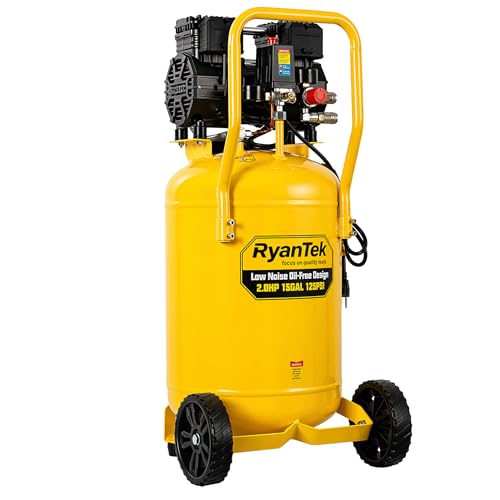 RyanTek 15-Gallon 2HP Air Compressor
|
8.6/10 | Buy | |
| Best Value |
 NorthStar 2-Stage 24.4 CFM Compressor Pump
|
8.6/10 | Buy |
 DEWALT DWFP55130 2.5-Gallon 200 PSI Quiet Trim Air
|
8.4/10 | Buy | |
 Klutch 20-Gallon Portable Air Compressor
|
8.4/10 | Buy | |
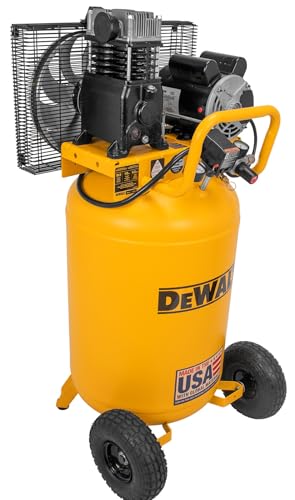 DEWALT 30-Gallon Vertical Portable Electric Air
|
8.3/10 | Buy | |
 Ingersoll Rand 2340L5-V 5 HP Air Compressor
|
8.3/10 | Buy | |
 Ingersoll Rand 2475N7.5 7.5 HP 80-Gallon Two-Stage
|
8.1/10 | Buy |
Stealth SAQ-1234 2-Gallon Air Compressor
Operating at under 60 decibels, this compact unit provides exceptionally quiet performance for garage DIY tasks, brad nailing, and tire inflation. Its oil-free motor reaches up to 125 PSI while keeping routine maintenance to a minimum.
Pros
- Quiet operation suitable for indoor workspaces
- Maintenance-free oil-free pump design
- Durable steel tank with rubber vibration dampening
- Reliable pressure recovery for intermittent nailing
Cons
- Relatively heavy to carry at nearly 42 pounds
- Small two-gallon tank limits continuous tool use
- Modest 1.8 CFM flow rate at 90 PSI
Campbell Hausfeld 60-Gallon Air Compressor
Built for demanding garage and workshop tasks, this stationary compressor combines a 3.7 HP motor with a two-stage cast-iron pump reaching 175 PSI. It provides steady airflow to support high-demand air tools like sprayers, grinders, and sanders.
Pros
- High 175 PSI maximum output pressure
- Durable cast-iron pump rated for longevity
- Large 60-gallon capacity supports sustained pneumatic tool use
- Vertical tank design saves workshop floor space
Cons
- Requires a dedicated 230V to 240V electrical connection
- Heavy 255-pound stationary build is difficult to move
Metabo HPT 6-Gallon Pancake Air Compressor Review
The Metabo HPT EC711S is a portable 6-gallon pancake air compressor delivering 2.8 CFM at 90 PSI with a 165 PSI tank ceiling and an operating sound level of 73 dB. With its quick 46-second recovery cycle and dual quick couplers, it is an excellent choice for finish carpenters, punch-list contractors, and DIYers running pneumatic nailers.
Pros
- 73 dB operational sound rating is substantially quieter than standard job-site pancake units
- 165 PSI maximum pressure provides ample air storage with a swift 46-second recovery cycle
- Two 1/4-inch universal quick couplers support multi-tool setups right out of the box
- Sturdy steel roll cage protects gauges and the manifold assembly against knocks and drops
- Oil-free 1.0 HP motor ensures low maintenance and reliable cold-weather motor startup
Cons
- At 38.5 lbs, it is slightly heavier than ultra-compact 1-to-3-gallon trim compressors
- Airflow of 2.8 CFM at 90 PSI is designed for intermittent fastening, not continuous rotary tools or paint sprayers
- Bare-tool configuration means air hoses and pneumatic fastening tools must be purchased separately
RyanTek 15-Gallon 2HP Air Compressor
Built for garage workshops and indoor tasks, this vertical compressor combines a quiet 66 dBA dual-cylinder motor with a spacious 15-gallon tank. It supplies a dependable 4.5 CFM at 90 PSI for continuous nailing, spraying, and inflation while conserving floor space.
Pros
- Quiet 66 dBA operation suitable for indoor spaces
- Generous 4.5 CFM output at 90 PSI
- Compact vertical tank saves workshop floor space
- Maintenance-free oil-free pump design
- Integrated wheels make rolling transport straightforward
Cons
- Heavy at 68.3 pounds to lift manually
- Maximum pressure caps at 125 PSI
NorthStar 2-Stage 24.4 CFM Compressor Pump
Built with full cast iron construction and Swedish steel valves, this NorthStar two-stage pump delivers 24.4 CFM at 90 PSI for demanding pneumatic setups. Its low-RPM operation and V-style cylinder layout prioritize cooling and mechanical durability during heavy use.
Pros
- High airflow rating of 24.4 CFM at 90 PSI
- Heavy-duty FC35 cast iron construction
- Durable Swedish steel floating valve design
- V-style cylinders promote effective heat dissipation
- Low-RPM operation minimizes wear and running temperatures
Cons
- Heavy 135-pound weight complicates mounting and handling
- Substantial 21-inch cubic dimensions require ample space
DEWALT DWFP55130 2.5-Gallon 200 PSI Quiet Trim Air
The DEWALT DWFP55130 delivers a capable 3.0 SCFM at 90 PSI with a 200 max PSI 2.5-gallon tank, running at a quiet 71.5 dBA on an efficient 12-amp motor. It is an ideal pneumatic power source for trim carpenters, punch-list contractors, and DIYers working on residential circuits.
Pros
- Delivers 3.0 SCFM at 90 PSI with a high 200 max PSI ceiling for rapid pressure recovery during sequential fastening
- Quiet 71.5 dBA sound output makes indoor trim carpentry and remodeling far less disruptive to homeowners
- Low 12-amp draw reduces breaker trips when running on shared 15-amp household circuits
- Integrated roll cage and console protect critical components while supporting horizontal or vertical operation
- Dual quick couplers allow two trim carpenters to connect and work off a single compressor
Cons
- Bare-tool configuration means you must supply your own air hoses, couplers, and pneumatic nail guns
- At 36 pounds, it is heavier to haul up flights of stairs than ultra-compact 1-gallon finish compressors
- Air output of 3.0 SCFM is built for intermittent finish fastening and will not support continuous tools like rotary sanders or sprayers
Klutch 20-Gallon Portable Air Compressor
Featuring a 2.0 HP 120V motor and a 20-gallon tank, the Klutch portable air compressor delivers a rated 4.2 SCFM at 90 PSI for versatile workshop air. Its oil-free pump and wheeled design make it a dependable choice for garage mechanics, woodworkers, and serious DIYers needing steady air storage.
Pros
- Generous 20-gallon air storage capacity provides a substantial buffer for intermittent shop tools
- Delivers a listed 4.2 SCFM at 90 PSI, outperforming smaller pancake compressors for workshop chores
- Oil-free pump design eliminates messy oil changes and allows clean, upright transport
- Rugged rubber wheels and built-in ergonomic handle make moving the 90-pound frame manageable
- Integrated thermal overload protection helps prevent motor burnout during demanding cycles
Cons
- Substantial 90-pound weight makes lifting into truck beds or carrying up stairs difficult without assistance
- Oil-free motor configurations generally produce noticeable operating noise compared to low-RPM lubricated units
- At 4.2 SCFM at 90 PSI, high-draw continuous air tools like sanders or grinders will require recovery pauses
DEWALT 30-Gallon Vertical Portable Electric Air
Delivering 6.2 SCFM at 90 PSI with a high-capacity 175 PSI max pressure rating, the DEWALT DXCM303 30-Gallon Electric Air Compressor offers substantial air reserves for demanding workshop tools. Featuring rugged pneumatic wheels and a factory high-flow regulator, it is an outstanding mobile solution for garage mechanics and serious DIY woodworkers.
Pros
- Substantial 175 PSI maximum pressure provides longer run time between motor recovery cycles
- Solid airflow output of 6.2 SCFM at 90 PSI supports a wide variety of pneumatic garage tools
- High-flow regulator supplies up to 65% more usable operating pressure to connected hoses
- Heavy-duty pneumatic wheels make rolling this 196-pound upright compressor around the garage practical
Cons
- Substantial 196-pound total weight makes vehicle loading and transport between jobsites difficult without ramps or assistance
- Large vertical shop profile is designed for roll-around floor use rather than hand-carry punch-list applications
Ingersoll Rand 2340L5-V 5 HP Air Compressor
Built for demanding workshop environments, this two-stage compressor provides continuous duty operation through an all-cast-iron design. Its 60-gallon vertical configuration helps conserve valuable floor space while reliably sustaining high-pressure air applications.
Pros
- Durable all-cast-iron construction
- Rated for 100% continuous duty
- Vertical tank configuration saves floor space
- Individually cast cylinders ease maintenance
Cons
- Extremely heavy at 430 pounds
- Requires dedicated 230-volt single-phase power
- Tall 69-inch profile requires significant overhead clearance
Ingersoll Rand 2475N7.5 7.5 HP 80-Gallon Two-Stage
The Ingersoll Rand 2475N7.5 is an industrial-grade 7.5 HP two-stage stationary air compressor pairing an 80-gallon ASME receiver tank with a rugged cast-iron pump rated for 100% continuous duty at up to 175 psig. It provides dependable, high-capacity air storage for professional auto mechanics, commercial garages, and demanding fabrication shops.
Pros
- Durable solid cast-iron two-stage pump engineered for over 15,000 hours of heavy-duty shop service
- True 100% continuous duty rating supports non-stop production in multi-bay automotive and fabrication environments
- Spacious 80-gallon ASME-certified vertical receiver tank stores ample air volume at up to 175 psig
- Extended 2,000-hour oil service intervals when utilizing All Season Select synthetic lubricant
- Individual cylinder casting and one-piece connecting rod simplify preventative maintenance and component access
Cons
- Substantial 611-pound dry weight requires dedicated floor anchoring, mechanical lifting gear for positioning, and a permanent shop footprint
- Demands high-power dedicated electrical service and professional stationary hardwiring rather than standard outlet convenience
- Extended two-year pump warranty coverage requires the separate purchase of the official lubricant start-up kit
The Mechanics of Two-Stage Air Compression: How Dual-Piston Systems Operate
Dual-stage reciprocating air compressors are engineered specifically for demanding workshop environments where high operating pressures and continuous airflow are mandatory. While a single-stage pump forces atmospheric air straight into a storage tank in a single stroke, a two-stage pump compresses air in two distinct, sequential phases. This mechanical process relies on two pistons of different diameters, an external finned intercooler tube, and heavy-duty one-way valves. By dividing the compression workload into manageable increments, the pump maintains lower operating temperatures, improves mechanical efficiency, and safely achieves pressures up to 175 PSI.
Stage One: Ambient Intake and Low-Pressure Compression
The compression process begins when the electric motor rotates the crankshaft, drawing the larger low-pressure piston downward inside its cast-iron cylinder bore. This downward motion creates a partial vacuum in the cylinder chamber, prompting the intake reed valve to flex open and admit ambient air through the external intake filter. Clean atmospheric air rushes in at approximately 14.7 PSI until the piston reaches bottom dead center. Once the intake stroke completes, the intake valve snaps shut to trap the volume of air inside the cylinder.
As the crankshaft rotates further, the low-pressure piston begins its upward compression stroke. The ascending piston compresses the trapped air mass, reducing its physical volume and raising its internal pressure to approximately 80 to 120 PSI. Because compressing any gas naturally generates friction and thermal energy, the air temperature spikes significantly during this initial stage. Once the internal cylinder pressure exceeds the threshold of the low-pressure discharge valve, the air forces the valve open and exits the cylinder chamber into the transfer passage.
The Intercooling Stage: Controlling Heat and Air Density
Rather than routing the hot, semi-compressed air directly into the second cylinder, a true two-stage pump passes the air charge through an external intercooler. The intercooler consists of finned copper, aluminum, or cast-iron tubing mounted directly in the airflow path of the compressor flywheel fan blades. As the high-velocity air from the flywheel washes across the cooling fins, it extracts substantial heat from the compressed air traveling inside the tube. This cooling drop is essential for both mechanical longevity and pneumatic thermodynamic performance.
Cooling the air between stages drastically increases the mass density of the air charge according to fundamental gas laws. Dense, cooler air requires less mechanical energy to compress during the subsequent stage than hot, expanded air. Furthermore, lowering the air temperature prevents lubricating oil in the pump crankcase from vaporizing or baking onto the discharge valve plates. Without an effective intercooler, the extreme heat generated during the secondary compression stage would quickly cause valve carbonization, reed failure, and premature gasket deterioration.
Stage Two: High-Pressure Compression and Storage Delivery
After traveling through the intercooler, the cooled, pre-compressed air enters the secondary stage through the intake valve of the high-pressure cylinder. This secondary cylinder bore features a noticeably smaller diameter than the first-stage cylinder. Because the air entering this chamber is already pressurized to roughly 90 PSI, a smaller piston surface area allows the motor to exert immense force without requiring excessive horsepower. The piston descends on its intake stroke, drawing in the dense air charge, and then seals the intake valve at the bottom of the stroke.
The high-pressure piston then drives upward with powerful mechanical leverage, compressing the pre-charged air into an even tighter volume. This secondary stroke elevates the air pressure from the intermediate level up to the final working limit, typically between 150 and 175 PSI. At peak stroke, the extreme pressure forces open the high-pressure discharge valve, sending the fully compressed air through an armored discharge tube and a one-way check valve into the receiver tank. The check valve prevents stored tank pressure from back-flowing into the pump head when the motor shuts off.
Single-Stage versus Two-Stage Pumps: Core Mechanical Differences
Many equipment buyers assume that any compressor featuring two pump cylinders is automatically a two-stage machine, but this is a frequent misconception. In a twin-cylinder single-stage pump, both pistons share identical bore diameters and compress atmospheric air independently in parallel directly into the tank. Each cylinder takes in room air and expels it into the tank at the same maximum pressure, usually topping out between 125 and 150 PSI. These single-stage units work well for intermittent tasks, but they generate intense cylinder head heat when forced to run continuously.
In contrast, a genuine two-stage pump compresses air in series rather than parallel, using stepped cylinder bores and an intercooler. The mechanical division of labor allows two-stage pumps to operate at lower internal compression ratios per cylinder, which significantly reduces the mechanical strain on the connecting rods and crankshaft bearings. Industrial pumps like the NorthStar two-stage pump and the Campbell Hausfeld 60-gallon unit utilize heavy cast-iron heads and precision Swedish steel valves to handle the severe forces of 175 PSI compression. This robust architecture ensures steady volumetric output where single-stage units would overheat and lose efficiency.
Thermal Management and Extended Duty Cycle Capabilities
Excessive thermal buildup is the primary cause of premature air compressor pump wear, valve warping, and motor burnout. Single-stage compressors operating above 120 PSI experience rapid heat accumulation because compressing ambient air up to cut-out pressure in a single stroke generates extreme thermal friction. When pump components become excessively hot, the surrounding air expands prior to compression, which reduces volumetric efficiency and forces the pump to cycle longer to fill the receiver tank. This continuous heat cycle accelerates oil breakdown and thins the protective lubrication film along cylinder walls.
Two-stage engineering mitigates thermal stress by removing heat mid-cycle, allowing stationary workshop models to achieve superior duty cycle performance. Heavy commercial units such as the Ingersoll Rand Type 30 series are engineered for 100% continuous duty application, meaning the pump can operate without thermal shutdown under continuous pneumatic demand. Understanding understanding air compressor duty cycles helps shop owners match pump runtime capabilities with high-draw equipment like sandblasters and rotary tools. Because two-stage pumps typically spin at lower rotational speeds, often between 700 and 1,200 RPM, they generate less friction and dissipate heat far more effectively than high-speed consumer pumps spinning at 3,400 RPM.
Air Volume, Storage Density, and Usable Tool Run Time
One of the greatest operational benefits of two-stage air compression is the ability to store air at 175 PSI instead of standard consumer limits of 125 or 150 PSI. The fundamental relationship between pressure and volume dictates that compressing air to a higher pressure packs more cubic feet of usable air into the same physical tank footprint. For instance, a 60-gallon ASME vertical receiver pressurized to 175 PSI holds roughly 35% more usable air volume than the identical tank filled to only 135 PSI before dropping below the ninety PSI regulator threshold. This extra storage buffer reduces motor cycling and provides a consistent reserve for continuous pneumatic tools.
Continuous tools such as dual-action orbital sanders, HVLP paint spray guns, and large pneumatic die grinders consume continuous volumes between 8 and 15 CFM at 90 PSI. When paired with an undersized single-stage compressor, these tools quickly drain the tank buffer, causing regulated line pressure to plummet mid-task. A heavy-duty two-stage unit like the Ingersoll Rand 2475N7.5 delivers ample continuous CFM while maintaining a high cut-in pressure threshold, ensuring the line pressure never starves sensitive finishing equipment. The expanded air reserve also gives the pump adequate time to recover before the tank pressure falls below the operating requirement of the tool.
Workshop Electrical Demands and Motor Sizing
Generating 175 PSI through a heavy two-stage cast-iron pump requires substantial mechanical torque from the electric drive motor. Unlike lightweight portable compressors that operate on 120-volt, 15-amp household outlets, stationary two-stage compressors almost universally demand dedicated 230-volt or 240-volt single-phase or three-phase electrical circuits. Motors on these units generally range from 3.7 running horsepower up to 7.5 running horsepower, drawing substantial running current and even higher startup inrush current. Attempting to power a multi-stage stationary pump on an undersized electrical feed will trip circuit breakers and damage motor windings.
Proper workshop electrical installation requires appropriately sized copper wiring, dedicated double-pole breakers, and heavy-duty pressure switches or magnetic motor starters. Magnetic starters protect larger electric motors by safely absorbing electrical arcs and cutting power immediately during thermal overload or voltage drop events. Reliable electrical power ensures the induction motor can overcome head pressure when restarting at the factory cut-in threshold, which typically sits around 135 or 140 PSI on a 175 PSI system. Neglecting electrical sizing can cause hard starting, voltage sags, and premature capacitor failure across busy garage workshops.
Lubrication Architecture and Pump Maintenance
Most industrial two-stage compressors feature oil-lubricated cast-iron crankcases engineered to operate across thousands of workshop hours. As the crankshaft spins inside the oil bath, small dippers attached to the bottom of the connecting rods splash lubricant across the cylinder walls, wrist pins, and main bearings. This splash lubrication system creates a durable hydrodynamic barrier that protects reciprocating parts from severe metal-on-metal friction under intense 175 PSI loads. Maintaining clean oil levels via the external sight glass prevents catastrophic pump seizure and preserves ring sealing.
Using the correct lubricant is critical for preventing valve deposits and thermal degradation inside high-pressure cylinder heads. Manufacturers recommend non-detergent synthetic compressor oils engineered to resist thermal breakdown and avoid carbon formation on delicate valve plates. Reviewing guidelines for selecting appropriate compressor pump oil ensures operators choose the proper viscosity without automotive detergent additives that cause foaming. Premium synthetic fluids, such as the lubricant used in Ingersoll Rand two-stage pumps, offer extended service intervals up to 2,000 hours between changeouts while maintaining exceptional thermal stability.
Moisture Control and Tank Condensation Management
Compensating for ambient moisture is a necessary reality when operating dual-stage compression systems. When atmospheric air is compressed into a dense volume and then cooled across the intercooler and inside the storage tank, the moisture vapor naturally condenses into liquid water. If neglected, this accumulated condensation pools along the bottom of the receiver tank, promoting internal corrosion that compromises the structural integrity of the steel vessel over time. Furthermore, excess water inside the tank can migrate downstream into air hoses, ruining paint finishes and corroding internal pneumatic tool components.
Protecting the pneumatic investment requires establishing a daily condensation purge routine using accessible tank drain valves. Stationary tanks equipped with heavy-duty quarter-turn brass ball valves make regular moisture draining fast and convenient compared to stiff, recessed needle petcocks that frequently seize from rust. In addition to regular manual tank draining, commercial auto shops often install inline coalescing filters, refrigerated air dryers, and dedicated water separators immediately downstream of the compressor discharge port. These filtration devices capture lingering water droplets before clean, dry air reaches sensitive impact wrenches, ratchets, or automotive spray nozzles.
Practical Criteria for Choosing a Two-Stage Workshop Compressor
Selecting the right air compressor requires matching your specific pneumatic demand with the mechanical capabilities of the pump. Hobbyists running brad nailers, inflating vehicle tires, or occasionally using light-duty air ratchets generally do not require the expense, weight, and 240-volt electrical installation of a two-stage machine. Compact single-stage units, such as portable pancake or hot dog compressors, offer ample air delivery and portability for intermittent tasks without occupying permanent workshop square footage. However, when shop tasks involve high-volume continuous sanding, commercial auto repair, or multi-gun production environments, a two-stage stationary unit is an essential shop asset.
Investing in a quality two-stage cast-iron compressor provides higher maximum operating pressure, expanded air storage reserves, and superior duty cycle endurance that single-stage units cannot duplicate. Evaluating manufacturer specifications for delivered CFM at 90 PSI, true continuous running horsepower, tank capacity, and electrical circuit availability ensures the equipment matches the daily demands of your shop. When properly wired, maintained with non-detergent synthetic oil, and drained regularly of condensation, a two-stage air compressor delivers decades of quiet, dependable pneumatic power for demanding professional projects.
About the author
Clint DeBoer is an experienced tool-industry specialist with decades of involvement in technical media, hands-on product evaluation, and testing methodology. His focus on performance, practical usability, and data-driven comparisons makes his expertise highly relevant to professional air compressors, pneumatic tools, and workshop equipment.