
What Type of Air Compressor Do I Need: Practical Guide for 2026
Match pneumatic tool air demands with the proper pump capacity in October 2026 to figure out what type of air compressor do i need for any job.
 By Tom Scalisi
Updated October 8, 2026
By Tom Scalisi
Updated October 8, 2026

Running an air tool that suddenly stalls or drops line pressure mid-cut is one of the most frustrating experiences in a home garage or workshop. Many buyers purchase a compact tank based on storage convenience, only to realize that continuous pneumatic demands quickly starve the motor of compressed air. Figuring out what type of air compressor do i need starts with matching tool consumption at specific pressures against pump output rather than relying on basic tank volume alone. Selecting the right configuration keeps air tools operating smoothly without burning out motor windings or tripping household circuits.
Different pneumatic tasks require vastly different volume thresholds, ranging from light brad nailing to high-draw automotive impact guns. An intermittent finish nailer uses small air bursts that allow rapid recovery, whereas rotary sanders demand continuous air delivery measured in standard cubic feet per minute. Alongside airflow volume, buyers must evaluate electrical draw on standard household breakers, noise ratings in enclosed rooms, and understanding air compressor duty cycles to prevent premature pump failure. By evaluating these primary performance criteria up front, you can invest in equipment that reliably matches your everyday workload.
| Award | Product | ACR Score About ACR ScoreThe ACR Score is our own rating from 0 to 10, based on performance, design and build, ease of use, and value. It reflects independent research and is never influenced by manufacturers, retailers, or affiliate commissions. Learn more › | |
|---|---|---|---|
| Best Overall |
ALL-TOP Dual Cylinder 12V Air Compressor
|
9.2/10 | Buy |
| Best Budget |
 WYNNsky 1/4-Inch NPT 5-Piece Air Coupler Kit
|
9.1/10 | Buy |
 DEWALT Cordless Tire Inflator Portable Air
|
9.1/10 | Buy | |
 Limodot 1-Gallon Quiet Air Compressor
|
9.1/10 | Buy | |
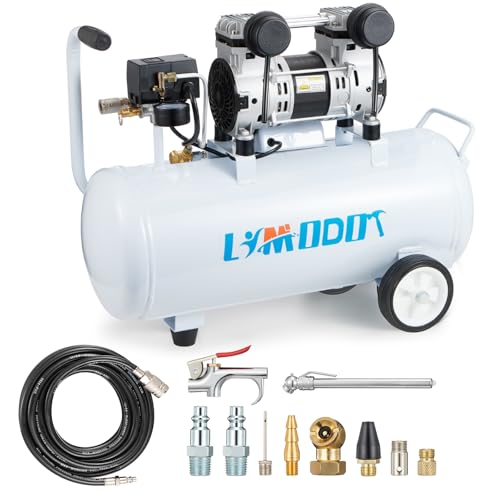 Limodot 8-Gallon Quiet Air Compressor
|
9.1/10 | Buy | |
| Best Value |
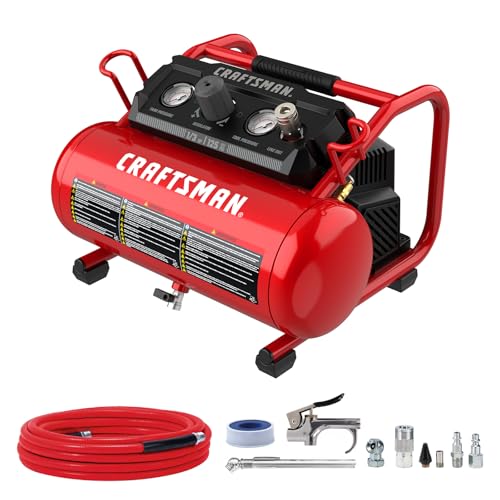 CRAFTSMAN 2-Gallon Portable Air Compressor
|
9.1/10 | Buy |
| Best Premium |
 Metabo HPT 6-Gallon Pancake Air Compressor Review
|
8.6/10 | Buy |
 Metabo HPT EC914S 6-Gallon 200 PSI Pancake Air
|
8.3/10 | Buy | |
 CRAFTSMAN 6 Gallon 150 PSI Portable Oil-Free
|
8.1/10 | Buy | |
 CRAFTSMAN 8-Gallon 1.8 HP Air Compressor
|
8.0/10 | Buy |
ALL-TOP Dual Cylinder 12V Air Compressor
Built for rapid tire inflation on large trucks and off-road rigs, this dual-cylinder pump pushes an impressive 12.35 CFM flow rate up to 150 PSI. The rugged metal frame, integrated thermal safeguards, and extended 26-foot hose provide reliable utility for heavy-duty vehicle recovery.
Pros
- High 12.35 CFM output swiftly inflates large tires
- Dual aluminum cylinder construction helps dissipate heat
- Generous 26-foot hose reaches all corners of large vehicles
- Equipped with automatic thermal and over-current safety switches
Cons
- Heftier 24-pound build demands extra carrying effort
- Third-party gauges require built-in over-pressure protection
WYNNsky 1/4-Inch NPT 5-Piece Air Coupler Kit
Designed for workshops using diverse pneumatic tools, this WYNNsky kit features a universal coupler compatible with A, T, and I/M plugs alongside four matching I/M fittings. Rated up to 300 PSI, its scratch-resistant anodized construction delivers dependable performance for everyday compressed air tasks.
Pros
- Universal coupler accommodates A, T, and I/M plug types
- High 300 PSI maximum working pressure rating
- Scratch-resistant anodized coating protects against shop wear
- Standard 1/4-inch NPT size fits most common compressors
Cons
- Included plugs are limited exclusively to I/M style
- 1/4-inch flow size limits high-volume pneumatic equipment
DEWALT Cordless Tire Inflator Portable Air
This compact DEWALT portable tire inflator delivers up to 150 PSI with smart auto shut-off, powered by an internal rechargeable battery or an included 10-foot 12V car plug. It provides an efficient, pocket-sized solution for vehicle owners, cyclists, and DIYers wanting rapid roadside top-offs without hauling a bulky tank compressor.
Pros
- True cordless freedom with an internal rechargeable battery plus a 10-foot 12V DC vehicle plug backup
- Accurate digital pressure gauge with 5 smart presets and automatic shut-off to eliminate overinflation
- Ultra-compact handheld design weighing just 0.63 kg for easy storage in glove boxes or saddlebags
- Integrated LED work light and emergency USB power bank functionality for travel safety
- Generous accessory bundle backed by a 3-year limited warranty
Cons
- Engineered exclusively for high-pressure inflation rather than operating pneumatic air tools or nailers
- Does not include a 120V AC residential wall outlet power adapter
- Compact tankless pump requires periodic cooling breaks during heavy multi-tire inflation runs
Limodot 1-Gallon Quiet Air Compressor
Engineered for low noise output at 68 decibels, this 1-horsepower Limodot compressor delivers quick recovery times and an oil-free motor for light pneumatic tools. Its compact form factor and bundled 11-piece accessory kit make it a practical option for trim carpentry and home workshop projects.
Pros
- Quiet 68 dB operation suitable for indoor jobs
- Rapid 15-second pressure recovery time
- Oil-free design requires minimal routine maintenance
- Generous accessory bundle included out of the box
- Reliable cold-weather starting capability
Cons
- Small 1-gallon capacity restricts continuous heavy use
- Relatively heavy at nearly 30 pounds
Limodot 8-Gallon Quiet Air Compressor
Limodot pairs an 8-gallon capacity with a quiet 68-decibel motor, keeping noise disruption low during indoor trim or workshop jobs. Delivering 2.8 CFM at 90 PSI alongside a quick 30-second recovery time, it provides steady airflow for DIY pneumatic tools without messy oil maintenance.
Pros
- Low 68 dB output prevents loud workshop disruption
- Fast 30-second pressure recovery keeps projects moving
- Oil-free pump eliminates messy oil changes
- Comprehensive 11-piece accessory kit included out of the box
- Integrated wheels make moving the 8-gallon tank easy
Cons
- 2.8 CFM output limits high-demand continuous tools
- Included PVC hose is stiffer than rubber alternatives
CRAFTSMAN 2-Gallon Portable Air Compressor
This CRAFTSMAN 2-gallon portable compressor package pairs a max 125 PSI oil-free pump with a versatile 10-piece pneumatic accessory kit using standard 1/4-inch NPT fittings. It is a practical, lightweight solution for DIYers and homeowners tackling tire inflation, air dusting, and light fastening.
Pros
- Complete out-of-the-box pneumatic package with air hose, blow gun, tire chuck, and 1/4-inch NPT quick-connect hardware
- Lightweight 19-pound carry weight makes moving between the garage, driveway, and workbench effortless
- Oil-free pump eliminates crankcase oil checks and prevents oil aerosol contamination in downstream air lines
- Dual quick couplings allow quick hookups without needing additional brass splitters
Cons
- Small 2-gallon receiver tank and 1/3 HP motor are limited to light-duty pneumatic tasks rather than continuous air-hungry tools
- The included starter air hose and accessories are entry-level components that high-volume shops may eventually want to upgrade
- Fittings utilize standard 1/4-inch auto profile plugs which require matching couplers if your shop uses alternate pneumatic profiles
Metabo HPT 6-Gallon Pancake Air Compressor Review
The Metabo HPT EC711S is a portable 6-gallon pancake air compressor delivering 2.8 CFM at 90 PSI with a 165 PSI tank ceiling and an operating sound level of 73 dB. With its quick 46-second recovery cycle and dual quick couplers, it is an excellent choice for finish carpenters, punch-list contractors, and DIYers running pneumatic nailers.
Pros
- 73 dB operational sound rating is substantially quieter than standard job-site pancake units
- 165 PSI maximum pressure provides ample air storage with a swift 46-second recovery cycle
- Two 1/4-inch universal quick couplers support multi-tool setups right out of the box
- Sturdy steel roll cage protects gauges and the manifold assembly against knocks and drops
- Oil-free 1.0 HP motor ensures low maintenance and reliable cold-weather motor startup
Cons
- At 38.5 lbs, it is slightly heavier than ultra-compact 1-to-3-gallon trim compressors
- Airflow of 2.8 CFM at 90 PSI is designed for intermittent fastening, not continuous rotary tools or paint sprayers
- Bare-tool configuration means air hoses and pneumatic fastening tools must be purchased separately
Metabo HPT EC914S 6-Gallon 200 PSI Pancake Air
The Metabo HPT EC914S delivers an impressive 200 PSI maximum pressure and 4 CFM at 90 PSI from a 6-gallon tank, giving trim carpenters and remodelers the air volume needed to drive multiple nailers simultaneously. At roughly 41 pounds, it successfully combines high-pressure air storage with practical job-site portability.
Pros
- High 200 PSI tank ceiling stores substantially more usable air than conventional 150 PSI pancake models
- Generous 4 CFM at 90 PSI airflow rating supports multi-tool operation and reduces nailer drive hesitation
- Manageable 41-pound carry weight offers better portability than heavier twin-stack compressor configurations
- Engineered by Metabo HPT to support both lightweight trim nailers and larger framing or roofing guns
Cons
- At 41 pounds, it is noticeably heavier to carry than minimalist 1-to-3 gallon trim-only compressors
- Tank volume and CFM output remain inadequate for continuous high-demand air tools like HVLP sprayers or sanders
- Ships as a bare-tool compressor without included air hoses, pneumatic fittings, or nail guns
CRAFTSMAN 6 Gallon 150 PSI Portable Oil-Free
The CRAFTSMAN 6-Gallon 150 PSI Oil-Free Pancake Air Compressor delivers 2.6 SCFM at 90 PSI via a 1.0 HP low-voltage start motor with factory dual quick couplers. Weighing 30.8 pounds, it provides dependable air delivery for finish carpenters, DIY remodelers, and garage maintenance tasks.
Pros
- Delivers 2.6 SCFM at 90 PSI with a 150 PSI maximum tank ceiling for dependable finish fastening.
- Dual quick couplers allow two pneumatic tools to remain connected at the same time without splitters.
- Oil-free pump design ensures clean air delivery and zero periodic pump oil maintenance.
- Low-voltage start 1.0 HP motor supports reliable startups on standard 120V household outlets.
- Manageable 30.8-pound weight and integrated carry handle provide practical one-person jobsite transport.
Cons
- Air delivery rate of 2.6 SCFM at 90 PSI is not designed for continuous high-demand tools like rotary sanders or paint sprayers.
- Standard oil-free electric motor design generates typical high-pitch operational sound during tank recharge cycles.
- Sold as a bare compressor unit without included air hoses, couplers, or pneumatic nailers.
CRAFTSMAN 8-Gallon 1.8 HP Air Compressor
Built with a durable steel horizontal tank and an oil-free motor, this compressor delivers up to 150 PSI for garage projects, framing, and tire inflation. An included 10-piece accessory set and wheeled frame provide an accessible, mobile setup for home workshops.
Pros
- Oil-free pump requires zero regular maintenance
- Fast 45-second tank recovery cycle
- Generous 10-piece pneumatic accessory kit included
- Wheels and handle make transport easy
Cons
- Horizontal tank footprint requires significant floor storage space
- 1.8 HP motor is not intended for continuous industrial tools
Matching Compressor Architecture to Your Pneumatic Workload
Choosing the right air compressor requires looking past shiny tank paint and deceptive marketing badges to assess true pneumatic mechanics. Many people assume that a larger tank automatically delivers more continuous air, yet the motor and pump assembly actually dictate performance. To resolve what type of air compressor do i need, you must evaluate tool air consumption, storage pressure limits, electrical delivery, and recovery speed. Understanding these mechanical relationships ensures your chosen compressor delivers consistent working pressure without stalling your workflow.
The Fundamental Metric: CFM at 90 PSI Versus Peak Horsepower Claims
Air volume delivery is the single most critical specification when evaluating any pneumatic power system. Volume is measured in cubic feet per minute (CFM) or standard cubic feet per minute (SCFM), representing the actual volume of air displaced at a given pressure. Most pneumatic tools operate at approximately 90 PSI, making the CFM rating at 90 PSI the true benchmark of working capability. Marketing materials frequently highlight inflated peak horsepower numbers, but continuous running power combined with pump displacement determines genuine tool performance.
When evaluating compact pancake compressors, you will typically encounter ratings between 2.6 and 4.0 CFM at 90 PSI. For instance, the Metabo HPT EC711S provides 2.8 CFM at 90 PSI, which handles single-tool finish nailing with ease. High-pressure variants like the Metabo HPT EC914S push air delivery up to 4.0 CFM at 90 PSI by utilizing high-efficiency pump designs. If your pneumatic equipment demands more volume than the pump produces continuously, the system relies on stored tank volume until the pressure inevitably collapses.
Intermittent Versus Continuous Air Consumption: Sizing for Your Tools
Pneumatic tools fall cleanly into two distinct operational categories: intermittent duty and continuous consumption. Fastening tools such as brad nailers, roofing nailers, and framing nailers consume discrete pulses of compressed air per actuation. Because an operator pauses between fastening cycles, even modest pumps can maintain adequate line pressure across small storage tanks. In contrast, tools like dual-action rotary sanders, die grinders, and HVLP paint sprayers consume vast volumes of air continuously.
Attempting to operate continuous-consumption tools on an undersized compressor leads directly to tool stalling and motor overheating. A small 2-gallon unit like the CRAFTSMAN 1/3 HP model works well for intermittent tasks, tire inflation, and short blow gun sweeps. However, continuous tools generally require at least 8 to 15 CFM at 90 PSI to prevent line starvation. Sizing a pump to your most demanding continuous tool prevents the compressor from running past its thermal endurance limits.
Tank Reservoir Sizing and Usable Stored Air Pressure
Air tanks do not generate compressed air; they act as pressurized storage buffers between the pump and your tools. The storage buffer allows you to draw momentary air volumes that exceed the pump’s immediate displacement capacity. A larger reservoir dampens line pressure fluctuations and prevents the electric motor from cycling rapidly on and off. Compact tanks between 1 and 2 gallons prioritize jobsite mobility, while 6-gallon and 8-gallon tanks offer superior stability for multi-fastener operations.
Maximum tank pressure plays an equally vital role in determining total usable air storage. A 6-gallon tank pressurized to 200 PSI holds substantially more usable air than an identical 6-gallon tank capped at 125 or 150 PSI. The Metabo HPT EC914S utilizes a 200 PSI maximum limit, which provides extra reserve before the pressure switch drops to its cut-in threshold. This expanded differential extends operating intervals between motor cycles, helping framing crews fire multiple nailers without experiencing pressure lag.
Pump Architecture: Oil-Free Versus Oil-Lubricated Mechanics
Compressor pumps generate pressure through either oil-free piston mechanisms or splash-lubricated cast-iron cylinders. Oil-free pumps utilize Teflon or composite PTFE piston rings sliding inside precision sleeves to eliminate liquid lubrication requirements. This design ensures that compressed air remains free of oil aerosols, which is beneficial for spray finishing, fine woodworking, and cold-weather startup. Units like the CRAFTSMAN 6-gallon pancake and Limodot models leverage oil-free systems to minimize routine maintenance chores.
While oil-free units offer exceptional convenience, traditional oil-lubricated cast-iron pumps provide unmatched thermal dissipation for demanding industrial environments. Oil-lubricated assemblies can handle higher duty cycles because lubricating oil transfers friction heat away from critical piston rings and cylinder walls. However, oil-lubricated units require level positioning, regular oil level checks via sight glasses, and routine oil changes. If you prioritize zero upkeep and simple cold-weather operation, an oil-free mechanism remains the practical choice for residential garages.
Compression Stages and Operating Pressure Thresholds
Understanding pump staging helps clarify why certain compressors reach higher operational cut-off pressures than standard consumer models. A single-stage compressor draws ambient air into one or more cylinders and compresses it directly into the storage reservoir in a single stroke. Single-stage configurations typically top out between 125 and 150 PSI, which accommodates standard pneumatic nailers and basic garage tasks. For higher storage pressure and heavy workshop machinery, our guide comparing single-stage versus two-stage compressor designs outlines how intercooling stages increase overall efficiency.
Two-stage compressors use an initial low-pressure cylinder to partially compress ambient air before routing it through a cooling tube into a secondary high-pressure cylinder. This dual-step mechanical process allows two-stage workshop units to achieve working pressures of 175 PSI or higher. While production facilities rely on heavy two-stage equipment, single-stage electric units cover the vast majority of DIY, residential remodeling, and jobsite framing needs. Choosing single-stage equipment keeps weight down and avoids unnecessary electrical complexity.
Operational Decibels and Motor Engineering for Enclosed Spaces
Noise output is a major buying factor that many workshop owners overlook until they start up their machine in an enclosed space. Traditional jobsite compressors utilize high-RPM universal motors that spin above 3,400 RPM, producing deafening noise levels between 78 and 85 dBA. That level of acoustic output quickly induces ear fatigue and disturbs family members in attached garages or basements. Fortunately, modern compressor engineering has produced ultra-quiet induction pumps that drastically attenuate noise generation.
Quiet compressors, such as the Limodot 1-gallon and 8-gallon models operating at 68 dB, utilize low-speed induction motors running around 3,240 to 3,400 RPM. These dual-piston balanced assemblies distribute compression forces smoothly, substantially dampening mechanical vibration and harsh acoustic chatter. Similarly, the Metabo HPT EC711S operates at a manageable 73 dB, making it significantly quieter than older universal motor designs. If you perform trim carpentry inside occupied residences, prioritizing low decibel output preserves clear communication and prevents noise complaints.
Electrical Circuit Compatibility and Starting Inrush Amperage
Electrical compatibility often catches buyers off guard when plugging a new air compressor into a standard 15-amp household outlet. Electric motors draw a momentary surge of inrush current upon startup that can exceed their normal running amperage by two to three times. If a compressor starts under head pressure or operates in cold ambient temperatures, this starting surge can easily trip household circuit breakers. Selecting models with low-voltage starting capability, such as the CRAFTSMAN 6-gallon unit, helps prevent breaker nuisance trips.
To prevent voltage drop, avoid operating portable compressors on long, undersized household extension cords. If extended reach is required, run longer air hoses instead of electrical cords to keep line voltage stable at the motor terminals. For small setups and remote projects, measuring small compressor electrical draw can help ensure your generator or branch circuit provides sufficient continuous wattage. Ensuring your garage outlet provides adequate amperage protects motor windings from thermal stress and premature burnout.
Portability, Form Factor, and Jobsite Transport Engineering
Compressor tank orientation and physical architecture heavily influence ease of transport and workshop storage efficiency. Pancake style tanks feature a wide, low-profile footprint that resists tipping during truck transit or rough jobsite handling. Units like the CRAFTSMAN 2-gallon portable weigh only 19 pounds, allowing easy single-handed transport up ladders and across staging areas. Conversely, horizontal wheeled tanks like the CRAFTSMAN 8-gallon model utilize structural handles and rubber tires to roll smoothly across rough shop floors.
When jobsite mobility extends off-road or away from utility power, dedicated 12-volt inflators fill a unique operational niche. The ALL-TOP dual cylinder 12V portable compressor delivers an impressive 12.35 CFM for rapid truck and RV tire inflation directly from a vehicle battery. Compact digital pumps like the DEWALT tire inflator combine cordless battery versatility with 12V vehicle cords for emergency roadside repairs. Matching compressor weight and power sources to your travel requirements prevents hauling heavy stationary equipment to remote jobs.
Moisture Management, Drain Valves, and Air Distribution Fittings
Compressing ambient air generates heat and forces atmospheric moisture to condense along the interior steel walls of the storage tank. If this accumulated water is neglected, it creates internal rust scaling and eventually contaminates downstream air tools and finishes. Every storage tank incorporates a bottom drain valve that must be opened regularly after use to purge moisture under low pressure. Accessible drain valves make daily maintenance simple, preventing premature tank degradation and extending equipment service life.
Proper air distribution also depends on quality pneumatic couplers and air line fittings to eliminate parasitic pressure leaks. Using universal fittings like the WYNNsky 1/4-inch NPT coupler kit allows seamless connections across common A, T, and I/M industrial plugs. High-quality couplers maintain unrestricted airflow while withstanding operating pressures up to 300 PSI without leaking. Equipping your air lines with reliable quick-connect fittings ensures your compressor delivery reaches the tool without pressure drop.
Practical Selection Guidelines for Your Specific Workload
Selecting the ideal air compressor ultimately requires balancing your tool air consumption against portability, noise tolerance, and budget. Homeowners managing basic tire inflation, sports gear, and occasional trim work do well with compact 1-gallon to 2-gallon oil-free units. Finish carpenters and framing crews benefit most from 6-gallon pancake models delivering between 2.8 and 4.0 CFM at 90 PSI with fast recovery cycles. Automotive hobbyists running impacts and spray equipment should step up to wheeled 8-gallon or larger tanks to provide stable operating buffers.
Before finalizing your decision, verify the highest CFM consumption among all the pneumatic tools you plan to operate. Add a safety margin of approximately thirty percent to ensure your compressor pump does not run continuously under heavy workloads. Checking that your electrical supply matches motor amperage requirements will protect your investment and guarantee dependable performance. Aligning your pneumatic demands with the proper pump capacity ensures you achieve consistent results across every workshop project.
About the author
Tom Scalisi brings more than two decades of experience in construction, building maintenance, contracting, and hands-on tool use. His practical understanding of power tools, automotive work, repairs, and jobsite equipment helps readers evaluate compressors based on real workloads rather than specifications alone.