
What Kind of Oil Does My Air Compressor Take: Practical Guide for 2026
Learn what kind of oil does my air compressor take for peak pump health, viscosity ratings, and maintenance schedules updated for October 2026.
 By Glenda Taylor
Updated October 8, 2026
By Glenda Taylor
Updated October 8, 2026

Compressor pumps generate intense thermal friction during heavy compression cycles, making proper crankcase lubrication essential for long-term mechanical reliability. Many shop owners and DIY mechanics wonder what kind of oil does my air compressor take when performing routine seasonal maintenance or servicing an older reciprocating cast-iron pump. Pouring standard motor oil into a reciprocating pump crankcase can trigger severe carbon buildup on reed valves and compromise compression efficiency over time. Understanding your pump design helps you choose fluids that prevent thermal breakdown, minimize friction, and resist moisture emulsification under tough shop conditions.
Piston pumps typically rely on specialized non-detergent mineral oils or fully synthetic compressor lubricants engineered to withstand continuous operating temperatures without foaming. If you use pneumatic tools alongside your compressor, our air tool oil versus compressor oil guide explains why in-line tool lubricants cannot serve as crankcase pump fluids. Selecting the proper ISO viscosity grade and non-detergent formulation protects your cylinder walls, wrist pins, and crankshaft bearings from premature mechanical wear. Paying close attention to manufacturer recommendations preserves clean airflow output, stabilizes internal operating temperatures, and ensures dependable operation across changing workshop seasons.
| Award | Product | ACR Score About ACR ScoreThe ACR Score is our own rating from 0 to 10, based on performance, design and build, ease of use, and value. It reflects independent research and is never influenced by manufacturers, retailers, or affiliate commissions. Learn more › | |
|---|---|---|---|
| Best Overall |
Mag 1 1-Gallon Air Compressor Oil
|
9.2/10 | Buy |
| Best Budget |
 Triax Kompressor ISO 46 SAE 20 Full Synthetic Air
|
9.1/10 | Buy |
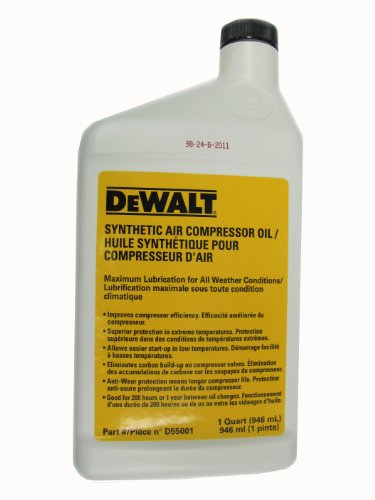 DeWalt D55001 1-Quart Compressor Oil
|
9.1/10 | Buy | |
| Best Premium |
 Triax Kompressor ISO 100 SAE 30 Oil (5 Gal)
|
9.1/10 | Buy |
| Best Value |
 Milton 1002 SAE 30W Compressor Oil, 1 Gallon
|
8.8/10 | Buy |
 TRIAX Kompressor ISO 46 SAE 20 Full Synthetic Air
|
8.8/10 | Buy | |
 Campbell Hausfeld ST1253 Compressor Oil (16 oz)
|
8.6/10 | Buy | |
 TRIAX Kompressor ISO 68 Full Synthetic Air
|
8.6/10 | Buy | |
 Milton 1002-32 ISO-100 Compressor Oil, 32 oz
|
8.4/10 | Buy | |
 Silentaire Synthetic Compressor Oil, 24 oz
|
8.0/10 | Buy |
Mag 1 1-Gallon Air Compressor Oil
Formulated for reliable workshop maintenance, Mag 1 Air Compressor Oil uses refined petroleum base stocks paired with anti-foam additives to maintain stable lubrication. The generous one-gallon volume makes it a practical choice for keeping reciprocating or stationary compressors running smoothly over time.
Pros
- Anti-foam additives maintain steady lubrication
- Refined petroleum stocks promote smooth operation
- Formula helps extend compressor service life
- Generous 1-gallon volume handles multiple refills
Cons
- Jug weighs 7.25 pounds and can be heavy to pour
- One-gallon size may exceed small top-off needs
Triax Kompressor ISO 46 SAE 20 Full Synthetic Air
Triax Kompressor ISO 46 SAE 20 is a commercial-grade, full synthetic non-detergent compressor oil engineered for oil-lubricated reciprocating, rotary screw, and vane pumps operating in temperatures from -49°F to over 140°F. It provides exceptional thermal protection and extended component life for garage mechanics and shop owners maintaining heavy-duty pneumatic systems.
Pros
- Extreme all-weather operating range from -49°F to 140°F+ prevents cold-start motor stalling and high-heat viscosity breakdown
- Non-detergent full synthetic formula protects internal bearings and provides up to 20,000 hours of service longevity
- Lowers operating pump temperatures by 30% and actively sheds condensation to prevent internal crankcase rust
- Compatible with oil-lubricated reciprocating, rotary screw, and rotary vane compressor pumps from major manufacturers
Cons
- Not suitable for oil-free or maintenance-free dual-piston compressor designs that do not use crankcase oil
- Explicitly prohibited for use in breathing air systems, oxygen compressors, or liquid natural gas (LNG) units
- Single-quart volume may require purchasing multiple bottles for larger stationary 60-gallon or 80-gallon shop pump crankcases
DeWalt D55001 1-Quart Compressor Oil
Formulated for regular air compressor maintenance, the DeWalt D55001 comes in a handy one-quart bottle to keep pump components operating smoothly. It is a solid choice for workshops and job sites running oil-lubricated compressors that require dedicated manufacturer-grade fluid.
Pros
- Convenient 1-quart size for routine maintenance
- OEM formulation from an established tool brand
- Compact bottle design stores easily
Cons
- Not applicable for oil-free compressor models
- May require multiple bottles for high-capacity industrial tanks
Triax Kompressor ISO 100 SAE 30 Oil (5 Gal)
Engineered for rotary, vane, screw, and reciprocating systems, this industrial-grade synthetic fluid provides up to 20,000 hours of continuous service across extreme temperatures. Its non-detergent formula lowers operating heat by 30 percent while guarding vital bearings against friction and moisture.
Pros
- Extended 20,000-hour life span minimizes maintenance cycles
- Reliable all-season operation across wide temperature swings
- Substantially reduces operating temperatures and oil burnoff
- Non-detergent blend prevents bearing wear and vibration
Cons
- Not compatible with oxygen air or LNG compressors
- Large 5-gallon volume exceeds small workshop requirements
Milton 1002 SAE 30W Compressor Oil, 1 Gallon
Milton 1002 is a non-detergent ISO-100 SAE 30W conventional lubricant engineered specifically for reciprocating air compressors. The one-gallon capacity makes it a sensible option for regular workshop equipment upkeep.
Pros
- Non-detergent formula tailored for reciprocating compressors
- Standard ISO-100 SAE 30W viscosity rating
- Generous one-gallon volume covers multiple refills
Cons
- Conventional mineral formula instead of synthetic blend
- Heavy container can be awkward to pour directly
TRIAX Kompressor ISO 46 SAE 20 Full Synthetic Air
TRIAX Kompressor ISO 46 SAE 20 is a commercial-grade, full-synthetic non-detergent lubricant engineered for oil-lubricated reciprocating, rotary screw, and vane air compressors. It provides reliable extreme-temperature wear protection and multi-viscosity all-season performance, making it an excellent maintenance choice for auto shops, contractors, and home garage workshops.
Pros
- Full synthetic non-detergent formulation extends pump life across severe operating conditions
- True all-season multi-viscosity rating maintains fluid flow from -49 deg F up to 140 deg F+
- Formulated to lower operating temperatures by up to 30% and eliminate oil vapor odor
- Compatible with a wide array of compressor pumps including reciprocating and rotary screw designs
Cons
- Not formulated for oil-free air compressors, breathing air systems, oxygen setups, or LPG gas pipelines
- Users must verify whether their pump manufacturer specifically calls for ISO 46 (SAE 20) rather than heavier ISO 68 or ISO 100 weights
- Requires careful manual crankcase draining and filling without an included pour spout
Campbell Hausfeld ST1253 Compressor Oil (16 oz)
Formulated for workshop and industrial setups, this 30-weight lubricant protects compressor pumps against rust, sludge, and component wear. The compact 16-ounce bottle makes routine top-offs and crankcase servicing straightforward.
Pros
- Formulated specifically for compressor pumps and motors
- 30-weight viscosity helps minimize component wear
- Inhibits rust, sludge, and internal corrosion
- Compact bottle enables controlled, mess-free pouring
Cons
- 16-ounce volume may require multiple bottles for large units
- Single 30-weight viscosity is not suitable for all models
TRIAX Kompressor ISO 68 Full Synthetic Air
TRIAX Kompressor ISO 68 is a commercial-grade, full synthetic compressor lubricant engineered for oil-lubricated reciprocating, rotary screw, and vane pumps operating between -49°F and 140°F+. It is an excellent maintenance solution for auto mechanics, shop owners, and contractors seeking lower pump operating temperatures and up to 20,000 hours of service life.
Pros
- Extended 20,000-hour service life minimizes routine maintenance intervals on high-demand shop compressors
- All-season stability from -49°F to 140°F+ prevents cold-morning motor drag and high-heat viscosity breakdown
- Non-detergent formulation separates condensation cleanly to safeguard internal crankcase bearings
- Broad compatibility across major reciprocating, rotary screw, and rotary vane compressor manufacturers
Cons
- Not suitable for maintenance-free oil-free compressor designs or oxygen and Liquid Natural Gas (LNG) systems
- One-gallon container size exceeds the immediate refill capacity of small single-stage DIY splash-lube pumps
Milton 1002-32 ISO-100 Compressor Oil, 32 oz
Formulated specifically for oil-lubricated reciprocating compressors, this ISO-100 non-detergent lubricant shields pumps against wear and deposit buildup. It separates easily from moisture and remains fluid down to -15°F for dependable cold-weather starts.
Pros
- Protects internal components against wear and corrosion
- Non-detergent formula resists foaming and separates water
- Inhibits sludge and carbon deposit formation
- Maintains fluidity in temperatures down to -15°F
Cons
- Designed strictly for reciprocating pump mechanisms
- Conventional oil base rather than full synthetic
Silentaire Synthetic Compressor Oil, 24 oz
Silentaire offers this 24-ounce synthetic lubricant to keep compatible air compressors operating smoothly. The container includes a dedicated pouring tip and cap to assist with clean, precise refills during maintenance.
Pros
- Special pouring tip enables neat dispensing
- Included cap seals bottle securely
- Synthetic formulation suited for compressor upkeep
- Convenient 24-ounce size for standard maintenance
Selecting the Correct Oil for Your Air Compressor Pump
Reciprocating air compressor pumps require specialized lubricants that maintain a stable protective film under extreme cylinder head heat without carbonizing against discharge reed valves. Most standard oil-lubricated workshop compressors operate best on a dedicated non-detergent compressor oil rated at ISO 100, which corresponds to an SAE 30 weight. Using automotive engine oil or standard hydraulic fluid in a compressor pump creates major maintenance headaches, as standard motor oils contain chemical additives that ruin pneumatic components. Checking your owner manual and matching the fluid to your shop ambient temperature ensures reliable pump pressurization and prevents premature piston seizure.
The Critical Requirement for Non-Detergent Formulations
Automotive engine oils contain heavy detergent packages specifically engineered to keep soot, combustion blow-by, and metallic particles suspended in the fluid until they reach an oil filter. Air compressor pumps lack internal automotive-style oil filters and rely on splash lubrication to coat the cylinder walls, connecting rods, and crankshaft bearings. When detergent-heavy motor oil circulates inside a compressor crankcase, it keeps airborne dust and wear debris floating in suspension rather than allowing foreign matter to settle harmlessly at the bottom of the sump. This circulating debris acts as an abrasive slurry that accelerates wear across wrist pins, splash dippers, and cast-iron cylinder sleeves.
Detergent additives also react poorly to the intense moisture and high compression temperatures found in reciprocating cylinder heads. These additives tend to foam violently when churned by high-speed crankshaft counterweights, which creates air pockets that strip away the oil film between bearing surfaces. Furthermore, foaming oil easily bypasses piston compression rings, entering the discharge manifold where extreme heat bakes detergent ash into hard carbon deposits on thin reed valves. Over time, these brittle carbon crusts prevent the valves from sealing properly, causing severe pressure drop, longer tank recovery cycles, and potential pump overheating.
Viscosity Grades Explained: ISO 100, ISO 68, and ISO 46
Industrial compressor lubricants use the International Organization for Standardization viscosity classification rather than standard automotive multi-grade designations. An ISO 100 compressor oil represents the most common specification for single-stage and two-stage reciprocating pumps operating in standard ambient shop temperatures between 50 and 100 degrees Fahrenheit. This viscosity corresponds closely to a straight SAE 30 non-detergent weight, offering the high film strength necessary to cushion connecting rod bearings under peak compression load. Well-known formulations like Campbell Hausfeld 30 weight and Milton high performance conventional oil are classic examples of ISO 100 fluids designed specifically for reciprocating pumps.
Lighter viscosity grades come into play when operating equipment in unheated workshops or colder regional climates. An ISO 68 compressor oil correlates roughly to an SAE 25 weight, bridging the gap between cold-start fluidity and high-temperature hydrodynamic film protection. For severe winter conditions or specialized rotary vane units, manufacturers frequently specify an ISO 46 compressor oil, which aligns with an SAE 20 weight. Lighter viscosity oils flow freely during initial motor rotation, preventing excessive drag on splash dippers and allowing electric motors to achieve operational speed without pulling severe current surges.
Full Synthetic versus Conventional Mineral Base Stocks
Conventional compressor lubricants rely on highly refined mineral base stocks blended with anti-wear and anti-foaming agents. Blends such as Mag 1 air compressor oil utilize refined petroleum stocks to maintain lubricity while helping workshop pumps operate smoothly during moderate, intermittent cycles. Mineral oils provide dependable lubrication for standard hobbyist or light-duty garage duties where the pump runs intermittently for tire inflation or brad nailing. However, petroleum-based oils tend to degrade more rapidly when exposed to continuous heat, requiring frequent drain intervals to avoid sludge accumulation and thermal breakdown.
Full synthetic compressor oils utilize engineered polyalphaolefin or ester base stocks that resist thermal oxidation far better than conventional mineral blends. Products like TRIAX Kompressor full synthetic oil provide high film durability and elevated load-bearing capacity, preventing direct metal contact even during prolonged compression cycles. Synthetic fluids also feature a naturally high viscosity index, allowing them to remain fluid in sub-zero weather while maintaining thick protective barriers under scorching crankcase conditions. Commercial operations running continuous rotary screw or cast-iron reciprocating pumps often select synthetics because they dramatically extend oil drain intervals and reduce carbon buildup on valve plates.
Synthetic lubricants also demonstrate superior water separation characteristics, commonly referred to as demulsibility. Because ambient air contains humidity that condenses inside the crankcase during cool-down periods, oil must shed moisture cleanly rather than turning into a foamy mayonnaise-like sludge. High-grade synthetic formulations allow condensed water to separate and drop to the bottom of the oil reservoir where it can be periodically purged. This water-shedding action keeps active lubricant molecules circulating directly over bearing journals, minimizing corrosion and rust formation across internal pump components.
Temperature and Seasonal Viscosity Selection
Operating an air compressor in varying seasonal temperatures demands careful attention to lubricant thickness at startup. When winter temperatures drop below 40 degrees Fahrenheit inside an unheated garage, standard SAE 30 or ISO 100 conventional oil thickens into a dense syrup. This sluggish viscosity creates immense rotational resistance against the splash pin and crankshaft, forcing the electric motor to draw heavy inrush amperage upon startup. As a result, compressors started in freezing shops often trip standard 15-amp household circuit breakers or blow thermal overload reset buttons before the pump reaches operating speed.
Switching to an ISO 46 or SAE 20 non-detergent oil during cold winter months alleviates excessive starting torque and protects against oil starvation during initial revolutions. Once warm summer weather arrives and ambient temperatures climb past 90 degrees Fahrenheit, transitioning back to an ISO 100 or SAE 30 oil prevents thermal thinning. Alternatively, using an all-season synthetic multi-viscosity compressor oil eliminates the hassle of seasonal fluid swaps. Modern multi-viscosity synthetics are formulated to flow readily in sub-freezing conditions while maintaining structural shear resistance during scorching summer workloads.
Oil-Lubricated versus Oil-Free Pump Mechanisms
Before buying fluid for your machine, you must determine whether your air compressor pump actually requires crankcase oil. A substantial portion of portable consumer compressors, including common pancake, hot dog, and twin-stack units, utilize completely oil-free pump designs. These oil-free systems feature cylinders lined with low-friction coatings and piston rings made of reinforced Teflon or PTFE compounds that require zero liquid lubrication. Pouring oil into an oil-free compressor intake or motor housing will destroy the non-stick cylinder linings, foul pressure switches, and ruin downstream pneumatic equipment.
Oil-lubricated compressors are easily identified by examining the pump housing for dedicated mechanical service fittings. An oil-lubricated pump will feature a crankcase with an oil fill cap or breather plug on top, an oil drain plug near the base, and either an oil level dipstick or a clear glass sight window. These units are typically constructed from heavy cast iron or aluminum cylinders with cast-iron sleeves, designed for higher duty cycles, quiet operation, and prolonged workshop longevity. If your compressor has a clear circular sight glass with a red center indicator, it unquestionably requires regular oil level monitoring and scheduled fluid changes.
How to Check Oil Levels and Inspect Fluid Condition
Maintaining the proper oil volume in your compressor crankcase prevents catastrophic bearing failure from fluid starvation and air line contamination from overfilling. When reading a circular sight glass, the oil level should rest precisely across the middle of the glass, covering the red indicator dot when the machine rests on a level floor. If using a dipstick, verify that the fluid level sits between the crosshatched minimum and maximum indicator lines without overflowing the neck. Checking the oil level before every major work session ensures you catch slow gasket leaks or excessive oil blow-by before mechanical damage occurs.
Inspecting the visual condition of the oil reveals valuable information regarding internal pump health and condensation contamination. Clean compressor oil appears golden, amber, or completely clear depending on whether it is conventional mineral oil or synthetic. If the fluid in your sight glass looks cloudy, milky, or resembles a light tan emulsion, water condensation has blended into the oil supply. In addition to changing contaminated crankcase oil immediately, reviewing our compressor moisture maintenance guide helps you establish routine tank draining habits that keep excess humidity out of the entire pneumatic delivery system.
Step-by-Step Compressor Pump Oil Change Procedure
Changing your compressor pump oil requires only basic hand tools, fresh non-detergent lubricant, and an approved oil collection container. Begin by running the compressor for roughly five to ten minutes under mild load to warm the crankcase lubricant, which suspends accumulated particulates and thins the fluid for complete draining. Shut off electrical power to the compressor, disconnect the power cord from the wall outlet, and pull the safety relief valve ring to vent remaining tank pressure before touching mechanical fittings. Positioning a shallow catch pan directly beneath the crankcase drain plug keeps your workbench clean during the draining process.
Carefully unthread the crankcase drain plug using an appropriate box wrench or hex key, allowing the warm lubricant to drain completely into the catch pan. Removing the top oil fill cap or crankcase breather plug promotes rapid draining by eliminating vacuum resistance inside the housing. Inspect the magnetic tip of the drain plug, if equipped, for excessive metal shavings that could signal connecting rod or crankshaft bearing deterioration. Once the sump drains to a faint drip, clean the threads with a clean shop rag, apply fresh thread sealant or a new crush washer, and reinstall the drain plug securely without over-torquing the soft aluminum casting.
Using a clean funnel, slowly pour the correct viscosity non-detergent compressor oil into the fill port while observing the sight glass. Stop pouring periodically to allow fluid to settle across the crankcase bottom, preventing accidental overfilling that leads to frothing and oil discharge through the breather. Thread the crankcase breather cap back into position firmly by hand to keep shop sawdust and metal grit from falling into the clean oil. Wipe away any accidental drips, reconnect the power supply, and allow the compressor to cycle to full shut-off pressure while visually inspecting the drain plug for oil leaks.
Managing Operating Heat and Duty Cycle Demands
The rate at which compressor oil breaks down depends heavily on how hard the pump works during regular shop projects. Continuous-draw pneumatic tools such as rotary sanders, die grinders, and HVLP paint sprayers demand continuous airflow that forces single-stage pumps to cycle relentlessly. Running a standard air compressor beyond its intended thermal envelope superheats the crankcase, accelerating oil oxidation, thinning protective fluid boundaries, and causing rapid fluid evaporation. Our compressor duty cycle guide details how matching pump run times to manufacturer rest intervals prevents extreme thermal stress across your crankcase lubricant.
High workloads make full synthetic lubricants an exceptionally smart investment for demanding workshop and commercial environments. Industrial synthetic compressor oils provide robust shear resistance that maintains vital hydrodynamic separation between moving parts even when cylinder head temperatures soar. While conventional petroleum oils often require replacement every 100 to 200 operational hours under heavy service, quality synthetic formulations can comfortably operate for several thousand hours under proper maintenance. Investing in premium synthetic compressor oil safeguards precision mechanical components, suppresses oil vapor carryover into spray equipment, and keeps pump operating temperatures running noticeably cooler over extended daily shifts.
Practical Workshop Takeaway for Pump Longevity
Protecting your reciprocating air compressor comes down to using non-detergent lubricants matched to your operating climate and pump design. Always resist the urge to pour standard automotive engine oil into your crankcase, and never add oil to an oil-free Teflon-lined pump assembly. Routine checks of the oil sight glass combined with timely seasonal fluid replacements ensure that your cast-iron pump continues delivering dependable pneumatic power for years to come. Checking your manufacturer specifications before every oil change eliminates guesswork and keeps your pneumatic shop tools running at peak efficiency.
About the author
Glenda Taylor has extensive experience in residential construction, remodeling, home improvement, and tool use. Her practical approach to equipment evaluation focuses on usability, performance, safety, and value—helping DIYers and workshop users make better-informed decisions about compressors and related tools.