
What Size Air Compressor for Air Impact Wrench: Practical Sizing Guide for 2026
Learn what size air compressor for air impact wrench setups you need in October 2026, covering CFM delivery, tank capacity, and operating pressure.
 By Kenny Koehler
Updated October 8, 2026
By Kenny Koehler
Updated October 8, 2026
Automotive maintenance tasks often stall when a pneumatic wrench suddenly lacks the torque needed to break free stubborn, rusted lug nuts. Fastener removal and suspension work rely heavily on instant air volume rather than just static line pressure, which makes selecting the right air delivery system crucial for any home workshop or commercial bay. When home mechanics question what size air compressor for air impact wrench operation is truly necessary, they must evaluate both delivered airflow volume and compressed air storage capacity. Proper air tool performance depends on matching mechanical consumption with reliable compressor output to prevent sudden torque dropouts during heavy fastening or extraction tasks. For a detailed breakdown of pneumatic volume metrics, review our resource on understanding air compressor cfm ratings across different tool categories.
Standard half-inch pneumatic impact guns generally demand between four and six cubic feet per minute at ninety pounds per square inch under typical intermittent operation, but continuous firing quickly drains smaller tanks. An undersized pump combined with a tiny reservoir forces the motor to cycle endlessly, resulting in rapid line pressure loss and cold tool stalling. Choosing an appropriate tank size alongside an efficient pump ensures that your impact mechanism receives consistent dynamic pressure whenever the trigger is pulled. Taking the time to calculate real-world tool consumption before selecting workshop equipment eliminates the frustration of stalled fasteners and excessive motor wear.
| Award | Product | ACR Score About ACR ScoreThe ACR Score is our own rating from 0 to 10, based on performance, design and build, ease of use, and value. It reflects independent research and is never influenced by manufacturers, retailers, or affiliate commissions. Learn more › | |
|---|---|---|---|
| Best Overall |
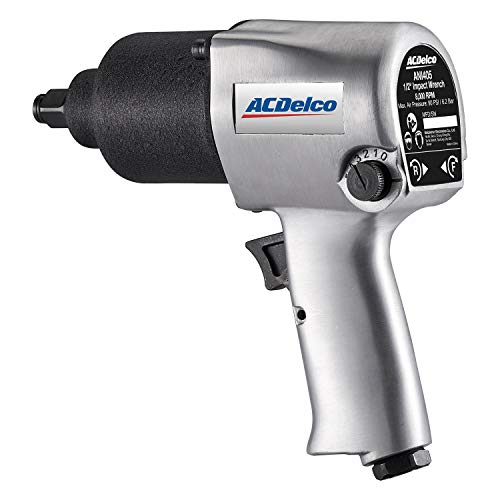
ACDelco ANI405A Heavy Duty 1/2-Inch Pneumatic
|
9.2/10 | Buy |
| Best Premium |
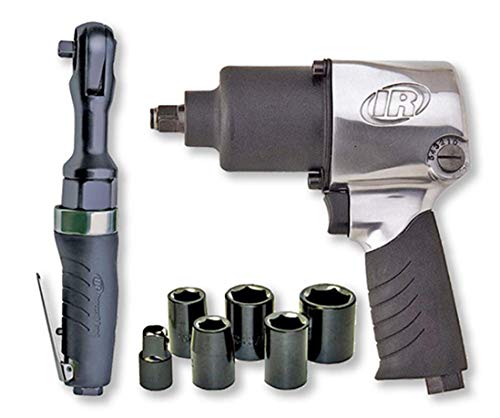 Ingersoll Rand Edge Series 2317G 1/2-Inch Air
|
9.1/10 | Buy |
| Best Value |
 VEVOR 1/2-Inch 1400 Ft-Lb Air Impact Wrench
|
8.9/10 | Buy |
 Ingersoll Rand 231C 1/2-Inch Air Impact Wrench
|
8.9/10 | Buy | |
 Dynamic Power 50-Piece Pneumatic Air Tool Kit
|
8.8/10 | Buy | |
| Best Budget |
 AEROPRO 1/2-Inch Air Impact Wrench
|
8.6/10 | Buy |
 BESWELL BW-112BN 1/2-Inch Air Impact Wrench
|
8.3/10 | Buy | |
 AEROPRO A398 1/2-Inch Air Impact Wrench
|
8.3/10 | Buy | |
 Trivd Frol 1/2-Inch Air Impact Wrench
|
8.3/10 | Buy | |
 Ingersoll Rand 231HA-2 1/2-Inch Drive Air Impact
|
8.3/10 | Buy |
ACDelco ANI405A Heavy Duty 1/2-Inch Pneumatic
The ACDelco ANI405A is a heavy-duty 1/2-inch pneumatic impact wrench engineered with a twin hammer clutch mechanism that delivers up to 500 ft-lbs of torque with a 5-speed regulator for controlled shop fastening. It offers dependable lug nut busting power and workshop utility for auto mechanics, DIYers, and garage hobbyists paired with a compatible air compressor setup.
Pros
- Rugged twin hammer mechanism delivers dependable impact force rated up to 500 ft-lbs
- Integrated 5-speed regulator provides adjustable power control for diverse fastening tasks
- Substantial 5.72-pound chassis provides durable metallic heft for demanding mechanical work
- Standard 1/2-inch square drive accepts widely available automotive impact sockets
Cons
- Requires an air compressor with adequate air volume and storage to maintain continuous operating pressure during heavy duty cycles
- At 5.72 pounds, it may cause hand fatigue during extended overhead mechanical jobs compared to lightweight composite alternatives
Ingersoll Rand Edge Series 2317G 1/2-Inch Air
The Ingersoll Rand Edge Series 2317G combo kit pairs a 500 ft-lb 1/2-inch impact wrench and a 2.6-pound air ratchet for dependable vehicle maintenance. It is a practical, durable pneumatic package for garage hobbyists and DIY mechanics with a capable air supply.
Pros
- Delivers up to 500 ft-lbs of maximum torque to break loose stubborn vehicle lug nuts and suspension bolts
- Lightweight 2.6-pound air ratchet maneuvers easily inside cramped engine bays and beneath dashboards
- Twin hammer mechanism provides smooth, balanced impact force with reduced internal vibration
- Complete kit includes five utility sockets and a durable blow-molded carrying case
Cons
- High rotary airflow demand exceeds the continuous capacity of compact 1-gallon to 6-gallon pancake air compressors
- Does not include quick-connect air fittings, whip hoses, or thread sealant out of the box
- Air ratchet top speed of 170 RPM requires manual initial breakaway for extremely over-torqued fasteners
VEVOR 1/2-Inch 1400 Ft-Lb Air Impact Wrench
Delivering up to 1,400 foot-pounds of nut-busting torque, this pneumatic impact wrench pairs high breakaway power with a compact 4.6-pound body. The included 11-piece CR-V metric socket set and dedicated carry case make it a practical kit for automotive maintenance.
Pros
- High 1,400 ft-lbs breakaway torque for tough fasteners
- Lightweight 4.6-pound body reduces arm fatigue
- Includes 11 durable CR-V impact sockets
- Four-position regulator provides straightforward power control
- Integrated lubrication adaptor simplifies tool oiling
Cons
- Requires an external air compressor to operate
- Socket set includes metric sizes only without SAE options
Ingersoll Rand 231C 1/2-Inch Air Impact Wrench
The Ingersoll Rand 231C is a classic 1/2-inch pneumatic impact wrench delivering up to 600 foot-pounds of reverse torque with a durable twin-hammer mechanism. Requiring a minimum 90 PSI air supply and a 3/8-inch hose, it is an ideal choice for DIY mechanics and garage workshops tackling tire rotations and bolt extraction.
Pros
- Up to 600 foot-pounds of reverse breakaway torque easily removes stubborn vehicle lug nuts and seized bolts
- Durable twin-hammer mechanism delivers smooth, reliable impacts with reduced tool vibration
- Adjustable power regulator offers precise forward power selection to prevent over-tightening
- Manageable 5.8-pound weight and 7.3-inch length allow convenient access in tight automotive spaces
- Pressure-fed lubrication system promotes long-term mechanical reliability in busy garage settings
Cons
- Requires an air compressor capable of maintaining at least 90 PSI and a 3/8-inch air hose (sold separately)
- Small portable or pancake air compressors will quickly deplete their air reserve during extended burst cycles
- Front exhaust port can blow loose dust and debris forward toward the work surface if positioned close to dirty components
Dynamic Power 50-Piece Pneumatic Air Tool Kit
The Dynamic Power D-W3-50K 50-piece pneumatic air tool kit bundles an impact wrench, ratchet wrench, air hammer with chisels, and a blow gun into a portable 17-pound organized case. It is a practical starter set for DIY garage owners and home mechanics who need versatile air tools for fastening, cutting, and workshop cleanup.
Pros
- Comprehensive 50-piece pneumatic tool and accessory selection for diverse garage and DIY jobs
- Includes core air tools: an impact wrench, ratchet wrench, air hammer with 5 chisels, and a blow gun
- Sturdy organized blow-molded carrying case ensures quick access and secure vehicle transport
- Practical all-in-one value for home mechanics setting up their first pneumatic workshop collection
Cons
- Requires pairing with an adequately sized workshop air compressor to sustain continuous tool operation
- Compact pancake air compressors may struggle to supply sufficient continuous CFM for the impact wrench and air hammer
- Does not include an air hose inside the carrying case
AEROPRO 1/2-Inch Air Impact Wrench
The AEROPRO 1/2-inch air impact wrench delivers up to 1,200 ft-lbs of loosening torque with a lightweight 4.64-pound housing and twin hammer mechanism operating at 90 PSI. It is an ideal addition for garage workshop owners and DIY mechanics who already maintain a reliable pneumatic air supply and need serious breakaway force for vehicle maintenance.
Pros
- High 1,200 ft-lbs loosening torque breaks free stubborn vehicle lug nuts and rusted suspension bolts
- Lightweight 4.64-pound body substantially reduces arm fatigue compared to traditional all-metal impact wrenches
- Three-speed forward dial provides regulated speed control to prevent over-torquing during initial fastener seating
- Rear exhaust port keeps air blast and debris directed away from the technician
Cons
- Requires an external air compressor with sufficient air volume delivery that is not included with the bare tool
- Not practical for small 1-to-6 gallon pancake compressors due to the high intermittent CFM demand of 1/2-inch rotary air tools
- Bare-tool configuration requires users to supply their own 1/4-inch quick-connect fitting, 3/8-inch air hose, and impact sockets
BESWELL BW-112BN 1/2-Inch Air Impact Wrench
Built for heavy-duty automotive and industrial jobs, this pneumatic wrench delivers 1,180 ft-lbs of nut-busting torque in a manageable 4.62-pound composite frame. Its twin-hammer mechanism and three-speed forward regulator give mechanics balanced power and vibration control for all-day use.
Pros
- High breakaway torque quickly frees seized fasteners
- Lightweight composite frame reduces arm fatigue
- Smooth twin-hammer design dampens operating vibration
- Internal cooling system supports prolonged heavy use
Cons
- Requires a compatible high-pressure shop air compressor
- Full-size housing can be cumbersome in tight clearances
AEROPRO A398 1/2-Inch Air Impact Wrench
The AEROPRO A398 is a 1/2-inch pneumatic impact wrench delivering up to 1380 ft-lbs of loosening torque and 810 ft-lbs of working torque at 90 PSI via a twin-hammer mechanism. Weighing 5.28 pounds with an aluminum body, it suits DIY mechanics and garage hobbyists who have an air compressor capable of supplying steady 90 PSI pneumatic line pressure.
Pros
- High breakaway power with up to 1380 ft-lbs of loosening torque at 90 PSI
- Twin-hammer design delivers balanced, smooth impact strikes on heavy fasteners
- Manageable 5.28-pound aluminum body reduces fatigue during vehicle maintenance
- Rear exhaust directs exhaust air and debris away from the immediate work area
- Includes a 1/4-inch NPT air fitting, spanner, and oil bottle out of the box
Cons
- Requires a dedicated air compressor with sufficient CFM reserves, as small pancake units can only manage very short bursts
- Pneumatic tool oil is not pre-installed, requiring routine manual oiling before each use
- High torque output demands caution on smaller automotive fasteners to avoid stripped threads
Trivd Frol 1/2-Inch Air Impact Wrench
The Trivd Frol 1/2-inch air impact wrench combines a twin-hammer mechanism with a lightweight 4.73-pound composite body, delivering up to 1500 ft-lbs of advertised torque at 90 PSI. It is a practical, budget-conscious choice for garage hobbyists and DIY auto mechanics tackling lug nuts and suspension hardware with a capable pneumatic air setup.
Pros
- High advertised torque output of up to 1500 ft-lbs for breaking loose seized vehicle fasteners and stubborn lug nuts
- Lightweight 4.73-pound composite housing reduces user arm and wrist strain compared to heavier all-metal impact guns
- Twin-hammer impact mechanism and 45mm cylinder provide balanced, smooth blows during heavy fastener work
- Multi-speed adjustment knob offers three forward speeds and full reverse power for precise fastening control
Cons
- Requires a substantial air supply at 90 PSI; compact pancake compressors will struggle to sustain air volume during continuous impact use
- Manufacturer indicates reaching maximum torque requires higher airflow and pressure than standard 90 PSI regulation
- Bare-tool package requires users to provide their own air hose, quick-connect fittings, and pneumatic tool oil
Ingersoll Rand 231HA-2 1/2-Inch Drive Air Impact
The Ingersoll Rand 231HA-2 is a heavy-duty 1/2-inch pneumatic impact wrench delivering up to 600 ft-lbs of reverse torque with an extended 2-inch anvil and twin-hammer mechanism. Designed for automotive garages and workshop tire service, it requires an air compressor supplying at least 90 PSI through a 3/8-inch air hose.
Pros
- Delivers up to 600 ft-lbs of reverse torque for breaking loose stubborn lug nuts and heavy chassis hardware.
- Twin-hammer mechanism and pressure-fed lubrication provide reliable durability and smooth power delivery.
- The 2-inch extended anvil offers practical clearance when servicing deep wheel wells and automotive rims without extra adapters.
- Adjustable power regulator gives operators straightforward forward torque management.
Cons
- Requires a minimum of 90 PSI and a 3/8-inch air hose, demanding more continuous air volume than standard compact pancake compressors can typically sustain.
- Sold as a bare tool without pneumatic couplers, air hose, or air compressor included.
- At 6.1 pounds, extended one-handed overhead use under a vehicle lift may contribute to arm fatigue.
Technical Sizing Analysis for Pneumatic Impact Wrenches
Matching an air compressor to an impact wrench requires understanding how mechanical torque output links directly to volume flow and dynamic pressure. A pneumatic tool cannot generate its rated breakaway force if the air supply chokes during heavy hammer strikes. The following sections break down exact air requirements, tank sizing rules, and line delivery setups to ensure reliable workshop operation.
Direct Compressor Sizing Benchmarks for Impact Guns
To operate a standard half-inch pneumatic impact wrench effectively, an air compressor must deliver at least 4.0 to 5.5 CFM at 90 PSI paired with a minimum tank capacity of 20 to 30 gallons for continuous automotive tasks. If you only plan to remove occasional passenger car lug nuts or perform light tire changes, a smaller portable unit delivering 2.5 to 3.0 CFM at 90 PSI with a 6-gallon to 10-gallon tank can loosen four or five fasteners before stopping to recharge. However, heavy suspension work, seized axle nuts, and commercial fleet maintenance require sustained airflow that only a 30-gallon or 60-gallon compressor producing 5.0 to 10.0 CFM can provide. Sizing your setup properly prevents frustrating interruptions and protects both the impact wrench motor and the compressor pump from premature mechanical fatigue.
Understanding the distinction between intermittent firing and continuous air demand represents the foundation of pneumatic tool sizing. Impact wrenches do not consume air in a steady stream like rotary sanders or paint sprayers, but rather operate in brief bursts of high-velocity air pulses. When the internal twin-hammer mechanism strikes an anvil to break loose a stubborn fastener, it consumes air at an instantaneous rate that often exceeds 15 to 20 CFM for several seconds. If the compressor tank does not hold enough compressed air reserve, the air line pressure plummets immediately, starving the wrench of the volume it needs to hit its maximum torque output.
Continuous Airflow Versus Intermittent Consumption Ratings
Manufacturer tool specification sheets can easily mislead home mechanics because air consumption ratings are frequently listed as average CFM rather than continuous CFM. Average CFM ratings assume a standard 25 percent duty cycle, meaning the mechanic pulls the trigger for only fifteen seconds out of every full minute of workshop operation. Under this conservative estimate, a half-inch impact wrench listed at 4.5 CFM actually consumes roughly 18 CFM while the trigger is held wide open. If you run into a corroded suspension bolt that requires thirty continuous seconds of hammering, an undersized pump simply cannot keep up with that immediate volumetric draw.
When an air compressor cannot deliver the volume demanded by the tool, the system experiences severe dynamic pressure drop. The pressure gauge on your regulator might display 100 PSI while the tool sits idle, but the moment you pull the trigger, the needle drops down to 60 PSI or lower. This sudden restriction starves the pneumatic motor, slashing rated loosening torque from 1,000 foot-pounds down to a weak vibration that cannot free rusted components. Choosing a compressor with a higher continuous CFM delivery at 90 PSI ensures that the pump restores tank volume quickly enough to maintain stable line pressure.
Air Storage Tank Capacity and Usable Burst Duration
While CFM measures the speed at which the compressor pump generates air, tank size determines how long you can operate your impact wrench before line pressure drops below working limits. A compact 6-gallon pancake compressor stores a limited reserve that depletes after just ten to fifteen seconds of continuous trigger activation. Once that initial volume escapes, you must wait for the small single-stage pump to refill the tank from its cut-in threshold back up to maximum cut-out pressure. This stop-and-go cycle turns a straightforward ten-minute tire rotation into an agonizing chore.
Upgrading to a 20-gallon or 30-gallon storage vessel provides a generous air cushion that absorbs high-volume bursts without significant pressure loss. In a 30-gallon tank pressurized to 150 PSI, an automotive technician can comfortably buzz off all twenty lug nuts on a truck without waiting for the pump to catch up. The compressor motor will still cycle on once the system reaches cut-in pressure, but the large volume prevents the dynamic working pressure from collapsing while you work. For stationary garage installations where heavy automotive repairs occur regularly, a 60-gallon vertical tank offers the ultimate buffer, allowing continuous operation across multiple pneumatic tools without hesitation.
Operating Pressure Settings and Dynamic Pressure Drop
Most half-inch pneumatic impact wrenches are engineered to deliver their advertised torque at exactly 90 PSI of dynamic working pressure measured at the tool inlet. Setting your compressor regulator to exactly 90 PSI while the tool is idle is a common mistake that severely cripples performance. Static pressure always drops when air begins moving through hoses, fittings, and internal valve passages due to friction and restriction. To maintain genuine 90 PSI dynamic pressure during full-throttle hammering, mechanics often need to adjust the primary tank regulator between 100 and 110 PSI.
Understanding how working pressure dictates pneumatic power ensures your impact gun strikes with balanced, forceful blows every cycle. For deeper insight into regulating pneumatic systems safely, consult our comprehensive guide on air compressor working pressure guidelines to avoid underpowering or overpressurizing shop equipment. Exceeding 120 PSI at the tool inlet can damage internal seals, shatter rotor blades, and crack twin-hammer housings without providing meaningful torque gains. Operating within the manufacturer recommended pressure range preserves tool longevity while extracting maximum breakaway force.
Air Hose Diameter and Quick-Connect Fitting Restrictions
Many garage mechanics blame their air compressor for weak impact wrench torque when the actual bottleneck lies in their air delivery plumbing. Standard consumer air lines typically feature a narrow 1/4-inch inner diameter, which acts like a pinched drinking straw when a high-torque pneumatic motor demands air. Running a high-draw half-inch impact wrench through fifty feet of 1/4-inch hose causes massive frictional resistance, shedding up to 30 PSI between the compressor regulator and the wrench anvil. Replacing that restrictive line with a dedicated 3/8-inch or 1/2-inch inner diameter air hose dramatically reduces friction and unlocks full tool power.
Couplers and plugs also present significant choke points that limit instantaneous airflow volume. Common 1/4-inch industrial quick-connect fittings feature internal orifices that measure less than 3/16 of an inch across, severely choking high-volume air pulses. Switching to high-flow style fittings, such as Milton V-style connectors, substantially increases internal orifice surface area and permits unrestricted air transfer. If you want to optimize your delivery line plumbing correctly, review our practical air hose setup and connection guide for proven hose routing and fitting configurations. Investing in unrestricted plumbing ensures that every cubic foot of air generated by your compressor reaches the impact motor uninhibited.
Motor Horsepower and Electrical Circuit Requirements
Compressor motor output directly dictates how rapidly the pump can replenish depleted air reserves. True continuous running horsepower represents the actual mechanical work the electric motor can perform sustainably without overheating. Consumer marketing often advertises inflated peak horsepower ratings that reflect brief electrical surge capacity rather than sustained output. A genuine 2.0 to 3.0 continuous running horsepower motor can drive a pump that delivers roughly 5.0 to 7.0 CFM at 90 PSI, which represents the sweet spot for garage impact wrench tasks.
Electrical supply considerations also influence what size air compressor you can safely install in a domestic workshop. Compressors producing over 6.0 CFM at 90 PSI generally pull substantial electrical current that may exceed standard 120-volt 15-amp household branch circuits. If a heavy-duty portable compressor draws 14 to 15 running amps, startup inrush current can easily trip standard breakers, particularly in colder garage temperatures when pump oil thickens. Stationary garage units capable of driving larger dual-piston pumps typically require a dedicated 240-volt single-phase 20-amp or 30-amp electrical line to deliver consistent high-CFM performance safely.
Single-Stage Versus Two-Stage Pump Architecture
Compressor pump design significantly impacts maximum storage pressure and recovery efficiency. Single-stage air compressors compress ambient atmospheric air into the storage vessel in a single piston stroke, typically achieving maximum cut-out pressures between 125 and 150 PSI. These units are relatively affordable, compact, and suitable for the intermittent air consumption demands of general automotive maintenance. However, single-stage pumps generate higher operational heat and lose volumetric efficiency as tank pressure climbs toward maximum cut-out thresholds.
Two-stage air compressors utilize two distinct cylinders of differing sizes connected by an intercooler tube to compress air sequentially up to 175 PSI. Storing air at 175 PSI creates a substantially denser pneumatic reserve inside the same physical tank volume compared to a 135 PSI single-stage tank. When this higher-pressure air is stepped down to 90 PSI through an external regulator, the system provides a vastly extended run duration before the pump must cycle on. For professional automotive shops or dedicated home restoration projects requiring heavy use of impact guns and ratchets, a two-stage compressor offers unmatched recovery speed and thermal durability.
Pump Lubrication Styles and Duty Cycle Limitations
Pneumatic power systems utilize either oil-free or oil-lubricated pump designs, each carrying distinct advantages and duty cycle boundaries. Oil-free compressors feature dual-piston designs with Teflon-coated cylinder sleeves, providing maintenance-free operation and easy cold-weather starting. However, oil-free units generally operate at higher rotational speeds, producing elevated noise levels between 75 and 85 decibels while generating considerable friction heat. Their duty cycles are typically limited to 50 percent, requiring equal periods of rest to prevent thermal overload and ring degradation during heavy impact wrench sessions.
Oil-lubricated cast-iron pumps operate at lower rotational speeds, often turning between 1,000 and 1,750 RPM, which results in quieter performance and superior heat dissipation. These industrial-style pumps frequently boast duty cycles of 75 to 100 percent, allowing them to cycle continuously without overheating when supporting busy auto maintenance routines. The splash-lubricated crankcase protects bearings and cylinder walls from friction wear, extending overall operational lifespan significantly over oil-free alternatives. For automotive hobbyists who frequently tackle stubborn suspension assemblies and truck drivetrain components, an oil-lubricated pump represents a much more durable long-term investment.
Compressor Form Factors for Common Automotive Jobs
Selecting the best compressor form factor depends heavily on where and how you intend to use your pneumatic impact gun. Portable pancake and hot dog compressors weighing under forty pounds offer exceptional mobility for roadside tire service or quick repairs around the yard. While their small tanks limit trigger time, their compact footprint makes them easy to transport in vehicle trunks or store beneath garage workbenches. If your impact wrench tasks are confined to occasional wheel swapping or seasonal tire rotations, a compact portable unit paired with brief operating pauses may adequately handle your workload.
Horizontal wheelbarrow and upright vertical compressors offer the balance of mobility and volume required for serious mechanical projects. A 20-gallon horizontal compressor equipped with semi-pneumatic wheels allows mechanics to roll substantial air reserves directly next to the vehicle lift or driveway. Stationary vertical tanks, ranging from 30 to 80 gallons, maximize precious garage floor space by utilizing vertical height while anchoring your shop air delivery system. When permanent garage air piping is installed, a stationary upright unit supplies uniform, dry air to multiple drops, providing effortless access for impact wrenches, air ratchets, and tire inflators alike.
Moisture Extraction and Impact Tool Maintenance
Compressing atmospheric air naturally concentrates ambient humidity, causing liquid water to condense inside the metal compressor tank. If moisture is allowed to accumulate, the air stream carries water droplets through the delivery hose directly into your impact wrench motor. Water washes away vital internal lubricants, accelerates corrosion across delicate rotor vanes, and causes premature seizure of the twin-hammer mechanism. Installing a dedicated moisture filter and water separator at the compressor outlet traps condensation before it can enter your pneumatic tools.
Draining your compressor storage tank after every single workshop session is essential for equipment longevity and safety. Factory thumb petcocks located at the base of the tank can be stiff and awkward to turn, leading many mechanics to neglect daily drainage. Replacing stubborn petcocks with an accessible quarter-turn brass ball valve encourages routine moisture purging and prevents internal tank rust from thinning vessel walls. In addition to clean, dry air, pneumatic impact wrenches require several drops of dedicated pneumatic tool oil in the air inlet prior to every use to maintain smooth internal operation and protect against friction wear.
Final Practical Recommendations for Impact Wrench Compressor Sizing
Determining the ideal compressor size ultimately requires balancing your specific mechanical workload against available workshop space and electrical capacity. For occasional weekend maintenance, such as changing brake pads or rotating tires on passenger vehicles, an 8 to 10-gallon portable compressor delivering at least 3.5 CFM at 90 PSI provides acceptable performance when managed with short bursts. You will need to pause occasionally to allow the tank to rebuild pressure, but you avoid the expense and space requirements of a stationary unit.
For frequent automotive restoration, heavy truck maintenance, or continuous shop operation, an air compressor with at least a 20 to 30-gallon tank delivering 5.5 CFM or more at 90 PSI is the recommended minimum. Coupling this pump capacity with a 3/8-inch inner diameter hose and high-flow quick-connect fittings guarantees your impact gun achieves its full rated torque every time you pull the trigger. Evaluating your air delivery system as a cohesive whole ensures you spend your workshop time completing projects efficiently rather than waiting for an undersized compressor to recover.
About the author
Kenny Koehler is a power-tool specialist with more than a decade of hands-on evaluation experience and a science-based approach to product testing. His expertise in repeatable testing, tool performance, impact wrenches, and professional equipment brings a practical, data-focused perspective to compressor and pneumatic-tool comparisons.